Questioning the Ethics of Farmers Markets

Is everything you buy from the farmers market from a local farm? If you think so, I hate to tell you, but in some cases,  you would be wrong.

As with every industry, business and activity, there are those who will jump on an opportunity for a quick buck.
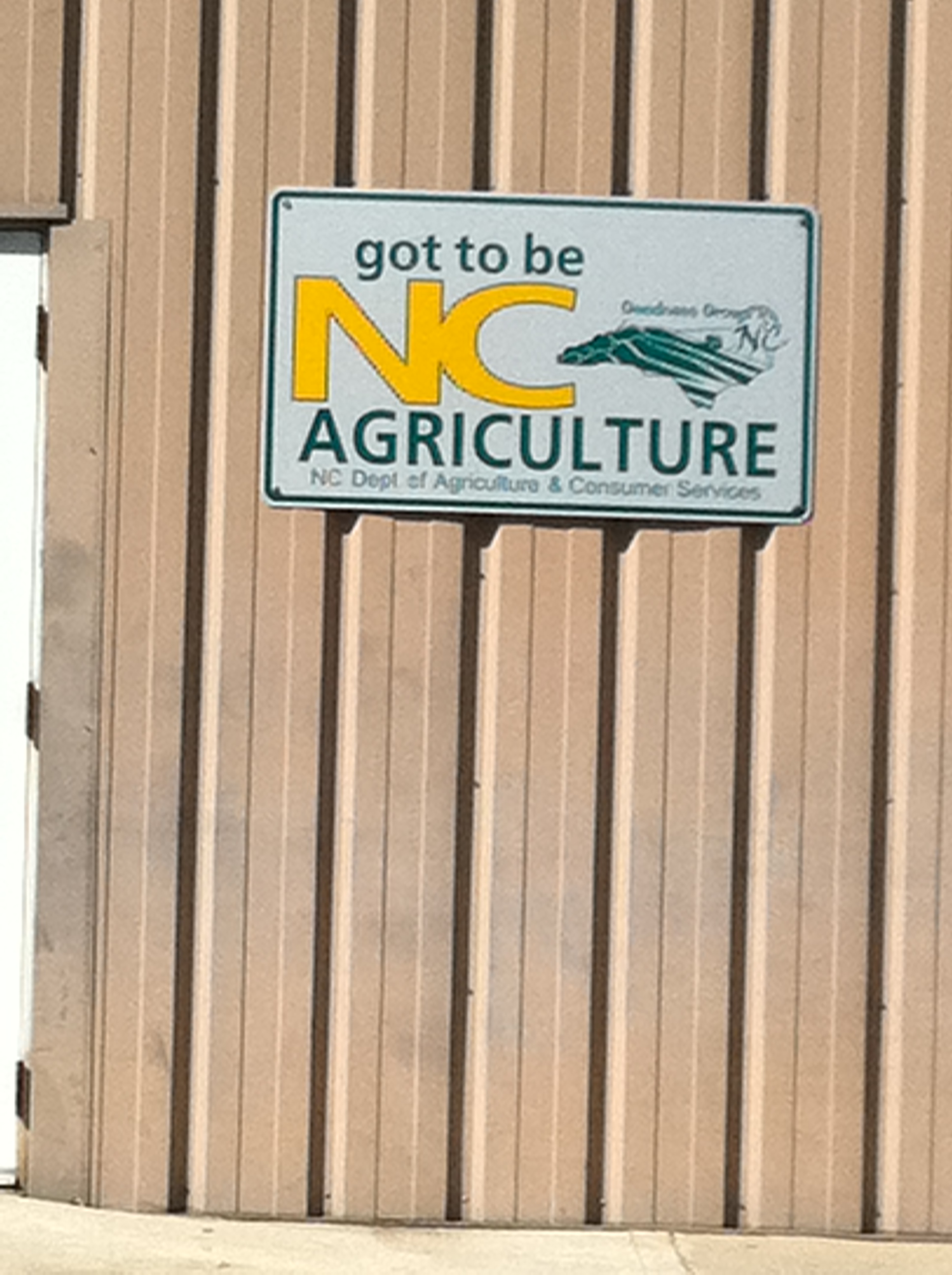
Got to be NC Agriculture

Got to be NC Agriculture

There are ethical markets that vet their vendors to prove the products they are selling are indeed from the local area. Locally, the Matthews Farmers Market, Atherton Mills Market and Yorkmont Markets are truly farmers markets. Then there are others.

It really irks me when I see opportunists take advantage of trusting customers. Our local Farmers Markets  sell produce, hoop cheese and country ham; primary season is from April through October 31; adding pumpkins and squashes as the season comes to a close. The markets are extremely busy.

Ask about how the animals are raised

Ask about how the animals are raised

People buy there thinking they are in some manner, doing better for their families, communities and supporting farmers.

I remember when Robert used to tell me of the farmers market on the corner near his house. I lived in the mountains of North Carolina at the time and walking to a weekly farmers market painted romantic dreams of urban living.

There is a corner market nearby that I have been observing for years. It is a family run business, they own a nice block or two of land in what would be considered “prime commercial real estate” for mid-town Charlotte.

On market days, there are often traffic jams which require hiring off-duty police to direct traffic. People pile in and load up their baskets with whatever produce they find; feeling good about feeding their families on fresh “farmers market” foods.

They don’t ask questions, they just flock in and buy.

Vegetables at the marketEarly in the morning, restaurants show up at the market to buy the produce at wholesale prices. In turn, the restaurants go back and advertise on their menu’s that they offer “local vegetables bought from the farmers market.”

The biggest buzzwords in food lately are “local, sustainable and organic.” Claim that and you gain an easy audience in your marketing; your marketing image leans towards a caring business who supports the local community.

However, the public is being duped.

People don’t ask questions!

On my visits to the market, I noticed they would have the same bagged greens that we could buy in the grocery store.

Locally grown? Chiquita, really? Mangoes? Pineapples?

Locally grown? Chiquita, really? Mangoes? Pineapples?

I noticed they always had corn. Always have corn, from April through the end of November. And the corn has a sign on it, written with highlighter, “Non-GMO.” Somehow I don’t believe it. I’d like to ask for proof.

What really caught my attention and lit my fire was the last time I was there. Each check out station was surrounded by pulp baskets of strawberries with signs on them declaring “Sweet Strawberries $3.99 qt.”

Being July and knowing it is well past strawberry season here, I asked:

Commercially grown strawberries dressed up to look like farm-fresh. These "local" berries are from California and sometimes Driscolls grows in Mexico too.

Commercially grown strawberries dressed up to look like farm-fresh. These “local” berries are from California and sometimes Driscoll’s grows in Mexico too.

“Where the berries were from?”

“California. . .”

“Are they organic?”

“No, they are Driscoll’s.”

This makes them no different from what you buy in the grocery store! Driscoll’s just happens to be a huge mono-culture farmer of commercial berries.

Commercially grown strawberries are sprayed and hold residue of many different chemicals. Here is an in-depth article you can read here:

Pesticides are a Danger to Health and the Environment – Choose Organic!

The article will tell you about the research and how dangerous chemicals are being used on commercially grown strawberries and other produce and best of all, what you can do about it!

So when people buy the berries from this market, they are not getting an organic berry but commercially grown berries instead. The berries are packaged to look like farm fresh; the hand written signs are casual and fit the marketing image.

Muscadine grapes

Muscadine grapes

I looked around and saw shoppers scarfing up the berries and other produce thinking they are in some way or another doing good because they are buying their food from the farmers market.

The problem is, they are buying the same as they would get from the grocery without it being disclosed! They are buying the same stuff commercial restaurants buy from commercial broadband vendors and smaller vendors like Restaurant Depot.

 The are buying the commercially grown food they are trying to avoid by shopping at the farmers market in the first place.

This is the kind of food we try to avoid for better health.

I think all markets should be required have signage on every product that says where it was grown and by whom. All items should be labeled how it was grown and be able to provide the paperwork to prove it, if asked.

Full Disclosure!

Let us have the right to make a choice and they should be prepared to provide the proof. I’ve lost my trust in our corner farmers market. They may have a few farmers but I don’t believe their corn in Non-GMO, I don’t believe their claims. Broccoli is not coming out of any local garden at this time of year, yet they have a table full of it.

The public needs to be aware of this practice so they can actually support the real farmers; go to a real market.

At this time of year, you won’t see any strawberries because they aren’t in season.

California has passed a bill to crack down on Farmers Market Fraud. See the article below for information.

 http://blogs.kqed.org/bayareabites/2014/08/27/california-legislature-passes-bill-to-crack-down-on-farmers-market-fraud/

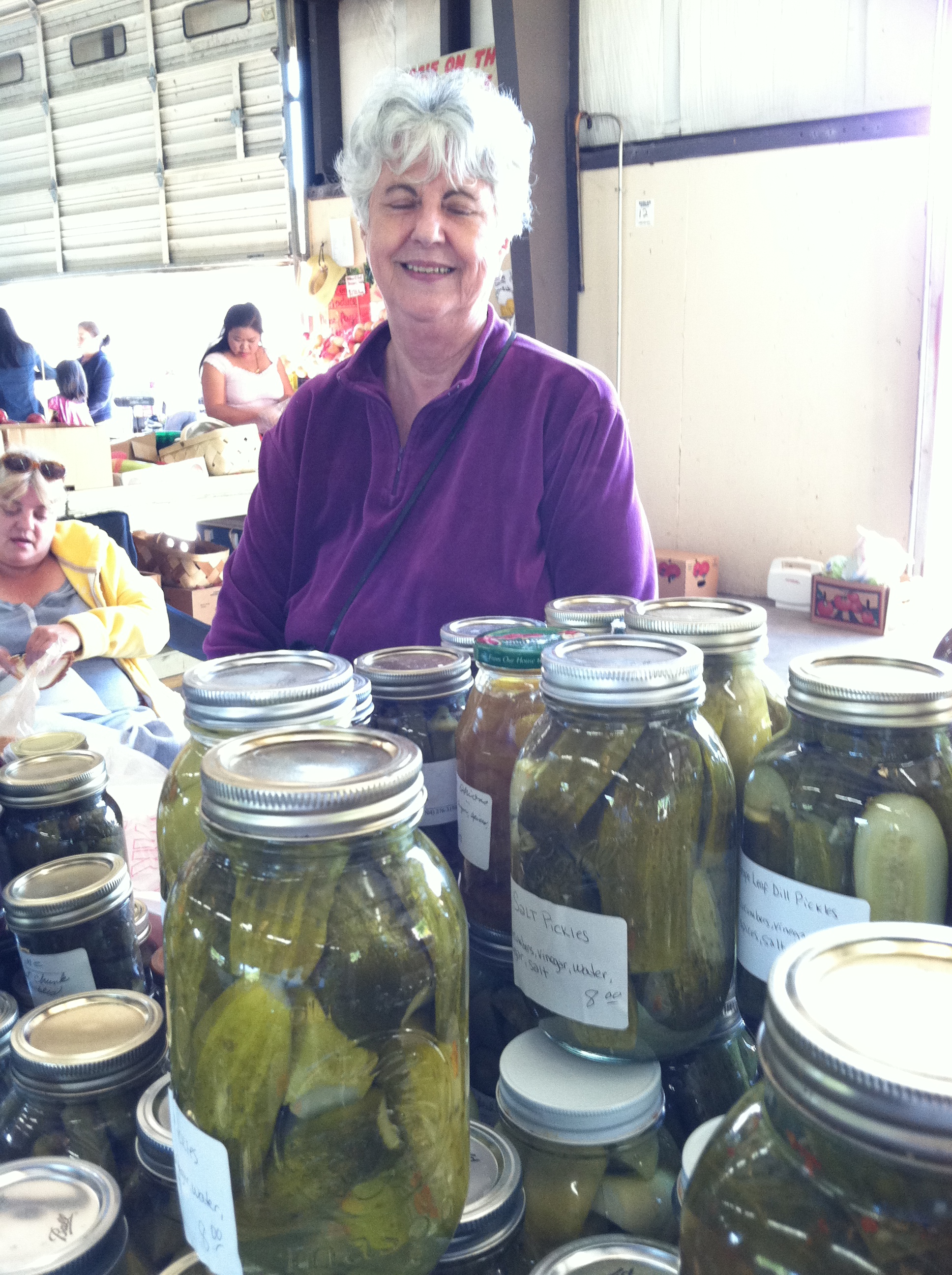
In the meantime, when you go to a market, ask questions. If they can’t or won’t tell you, don’t buy it! They are probably a commercial enterprise posing as a farmers market for easy money.October 15, 2011 farmers market 021
Here are some easy questions to ask:

  • “Where are these (insert whatever fruit or vegetable) from?”
  • “Are they organically grown?”
  • “Does the farm have a website?” Then use your phone and look them up. You’ll know if it is a commercial farm or a local farm.
  • “Why do you have broccoli in August? Where is it being grown? and how far did it travel to come to be here?” [To people wanting to reduce their carbon footprint, this matters!]

The Farmers Market industry currently has few regulations. Some require you to apply and be approved before you can sell there. They actually verify you are truly a local food producer.

However, if you own a few acres of vacant land, you can throw up some awnings, spread tables with produce you bought at the broad distributor food service uses, invite a few folks to sell grass-fed beef, home-made cakes, pies, flowers, and you too can be in the Farmers Market business as long as you have a business license.

I think this is scandalous and it really makes me quite angry.

Don’t Assume!

We’ve all got brains in our heads, it’s time to put them to use. This is something everyone who goes to a farmers market should be aware of.

Do some research, find out what kind of farmers market you patronize.

Be sure you are actually getting what you think you are getting. Ask a few questions. The answers may surprise you.

Don’t be duped!

#eatfresh #farmersmarkets #ethicalfarmersmarkets #Knowyourfood #wheredoesyourfoodcomefrom #eatwell #freshfood #fruit

#vegetables #freshproduce #healthyfood

Support your Local Farmer!
Support your Local Farmer!

Eat Fresh – What’s in Season NOW! September

Here is a quick run down on Eating Fresh – What’s in season now, September 2014.

Every where you look, people are trying to eat better.

To be an educated eater, you need to be aware or what fresh #fruitsandvegetables are available according to season.
Simply going to the grocery store or that busy farmers market on the corner isn’t a good way to determine what is in season. Food gets shipped in from all over the world so the availability seems season-less.

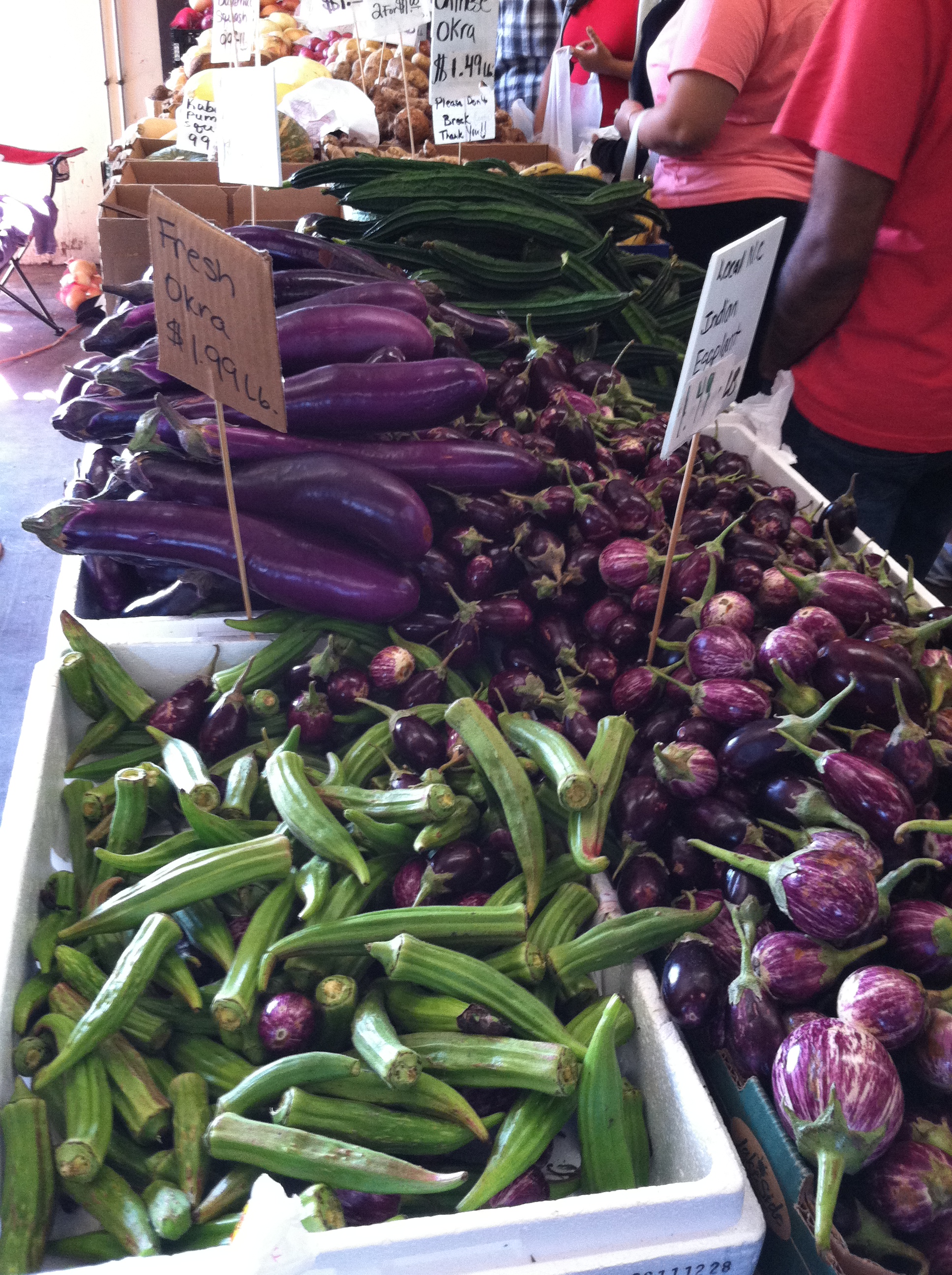
Eggplant and Okra

Eggplant and Okra

Knowing what is in season and that winter would be the “bleakest” food season; you can prepare and plan to have a pantry full of amazing things. But that’s another discussion.

Summer is winding down, days are getting shorter. Tomatoes are in full swing, melons are ripening on the vines.
Okra is growing over your head the plants have become so tall!

Here's what you can buy fresh from the garden in September:

Click on the hyperlinks to get fun, interesting ideas and recipes.

  • Apples- are coming in, crisp and fresh! Look for more varieties in the market as fall progresses.

    Apples on display

    Apples on display

  • Blackberries– soon to be gone! Make some Blackberry Sage Jam for a cold winter morning.
  • Cabbage – a good winter staple
  • Cherry Tomatoes – great for salads, snacking, roasting or sauté – abundant now through first frost
  • Collards – Simply an amazing green to simmer and eat with beans and cornbread, ’nuff said! Don’t forget the hot pepper vinegar!
  • Cucumbers– until first frost, time to make some pickles. Here’s a primer to get you going.
  • Figs–  get them quick! They are almost gone. Fig and lemon jam will capture their essence, or simply do whole figs in syrup. Wrap them in prosciutto. . .
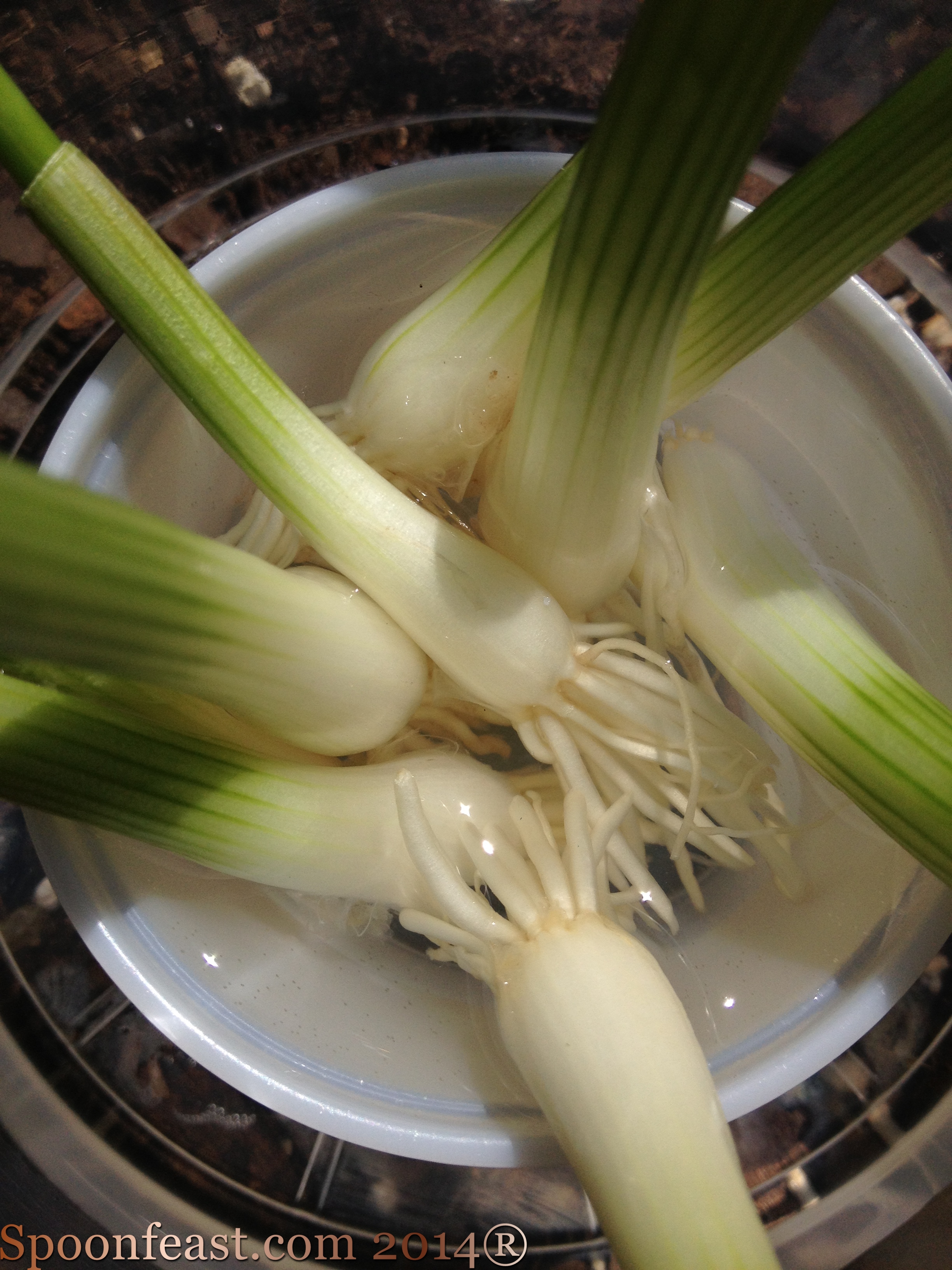
  • Green Onions I find they winter ok if you grow them yourself. For fun, try sprouting the root end again by putting it is a small glass of water, it grows!
  • Greens– Easily available, get baby varieties to eat raw
  • Herbseasily available in most varieties. Mint may be dying back, Basil is trying to seed. Freeze fresh herbs in ice-cube trays for winter use.
  • Indian Corn– begins to hit the market through October
  • Muscadine Grapes– Short season, all-time favorite regional treat. Freeze some for Halloween, use them as ‘eyeballs’ in the punchbowl or drinks.
  • Mushrooms– Late summer varieties rich flavors!
  • Mustard Greens– start coming in mid-September. Try some for a spicy different taste.
  • Peaches– leaving the market soon. Get your fill now! Make some fresh peach ice cream this weekend and serve it over warm peach cobbler or pie.
  • Peanuts– a year round favorite, raw, roasted or boiled.
  • Pears– the best pears are just starting to show up. Pears will only be here a short while, through October.
  • Persimmons– tricky to get just right, those who do love them!
  • Pumpkins– YAY! I adore pumpkins, eating and decorating and carving, flesh seeds and all! (Check out the links! You’ll have fun, promise!)
  • Raspberries– Almost gone until next year. Freeze some.
  • Snap Beans– Coming to an end of the season. I adore green beans and freeze some for winter. I think canning them makes them to soggy.
  • Yellow Squash– I know some aren’t sorry to see these go. Still available through mid October.
  • Sweet Corn– the symbol of summer, gone by the middle of the month. If you haven’t yet, grill you some corn on the cob for dinner.
  • Sweet Potatoes– Available year round although some specialty varieties come and go. I adore the garnet type from mid summer.
  • Tomatoes and Tomatillos– Through first frost. Be sure to get the green ones at the end of season to make chow-chow!
  • Watermelon– Another summer classic about to depart as fall descends.
  • Zucchini– only through the end of September. Shred some and make some Brownies!

I hope this helps. If you’re at the market and see things that really don’t seem right, like strawberries in September, ask where they came from and how they were grown. Leave them behind if you don’t like the answer.

Use your dollar to vote for better food and health with every purchase you make.

How do you eat, do you follow seasons? Buy Local? Please comment below and tell us how you plan your meals.

The What to Eat Now – October will be out soon. Subscribe to Spoon Feast so you are sure to get it! Use the subscription button on the right.

Massaged Kale Salad

Massaged Kale Salad

#eatfresh #seasonaleating #localfood #fruitsandvegetables #foodinseason #supportfarmers #eatlocal #seasonalfood


Happy Bees

I’ve never seen bees do this before!

While working in the garden this morning and I kept hearing a loud buzzing. When I looked for the source, I noticed there was a Magnolia flower that had bloomed at dawn and had dropped some luscious stamens on its outstretched petals.

Bees doing a Happy Dance!

Bees doing a Happy Dance!

The bees found the stamens and seemed to be quite happy, playing and rolling around. I’ve never seen bees this happy!


Zucchini Brownies, Just try it!

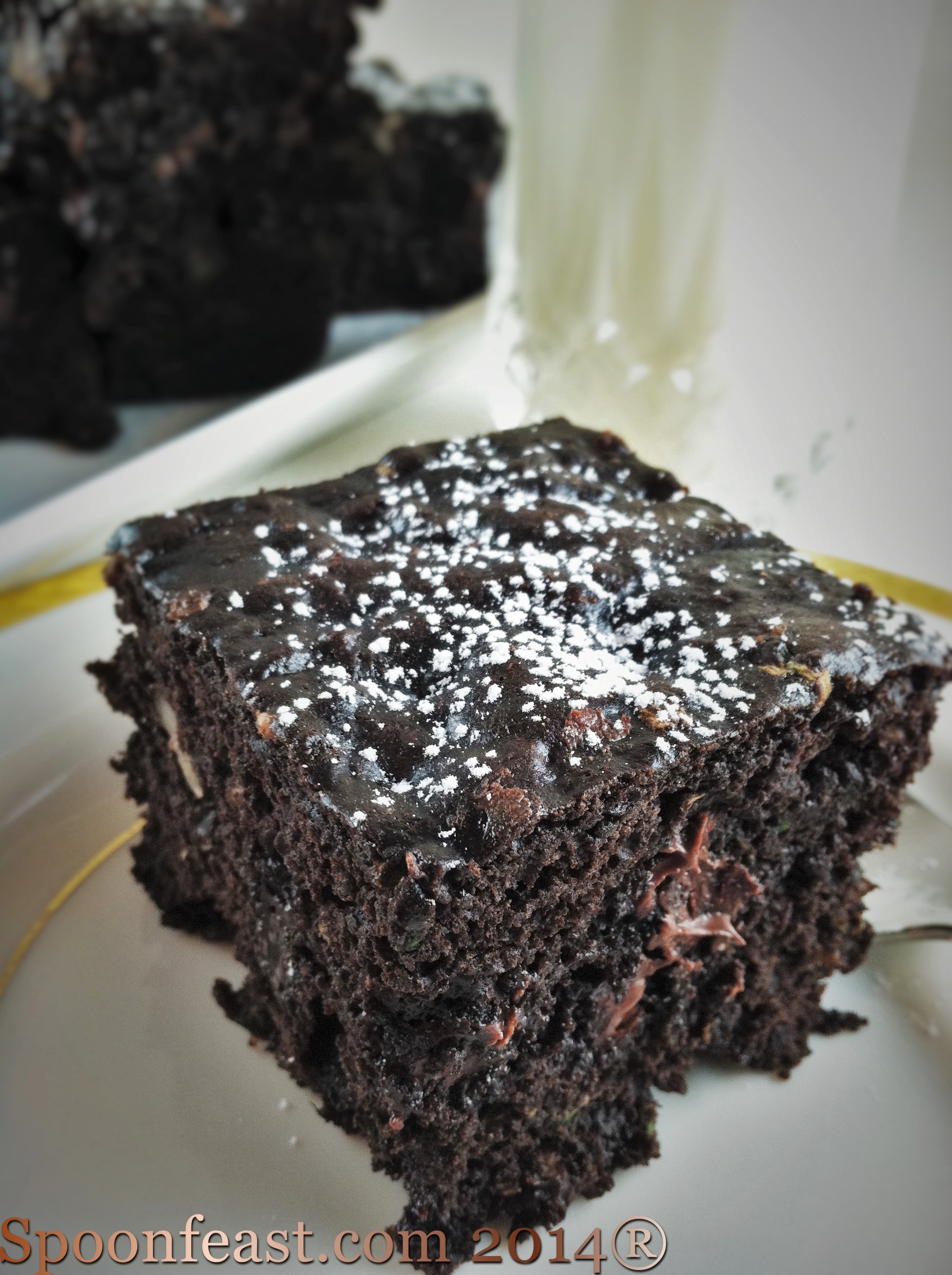
Zucchini Brownies are a great way of adding vegetables to your families diet. Unless you tell them zucchini is in the mix, they simply won’t know. The secret here is to finely shred the zucchini so it ‘melts’ while baking. You can’t expect it to be undetectable if you put big chunks in the mix.

This is a great way to get some vegetables into your meat and potato family members.

This recipe follows the formula of replacing the fat in the recipe with vegetables. The shredded zucchini adds the required moisture that creates the most gooey, fudgy brownies; you won’t believe they are full of zucchini.

I’m looking forward to trying zucchini in other baked goods to see how it goes. I imagine a carrot zucchini cake?

Try the recipe and let me know what you think!


Zucchini Brownies

  • Servings: 9-12
  • Difficulty: easy
  • Print

Zucchini BrowniesZucchini Brownies

Pre-heat oven to 350°F.

Butter a 9 x 9 baking dish.

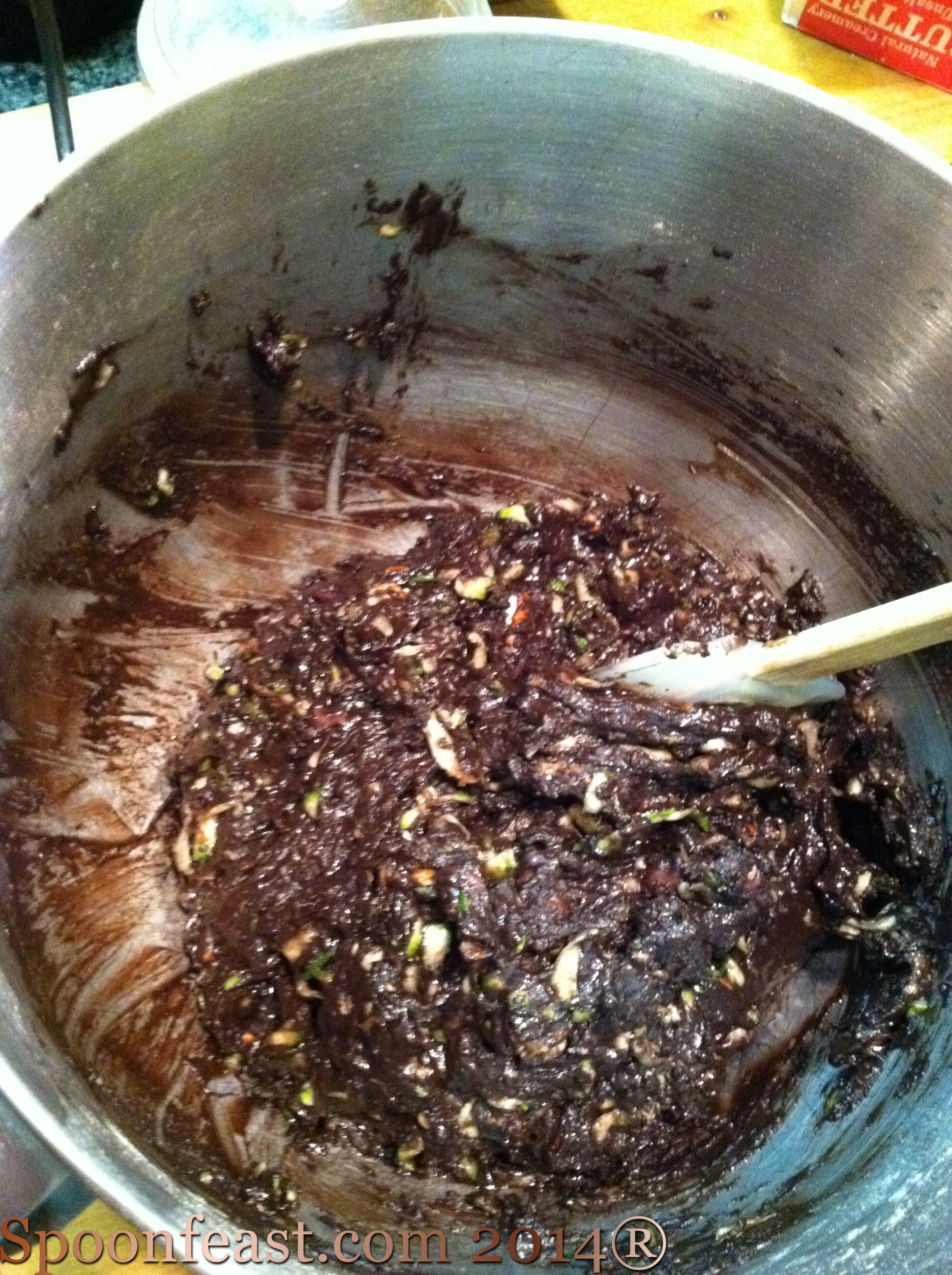
Combine sugars, egg and vanilla in a mixing bowl on medium speed.

Fold in zucchini.

Shred Zucchini

Shred Zucchini

Combine dry ingredients in a separate bowl.

Add flour mixture to zucchini mixture on low-speed, mixing only long enough to combine the ingredients.

Spoon the mixture into the prepared baking dish, smoothing it evenly in the dish.

All mixed together with the Shredded Zucchini

All mixed together with the Shredded Zucchini

Bake at 350°F for 30-35 minutes. Remove the brownies from the oven and cool on a rack.

Cut and remove from pan after the brownies have cooled to room temperature.

Zucchini brownies

Hot and Spicy Chicken

So here is a recipe for a hot and spicy chicken from Paul Prudhomme. He calls it “Frontier Chicken”; I call it delicious!

The flavor resembles Chicken Creole and will leave you smacking your lips because it is so good.

Hot and Spicy Chicken!

Hot and Spicy Chicken!

I left out the jalapeno because I thought it had enough spicy heat, but if you can tolerate them, add them in. We served sliced jalapeno on the side.

There’s one element that will surprise you.

Banana! Don’t leave it out! It makes for such a delightful complex surprise when you’re eating and there’s that bite. . .

Paul Prudhomme's Frontier Chicken

  • Servings: 4-6
  • Difficulty: medium
  • Print

Seasoning Mix

  • 2 teaspoons salt
  • 1 teaspoon ground cardamom
  • 1 teaspoon cayenne
  • 1 teaspoon ground coriander
  • 1 teaspoon ground cumin
  • 1 teaspoon ground fenugreek (I left it out because I couldn’t find it)
  • 1 teaspoon garlic powder
  • 1 teaspoon ground ginger
  • 1 teaspoon dry mustard
  • 1 teaspoon onion powder
  • 1 teaspoon ground black pepper
  • 1 teaspoon ground white pepper
  • 1 teaspoon red chili powder
  • 1 teaspoon turmeric

Combine everything into a small bowl; set aside while your prepare the rest of the dish

For the chicken and the rest of the dish:

  • 6 (4-6 ounce) chicken breasts or 1 cut-up 8 piece chicken or 8-12 chicken thighs, bone in
  • 3 Tablespoons olive oil
  • 1 ½ cups of chopped onion
  • 1 cup chopped red peppers
  • 1 cup chopped green peppers
  • 1 cup chopped yellow peppers
  • 1 large ripe banana, peeled and sliced
  • 2 cups chicken stock
  • 1 tablespoon chopped garlic
  • 1 tablespoons minced fresh ginger
  • 3 Tablespoons all-purpose flour
  • ¼ cup chopped fresh cilantro
  • 2 fresh jalapeno, chopped (remove seeds and robs for milder heat; wear gloves to protect hands)
  • 1 14 ½ ounce can diced tomatoes

Sprinkle each side of the chicken breasts with ½ teaspoon of the spice mixture. Be sure to massage it in well.

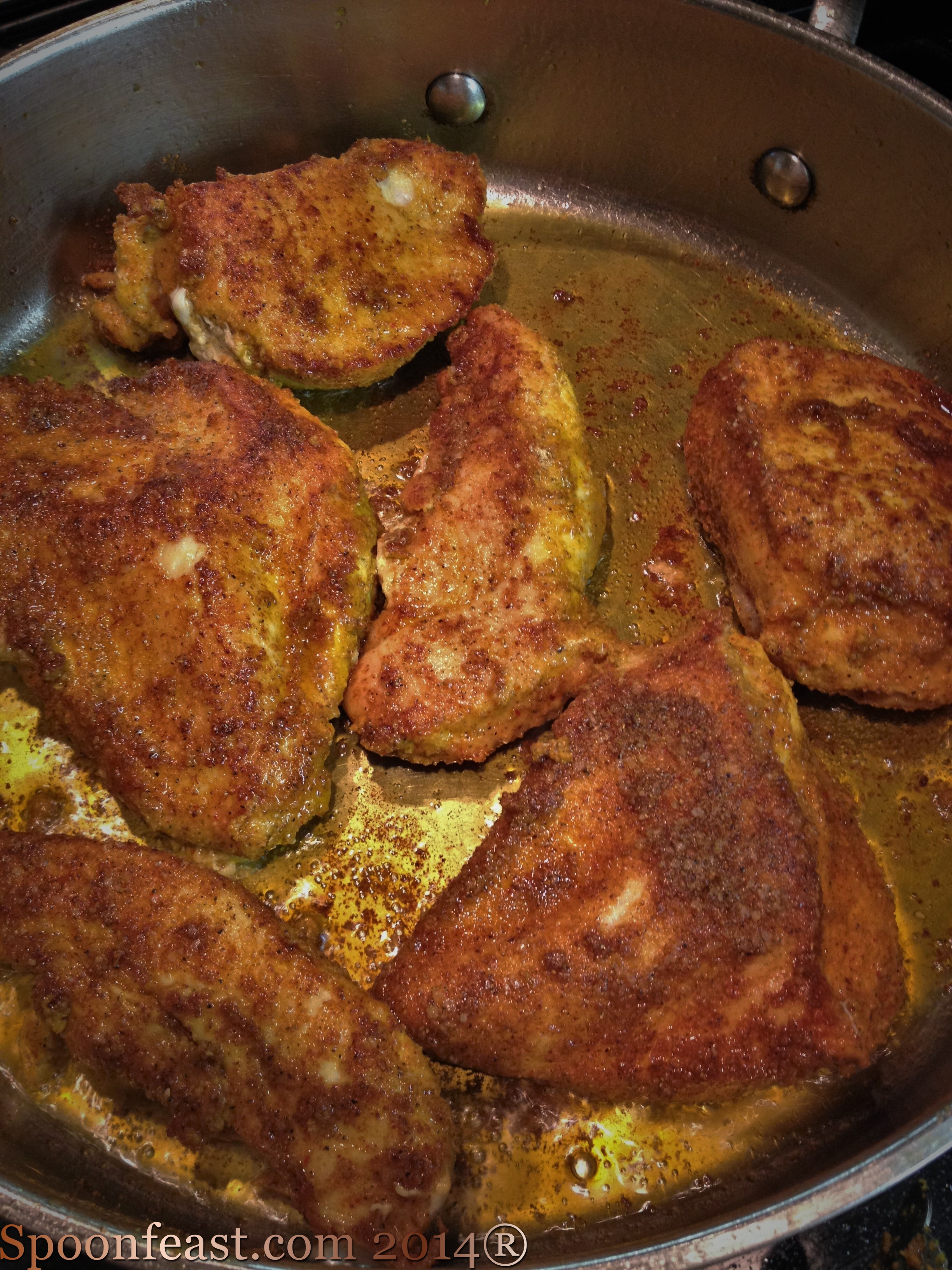
Heat oil in a large skillet or 5-quart pot, add the chicken to brown each side, typically 2-3 minutes on each side; remove from pan.

Brown the seasoned chicken on both sides

Brown the seasoned chicken on both sides

(Notice the color of the oil! A great golden brown from the turmeric, it’s quite dramatic!)

If you notice the chicken or the pan is starting to burn, turn the heat down.

Once the chicken is removed from the skillet, place it in the oven to keep warm. It will finish cooking later.

Add 1 cup of the onions, only half of each of the chopped peppers (not jalapeno) and the banana and the remaining seasoning mix to the pan. Cook; stirring occasionally and scraping the pan for about 10 minutes. IF anything starts to get too brown, add chicken stop to loosen everything from the bottom of the pan.

Add garlic, ginger and flour, stir until the flour is absorbed; add the remaining peppers, onions, cilantro and jalapeño.

Cook for 5 minutes, add the tomatoes and remaining stock. Bring to a boil.

Add the chicken and any juices that may have accumulated to the pan, reduce to low and simmer about 10 minutes more until the chicken is cooked through.

Serve hot over steamed brown rice; add a crisp, crunchy salad that includes cucumber to cool the mouth down!

The heat is coming from several sources: cayenne, cumin, and ginger, dry mustard, chili powder, and jalapeno.

Adjust any one of these to cool it down if it gets too hot for your taste. I just left out the jalapeno for us and served them on the side.

Hot and Spicy Chicken!

Hot and Spicy Chicken!


Make Half-Sour Pickles

Have you ever had one of those delicious pickles from a Jewish Deli and thought it was the best ever? Good chance it was a Half-Sour Pickle!

Half Sour Pickles are some of my favorite pickles. The best part is they are ready to eat only a few hours after making them.

Guaranteed they won’t be around for long!

As they age, they move into full sour pickles but that’s just because the cukes get to stay in the brine longer. Honestly, they never last that long in my home.

Half-Sour Pickles

  • Servings: 1 quart
  • Difficulty: easy
  • Print

These are considered a “fresh” pickle

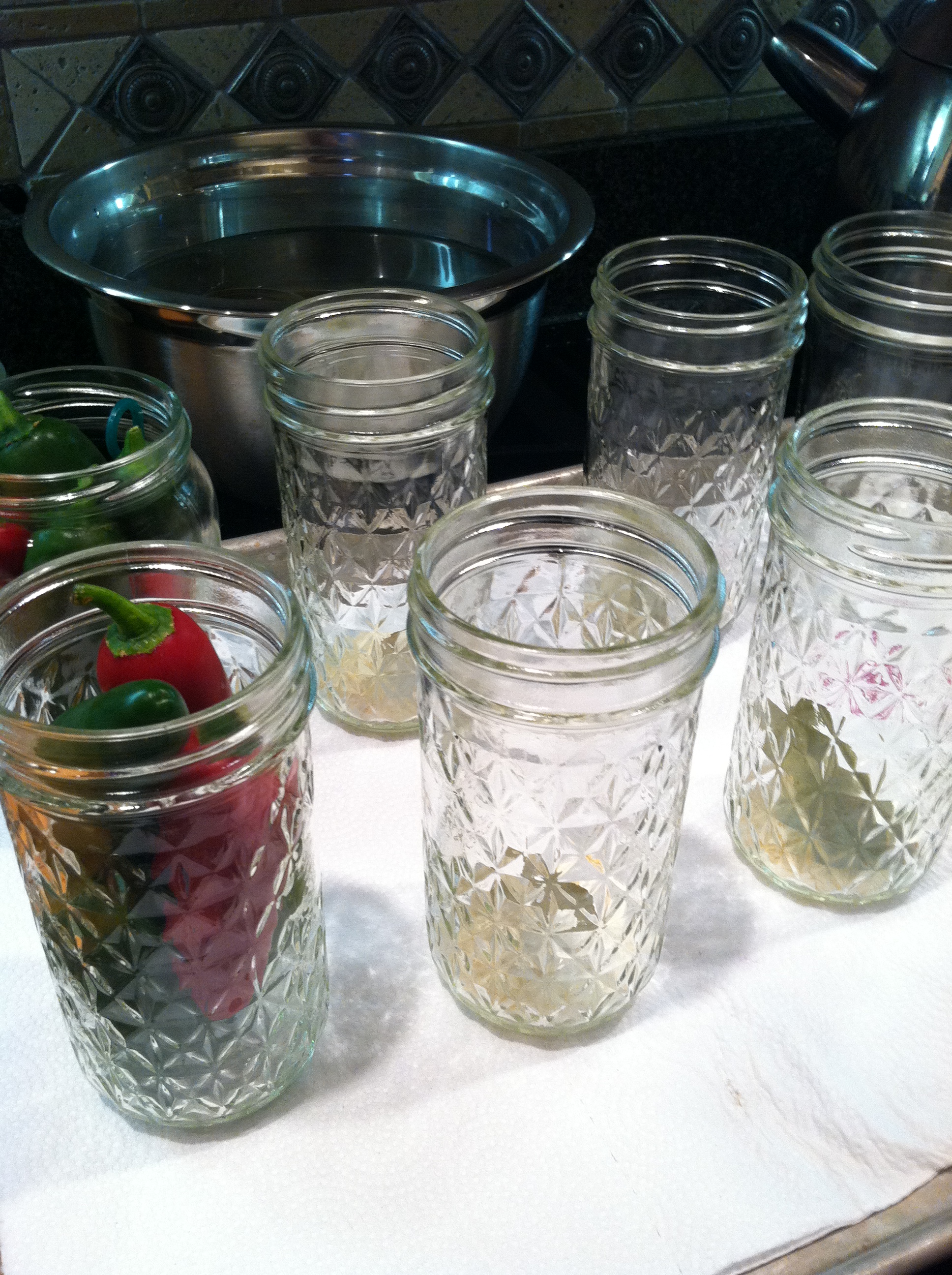
  • 1 quart wide mouth canning jar with new 2-piece lid. Sterilize the jar in the dishwasher, NOT the 2-piece lid
  • 2 pounds pickling cucumbers, cut into spears or leave whole if desired
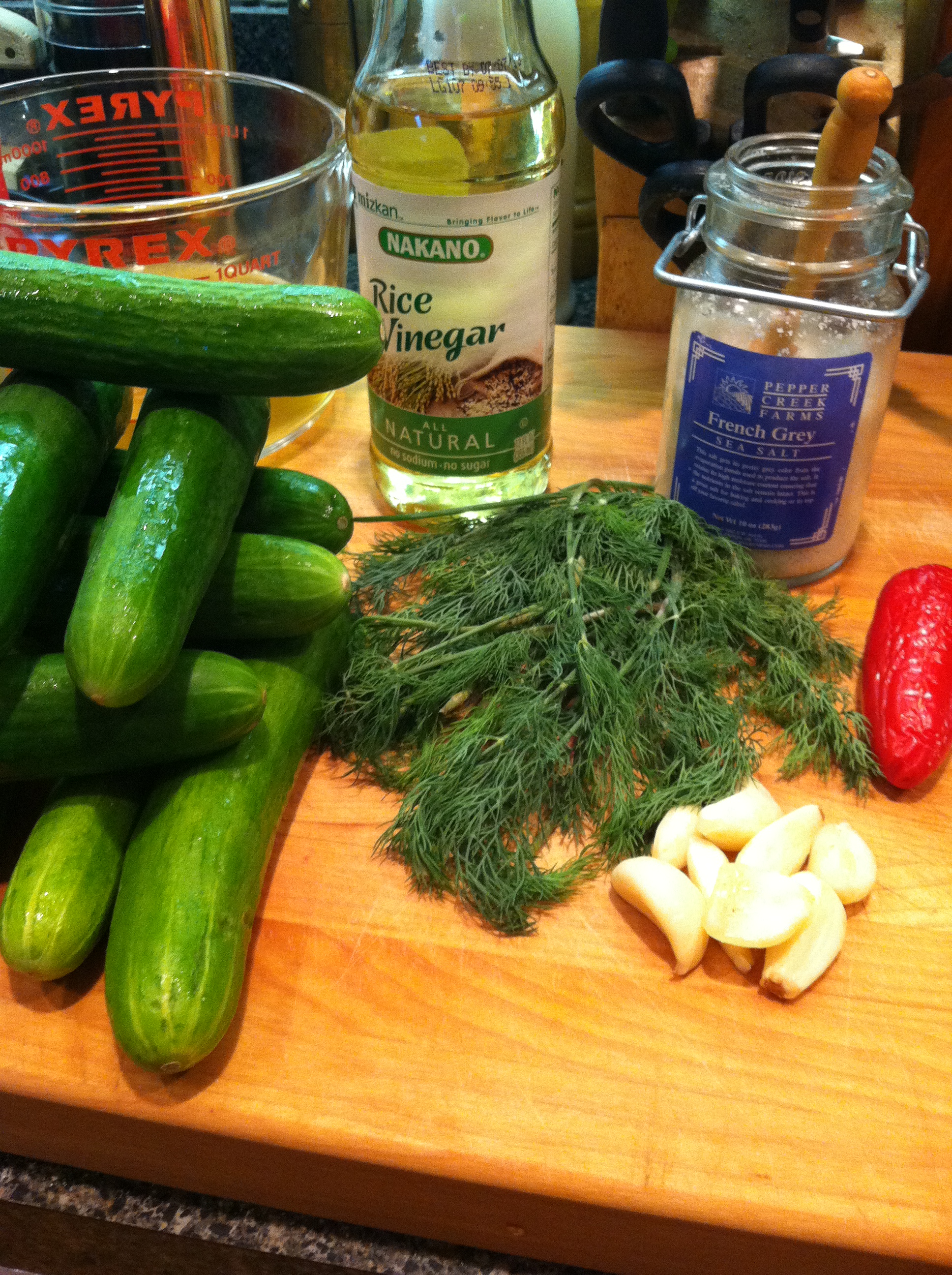
  • Ingredients for Half-Sour Pickles
  • 1/4 oz dill sprigs
  • 2 cloves fresh garlic, smashed
  • 1 bay leaf
  • For the Brine:
  • 32 ounces water
  • 3 ounces salt- use a scale and weigh it!
  • 4 ounces white vinegar

Boil 1 quart water. Place the 2-piece canning lid in a mixing bowl; pour boiling water over the canning lid; set aside until ready to use

Place the dill, garlic, and bay leaf into the bottom of a 1 quart wide mouth canning jar. Pack the cucumbers on top.

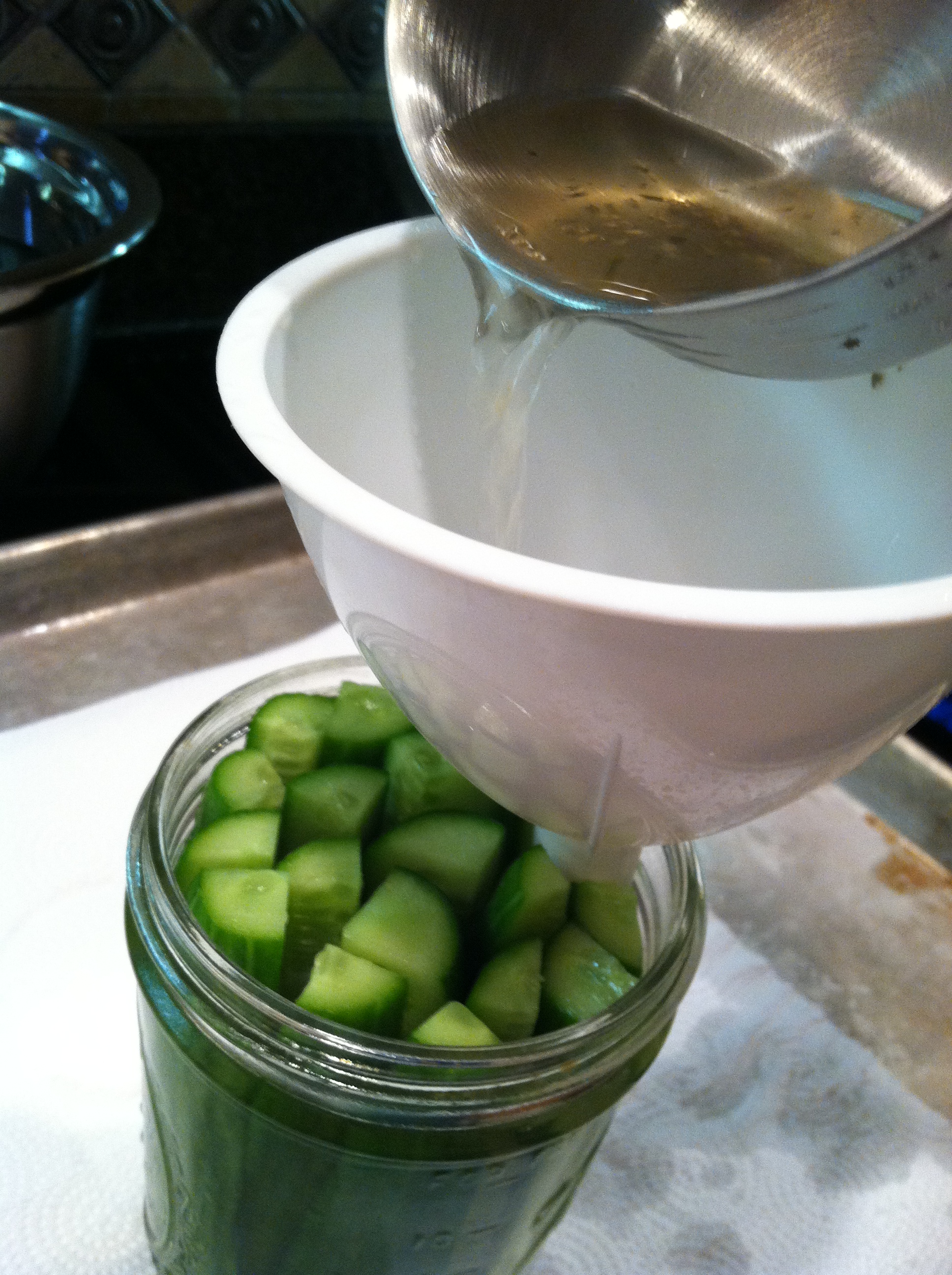
Bring the water, salt, and vinegar to a boil, pour directly over cucumbers. Place the canning lid on the jar, turn upside down and cool. Refrigerate. Allow pickles to steep 24 hours before eating. The pickles will change from half cured to a fully cured pickle the longer they sit in the brine.

They are good until they are gone, which won’t be long.

Place seasonings in clean, sterile jars

Pack cucumber spears into jars

Pour boiling brine into jars; fill to top

Secure lids and allow to cool

Adding dried onion flakes and jalapeno slices to the seasonings will add flavors as well. If you like your pickles spicy, try it.

This brine can also be used to pickle an excess of jalapenos and zucchini spears can be substituted for cucumbers if you like.

This is a quick and easy pickle. Try making some soon.

There’s nothing quite like a fresh pickle along side a sandwich or any kind of  charcuterie.

Enjoy!

Related Articles:

A Pickling Primer

Pickled Beets

Pickled Cauliflower

Pickled Turnips

Sweet Pickle Chips


Quick and Tasty Summer Lunch

This quick and tasty summer lunch is fresh out of the garden.

Who can resist this?

Quick and Tasty Summer Lunch

Quick and Tasty Summer Lunch

The tomato is of an heirloom variety that has a purple top and green bottom that slowly turns red as it ripens. It is the sweetest tomato I have ever tasted! I have no idea what the name of it is so if you know, Please let me know in the comments!

The cucumber was cut from the vine just minutes before it was sliced for the plate.

On the way in the door, I stopped and pulled a scallion and a few basil leaves.

Freshly pulled scallions

Freshly pulled scallions

I added some pickled cauliflower for a fermented food aspect and whole grain flat bread crackers.

Fresh and Pickled cauliflower

Fresh and Pickled cauliflower


Add some cheese and nuts if you want some protein.

One Delicious Bite!

One Delicious Bite!

Related Articles:

Pickled Cauliflower

Appetizing Cheese Board

Make your own goat cheese at home

Farmers Market Visit

Garden Fresh Vegetables

I was out and about yesterday and when I came home, I found this on my doorstep!

Garden Fresh Vegetables on the doorstep!

Amazing garden fresh vegetables just picked from the garden a couple of hours earlier.

These vegetables were grown from the seed, mulched and grown totally organically by Robert’s sister, Shelton, who lives in Boone, NC, up in the mountains.

This explains why she still had broccoli! I was overjoyed at the bounty:

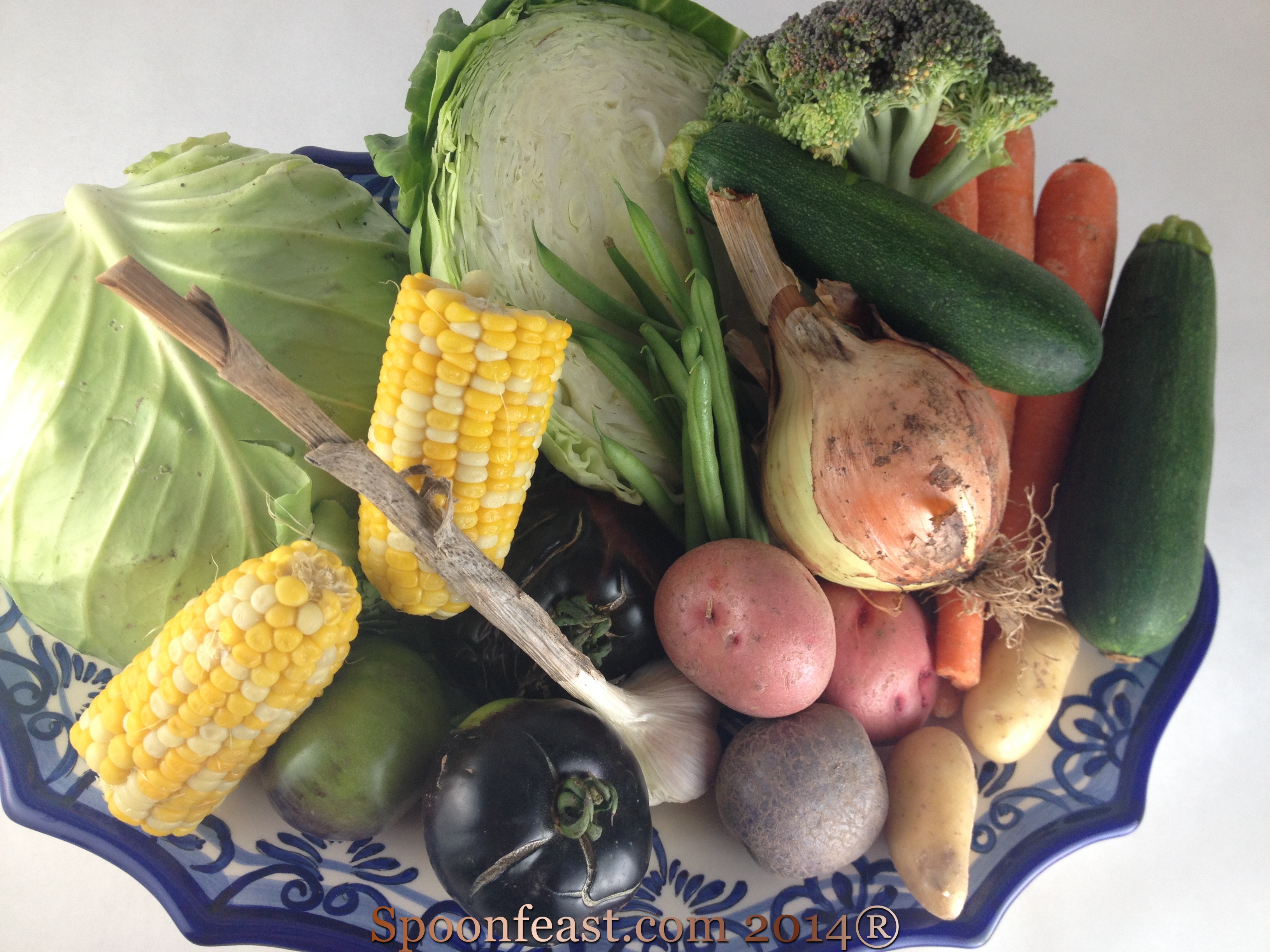
Russet potatoes, garlic onions, red onions, broccoli, green and purple peppers, tomatoes and what looks like a purple tomato, green beans, red cabbage and green cabbage; it is an amazing gift.

Bountiful Garden Goodness

Bountiful Garden Goodness

We had just bought corn, kale, collards, arugula and spinach at the farmers market so we will be eating quite good this week.

Thank you Shelton!

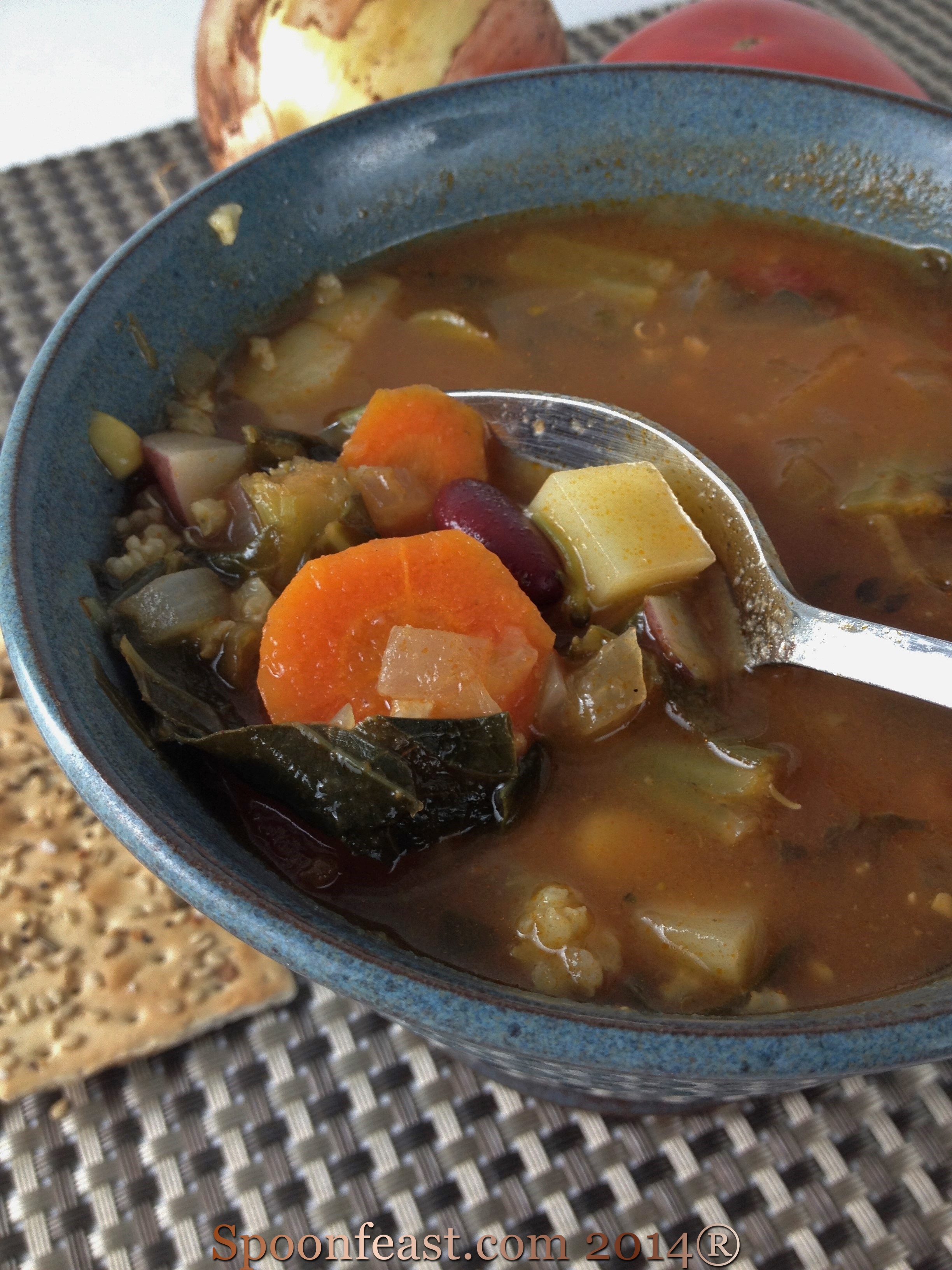
These were just in time for  a cold day in July, needless to say, I made some amazing vegetable soup.

Garden Bounty Vegetable Soup

  • Servings: about 1 gallon
  • Difficulty: easy
  • Print

TIP: Cut all the vegetables about the same size. Use different shapes for visual interest. Remember everything needs to fit on the spoon, not hang over.

Soup Ingredients

Soup Ingredients

  • 1/4 green cabbage, chopped fine
  • 1 large onion, cut into small dice
  • 2 carrots, sliced
  • 3 red potatoes, diced
  • 1 medium zucchini, diced
  • 10 green beans, sliced
  • 2 broccoli crowns, separated into florets
  • 2 large cloves of garlic, smashed
  • 1 can organic diced tomatoes
  • 1 can dark red kidney beans
  • 1 cup lima beans
  • 1 ear of corn, cut it off
  • Enough water to cover the vegetables
  • 1-2 bay leaves
  • 1-2 Tablespoons salt, to taste
  • 1 Tablespoon fresh ground black pepper
  • 1 splash Texas Pete Hot Sauce

Chop it all up, sweat (cook without browning) the onions, carrots and cabbage, once these vegetables are tender, add the rest of the ingredients.

Bring to a boil and then turn down the heat and simmer until the vegetables are done. Adjust the seasonings and serve.

Garden Fresh Vegetable Soup for a chilly day in July

Garden Fresh Vegetable Soup for a chilly day in July

French Toast Stuffed with Goat Cheese and Slathered in Blueberry Sauce

French Toast Stuffed with Goat Cheese and Slathered in Blueberry Sauce is delicious and nutritious although not diet food. This dish came to me while trying to use up some things to make room in the refrigerator.

French Toast Stuffed with Goat Cheese and Blueberry Syrup

French Toast Stuffed with Goat Cheese and Blueberry Syrup

I make 95% of the bread we eat and typically use lots of grains in the loaves. We buy organic eggs from the farmers market and the blueberry sauce is made from a batch of berries I bought to make a pie but never did. So instead of the berries going bad (I couldn’t believe no one ate them!) I made a sauce. The recipe is below and is very simple.

Goat Cheese Stuffed French Toast with Blueberry Sauce

  • Servings: 2-4
  • Difficulty: Easy
  • Print

  • 4-6 slices of good quality, nearly stale bread
  • 1 large egg
  • 1/4 cup unsweetened almond milk
  • 1 tablespoon vanilla
  • 1/2 teaspoon ground cinnamon
  • 1/4 teaspoon ground ginger
  • 1/4 teaspoon salt
  • Pinch of ground nutmeg (fresh ground is best!)
  • 1 tablespoon oil or just enough to coat the bottom of the pan
  • 1 ounce of fresh plain goat cheese for each serving

Mix all the ingredients, except the bread, in a flat pan. Place the sliced bread in the egg mixture, turning to coat. Let the bread sit in the mixture so it can soak it all up.

Heat a pan large enough to hold all the slices, place the soaked bread in the hot pan and cook until each side is golden brown.

Place the French Toast on a warm plate, immediately spread the goat cheese on one side of the bottom slice, top with another slice of hot French Toast.

Pour Blueberry Sauce all over and serve.

Now if you wanted, you could whip some honey and cinnamon into the goat cheese before spreading it onto the French Toast. It would put this dish completely over the top!French Toast stuffed with Goat Cheese

This is soooo good! And made with whole grains so you will feel full and had great energy all morning.

Like I said, not diet food, but whole, real food.

I hope you try this recipe and enjoy every bite.

French Toast stffed with Goat Cheese

Blueberry Sauce

  • Servings: Varies
  • Difficulty: Easy
  • Print

  • 1 pint of fresh or frozen blueberries
  • 1/2 cup organic sugar
  • 1/4 cup waterIMG_9355
  • Pinch of salt
  • Dash of cinnamon or zest from 1/2 lemon (Optional)

Wash and pick through the blueberries. Discard and soft, moldy or squished berries, leaves, stems and twigs. Combine everything into one pan and bring it to a boil. Simmer for about 10-15 minutes, until its thick. If you want the sauce smooth, put it in a blender or use an immersion blender to puree the sauce to the desired consistency. I like mine to have a few whole berries left in it. You can always choose to put some fresh berries with it when you serve it too.

This sauce is great on this decadent French Toast and over pancakes, ice cream and even over grilled salmon. Treat yourself and try that one!

Harvesting Honey

Harvesting Greenway Gold Honey

At the college where I work, we got permission to raise honey bees and this week was our first opportunity in harvesting honey.

The Hives for Greenway Gold

The Hives for Greenway Gold

Bees are in danger and need all the care and help they can get. So to see one of the two hives we have thrived is quite a source of glee and happiness.

I am not a bee keeper but I am a local honey devotee.

Local honey helps with all kinds of pollen related allergies. As someone who was highly allergic to just about anything that grew, once I started consuming local honey and local bee pollen, the allergies for the most part, disappeared!

Let’s hear it for local honey!

On to the harvest!

The box that had the frames which held the honey had been removed from the hive stack the day before.

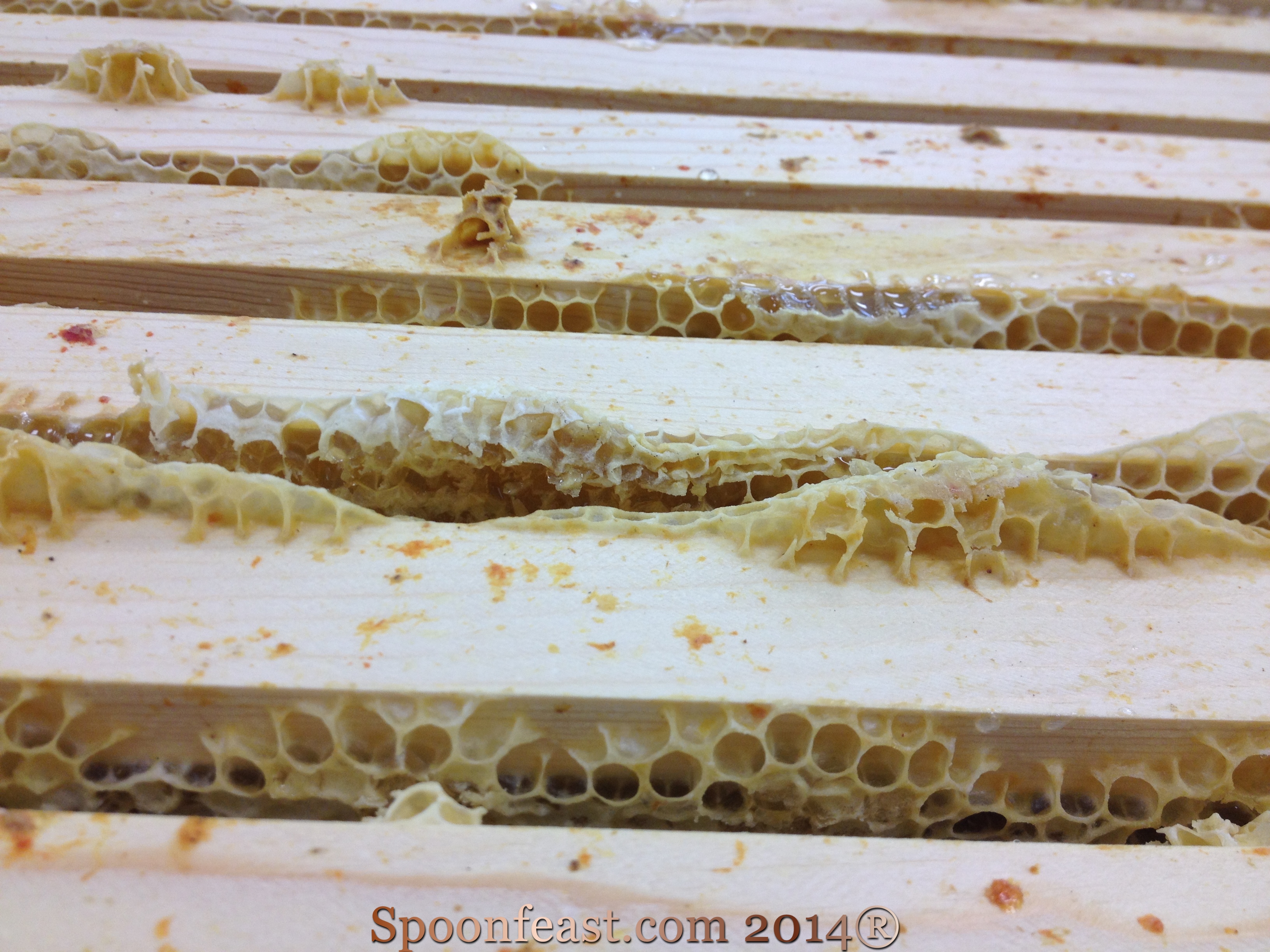
Honeycomb frames filled with honey!

Honeycomb frames filled with honey!

It really pissed some bees off, Jim got stung a couple of times. Why not? The bees were only protecting their winter survival source.

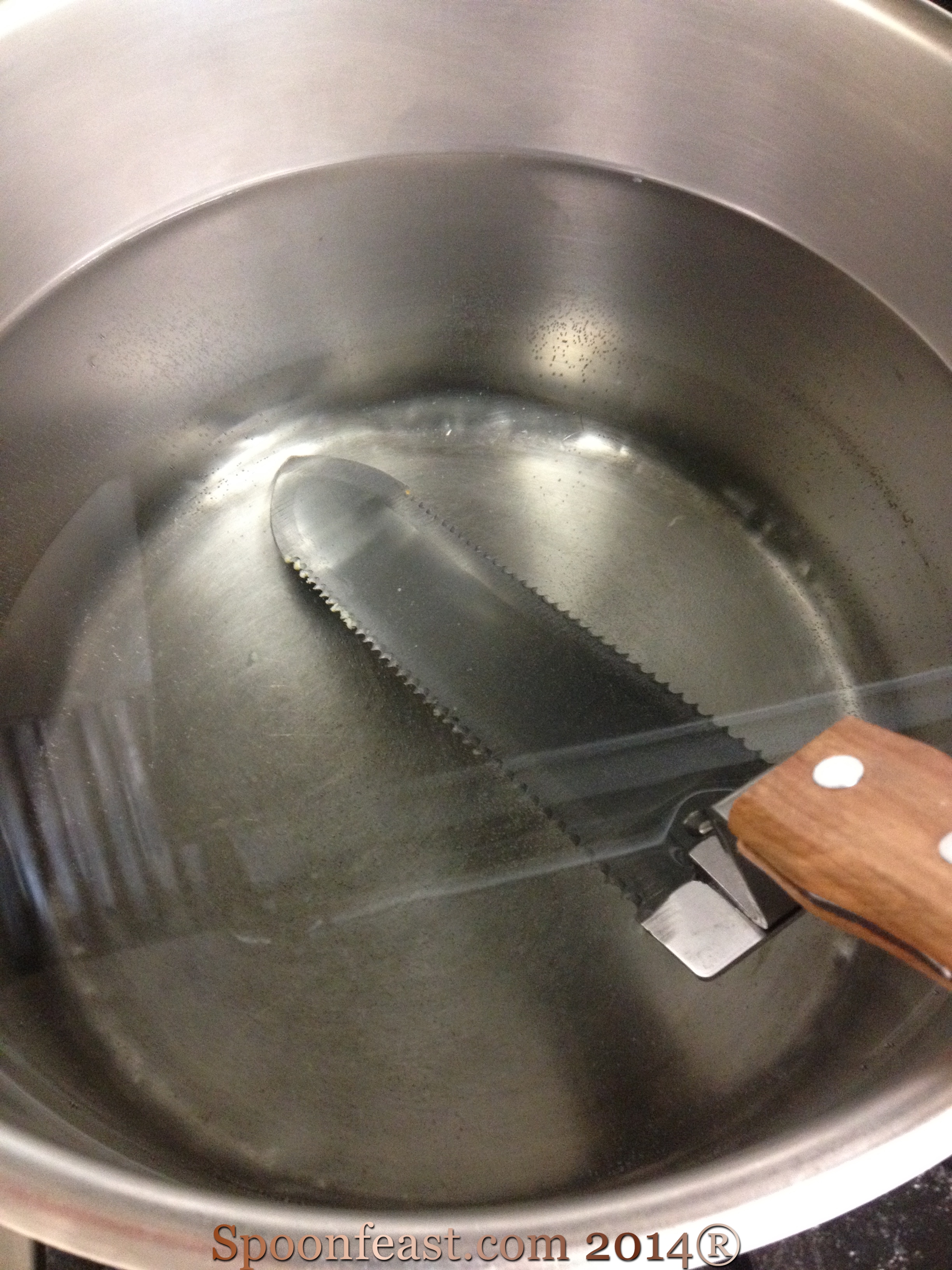
The “Extraction Room” had to be readied: plastic on the floor, tables, warm honey extracting knife,

The warm wax cutting knife

The warm wax cutting knife

centrifuge assembled, screen filters, buckets,

The filter bucket

The filter bucket

jars and damp paper towels all in place. Don’t forget the tasting spoons!

Assembling the centrifuge

Assembling the centrifuge

Each of the frames weighed around 7.5 pounds before removing the honey and 1.5 pounds after. The process is sticky but amazingly rewarding.

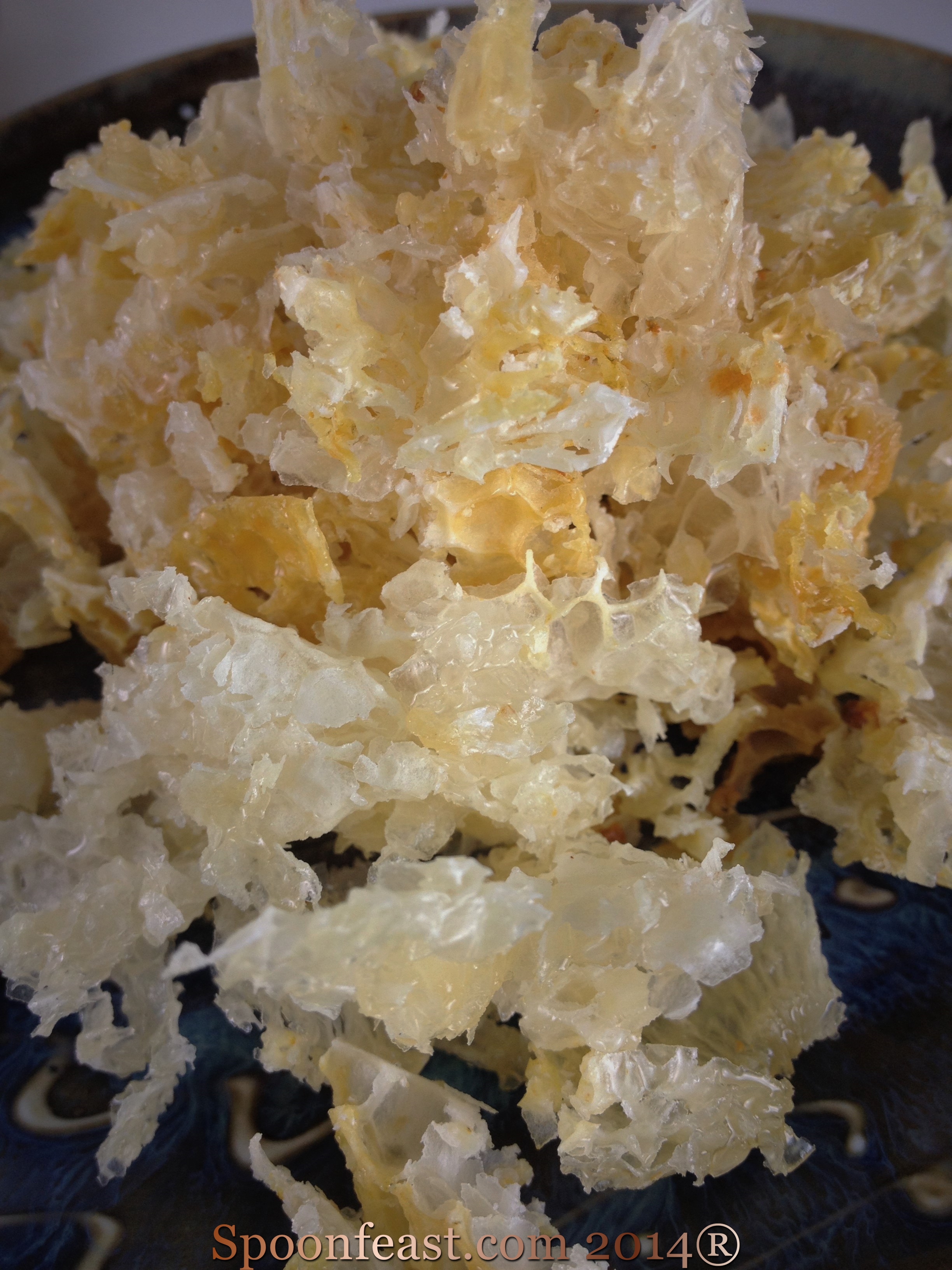
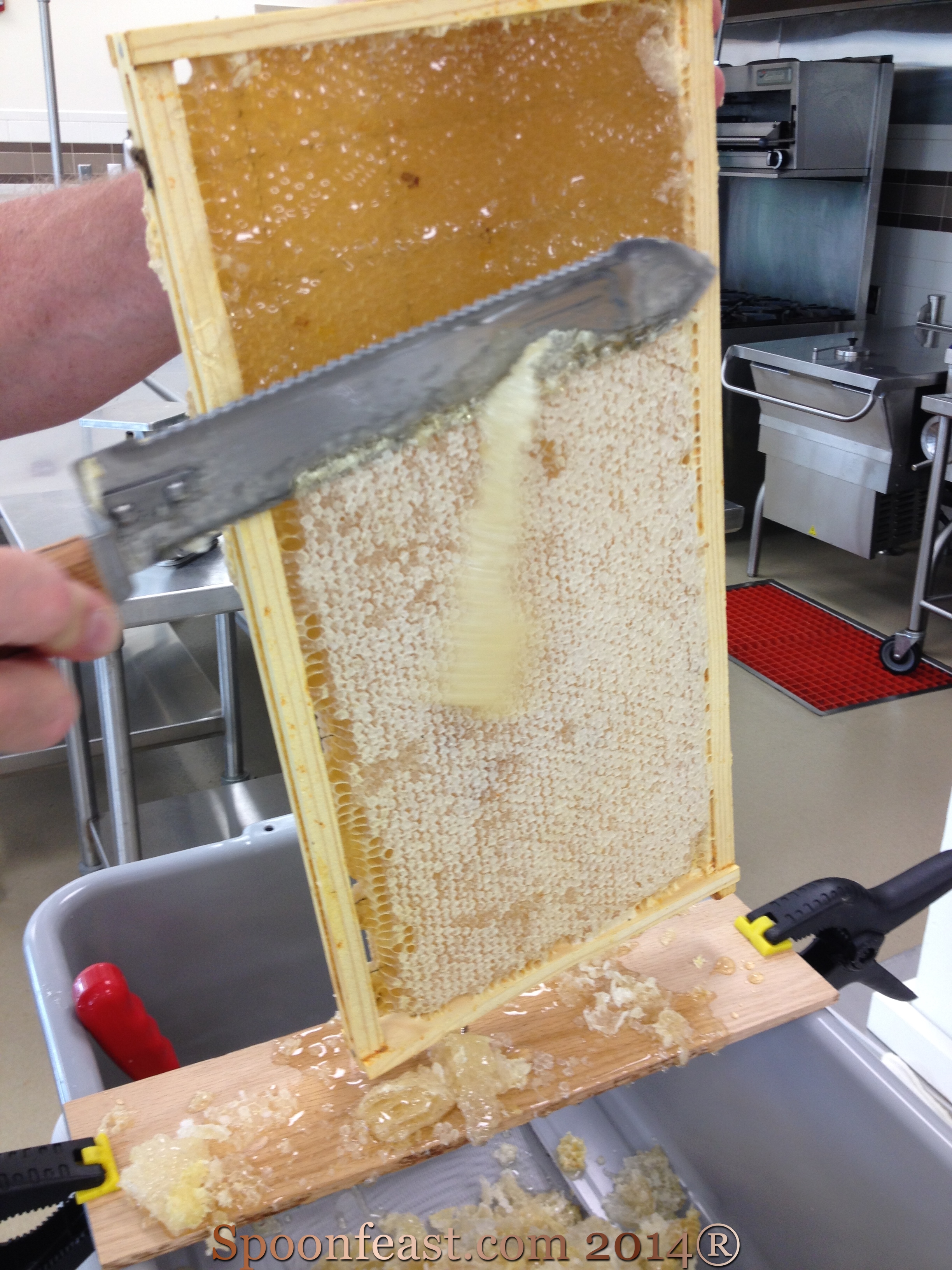
Once you have everything ready to go, one of the frames is placed so the wax caps can be removed from both sides of the frame using a warm knife made for doing just these kinds of things. Catching the wax caps in a bucket below is a great idea as this is “virgin” beeswax, perfect for making lip balms and body lotions; just wash the honey out gently in cool water.

This is some of the wax cut off the honeycombs; virgin beeswax is perfect for lip balms!

This is some of the wax cut off the honeycombs; virgin beeswax is perfect for lip balms!

Cutting the wax caps with a warm knife

Cutting the wax caps with a warm knife

Place the frames in the centrifuge, there’s a certain angle they have to be placed because the bees create the honey combs on a particular angle to prevent the honey leaking out. Clever things!

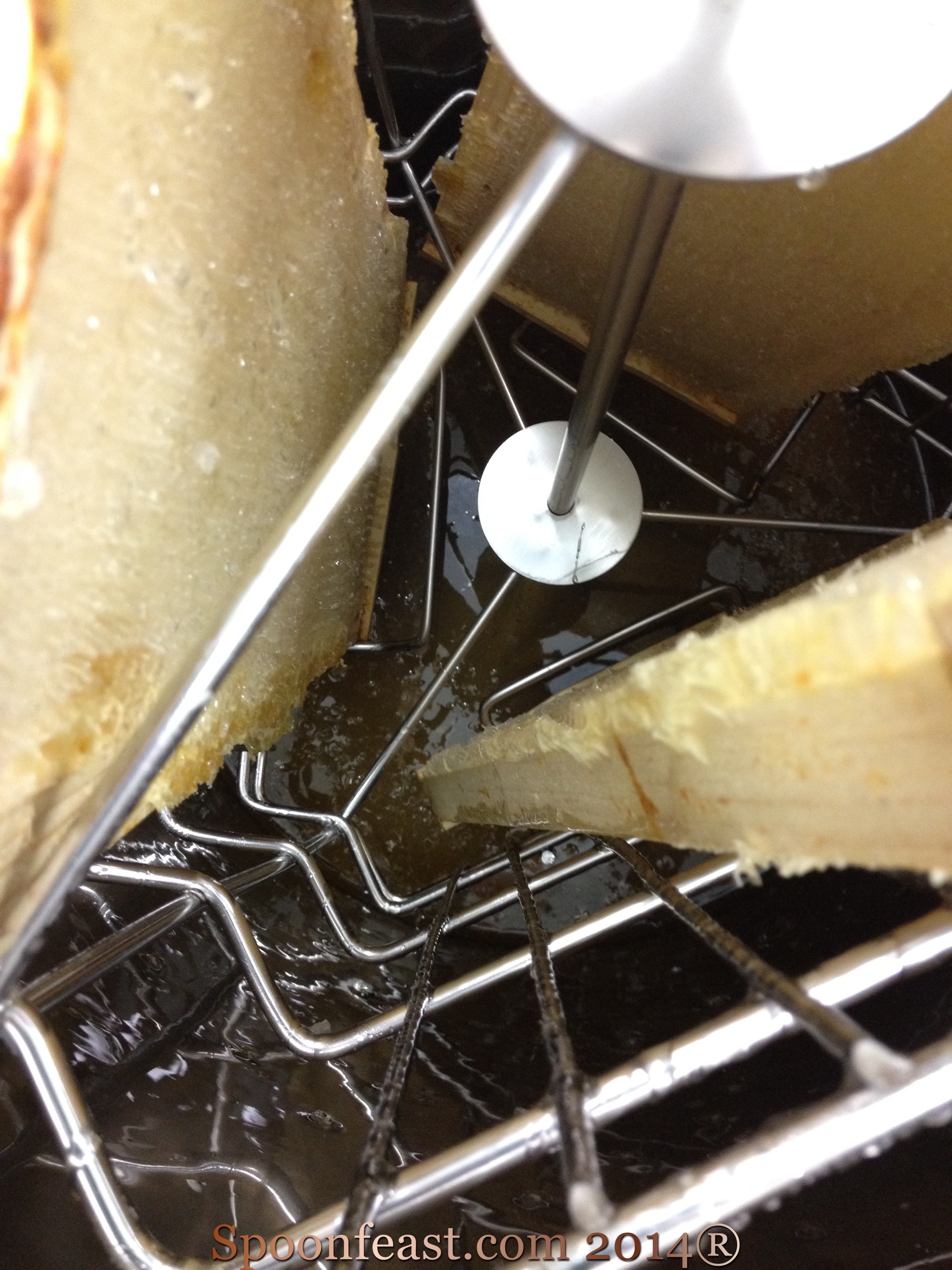
Inside the centrifuge, see all the honey at the bottom?

Inside the centrifuge, see all the honey at the bottom?

Once the honey is spun out of the combs, it needs to be filtered.

It gets filtered through a larger screen mesh then into a fine mesh into a clean bucket below.

Then it is ready to bottle. When the honey is first bottled, there are a lot of air bubbles in it.

Due to the viscosity of the honey, it takes some time for them to rise and leave behind the clear, lovely color of the honey.

From our first harvest, we extracted 3.81 gallons!

Filling the jars

Filling the jars

We are naming it “Greenway Gold” since the hives are near the Greenway here in Charlotte.

Look at our stash!

Our honey is pale yellow and has a very floral flavor, similar to an orange blossom. It is delicate and sweet and couldn’t get any more local. Heck, it’s made just outside my office door!

Here’s an amazing part: the bees will refill the empty combs and will “clean up” any honey left on any of the buckets and other things. It’s good for them. Our main concern is the equipment getting stolen so Jim takes the things home for his home bees.

Did you know a honey bee will only produce about 1 teaspoon of honey in its lifetime? These are amazing critters.

There is a “Bee School” around here that is working hard to encourage people to keep bees. I don’t think I’d ever actually keep my own, but I will certainly continue to help with the honey extraction!

Now I can have some honey flavor in my lip balm formulas, won’t that be nice?

Part of the first Honey Harvest!

Part of the first Honey Harvest!


More honey

More honey

Greenway Gold with Breakfast

Greenway Gold with Breakfast