“Dear Tyler, How to Cook” Series

Starting tomorrow

The unit cook preparing the salad

The unit cook preparing the salad (Photo credit: Government Press Office)

Spoon Feast is beginning a series of posts on the subject of “How to Cook”.

As my son was moving into his first apartment, he asked me for a cookbook, “Couldn’t you just write one for me?”

He also wanted to share the recipes and methods with his other friends who are also in the same boat of being in their first apartments with kitchens and not knowing quite where to start or what to do.

The first posts will be about outfitting your kitchen and selecting the necessary items to get started.

A cook sautees onions and peppers.

A cook sautes onions and peppers. (Photo credit: Wikipedia)

Then, at the beginning of each week, there will be some basic cooking skill posts and at the end of the week there will be a full menu meal that uses all the simple skills learned during the week in the meal.

The skills will be presented in a way that you will learn to cook without being recipe dependent.

Please check out the posts and let me know if there is something you would like to learn.

Step-by-step photos and an occasional video will illustrate techniques and ingredients.

You will quickly learn a good solid basic cooking foundation from which you can grow and expand with confidence.

Please join in!

Strawberry “Cheesecake”, Rhubarb Compote, Oatmeal Hemp Seed Crisp

A bowl of Strawberries. Français : Un bol de f...

Strawberries enhance the tartness of rhubarb. Classically they go together like hand in glove. But they don’t have to.

I like strawberries and I like rhubarb, both separate and together.

The local grocery had a sampling table set up promoting hemp seeds for their nutritional value. I picked up a bag intending to use them in a multi-grain bread, but used them instead of nuts in the oatmeal crisp.

So you are really getting three desserts today; you can eat each separate and then together.

Let’s talk briefly about the hemp seeds.

Gillian McKeith's organic shelled hemp seeds i...

Gillian McKeith’s organic shelled hemp seeds in a small bowl with teaspoon. (Photo credit: Wikipedia)

These seeds are not the variety of hemp used to “get high” anymore than you can “get high” from pistachios.

They are delicious, have great nutritional value and I thought it may push the envelope a bit to use them.

You can toast them but the texture is fine so it would be best to use them in something rather than a snack food.

If you desire, substitute finely ground pistachios or almonds instead of hemp seeds.

This entire dish consists of three recipes. Each quite simple.

The beauty is you can eat the strawberry “cheesecake” without the rhubarb compote and the compote without the cheesecake.

The cheesecake in this case is not baked, does not contain as much fat as traditional cheesecake; hence the quotation marks.

Make this with cream, or half and half (even the fat-free kind), Greek yogurt, cream cheese (can also be low-fat) and low-fat sour cream if desired.

Depending upon your choices of regular, low or non fat versions, you can have a pretty nifty dessert.

Recipe 1:

Strawberry Rhubarb Oatmeal Hemp Seed Crisp

Strawberry “Cheesecake”

1 cup of whole strawberries, stemmed and washed

1/2 cup heavy cream or 1/2 and 1/2

1/2 cup plain Greek yogurt

1/4 cup sour cream (optional)

1 8 – ounce package Cream Cheese

1/4 cup confectioners (10x) sugar

4 gelatin leaves or 2 teaspoons powdered gelatin

1 teaspoon vanilla extract

Method:

Puree the strawberries until smooth. Set aside.

Warm the cream cheese slightly in a microwave or wrap in a warm towel for 10 minutes to soften. The cream cheese whips better when soft.

Place the cream cheese in the mixer along with the sugar. Whip until smooth, add the strawberry puree.

Important notes about using gelatin:

If using gelatin leaves, soften the gelatin leaves in cold water for 10 minutes. When soft, squeeze out excess moisture. Add to warm liquid to melt, in this case the warm cream.

If using powdered gelatin, measure out the cold cream into a  heat proof bowl. (Stainless bowls work great) Sprinkle the powdered gelatin over the surface of the cream. Allow the gelatin to “bloom” for 10-15 minutes. Place the bowl over a pot of boiling water (double boiler) to warm the cream and melt the gelatin.

Careful in both cases, gelatin burns and scorches easily. Be careful and pay attention.

If using powdered gelatin follow these directions:

Heat cream and bloomed gelatin until warm and melted in a double boiler.

( A stainless bowl over pot of boiling water works nicely)

Add yogurt, be careful not to scorch, stir until warm and gelatin is totally melted.

If using gelatin sheets or leaves follow these directions:

Add the softened gelatin to warm cream and yogurt.

Stir until gelatin is dissolved.

Continue:

Add the gelatin mixture to the whipped cream cheese and strawberries.

Add the vanilla extract.

Pour the mixture into desired containers: pretty stemmed glasses, ramekins, small bowls, fancy tea cups or a large dish.

I used stemmed “Marie Antoinette” champagne classes for this.

Refrigerate 2-3 hours or overnight for the gelatin to set.

Recipe 2:

Rhubarb Compote with Oatmeal Hemp Seed Crisp

(Or Oatmeal Pistachio/Almond Crisp)
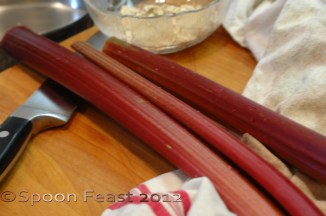
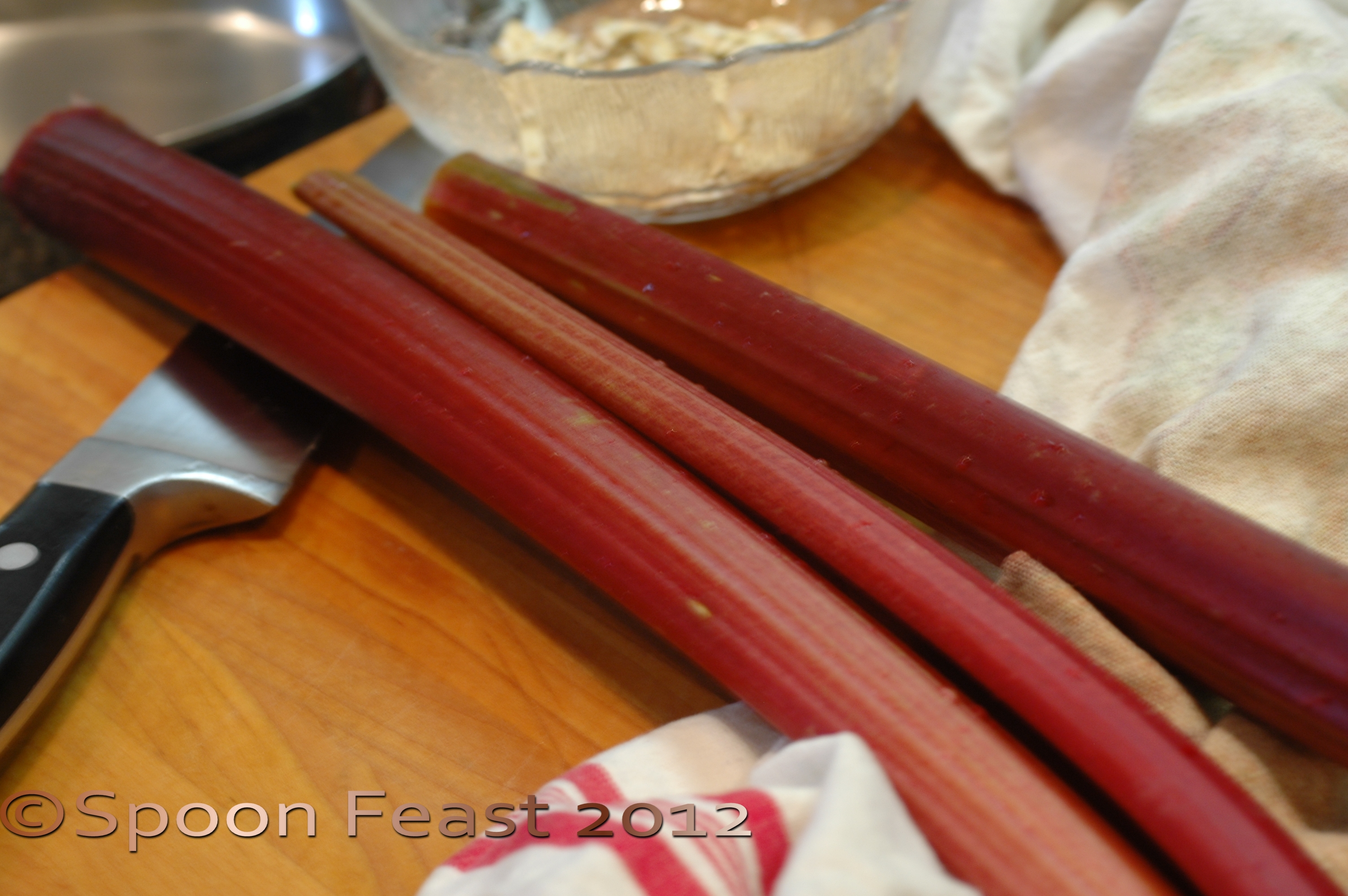
Wash and dry rhubarb

3 stalks of fresh rhubarb, washed and sliced into pieces finger width wide. Be consistent.

1/2 cup sugar or 1/3 cup honey or agave syrup

2 tablespoons instant tapioca

1 teaspoon vanilla extract

Pinch of salt

Slice the rhubarb
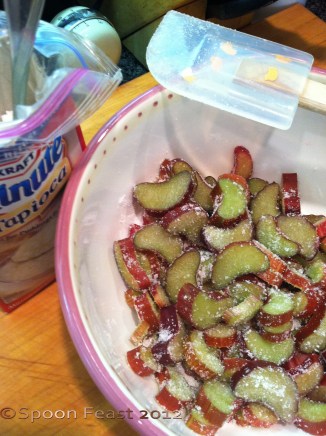
Allow rhubarb, sugar and tapioca to sit 15-30 minutes
( this is called “to macerate” in cooking terminology)

Spray baking dish with pan spray or
butter the dish

Fill the baking dish with macerated rhubarb

Wash and slice the rhubarb. In a large bowl, combine the rhubarb, sugar and tapioca and vanilla.

Allow the mixture to rest for 15 – 30 minutes.

Meanwhile make the crisp part.

Recipe #3

Oatmeal, Hemp Seed Crisp

(Or Oatmeal Pistachio/Almond Crisp)

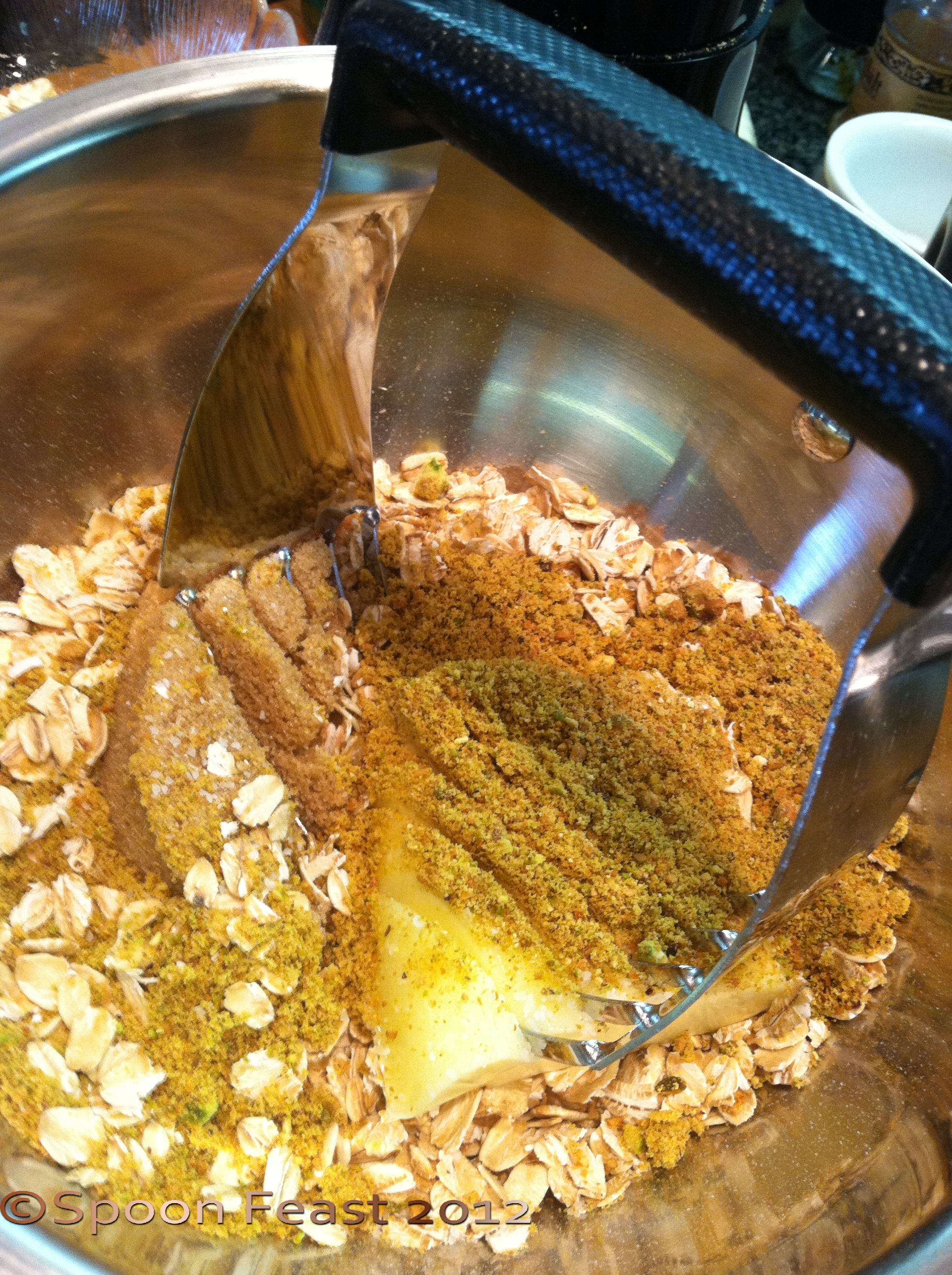
Combine oats, brown sugar, butter and ground nuts or seeds with a pastry cutter

Combine until the mixture looks like this; spread over top of the rhubarb; bake

Bake until golden and bubbly

1 cup old-fashioned oats

1/2 cup brown sugar

1/4 cup whole butter, soft not melted!

1/4 cup hemp seeds or finely ground almond or pistachio nuts

1 teaspoon salt

Combine the oats, sugar and seeds and salt, cut in the butter until the mixture is like coarse cornmeal.

Place the macerated rhubarb mixture into a baking dish, top with the oatmeal hemp seed streusel mixture. Bake for 1 hour in an over set at 350°F or until the mixture bubbles.

Be sure to place a pan under the dish to catch all of the drippings for easy clean up.

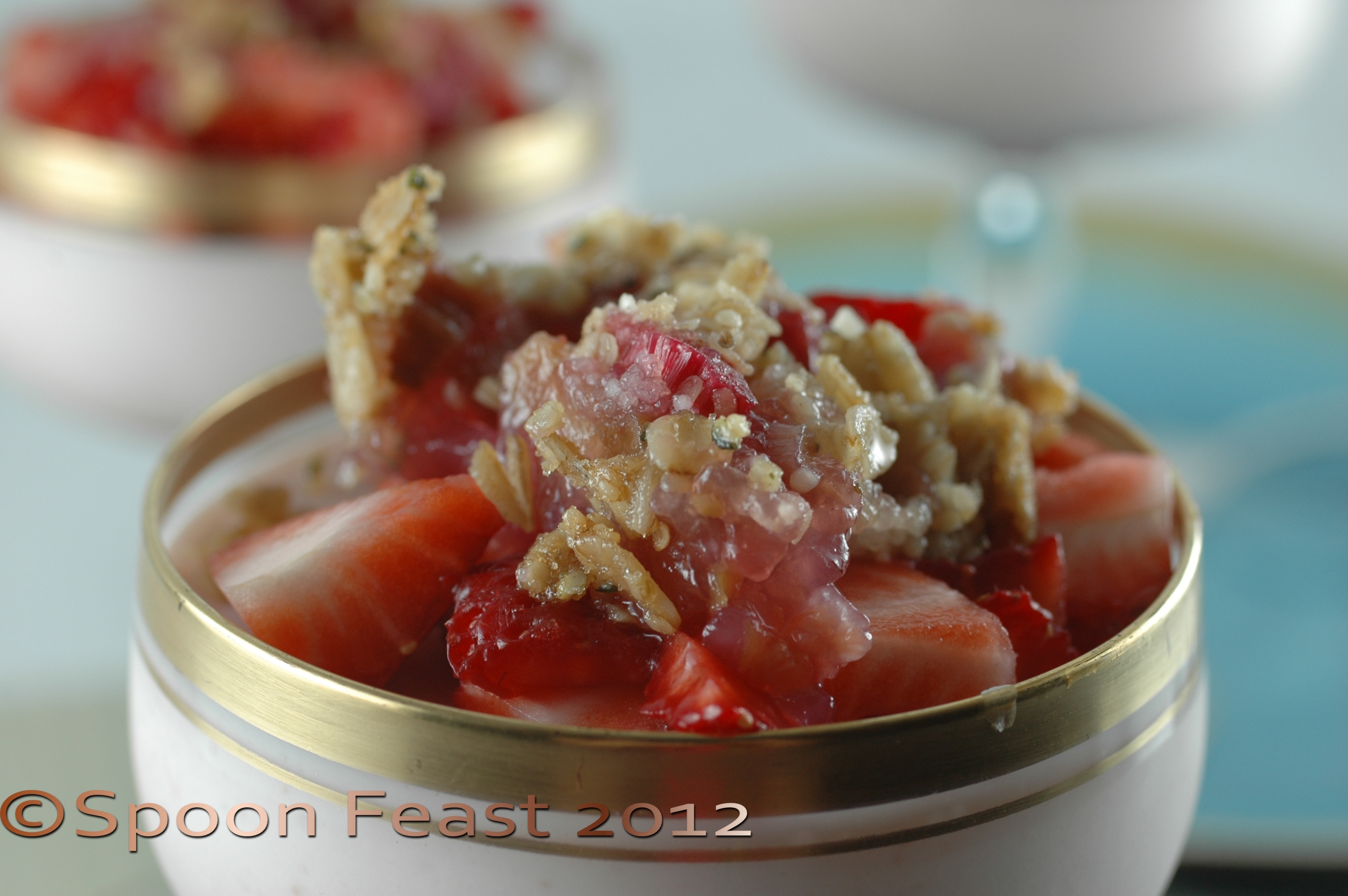
To serve, top each chilled strawberry cream cheese dish with a generous dollop of warm rhubarb compote. Make sure you get some of the crisp part for the top. Add sliced or fresh diced strawberries if you like.

Garnish with mint leaf and serve with a smile!

Rhubarb Hemp Seed Crisp on top of Strawberry “Cheesecake”

The Bread Show

We had a wonderful weekend in the North Carolina mountains visiting friends. This post is to provide a quick link to the bread show we did on Charlotte Cooks not too long ago.

In my mind, the show was a comedy of errors with too hot lights, dough rising way too fast in response to the too hot lights. . . Sometimes, you just have to laugh!

If you want to make m “No-Knead Sourdough Bread“, here is the visual.

Spero, this one’s for you!

SPOILER ALERT!
I am working on a post about some amazing Greek olive oil I discovered this weekend.
Watch for the next post for a chance to try some too!

A Southern Staple: Simple Syrup

Bottle of simple syrup

This basic southern staple, simple syrup, is a must have in any kitchen or bar.

This style of syrup is used all over the world for lots of things, not just in the south.

It is, however the secret to true southern iced tea.

Simple syrup is easy and quick to make and there are endless ways to use it in the kitchen and bar.

Basic Simple Syrup

Ingredients:

  • 2 cups granulated sugar
  • 2 cups water, enough to cover the sugar by 1/2 inch.
  • 3-4 drops lemon juice

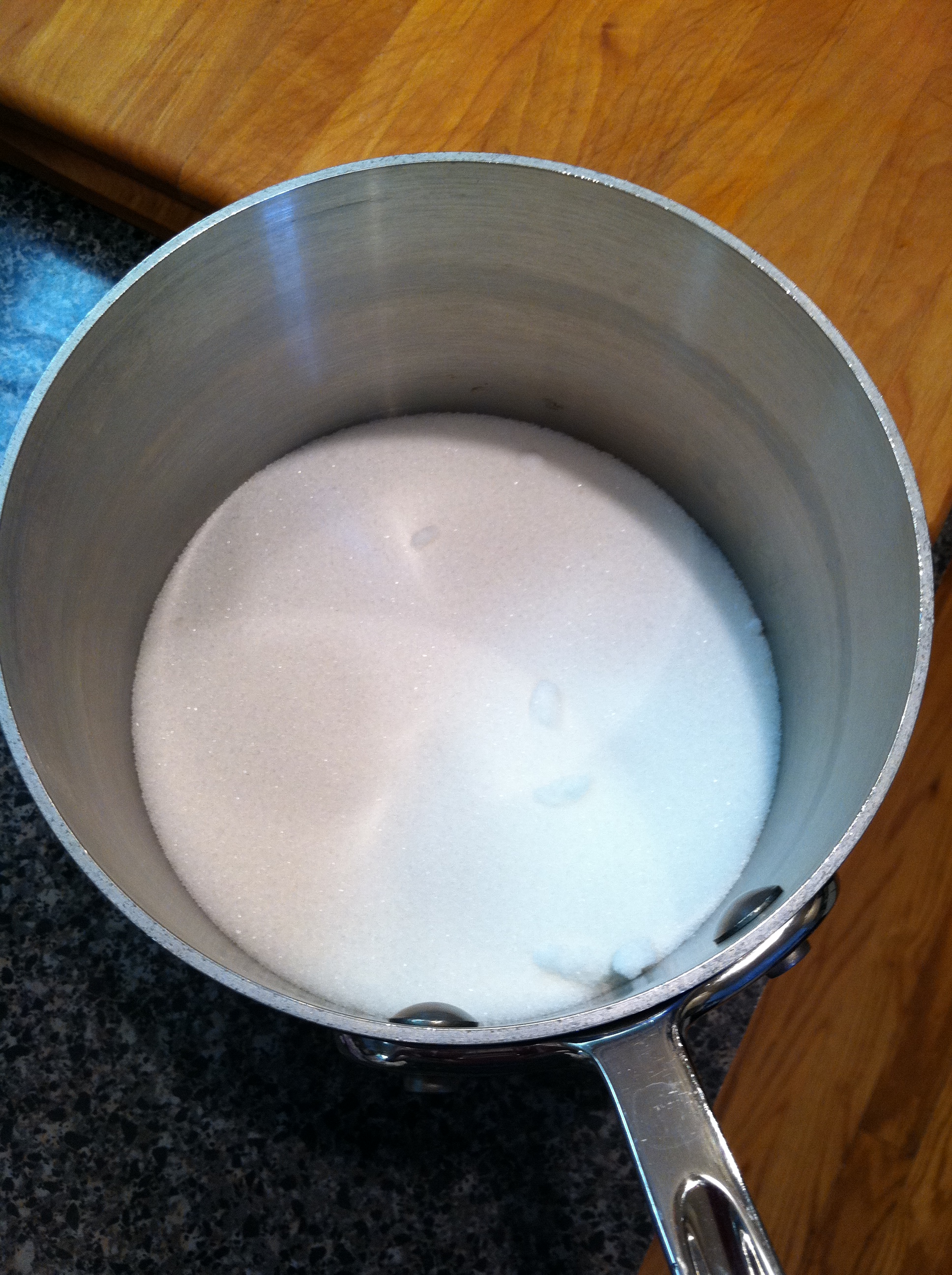
Put sugar in a sauce pot

Add water to cover sugar by 1/2 inch; add 2-3 drops of lemon juice, stir

Bring to a boil; boil for 1-2 minutes

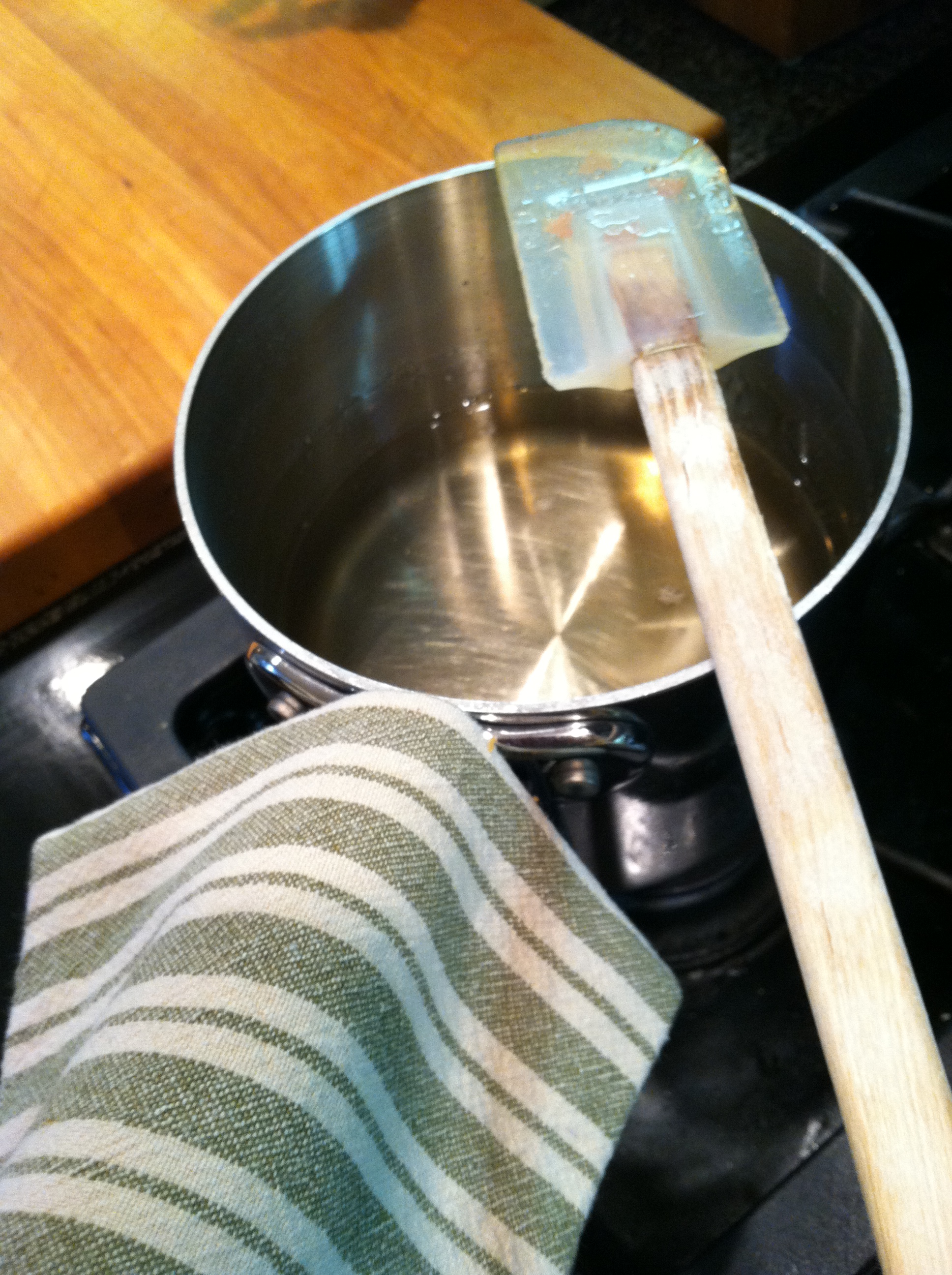
Place a ‘sign or symbol’ to signify pot is hot;
Put the pot away from accidents to cool

Method:

Put the sugar in a sauce pot, add water to cover the sugar by 1/2 inch. Stir well.

Place the pot over high heat; add the lemon juice and bring to a boil.

Stir, not constantly, but often enough to prevent scorching on the bottom.

Once the mixture comes to a boil, the sugar will turn clear. Allow to boil for 1-2 minutes, turn off.

Cool the mixture before transferring to a jar or bottle.

While the sugar syrup is cooling, put some kind of “sign or symbol” on the  handle so others know the pot and contents are hot and to leave the pot alone.

Use caution and place the pot well to the back of the stove out of harms way.

Sugar burns are very nasty and go really deep. Avoid at all costs, especially around children.

The syrup is shelf stable. Keep it handy to sweeten iced tea, lemonade, tea or coffee, use it over fresh fruit, in meringues, or even in marinades and specialty bar drinks.

You can infuse flavors into simple syrup, add a vanilla pod, lemon, lime or orange zest, fruit puree, basil, lavender, or mint for a few ideas. Be sure to strain the flavor elements out before using. The vanilla pods or herb leaves do look nice in the bottle.

My favorite way to use this syrup is to splash some into iced tea and top with a lemon wedge.

The perfect thirst quencher!

Iced Tea and Simple Syrup

Fresh Pork: Making Sausages

Hilarious stunt! Appropriate due  to Garde Manger making sausages this week.

Enjoy! It is in Italian, but you don’t need to understand to laugh.

What’s in your sausage?

“Charlotte Cooks” Bread

In January, we filmed an episode of “Charlotte Cooks” about making no knead bread. The episode was released and began airing on TV and You Tube on April 2.

The comedy of errors that went with the taping, I think, were glaringly obvious. The process made me think this is how Lucy Ricardo would have made bread. In spite of the dough getting out of hand, she would have continued on, so I did too.

To shoot the episode, I had to have bowls of dough in various stages in order to shoot continuously. The camera crew was not prepared to step up the pace we normally shoot. The idea was to keep one step ahead of the rising dough. Russ had to keep telling me to slow down. Guess I was trying to keep pace with the dough rising.

I had 5 bowls on dough going at various stages, all while trying to talk about the different stages and move them along to the next for a supposedly seamless show. I gave up on seamless.

The loaf you see me plop on the baking stone turned out the size of a small car and looked and tasted fantastic. That loaf finished baking after we finished shooting so we didn’t get shots of it. With all the different loaves and bowls around, maybe it wasn’t clear as to which one to shoot, but we shot everything. I think there were around 17 loaves finished for the set that day. (Thank God for commercial steam ovens.)

As you watch the episode you will see, by the bowl of dough that gets plopped into the oven, the dough had a mind of its own. Things got to a point where everything was comical; flour everywhere, dough spilling over the sides of the bowl and the oven at 450°F in addition to the camera lights. So the room was perfect for rising dough quickly.

I didn’t think we had enough good material to actually put together a show but Russ, the main man on the show, did a great job. I love my camera crew!

Setting the set for filming

The Main Man, Russ

You can read my post and get the recipe for No Knead Bread here. Yeah, you can cut it half and make a single loaf, but then you wouldn’t have the fun playing with 2 balls of dough.

If you want to make the Chocolate Cherry Bread, reduce the flour by 1/2 cup, add 1/2 cup dark cocoa. Just as you use raisins, substitute dried cherries and put 1/2-1 cup of dark chocolate chips in the flour. Everything else is the same!

Watch the next 20 minutes and let me know what you think.

Radishes

Watermelon Radishes

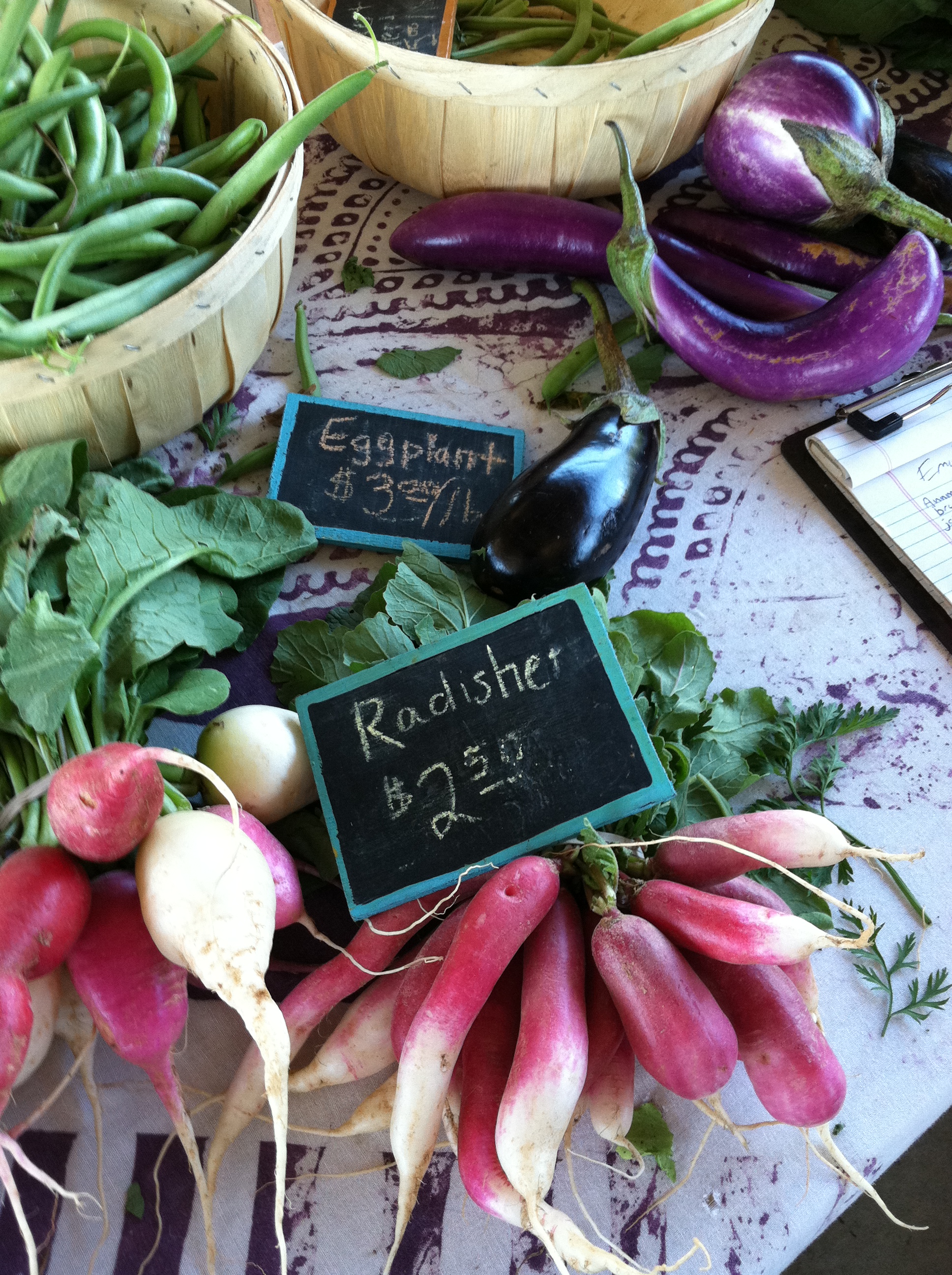
I am a big fan of radishes. I love all kinds of radishes from daikon to french breakfast radishes, I never tire of crunching on them.

Sometimes they get steamed and called  ‘Baby Pick Turnips‘ so as not to put anyone off by saying ‘cooked radish’.

When I go on a road trip, the typical snack food is some nice crisp radishes and salt right there for snacking as I roll on down the road.

(Far better than junky road food!)

Do YOU like radishes?

French Radishes

Small Snack

No Knead Bread

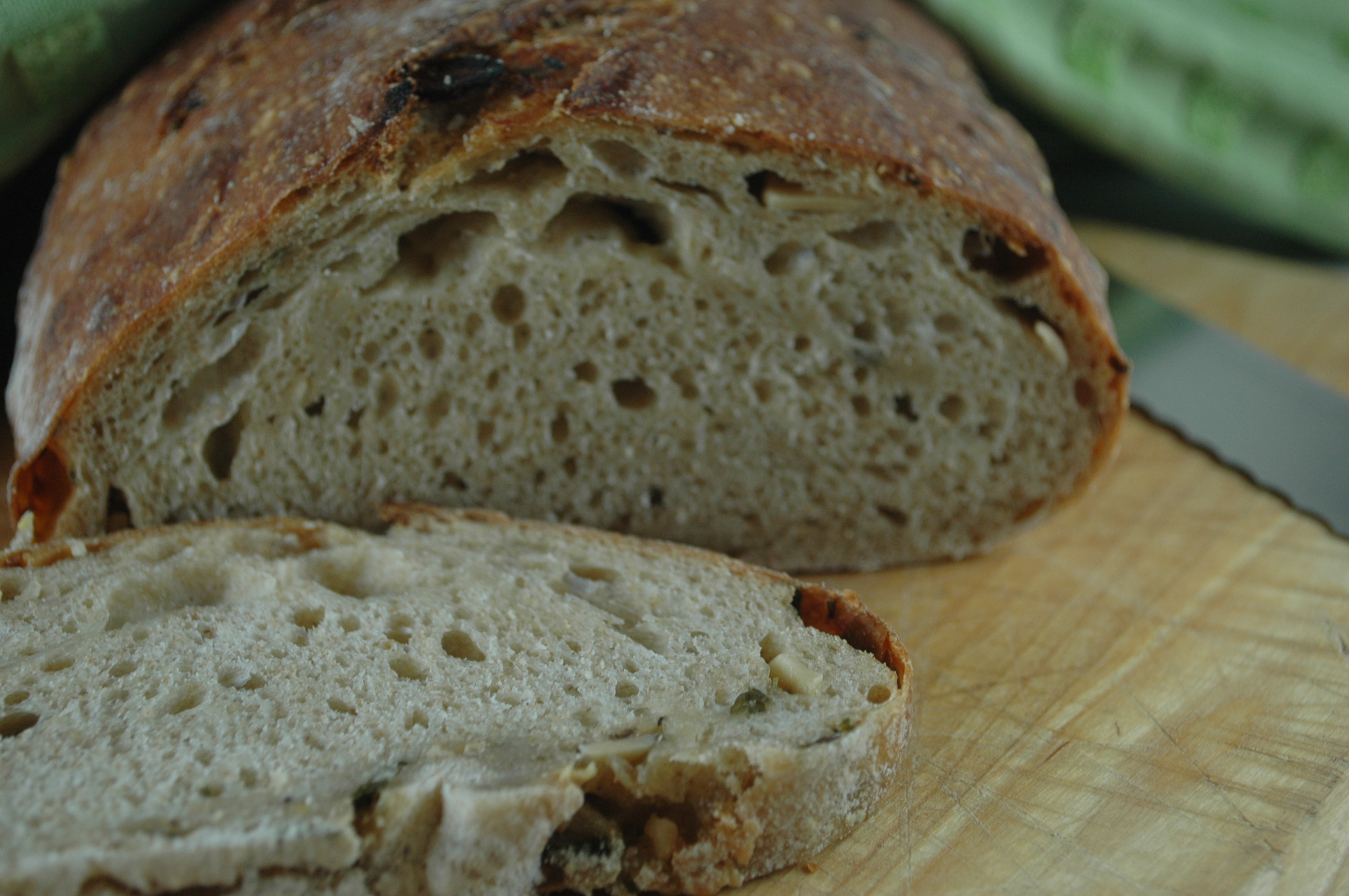
As far as bread making goes this if fast, tasty, chewy bread with a crispy crust. This method creates a wonderful artisan loaf.

Best of all, this no-knead method does not require the use of a cast iron dutch oven or 18 hours of proofing time!

Use this tool or a razor blade to slash the dough

For best results it is highly recommended you have a pizza stone  for baking your bread on and a pizza peel for getting the bread in and out of the oven. Also, you will need a broiler pan (something sturdy that won’t warp in high heat) for adding water to create the steam that makes the crust crispy and a razor blade or bakers peel for slashing the dough. You can find both the pizza stone and the peel for less than $20.00 total, even less if you are a clever shopper. (Hint: check out Target.)

Are you ready? Grab the flour and let’s get cooking!

No Knead Bread

      • 3 cups water 100°F
      • 1 tablespoon yeast
      • 1/2 cup sour dough starter (or 1 additional tablespoon of yeast for a total of 2  tablespoons)
      • 4 1/2 cups King Arthur AP or bread flour (use any brand you like)
      • 2 cups whole wheat flour
      • 2 tablespoons non-iodized salt (kosher, sea, etc)

Mix the starter and yeast with the water. Allow this to sit and bubble while you measure the remaining ingredients.

Measure the flours and salt into a large bowl.

Make a well in the center and pour in the yeast, starter and water mixture. Stir with a wooden spoon to mix it all together.

Cover the bowl with an oiled piece of plastic wrap and place in a warm place to rise for the next two hours. If your home is chilly, use the oven on a proof setting or set at 100°F. A gas oven with a pilot light is often enough warmth to proof the bread.

Risen Dough

The dough should double in size. Depending on how warm your proofing area is, this may take longer or shorter time than 2 hours.

Now here is where it gets tricky.

The dough is very wet and sticky. You do not want to handle it very much.

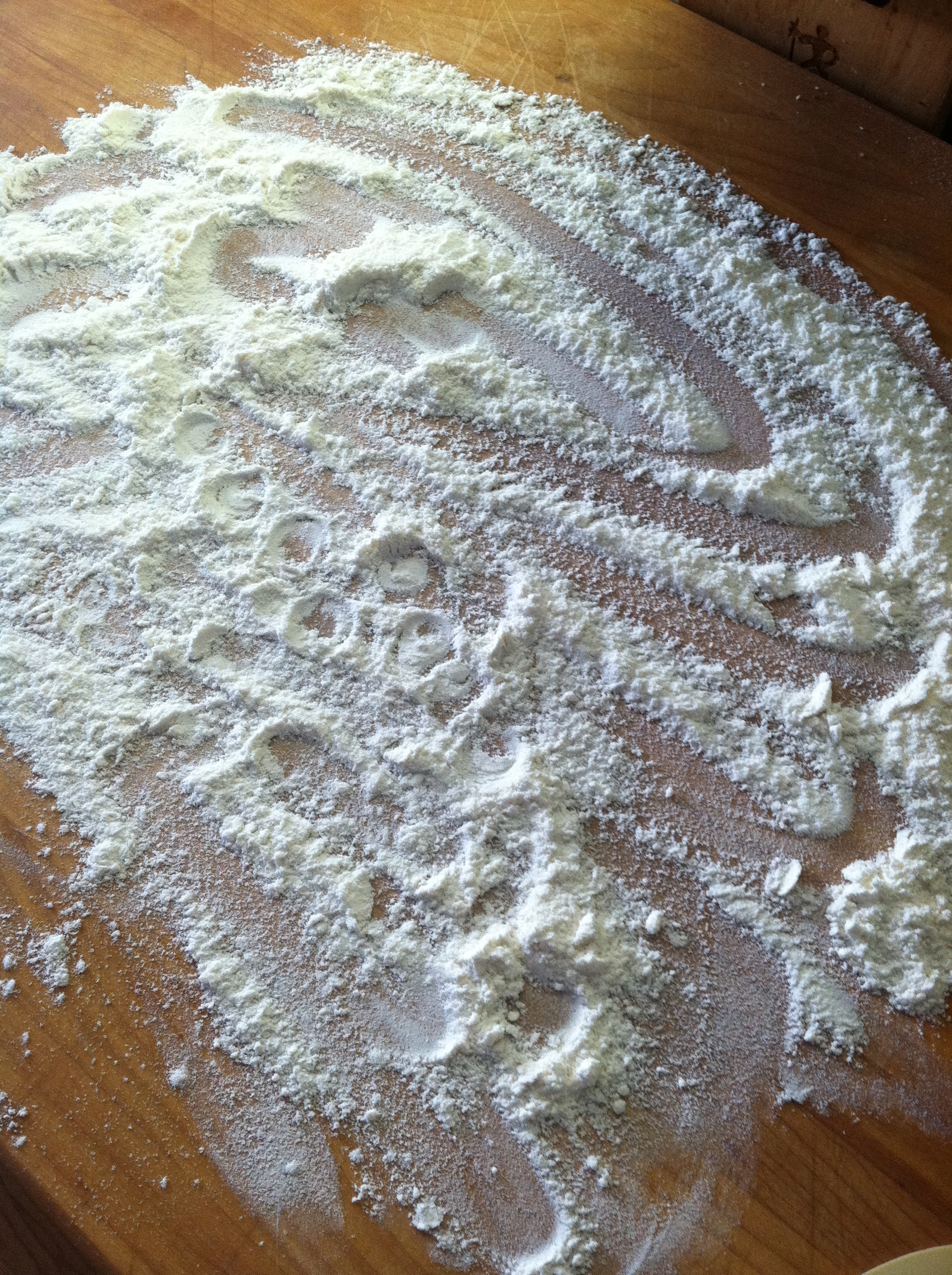
Heavily flour your working station and your hands.

Remove 1/2 of the dough from the proofing bowl and place on the flour.

Flour the work station

Shaped Boule

Shaped Loaf

Cover any sticky spots with flour so the surface feels smooth and not sticky. Using a well floured rolling-pin, work the dough into a rectangle about 1/2 inch thick.

Fold the left edge over 2/3’s of the bread, fold the right edge over the folded left side. You should have three layers. Turn the bread 1/4 turn, roll and repeat 4 times.

Lastly, roll into a rectangle. Take the edge closest to you and begin rolling the dough into a cylinder.

Peel with a good layer of cornmeal

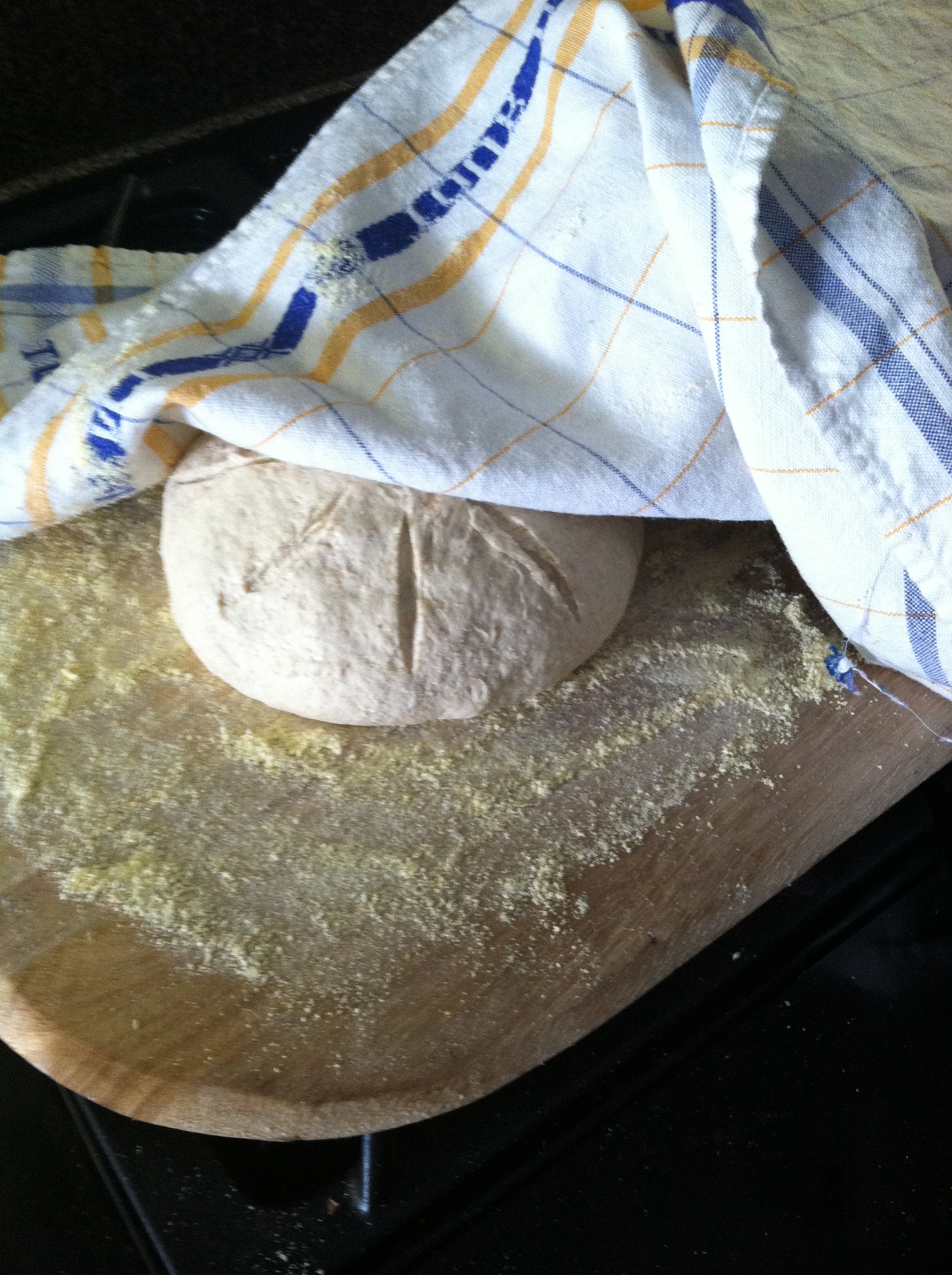
Place a good layer of corn meal on the surface of the pizza peel; place the loaf on the peel, near the edge so the dough does not have a long way to slide when placing into the oven.

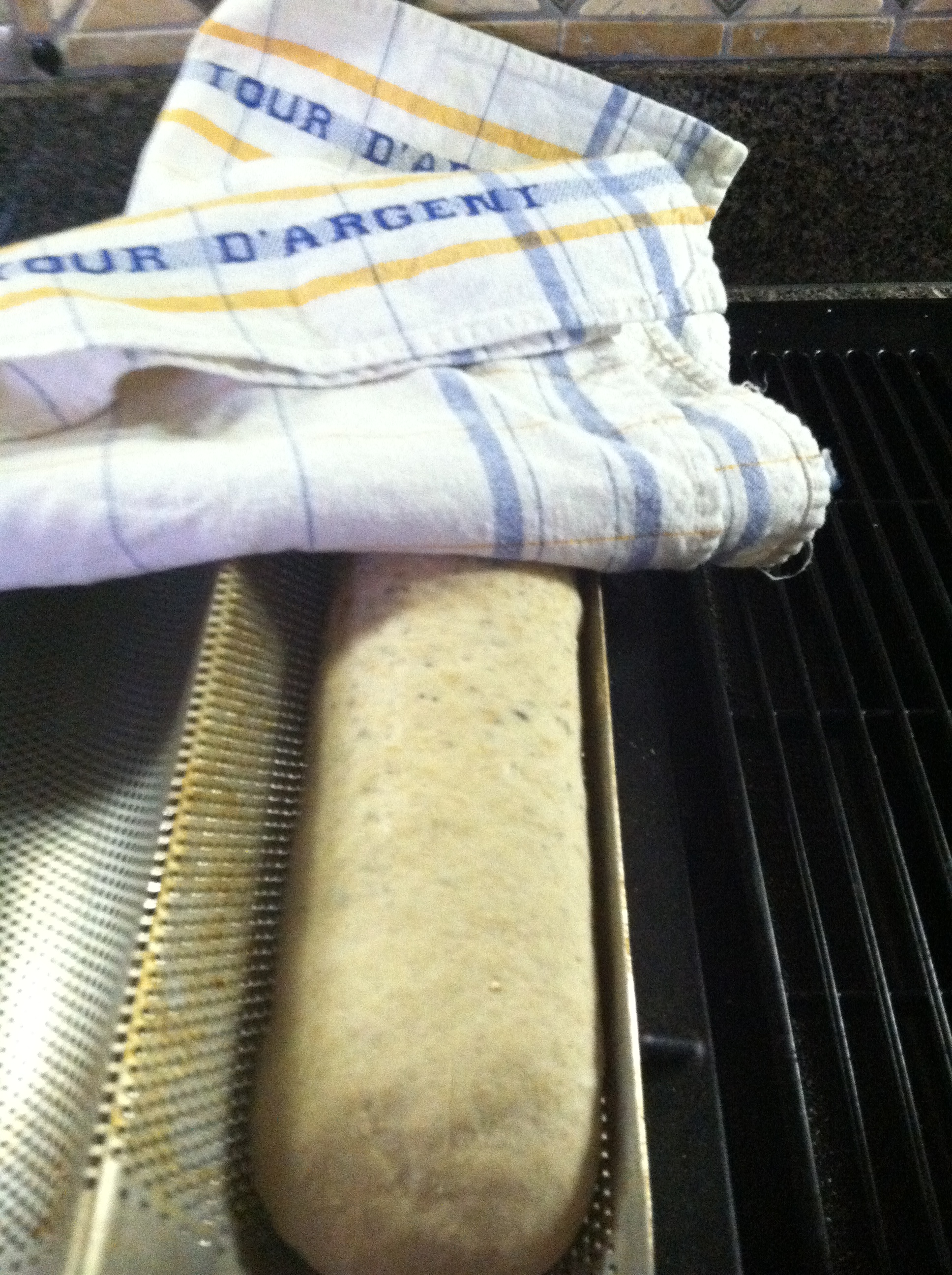
Shape and cover with towel to rise

Cover with a clean towel and allow to rise for about an hour.

In the meantime, while the oven is cold, place the pizza stone on the middle rack of the oven. Place the broiler pan on the bottom shelf and remove the top shelf. You want the bread to have plenty of room to rise!

Pre-heat the oven to 450°F. The oven needs to heat for 30 minutes at 450°F before baking. This ensures the temp is good and hot which is necessary for great ‘oven spring’.

Bring 4 cups of water to a boil in something it is easy to pour,  like a kettle.

Once the oven has heated for 30 minutes and the dough has been rising for an hour, and the water is boiling, it is time to bake the bread.

Now, you are going to look at it and say it is floppy and loose and not going to work. Trust me, just go through the process, be patient!

You have to work quickly here. Decide what you are going to do and do it!

Take the peel with the bread on it; remove the towel. Using a razor blade or bakers peel, make 3-4 deep slashes across the top of the bread. This prevents the bread from breaking while it expands in the oven.

Open the oven door and with a quick firm motion slide the bread to the baking stone from the peel. A quick forward back movement is all it takes as long as you have enough corn meal on the peel.

Hint: Once the bread hits the stone, don’t move it.

Quickly close the door.

Put oven mitts on your hands to prevent steam burns. Take the kettle of boiling water; open the oven door, pull the broiler pan out enough to easily pour the water into the pan. CAREFUL, it steams! Fill the bottom of the broiler pan by 1/2 inch. Quickly close the oven door so as not to let all the steam escape.

The steam is what creates the crispy crust. Commercial bread ovens have “with steam” options, home ovens do not.

There are several theories as to how to add steam in the home kitchen.

One will tell you to spray the bread with water while it is cooking.

Folks, if you spray cold or warm water on a 450°F light bulb in the oven, it will burst.
Same with your baking stone: CRACK! So this is not a good method.

Another is to brush the loaves with water just before putting them into the oven.

This dough is already wet. Additional moisture would hinder a smooth slide from the peel to the stone.
Besides the dough is so tender that brushing it at all would collapse whatever has risen.
Slashing is all it can take.

The broiler pan method is most useful.

It does not endanger the stone or bulb.
Just protect yourself from a nasty steam burn.

After you have added the water and started to create the steam, close the door quickly then set the timer for 15 minutes.

Make sure you have more boiling water at the 15 minute mark; open the door and add more water for more steam.

Note the color and the rise on the bread! The amount the bread rises once it hits the heat is referred to as “oven spring” and this bread formula has great oven spring. Yay!

In about 10 more minutes, remove the bread from the oven and take its temperature.  When the bread reaches 190°F the bread is done. Remove from the oven and cool on a rack until it is cool.

Slice and enjoy!

Loaves and Boules No Knead Bread

No Knead Loaf

Related articles

Sardine and Anchovy Pasta

http://youtu.be/aRWHVu5JbGg

Charlotte Cooks

I hope you enjoy watching the show! Here are the recipes from the featured episode.

Sicilian-Style Sardine and Anchovy Pasta with Bread Crumbs

Ingredients

For the bread crumbs:

  • 1/4 cup plus 3 tablespoons extra-virgin olive oil
  • 8 cloves chopped garlic
  • 1 1/2 cups bread crumbs
  • 1/2 cup chopped flat-leaf parsley
  • 1 teaspoon each, coarse salt and coarse black pepper

For the pasta:

  • 2 Tablespoons olive oil
  • 4 oil packed anchovy fillets
  • 2 four ounce tins of sardines, packed in oil
  • 1/2 pound linguini or spaghetti, cooked to al dente in salted water, drained and cooled with cold water to stop cooking.

Directions:

To a large skillet preheated over medium heat, add 1/4 cup extra-virgin olive oil, and chopped garlic.

When you can smell the garlic add bread crumbs.

Stir bread crumbs until deeply golden in color.

Add parsley and a liberal amount of salt and pepper, about 1 teaspoon of each. Remove bread crumbs from the hot pan, put them in a bowl and set aside.

Return skillet to heat and add 3 tablespoons extra-virgin olive oil.

Add anchovies and sardines to the pan and sauté over medium heat 2 or 3 minutes.

Add hot, cooked pasta to the skillet and toss with sardines.

Add bread crumbs to the pan and toss thoroughly to combine and evenly distribute the mixture. Adjust seasonings to taste with pepper and salt.

Taste before adding salt as the anchovies typically are salty. You may not need to add any more.

Top it all off with a shaving of a good quality of Parmesan cheese.

Enjoy!

Oven Fried Chicken Fingers and more

http://youtu.be/FgNmtuis3hI

Charlotte Cooks

Oven Fried Chicken with Fresh Cole Slaw, Mango Salsa and Salt and Vinegar Roasted Potatoes

Recipes

Oven Fried Chicken

  • 2 boneless chicken breasts, cut into fingers
  • 2 cups buttermilk + 2 additional cups, keep separated
  • 2 cups all-purpose flour
  • 2 cups panko
  • 2 Tablespoons Montreal Steak Seasoning
  • ¼ cup Olive oil

Preheat oven to 400°F

Cut the chicken into fingers.

Marinade 30 minutes in 2 cups buttermilk.

Remove from buttermilk and pat dry.

Lightly season the chicken with salt and pepper.

Set up a standard breading station.
3 containers:
#1 is flour
#2 is 2 cups buttermilk
#3 is seasoned panko (season the panko with Montréal steak seasoning)

Here’s the set up:

Pan #1: Flour, seasoned    Pan #2 Buttermilk    Pan #3 Seasoned Panko Breadcrumbs   Pan#4 Sheet pan for breaded chicken

Dredge each finger in flour, then buttermilk, then panko. Making sure each finger is well coated on all sides.

As each finger is coated, place on a parchment lined baking sheet.

Drizzle each finger with a small bit of olive oil.

Place sheet pan in oven and bake the chicken until golden brown; usually about 20 minutes.

Ovens vary so watch yours.

The internal temperature should reach 165°F on a food thermometer.

Keep warm in a 150° oven. Do not cover so the chicken remains crispy.

Coleslaw

  • 1 bunch scallions
  • 1 teaspoon celery seed
  • ¼ cup mayonnaise
  • 2 tablespoons seasoned rice wine vinegar
    • There are 2 kinds of rice vinegar; seasoned (with salt and sugar) and unseasoned. Read the labels and choose seasoned for this recipe.
  • 1 tablespoon sugar
  • 1 pound bag of tri-color coleslaw mix
    • Or thinly slice cabbage, carrots and some red cabbage for about 1 pound total weight.
    • Salt and pepper to taste

Choose a large bowl; Allow lots of stirring room.

Slice scallions, place into the bottom of the bowl.

Add the celery seed, mayonnaise, rice wine vinegar, sugar and whisk to smooth.

Slice the cabbages and carrots and add to the dressing.

Stir to coat.

Adjust flavors with salt and pepper if needed.

Allow to sit for at least one hour in the refrigerator before serving to allow flavors to meld.

Stir well before serving.

Mango Salsa

  • 1 pound mango slices, fresh or jarred mango, cut into medium dice
  • ½ sweet onion, small dice (like Vidalia)
  • 1 small diced jalapeno,
  • ½ cup sweet grape tomatoes, cut in half
  • 2 tablespoon seasoned rice wine vinegar
  • ½ bunch chopped cilantro
  • ½ bunch chopped scallions
  • Salt and pepper to taste

Cut all fruits and vegetables, combine everything in a bowl and serve.

Salt and Vinegar Roasted Potatoes

  • 3-4 small red potatoes per person
  • 1 tablespoon salt
  • ¼ cup Olive oil
  • 1 teaspoon Kosher salt

2 ounces Malt vinegar (you may use more or less depending upon your taste)

Place the potatoes into a saucepan, cover with cold water and bring to a boil.

Salt water once boiling begins.

Cook until done.

Drain and place on a clean kitchen towel.

Cover and whack each potato with a rolling pin to break it open but not smash it flat.

Place the smashed potatoes on a baking sheet, drizzle with olive oil.

Place in the 400° and bake about 35-40 minutes until the edges start to turn golden brown and the skins are crispy.

Remove from the oven, place in a serving bowl.

Sprinkle salt and malt vinegar over the potatoes and serve warm.