Pickled Beets

Pickled beets jumped out at me this weekend while at the farmers market. I brought home a beautiful bunch of beets with the greens, for just $2.50 this was a real steal.
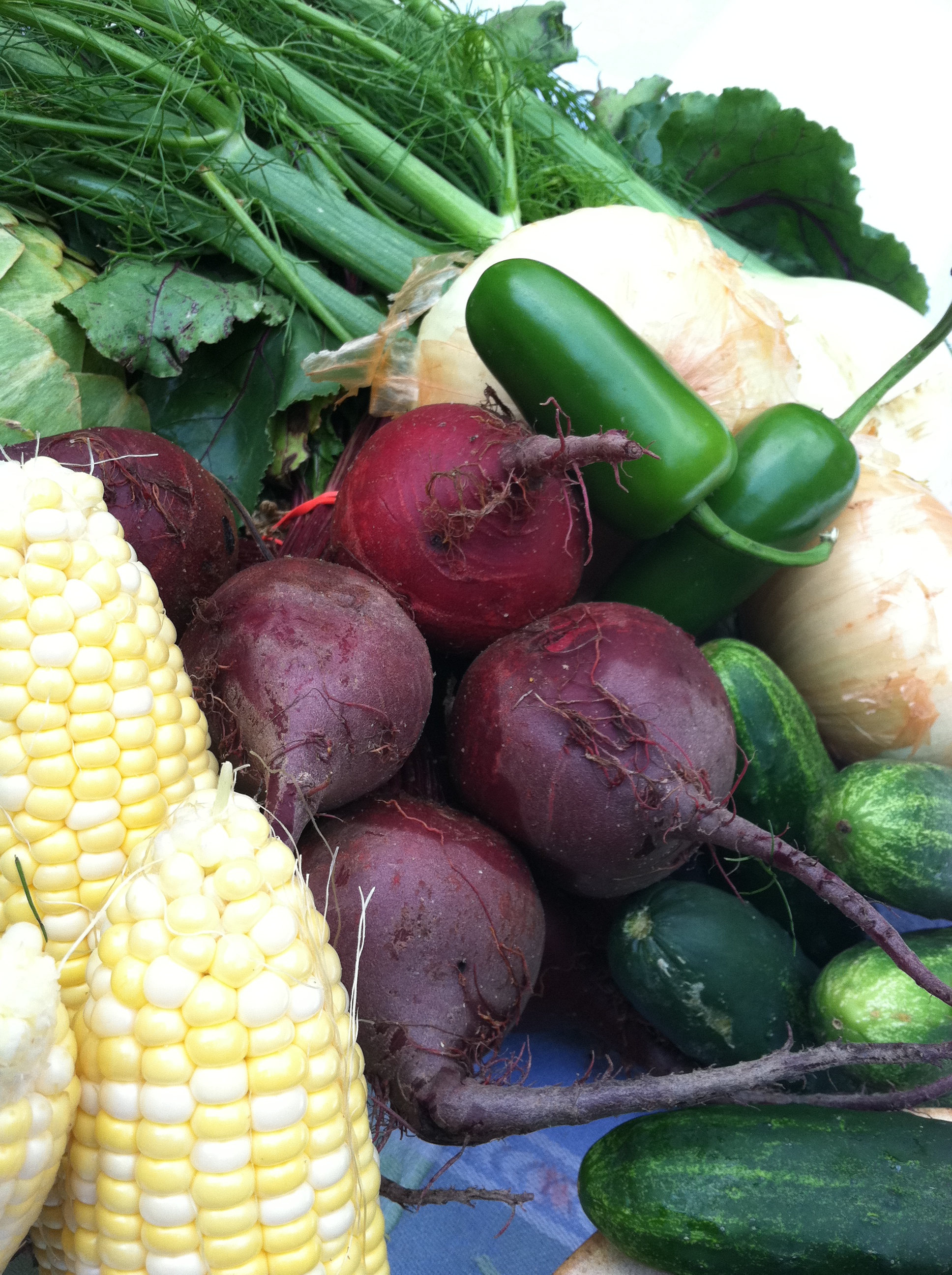
I made a list of what I could do with them: Roasted beet salad with blood orange vinaigrette, Beet chutney, beets in butter with a splash of rice vinegar and in the end, pickled beets won.

I suppose I thought the bunch of beets was larger than it really was.

The first step in all the recipes is to cook them.

There are several ways, the best method and least messy is to steam them.

Here’s the thing about beets. They will “bleed” this lovely magenta color everywhere and leave a legacy of stains behind them.

Trick of the trade: Don’t cut, nick or peel them before cooking.
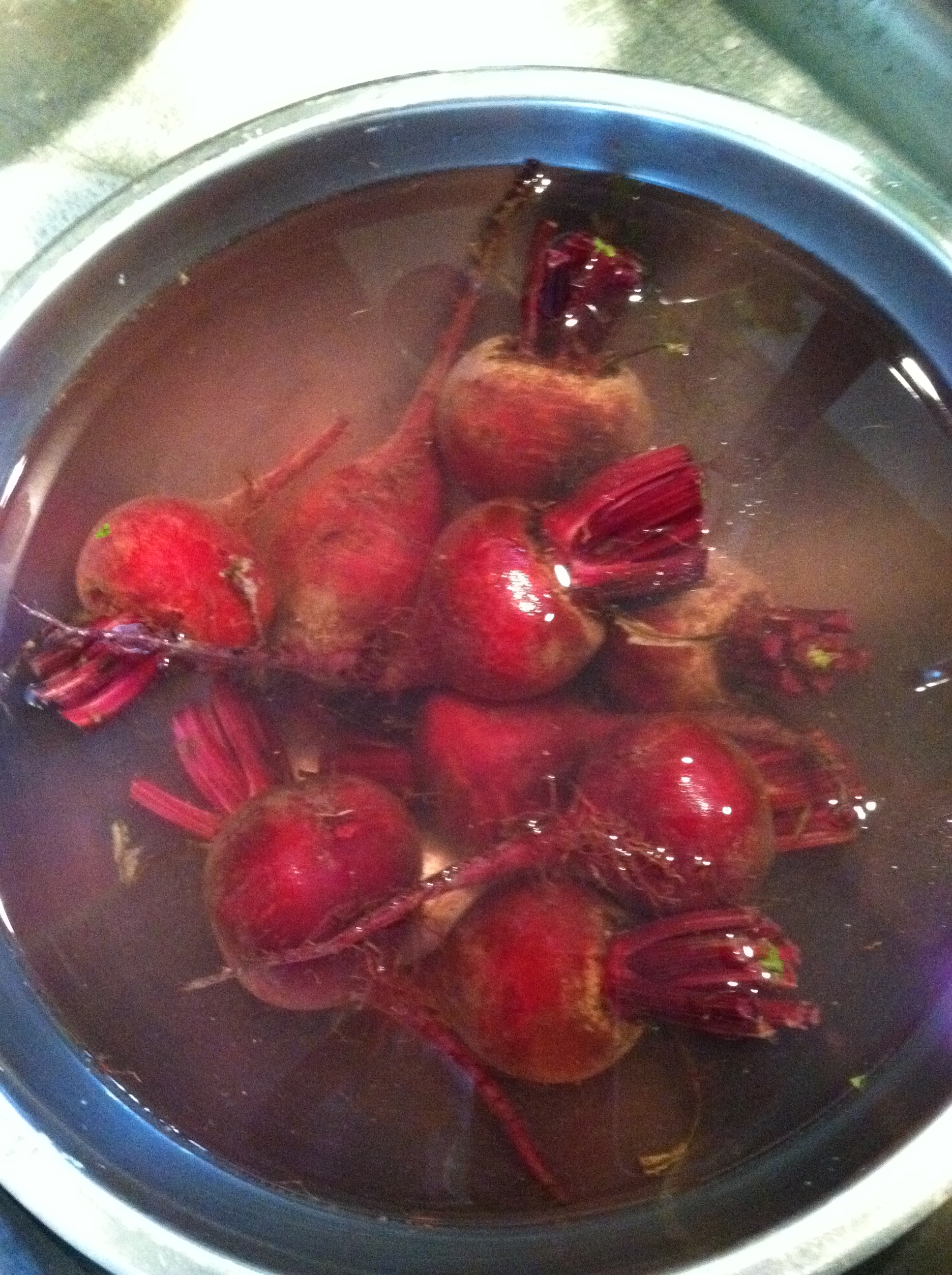
Trim leaving 1-2″ of stem; soak to remove soil and sand.
Do not peel or cut.

Trim the roots from the stems by cutting at least 1-2 inches of stem remaining on the root end. Leave the tap-root end in tact also, don’t trim it, just tuck it out-of-the-way.

Gently wash the beets to remove excess soil and sand. Don’t scrub them as they have a thin skin. Soaking for a few minutes is usually good.

Keep the greens. Set them aside in a large deep bowl of cold water. Remove any yellowish or ‘spotted’ leaves you wouldn’t want to eat.

Soak the leaves in cold water. Swish the leaves in the water gently. The sand will fall to the bottom of the bowl. Lift the leaves from the bowl without disturbing the bottom and repeat at least 4 times. You will be amazed how much sand and soil the leaves can hold.

Soak greens to remove dirt, and sand.
Change water 3-4 times

Lastly, rinse the leaves under running water, wrap in a towel, cover with plastic wrap or bag and store in the refrigerator until you want to use them in the next couple of days. That is another post.

How to use the beet greens is another post coming soon. The greens need to be cared for as soon as you remove the root ends so you don’t lose quality. If the greens look limp at first, they crisp up during the soaking process.

If you buy beets with greens and plan to use them later, separate the green tops and the root ends because the greens will pull nutrients, sugars and moisture from the roots during storage. (same with radishes, carrots, bulb onions etc.)

This recipe for pickled beets is simple and very flavorful. Some folks say they can eat the entire batch at once but that’s not recommended.

Steaming the beets takes the longest amount of time.

So here is how to make Pickled Beets:

Pickled Beets

  • Servings: 2 quarts
  • Difficulty: medium
  • Print

1 bunch of beets (8 medium size beets as close to the same size as possible)

Steam the beets by placing them in a steamer pot with a tight-fitting lid. Use good quality water to steam the beets. You will use 1/2 cup of this water in the pickling brine.
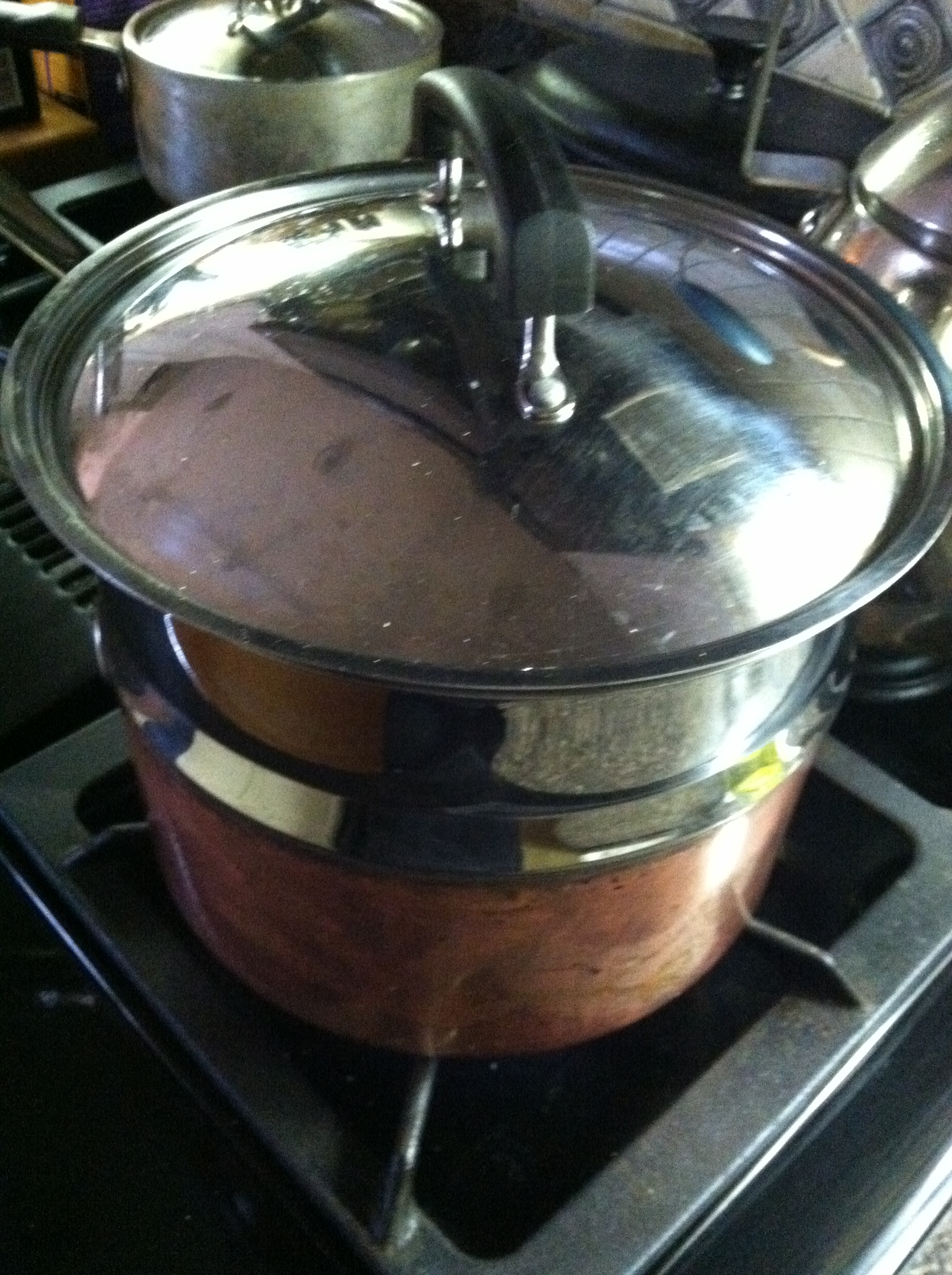
Steam the beets until tender

Steam the beets until easily pierced with a paring knife, just as you test a baked potato for doneness.

Do not pierce the beets often or all over as they will “bleed”. You want them to retain the color. Just test the biggest ones.

When the beets are done,  save the water in the bottom pot and place the beets in a big bowl of cold water. Once they are cool, underwater, using your hands, slip the skins off.The skins slip off very easily.

Set the peeled beets aside in another bowl.

Peeling underwater helps keep your hands from staining magenta.

Using a cutting board you can bleach later, trim the top and bottom, then slice the beets into thick slices and place them back into the bowl.

Make the brine and have the jars or containers you are going to store the finished beets in ready to fill.

Pickling brine

  • 3/4 cup apple cider vinegar
  • 3/4 cup water from steaming pot with beet drippings
  • 2 tablespoons sugar
  • 1/2 teaspoon kosher salt (or any non-iodized salt)
  • 3-4 black peppercorns
  • 2-3 whole cloves
  • 2 bay leaves
  • 1 cinnamon stick
  • 1 small sweet onion sliced

Bring the beet water and vinegar to a boil, add the remaining ingredients, including the onion and return to a boil. Boil for 1 minute.

Pour the hot mixture over the beets and gently stir with a rubber spatula to ensure all the beets are coated.

Pour the hot brine over beets, place in storage jars, cool. Serve cold.

Gently place the beets and all the brine into the storage jar. Allow to cool then refrigerate.

The pickled beets are ready to eat after 24 hours. One of my favorite parts are the onions that get pickled too. Slightly crunchy and  what a taste treat!

Pickled beets
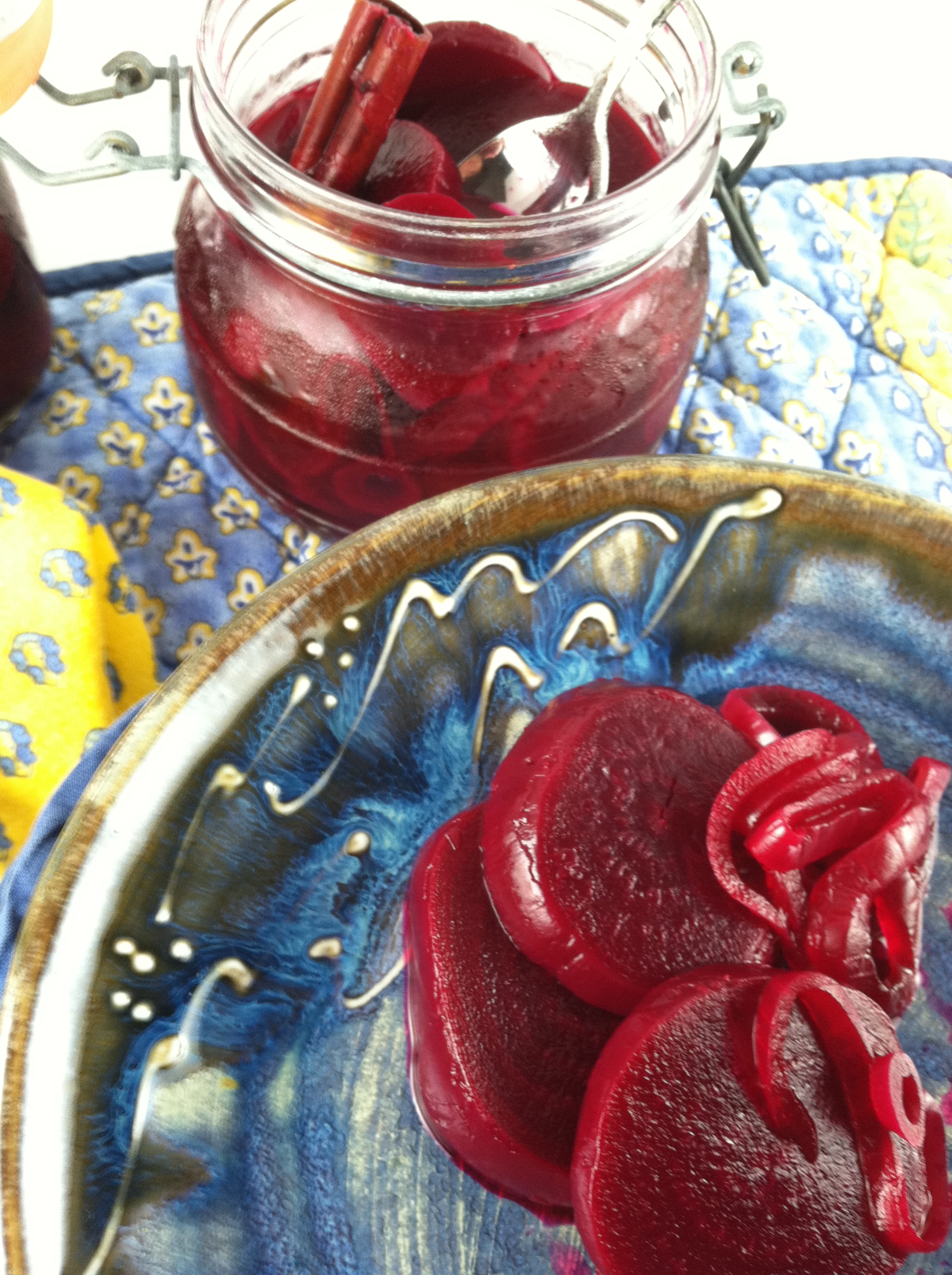
Pickled Beets – I could eat the whole jar!

Serve very cold.

Chocolate Cherry Bread

Believe it or not, this is not sweet chocolate cherry bread. It would be fantastic with grilled or smoked chicken or ham and honey mustard sandwiches with bread and butter pickles.

Chocolate cherry bread also makes great breakfast.

I have been perfecting a no-knead formula. Trying out different things, discovering what the dough can and can’t do has led to some interesting discoveries, such as this variation.

1. Replace 1/2 cup flour with 1/2 cup special dark cocoa

2. Hydrate 1 cup tart cherries,drain, fold the cherries into the bread after the first rise.

I mixed 1 tablespoon of cocoa into the flour used on the board when folding in the cherries. I did not line the rising baskets with cocoa, just flour.

If I keep making this, I’ll invest in some heavy linen cloth to line the baskets so the cloths will get stained from chocolate, not the baskets.

Recipe for Chocolate Cherry Bread

Makes 2 large loaves

  • 6 cups bread flour
  • 1/2 cup dark cocoa powder
  • 2 Tablespoons kosher salt
  • 3 cups water
  • 2 Tablespoons yeast
  • 1/2 cup dried cherries, soaked in warm water at least 30 minutes
  • 1/4 cup cinnamon sugar, if desired

For handling dough: Mix 2 Tablespoons cocoa powder into 1 cup of bread flour. Use this to dust the rolling surface and any sticky parts of the dough as you shape the loaves.

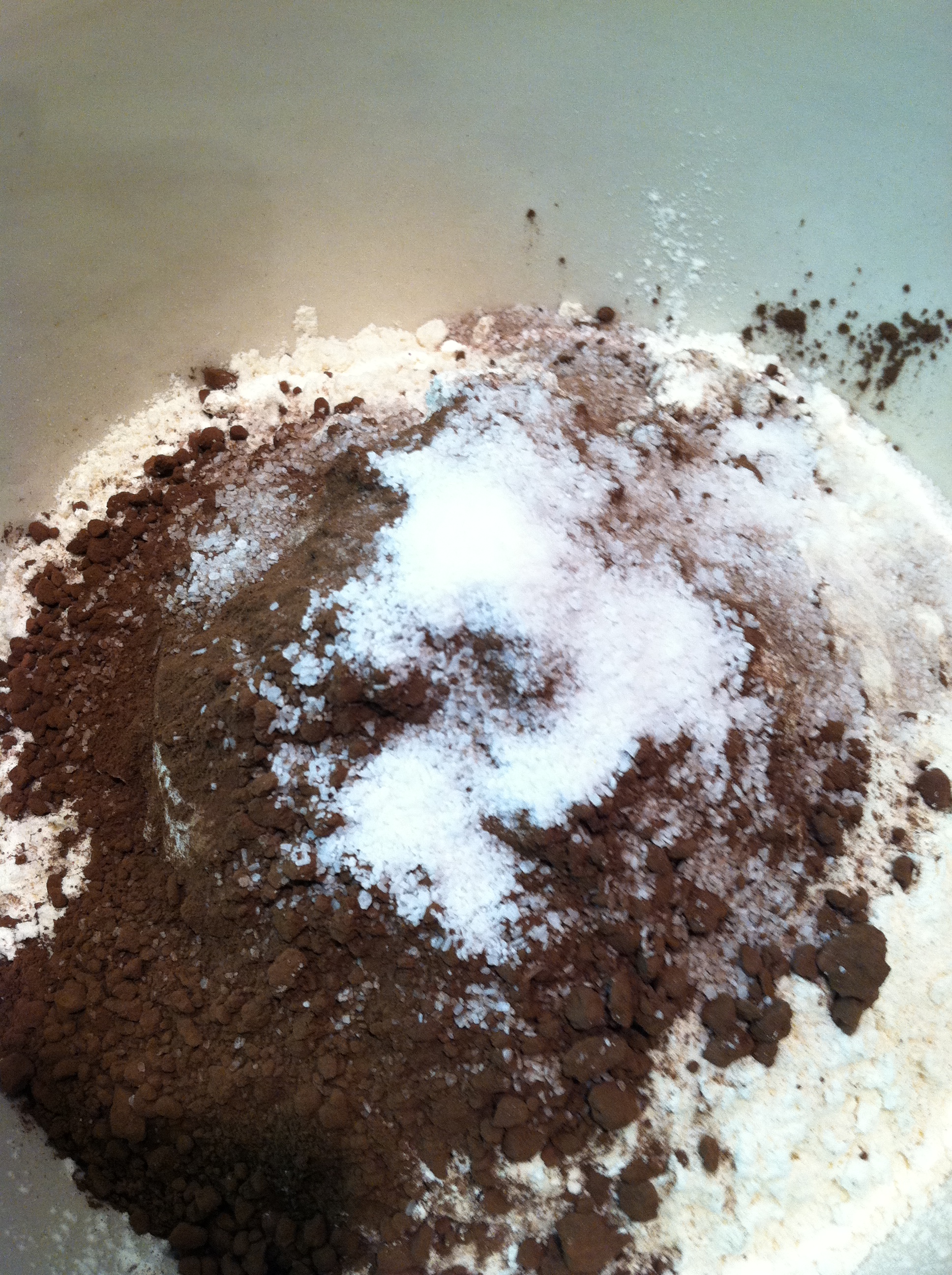
Combine salt, flour and cocoa powder in a large bowl

Mix the dry ingredients together before adding the wet ingredients

Combine the flour, cocoa, salt in a large bowl, stir to combine.

Warm water to 110°F sprinkle yeast on top and let bubble for 5 minutes. (This ensures the yeast is active)

Whisk the yeast and water together and pour over the flour mixture, fold until all liquid is absorbed and all flour is incorporated.

Pour in the wet ingredients and mix until everything is incorporated; form into a ball on the bottom of the bowl. Let rise for 2 hours or double in size.

Doubled in size

Form into a ball in the bottom of the bowl, cover with an oiled piece of cellophane wrap and allow to rise until doubled in size. This usually takes 2 hours.

Remove and sprinkle the top of the dough with cocoa/flour mixture, scrape to deflate and separate into equal balls of dough.

on a well floured surface, flatten one ball into a rectangle, sprinkle with hydrated cherries and cinnamon sugar if using, fold in thirds, sprinkle more cherries and cinnamon sugar, fold in half. Flatten the dough into another rectangle and roll into a log.

Pre-heat your oven to 450°F for 15 minutes before the bread is ready to bake.

Slash the loaves and place them into the hot oven for 30 minutes or until the internal temperature of the bread reached a minimum of 190°F. Steaming is optional, if you want a crispy crust, steam is recommended. See how to add steam by reading the No Knead Bread post for a full description of baking off the loaves at home.

Shape into a log or ball; let rise for 1 hour or nearly double

As I mentioned before, this bread isn’t sweet. Even if you add the cinnamon sugar, the cinnamon adds to the complex flavor of the cocoa and the cherries. Simply divine for a smoked ham or turkey sandwich with whole grain mustard, lettuce and tomato.

Light lunch

How to Boil an Egg and what to make with them

How to boil an egg is a basic procedure that needs to have a couple of “rules” to follow in order to turn out right.

There are a few suggestions on what to do with your hard-boiled eggs after you master the technique at the end of this post.

So often the yolks have a dark green sulfur ring around them and the whites are rubbery rather than tender. This happens from the eggs being overcooked or being old after they are cooked. The reason they start to stink when they age is due to the sulfur content which is also what makes the green ring around the yolk form, a simple chemical reaction.

You can avoid this and have beautiful boiled eggs by following this method and eating them soon after.

The rules are simple:

  • Start with cold water.
  • Bring to a boil
  • Add salt (only after the water boils)
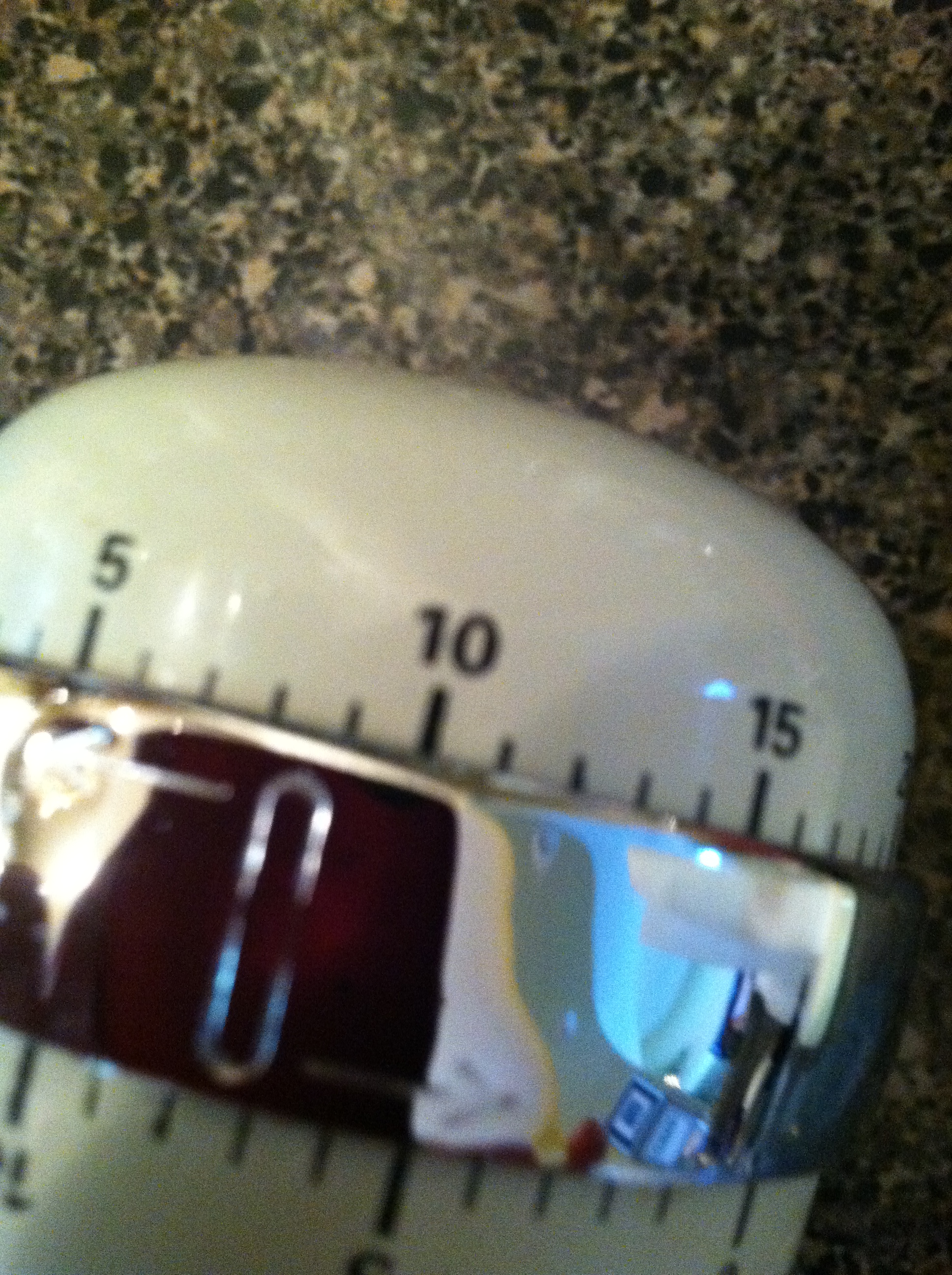
  • Boil for 10 minutes

    Set timer for 10 minutes

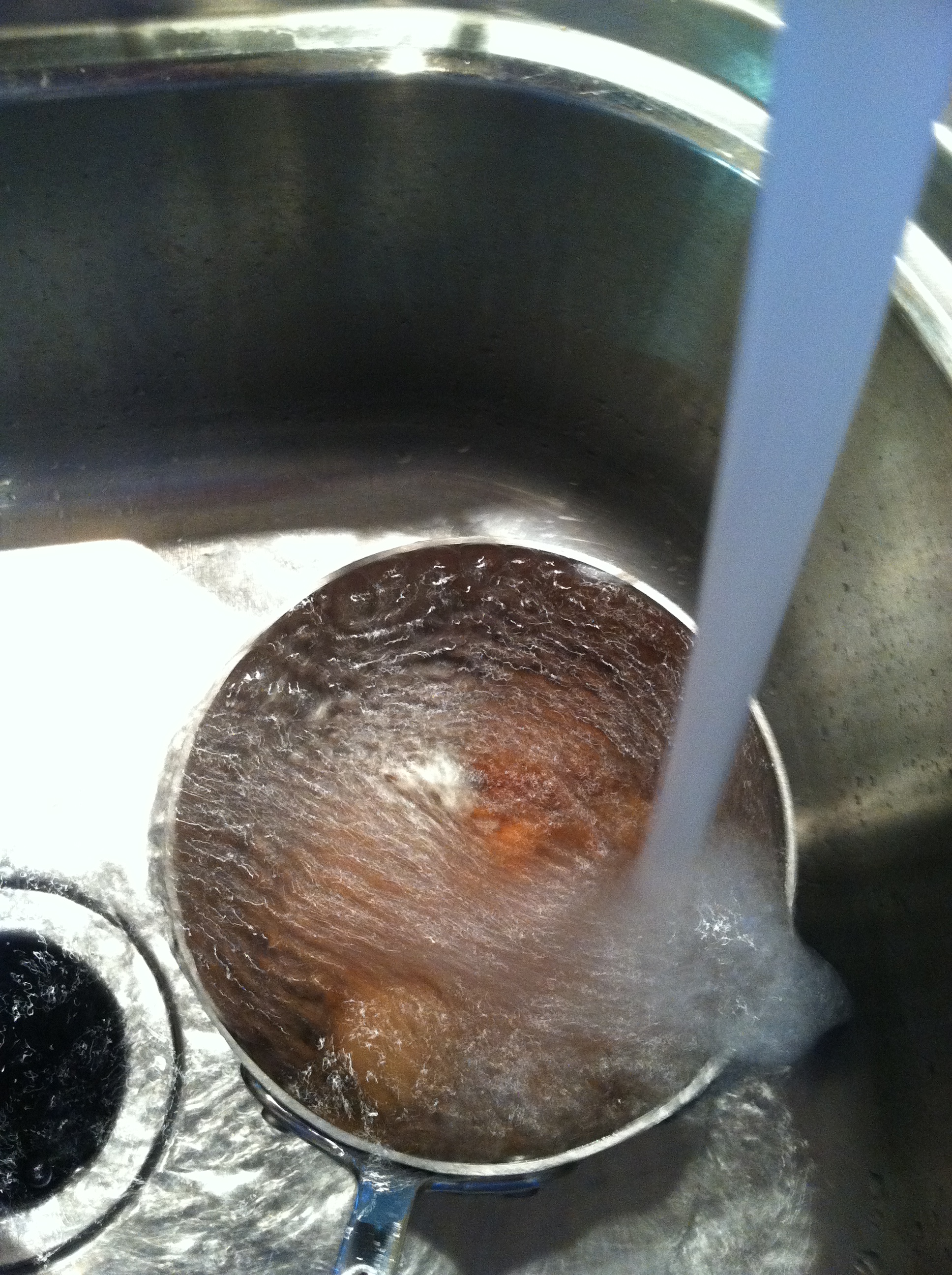
  • Cool quickly in cold water

Cool by running cold water over the cooked eggs until they cool

Cool under cold water

down. You will need to change the water as it warms up from the hot eggs. Keep the water cool and in about 15 minutes you will have perfectly cooked hard-boiled eggs.

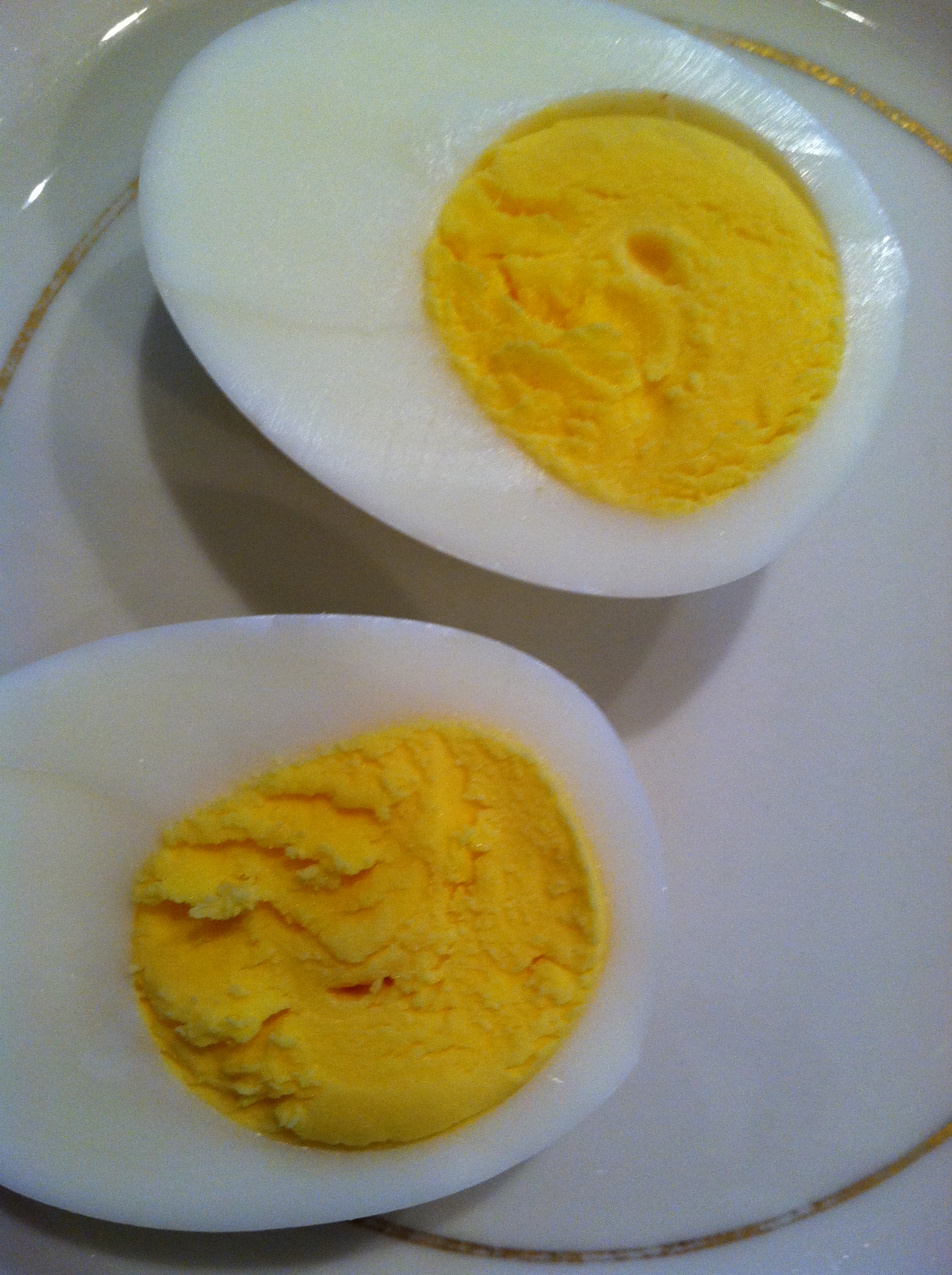
A perfectly cooked hard-boiled egg is yellow throughout the yolk

Perfectly cooked hard-boiled eggs

and the whites are tender.

Using this method, they

Gently tap to crack the shell all over

should be easy to peel. Gently tap the shell on the counter until it cracks. Gently roll the egg so the shell gets cracked all over; then peel the shell off.

Starting with cold water and adding salt after the boil all contribute to successful peeling.

A lot of Europeans will leave their eggs out on the counter, in the US we keep them in the refrigerator. Either way, it is best to start with cold water. Place the eggs in the pot, fill with cold water to cover the eggs by at least an inch or more. This helps keep the eggs from cracking due to temperature change.

Use a pot that can comfortably hold all the eggs you are boiling neatly on the bottom of the pot. There should be enough room for them to roll a little, but not too much. (See the photo of the eggs in the pot earlier in this post) Some people put a small towel in the bottom to cushion the eggs. This is totally unnecessary, but you can do it if you like.

Add salt after the water comes to a boil. This saves the bottom of your cookware from getting pitted from years of salting cold water. Save your cookware, salt only after water boils.

Some people will save the egg cooking water for plants, I don’t due to the salt.

Carefully peel, rinse and dry

The eggs will absorb some of the salt while boiling.

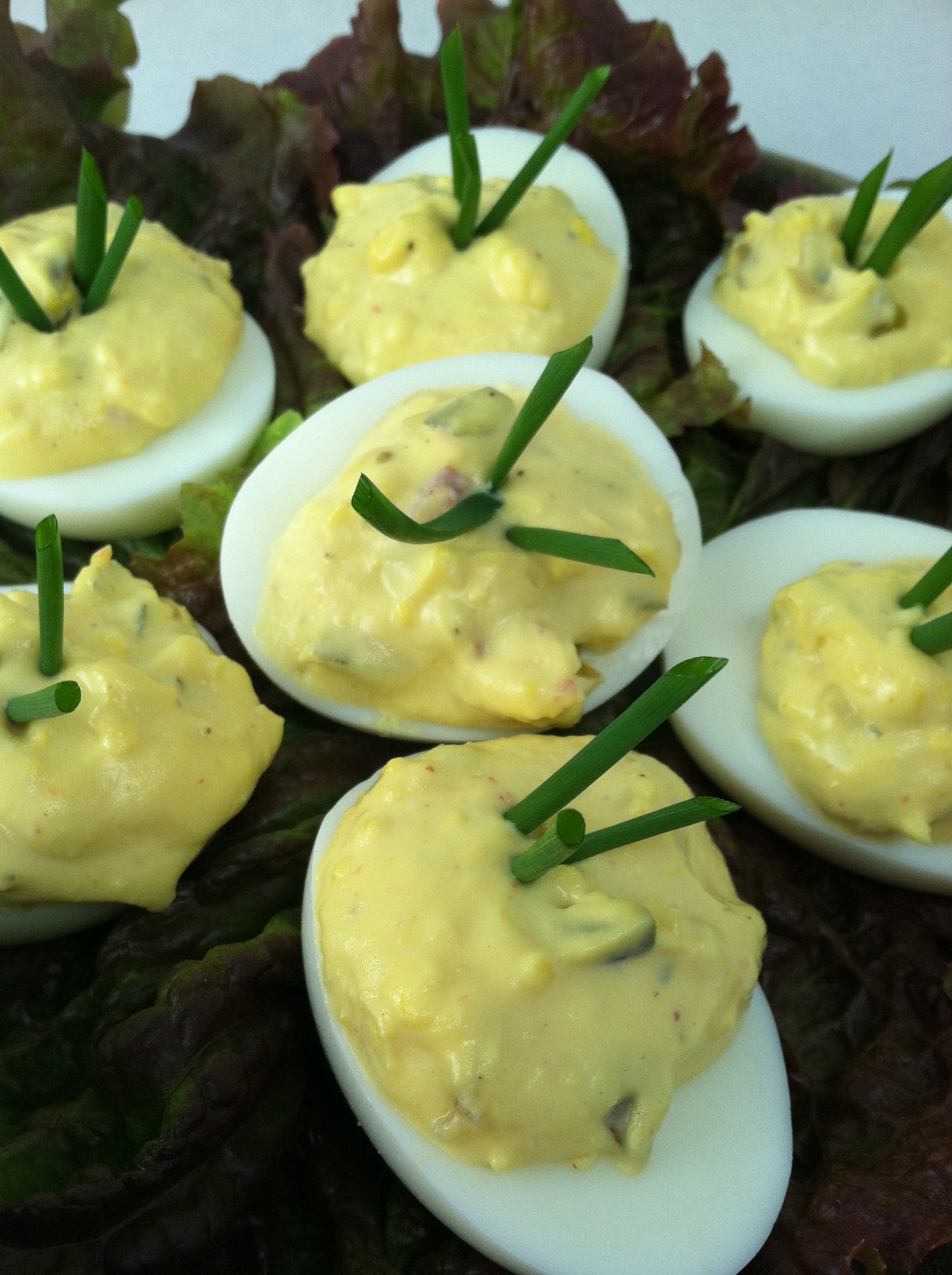
Here is a traditional Southern dish named “Deviled Eggs“. I have always been around Deviled Eggs so I am not sure how well-known they are in other parts of the world.

Here in the South, we have dishes known as “egg plates” made specifically for holding Deviled Eggs. I used to have several in different styles but alas, I no longer own an egg plate. Not even an egg plate shaped like a holiday wreath, not a glass one nor a china one. Where did they go? It’s not like I swore off ever making deviled eggs again. Puzzling how things come and go. Maybe one day I decided I would rather have the space than the egg plates. I don’t recall making that decision.

Be careful when adding the pickle relish. Don’t add too much liquid or else  your egg filling will be runny. If that happens add some cheese or bread crumbs or go commercial and add xanthan gum to thicken it back up. You could always boil some more eggs too.

Here is the recipe:

Deviled Eggs

  • 6 eggs, hard-boiled, split in half.
  • 2 Tablespoons Mayonnaise
  • 1 Tablespoon Sweet Pickle Relish
  • 1/8 Teaspoon Onion Powder
  • 1/8 Teaspoon Garlic powder
  • 1/2 Teaspoon Kosher salt
  • 1/2 teaspoon Capers
  • Chives or scallion for garnish

Remove the yolks from the whites, place the yolks in a bowl. Add the remaining ingredients and mash

Tray of Deviled Eggs garnished with scallion green, caper and chive flower

together with a fork until smooth.

Adjust the quantities of the ingredients to match the yolks and your personal taste.

Perfectly cooked hard-boiled eggs
Remove yolks to make filling for Deviled Eggs

Spoon the yolk mixture back in to the whites. Top each with a bias cut chive or scallion green.

Deviled Eggs

Sprinkle lightly with sweet paprika and finely ground black pepper.

What else can you do with hard-boiled eggs?

Add them to tuna salad, make egg salad for sandwiches, slice and serve with spinach salad, make Pad Thai and sprinkle chopped hard boiled eggs, peanuts and cilantro over the noodles.

Personally, I can eat them sprinkled with a touch of Fleur de sel.

Spinach Salad

Main thing to remember, start with cold water and boil only for 10 minutes.

Cooking Note: A “BOIL” is 212°F or when the bubbles roll rapidly and break the surface of the water.

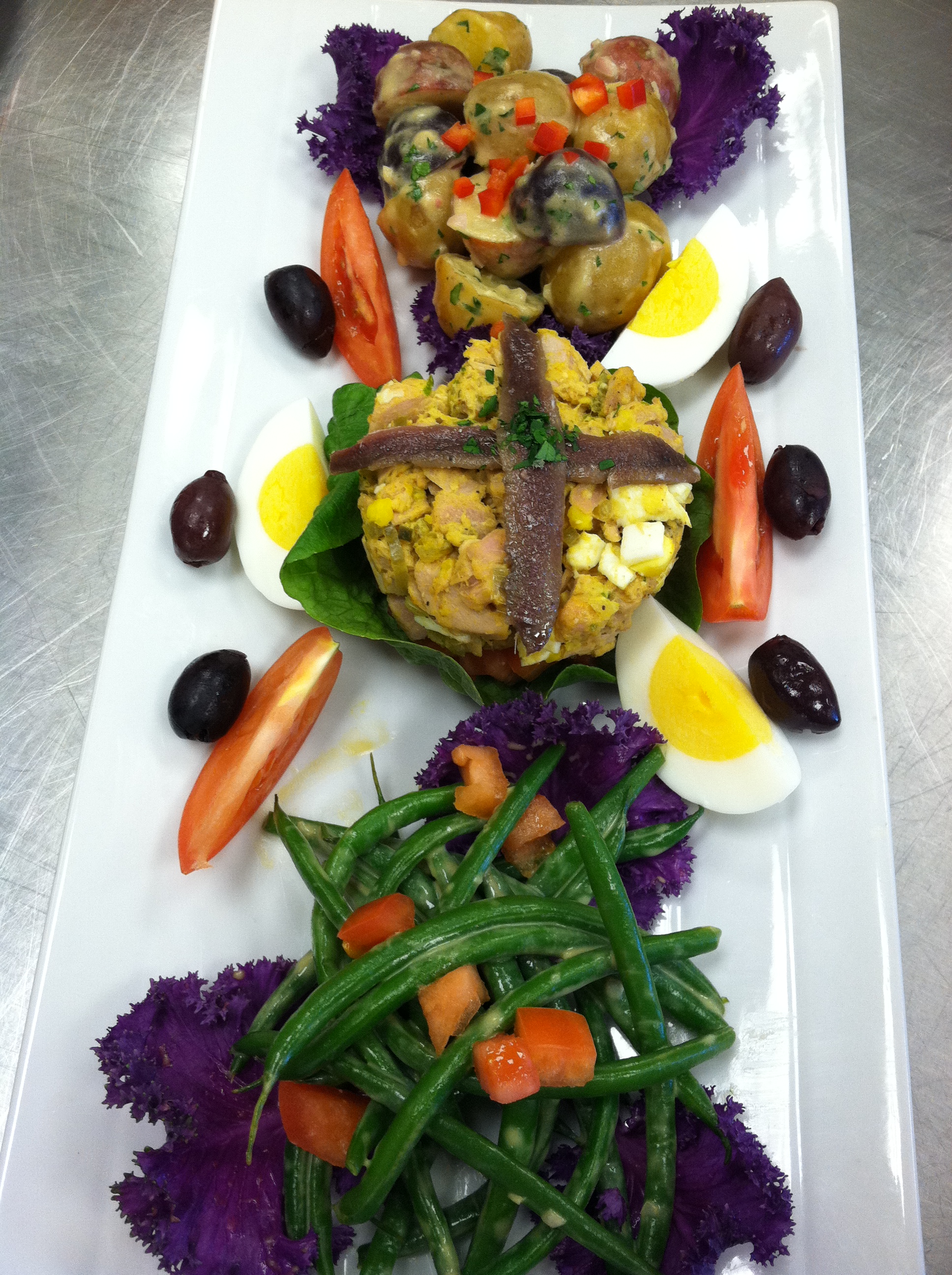
Use hard-boiled eggs in Salad Nicoise