The Gift of Pears

My crazy friend Joanie gave us a remarkable gift of pears. I was immediately struck at their shapes and colors. Since they were a bit firm, the pears were placed into a bowl to ripen.

While they were still firm, I shaved on onto a salad, as they ripened, they became more sliced. One of our favorite salads now days is pear, Roquefort and arugula salad, which is a post soon to follow this one.

We have enjoyed the pears, both as a centerpiece and as tasty delights. I’ll even wager there is a pear tart in the near future.

This is how we enjoy the pears in the early evening while we sip our wine and watch the sun go down.

Sliced pears, Roquefort, walnuts, cashews, local honey, cut from the comb and berries or dried fruits like apricots or cranberries.

Enjoy!

This slideshow requires JavaScript.

Pineapple, Chestnut and Caramel Upside Down Cake

Going crazy with using chestnuts these past few days lead me into dessert realm. If I could keep my hand out of the jar and stop snacking on these tasty morsels, they would actually make it into more things.

Alas, what to do?

Pineapple Upside Down Cake is one thing you can do. Please, forget about those horrible neon glaring cherries Betty Crocker used. This is a cake for adults because it has rum in it. Of course you could leave it out or use rum flavoring, but there isn’t anything quite like Pyrat Rum.

Upside down baking is a rather nice idea actually and can be adapted to may other fruits as well. One you may have heard of is the French famous Tarte Tatin. Flip the baked cake or tart over onto a plate and the bottom of the pan becomes the most wonderful caramelized fruity topping.

What a novel idea, upside down baking.

I found a can of baby pineapple rings at a gourmet store that were screaming to be made into a cake. With waning warm weather, this cake brings you smack dab into a nice tropical get-away.

Pineapple, Chestnut and Caramel Upside Down Cake

Ingredients:

For the caramel and pineapple topping:

1 can mini pineapple rings

You can use regular pineapple rings too. You may want to cut them to make an overlapping pattern.

3 ounces butter

3/4 cup brown sugar

1 cup chestnuts cut in half

You want enough so every hole has a chestnut. Or sprinkle chopped chestnuts over pineapple.

Method:

Pre-heat oven to 350°F.

Drain the pineapple, reserving juice for the cake batter.

Using a 9″ heavy bottomed saute pan, melt the butter and the brown sugar. Once melted, allow to simmer for 4 minutes, do not stir once simmering begins.

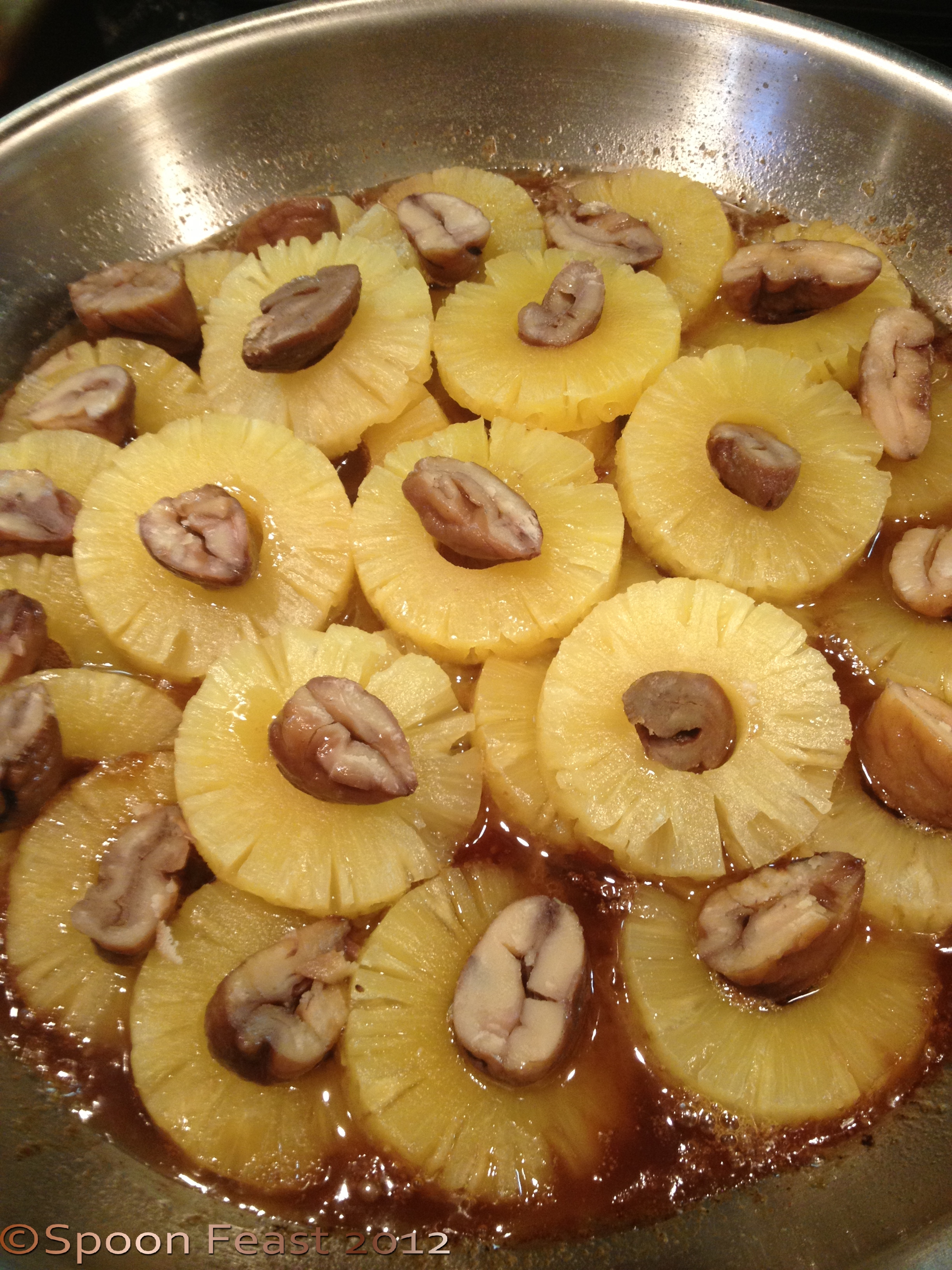
After 4 minutes, remove from heat and carefully place the pineapple all over the surface of the caramel.

Be careful about touching the caramel as it is very hot.

Arrange pineapple over caramel, place a chestnut over each hole or sprinkle them on.

Overlapping the pineapple, cover the entire surface of  the pan. Fill each hole with a chestnut half. If chopping, sprinkle the surface of the pineapple with the chopped chestnuts.

For the cake batter:

  • 1 1/2 cups AP flour
  • 2 teaspoons baking powder
  • 1/4 teaspoon salt

Sift these together and set aside.

  • 3 ounces soft butter
  • 3/4 cup granulated sugar
  • 2 eggs
  • 1 teaspoon vanilla
  • 1 tablespoons good quality rum (Or 1 teaspoon rum extract)
  • 1/2 cup unsweetened pineapple juice ( left from straining the pineapple)

Using an electric mixer, whip the soft butter until it is light and fluffy. Gradually add the sugar and then the eggs, one at a time.

Add the vanilla and rum then add the pineapple juice.

The mixture will separate and look like a mess, but move on.

Add the flour in two stages. Once the flour is added, the mixture looks just fine.

Pour the batter over the fruit and caramel. Bake.

Pour the batter over the pineapple and chestnuts.

Place the pan into a 350°F oven for 45-50 minutes. Test for doneness with a toothpick. When it comes out clean, the cake is done.

Remove the pan from the oven. Keep a cloth on the handle so no one burns their hands on a hot handle while the cake cools.

Cool for 10 minutes.

Lay a folded towel on the counter. Place the cake pan on the towel. Place the serving plate over the pan.

Fold the towel over the plate and holding it all tightly together, flip it so the cake turns out onto the plate.

Hopefully, all the pineapple will also follow. If not, just replace them.

If you like, sprinkle a bit of rum over the top of the cake. Totally optional.

Exploring Upside Down Baking is on the agenda for this winter.

What about an Upside Down Banana’s Foster Cake?


In My Kitchen November 2012

I think I just wrote one of these the other day. Where is the time going? Celia at Fig jam and Lime Cordial hosts this wonderful segment of sharing what’s in your kitchen this month.

This month I have these wonderful eggs brought to me by one of my students. They raise their own chickens and have such healthy diets. The wonderful thing about these eggs is that the inside of the shells are colored too.

I love the way they look and taste.

In my kitchen are some lovely flowers my son Tyler sent for my birthday.

In my kitchen is a fabulous jar of chestnuts! Actually, I’ve gone a bit chestnut crazy.

The FAB French Chestnuts!

I adore them. Eating them just out of the jar is so easy, I need to be careful not to eat the whole thing. They have around 10 calories each, no sodium unless you add it, fiber, vitamin C, B complex,protein, minerals and a great taste.

Last night I sautéed chestnuts with Brussels sprouts. Tasty!

Next I’m making a pineapple upside down cake with caramel and chestnuts. And then chestnut stuffing, sweet potato and chestnut pancakes, and chestnut ice cream. I might need more chestnuts.

And all these chestnuts…

I even have “Smiling Chestnuts!” How great is that?!?!?!

The best part is being able to buy them without having to peel them!

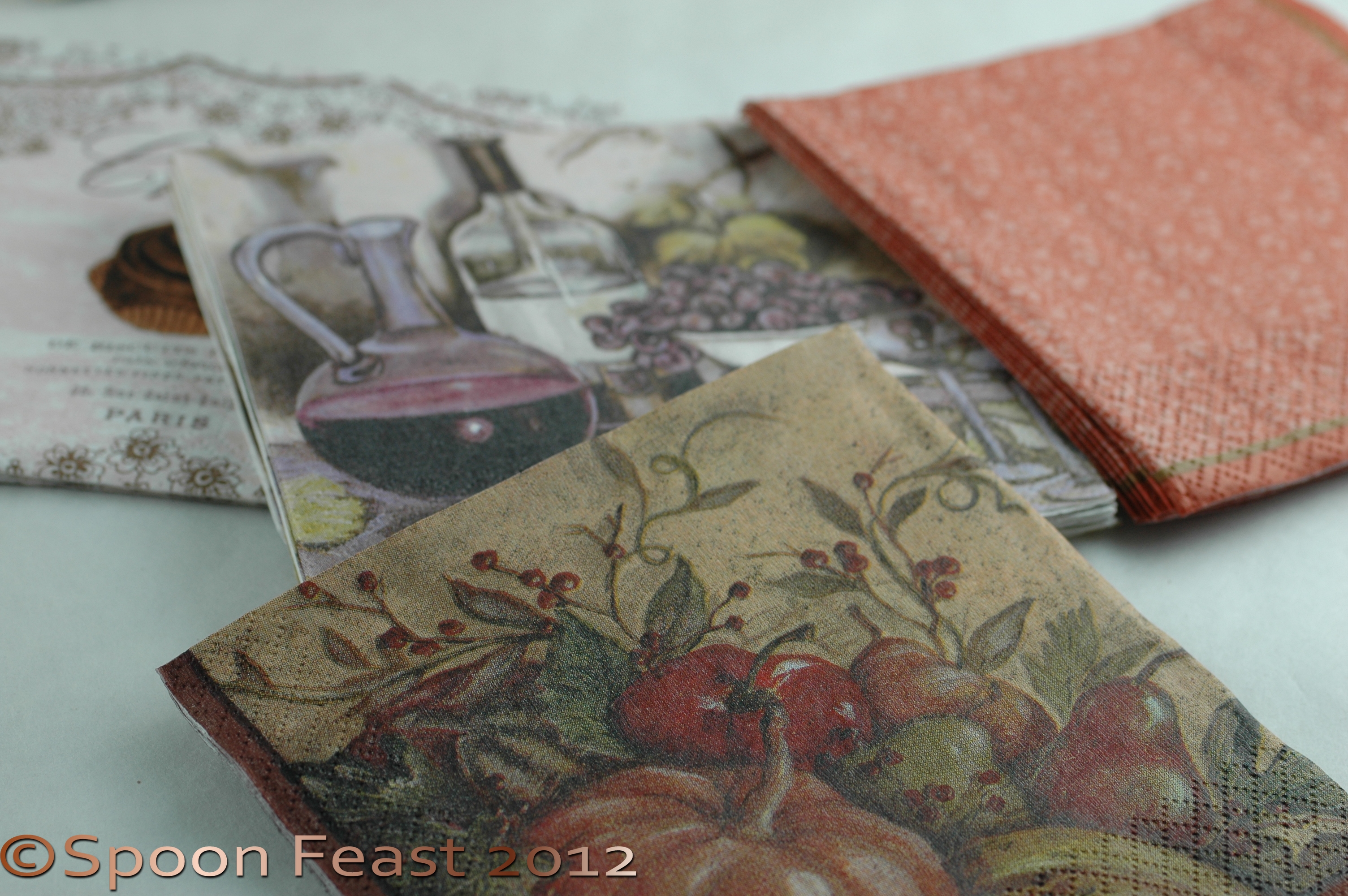
I found this stylized Buddha hand that is perfect for offering beverage napkins. Bev naps are a “thing” I have. I can’t stand a glass sweating all over the table so here is a bev nap for your drink.  I have bev naps for nearly every occasion.

This weeks Bev Naps

“Care for a Bev Nap?”

Our weather is becoming cooler. We sit outside in the late afternoons and evenings sipping cider or wine talking about our days. It is the time of day I enjoy the most. As the days turn colder, it feels so good to wrap your hands around a warm cup of tea and feel the crisp fall air on your face, laughing and talking the evenings away with my wonderful Robert.

Full Moon over Margarita

Full Moon over Margarita (Photo credit: bilbord99)

We watch the full moon rise between the big trees and marvel at how fast time is passing.

In the meantime, bread still rises, the grill still fires, dishes get used and washed over and over again as we pass through this circle of life.

Life is good.


Salmon Coulibiac with Mustard Sauce

In the restaurant, we used to make Salmon Coulibiac for New Years appetizer. It was wildly popular and considering how easy it is to make and the big WOW factor, I am surprised we didn’t offer it more than just on New Years menus.

Salmon Coulibiac is a great dish to use poached salmon but this time, I had some salmon left over from dinner. So I decided to use that up.

This recipe makes quite a bit. I got 2 lovely fish out of it and still had enough left over to make a couple of smaller rolls with the filling.

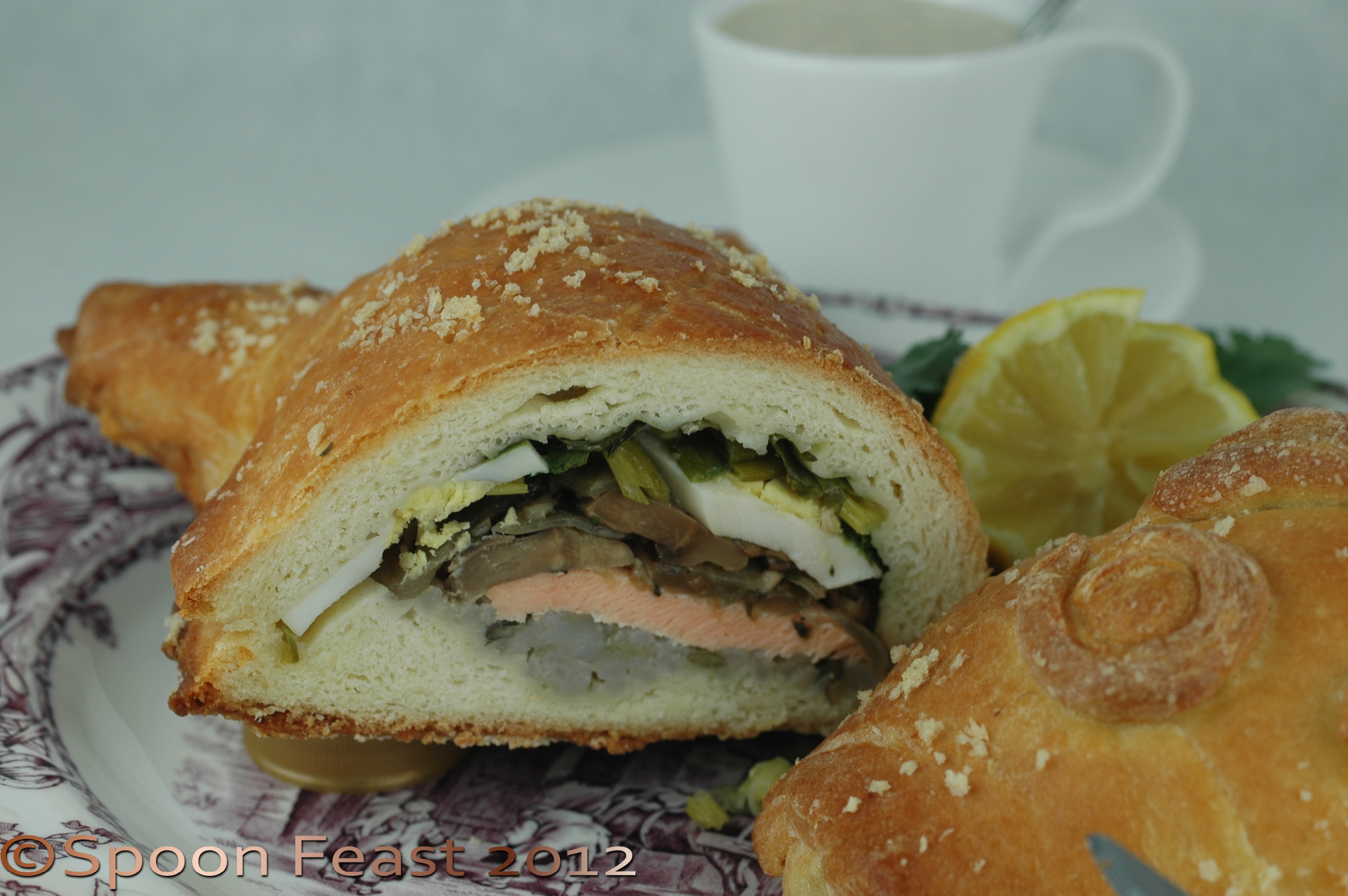
There are a couple of ways to approach this, you can layer the filling ingredients or you can mix them all together.

Personally, I like layering as the sliced serving looks so much better.

Salmon Coulibiac

You will need:

  • 2 sheets of puff pastry or you can make brioche if you like
  • 8-10 ounces of cooked salmon
  • 1 medium onion, sliced
  • 3 ounces of sliced mushrooms
  • 2 tablespoons white wine
  • 3 hard-boiled eggs, sliced if layering, chopped if mixing together
  • Cooked rice (I used a wild and brown rice mixture)
  • fresh cilantro
  • Fresh scallions, sliced
  • salt and pepper to taste

Saute the onions and mushrooms in butter until done. Season with salt and pepper, deglaze the pan with a splash of white wine.

Cool to room temperature.

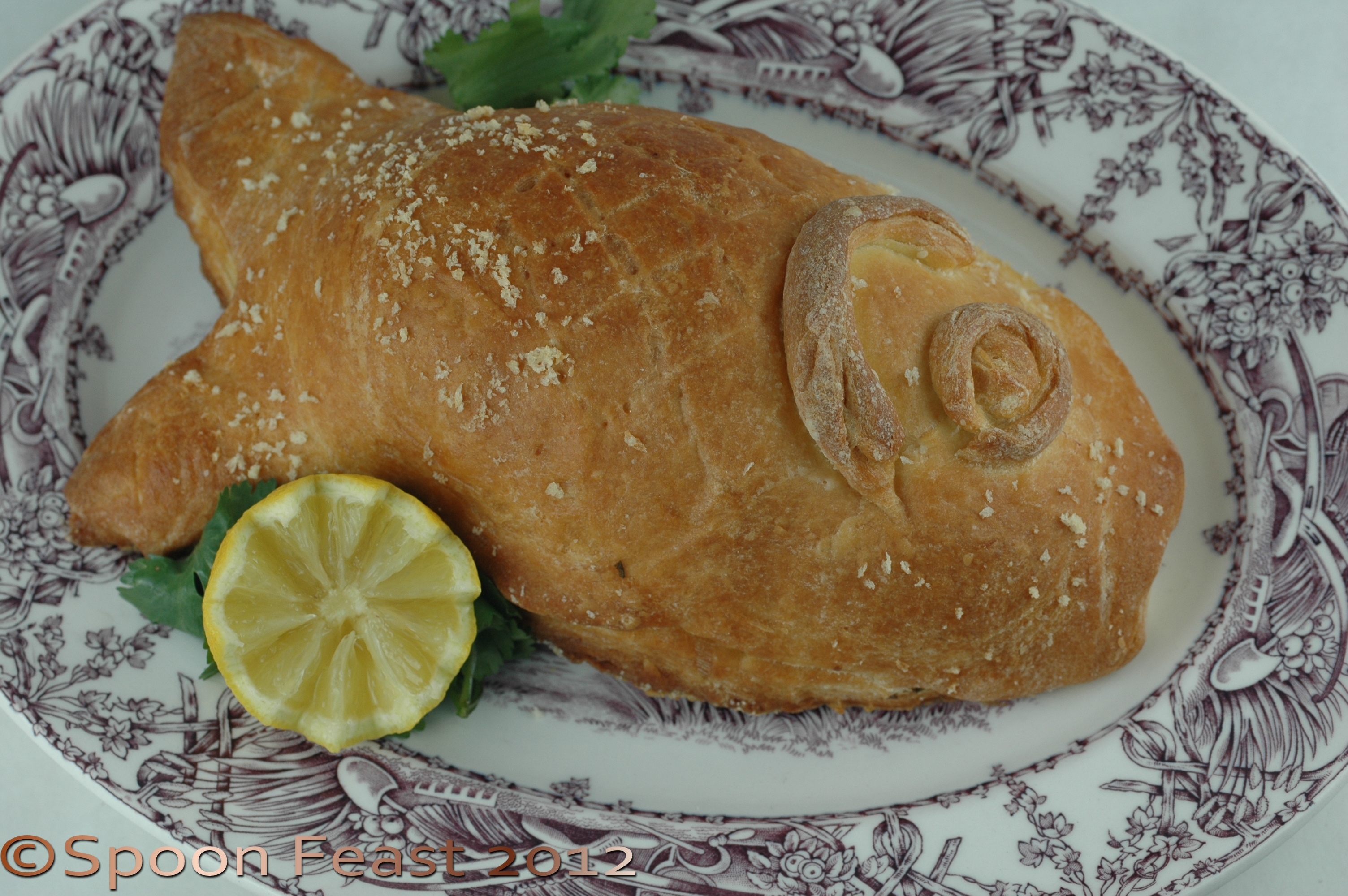
Lay the puff pastry on a cutting board. Trace and cut into a large fish shape. Cut two: one for the bottom and the other to top. The top should be slightly larger than the bottom.

Transfer the bottom fish shape to a sheet pan lined with parchment and dusted lightly with corn meal.

Leaving a 1/2 inch border around the outside, place a bottom layer of cooked rice.

Top with cooked salmon, then the onions and mushrooms, hard-boiled eggs, cilantro and scallions.

Season with salt and pepper.

Moisten the edge of the dough with egg wash, top with the other piece of dough. Press together to seal the edges all around.

Use dough scraps and a knife tip to create a design in the dough

Using scraps of dough, decorate the surface to create gills, eye, scales can be traced with a knife point. Cut through the dough in a few places to create vents for steam to release during cooking. If you don’t, your fish will break open during baking. Not a good look.

Use egg wash to hold the decorations in place and wash the entire surface with egg wash to give a nice shiny surface to the finished dish. Sprinkle a few bread crumbs on the surface if you like.

Bake is a 375°F oven for 40 minutes or until done and golden brown.

Mustard Sauce

Simple and tasty

  • 1/2 cup half and half
  • 1/2 cup heavy cream
  • 2 tablespoons smooth Dijon mustard
  • 2 tablespoons whole grain mustard
  • 1 teaspoon dried minced garlic
  • 1/4 teaspoon kosher salt or to taste

Bring the half and half and cream to a boil, whisk in the mustard and garlic, simmer for 5 minutes.

Adjust seasonings with salt if needed.

To serve:

Slice the Salmon Coulibiac and place each slice on a plate, put a spoon of sauce over one edge.

Serve with a salad and enjoy!

This is a great dish to use up any leftover salmon and rice you may have in the fridge.

If you aren’t the whimsical type and want to make this without the fish shape, you can.

Personally I love the fish shape, it makes me smile!

Oatmeal Cranberry Bars or What To Do With Leftover Cranberry Sauce

Oatmeal Cranberry Bars

This recipe is a great way to use up any leftover cranberry sauce you may have from holiday meals. I find whole berry works best but if you like the jelly kind, use it too. Store bought, in a can or fresh, any cranberry sauce will work out quite well.

For the best, make your own cranberry sauce.

Oatmeal Cranberry Bars

  • Servings: 12
  • Difficulty: moderate
  • Print

Cranberry Sauce 003

Cranberry Sauce 003 (Photo credit: MGF/Lady Disdain)

Pre-heat the oven to 350°F. Prepare a 9 x 13 inch baking pan. Spray the bottom and sides with baking spray, line the pan with a sheet of parchment, allowing the sides of the paper to overhang on the long edge of the pan. This makes for easy removal from the pan after the bars are baked. Simply lift the paper and the whole thing can be moved to a cutting board or platter.

Spray the parchment with baking spray. Set aside until ready to use.

Make the dough:

  • 8 ounces soft  unsalted butter
  • 1 1/4 cups packed light or dark brown sugar
  • 1 large egg
  • 2 teaspoons vanilla extract
  • 2 cups all-purpose flour
  • 1 teaspoon baking soda
  • 1 teaspoon kosher salt
  • 1/2 teaspoon ground cinnamon
  • 2 1/2 cups old-fashioned rolled oats
  • 1 cup chopped pecans
  • 4 ounces cream cheese
  • 1 cup semi sweet chocolate chips

Using a mixer with a paddle attachment, add the butter and sugar, mix just until it comes together.

Add the eggs and vanilla.

Mix together: flour, baking soda, salt, cinnamon and pecans in a separate bowl. Add the mixture to the butter and eggs, stirring slowly to combine, slowly add all of the oats and mix only until combined.

Press 1/2 of the dough into the bottom of the baking pan.

Top with cranberry sauce. Make sure to cover the entire surface, all the way to the edges. I added some seedless raspberry jam in dollops all over the dough too.

Dot the cream cheese over the surface of the dough.

Using the remaining half of the dough, dollop it over the top of the cranberries and cream cheese.

Bake in the pre-heated 350°F for 45 minutes or until the top is lightly golden brown.

When the bars come out, drop 1 cup of semi-sweet chocolate chips on top. The heat from the baked bars will melt the chips, then spread the melted chocolate in swirled patterns over the top. You could drizzle some fondant icing over them too but that might be overkill.

Remove from the oven and cool on a wire rack for about 1 hour.

Carefully lifting the sides of the overhanging paper, lift the baked bars onto a cutting board and cut them into the desired size with a sharp knife. Sprinkle any crumbles over yogurt.

Store covered at room temperature for up to 7 days. (If they last that long!)

Plated Oatmeal Cranberry Bar

Lemon Marmalade

Bitter Orange Marmalade made with Seville Oranges is one of life’s truly great pleasures. The intensity of the orange, the bitter-sweet finish that mixes with melted butter on good toast is something that could inspire sonnets.

Tempting Bite!

So humbly, I go into making a marmalade from the abundance of lemons in my kitchen. It is worth noticing that some recipes ask for the white pith to be removed, some include the entire lemon, some just peel and lots of interesting versions in between.

The main ratio you want to have for making a lovely marmalade is 1 part water: 1 part citrus fruit:  1 part sugar

All ingredients are equal parts and there are only three ingredients. Water, fruit and sugar. Simple recipe, right?

Armed with this knowledge, you can make as much or as little as you like. For me, I’ll make at least 4 pints and put it into 1/2 pint jars.

This makes a good gift and the holidays are just around the corner.

Lemon Marmalade

Remember the ratio

  • 1:1:1
  • Water
  • Lemons
  • Sugar

Wash and soak the lemons for at least 30 minutes. Scrub them gently.

Remove the zest using a 5-hole zester or a sharp knife. The best appearance comes from cutting thin strips of the peeling.

Peeled lemons. Sometime the citrus will have a thick pith between the zest and the fruit. Remove the peel, cut the pith away just as you would to remove the peeling for sectioning citrus. Refer to the “Related Article” below.

Pile the strips to cut into fine strips. Notice how much of the pith left on the peels. This will ensure a desirable bit of bitterness. This adds so much to the complexity of flavors involved in a great marmalade.

Cut the fruit into quarters; remove the core and slip out all the seeds. Reserve core and seeds in a bowl; chop the fruit and place it into another bowl. Try to reserve as much juice as you can.

Measure chopped fruit and sliced peel to determine how much water and sugar are needed. Remember equal parts of all three.

Here you have the chopped seedless fruit, the sliced zest and the trimmings from seed removal in separate bowls. Place all of the trimmings into a cheesecloth, tie it and put into the pot to cook with the fruit, water and sugar. You will want to remove it after cooking. Add the same amount of water, sugar. and the fruit and peel to a deep heavy bottomed pot.

Bring to a boil, stirring to prevent sticking and burning.

Once the mixture comes to a boil, reduce the heat to an active simmer. Place your thermometer into the mixture and let it simmer until it reaches 220°F.

Remove from heat. Please be careful handling this as it is hot melted sugar and can really cause a nasty burn. Keep a small bowl of ice water near to dip your hand into just in case it splashes.

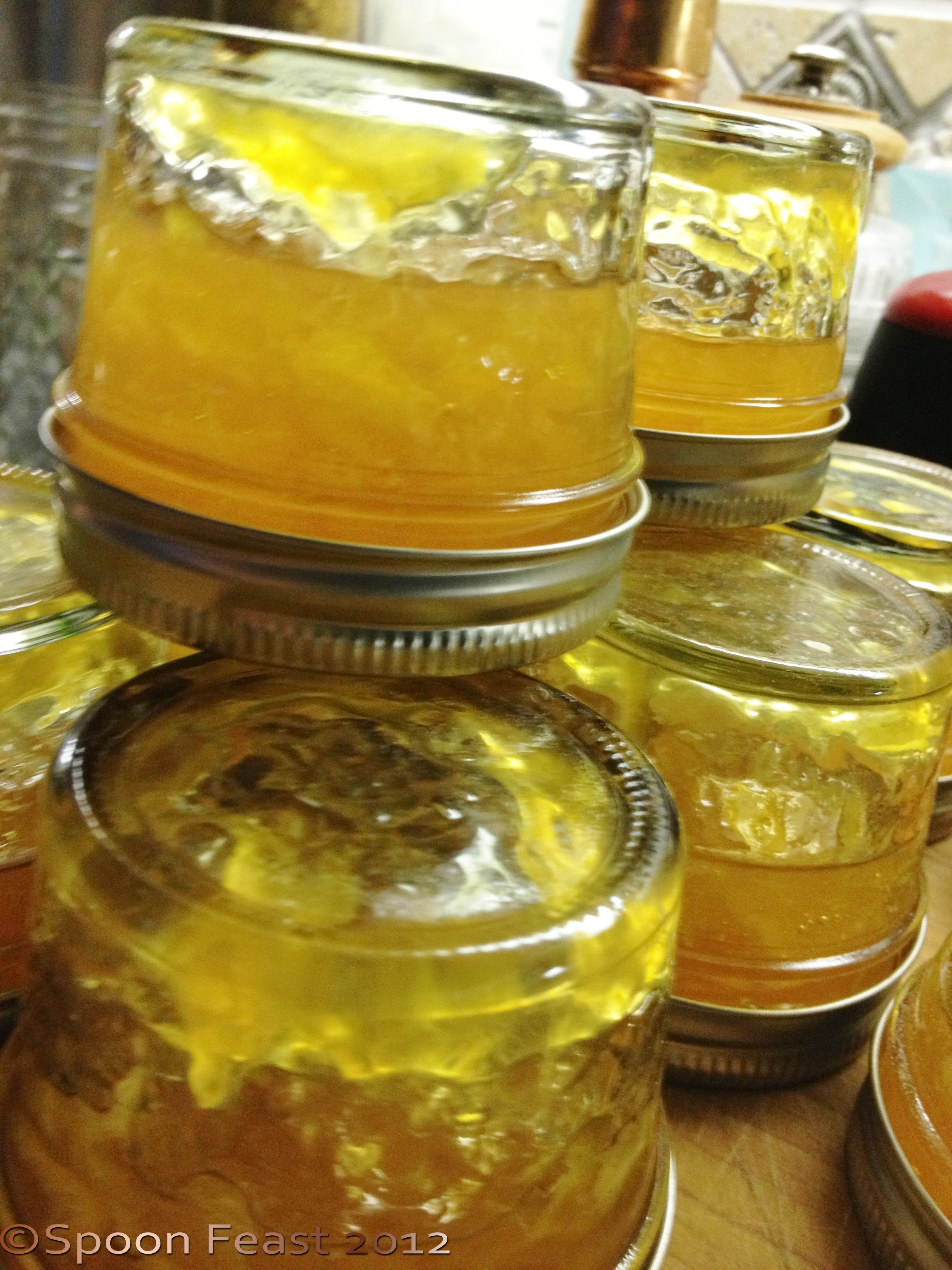
Fill sterilized jars with the hot marmalade, place the lids on and flip them upside down to cool. This will seal the jar.

Cooling jars upside down will seal them or you can use traditional canning methods.

I use small 1/2 pint jars so I can have extra to take along with me when ever I need a small gift. These are also great office gifts and hostess gifts too.

When the Keller family of  Dundee Scotland started making Bitter Orange Marmalade, they bought a lot of oranges from Spain they thought were sweet. Upon the discovery of the oranges being bitter, Mrs. Keller took them into her kitchen and boiled them with water and sugar to make what became the wildly popular “Bitter Orange Marmalade”.

In my opinion the best marmalade is full of fruit and peel with that lovely bitter element tucked into the sweet flavor.

California made marmalade is made with sweet oranges therefore does not have that bitter bite marmalade fans enjoy.

Lemon Marmalade

When buying or making marmalade you can get the fruit just the way you like it. I like it full of chunked fruit with lots of peel. You can make it (and buy it) with just peel too.

Making marmalade is easy as long as you have time and a candy thermometer. Besides, there is something quite satisfying to see a line of nice glistening jars all full of  lovely marmalade that you made.

It makes you feel as if you can do anything.

Pickled Turnips

OK, before you turn your nose up, make a small batch and see. It is hard to believe something so simple can taste so good!

Besides October is Breast Cancer Awareness month and this pickle is the color of choice.

This recipe comes from David Lebovitz, who lives in Paris. I pretty much copied the recipe and fell in love with the results.
In the most recent batch, I added some red radishes to see how they turn out. The turnips really are wonderful done this way as are the beets that give the pickle the lovely magenta hue. The beets and turnips and radishes all turn out to be quite equal in color.

In my next batch I’m going to add some dill and instead of beets for color, I’ll use saffron or turmeric.

At your next gathering, no matter how small, set out a dish of these lovely pickled turnips and see how strangely addicting they are.

You will find yourself sneaking over to the dish for just one more.

Recipe from David Lebovitz

Pickled Turnips
You can dial down the amount of garlic, but I like the slightly aggressive flavor of the slices in the brine. Use whatever white salt is available where you are, but avoid fine table salt as it’s quite unpleasant and bitter. Gray salt will discolor the brine.

For those who like to tinker, although these are usually served as they are, a few sprigs of fresh dill, or dill flowers, in the brine will take them in a different direction. A hot pepper will add some zip.

3 cups (750 ml) water
1/3 cup (70 g) coarse white salt, such as kosher salt or sea salt
1 bay leaf
1 cup (250 ml) white vinegar (distilled)
2-pounds (1 kg) turnips, peeled
1 small beet, or a few slices from a regular-size beet, peeled
3 cloves garlic, peeled and thinly sliced

In a saucepan, heat about one-third of the water.

Add the salt and bay leaf, stirring until the salt is dissolved.

Remove from heat and let cool to room temperature. Once cool, add the vinegar and the rest of the water.

Note to Davids Directions:

I added the remaining salt and vinegar as soon as I was ready for it. The salted water cools quickly; adding the remaining water and vinegar definitely cools it quicker.

Cut the turnips and the beet into batons, about the size of French fries.

Use a mandolin and square off the ends for a nice appearance. Cut the garlic by hand, just do it carefully!

Put the turnips, beets, and garlic slices into a large, clean jar.
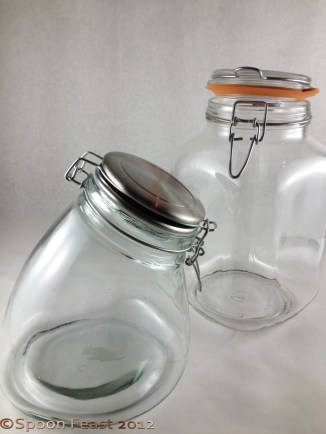
Pickling Jars with wire bales and silicone or rubber seals

I like to use gallon or 2-gallon Ball or Mason jars with wire bales and rubber or silicone seals. After the process is complete, I transfer the pickles into smaller Ball or Mason jars for the refrigerator.

Pour the salted brine over them in the jar, including the bay leaf.

Make sure everything is below the surface of the liquid. Use a small dish or a water-filled plastic bag as a submersion weight.
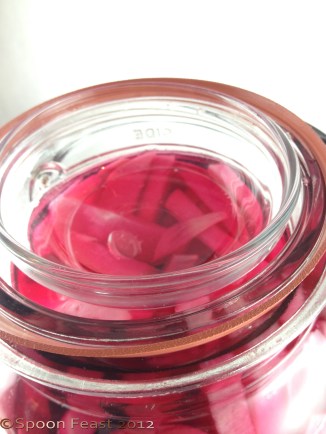
Place a small bowl inside to hold contents below the surface. Look carefully as this bowl is clear like the jar.

Cover and let sit at room temperature, in a relatively cool place, for one week. Once done, they can be refrigerated until ready to serve.

Storage: The pickles will keep for several weeks in the refrigerator. They’ll be rather strong at first, but will mellow after a few days. They should be enjoyed within six weeks after they are made, as they tend to get less-interesting if they sit too long.

So there you have an amazing and unusual recipe for the age-old question: What can I do to turnips so someone will like them?

Watch everything change color while curing. The batons are turnips, the wedges are radishes.

Now you have your answer!
 

In My Kitchen October 2012

I went to the new posts reader this morning and saw Celia’s new “In My Kitchen ” post  at Fig Jam and Lime Cordial and was shocked at how fast time has flown by.

Yikes! It has been over 2 weeks since I have posted anything. Guess when life gets busy, things slip by without realizing how much time has slipped by unnoticed.

turnips

turnips (Photo credit: hagerstenguy)

In my kitchen were 5#’s of fresh turnips and radishes which are being turned into Pickled Turnips. The recipe came from David Lebovitz a while back. As much as I love turnips and radishes, the recipe intrigued me, so I had to try them and fell in love immediately. A post with the recipe is in the works.

Pickled Turnips

In my kitchen is a big basket of lemons and some limes. Robert uses the limes in his drinks so I need to come up with some ways of using all these lemons we over bought. So I am planning to make lemon curd, preserved lemons, lemonade, dried zest, maybe some lemon vinegar and emulsified lemon oil and Chicken Piccata.

A Basket of Lemons

Right now, they are just a basket of lemons.

I bought a lemon squeezer just because.

Lemon Squeezer

In my kitchen is a new pan! I love this new square pan from All-Clad. I am sure they call it a griddle but I sure do like it. I have used it everyday since I got it.

Square Pan

In my kitchen is my levian. It was kept in the fridge all summer. Now that the weather is cooling down, it can come back out and hang out at room temperature. It will develop a deep rich flavor this way. Typically I make bread every week. I think September was a time warp because I didn’t make bread but once, maybe twice. And now October is also flying by. Can time be measured accurately by a levain life cycle? if so, I should read and listen to what it is telling me.

A Bowl of Levain

I have two buckwheat loaves in the oven. Next is a 10-grain loaf and an olive loaf with lemon and rosemary. I look forward to making that one!

Tyler gets to move back into his apartment next weekend so he will be cooking again. The “How To . . .” posts will start back again soon.

And there is another White Dinner Event on October 27 and classes resume again soon. Is it true that time speeds up as you get older? Is it time to write the November IMK already?!

Our White Dinner Event

Below is our post on the most recent White Dinner Event we hosted. It is copied from our blog whitedinnerevents.com

The September event, when it finally happened, was a great success!
Saturday, at the initial scheduled start time, the sky opened and it not only rained but thunder and lightning.
We did a quick survey and since most people were available on Sunday, we rescheduled.

Getting ready to attend a White Dinner!

Sunday was gorgeous weather! Behind the storm front, came lower temperatures and less humidity, which made it very pleasant to be outside. We washed and scrubbed the tables then set them into place. It took a team of us to blow up balloons. Next time, we are letting the professionals do it. While it was fun doing it, we could all see how it would be a tiring chore at every event.

Setting up, getting ready for the guests


After so many moving parts, the hour was finally upon us.

Setting the tables

6:30 the first guests arrive to begin the table set up. They are excited and having a lot of fun setting their tables.

Beautiful Table Settings

Carved pineapples,candelabras, lanterns, candles in glass jars and a tree full of white twinkle lights set the stage for a magical evening.

Lovely, elegant tables
And a candelabra!


People arrived as strangers and left as friends.

Opening Toast! Notice the white gloves and candelabra


The light during twilight was an amazing blue.

The sky was Maxfield Parrish blue as twilight waned. You can see it in the sky in some of the photos.

Champagne and Hibiscus

We put hibiscus flowers in champagne. The flowers were preserved in syrup and a luxurious touch. Such a nice treat; Thank you ladies!
After it got dark, each table got a box of sparklers.
Everyone lit their sparkler at different times and it was so much fun!

The sparklers made a soft light making for some nice photos.

The sparklers lit up faces for great photographs. Each sparkler lasted for 1-1/2 minutes.

You could see everyone having a great time.

The Candelabra Ladies!

We talked, exchanged information, numbers and so many names!
It was great to meet the names we have been corresponding with in e-mail.

If you are interested in attending a white Dinner Event, send an e mail request to whitedinnersincharlotte@gmail.com. You will be kept informed of upcoming events.

Also, be sure to visit our website: www.whitedinnerevents.com

NEXT EVENT: Saturday, October 27, 5:30-7:30~8.00 Table set up begins at 5PM
Location not yet determined.

FAQ:
Why 5:30PM?
The events center around the time of sunset. We schedule the event to begin an hour before sunset, move through twilight into night. This is why we schedule them on Saturday; so there is time to rest on Sunday.

Bob’s Paleo Bars

Teaching culinary school certainly has perks. One of the best perks is everyone around you has an interest in some aspect of food. Some grow great gardens, some make cookies, share fish they caught, bread, pickles, wines, liquors, there is always something going around.

A favorite activity for me is taking part in recipe development, especially in the cookie department. While attempting to come up with the “World’s Best Chocolate Chip Cookie” it became obvious that ‘world’s best’ is a matter of perception.

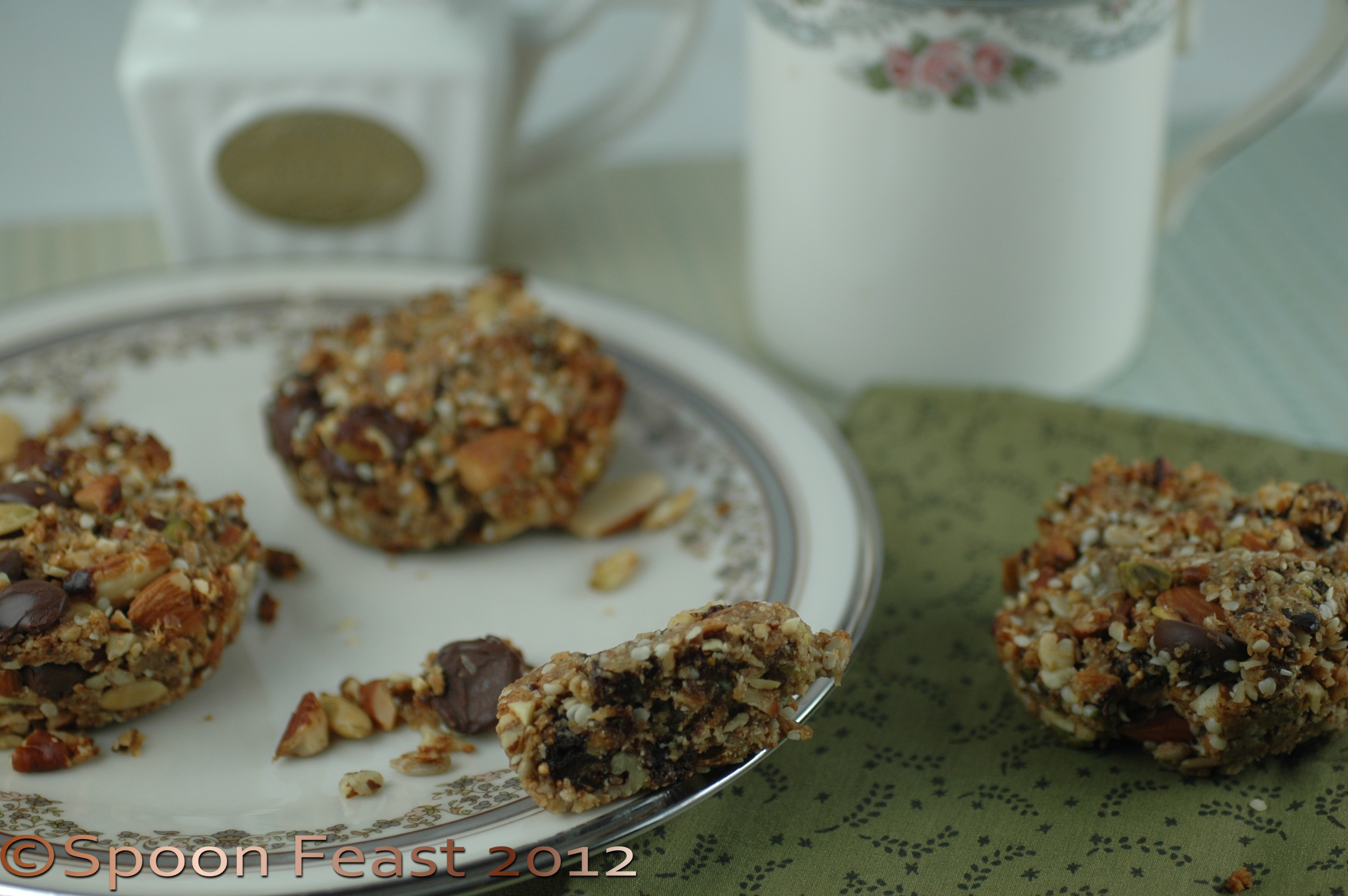
Bob’s “Good Health Balls”

Some like cookies crunchy, some soft, others cake like. Then there are nuts or no nuts, milk chocolate or what degree of dark chocolate; 50% 75% 80% cocoa? Or sweeteners, honey, sugar or agave?

I hope you can start getting the picture that “world’s best” is only world’s best to that persons mouth. Certainly their taste buds aren’t speaking for everyone in the world.

Bob is our division director and quite an interesting person. He is very health conscious, an avid practitioner and teacher of Yoga (I don’t know what kind) and is careful with what he puts into his body.

Bob is the person responsible for getting me started in baking our own bread again. He gave me a bit of his sourdough starter last year and I have kept it going and feeding without any issues. The starter makes great bread!

He found a recipe for “Paleo Bars” somewhere that he began playing with to create his own version of what he calls “Good Health Balls”

Perhaps the name needs a bit of work, but the bars are delicious. I don’t think Bob would have appreciated a post title:

“Bob’s Good Health Balls”

Nope, not going there.

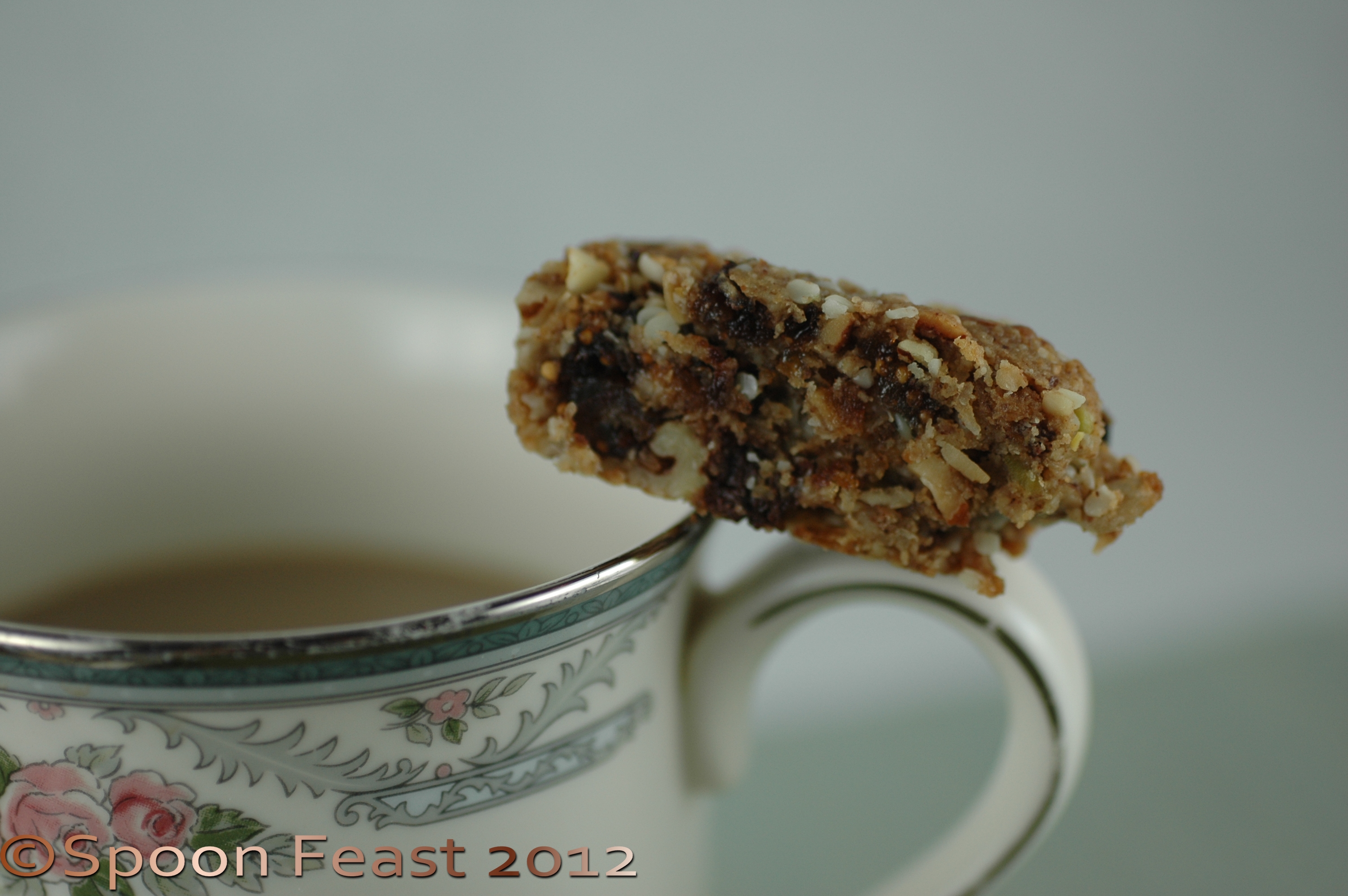
They go great with coffee or tea!

Good Health Balls 

  • 1 cup               toasted chopped almonds
  • 1 cup               toasted chopped pecans
  • ¼ cup             toasted chopped sunflower seeds
  • ¼ cup             toasted pumpkin seeds
  • ¼ cup             toasted pistachios
  • ¼ cup             hemp seeds
  • 1 cup               chopped dried dates
  • ½ cup             shredded coconut
  • 1 cup               almond flour
  • 1 teaspoon    cinnamon
  • ½ cup             chopped dark chocolate (optional)
  • ¼ cup                almond butter (Other nut butters can also be used)
  • ¼ cup                coconut oil
  • 2 teaspoons     pure vanilla extract
  • 2 large               eggs
  • 1 Tablespoon  organic blue agave

Pre-heat oven to 350°F while making the mixture.

In a large bowl, combine the almonds, pecans, sunflower seeds, pumpkin seeds, pistachios, hemp seeds, figs, coconut, almond flour, cinnamon, and chocolate.

In a separate bowl, combine the almond butter, coconut oil, vanilla, eggs, and agave. Whisk together well.

Add the wet ingredients to the dry ingredients and mix until the dough is moist and blended.

Form the dough into 1-ounce balls, lightly press onto a silicone or parchment paper-lined cook sheet.

A 1-ounce ball is 2 tablespoons. Make the balls all the same size, the weight isn’t as important as even size. If you adjust the size larger or smaller, you will also need to adjust baking time.

Use a small muffin tin lined with cup-cake liners instead of a baking sheet, if you like.

Bake for 15 minutes.  Balls will lightly browned on top.

Makes approximately 36  1-ounce morsels.

Notes: 

  • The dough balls can be successfully frozen.  This allows you to enjoy as many treats as you like.
    Store unbaked dough in a zip-lock freezer bag.

    Bake frozen balls for approximately 20 minutes in a preheated 350°F oven.
  • If you have a Trader Joe’s in your neighborhood, try their 72% dark chocolate.
  • Costco is a great source for hemp seeds

To your health!