Almond, Date, Cranberry and Lime “No-Bake” Cookies

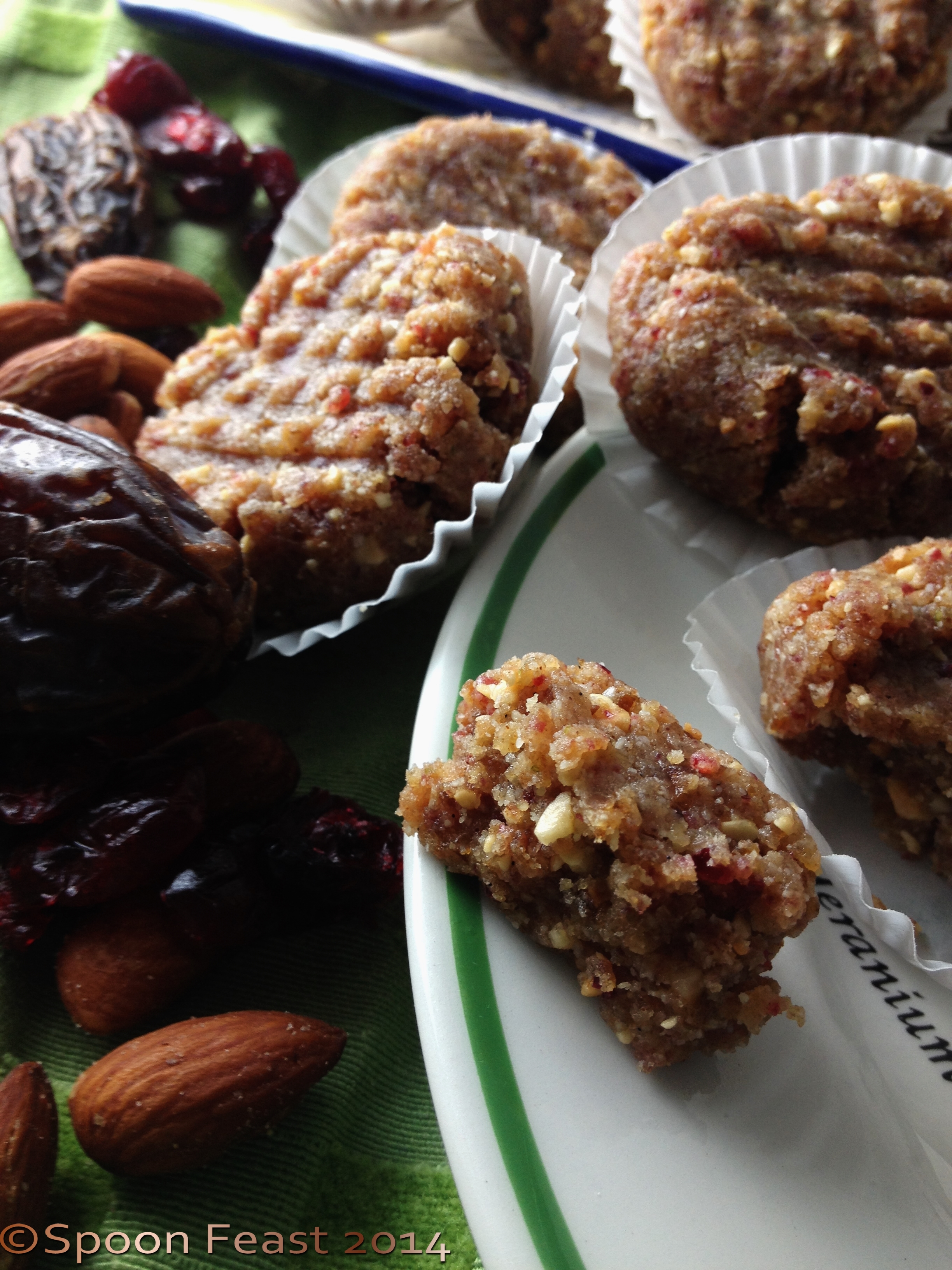
A Morsel of Almond Date Cranberry Lime Cookie

A Morsel of Almond Date Cranberry Lime Cookie

Almond, Date, Cranberry and Lime “No-Bake” Cookies are a real treat!

They are a “no-bake” cookie which puts them in the raw category; they are no sugar, eggs or butter so they also fall into the vegan category. With all natural ingredients so they also fall into the healthy foods and nutritious category.

Personally, my favorite category for  these morsels: Delicious!

Keep in mind some people might be put off thinking they are eating a raw cookie. So change the language and present these delicious morsels.

NOTE: Don’t fall prey to marketing ploys and think that because the label claims “healthy, all-natural or nutritious” does not mean low in calories! Learn to read a nutrition label and compare information.

Here’s the recipe for the cookies. It’s pretty much put it all in a food processor and pulse until a dough forms. Have fun!

Almond, Date, Cranberry and Lime “No-Bake” Cookies

  • 1/2 cup pitted Medjool Dates
  • 1/4 cup dried cranberries
  • 1 cup almond meal
  • 1/2 to 3/4 cup crunchy almond butter
  • 1 generous Tablespoon coconut oil
  • 2 Tablespoons vanilla extract
  • Zest and juice from 1 lime
  • Pinch of Sea Salt

Place all ingredients into the bowl of a food processor. Pulse until a dough forms. Leave some nuts chunky for a cookie that has some crunch.

Taste the dough and see if it need adjustment: a bit more salt? More vanilla or lime?

Form the dough into about 18 balls. Place the balls on a cookie sheet. Flatten each cookie with a fork.

That’s it.

Flatten the dough balls with a fork; like you would peanut butter cookies

Flatten the dough balls with a fork; like you would peanut butter cookies

The texture is kinda like fudge but in a much better way. If you leave some nuts slightly chunky, your cookie can have a crunchy texture too, but if you want a smooth cookie, pulse until smooth.

You can choose to roll the cookies in coconut, chopped nuts or cocoa with a dash if cinnamon if desired. Use peanut butter, cashew or almond butter with cocoa in it. I guess in a pinch you could use Nutella but the point here is to avoid added sugar and processed foods in delicious ways.

(OK, so now I have to make another batch using the cocoa!!!)

Most people would never realize these are considered “raw food” but they are.

These certainly aren’t low in calories but the sure supply great nutrients: Potassium, fiber, iron, B-6 and magnesium and vitamin E.

Just a note, you can leave the coconut oil out but it adds so much, I would use it.

Oh, and don’t bake these beauties for any reason! If you try, all that will happen is the oils from the nuts will leak out and leave you with a rather unpleasant mess. So if you want  a baked cookie recipe, use another recipe, not this one.

Hopefully you make your own vanilla extract, if not, go get ya some vanilla beans and some 100 proof vodka and make some!

Click this link: Perpetual Vanilla Extract

Please make a batch of these and let me know how you like them and how they go over with friend and family.

Raw Almond Date Cranberry Cookies  Rather than "raw" let's call them "No Bake"

Raw Almond Date Cranberry Cookies
Rather than “raw” let’s call them “No Bake”

My Cooking Culture

george-chochran-shoot-086.jpgMy Cooking Culture

We lived all over the world, moving about every 3 years to another place on the planet. From Morocco to Spain, Canada to Japan with a few of the United States in between.

My father is an avid gardener; we used to joke about having a corn field in our back yard no matter where we lived. Fresh snow peas were the gardeners treat. They got eaten in the garden and never quite made it to the table. I used to eat snow peas instead of potato chips. After school, I would head to the garden and sneak a few off the vines then help my dad after work with weeding and tying vines to eat more.october-15-2011-farmers-market-015.jpg

To this day, I love garden grown green beans and home-grown tomatoes seem to be better than anything you can buy at a store.

My mom is Canadian; grew up in Nova Scotia where they grew a lot of their food. She fed us with garden grown fresh foods, or frozen. She tried cans on us once and we rejected them as repulsive so she didn’t try that again.

In the foreign countries, mom always managed to hire a native cook to prepare meals for us a few days a week. My parents made sure no matter what country we lived in, we learned about the culture, food and language. When we lived in Japan, the family that lived behind us was the same size. The mom there and my mom made great friends with each other. On Wednesday night, they would each prepare a full meal for the family, put it on trays; walk out the back door and swap meals. They got a traditional American/Canadian meal and we got a traditional Japanese meal. I loved it! My dad, not so much.

Imagine, from my Dad’s point of view, the aroma of pan-fried pork chops, green beans and mashed potatoes with gravy wafting through the air. Ah, the smell of the roasting garlic whetting the appetite. The coming to the table and finding plates of various sushi, rice, miso soup and tofu with cucumber seaweed salads. Surprise!

We have always eaten a ton of fresh vegetables, local meats and foods. What is horribly frustrating is seeing the decline in the quality of our food supply. In addition to the decline in quality, there is also the fact that so many people really don’t know what they’re eating, or how to eat well or make good food choices.

This is where I want to make a difference!

My dad, who is 87, still grows a garden and has the best tomatoes in the world. He also makes a terrific gyoza, thanks to “Mamasan’s” recipe.

Final Harvest!

Final Harvest!

I am one of the lucky ones. My parents didn’t take us to McDonald’s. Even though as kids we begged for it. I remember looking at the McDonald’s signs and noticing how the numbers of how many hamburgers they sold kept increasing. (Yes, they kept count in the early days!) I wondered if I would ever be lucky enough to be part of that statistic. Then came the day when the signs changed to “millions served” now it might be “billions served”. Yes, I finally got one. They must have, among other things in this category, the worst bread on the planet.

My son used to say my meals were always the same: 1 starch, 1 or two vegetables (1 always green), and a protein with a sauce of some kind. I have to admit it is a type of formula.

Today my Typical Dinner Consists of:

1 Green vegetable (1 cup)

Leafy greens, broccoli, cabbages, peas, any variety of beans, snow peas, there are so many! If you’re not familiar, pick something you don’t know, ask about it, look up recipes on the internet and play with cooking it.

Fresh picked kale

Fresh picked kale

1 Vegetable of another color (1/2 cup)

Any veg that is not green, peppers, onions, cauliflower, squashes, this is to make the plate visually interesting and it also adds a punch of nutrition!

Corn Crusted Grouper

Corn Crusted Grouper

Grain or starch of some kind (1/2 to 1 cup)

Whole grains like brown rice, exotic rice, lentils, beans, potatoes, sweet potatoes, barley, millet, mung beans, quinoa, farro, cous cous. I love how much the level of choice in this category has grown. There is so much more than just rice and potatoes.

1 High quality protein – not always animal based (4-6 ounces)

Guidelines for animal proteins:
  • No beef
  • No pork (but I love bacon! ) 😉
  • No farm raised fish except catfish or trout
    • No Tuna, Sea Bass or Redfish

Note: we no longer eat any fish from the Pacific ocean.

  • Organic poultry
  • Organic eggs
  • Organic Dairy

    Multi colored Carrots (I bought these!)

    Multi colored Carrots (I bought these!)

1 Sauce (1-2 ounces)

Can be made from de-glazing the pan or reserved cooking liquids or stock or vinaigrette. This provides a bit of moisture and can add another dimension of flavor. I avoid using fat and flour thickeners and cornstarch. Instead I thicken by reduction (enhances flavor), adding mustard or miso which also contribute to flavor.

1 Side dish of raw vegetable salad (1/4 -1/2 cup)

This can be a green salad, carrot salad, cucumber, onion, Caesar, or lightly blanched vegetable and may contain a fermented/ pickled vegetable like pickled beets, cauliflower or onions. A homemade vinaigrette dressing, sometimes lemon juice and olive oil and cracked black pepper.

Anaida's Beans

Anaida’s Beans

This side does not need to be a big portion. 1/4 to 1/2 cup is a typical serving.  It can be used as a palate cleanser between tastes on the main plate.

Lunches:

Sandwiches with a chip and pickle of some kind. I’m working on improving the chip option but I really am fond of a handful of chips with a sandwich. I’m trying nori chips and kale chips. . . I may still go back to potato once in a while.

Light bits of left over dinner

Soup with good bread (I’ve made the bread we eat in the house for the past 10+ years)

Noodle stir fry

Grill pan dinner“Ploughman’s lunches” using what we have on hand

Vegetable Sushi

Breakfast:

On our own for breakfast. Most of the time I’ll grab something with protein.

This meal is usually quick , easy and light. Unless it’s oatmeal.

What we always have on hand:

Buy Organic whenever possible

Chicken stock, 1/2 & 1/2 for morning beverages and sometimes chai, fat-free milk, fresh greens, eggs, fruit, tetra-pac tomatoes, variety of beans, canned and dried, various rice and grains, legumes and potatoes. We will keep a stock of chicken and sometimes fish in the freezer for meals during the week.

I shop whenever we need fresh vegetables; I try to use fresh vegetables over frozen.

I leave processed foods on the shelf and process my own condiments, pickles and breads.

That’s it! My cooking culture, in a nutshell. A bit of many cultures rolled into a multitude of meals.

I believe everyone should be able to make healthy food choices and healthy food should be affordable and available to all.

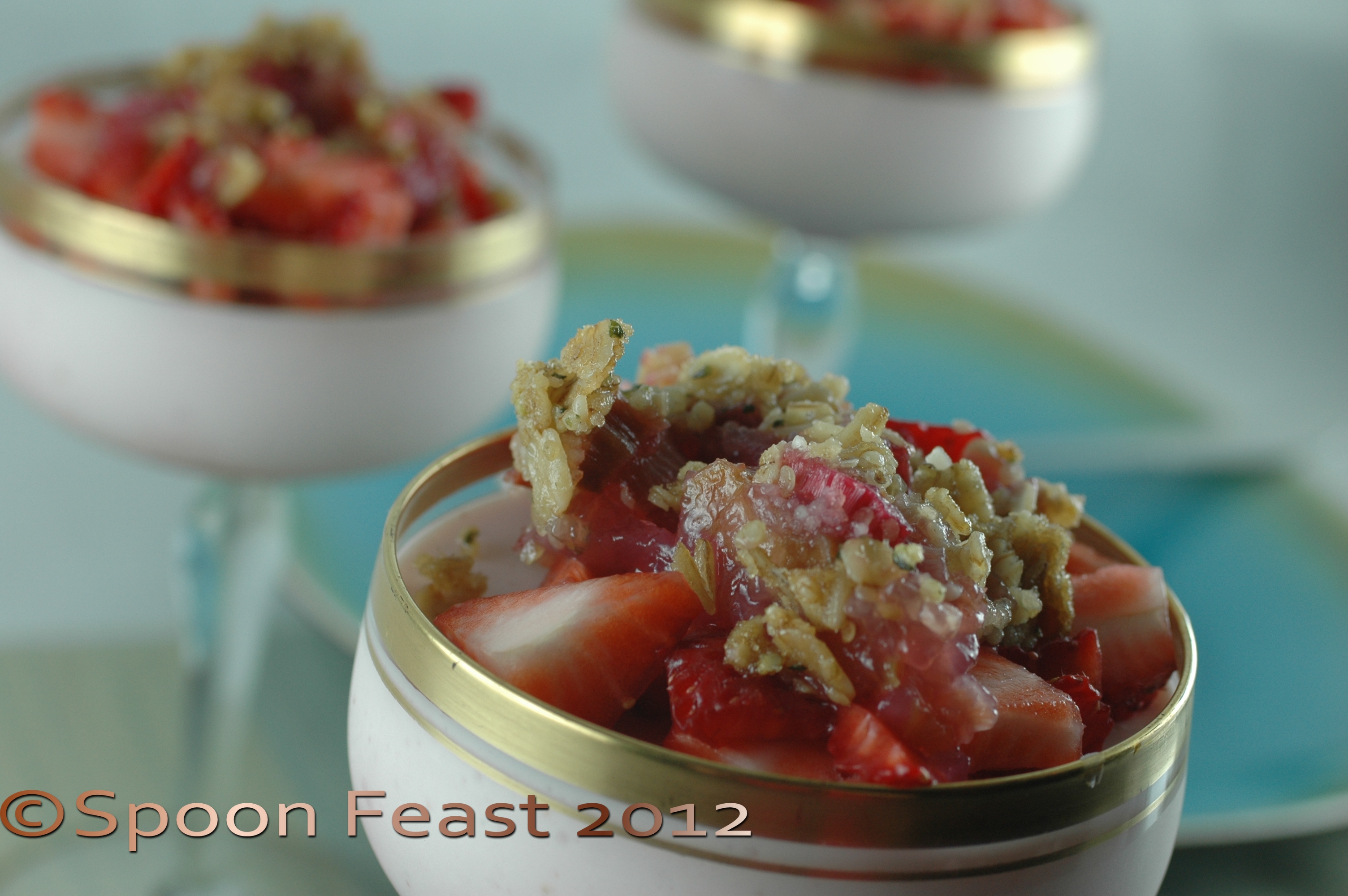
Strawberry Rhubarb Oatmeal Hemp Seed Crisp

Strawberry Rhubarb Oatmeal Hemp Seed Crisp

Chocolate Chia Seed Pudding with Toasted Almonds

There’s been a stir lately about chia seed pudding and this recipe for Chocolate Chia Seed Pudding with Toasted Almonds is one of the best I’ve tasted. Yum, Chocolate!

When I first bought the bag of chia seeds, honestly, I had no idea how I was going to use them.

I kept having flashbacks of smearing the soaked, slimy seeds over a rough damp terra-cotta pot shaped into some absurd shape. In college, my roommate and I had some; mine was an animal that grew chia fur, my roommate had a head that grew chia hair.

I think this is my favorite though:

But enough of silliness, on with the recipe! Best part is the seeds aren’t sprouted for the pudding.

The thing about chia seeds are they absorb quite a bit of liquid compared to their dried mass. This thickens products they are used in and results in a bit of an off-putting gelatinous substance. Hold your judgement.

The chia seed has good nutritional value providing omega 3 fatty acids, protein, fiber, magnesium, potassium, calcium and zinc. It’s a powerhouse of good nutrition.

Chocolate Chia Seed Pudding with Toasted Almonds

Chocolate Chia Seed Pudding with Toasted Almonds

Chocolate Chia Seed Pudding with Toasted Almonds

Yield: 1-1/2 cups

Dry Ingredients:

  • 2 Tablespoons organic granulated sugar
  • 2 Tablespoons dark chocolate cocoa powder
  • pinch of salt
  • 1/4 cup of chia seeds

Wet Ingredients:

  • 1 cup non-fat milk or use almond milk, soy milk, or coconut milk, use plain rather than already sweetened varieties
  • 1 teaspoon vanilla extract

Garnish:

  • 1/4 cup toasted almonds
Method:

Mix the dry ingredients together so there are no lumps.

Mix the wet ingredients together; add a small amount of liquid to the dry ingredients. Stir this until it makes a smooth batter-like paste. Fold the rest of the liquids into the dry ingredients and mix well.

TIP:

Dry cocoa powder does not combine easily with the milk if you just add everything all at once. There could be lumps of dry cocoa in the finished pudding which would be kinda yucky. SO add just a bit of milk and stir it in to get the cocoa wet and lump free before adding all of the milk.

Cover and set aside then stir every 20 minutes 3 times.This ensures the seeds are not clumping and will hydrate correctly.

Then put the covered pudding into the fridge for at least 2 hours or overnight.

To serve, fold in toasted almonds, reserving some for the top garnish. Spoon the pudding into a small bowl or cup, sprinkle with a few toasted almonds on top, add a small mint leaf and a berry or two if you have any on hand.

About the milk and ways to modify the recipe:

You can use any milk you prefer, even half and half but that sort of defeats the “healthy” part of this recipe. If you choose coconut milk, read the label and make sure of the ingredients before you buy it.

You can add spices like ginger, cardamom, cinnamon, use almond extract or orange or raspberry extract for flavor enhancement.

Leave the nuts out, add fruit  or nothing instead.

Chocolate Chia Seed Pudding with Toasted Almonds

Chocolate Chia Seed Pudding with Toasted Almonds

I’m thinking coconut, rose-water and cardamom, or chocolate raspberry next!

Since I had to taste this while writing about it, I didn’t realize I ate the majority of the dish and now have to make more to photograph the final plate up. Duh! It’s like the time I walked into the kitchen and ate the photo shoot. I dream of having a staff to help keep things straight!

Monk Fruit in the Raw VS. Sugar

Monk Fruit In The RawOK, so at the start of every new year, almost everyone says “I’m going to lose weight or get fit” or something. So I decided to see what this zero-calorie Monk Fruit In the Raw “all natural sweetener” is about.

The ingredients are: dextrose, monk fruit extract. In the larger bulk pack, the ingredients were: maltodextrin, monk fruit extract.

I wonder why the difference? I wonder what percentage of dextrose to monk fruit extract am I getting? Theoretically, they could simply add a few drops of the extract to the bin of dextrose and call it Monk Fruit in the Raw, but it is far from raw and since dextrose is the first ingredient, it is also far from being monk fruit.

So, I bought some to explore since I didn’t think the store would appreciate me trying this in the store. I opened a pack and poured it into my hand. I put some in my mouth and tasted it.

Sweet on the front, but it had an odd numbing sensation, slight, but numbing. Then the bitter after taste came on a few minutes after I had finished tasting the newly discovered miraculous ‘have your sweets and no calories too’ monk fruit sweetener. Yuck!

Then I put some in a perfectly good cup of coffee and totally ruined that too.

While the initial taste is sweet, it’s the dry bitterness of dextrose (yes another ‘natural’ sugar) that gets you in the end. Not being a diet soda drinker, I suppose my taste buds are more sensitive to those kind of flavors, but I didn’t like it at all. It actually numbed my taste receptors for a while after I finished  tasting, that I didn’t like at all!

I read the website the claim “Has the least after taste . . .” but whats with that tongue coating effect?

After washing my tongue off and getting it back to normal, I tried the same with a bit of organic sugar. Yup! Pleasure, smooth and sweet.

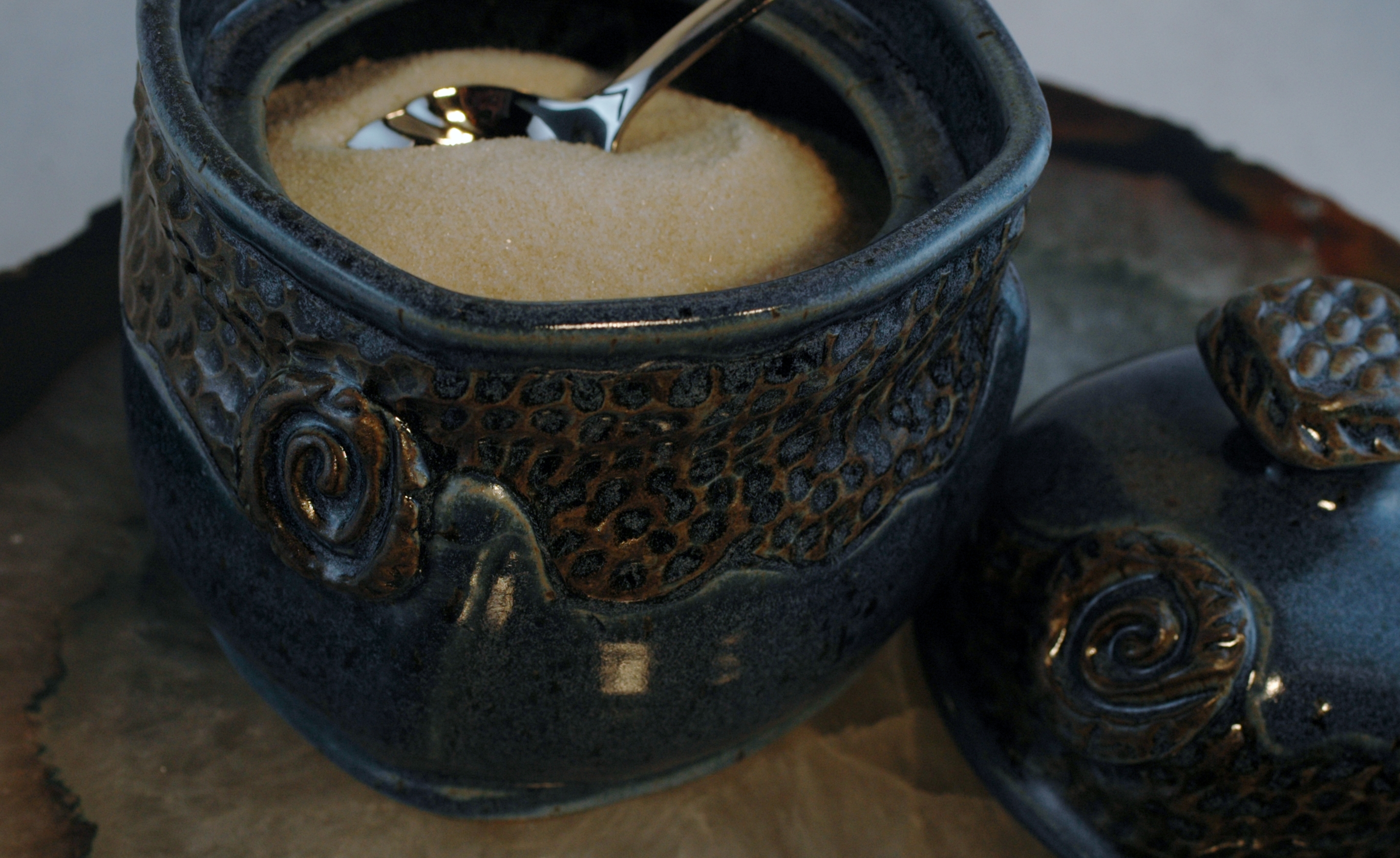
Sugar Bowl

Sugar Bowl

So what’s the conclusion? Use sugar, just use a lot less. I’m learning to like my tea with no sweetener but Earl Grey really likes a small bit of sugar.
Unless you enjoy the sensation of diet/low-calorie food things in your mouth, stick to using sugar. Train yourself to use less. I know that’s not an option for diabetics., but maybe use the real fruit instead of this processed junk?

The packaging is romantic and describes the ancient history of using monk fruit as a sweet ingredient. I’d bet they didn’t have granulated sugar then either, let alone dextrose or maltodextrin to mix it with. What they used back then is not what is wrapped up so neatly in bright orange packages and presented to you as monk fruit.Monk Fruit In The Raw Packets

And the zero calories? The say on the side of the box that each package contains less than 3 calories per serving which the FDA recognizes as zero calories. But whose counting?

This is my opinion and your tastes and experience may differ. I love that!

Southern Iced Tea

Southern Iced Tea

Thanks for All The Fish

I am going on an alarming rant here, about the condition of the oceans and the fish that swim in them. This is a very sobering situation and it seems there are only a few people talking about this.

It is stated that the entire Pacific Ocean will be completely contaminated with radiation by 2016.

Let that sink in. By 2016, if not sooner.

We should all be very alarmed.

Fukushima has always been a world issue but only a few dedicated heroic Japanese are working non-stop to solve the problem. The brains of the world should step in and assist in trying to figure out what should and could be done.

However, I feel it is already far too late to save the food we get from the oceans. The blue fin tuna being caught off of the California coast are testing positive for radiation.

This is not the radiation we commonly find naturally in food; our bodies have adapted to that. In case you didn’t know, bananas, Brazil nuts have extremely low doses of potassium-40 and we have naturally occurring radiation such as radon and radium. Our bodies have adapted to potassium-40. Potassium does not collect in our bodies, any excess is dumped. And we have adapted our environments to deal with radon.

We are referring to radioactive elements such as cecium-137 which has a half-life of 30 years, and idoine-129 and iodine-131 has a half-life of 8 days as an internal transmitter, while iodine-129 has a half-life of, get this, 15.7 million years. Additionally, Fukushima has dumped radioactive strontium-90 which is also a strong internal transmitter, mimics calcium and collects in bones.

We have not adapted to these elements and they cause cancer. Cecium-137 is hard to avoid due to the environmental and atmospheric  testing of bombs. Cecium-137 enters the body through food and milk. It is chemically similar to potassium and is processed in the body the same as potassium.

Cecium-137 collects in muscles; Iodines in the thyroid and strontium-90 collects in bones. These are not naturally occurring radioactive elements are extremely dangerous. Due to the long half-lives, exposure is cumulative and builds up until one or the other perishes.

Please read this article and series of articles regarding this on the blog Washington’s Post, poke around while you are there and read more.

There are articles, studies and research that back the information up so it’s not just some doomsday freak writing scare tactic articles.

Yes, I’m sure you have heard about the talking heads saying the levels of radiation are harmless and much lower that what we encounter everyday in our natural environments and medical procedures.

To quote the blog “Washington’s Post”

The bottom line is that there is some naturally-occurring background radiation, which can – at times – pose a health hazard (especially in parts of the country with high levels of radioactive radon or radium).

But cesium-137 and radioactive iodine – the two main radioactive substances being spewed by the leaking Japanese nuclear plants – are not naturally-occurring substances, and can become powerful internal emitters which can cause tremendous damage to the health of people who are unfortunate enough to breathe in even a particle of the substances, or ingest them in food or water.

Unlike low-levels of radioactive potassium found in bananas – which our bodies have adapted to over many years – cesium-137 and iodine 131 are brand new, extremely dangerous substances.

And unlike naturally-occurring internal emitters like radon and radium – whose distribution is largely concentrated in certain areas of the country – radioactive cesium and iodine, as well as strontium and other dangerous radionuclides, are being distributed globally through weapons testing and nuclear accidents.

At this point, I’m not sure if there is anything “we” can do except be aware. I predict our time to eat ocean fish from any ocean is limited. In five years, we may not be able to eat any more ocean food.

I went to high School in Tokyo Japan. I still have many friends living there, in Hawaii and Guam. They all express concern and have fears of what the future may bring.

It makes me wonder, would it be safe to live on the coast? Go to the beach? What about walking in the rain?

Life as we know is it going to change. Just as we now bring our own shopping bags as we grocery shop, we’ll need to add a Geiger counter. Hope they make a purse size.

The worlds scientists say it is OK to eat Pacific seafood. Is this to avoid mass panic? Is the issue being glossed over because there isn’t anything anyone can do? What will the future be like in 10 years?

So many questions without answers.

Geiger-Müller radiation detector.

Geiger-Müller radiation detector. (Photo credit: Wikipedia)

What happens when the safe drinking water supply to a city like Tokyo is contaminated with radiation? Where and how does an entire country get relocated?

#6550 Iodine-131 found in ground water

#6550 Iodine-131 found in ground water (Photo credit: Nemo’s great uncle)

Should we just go on about living as if nothing is happening? What do we do? What will you do?

Imagine future generations saying things like, “Can you believe they used to eat these things?”

All I can say, is I’m glad to have had the chance to eat seafood and enjoy it tremendously. I’ll miss it terribly. Thanks for all the fish!

Awareness of Eating

“Never trust a skinny chef!” is how the old saying goes. But let’s examine that adage and explore the rearrangement of a common cliché.

As we become more aware of our diets, the effects food has on our bodies and how it makes us feel, there needs to be a basis of trust between the cook and the consumer.

English: White House chefs, directed by Execut...

English: White House chefs, directed by Executive Chef Henry Haller, prepare for a state dinner honoring Australian Prime Minister Malcolm Fraser. The chefs are working in the White House kitchen; the dinner occured in 1981, during the administration of Ronald Reagan. (Photo credit: Wikipedia)

Take a look at the chef, the person responsible for creating the menu and training the kitchen staff on how to prepare the various dishes.

Since I have worked in kitchens, I know a lot more about how restaurant kitchens run than most. If the person creating my meal is on the heavy side, typically sauces and flavorings  would be full of butter, fats, salts and sugars.

“A heavy chef means they enjoy their food, so it must be good!”

Really? How many people who are overweight have a hard time identifying a proper portion size? Someone who struggles with weight will eat for the sake of eating.

Someone who has emotions (hopefully all of us) will eat sometimes for comfort. Think of chicken soup when you’re ill; but when you can’t stop eating weight becomes an issue.

Sometimes the food choices we make are simply because the food we choose is familiar, it is what we know. But what if that food is bad for us? What if people really don’t understand the processed food they are eating is bad?

Evidence the obesity crisis in the USA.

Jamie Oliver is doing an eating awareness program in West Virginia to address the problem of obesity. He goes into an elementary school and the children cannot identify fresh tomatoes on the vine, cauliflower or even potatoes.

The pile of pizza, corn dogs, hot dogs, hamburgers, cakes and ice cream all over the table that represented what the family ate for a week was disturbing. Most disturbing of all is that the mom didn’t know the food was bad for them. They weren’t hungry and she thought that was good.

But she is killing her family. Her 10-year old son is already 350 pounds. Really, “Well we’re not hungry”?!

Shocking. How did it get so far?

I want a chef who is inventive but not at the expense of my health. I want someone preparing my food with the same attitude I have for health.

Obesity is a rampant problem in the USA. Identifying proper nutrients is a major issue. Processed foods, fast foods, restaurant foods loaded with fats, salts and sugars invade the diets of every day eating all around us.

The basic food environment in the USA is severely lacking in good solid nutritious fresh food.

Drive through any town, fast foods for everything from donuts, burgers, sandwiches, Mexican, Chinese, and Italian; fried and fast is what lines the streets. It isn’t easy to choose not to eat fast food, especially when you are hungry, the temptation is great to give in.

There are many of us who are aware of what we eat. Those on gluten-free diets are aware of nearly every product they eat. Thankfully, gluten-free is easier to find these days, but there is still the issue of all that fat, sugar and sodium.

When we eat out, we are at the mercy of the kitchen to actually know how to make food taste good without the added fat, salts and sugar.

Slapping butter, sugar and salt onto food is an easy way to make anything taste good. Cooking like that takes no skill at all.

Using salt is an important seasoning but so many far overdo the salt thing. Adding some salt to cooking water when boiling pasta, rice or potatoes is usually all you need.

I love salt! I adore all the different kinds of salt there are, yet I don’t overdo it either.

I am not looking for a chef who serves me a plate full of sauces and vegetables full of butter. I am looking for foods that are cooked correctly and seasoned to bring out the full of flavors.

People need to learn what a proper portion size looks like. Restaurants serve enough to 1 person to feed three and yet that one person still tries to eat as much as they can because that is what they are served.

Case in point: The Cheesecake Factory (Hint right there) offers a “Crispy Chicken Costoletta” which serve up a whopping 2610 calories, 89 grams of fat and 2720 milligrams of salt. Costolotta alright, cost a lotta health if you eat all that.  If you really have to eat that, then break it down into three meals at least. (Nutrition Action Healthletter, January/February 2012) Best of all, choose another place to eat.

Watch buffets; people load up their plates as if they only have one visit. All manner of foods get glopped together on a plate so it becomes a huge pile of goop melange. Why not go get some salad, talk, visit with your dining companions, eat, and return for entrée, then again for dessert. It seems more civil. Why are we rushing? Trying to beat the mental signal you are full?

But instead they try to slip that cherry cobbler right next to the fried chicken and coleslaw that sits on top of the ranch dressing salad with “Country Crocked” yeast rolls underneath.

Then they stuff it all in, make a second trip and wonder why they have bellies the size of VW Bug cars.

Burp.

Talking to Tyler the other day, he mentioned he was having his girlfriend over for dinner and he had to go set the table. I felt good knowing he was carrying on a family value: Setting a table and sitting there to eat dinner and talk to each other about the day.

An attractive dinner setting

An attractive dinner setting (Photo credit: Wikipedia)

Something so small, yet it is so important. Our social and family bonds grow stronger with each meal gathering. Shouldn’t the food put in front of us be nourishing as well?

The movement to better health through eating well begins with each one of us making a choice.

If you don’t know how to cook or how to choose better nutrition, take a class and learn. Get your children involved with preparing meals; they are more likely to try new foods if they have a hand in making the dish.

Step away from the sugar bowl! Put down those sodas and juice boxes. Drink water, teas, non-fat milk. There are even flavored waters with bubbles if you simply must have a fizzy drink.

Try extra-virgin coconut and olive oils instead of butter. Your heart will thank you.

I started taking a Therapeutic Nutrition class a few weeks ago. My eyes have really been opened to how severe the obesity epidemic is and that we CAN do something about it.

That something is education and choice.

I hope you can join me in starting something is your neighborhood. The future depends on our kids, how can they carry on if they aren’t healthy?

First step ANYONE can take:

Don’t eat any food advertised on TV

Except eggs and milk, of course!

Sorry Jared, Subway needs a better way.

Make a sandwich from home. Learn to cook fresh foods and eliminate processed foods. It may take a while to actually accomplish this, but you will be rewarded with better health and more money in your pocket.

If each of us took one small step towards better eating and nutritious health, we could change a nation. We can start in our own homes.

The power of one can inspire another.

Apples are an all-American success story-each ...

Raw Kale Salad – Give it a Massage!

I was reading a recipe the other day on the Food Network website regarding a Massaged Kale Salad from the Aarti Party Show.

Kale is on the edge of being overdone but this is worth exploring. Give it a try before you get sick of eating so much kale!

Kale saladPrevious thoughts had me thinking kale was too tough to eat raw. A quick saute, dip in hot oil, plunge into a hot oven or dropped into soup is how I prepared it before this recipe caught my eye.

So I tried it. Massage your kale, sounds kinky right?!

I had to come up with another way of massaging the kale as not everyone likes to have their food handled to this extent by someone else’s bare hands.

Use a dough hook instead of your hands

Use a dough hook instead of your hands

Bare hand contact can be a health issue if the person touching the food does not wash their hands correctly or is carrying some kind of germ.

While the recipe wasn’t followed, the massage technique was. The result is an addicting, tender kale salad that can be dressed in so many ways.

After massaging the kale, create your salad. All you need to add is other ingredients and the salad is already dressed.

Choose a toasted nut and a favorite fruit, fresh or dried. Add some cheese and you can go forever with the combinations that can be created as additions for this most excellent salad.

This is what I did last night:

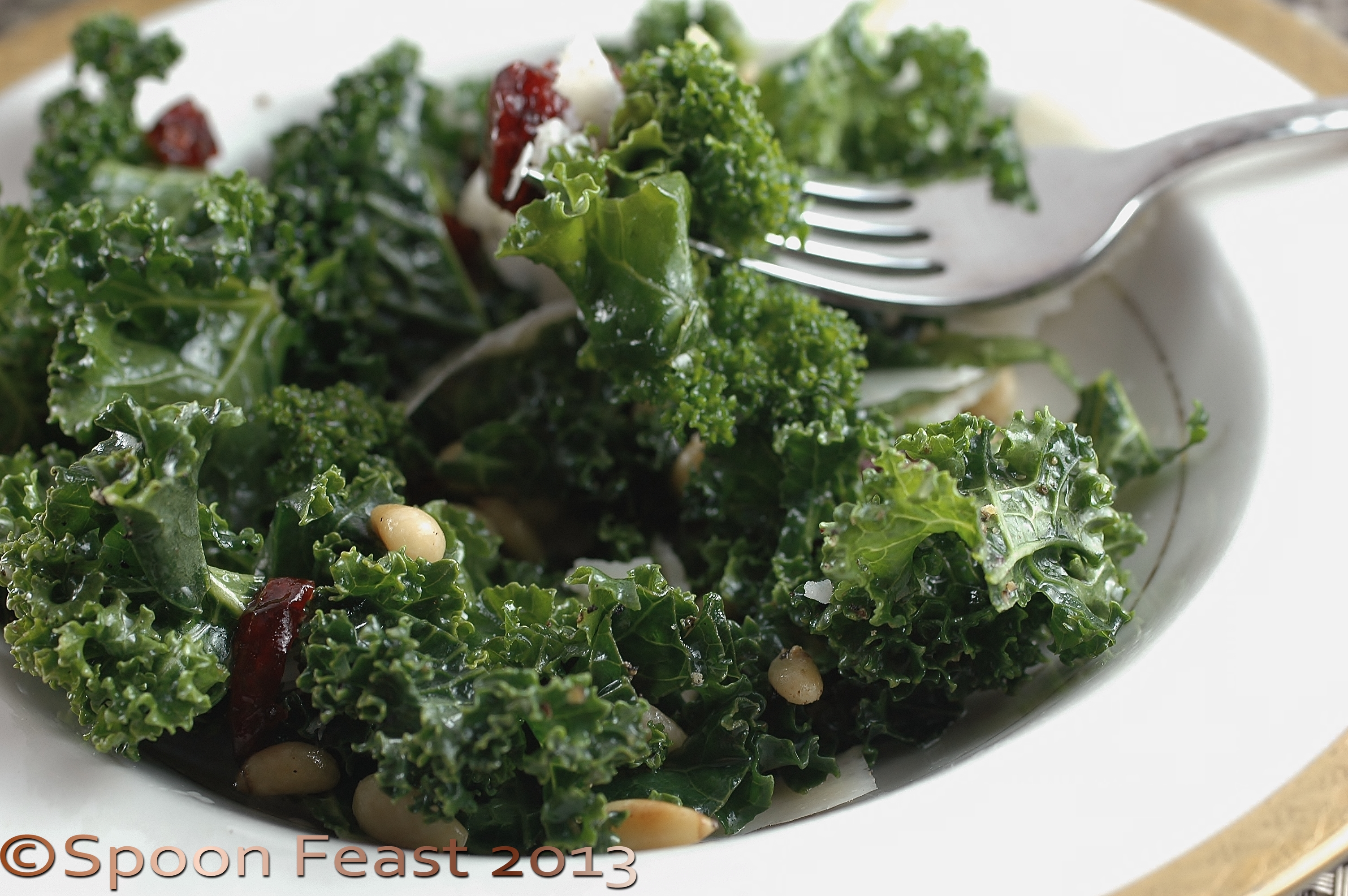
Kale Salad with Toasted Pine Nuts, Dried Cranberries and Shaved Parmesan

  • 1 pound kale
  • Juice from 1 fresh lemon
  • 1 tablespoon extra virgin olive oil
  • A light sprinkle of salt and fresh black pepper
  • 1/2 cup dried cranberries
  • 1/2 cup shredded Parmesan cheese
  • 1/4 cup toasted pine nuts
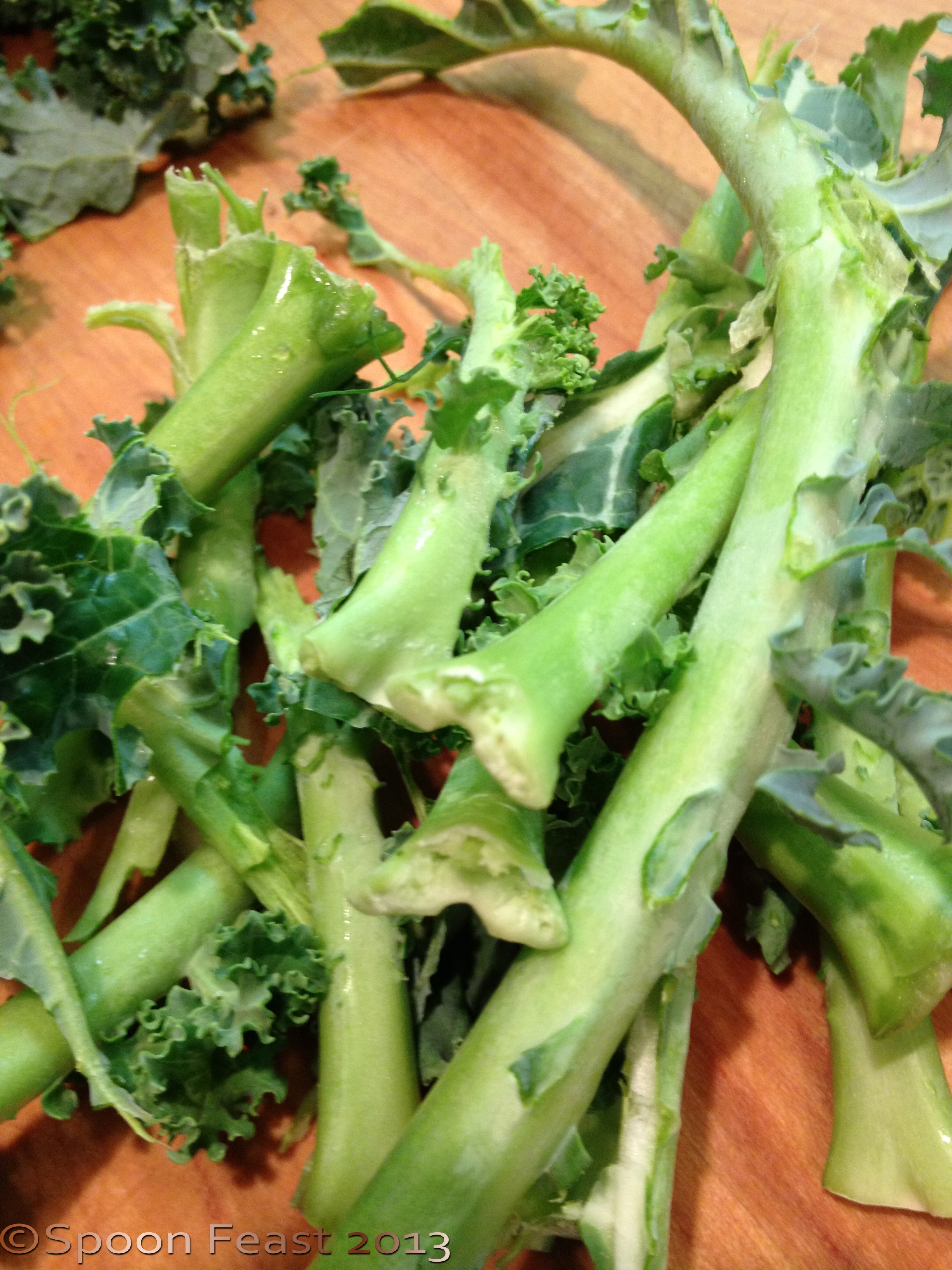
Trim the stems from the leaves

Trim the stems from the leaves

Trim leaves from the stems, wash thoroughly in cool water to remove any garden friends, sand and dirt.

If the kale is very sandy or has a lot of soil on it, soak it in a deep bath of salty water. Dip and lift the kale from the water so the soil is left behind in the bottom of the soaking bowl. You may need to do this several times to get rid of all the dirt.

Chop the kale leaves small, but not too tiny; bite size is perfect.

Place the chopped kale into a bowl. Drizzle the kale with lemon juice, olive oil, salt and pepper. The amount you use depends on how much kale you use. Only use enough to lightly coat the leaves, you don’t want anything on the bottom of the bowl.

Using your hands (washed of course! and wear gloves) or in a stand mixer on low with the dough hook, massage the greens for 2-3 minutes.

You will notice the leaves changing texture, becoming more tender and turning a brighter green as well.

Peel Parmesan into the salad with a peeler.

Peel Parmesan into the salad with a peeler.

After 2-3 minutes of massage, add toasted pine nuts, dried cranberries and use a peeler to shave Parmesan into the salad.

The above amounts can be adjusted to your liking.

Try other fruits, nuts and cheese in this salad, avocado is amazing too.

Top the salad with beef, grilled chicken, shrimp or fish to make it an entrée salad.

Serve and enjoy!

eating kale saladThis salad was so good, I came back down and scarfed another bowl in the middle of the night and another after breakfast.

Now I need to go buy more kale.

DSC_0051

Coconut Oil – Myth and Reality

Coconut oil has become the latest buzzword in healthy diets these days.

Healthy coconut oil? This goes against everything we have been told for the last 65 years.

English: This is a photo of one of my painting...

I must admit I held a lot of misconceptions about coconut oil until I started doing research and talking to people about using the oil.

If you want to know a very simple analysis of what I found read below.

How to use coconut oil in the kitchen is after the research. If you get bored by the technical stuff, drop down to the kitchen section.

“Coconut oil is high in fat and therefore bad for you.”

The fat found in coconut oil is a medium-chain fatty acid or triglyceride. Most vegetable and seed oils are composed of long-chain fatty acids. The medium-chain fatty acids are easily processed in the liver without insulin spikes. They are easy to break down therefore are used by the liver as energy rather than stored as fat cells like the long-chain fatty acids.

Coconut oil is a rich source of lauric acid, rarely found in nature, lauric acid is known as a ‘miracle’ element due to its ability to

Chemical structure of Lauric acid created with...

Chemical structure of Lauric acid created with ChemDraw. (Photo credit: Wikipedia)

promote health in the body. The body converts lauric acid into an anti-viral and anti-bacterial and anti-protozoa substance.

(Bacteria, viruses and parasites such as some protozoa, like Giardia and Cryptosporidium, are major sources of food borne illnesses.)

“Coconut oil is a saturated fat. It can build up in your system and cause clogged arteries, obesity and heart disease.”

Actually the opposite is what is true.

We have been told for the last 65 or so years, all saturated fats are bad for you. Consuming saturated fats can lead to health issues.

The health issue list includes obesity, heart disease, clogged arteries, high cholesterol, just to name a few.

Some saturated fats occur naturally and some are created, like margarine.

Bombarding  molecules with hydrogen to produce a thick sticky substance has no health benefits whatsoever. Yet this is what has been sold to us in the form of margarine and preached to us by the ad agencies as being “beneficial, healthy, and a better choice than butter. Witness the popularity of things like Country Crock, Parkay and I can’t believe it’s not Butter kind of products.

The created products are full of trans-fats, which we should avoid completely.

The marketing industry convinced us that because coconut oil was solid at room temperature, it should never be consumed. It was used in cosmetics to benefit the skin, but it was shunned as an ingredient in our diets.

Research has discovered these negative myths about coconut oil are not true. Studies have been done on cultures that thrive on coconut oil in their diets to show lower rates of obesity, no cardiovascular disease, and over all better general health than we have in the USA.

Coconut oil helps equalize cholesterol levels by promoting HDL in the blood which helps improve the HDL/LDL ratio. Additionally coconut oil helps promote healthy thyroid function thereby also assisting cholesterol and boosting energy and endurance. A boost to the thyroid can also pump up your metabolism, which is a great benefit!

Consumption of coconut oil helps the body absorb fat-soluble vitamins. It helps blood sugar stabilize, it can help resist fungus and yeast and can improve how the body uses insulin.

Consuming 2 tablespoons of coconut oil daily, in this 2009 study, demonstrated benefits. In this 12-week study, the women did not gain weight but actually lost stomach fat during the study. Reading this study made me decide to give coconut oil a try.

English: Coconut oil in solid state

Coconut Oil in the Kitchen

Selecting Coconut Oil:

You want extra-virgin, organic coconut oil. Read the labels!

Not all coconut oil is the same. Some is hydrogenated which is what you want to avoid.

Storing Coconut Oil:

Coconut oil has a low melting point (76°F) and a high smoke point (350°F). Store the oil in a cool dry place like a cabinet.

Do not store the coconut oil in the refrigerator.

Do not store it near the stove because it could cause it to melt.

Store it in a cool cabinet away from the stove. It should last about 2 years without going rancid.

But if you are using it, it shouldn’t last that long.

Using Coconut Oil:

Use Coconut Oil to saute or pan-fry your meals and snacks. Popcorn is wonderful popped in a bit of coconut oil.

Saute kale for an incredible flavor! The sweetness of the coconut oil really enhances and tames the bitterness of kale.

Use it to saute any vegetable, chicken, fish, or meat.

Use it just as you would any cooking oil. However because it is solid below 76°F, it is best not used in dressings or marinades. Use a quality grade of olive oil for these items instead.

Here is another use for coconut oil: replace butter or solid shortening (Crisco or margarine)with equal amounts of coconut oil in baking recipes. Your baked goods will be amazing and much healthier.

Does it make everything taste like coconut?

While the oil has the very mild scent of coconut, so far I cannot detect the flavor of coconut when I cook with it. Sometimes things may taste a bit “sweeter” but not like sweet as if you added sugar.

Just an enhancement of the natural sweetness that is already there.

Last night I marinated some chicken breasts in a spicy “Cockalacky” sauce which is made with sweet potatoes. After the marinade, the breasts were breaded in panko and pan-fried in coconut oil until done.

The oil really brought the flavor of the sweet potato used in the marinade, such a nice flavor surprise!

While I have added coconut oil to our diets, we still use other oils as well. I enjoy the flavors of various seed and nut oils in salad dressings. Additionally the various oils also have other health benefits.

This is not about giving up other oils but about making smarter choices, more informed choices.

The key thing to remember fat is fat.

Just because it is coconut oil does not mean you can consume mass quantities of it. As with all fats, use it in moderation.

For the next 12 weeks, I am going to get 2 tablespoons a day of coconut oil into my diet. I am looking forward to seeing the results. Hopefully my skin and hair will not suffer winter dryness, my tummy fat will start to disappear and I will feel great. I have a physical in soon so it will be interesting to compare the numbers from last year to this.

Summer 2013 Update

This summer I heard of using coconut oil instead of sunscreen. Personally, I think that’s taking it a bit too far. I love using coconut oil on my skin, it feels so good but instead of sunscreen? “They” may say that coconut is naturally SPF 30 but I think I’ll back it up with some SPF 50 just to be sure.

Before foregoing coconut oil for sunscreen, ask your dermatologist their professional opinion!

Skin cancer is no laughing matter and not worth a risk.

Use all fats in moderation, including coconut oil.

While I have lost 13 pounds so far, my goal is 10 more, it isn’t all because of coconut oil. It’s more about making better choices.

Do you use coconut oil? Why or why not?

Please share your thoughts and experiences so we can all learn something from each other.

Coconuts