Pickled Cauliflower

Pickled cauliflower ingredients

Pickled cauliflower ingredients

I don’t know about you, but I LOVE cauliflower, especially when its pickled cauliflower! When I was little, I would go into the jar of mixed pickles in the refrigerator and pick out the few bits of cauliflower that could be found. It was always disappointing because if you were lucky, you could find two pieces in a single jar.

And my dad likes it as much as I do. I always wanted to see a jar of pickled cauliflower on the shelves of the grocery, but when I have seen them, the contents have always been disappointing.

Yummy Pickled Cauliflower!

Yummy Pickled Cauliflower!

SO, using a pickling method I use to make sweet pickles, I used cauliflower instead of cucumbers with lip-smacking good delightful flavor.

Pickled Cauliflower

Ingredients:

  • 2 pounds of cauliflower, cleaned and broken into 2-3 bite size bits – measure after cleaning the cauliflower
  • 8 ounces sweet onion, sliced into 1/4 inch thick slices

Simmering Brine:

  • 1 quart of water
  • 12 ounces apple cider vinegar
  • 1 tablespoon sugar
  • 1 1/2 teaspoons kosher salt
  • 1/2 teaspoon mixed pickling spice

Mix brine ingredients in a large pot, bring to a boil. Once boiling, add the cauliflower and onions, return to a boil and lower heat. Simmer for 10 minutes.
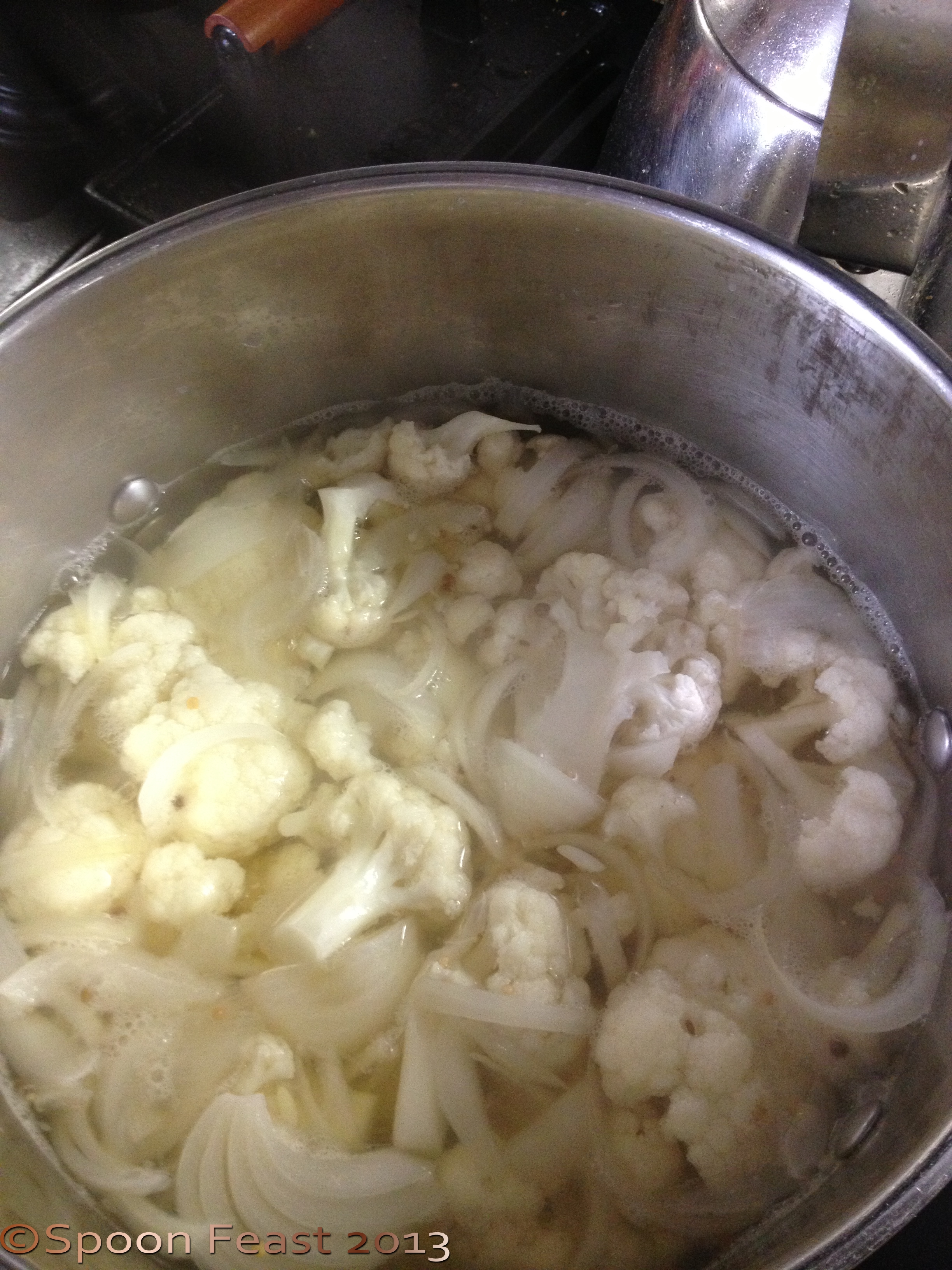
Boil the vegetables in the simmering brine for 10 minutes

Boil the vegetables in the simmering brine for 10 minutes

Drain, discarding liquid unless processing another batch.

While vegetables are simmering, make the vinegar pickling brine.

Pickling Vinegar Brine

  • 10 ounces white vinegar (NOT WINE Vinegar!)
  • 13.5 ounces granulated sugar
  • 1 Tablespoon celery seeds
  • 1 teaspoon mixed pickling spice
  • 1 teaspoon ground turmeric
  • 1/2 teaspoon crushed  whole allspice berries
  • 2 bay leaves

Optional:

  • 2-3 cloves fresh garlic – for a fresh garlic flavor
  • 1-3 dried red chili pods or red jalapeno pepper – to give some heat!

Combine everything in a sauce pot and bring to a boil. It will need to be stirred to encourage the sugar to melt.
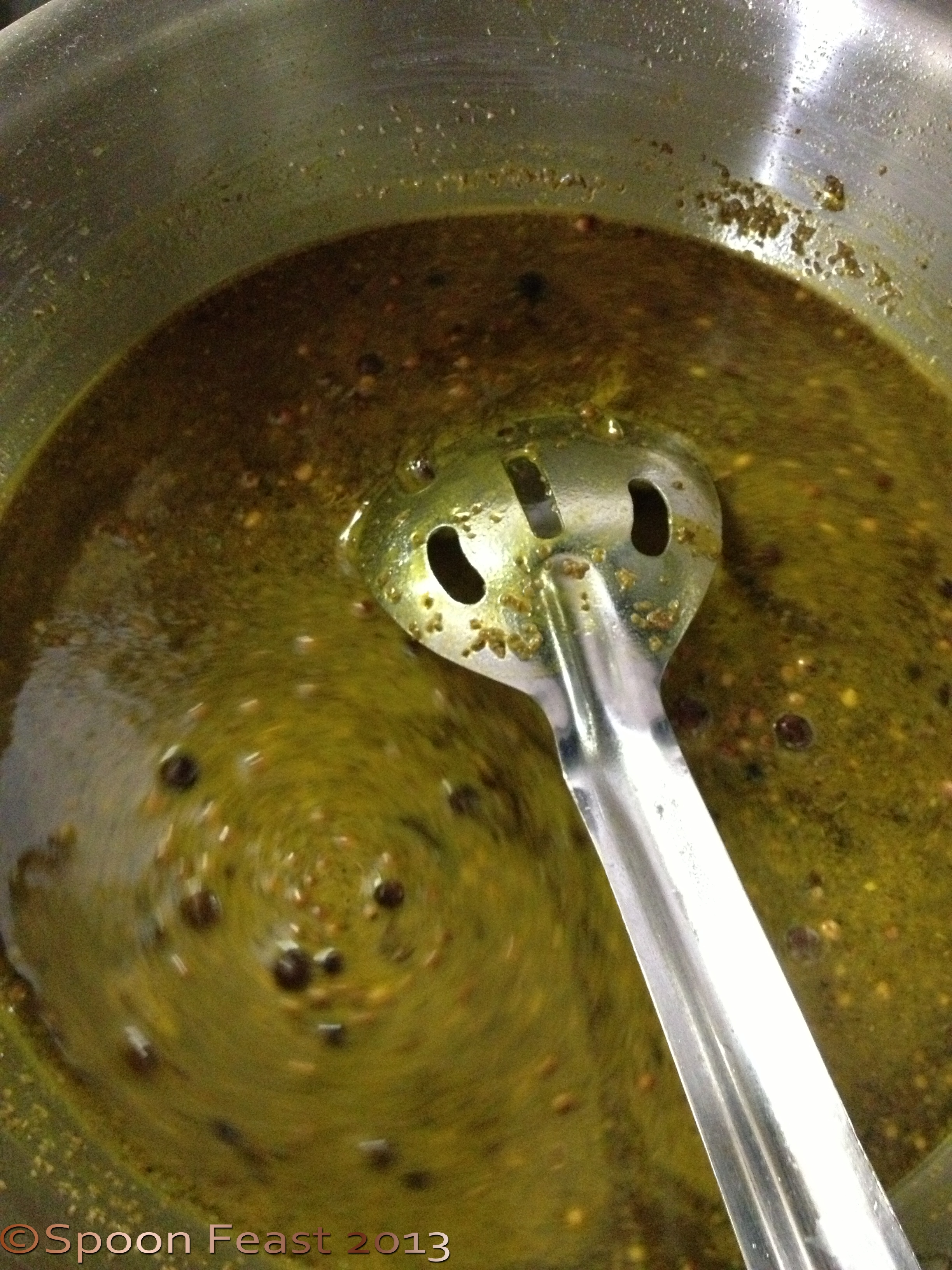
Stir the spices and sugar as you bring to a boil for the Pickling Brine.

Stir the spices and sugar as you bring to a boil for the Pickling Brine.

This mixture needs to be boiling when the vegetables are done simmering.

Procedure:

Wash the cauliflower in water slightly warmer than the cauliflower. Cut into florets. Soak in a large bowl of cold water with 1/4 cup salt in it.

This helps eliminate any insects that may be lurking on the vegetable.

Mix the simmering brine ingredients, put on the range top over high heat to bring to a boil.

Mix the pickling vinegar brine and put that over high heat, stirring often to prevent the sugar from burning.

Drain the cauliflower it should soak for at least 15 -30 minutes.

When the simmering brine reaches a boil, drop in the cauliflower and onions, return to a boil, then simmer for 10 minutes.

Drain the vegetables, discarding liquid (Unless processing another batch).

Place the cauliflower and onions in a large canning jar. Using a wide mouth funnel, pour the boiling pickling brine into the jar all the way to the top. Leave as little head room as possible. Everything must be submerged under the pickling brine.

If you find there are pieces that want to float, place a small glass plate or dish on the surface to hold everything down.

At first the jars may appear cloudy but as the turmeric and celery seeds settle to the bottom, the vinegar will clear up and you can enjoy looking at gleaming bottles of an amazing pickled cauliflower!

Fresh and Pickled cauliflower

Fresh and Pickled cauliflower

Keep these in the refrigerator unless you want to process them in a canning process to make them shelf stable.
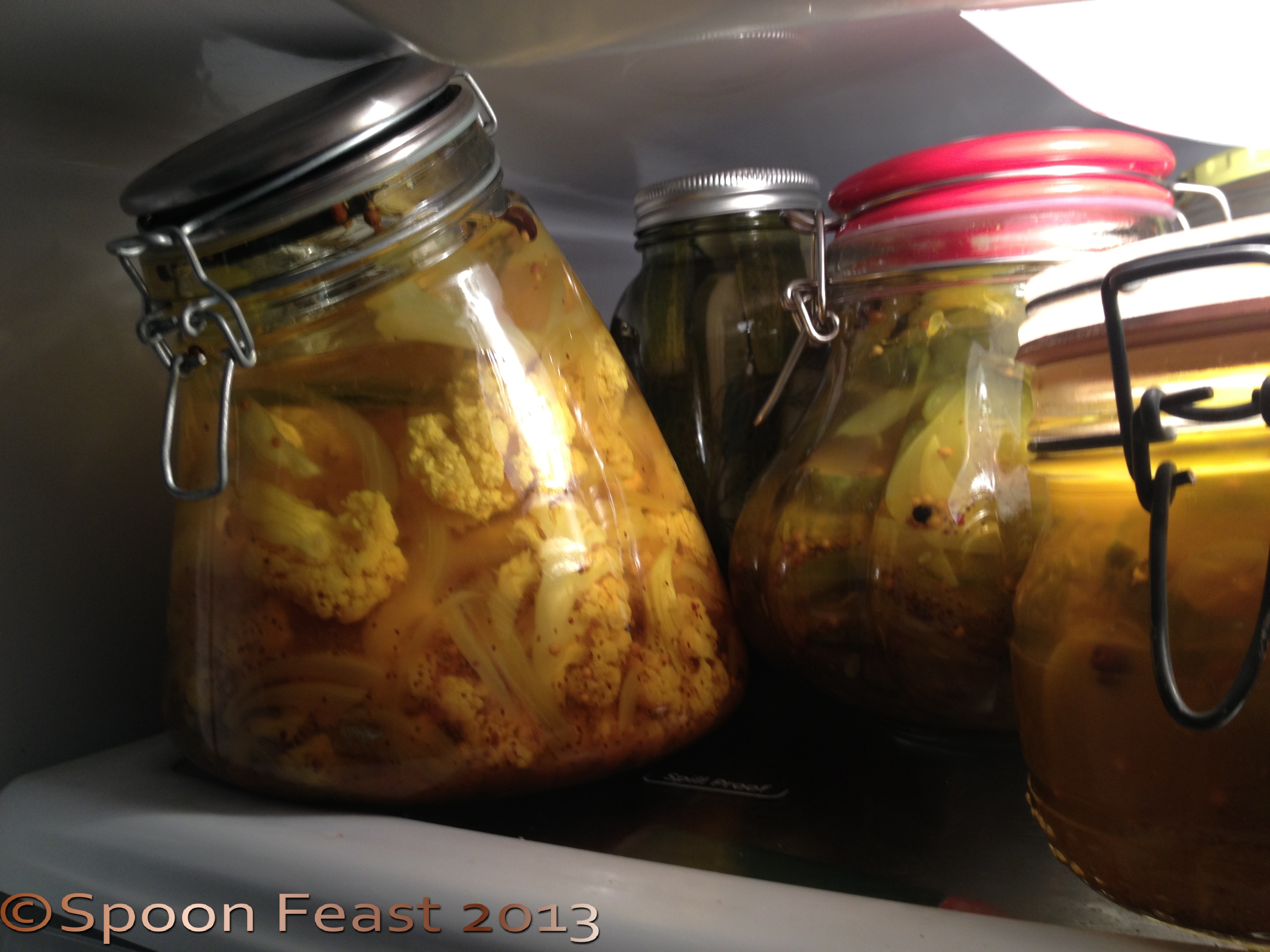
Pickles Cauliflower, Sweet Pickle Chips and Half-Sour Pickles chilling

Pickles Cauliflower, Sweet Pickle Chips and Half-Sour Pickles chilling

Fresh and pickled cauliflower

Fresh and pickled cauliflower

I find they don’t last long enough to can so just get set to make more.

Enjoy!

A Basic Fresh Goat Cheese: Chevre

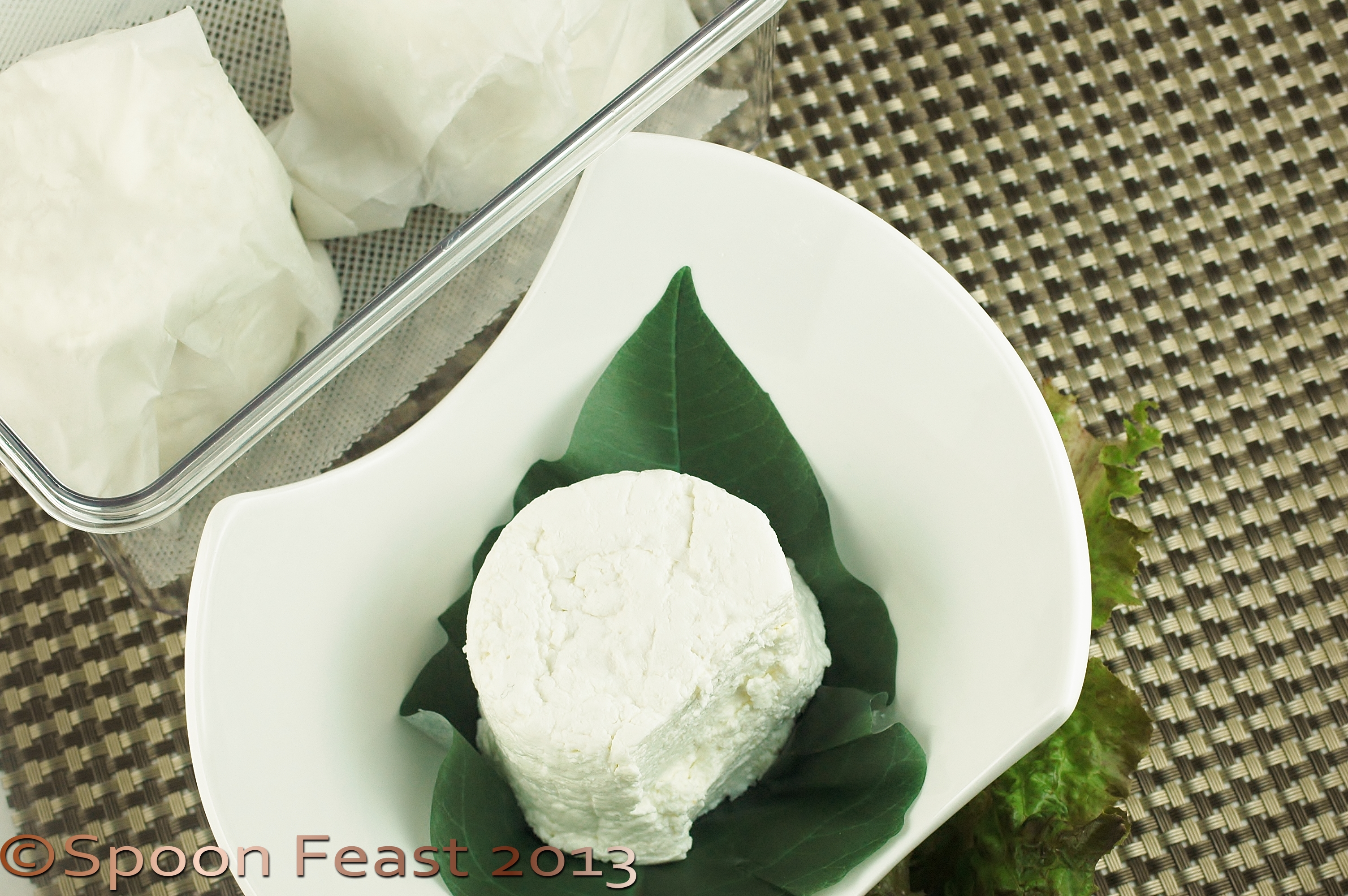
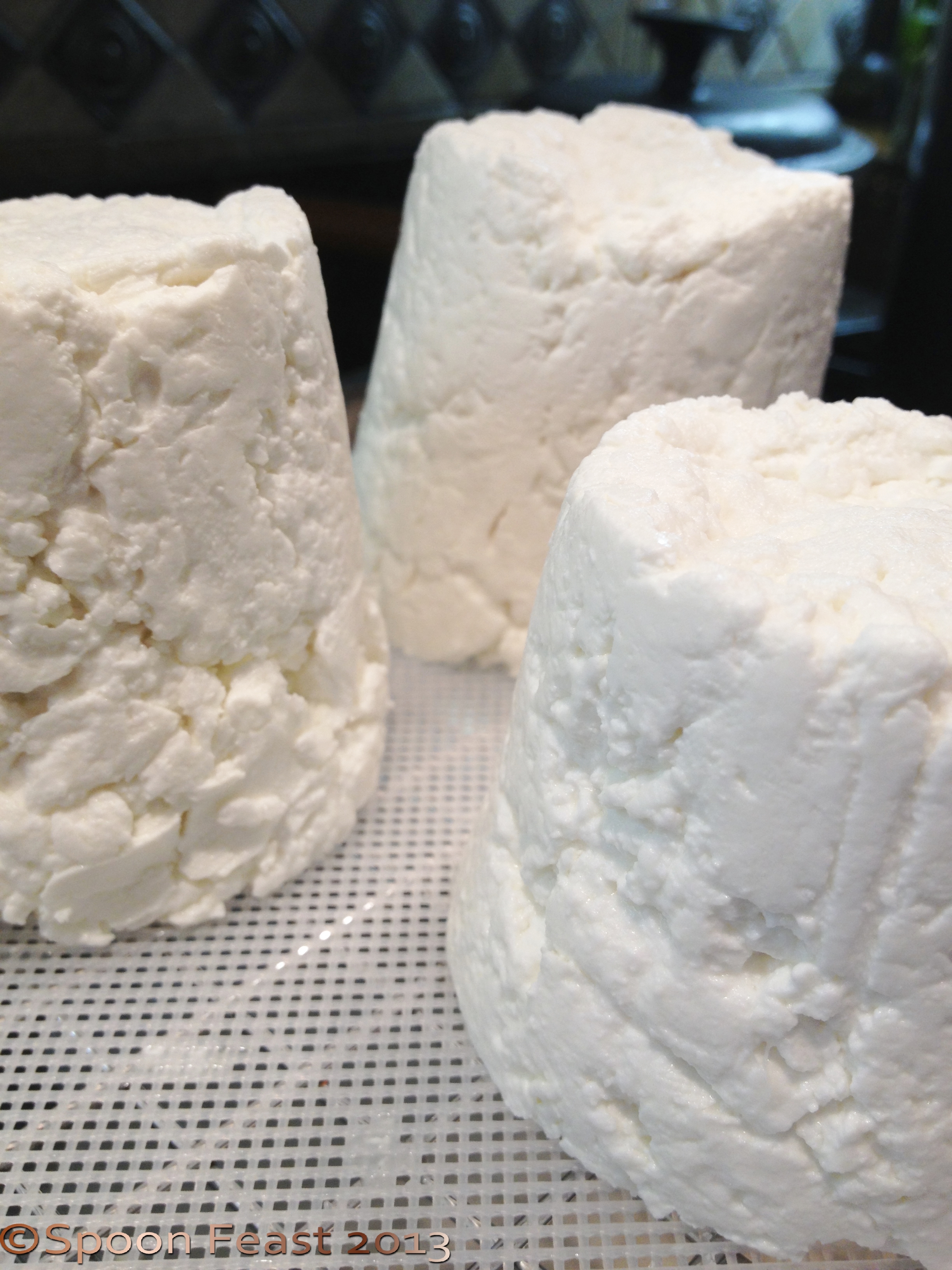
I made Fresh Goat Cheese!

Fresh Goat Cheese!

Fresh Goat Cheese!

Actually I was surprised at how quick and easy it actually was to make. Having the right equipment and getting good milk are key.

I get most of my supplies from The New England Cheese Making Supply which is a great resource for everything cheese.

Ever since I returned from the cheese making workshop a few weeks ago, my hands have been looking forward to getting into some milk.

First I had to find a source for good, clean, fresh goat milk for goat cheese and I still need to source Jersey cows for their milk for other cheese. For now, I have goat!

I LOVE the “barnyard” flavor of a strong goat cheese. While in France, I fell in love with Pouligny St. Pierre goat cheese which is a creamy smooth aged amazing bit of heaven to put into your mouth. It is my goal and intention to make some of that here, but obviously with the “terroir” of North Carolina.

OK, so here’s how I made this batch of Fresh Chevre:

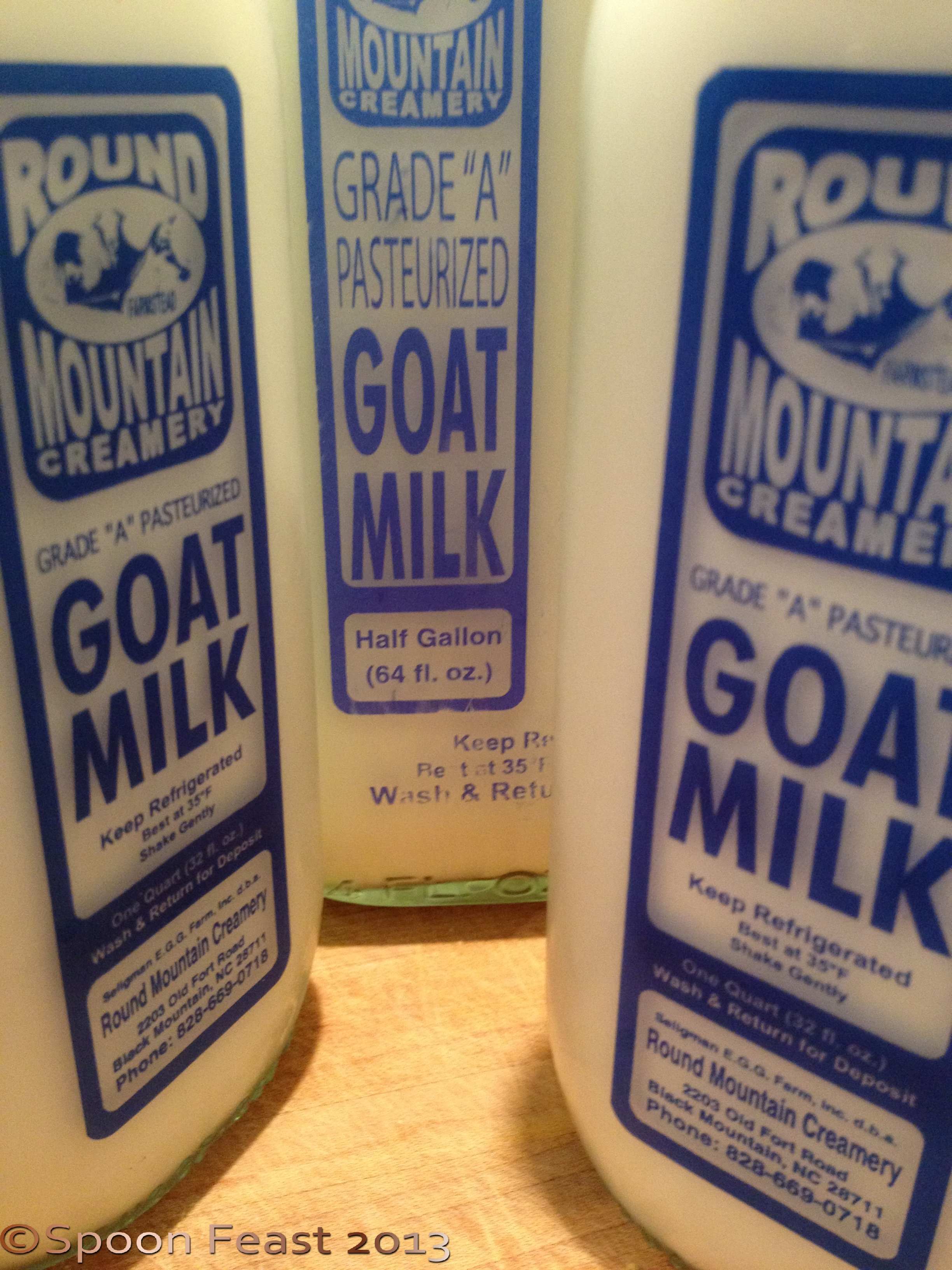
I started with one gallon of fresh Goat Milk from Round Mountain Creamery in Black Mountain, NC. The milk comes in glass bottles, which I love!

Order a batch of CHEVRE culture from New England Cheese Making Supply. One packet will culture one gallon of milk, so plan what you want to make. I never seem to order enough.

Additionally if your milk is pasteurized (PLEASE find milk that is low temp processed as Ultra-Pasteurized milk does not work for making cheese) you will need 1/4 teaspoon of calcium chloride per gallon of pasteurized, cold-stored milk.

In my next batch, I want to ripen it for a few weeks so I will be adding other cultures for different effects.

Equipment needed:

2 large pots; the small one holds 1 gallon easily. I can use the larger pot for larger batches. Just need to find a pot to nest it inside of for a reasonable price.

2 large pots; the small one holds 1 gallon easily. I can use the larger pot for larger batches. Just need to find a pot to nest it inside of for a reasonable price.

2 large stock pots: the one the milk goes into needs to be stainless steel (Non-reactive)

The second one needs to be large enough to make a double boiler or bain marie, the first needs to nestle into the large one so you can heat the milk easily and slowly.

A good thermometer: You NEED to be in control of temperatures, not too high or too low.

Cheese Muslin, butter muslin, closely woven cheese cloth– the normal loose woven is way too loosely woven. Invest in a yard or two, wash it and use it over and over.

Use cold water to remove any cheese particles, then hand wash. Rinse and boil it in a pot with some baking soda for 5-10 minutes, rinse and hang to dry. It will be fresh and good to go for the next round of cheese!

Here is how to make the cheese:

Wash and sanitize everything!! Have a pot of boiling/simmering water to drop cheesecloth, molds, tools into to sanitize them before they come into contact with cheese.

Pour the milk into the pot, place it over the water (about 80°F). Warm the milk to 72-78°F.

Please be aware that this will feel cold to the touch, this is not warm milk, just milk warmed from refrigeration to 72-78 degrees.

Open 1 packet of the Chevre culture and sprinkle it over the top of the milk. Allow it to hydrate for 2-5 minutes before stirring it into the milk.

Goat milkAdd 1/4 teaspoon calcium chloride is using cold-stored pasteurized milk.

Allow this to sit undisturbed for 6-12 hours. This is the hardest part as you want to go see what is happening and you want it to hurry up and do its thing. But be patient, it takes time.

This batch sat for 8 1/4 hours before testing the cleave of the curd. When it is ready to test, you should see a thin layer of whey over the curd and a slight separation from the sides of the pot.

Testing the cleavage break

Testing the cleavage break

Insert a knife or a spoon, slightly on the surface, the curd should cleave clean and the whey that floats into the separation should be clear.

Carefully lift the curds with a strainer into a colander lined with cheese muslin. Be sure to place the colander over a large bowl to catch the whey.

Gently fold the cheesecloth over the curds and allow them to drain for 6-12 hours again, depending upon your desired finished texture. Less time for sweeter cheese, more for tangy cheese. The longer the whey stays in contact with the curd, the more tangy it gets.

You must be very careful NOT TO PRESS the curds. Allow them to drain gently at this point. The whey should be clear dripping, if it is cloudy, you are losing milk fat and your cheese will be dry.

You can also put it into molds at this point if you are using a mold. It will result in a smoother sided end product.

Control the room temperature and the curd temperature to maintain as close to 72-78°F as possible. I let the curds form while still in the bain marie as the water in the host pot will maintain the temperature of the curd mass.

I usually let this happen overnight while sleeping. The next day is such a surprise!

Unfold the cheesecloth and reveal your fresh cheese! Now it is time to salt. For this batch, 1.5-2 teaspoons of non-iodized cheese salt.

You can consider the cheese finished at this point but this is also where you can be a bit creative.IMG_6161

As you fold in the salt, also consider adding other flavors like herbs, minced garlic or shallots or onions, crushed peppercorns, ash, use your imagination.

IMG_6171Store your fresh goat cheese in a bowl or tub and consume within 10 days. Refrigerate the cheese, but allow it to come to room temperature before serving to allow all the wonderful flavors to come through.

A Word About Seasonings:

Please use dried seasonings and herbs due to the risk of bacterial contamination that may be introduced by using fresh herbs and seasonings. If you use fresh, be sure to eat the cheese soon. It can’t hang out for a while like plain cheese.

A Word About Food Safety:

The temperature the milk gets processed is in a temperature range that is smack dab in the extreme temperature danger zone. Everything you use needs to be “sterilized” in the boiling water bath before it comes in contact with the curds or milk. I cover my curd formation and the curd draining with a glass lid (so I can see what is going on!) to prevent anything falling or flying into the curd mass.

Since my kitchen is FULL of wild yeast from all the bread I make, the introduction of wild yeast is totally possible. This could have a spoiling effect on the curd. This is another reason I boil things before they touch the milk/curds.

The hardest part is WAITING! I strongly suggest you get to a farmers market and buy some goat milk and try this. It is easy, very tasty and you will feel so good about making a tasty goat cheese you’ll make more.

If you do make any cheese, take notes on the temperatures, conditions, milk etc so you can repeat successful processes. Most of all remember DO NOT USE Ultra-Pasteurized milk!

So that’s Fresh Chevre in a nut shell. There is a lot of information out there on making cheese. I’m really just starting and am looking forward to making more!

Please let me know how you do if you make some fresh Goat Cheese!

Jacques Pepin: How to Debone a Chicken

The best video I have ever seen on how to do this process.

Buy some chickens, do it and practice!

Cooking time is about 2 hours at 350°F is a roasting pan.

Place a small bit of stock in the bottom of a pan with a couple of chopped carrots, onion and celery for flavor.

Use your favorite stuffing. When practicing, I make and donate the cooked chickens to Ronald McDonald House so we don’t get sick and tired of eating skills practice.

As Jacques says, you can do this with all birds.

What fun!

http://youtu.be/kAekQ5fzfGM

Lavash – An Easy Cracker to Make

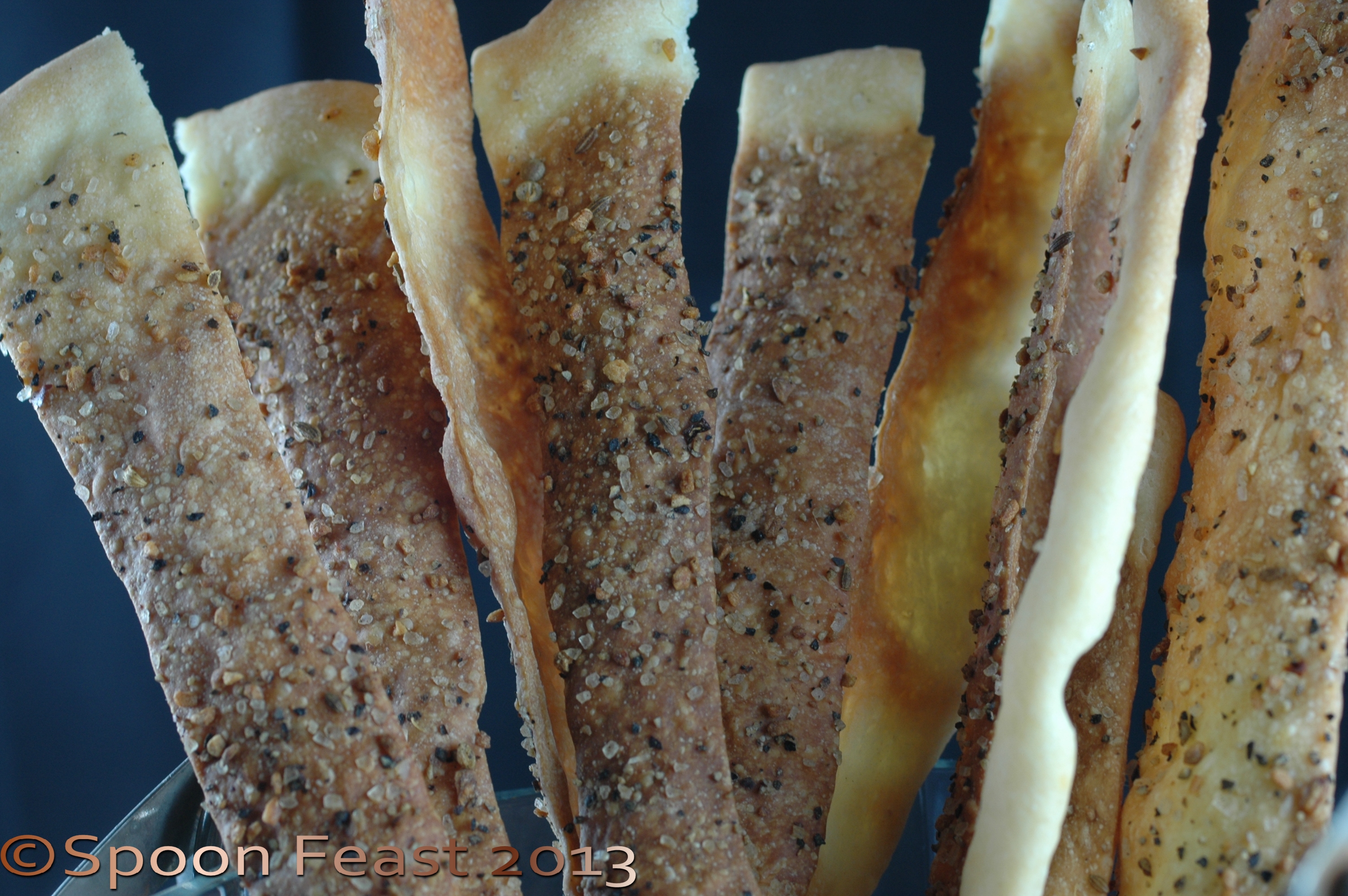
Lavash

Lavash

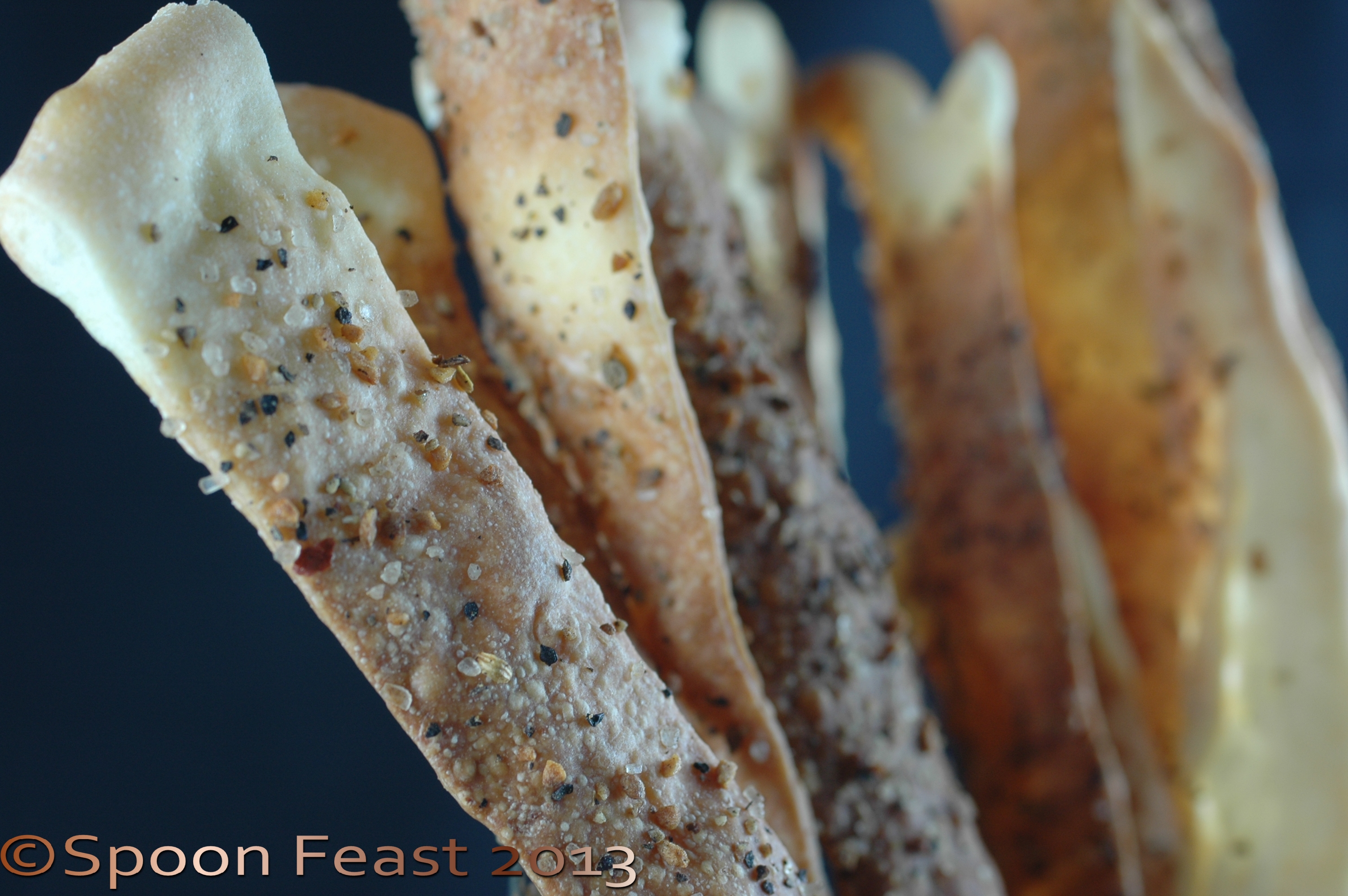
Lavash is such an easy cracker to make I think if more people knew how, more people would make them.

So here goes my attempt to teach everyone how to make Lavash.

Here is another added bonus, this recipe also makes great pita bread! Just weigh the dough balls to 4 ounces and roll it to 1/4 inch think.

Bake them on a baking stone in a 500°F oven. (Yeah, that’s HOT!) Place the dough disks onto the baking stone, wait for them to poof and begin to brown. Remove them to a cooling rack to cool. Lovely pita!

Sometimes I’ll make two 4-ounce pita and roll the rest out into lavash. Sometimes it’s all lavash others, all pita. Either way , this is a great formula and it comes to you by way of Peter Reinhart’s book, The Bread Bakers Apprentice, which if you don’t have it, I highly recommend it. But only if you like to bake bread.

OK!

Back to Lavash!

  • 1 1/2 cups bread flour
  • 1/2 teaspoon kosher salt
  • 1/2 teaspoon instant yeast
  • 1 tablespoon vegetable oil
  • 1 tablespoon honey
  • 1/3 to 1/2 cup room temperature water
  • Spray bottle with water (hopefully you have one dedicated to baking!)

DSC_0021Some topping suggestions:

  • Sesame seeds, both white and black
  • Poppy seeds
  • Cumin and caraway seeds
  • Sweet and/or hot Paprika
  • Kosher salt
  • Montreal Steak Seasoning
  • 7 seed mixtures

To make crackers:

Put all ingredients into a bowl of an electric mixer, add enough water to bring everything into a ball. You may only need 1/3 of a cup or you may need all the way up to 1/2 cup. If you need more than that, add it only 1 Tablespoon at a time.

Inf using an electric mixer to knead, knead the dough 6 minutes on medium speed. If kneading by hand, do it for 10 minutes.

The dough should be firm to the touch, satiny and not sticky.

Oil a bowl, roll the dough ball in the oil so it gets a light coating. Place the dough in the bowl and allow to rise for about 1 and 1/2 hours or until it has doubled in size.

If you don’t feel like finishing the crackers now, you can store the dough in the refrigerator overnight at this point.

If you want to make a couple of pita, weight out 2 4-ounce balls, give them an initial roll and set aside to rest.

Line the back side of a sheet pan with parchment paper. (The crackers get baked on the backside of the sheet pan.)

On a lightly oiled or floured surface, roll the dough into a paper-thin sheet. You may need to lift the dough to ensure it isn’t sticking to anything during this rolling process.

If, while rolling, the dough ‘fights’ you by shrinking back, cover it with a clean towel or piece of plastic wrap and allow the dough to rest for 5-10 minutes.

Place the thin dough onto the parchment lined sheet pan. Spray with water and sprinkle on the topping of your choice.

You can cut the dough into crackers or long strips using a pizza cutter before baking. Don’t worry about separating the crackers now, they will snap apart once cooled.DSC_0006

Bake the crackers in a preheated 350°F oven for 15-20 minutes or until they are golden brown.

Freshly baked crackers are a real treat to share with anyone dropping by for a glass of wine and a few nibbles. Don’t be surprised if your Lavash crackers become a topic of interest!

Caesar Salad – A Fresh Look

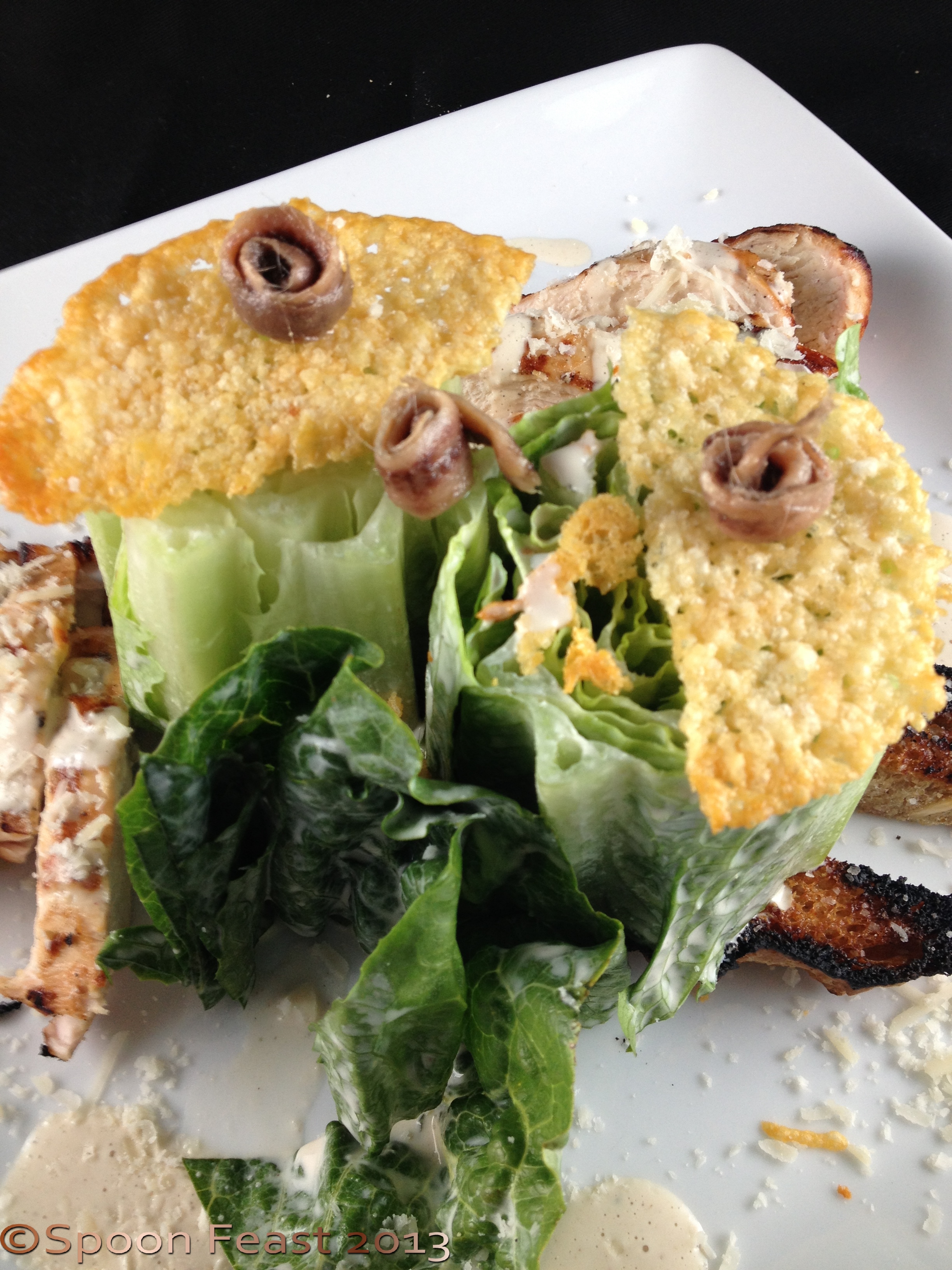
Caesar Salads have long been popular both in the restaurant scene and at home. I love a good Caesar Salad especially if you add some Caesar Saladgrilled chicken to it and lots of Parmesan cheese.

The dressing here is a low-fat version of a traditional Caesar. This maintains the flavor of the dressing the same as a traditional Caesar dressing, yet with far less fat. So you will find a stray from the traditional Caesar Dressing ingredients, but try this, you’d never know the difference!

Plating the salad becomes a real presentation. Take your time and you will be rewarded with not only a nice visual but also something that will satisfy your taste buds on many levels.

For the Salad:

      • Romaine Hearts – each one makes 1-2 servings; 3 for an appetizer or side salad
          • Keep the lettuce in tact!
  • Good quality bread for the “croutons”
  • Parmesan cheese, shredded or shaved off a block with a vegetable peeler
  • Anchovy fillets – white anchovies are a gourmet treat, but everyday anchovies will do also
  • Dressing (recipe follows)
  • Add Grilled chicken or shrimp if desired.

To make the dressing:

  • 1/2 cup low or non-fat mayonnaise
  • 1/2 cup low or non-fat plain Greek yogurt
  • 1/4 cup shredded Parmesan cheese (use the best quality you can buy!)
  • juice from 1/2 lemon
  • 1 tablespoon Worcestershire sauce
  • 4 oil packed anchovy fillets (or more if you like)
  • 2 cloves fresh garlic
  • 1 -2 teaspoons fresh ground black pepper

Put it all in the blender and process until smooth. Taste it, you may want more anchovy or garlic or cheese. If you do, add it and process again until smooth. If it gets too thick, thin with water.

Wash the lettuce, carefully remove any dirt or debris while keeping the head in tact. Turn the romaine heart upside down to drip dry or pat it dry with a paper towel.

Holding the romaine heart upright in a clean bowl, drizzle the leaves with the dressing, use about 1-2 ounces per heart.

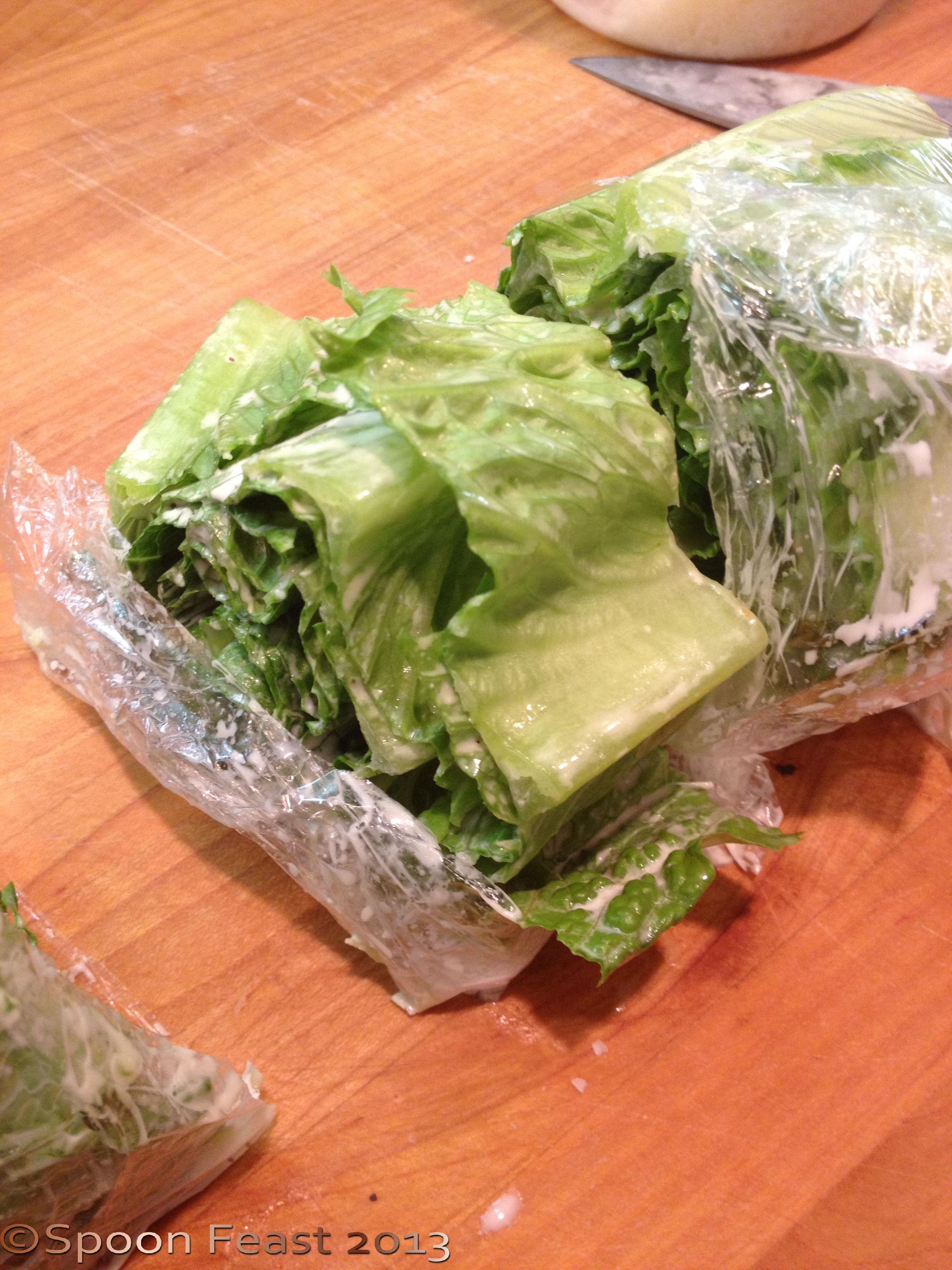
Wrap tightly into a log shape

Wrap tightly into a log shape

Wrap the lettuce tightly in a log shape in plastic wrap. When you do this, arrange the leaves so they don’t break. You want to be able to wrap it together really tight.

Refrigerate for at least 30 minutes.

Brush the bread with olive oil, grill each side for 1-2 minutes.

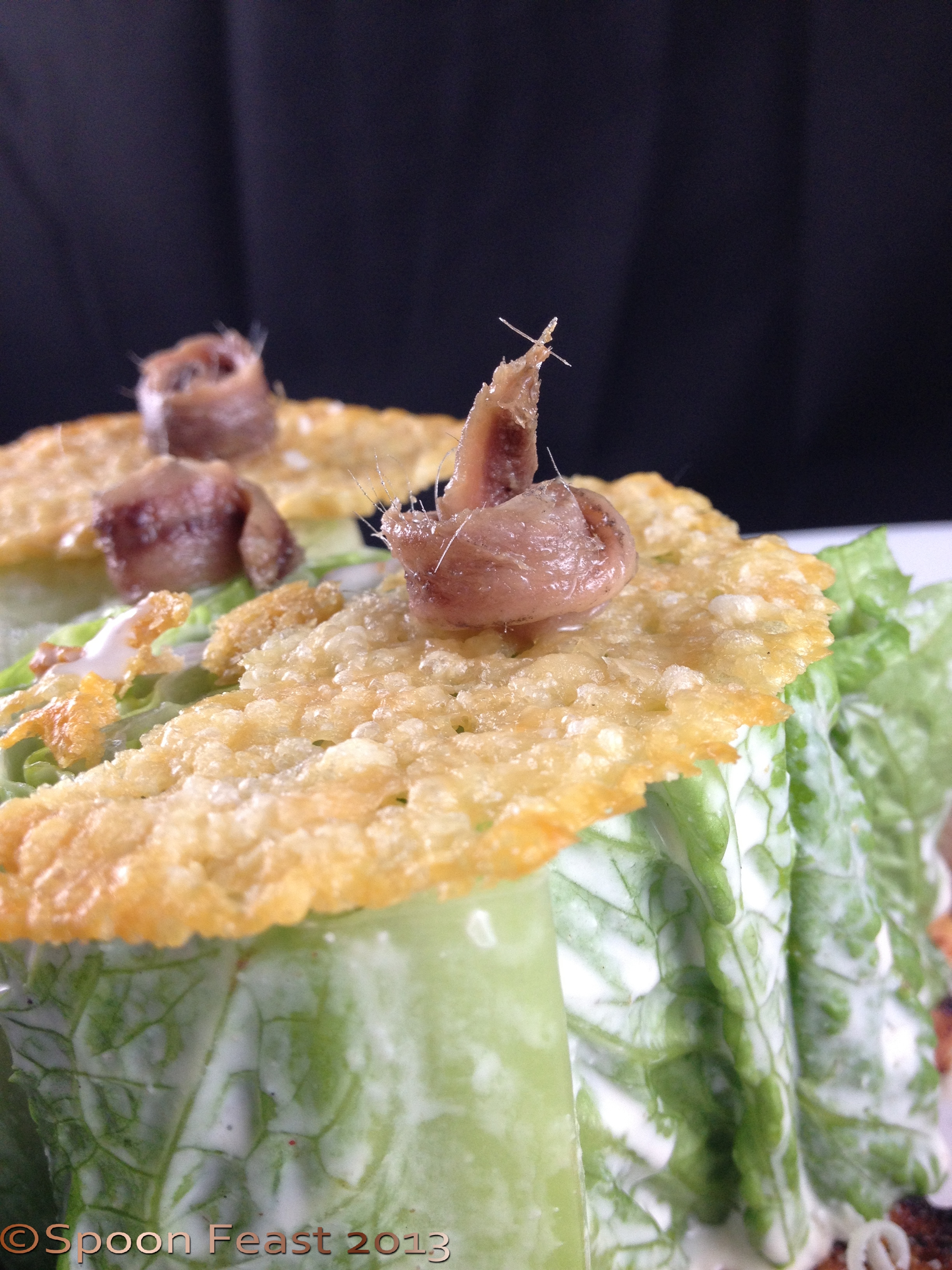
Roll the anchovy fillets into ‘mini-flowers’.

Make Crispy Parmesan Chips

Rolled anchovy fillets

Rolled anchovy fillets

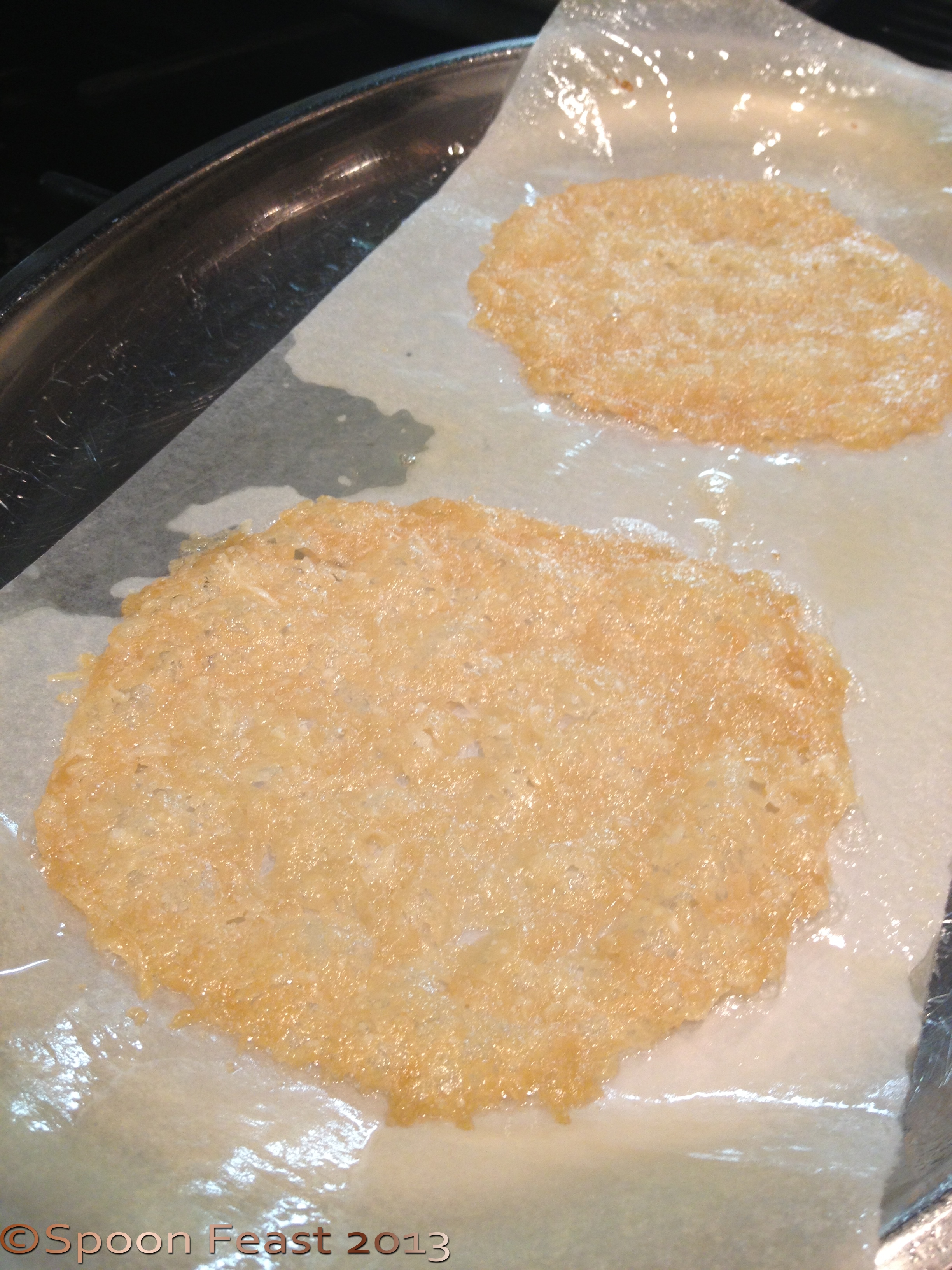
Make some crispy Parmesan chips by placing freshly shredded (grated cheese does not work) onto a piece of oiled parchment in a circle.

Use a ring mold for even shapes

Use a ring mold for even shapes

Use a ring mold to make even sized circles. Bake them in a 350°F oven for 5-10 minutes or until they turn golden brown.

Remove when the cheese gets golden brown

Remove when the cheese gets golden brown

Remove from the oven and using a spatula, remove them from the parchment immediately as the cheese cools rapidly. At this point, they will retain any shape you give them. but you have to move fast, once they cool they become crisp.

For this presentation, instead of making croutons, I cut the bread into a long rectangle, oiled it and then put it on the grill for a few minutes.

Plate Presentation:

Lay two lengths of bread on the base of the plate.

With the plastic wrap still on the lettuce, slice the lettuce into rounds about 2″ wide.

Slice the lettuce with the plastic wrap still on. Of course, remove it as you bring the lettuce to the plate.

Slice the lettuce with the plastic wrap still on. Of course, remove it as you bring the lettuce to the plate.

Remove the plastic wrap and place them on the bread. Stand them up with the cut side down. Do this carefully and they will hold together.

Place a crispy cheese round on top of the cut lettuce, then add the rolled anchovies.

IMG_5419

Place either the grilled chicken or shrimp along side of the bread, sprinkle with Parmesan. Drizzle some dressing onto the plate and serve.

The presentation is nice because when you want to eat the lettuce, it falls apart easily with your fork and does not require further cutting unless you cut them too wide. 2 inches is the perfect size for this presentation.

Enjoy this Caesar!

IMG_5422

How to Make a Paper Cone for Piping

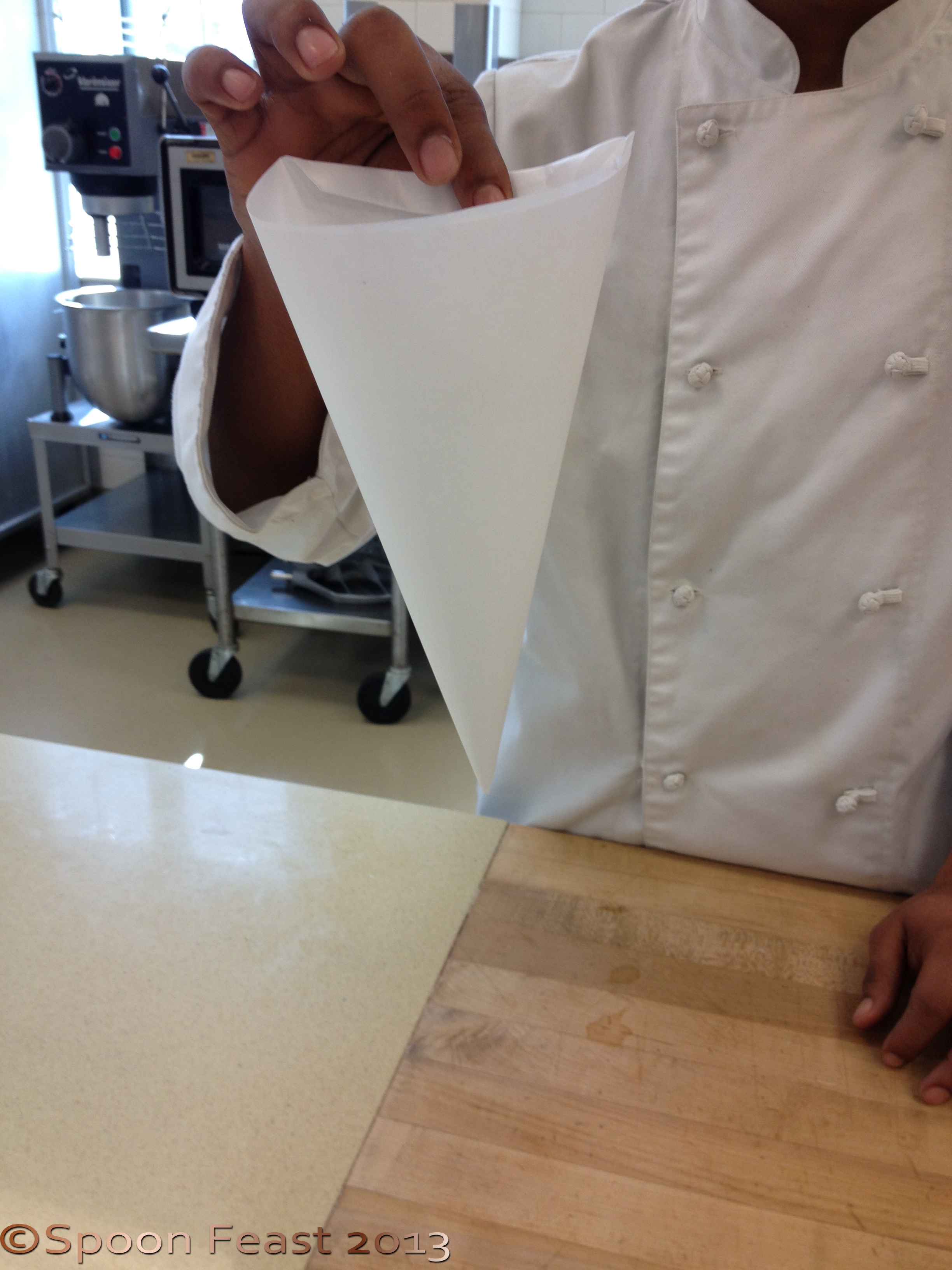
Paper cones ready to use

Paper cones ready to use

Knowing how to make a paper cone for decorating can save you a lot of headaches if you have some decorating of pastries to do.

The paper cones can be filled with melted chocolate, various glazes and thinned icing for writing on cakes or drizzling pastries or creating piped designs.

Best of all, no tip is needed and when you are done, simply throw the cone away.

It takes a few practice units to get it right, but after you do, it’s like learning to ride a bicycle, you don’t really forget how.

Here’s how:

IMG_5353

Lay out a piece of parchment paper.

IMG_5354

Fold it so it forms a square. There may be an extra piece to cut off at one end.

IMG_5355

Remove the piece you don’t need. I find cutting with a sharp knife works best.

IMG_5357

Fold the square into a triangle and cut to make two triangles.

IMG_5359

With the triangle, you have the top tip and two points along the long edge. Bring one of the bottom points up to meet the top tip as shown.

IMG_5360

Close up, bring both points on the long edge up to this top tip.

IMG_5364

With all three points together, adjust the cone so the pointy tip is closed. You can adjust the opening by moving the points. Play with this to see how it works. You will need to know how this works later when piping.

IMG_5365

Using the tips, you can move them to adjust the size of the opening.

IMG_5367

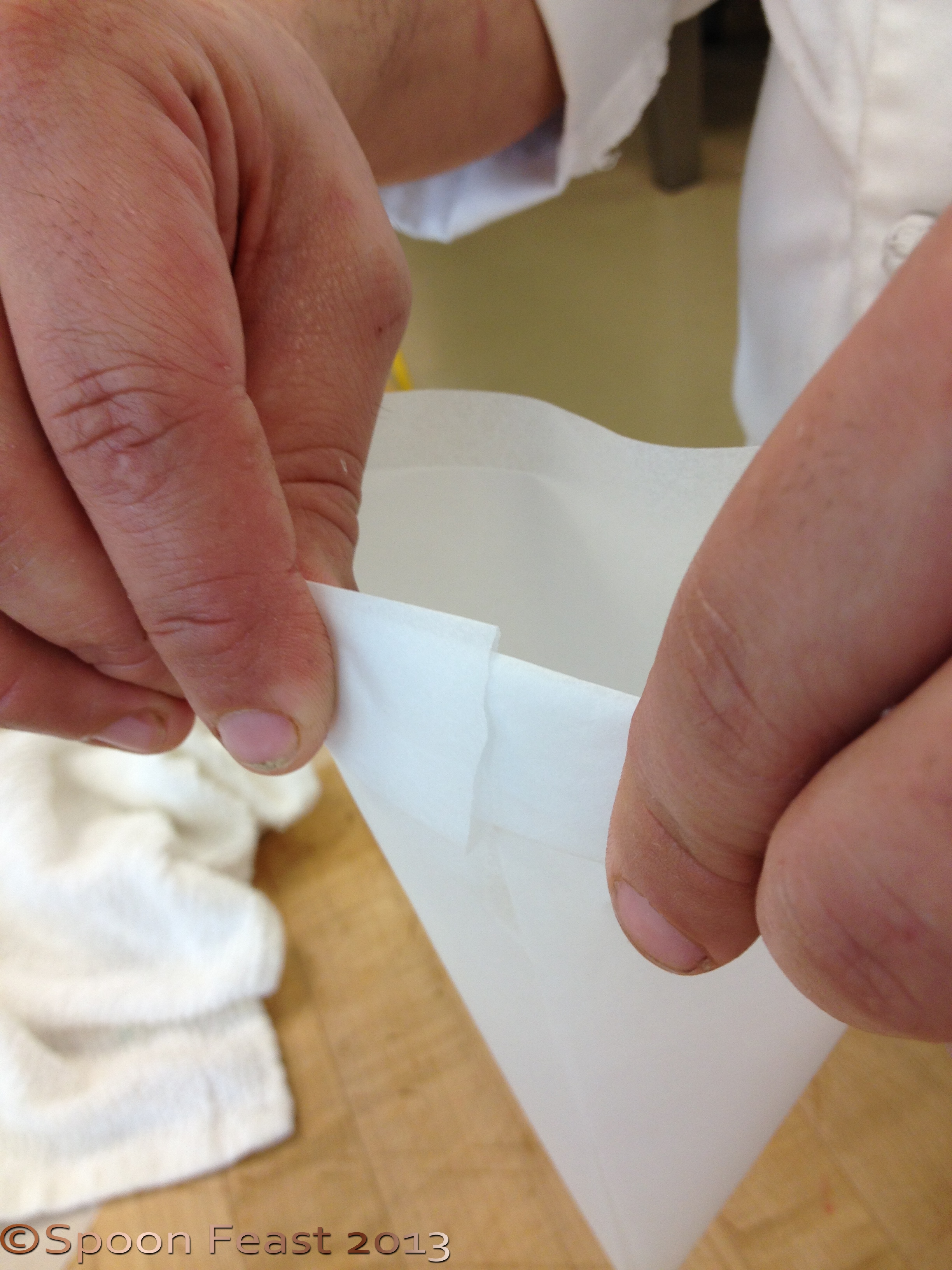
Fold the edges to secure. (NO TAPE!) Folding, if done correctly, is all you need to hold these together. Practice!

IMG_5368

A finished paper cone

IMG_5362

Moving the points on the long edge up to the tip on the top of the triangle allows you to control the size of the opening.

IMG_5352

Paper cones ready to use!


Roasted Tomatoes Provençal

These slow roasted Tomatoes Provençal are a wonderfully delicious way to enjoy the full ripe flavor and natural sweetness.

TomatoesI do this to use up any extra tomatoes we don’t get around to eating fresh. One week both Robert and I brought home an arm load of fantastic heirloom tomatoes from the local farmers market.

Being February when we bought them, I knew they weren’t local but they sure looked and tasted great.

Roasting Cornish Hens for dinner one evening, I decided to also roast some tomatoes.

Here’s how:

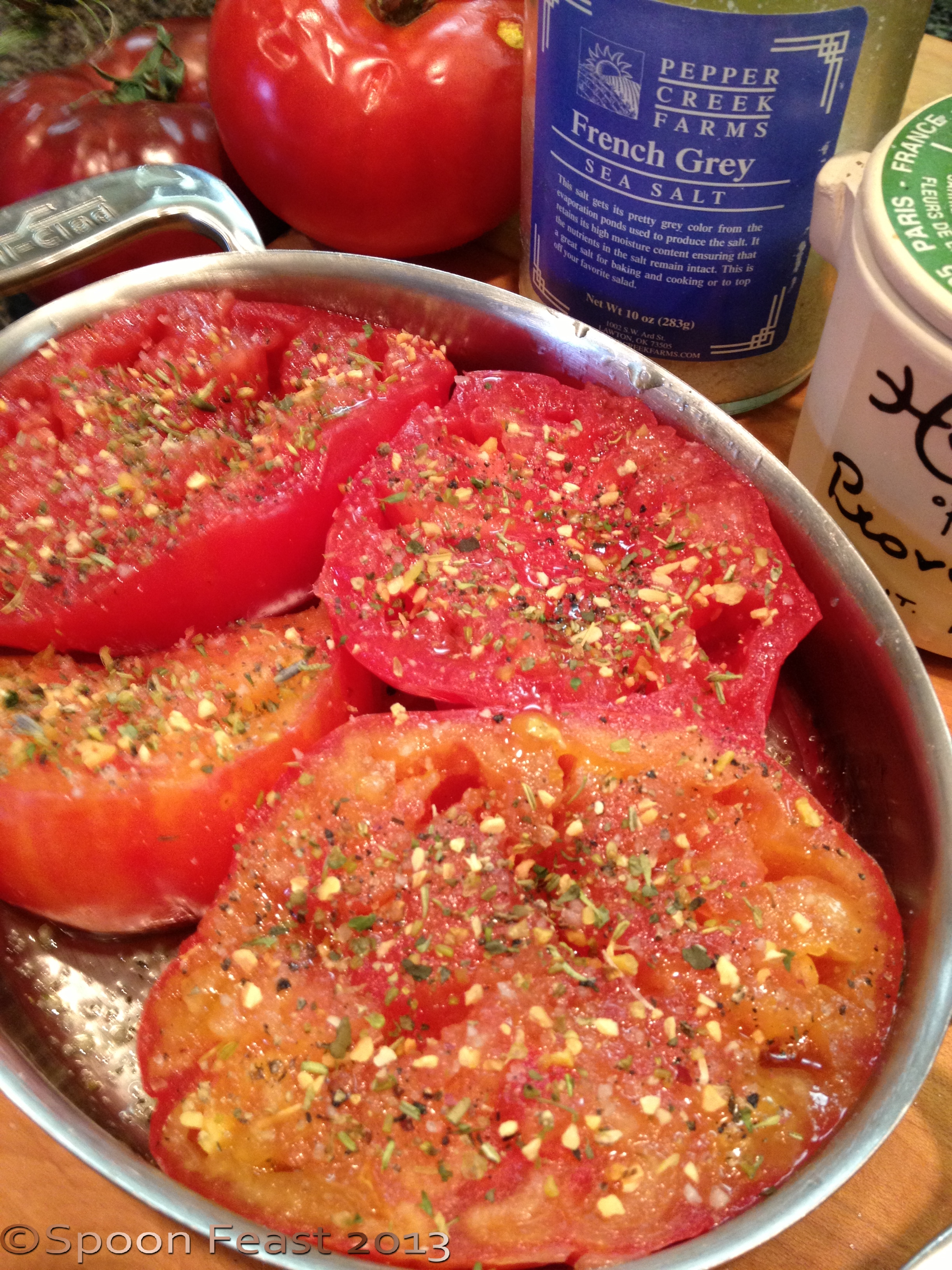
Tomatoes Provençal

  • Good quality ripe tomatoes
  • Kosher salt or French Grey Salt
  • Fresh ground black pepper
  • Herbs d’ Provence
  • Olive oil
  • Pinch of sugar (Optional)

Slice the tomato in half. Slice it across the middle, rather than top to bottom, to expose all the seed pockets.

Gently press out the seeds, catching them in a wire mesh strainer.  Place the cut and seeded tomatoes in the strainer, cut side down. Allow them to drain for about an hour or so.

Reserve any juice and press out any additional juice from the seeds. Set this aside for later.

Use a shallow baking dish. Place the tomatoes cut side up into the dish. Don’t crowd them as we want them to roast and concentrate all around. If they are crowded together, only the outside edge will get thoroughly roasted.

Sprinkle salt, pepper, herbs and sugar is using over the tops of the tomatoes. If you like, you can also add garlic, I chose to leave it out this time.

Seasoned, ready to roast tomatoes

Seasoned, ready to roast tomatoes

Drizzle a light bit of olive oil over the tomatoes and roast them, uncovered, in a 350°F oven for at least an hour and one-half. Keep an eye on them as you do not want a dried up leathery tomato (good sometimes, not here).

When the tomatoes are done roasting, allow them to cool before serving. Their full flavor potential is best at room temperature or slightly above.

Here we served them along side of grilled cheese sandwiches and butternut squash soup.

Lunch!

Lunch!

Be prepared! They will go so fast so be sure to roast more than you need.

If, by chance, you have any left over, you can make great roasted tomato marinade or  roasted tomato vinaigrette or even roasted tomato soup.This afternoon, I am putting some on grilled cheese sandwiches for lunch. YUM!

Typically though, you have to roast the tomatoes specifically for these dishes as there never seems to be any left over.

Snack Time!

When having fruit for a snack or any snack for that matter, be sure to present it nicely.

Apple Snack!

Apple Snack!

It makes such a difference!

This was just a half an apple, sliced and served with a small bit of vanilla Greek Yogurt.

Snack apples

Awareness of Eating

“Never trust a skinny chef!” is how the old saying goes. But let’s examine that adage and explore the rearrangement of a common cliché.

As we become more aware of our diets, the effects food has on our bodies and how it makes us feel, there needs to be a basis of trust between the cook and the consumer.

English: White House chefs, directed by Execut...

English: White House chefs, directed by Executive Chef Henry Haller, prepare for a state dinner honoring Australian Prime Minister Malcolm Fraser. The chefs are working in the White House kitchen; the dinner occured in 1981, during the administration of Ronald Reagan. (Photo credit: Wikipedia)

Take a look at the chef, the person responsible for creating the menu and training the kitchen staff on how to prepare the various dishes.

Since I have worked in kitchens, I know a lot more about how restaurant kitchens run than most. If the person creating my meal is on the heavy side, typically sauces and flavorings  would be full of butter, fats, salts and sugars.

“A heavy chef means they enjoy their food, so it must be good!”

Really? How many people who are overweight have a hard time identifying a proper portion size? Someone who struggles with weight will eat for the sake of eating.

Someone who has emotions (hopefully all of us) will eat sometimes for comfort. Think of chicken soup when you’re ill; but when you can’t stop eating weight becomes an issue.

Sometimes the food choices we make are simply because the food we choose is familiar, it is what we know. But what if that food is bad for us? What if people really don’t understand the processed food they are eating is bad?

Evidence the obesity crisis in the USA.

Jamie Oliver is doing an eating awareness program in West Virginia to address the problem of obesity. He goes into an elementary school and the children cannot identify fresh tomatoes on the vine, cauliflower or even potatoes.

The pile of pizza, corn dogs, hot dogs, hamburgers, cakes and ice cream all over the table that represented what the family ate for a week was disturbing. Most disturbing of all is that the mom didn’t know the food was bad for them. They weren’t hungry and she thought that was good.

But she is killing her family. Her 10-year old son is already 350 pounds. Really, “Well we’re not hungry”?!

Shocking. How did it get so far?

I want a chef who is inventive but not at the expense of my health. I want someone preparing my food with the same attitude I have for health.

Obesity is a rampant problem in the USA. Identifying proper nutrients is a major issue. Processed foods, fast foods, restaurant foods loaded with fats, salts and sugars invade the diets of every day eating all around us.

The basic food environment in the USA is severely lacking in good solid nutritious fresh food.

Drive through any town, fast foods for everything from donuts, burgers, sandwiches, Mexican, Chinese, and Italian; fried and fast is what lines the streets. It isn’t easy to choose not to eat fast food, especially when you are hungry, the temptation is great to give in.

There are many of us who are aware of what we eat. Those on gluten-free diets are aware of nearly every product they eat. Thankfully, gluten-free is easier to find these days, but there is still the issue of all that fat, sugar and sodium.

When we eat out, we are at the mercy of the kitchen to actually know how to make food taste good without the added fat, salts and sugar.

Slapping butter, sugar and salt onto food is an easy way to make anything taste good. Cooking like that takes no skill at all.

Using salt is an important seasoning but so many far overdo the salt thing. Adding some salt to cooking water when boiling pasta, rice or potatoes is usually all you need.

I love salt! I adore all the different kinds of salt there are, yet I don’t overdo it either.

I am not looking for a chef who serves me a plate full of sauces and vegetables full of butter. I am looking for foods that are cooked correctly and seasoned to bring out the full of flavors.

People need to learn what a proper portion size looks like. Restaurants serve enough to 1 person to feed three and yet that one person still tries to eat as much as they can because that is what they are served.

Case in point: The Cheesecake Factory (Hint right there) offers a “Crispy Chicken Costoletta” which serve up a whopping 2610 calories, 89 grams of fat and 2720 milligrams of salt. Costolotta alright, cost a lotta health if you eat all that.  If you really have to eat that, then break it down into three meals at least. (Nutrition Action Healthletter, January/February 2012) Best of all, choose another place to eat.

Watch buffets; people load up their plates as if they only have one visit. All manner of foods get glopped together on a plate so it becomes a huge pile of goop melange. Why not go get some salad, talk, visit with your dining companions, eat, and return for entrée, then again for dessert. It seems more civil. Why are we rushing? Trying to beat the mental signal you are full?

But instead they try to slip that cherry cobbler right next to the fried chicken and coleslaw that sits on top of the ranch dressing salad with “Country Crocked” yeast rolls underneath.

Then they stuff it all in, make a second trip and wonder why they have bellies the size of VW Bug cars.

Burp.

Talking to Tyler the other day, he mentioned he was having his girlfriend over for dinner and he had to go set the table. I felt good knowing he was carrying on a family value: Setting a table and sitting there to eat dinner and talk to each other about the day.

An attractive dinner setting

An attractive dinner setting (Photo credit: Wikipedia)

Something so small, yet it is so important. Our social and family bonds grow stronger with each meal gathering. Shouldn’t the food put in front of us be nourishing as well?

The movement to better health through eating well begins with each one of us making a choice.

If you don’t know how to cook or how to choose better nutrition, take a class and learn. Get your children involved with preparing meals; they are more likely to try new foods if they have a hand in making the dish.

Step away from the sugar bowl! Put down those sodas and juice boxes. Drink water, teas, non-fat milk. There are even flavored waters with bubbles if you simply must have a fizzy drink.

Try extra-virgin coconut and olive oils instead of butter. Your heart will thank you.

I started taking a Therapeutic Nutrition class a few weeks ago. My eyes have really been opened to how severe the obesity epidemic is and that we CAN do something about it.

That something is education and choice.

I hope you can join me in starting something is your neighborhood. The future depends on our kids, how can they carry on if they aren’t healthy?

First step ANYONE can take:

Don’t eat any food advertised on TV

Except eggs and milk, of course!

Sorry Jared, Subway needs a better way.

Make a sandwich from home. Learn to cook fresh foods and eliminate processed foods. It may take a while to actually accomplish this, but you will be rewarded with better health and more money in your pocket.

If each of us took one small step towards better eating and nutritious health, we could change a nation. We can start in our own homes.

The power of one can inspire another.

Apples are an all-American success story-each ...

Raw Kale Salad – Give it a Massage!

I was reading a recipe the other day on the Food Network website regarding a Massaged Kale Salad from the Aarti Party Show.

Kale is on the edge of being overdone but this is worth exploring. Give it a try before you get sick of eating so much kale!

Kale saladPrevious thoughts had me thinking kale was too tough to eat raw. A quick saute, dip in hot oil, plunge into a hot oven or dropped into soup is how I prepared it before this recipe caught my eye.

So I tried it. Massage your kale, sounds kinky right?!

I had to come up with another way of massaging the kale as not everyone likes to have their food handled to this extent by someone else’s bare hands.

Use a dough hook instead of your hands

Use a dough hook instead of your hands

Bare hand contact can be a health issue if the person touching the food does not wash their hands correctly or is carrying some kind of germ.

While the recipe wasn’t followed, the massage technique was. The result is an addicting, tender kale salad that can be dressed in so many ways.

After massaging the kale, create your salad. All you need to add is other ingredients and the salad is already dressed.

Choose a toasted nut and a favorite fruit, fresh or dried. Add some cheese and you can go forever with the combinations that can be created as additions for this most excellent salad.

This is what I did last night:

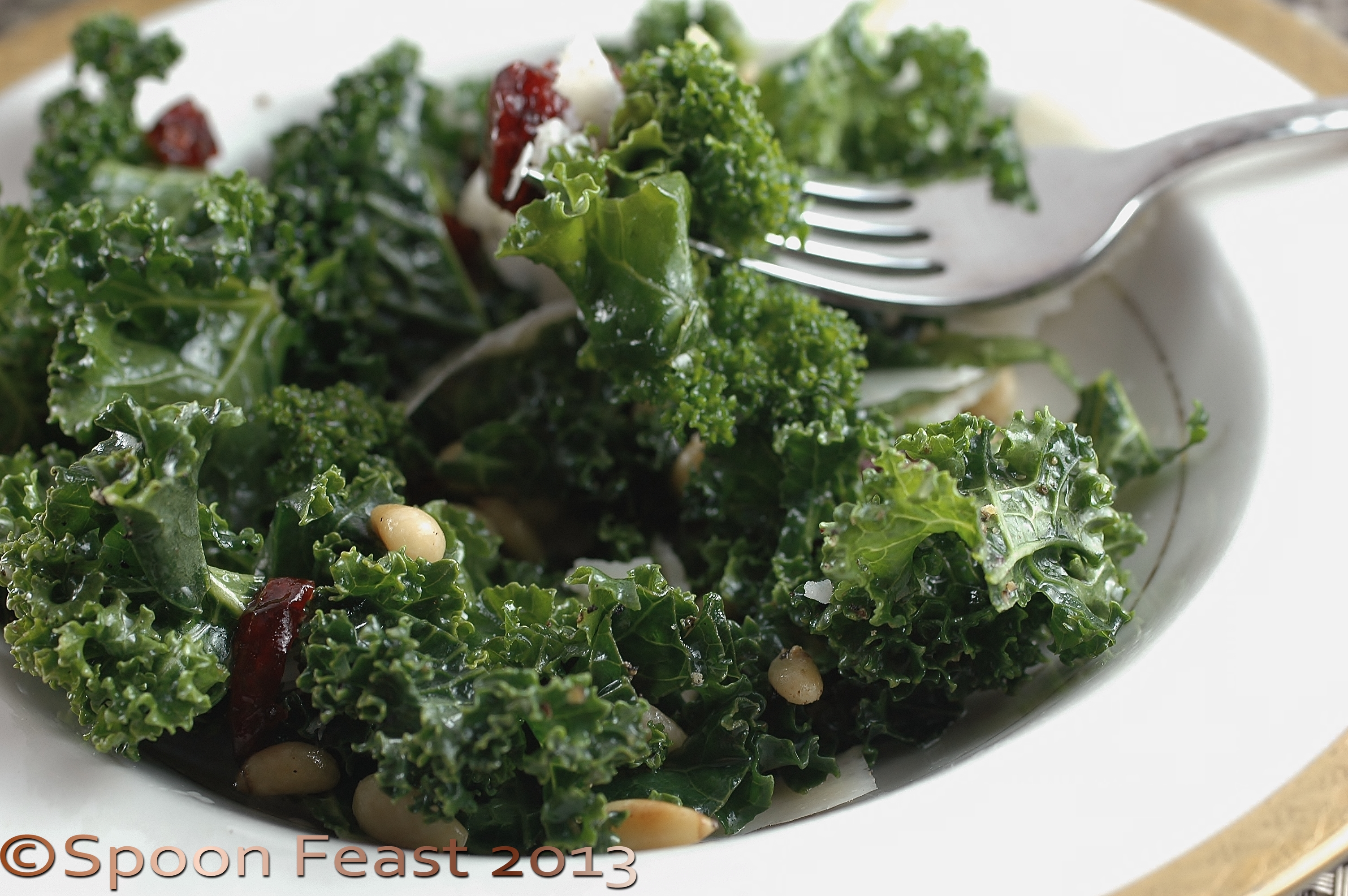
Kale Salad with Toasted Pine Nuts, Dried Cranberries and Shaved Parmesan

  • 1 pound kale
  • Juice from 1 fresh lemon
  • 1 tablespoon extra virgin olive oil
  • A light sprinkle of salt and fresh black pepper
  • 1/2 cup dried cranberries
  • 1/2 cup shredded Parmesan cheese
  • 1/4 cup toasted pine nuts
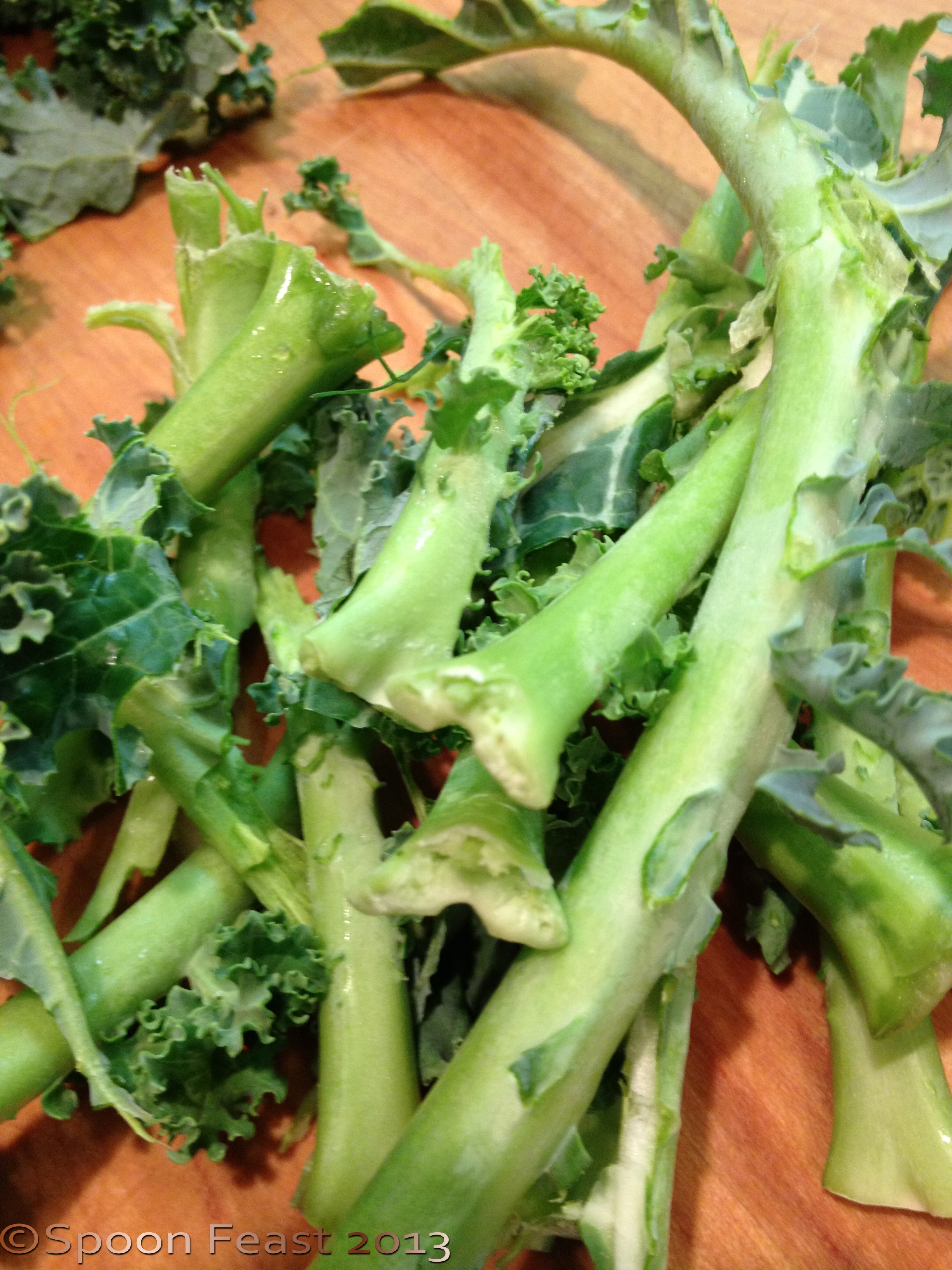
Trim the stems from the leaves

Trim the stems from the leaves

Trim leaves from the stems, wash thoroughly in cool water to remove any garden friends, sand and dirt.

If the kale is very sandy or has a lot of soil on it, soak it in a deep bath of salty water. Dip and lift the kale from the water so the soil is left behind in the bottom of the soaking bowl. You may need to do this several times to get rid of all the dirt.

Chop the kale leaves small, but not too tiny; bite size is perfect.

Place the chopped kale into a bowl. Drizzle the kale with lemon juice, olive oil, salt and pepper. The amount you use depends on how much kale you use. Only use enough to lightly coat the leaves, you don’t want anything on the bottom of the bowl.

Using your hands (washed of course! and wear gloves) or in a stand mixer on low with the dough hook, massage the greens for 2-3 minutes.

You will notice the leaves changing texture, becoming more tender and turning a brighter green as well.

Peel Parmesan into the salad with a peeler.

Peel Parmesan into the salad with a peeler.

After 2-3 minutes of massage, add toasted pine nuts, dried cranberries and use a peeler to shave Parmesan into the salad.

The above amounts can be adjusted to your liking.

Try other fruits, nuts and cheese in this salad, avocado is amazing too.

Top the salad with beef, grilled chicken, shrimp or fish to make it an entrée salad.

Serve and enjoy!

eating kale saladThis salad was so good, I came back down and scarfed another bowl in the middle of the night and another after breakfast.

Now I need to go buy more kale.

DSC_0051