Things I learned from Blogelina’s “Commentathon”

I just finished participating in a fun activity – Participating in Blogelina’s Commentathon!

The premise is you register an “epic” post worthy of receiving 50 comments. You agree to view, read and leave a meaningful comment on 50 other blogs during a one week period. The Blogelina staff assign groups and sent out an e-mail to participants links to all the blogs in the group. There were 56 blogs in my group.

This is what I learned from reading 50+ blogs and leaving 50+ comments over the last 5 days:

1. There are a lot of Mommie Bloggers out there!

Where were you when I was raising my son? You all would have made it so much easier.

2. Leaving meaningful comments on so many blogs made me feel good.

It’s more about building interactions and starting conversations than counting visitors.

Don’t lurk! Say something kind or meaningful

3. This taught how to improve the quality of the comments I make.

As I read the blogs I looked for something to comment on, something meaningful in some way.  I also noticed there is a great number of people out there who only say things like “great post!” which is fine but say why you think so. Let everyone know whats on your mind and be kind.

4. Good things happen when you get involved!

Beat depression and most other pity parties by volunteering at your local hospital or nursing home. An entire new perspective is waiting for you. Prepare to be changed.

Don’t just sit in your room watching the life parade march by. Be part of the parade.

5. The world is full of generous, sensitive souls.

There is hope after all! Commit random acts of kindness; it’s contagious, makes you feel great and enhances the quality of life all around. You never know when or what you do may have a profound difference in someones day or life.

6. Even with all the mommie bloggers out there, motherhood isn’t easy.

Don’t be afraid to ask and accept help. Cookies go a long way; giving and receiving.

So does chocolate.

7. There is so much to learn about blogging!

I wish there was a group I could join to learn together, or someone to partner with; there are so many options!

8. Everyone needs to prioritize making more quality “ME!” time.

This is something we often let go of when we get busy or ambitious. Making “ME!” time will enhance every aspect of your life.

Write in on your calendar or schedule. You’ll feel a twinge of delight when you say to someone, I’m sorry, I’ve got another appointment at that time. What day or time that would suit you better?”

There is great satisfaction putting your mental health first.

9. Creativity is alive and well and thriving!

Crafts are not just for kids anymore! And you can play with food and then eat it too.

I think it is only polite to photograph someone else’s food after you ask. I was surprised how much my family does not want me to photograph their food.

There are so many ways to use “duck” tape!

10. Families matter most of all.

Sometimes families get broken. Sometimes they get fixed and other times they don’t. Sometimes it’s better left that way. People who hurt you have no room in your life, no matter what the relationship bond.

Families aren’t always blood but those people around you who love you and support you unconditionally. Even if it’s only one person or a hundred.

Some family squabbles can’t be fixed, the damage is too deep. Accept it and move on. You don’t have to dwell on it but improve where you are now.

Accept life isn’t fair. Focus on the positive things in your life.

Keep moving forward.

The Ketchup Project – My Big Idea

I’ve been thinking about the state of our food supply and am honestly quite upset about it.

Monsanto, GMO‘s and big corporate entities are taking over and producing foods they think we should eat.

They are killing us!

The foods do not support good health or well-being. Now rather than just sit around complaining about it, I’ve come up with a plan.

Tell me what you think about it.

It’s called the Ketchup Project.

It’s about making our own condiments and not buying processed foods.

We would learn to make fresh ketchup, mustard, pickles and mayonnaise. We would get together in our communities to make these things and share with each other.

We would know what is in the food we are feeding our families.

We could establish community centers where you could get to know who is processing your food, If you don’t like to cook, there are other jobs to volunteer to do besides cooking. and still be able to share in the production.

At these centers you could get to know your butcher, your grower,who makes your cheese and dairy products, who makes your ketchup, and condiments you eat every day.

You could take “The Mayo Pledge” and learn to make your own. Imagine how much less mayonnaise you’d eat if you had to make it every time you wanted it! It’s easy to make but fresh mayo needs to be made nearly every other day unless you can use pasteurized egg yolks.

It is a step towards health, building community, supporting farms and food producers on a local basis. Best of all it’s a step away from Big Corporate and Processed Foods with so many chemicals and additives, that only simulate the real thing.

Want proof? Make ketchup and compare to what is in your fridge right now. Be sure to process it in a blender to produce the same smoothness.

A vibrant bowl of homemade ketchup

A vibrant bowl of homemade ketchup

I bet you’d be spoiled for ketchup for the rest of your life; and you might get a glimpse as to why President Regan counted ketchup as a vegetable in school lunches. (Unbelievable, but true).

10 Tips Addressing “Meanwhile” in Cooking

“Then, too, I had trouble with cookbooks. As I studied the recipes, I discovered the fateful word meanwhile.

I was supposed to separate eggs, then beat them, meanwhile stirring constantly. I was to melt butter, blend in the flour and gradually add milk. Meanwhile dicing or peeling something, and not forgetting to test the cake in the oven with a clean broom-straw. Meanwhile I was theoretically tossing the salad.

The most important lesson I learned was not to get in a panic when I saw meanwhile staring at me.”

What Cooks at Stillmeadow, by Gladys Tuber

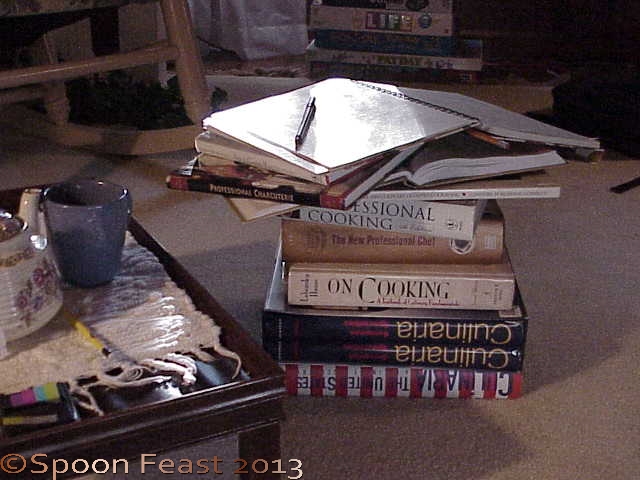
Stack of cookbooks

Stack of cookbooks

How true it is!

Planning and organizing a cooking session is crucial to everything coming out on time and getting everything made.

Whether it is everyday dinner or a special event, forming a few good habits will make cooking so much easier, faster and more organized.

Here are a few tips:

1. Print your recipe or write in your book; keep a notebook handy.

Make notes of what you liked, didn’t like, what you changed or substituted. I write all over my books, all the time.  If you don’t write in your books, have a notebook handy to make notes about timing, recipes, ingredients etc.writing in cookbooks 003

You’ll need that notebook anyway to make notes about shopping lists, what you have on hand, and creating your game plan or plan of action.

Cheese Soup Recipe

Cheese Soup Recipe (Photo credit: Wikipedia)

2. Read your recipe/recipes. Understand what they are asking you to do.

Read the recipe before hand. When something is boiling away on the stove is not the time to realize you were only supposed to add half of something first and the other half later. There are many recipes that list the total measurement but use it in different amounts throughout the recipe.

For example, 3/4 cup sugar is listed in the cookie recipe but the method says to cream only 1/2 cup sugar, reserving the remaining 1/4 cup for rolling the dough balls in before baking. BIG difference if you add all the sugar with the creaming. Your resulting cookies would spread and not be very nice looking.

3. Gather all the ingredients before you start cooking.

Separate according to recipes if making several things at once, as you typically do for dinner.

Backzutaten zu Pfannkuchen (Crepe), Kochbuch

Backzutaten zu Pfannkuchen (Crepe), Kochbuch (Photo credit: Wikipedia)

Keep all proteins separate and cold for food safety. Be aware of cross contamination. Follow good food storage habits, this post gives you some guidelines for food safety in the home.

The 9 Golden Rules of Food Safety

The 9 Golden Rules of Food Safety (Photo credit: Czarina Alegre)

4. Make note of all the tools and utensils and ingredients you will need.

Make a note of any tools you don’t have. Put those on your wish list somewhere. Cooking is such fun when you can play with all the nifty toys. I love Micro-planes and colorful silicone spatulas and, to Robert’s dismay, I pick up dish towels nearly everywhere I go.

Of course there are the “good” dish towels and there are those you can use to wipe the floor or stove down with. Heavens, you wouldn’t use a “good” towel for that would you?! Gasp!

Note any ingredients you need, are running low on or how much you have. This way, on your next grocery run, you can replace anything that gets used up.

5. Read all you recipes side by side to determine how long each recipe takes to make.

Recipes

Recipes (Photo credit: pirate johnny)

Make notes of cooking times, what takes the longest? Remember to include warm up times. Like pre-heat the oven, boil the water for pasta which can take 15 minutes or so depending upon where you live and how cold your water is to start.

Start with the item that takes the longest to prepare and the longest to cook. Prepare your prep list starting with the longest timed item, to the least amount of time.

Keep in mind some processes may take some time such as peeling and seeding 10 pounds of tomatoes. See if you can evaluate your skills for an accurate timing estimate for your game plan.

6. If you’re not sure of How to do something, look it up on You Tube.

Want to make hollandaise? French Macarons? Fresh butter? Not quite sure how to cut Julienne carrots? How do I feed sourdough?

There are videos that show you how. Look them up and watch! Then practice. Some of these videos are like having a private tutor. Some are downright awful. But this is a good way to see how something is done rather than waiting to take a class.

7. Write down your game plan and follow it.

“Plan you work; work your plan” is what I tell students in class when they have multiple tasks to accomplish within a tight time frame.

writing in cookbooks 008

writing in cookbooks 013

8. Keep a list of the fresh food in your kitchen so it gets used on a timely basis.

I hate throwing food out that has gone bad from not being used. Now I keep lists of what is in the fridge, freezer, and pantry shelves.

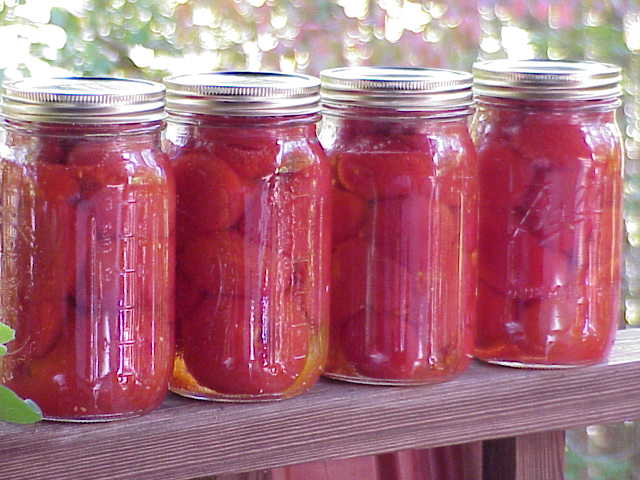
Canned tomatoesI put up a lot of things like tomatoes, ketchup, mustard, pickles, jams, salsa and chutney for fall, winter and spring use. Keeps me busy in the summer, but at least the freshness of the season is captured and I know what is in the processed foods we eat. I try my hardest not to buy processed foods anymore.

I use an excel spread sheet to manage the flow of the canned goods. This way, when they are gone and next year rolls around, I can see what we used up first and how much we used. It helps to plan the next years production. I’m quite geeky like that.

9. Use Timers!

Like measuring cups, you can’t have too many. Time things to help keep you on track and to remind you so nothing gets burned. There are so many fun kitchen timers out there, but your smart phone has a timer too.

English: An electronic egg timer to time eggs ...

English: An electronic egg timer to time eggs for soft, medium and hard cooking. The timer plays a short tune at each stage of the cooking. (Photo credit: Wikipedia)

I’ve got this retro one from France that has two timers on it so I can keep track of the bread in the oven and the rice simmering on the stove.

There are even ones that play tunes like the egg timer in the photo.

Timers are a great way to add some whimsy to your kitchen. I love whimsy!

10. Enlist help and have fun!

Get people involved, if they are eating at the table, they should be willing to give a helping hand somewhere. Setting the table, lighting candles, cutting flowers, choosing music, tossing a salad, bringing dishes to the table, pouring refreshing beverages, there are many tasks people can help with. All you need to do is ask.

I’ve asked Robert to help making salads while I handle the rest of the meal. Turns out he makes GREAT salads! I enjoy having him in the kitchen. Not quite sure how much he enjoys it, but judging from his salads, he does.

Kids will eat more if they have a had in helping prepare the food. Cleaning up without fuss? Not so much.

SO there you have a few of my tips for becoming more organized in the kitchen and how to address the meanwhile without panic.

Cooking is fun!

What tips do you have for organizing your cooking and kitchen?

What issues do you have while cooking; what is your greatest challenge?

Egg Plate – Concave or Convex?

Glenda, this is for you!

I couldn’t see how to attach a photo in the comments, so here’s an entire post on the egg plate’s optical illusion.

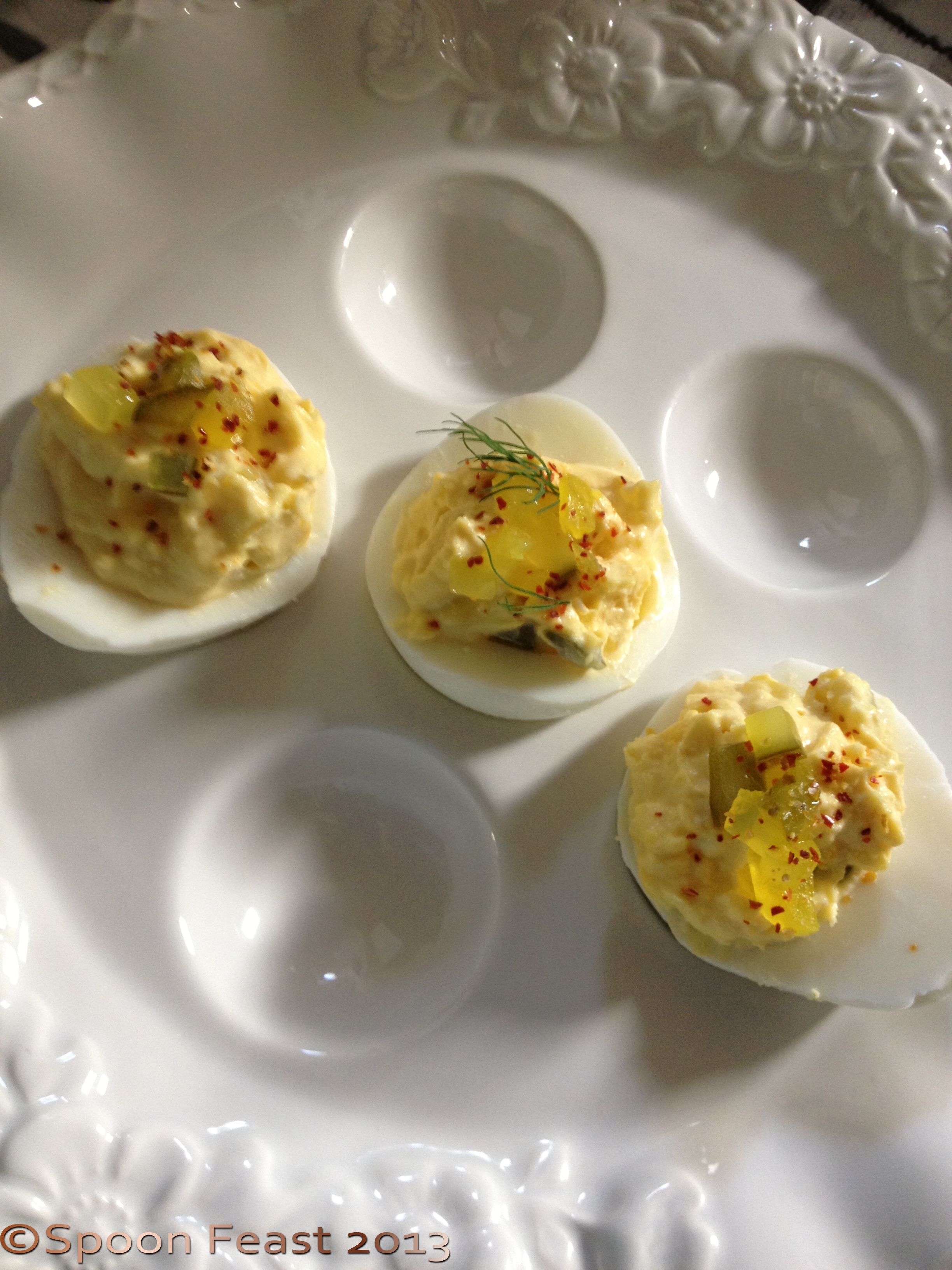
One of the features in the In My Kitchen post this month is an egg plate. The photo shows the plate without any eggs in it which makes the indents look more like convex domes rather than concave indents.

Celia pointed out this is due to monoscopic vs. stereoscopic vision. (One vs two, as in our eyes) It is because of this we have optical illusions.

Plain egg plate, concave or convex? Do you see indents or domes?

Plain egg plate, concave or convex?
Do you see indents or domes? I feel like reaching in and pushing them all down! Notice the flowers, are they indented or relief?


And this one?

Egg plate with an egg in it, now do you see indents or domes?

Egg plate with an egg in it, now do you see indents or domes?

Deviled Eggs

Deviled Eggs

Here is a link to Celia’s paper dragon that seems to follow you around the room as you move. Again it is due to mono/stereoscopic vision and the camera lens.

Fun!

Do other people have egg plates too?

In My Kitchen, September 2013

I nearly choked when I saw how many months have passed since I did one of Celia’s In My Kitchen Posts! Since this happens to be a long weekend in the US, I’m making time to do one this month.

Here goes!

In my kitchen this summer, is an egg plate that holds 6 deviled eggs. I loved the small version. Now Robert and I can have deviled eggs without having to make a whole dozen just to fill up the plate. (Yeah, I’m obsessive like that) I think it’s funny how the depressions in the photo have the optical illusion of being convex rather than concave.

6-egg Egg Plate

I’ve been pickling up a storm this summer.

Vegetables ready to pickle!

Vegetables ready to pickle!

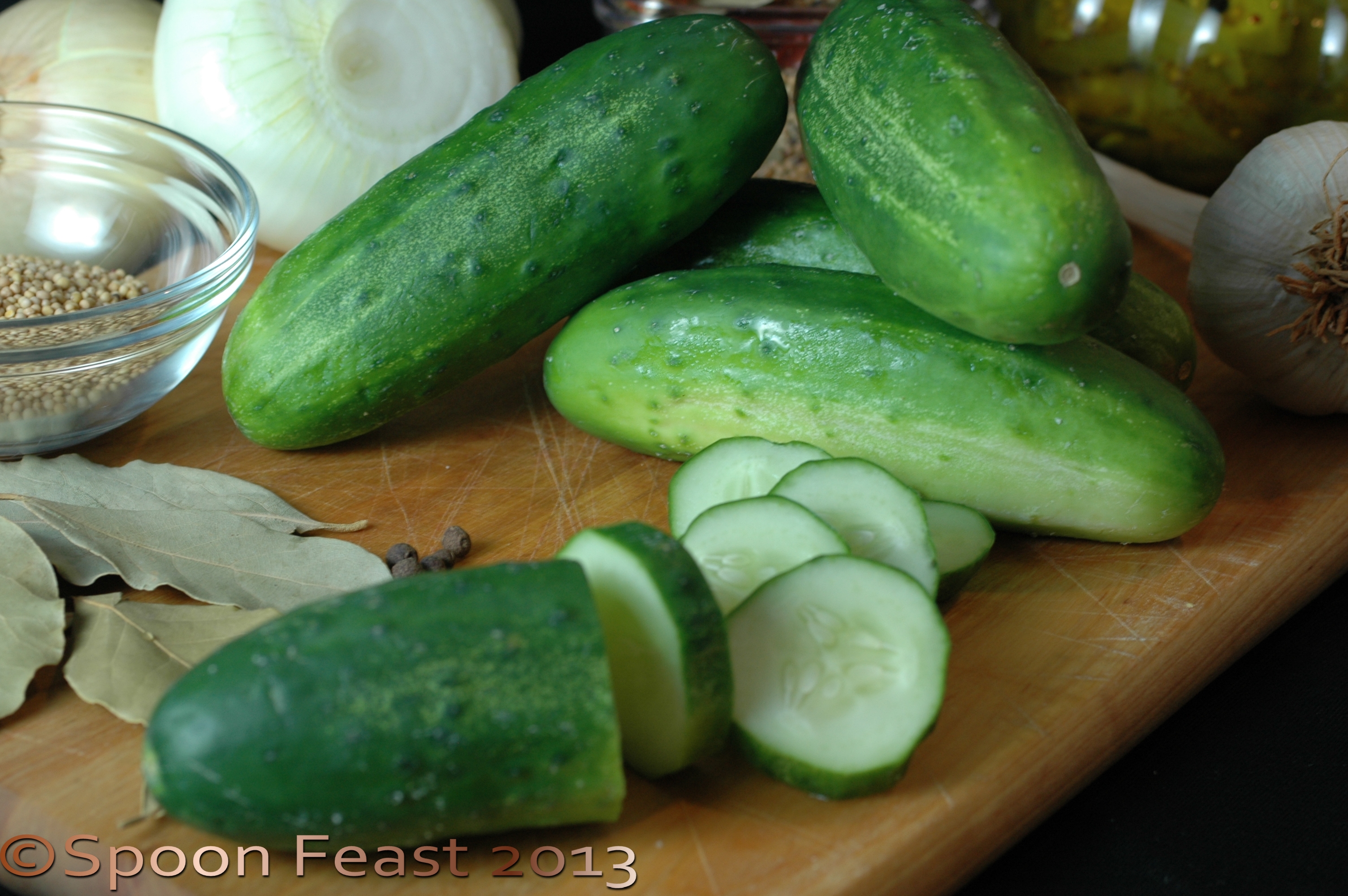
Pickling Cukes

Pickling Cucumbers

I hope we have enough to last us this  winter. I’ve made Sweet Pickle Chips, Half Sours, Dill Pickles, Pickled Cauliflower, Pickled Beets, Pickle Relish.

When I was done pickling, I made jams.

Simmering whole fig and lemon jam

Simmering whole fig and lemon jam

Blueberry, Lemon and Thyme, Strawberry Basil Balsamic and Whole Fig and Lemon.

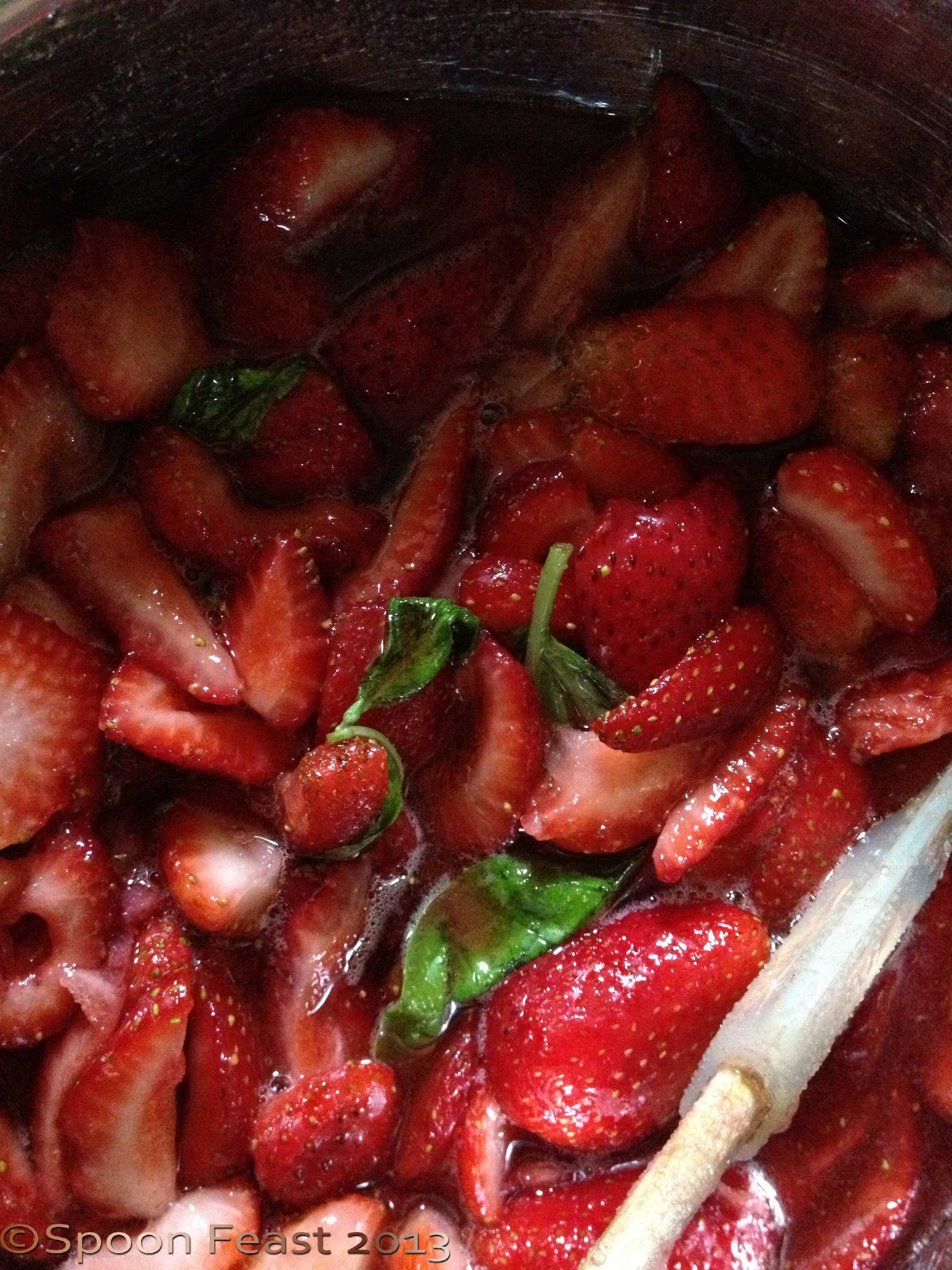
Strawberries and basil

Strawberries and basil

Blueberry, Lemon and Thyme Jam

Blueberry, Lemon and Thyme Jam

These two were also in the jam batch: Peach, Pepper with Ginger, and Mint Jelly. I used natural pectin by using grated apple peel.

Grate apple peel for pectin

Grate apple peel for pectin

While the canner was out, and to take advantage of 4 gallons of boiling water, I also threw together a batch of Heirloom Tomato Salsa, Homemade Ketchup, and Dijon Style Mustard and our own processed Horseradish.

Horseradish Root

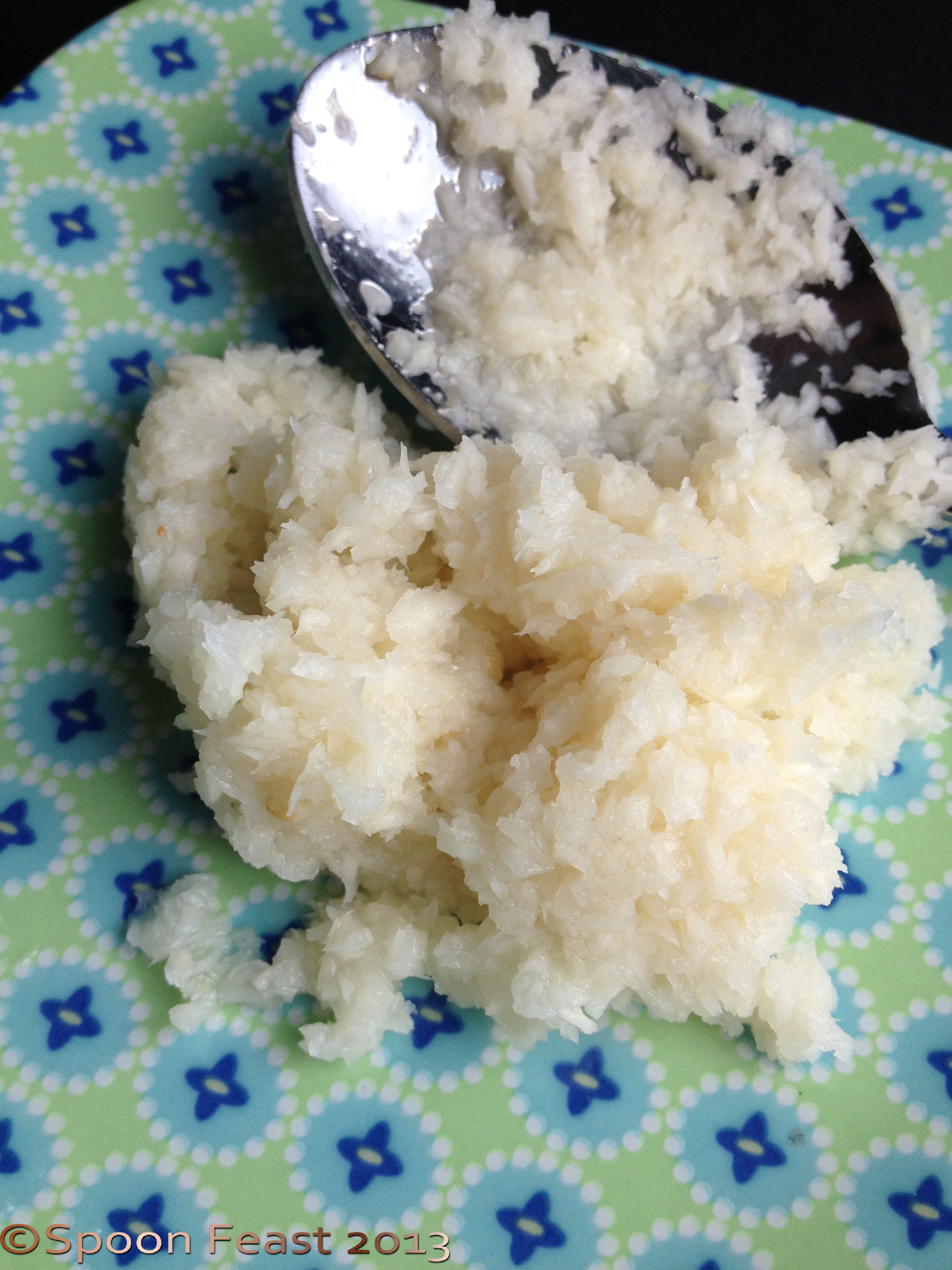
Horseradish Root. See the sprout on the end? It sprouted so now it’s growing in the garden. In a pot since I understand it spreads and is hard to control. I just cut the sprouted bit off, stuck it in some dirt and before too long it grew.

Processed Horseradish, for the perfect Bloody Mary!

Processed Horseradish, for the perfect Bloody Mary! I love horseradish on most any protein with a squirt of fresh lemon

Homemade Condiments

Homemade Condiments

The “PING!” of cooling jars seemed to be non-stop for several days.

Now I have to find somewhere to store all these jars!

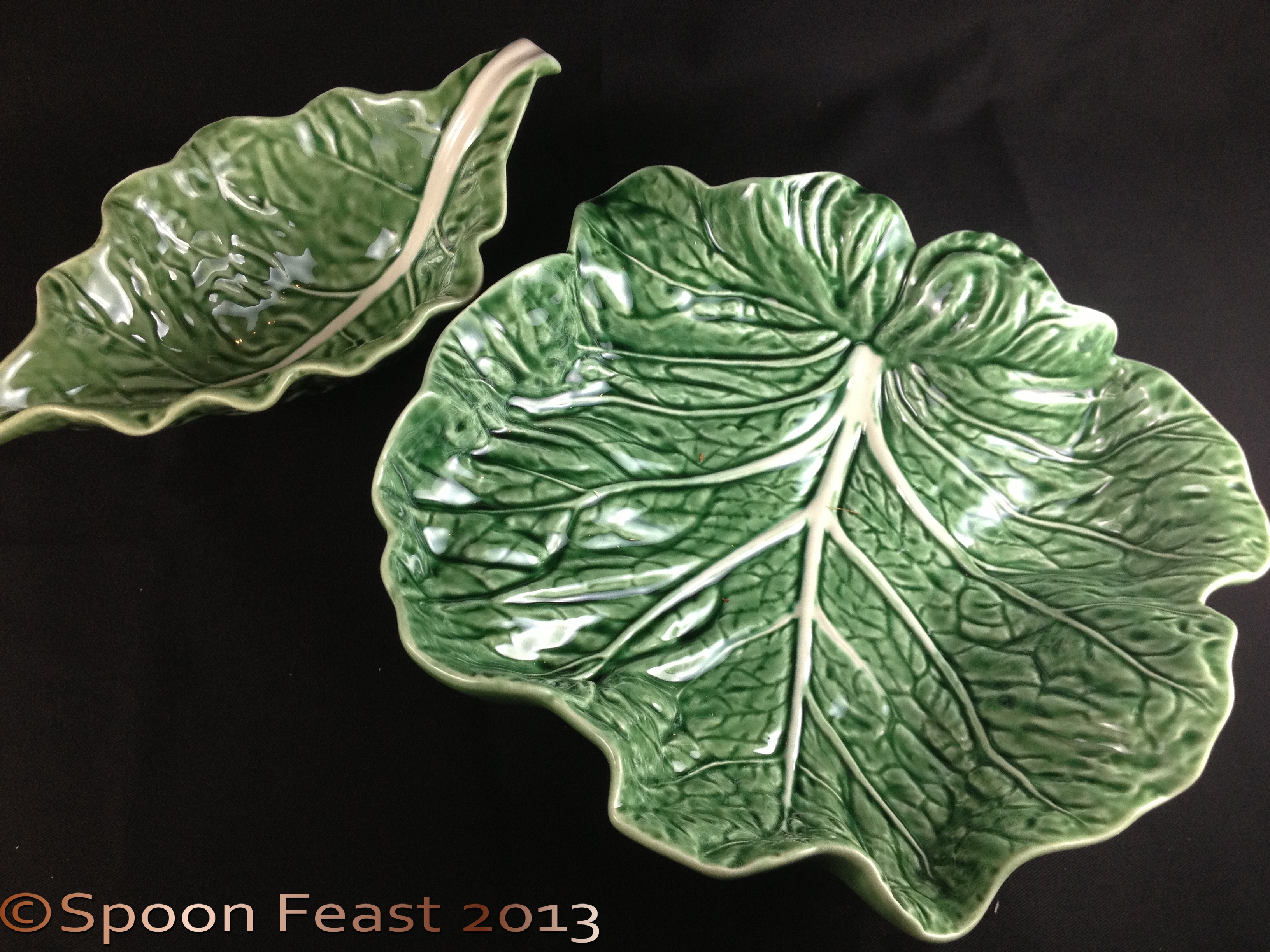
I found this great bowl and sauce server in the cabbage Leaf patters by Majorca Ware; I just love it!

Cabbage Leaf bowl and Sauce Server

Cabbage Leaf bowl and Sauce Server

What’s happening in your kitchen?

Sweet Pickle Chips

Sweet Pickle Chips

Appetizing Cheese Board

Putting together an appetizing cheese board is one of my favorite things.

Cheese Platter

We gather each evening, sip wine, talk about our day, sharing the time with family and friends, often as the sun slowly sets.

A few easy elements will ensure your cheese boards are exciting, tasty and everyone will enjoy.

First, you need cheese! Pick something you like. If you have more than one cheese, choose different varieties; creamy like Camembert or Brie, sharp like cheddar or goat, or blue, aged like  Gouda or Parmesan Reggiano or Pecorino Romano. If you are unsure, ask someone at the cheese counter to help you select. Often you can taste the cheeses too so it is beneficial to talk to the cheese person at your store.

For our evening appetizer platter often I just put out one great piece of cheese. In a pinch, you can use cream cheese, just dress it up with the rest of the elements of a great cheese platter.

Next, after you have the cheese, select some fresh fruit.

Grapes, pears, apples, fresh figs, cherries, berries, you don’t need a lot, but some.

Next add some dried fruit: apricots, dried cranberries, or dates make great choices for this category. If you have enough fresh fruit, you don’t need dried fruit too. You decide.

Choose some nuts: Almonds, pecans, walnuts, hazelnuts (filberts), Brazil nuts, cashews are some suggestions.

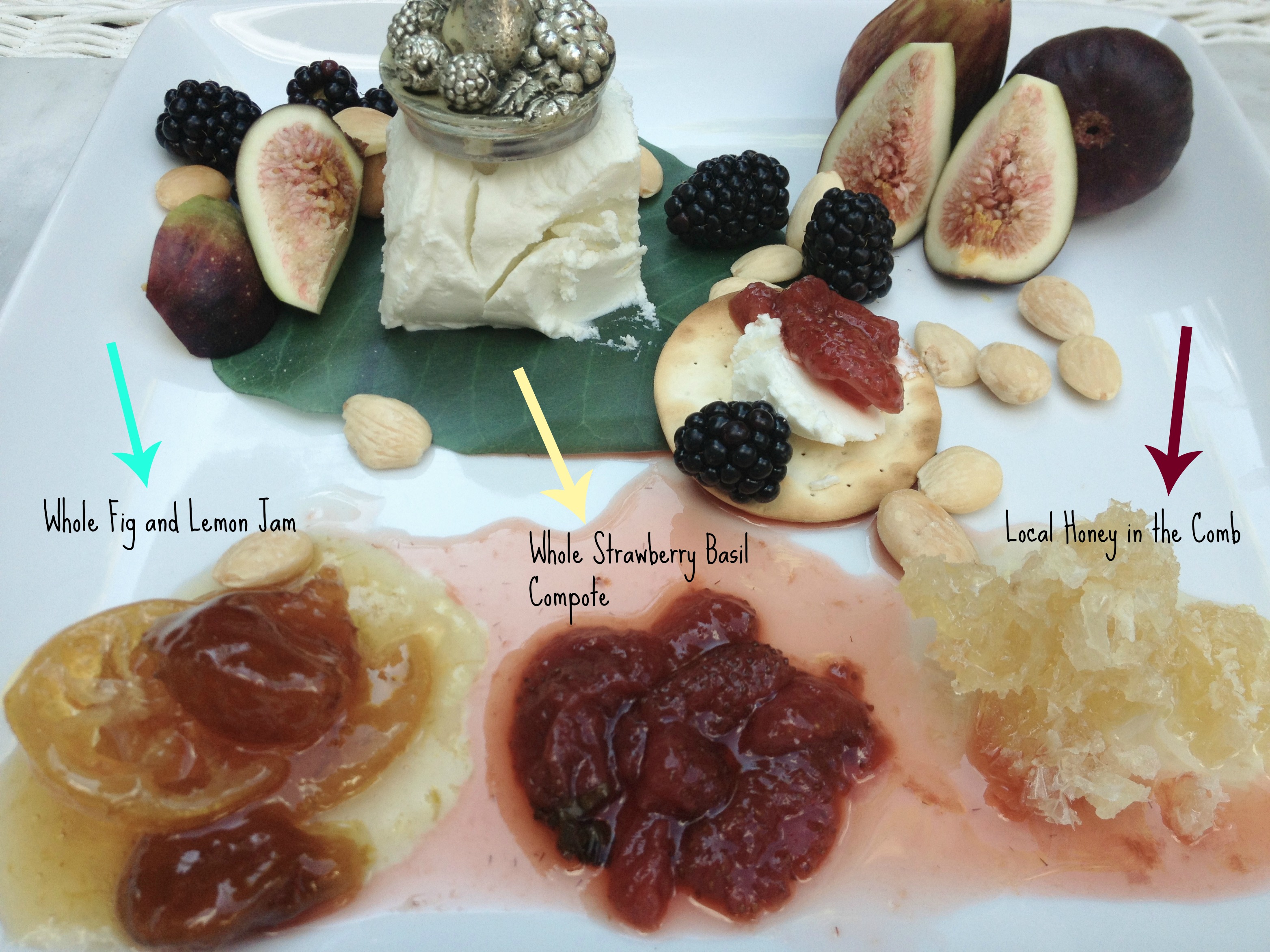
This is my favorite part, selecting some “toppings” to compliment. Choose marmalade, whole fruit jams, pepper jelly, or honey. This is where I like to use the honey that comes in the comb; slice off a bit, place the cut comb on the platter and let the honey drizzle and ooze all over. Scoop it up with a spoon to drizzle it over the cheese.

Compotes on cheese platter

The flavors you choose here can really set your platters apart.

If you wanted to add olives, pickles or charcuterie meats to a cheese platter you can. That brings it into the entertaining and party realm and is still easy and goes a long way when entertaining.

Finally add some crackers, flat breads, lavash, toast points or bread to a bowl or basket on the side.

Now it’s time to get your wine and enjoy!

Gaining Control of Our Food – How to stand up to Big Corporate Food

The state of our food supply is in crisis and WE are the ones to do something about it.

This is the beginning of a mission. There is a way we can fight back against big food corporations.

Cassie Parsons is a local chef and farmer who has an on-fire passion about local and honest food. This past February she did a TEDx talk about her big idea. In her speech she declares

“Our food supply is broken.”

And she’s right. She’s spot on.

Cassie’s TEDx Talk is linked below, give it a listen, Please.

This is what I have to say about the state of our food.

“America has the worst food in the world.”

We have the most and the worst. Quantity does not make quality food. Quantity has never made quality in any industry. Still there are so many that go hungry;  that is another discussion for another day.

We are in a state of change and increasing awareness. There is no reason to feel helpless about our food supply unless you decide not to do anything or you think someone else will do it instead.

That’s what Big Food is counting on, good old American apathy.

We’re world champions in apathy, we’re apathetic champions off the freaking chart.

You know what?

I hate to be the one to break the news, but the time for change is here; it’s NOW and it’s up to us.

We can’t let this go.

I want to talk about what we can do to stop Big Corporate Food from developing, planting and growing GMO‘s and other food atrocities they have developed and forced on us. They think we don’t need to know; they think we don’t care.

Worst of all is they think they can get away with it.

Here is the biggest thing, We DO have a choice. We have to demand the truth as to what is in our food, how it is processed and how the animals are treated and what’s in it; we have to get involved with our food.

Two news reporters were fired for not watering down a report about Monsanto and recombinant bovine growth hormone  causing cancer in humans who drink milk from cows treated with rBGH. rBGH is injected into dairy cows every two weeks to increase milk production which increases profits at the expense of human health. Click the link above to read the article.

Have you heard of rBGH? Big Food feels you don’t need to know if the milk you drink and give to your children is from cows treated with rBGH. You only find it mentioned on milk without it.

You don’t need to know that commercially grown strawberries can have residue of up to 13 different pesticides on them.

You don’t need to know that in order to “water” the plants, workers need to wear hazardous  material suits “to protect them”.

From what?! Aren’t they supposed to be “watering”?

The bees are dying due to the use of GMO seeds for growing crops.

Monarch butterflies are affected by GMO corn crops. You can hardly find non-gmo corn  anymore, even then, I’d question it. Same with soy and soy products.

If you read food labels, you may have noticed high fructose corn syrup products appears in nearly all processed foods.

What about additives, preservatives, FD&C color dyes for food, drugs and cosmetics (FD&C means that it has been approved for use in food, drugs and cosmetics) and who knows what else they put into products. How many of us read a label, see a list of 40 or so ingredients, glaze over it and buy the product anyway?

Those aren’t “cherries” on your cherry danish from that favorite fast food place, but a “cherry-like” substance with full cherry flavor. Read it.

Leave the products on the shelves! Drive by fast food, you and your family devserve better.

How can we make a change?

With our purchasing power and the decisions we make. Learn to make some of the “processed” food we buy at home; pickles, condiments, sauces, salad dressings, mayonnaise there are so many easy things to learn.

Photo: Let’s change the way we grocery shop

When we buy food that has come from a long distance from where we stand, we pay for that in more than money. When we buy those products, we no longer support our local economies. That money goes back to where the product came from or was produced.

Cassie explains this in her TEDx talk. I suggest when you are finished reading this post, go get a cup of coffee, glass of tea or whatever refreshing beverage you want, come back and watch Cassie Parsons talk. There’s a link at the end of this post and only about 18 minutes long. It will make you think.

It will empower you and implore you to do something too. When you process your own condiments and other food, you know your ingredients, you know what you are serving; you know ALL the ingredients and the quality used.

Yo wont find pink slime in your burgers if you grind your own meat, you won’t find bone scrapings and other left over bits if you learn to make your own fresh sausage.

If you do this right, you also know who raised the pig and get the casings from the same farmer.

If you make your own pickles, know the farmer who grew the cucumbers. There are farmers markets in nearly every city on nearly every day of the week. There is no reason not to find one and use them.

Beyond benefits of local foods, you gain the benefit of a stronger local economy, a stronger social community, which leads to great places to live and raise families. Why? Because you know who is growing your food, what they are growing and how. You share things, trade things, eat healthier, you build a better community.

Your health will be infinitely better. My grandfather used to tell me you can grow it yourself, pay the farmer, or pay the big grocery stores and then pay the hospital bills. He grew all his vegetables and raised a large family with fresh bread, fresh fish and good food.

If we decide to make our own processed foods (yes, there is a learning curve) we can have an impact on big food profit. If products sit on the shelves, if people stop buying them, it will have an impact on profits, which would get BCF attention.

Maybe then, Monsanto and other companies would listen to “Please No GMO!”

Watch this, out of the mouths of babes, the young people get it and it scares them.

If everyone learned just one thing they could make, make enough to share with neighbors, swap, make things together and share. This is not only about building our health, but community and quality of life.

We don’t have to feel helpless or voiceless in this food crisis. We have a choice. WE can do something, each and every one of us.

Buy local.

Ask questions about the food you buy.

Support local farmers.

Learn to make basic condiments, with a group and share.

Start a pickling group or whatever. Make food about people, health and community again; take the profit away from Big Corporate Food.

Stop the apathy and get involved, your health depends on it.

Here’s Cassie’s talk below

Ketchup or Catsup? Make Your Own

Whether you call it Ketchup or Catsup, we all love vibrant tomato ketchup for one reason or another. I can’t imagine eating pot roast without it, and it is divine with burgers and fries.

Did you know you can make it at home? Leave all the preservatives, artificial flavorings, high fructose corn syrups, red dyes behind you and follow this recipe. This looks vibrant, tastes great and your friends and family will simply LOVE it! Best of all, you know exactly what is in the food you are serving.

Picmonkey Homemade tomato ketchup

This is one small way we can take control of our food and avoid GMO‘s, high fructose corn syrup and other hidden sugars, fats, salts and preservatives. Take a stand against Big Food and learn to make your own ketchup! It’s small, but it will have a very healthy effect of your family!

Homemade Ketchup

For the spiced vinegar:

  • 1-1/2 cups white distilled vinegar
  • 2 teaspoons whole cloves
  • 1 teaspoon broken stick cinnamon
  • 1 teaspoon celery seed

For the ketchup:

  • 5 ½ pounds tomatoes
  • 1 cup granulated sugar – separated into two ½ cup measurements
  • ½ medium onion chopped fine
  • 2 cloves minced garlic
  • ½ teaspoon cayenne pepper
  • 1 tablespoon non-iodized salt

Method:

Combine the first four ingredients. Bring to a boil; remove from heat then set aside to cool.

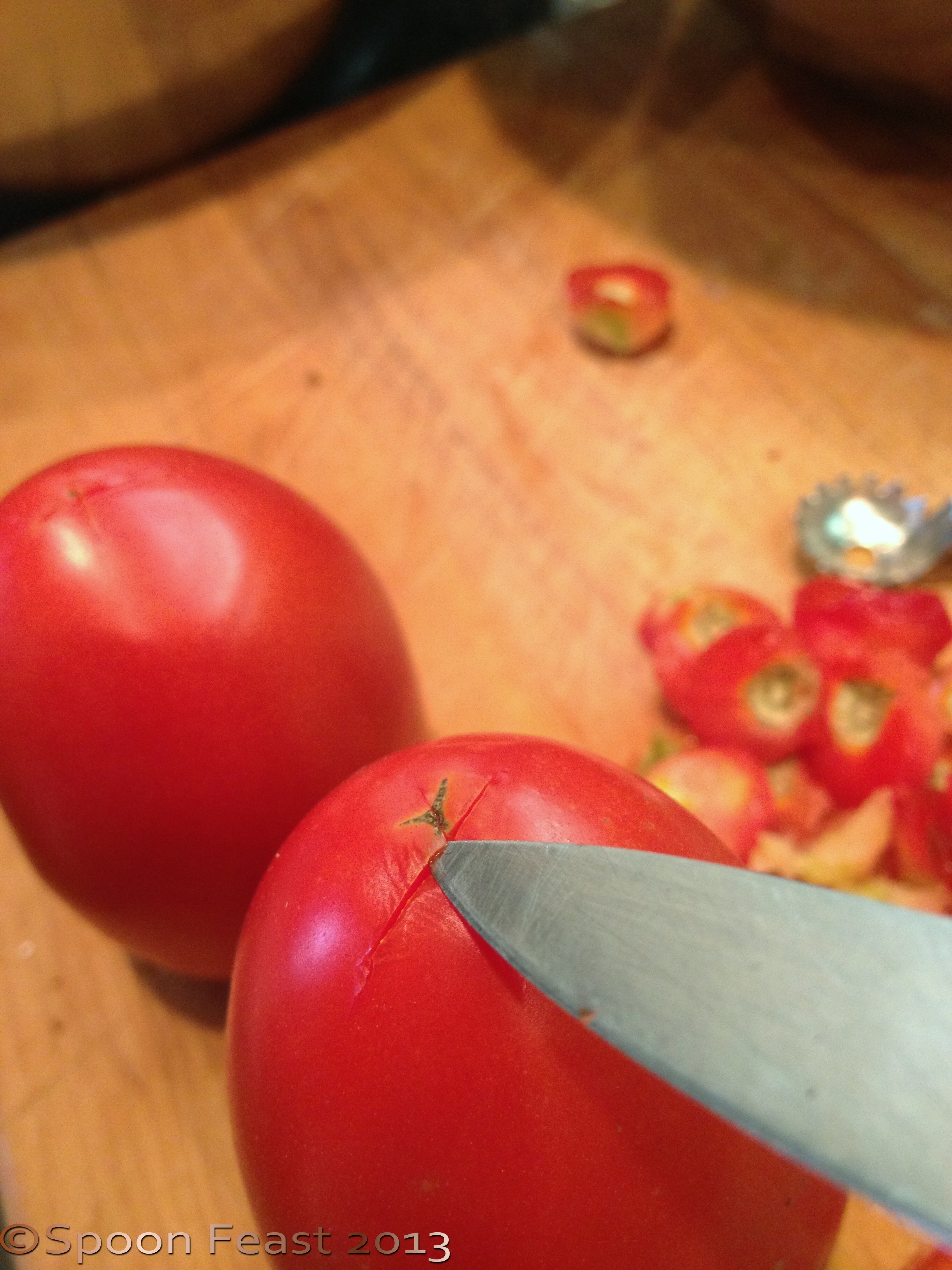
Wash the tomatoes. Bring a large pot of water to a boil. Remove the core from the top of the tomatoes and cut a shallow X into the bottom end.

A "Tomato Shark" makes removing the blossom end simple and quick

A “Tomato Shark” makes removing the blossom end simple and quick

Scratch a shallow X on the bottom

Scratch a shallow X on the bottom

The skin will split when ready, the more ripe the tomato, the quicker this happens.

The skin will split when ready, the more ripe the tomato, the quicker this happens.

When the skin splits, plunge into ice water to stop cooking.

When the skin splits, plunge into ice water to stop cooking.

Slip the skins off the tomatoes, cut and squeeze out the seeds.

Slip the skins off the tomatoes, cut and squeeze out the seeds.

Set a large bowl of ice water near the pot of boiling water. Place the prepped tomatoes into the boiling water. As soon as the skin splits, remove and place the warm tomatoes in the ice water to stop cooking.

Slip the skins off the tomatoes. Slice them in half around the center of the tomato, not from top to bottom. Squeeze gently to remove all seeds. Do this over a strainer that is over a bowl to catch the juices that come from squeezing the seeds out.

Cut the tomatoes in quarters. Combine half of the tomatoes with ½ cup sugar, onion, garlic and cayenne pepper in a deep stainless steel pot. Bring to a boil and allow the tomato mixture to boil vigorously for 30 minutes, stirring often to avoid scorching.

After 30 minutes, add the remaining tomatoes and sugar and boil for another 30 minutes. At this point you will need to stir it often as the mixture gets thick.

Strain the vinegar and discard the spices. Add the spiced vinegar to the boiling tomato mixture, stirring constantly for 15 minutes or until the desired texture is reached.

Test the consistency by placing a small amount of the ketchup on a small plate. There should be no watery run off. If there is, keep cooking.

For smooth ketchup, puree using a stick blender, or use a blender to puree the hot mixture. Bottle the hot mixture in sterilized jars or another non-reactive container.

Store under refrigeration unless processing in a water bath canner. An “Old Wives” trick is to wrap each jar in brown paper to protect the color during storage. Not necessary if you store the jars in the refrigerator.

A vibrant bowl of homemade ketchup

A vibrant bowl of homemade ketchup

How to Make Mustard

Learning how to make mustard can be as simple as mixing a few things together or as complicated as soaking a few seeds. It’s not hard at all to make.

Make Your Own Mustard

While there are many different kinds of mustard you can make, this is a kinder gentler mustard, not too pungent.

All it takes is mix the ingredients together, heat until thick, bottle and cool.

Simple!

Make Basic Mustard

  • 1/2 cup dry mustard powder, Coleman’s is my favorite.
  • 2 1/2 tablespoons all-purpose flour
  • 1/4 cup brown sugar, light or dark doesn’t matter
  • 1/2 teaspoon kosher salt (non-iodized)
  • 1/2 cup good quality white wine vinegar

Measure and mix everything in a heat-resistant bowl until a thin smooth paste forms.

Place the bowl over a pot of boiling water to make a double boiler, heat the mixture until it becomes thick. As the mustard thickens, whisk so it remains smooth.

Use a silicone spatula to get all the mustard in to a clean glass jar.

Allow to cool, cover, label and store.The mustard needs to sit for at least 2 hours before serving. The mustard will also “mellow” as it ages in the refrigerator.

Homemade Ketchup, Mustard and Relish

Homemade Ketchup, Mustard and Relish

I haven’t had a jar around long enough to tell you how long it lasts.

Use it as you would any mustard but be warned, it will spoil you from buying  processed store-bought mustard.
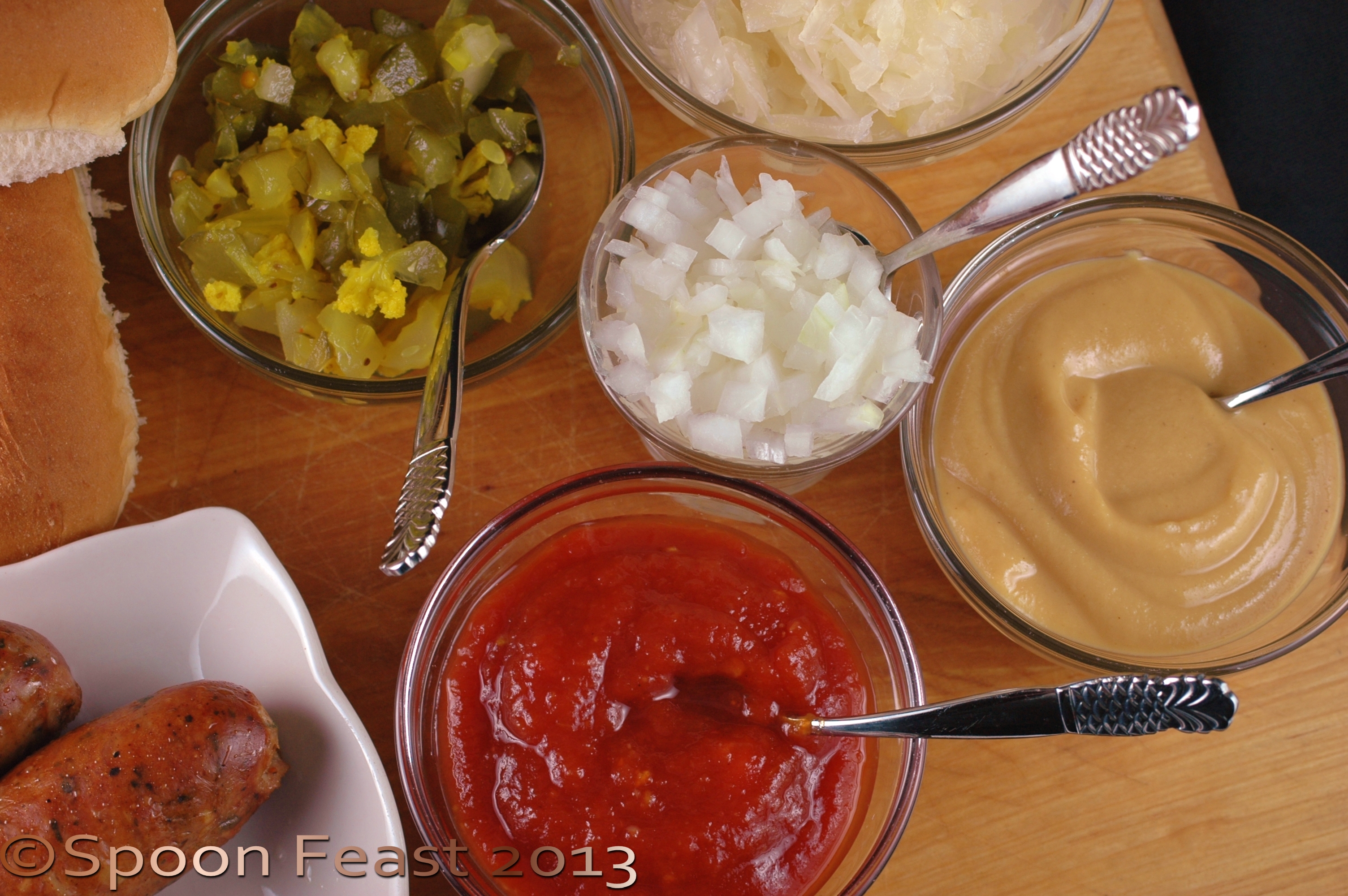
Dip a tasty sausage into mustard!

Dip a tasty sausage into mustard!

Decorate your hot dog the homemade mustard

Decorate your hot dog the homemade mustard

More mustard recipes coming soon such as whole grain mustard, Dijon style, champagne honey, and pear/apple mostarda.

Learning how to make mustard is an easy thing to do to reduce your consumption of processed foods.

Basic Mustard

Basic Mustard – Got a Pretzel?

Prepared Horseradish – Easy to make!

Making prepared horseradish is quite easy. The best benefit is you only have the ingredients intended without chemicals, preservatives, added colors or flavorings.

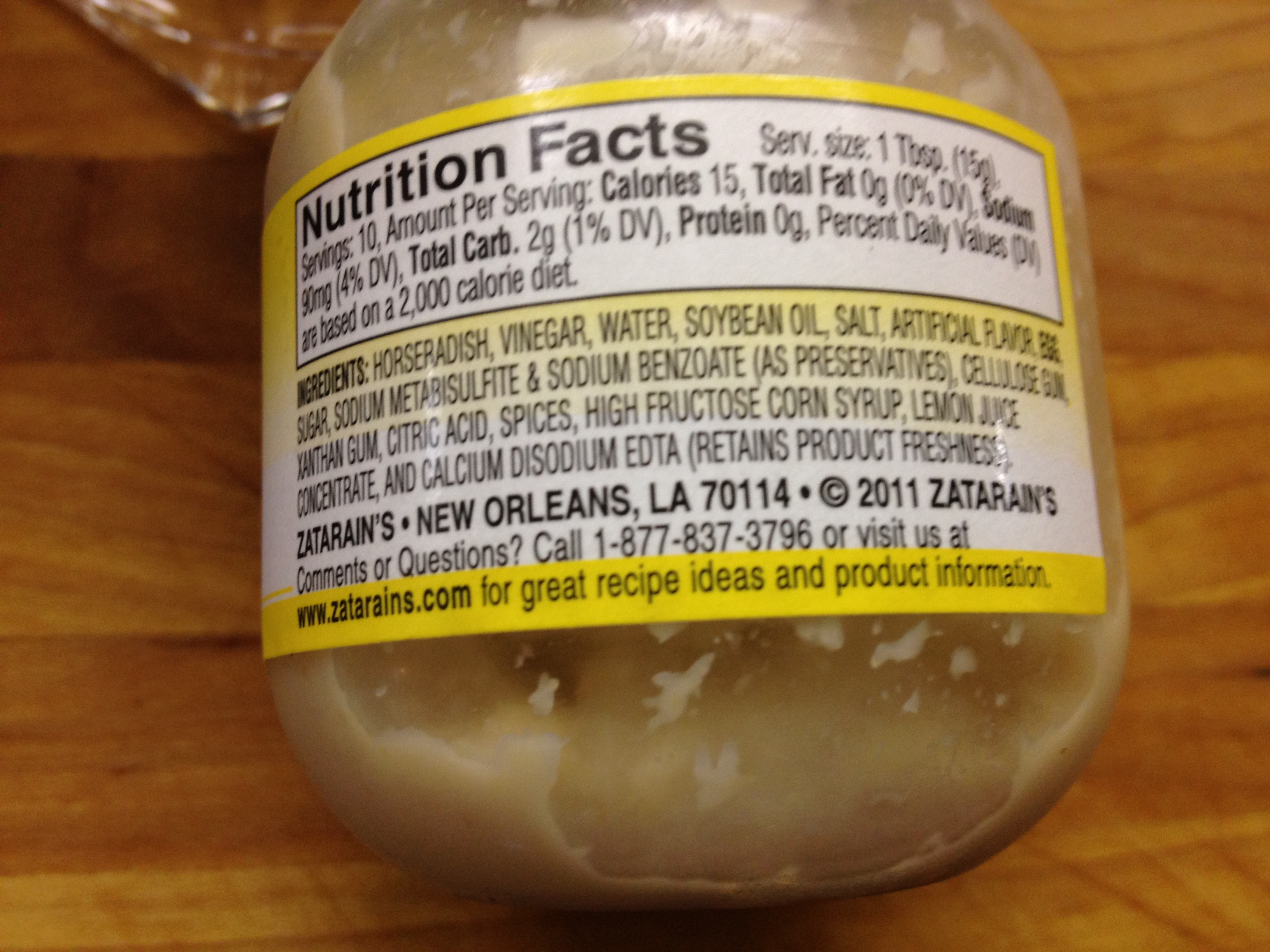
Label of commercially prepared horseradish

Label of commercially prepared horseradish – see all the added ingredients?!

I am campaining to stop buying processed foods and to process any foods we use myself. Horseradish is one of those staples we always have in our fridge.

We use it in Bloody Marys. Robert makes the best mix! He’s kind enough to share his recipe below.

We use prepared horseradish in a mix with brown sugar and mustard as a glaze for salmon, we mix it with sour cream or mayonnaise for a side with roasted or braised meats.

I like to mix prepared horseradish with orange marmalade and lemon juice for a dip for shrimp or spring rolls or chicken fingers and to add punch to salad dressings.

Armoracia rusticana

Armoracia rusticana (Photo credit: Wikipedia)

You have to be careful of fresh horseradish because it can clear even the most stubborn sinuses. This is why it is combined with other things rather than eaten straight.

So when you do look for fresh horseradish, you need to locate a good solid root. No soft spots or mushy places. The root should be firm and solid.

It will have dark brown skin and the flesh underneath is pure white. Discard the outside peel and any leaves or shoots coming off the root.

If you grow horseradish, be prepared, you cannot simply pull the plant out of the ground. It gets fully established and spreads. You have to cut a section of root out with your shovel, don’t pull it up.

Prepared Horseradish

Keeps up to 2 months in the refrigerator

  • 1 8-10 inch piece of fresh horseradish root
  • 2 Tablespoons white vinegar
  • 2 teaspoons sugar
  • 1 teaspoon salt
  • 1 tablespoon water, if needed

Measure the vinegar into a small bowl, add the sugar and salt; stir until both are dissolved. Set aside.

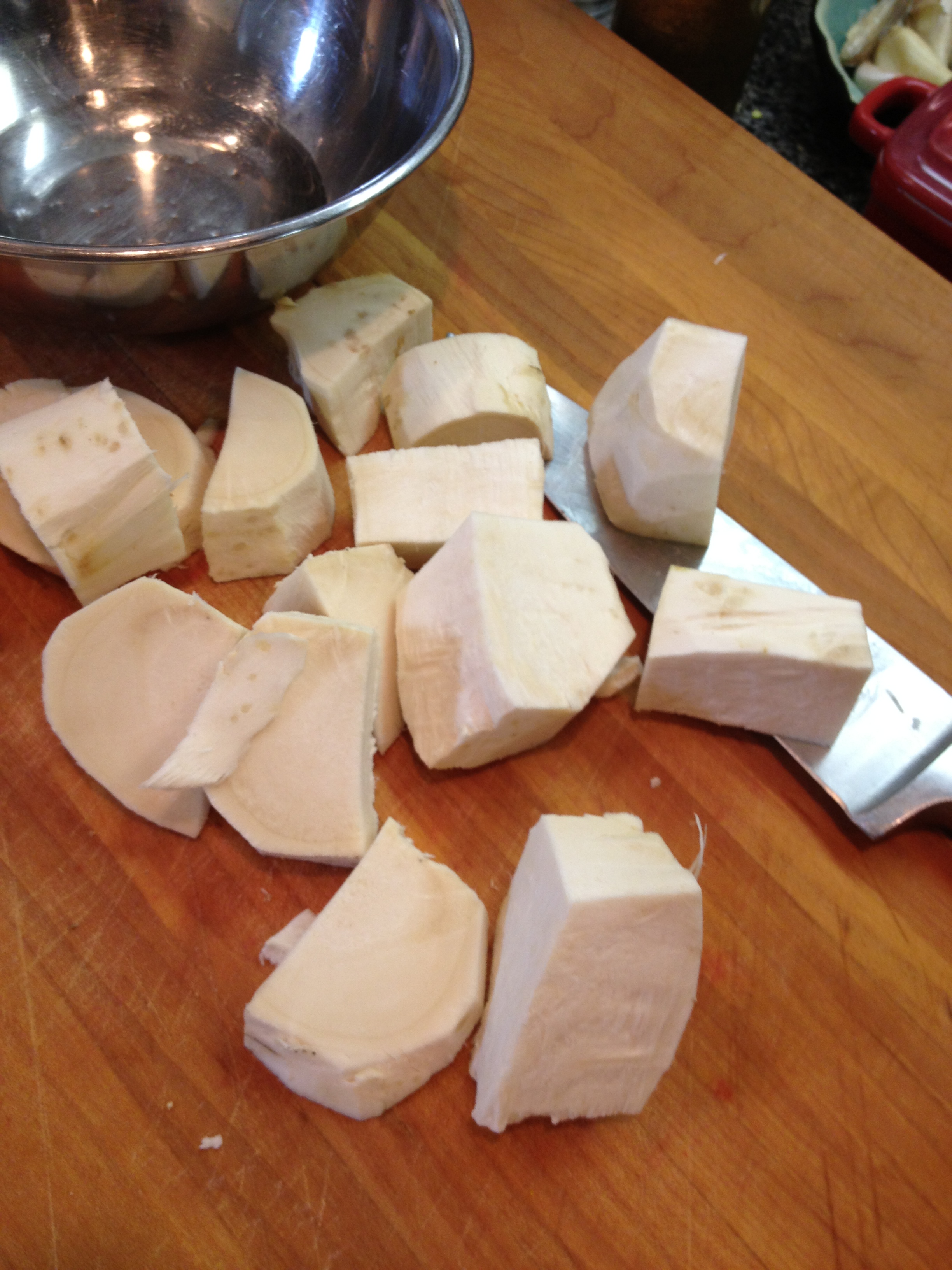
Scrub and then peel the horseradish root. Chop it coarsely and place it in the work bowl of a food processor fitted with a chopping blade.

Cut the horseradish into chunks to process in the food processor

Cut the horseradish into chunks to process in the food processor

If you have a shredding plate on the food processor, you can shred the root instead of chopping it by hand.

Pulse the food processor until the horseradish is roughly processed, Drizzle the vinegar, sugar and salt mixture into the bowl to form a loose paste. Add water if needed to thin. Process until the texture of the chop is as you desire.

CAUTION!

When removing the lid from the work bowl, do NOT put your face directly over the bowl! Horseradish is quite “pungent” like mustard is and can be used in crowd control sprays.

The aroma could cause severe eye, nose and throat irritation.

Avert your face while opening the bowl and work in a well-ventilated room, under the stove vent or near a fan would be best.

Adding the vinegar as soon as possible after the food processor processing is important as it “sets the heat” of the horseradish. So what that means is finish once you start. Don’t go answer the phone and get into a conversation for 30 minutes. You’ll lose all the heat in the horseradish.

The entire process can be completed and cleaned up within 15 minutes.

Once you have finished processing to the desired texture, place the mixture into glass jars and store in the fridge. It will keep up to 2 months. We use it up so fast, I don’t really know how long it would last!

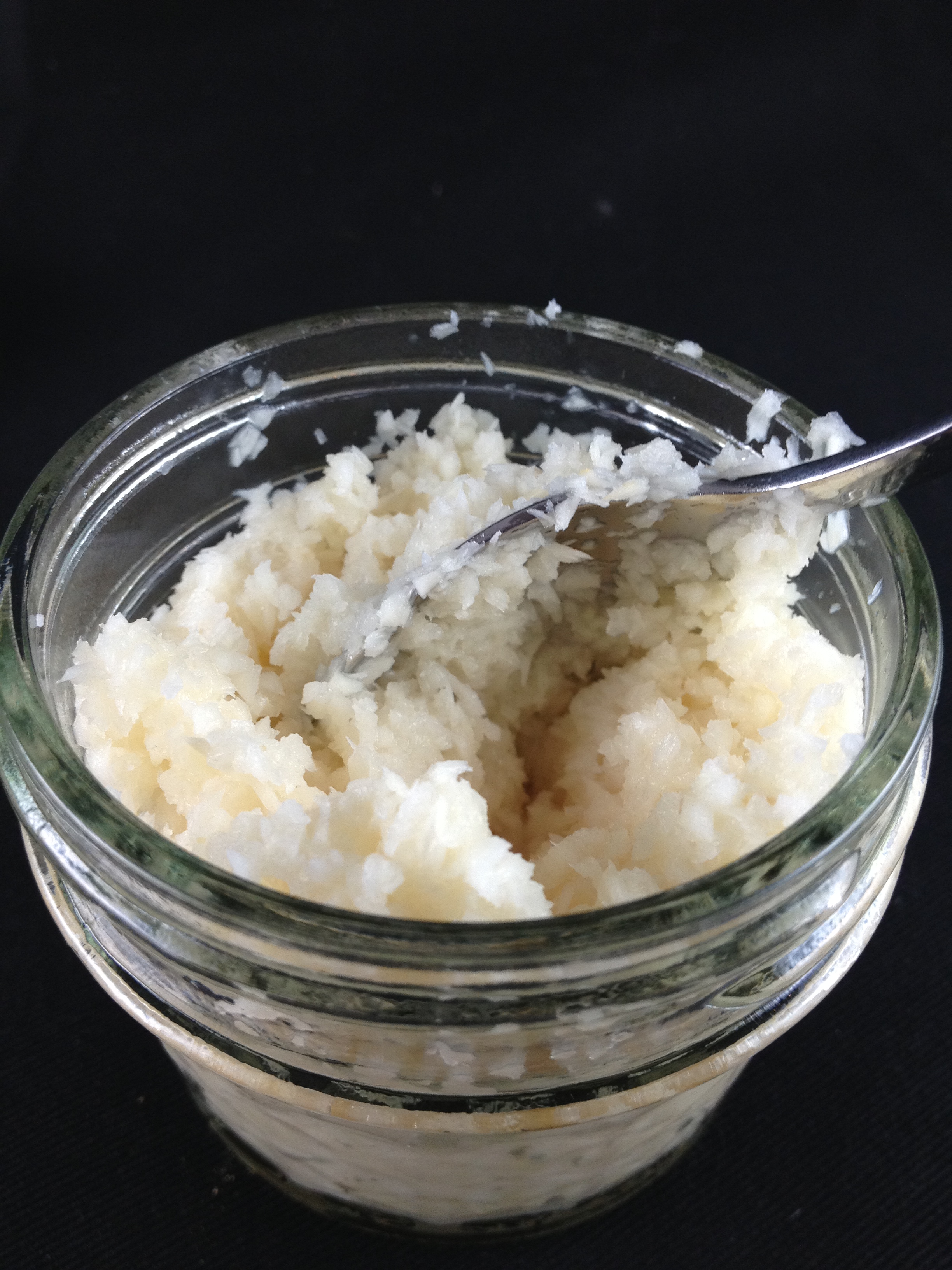
Prepared Horseradish

The sugar in the mix helps counter the bitter quality often found in horseradish prepared without it. Can you leave it out? Yes.

Can you substitute honey? Sure, but no artificial sweeteners because they also contribute a bitter quality, especially with the vinegar.

Can you leave out the salt? Not advised but if you want, you can cut it back a bit.

Can you use different vinegar? Yes, make sure it has between 5-7% acidity. Really, there is no need to use anything other than a simple white vinegar.

To make it pink, add some shaved beet or beet juice while processing.

So, now it’s time for a Bloody Mary!

Robert’s Bloody Mary Mix

  • 1 32-ounce bottle Low sodium Hot and Spicy V-8 Juice
  • 1 Tablespoon Worcestershire Sauce
  • 1/2 Tablespoon prepared Horseradish
  • 1/2 teaspoon celery seed
  • 1/4 teaspoon fresh ground black pepper
  • Texas Pete Hot Pepper Sauce to taste

Shake everything together well. Store in the refrigerator. Use as is or add vodka and ice as desired.

Sprinkle  a few celery seeds on top of finished drink, garnish with celery stalks.

Prepared Horseradish

Prepared Horseradish