Salt

Salt is one of the most used seasonings in the world, yet most people don’t even realize there are many kinds of salt.

The salt most people are familiar with is the simple table salt. Finely ground, iodine added, it is meant to be used as a table seasoning, not for cooking. The iodine adds a bitter flavor that most recipes don’t need. This salt is commonly mined from the ground.

We will leave the concept of table salt behind for this discussion.

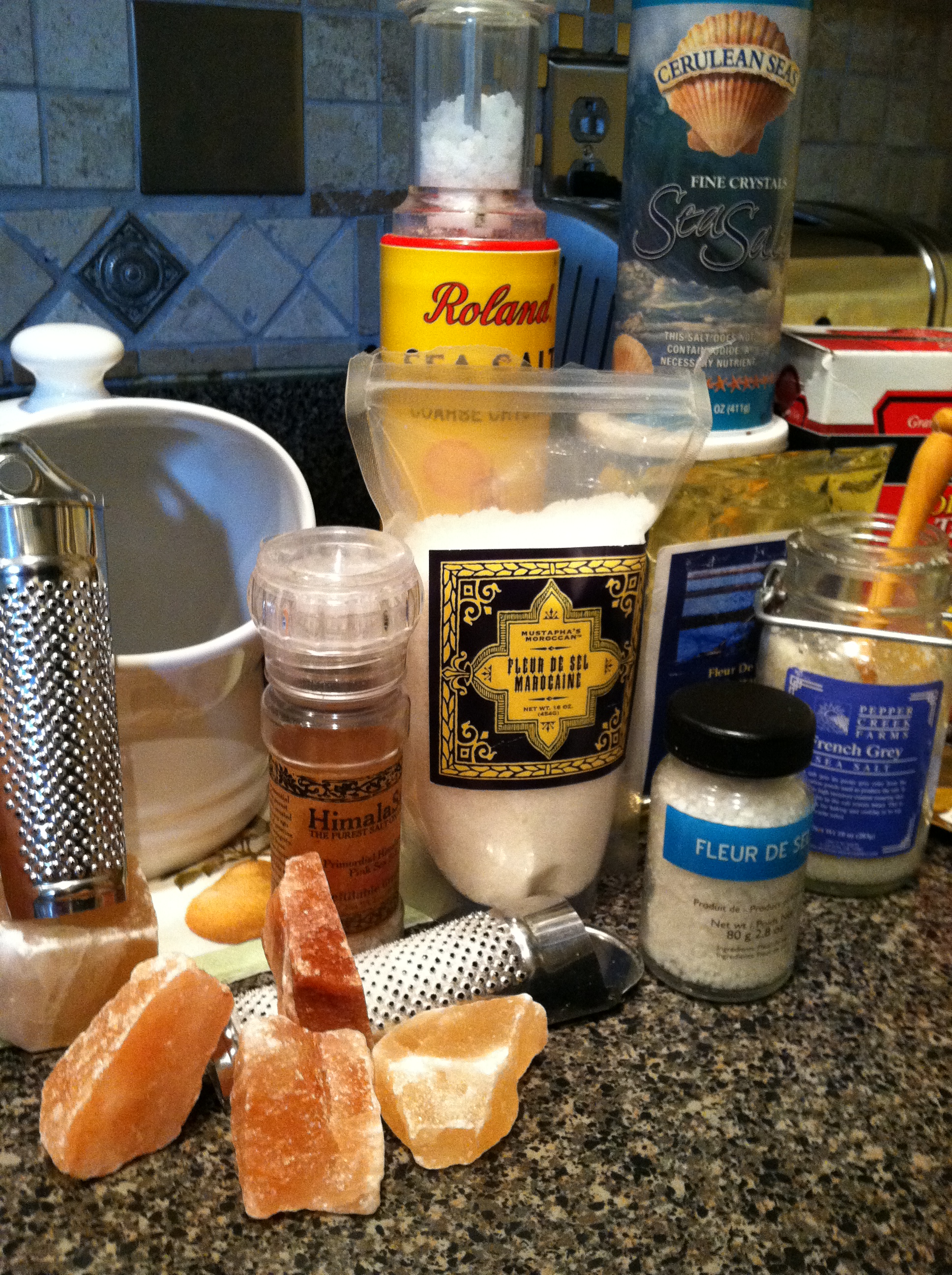
My favorite salt for finishing dishes is French Fleur de Sel from the coast of Brittany. It adds a delightful crunch to anything from crisp fresh radishes to scallions and baked potatoes. Various SaltsIts appearance is slightly off pure white and has the appearance of being slightly damp. Being a damp salt, it does not dissolve as quickly as a drier salt would. This is why it is used as a finishing salt. The irregular size of the crystals contributes to different melting times thereby lending a salting flavor on many different levels.
The Fleur de Sel forms when the wind blows across the coast of Brittany where workers hand collect the salt formation off of the top before it sinks into the collecting pans below. Being a hand collected salt, Fleur de Sel is one of the most expensive salts, but well worth it. The absolute best comes from towns of Guérande (Fleur de Sel de Guérande)

Here’s a link by one of the worlds foremost experts on salt, Mark Bitterman. He has authored  “Salted: A Manifesto on the World’s Most Essential Mineral, with Recipes” available on Amazon.

Face it, you won’t be salting your pasta water with Fleur de Sel so go ahead and splurge on some. Personally, I like to sprinkle the top of chocolate chip cookies with Fleur de Sel before they go into the oven. As my hair stylist would say,”OMG!”.

French grey salt is similar to Fleur de Sel and is used the same way. It gets the grey from being harvested deeper than just the very top like Fleur de Sel. Still on the pricy side, but should not cost quite as much as Fleur de Sel.

Sea salts are ocean sourced and are dried. You can find crystal sizes from coarse to fine. As an inexpensive salt, it can be used in any application.

Mined salts are cut from the earth. One of the largest salt mines is in Pakistan. From this mine you find Himalayan rock salt which is pink in color from the iron oxide content. Shades vary from light pink to dark reddish hues. Being very hard, the salt can be found shaped into trays, platters, bowls, cooking slabs, lamps, and candle holders in addition to being finely ground for kitchen use.

Himalayan salt

You can use the smaller fragments in a salt grinder just as you would a pepper grinder or use a rasp like a nutmeg rasp or a micro-plane.

I like this salt on popcorn.

Serving food on the slabs is quite interesting. The moist foods will become lightly salted and dry foods do not pick up salt flavors at all.

Salt is not fat soluble so if you oil the slab or serve fatty foods on it they will not pick up large amounts of salt thereby over-salting the food.

If using the slabs for cooking, the slab must get to 600 degrees Fahrenheit so the juices evaporate rather than hanging around melting the salt slab and over-salting the food. Heat the slab slowly. The salt slab will become translucent as it heats.

Salt bowls? I’m thinking ice cream!

If you use a smoker, wrap some coarse crystals of sea salt in multiple layers of cheese cloth or muslin and place it in the smoker. You will get a greyish smoked salt as a result. The trace of smoke flavor is really nice on a piece of fish.

The intention of this post is to simply increase your awareness of salt. If you explore the subject, you will find there are some amazing salt products out there. Try some.

Expanding your salt repertoire can be fun.

Keep your special salts for finishing dishes.

Kosher salt is the staple salt I keep in the kitchen. Great for pasta water, and general all around seasoning. It’s not expensive and available everywhere.

Use this salt to create your own seasoning salts.

Seasoning Salts

Combine herbs, spices, garlic, onion to create your own special blend.

Use a knife or a spice grinder to finely chop the herbs and flavorings you choose. Combine the mix with kosher salt; stir so it gets all mixed up.

Store in glass jars or plastic containers. Use it for finishing vegetables, pasta, potatoes, to season whatever you cook instead of plain salt.

Typically, kosher salt as that is what I have on hand. However you can use whatever kind of salt you want- just don’t use iodized table salt.

If you have health concerns and don’t use salt, get in the habit of using herbs, spices and citrus zest to enhance the flavors of your food. More about that in another post.

Explore something new, have fun and happy cooking!

Chef Pamela
Make Vanilla Extract

I love vanilla.

The smell, the aroma, and the fact that a vanilla bean comes from an orchid makes the most common flavoring actually quite exotic.

Having your own perpetual vanilla extract on hand is a simple thing to do and the rich, full flavor of this extract is well worth the six months you have to wait for it to develop.

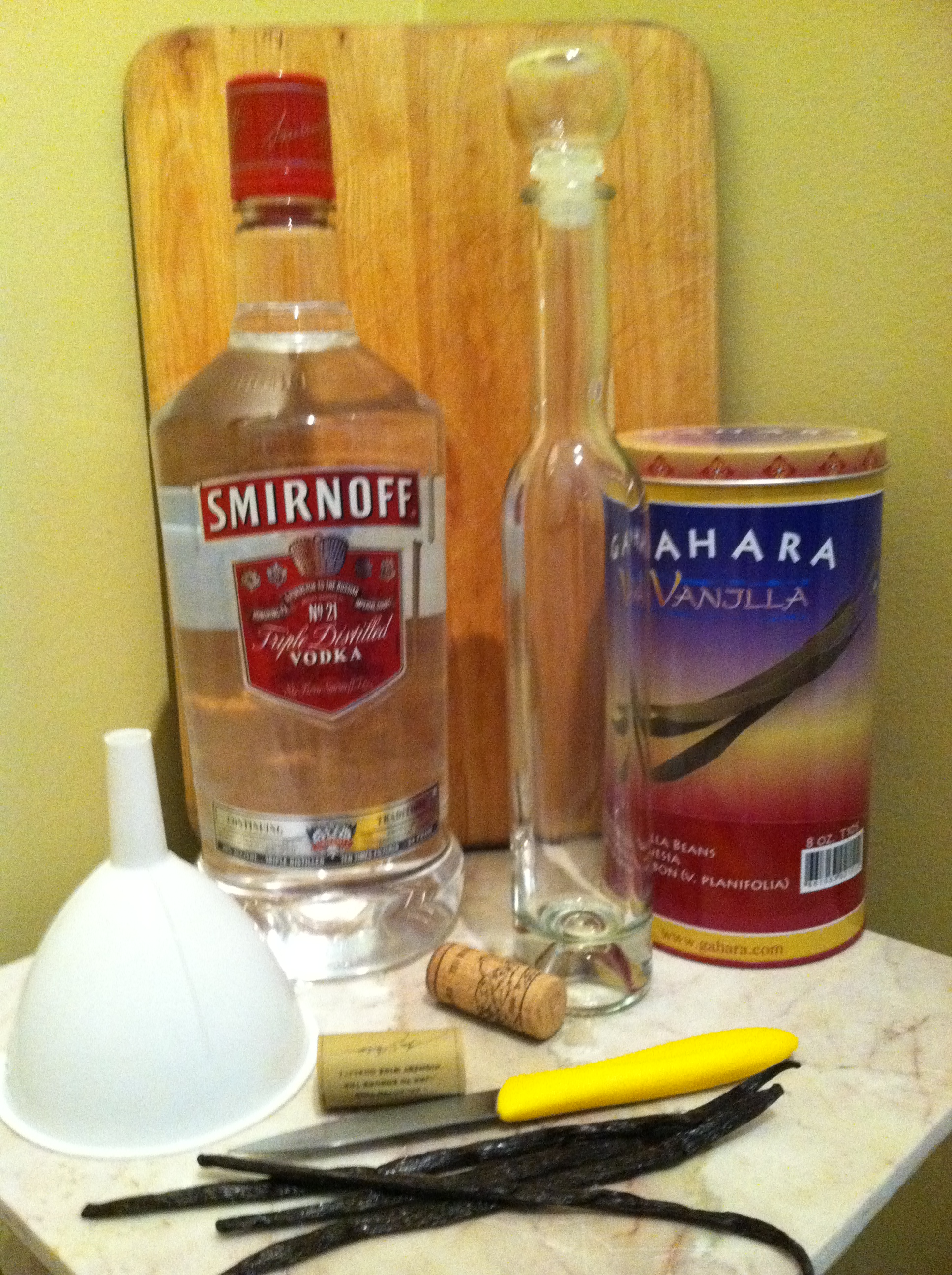
You will need:

  • Supplies for making vanilla extract

  • Cutting board for cutting the vanilla beans open
  • Sharp paring knife
  • 3-4 fresh vanilla beans
  • A clean, sterile bottle to fit the vanilla beans
  • A funnel to fill the bottle easily
  • Plain, unflavored vodka (Does not need to be a premium vodka)
  • A stopper for the bottle that fits well enough to shake the bottle vigorously

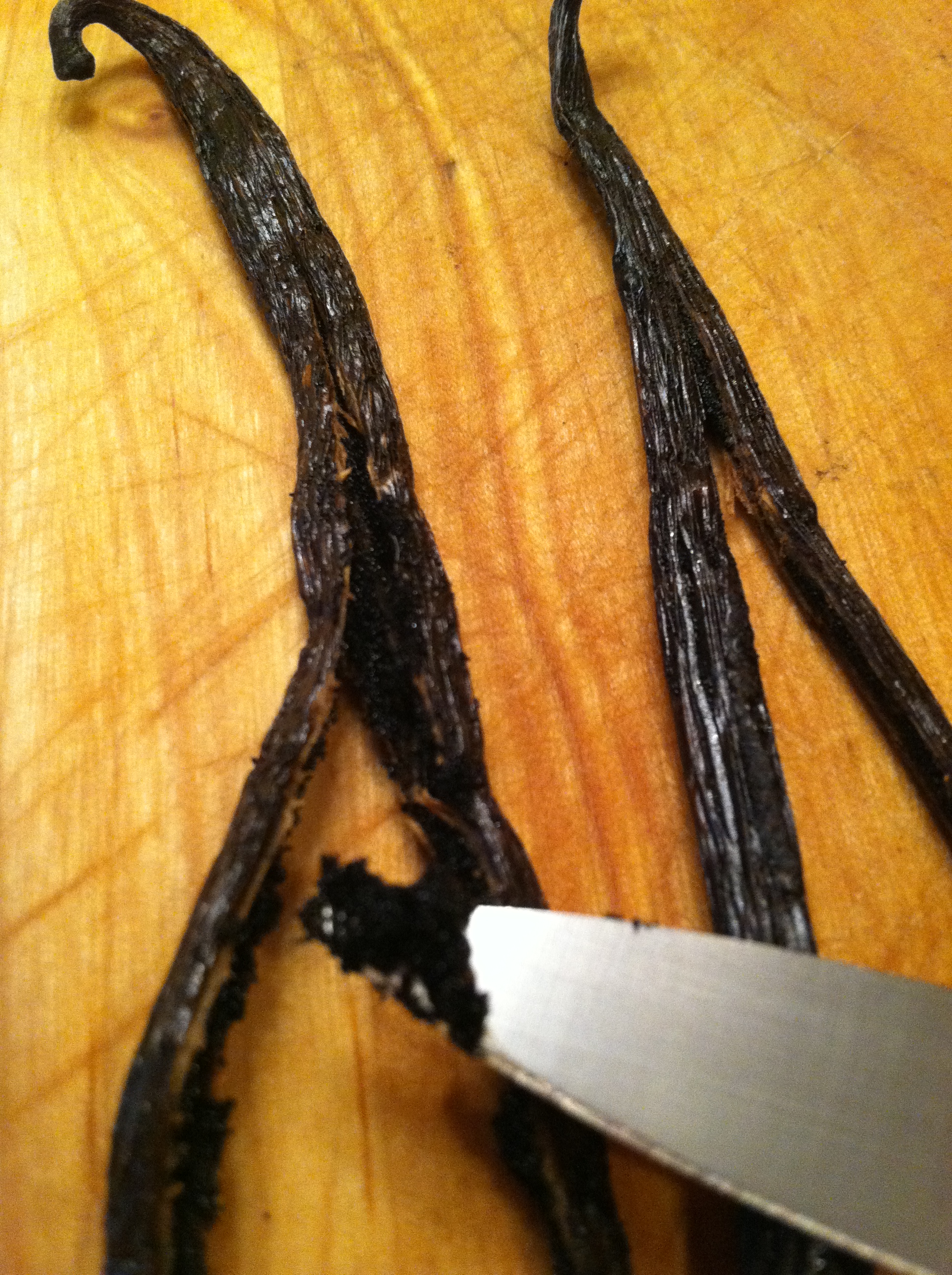
The procedure is quite simple. Slice the beans open lengthwise, leaving about 1/2 to 1 inch at the top of the bean still attached. Scrape the tiny seeds from inside the pods, then place the beans and seeds into a glass bottle. Place the funnel on the top of the bottle and fill with the vodka.

Cut the beans open and scrape the seeds

Put the stopper on the bottle and shake vigorously. Make a small label for the bottle (a piece of tape will do) and write the date you made the extract on it.

Here’s the hard part; store in a cool dark place for at least six months. Shake the bottle from time to time to loosen the seeds.

The color will go from pale to  warm brown. As you use other vanilla beans in your cooking, add the remaining pods (even if the seeds have been used) to the bottle to fortify the vanilla flavor.

Different stages of extract development

After six months you can begin to use the extract. As you use it, refill with vodka as needed. You will have a lifetime supply of wonderful premium vanilla extract. If you want the vanilla specs in your cooking, shake and measure. If you want just the extract with no specs, don’t shake it.

Hint: Make 2 bottles so as you refill one, use the other so the flavor can continue to develop and become richer as time goes by.

I don’t get it…

Talking about this blog to my friend June the other day revealed an assumption I had made.

“I don’t get it, I can’t relate to the title,” she said. “Spoon Feast, what is it about?”

“Try using more spoons” was my suggestion. Follow these directions:

Start using more spoons.

Notice when you use a spoon, what are you doing with it?
Do you:

  • Spoons
  • Stir with it?
  • Taste from it?
  • Slurp from it?
  • Lick it?
  • Eat from it?
  • Scrape with it?
  • Feed someone?
  • Serve from it?

Spoon are often found with delicious morsels cradled in the using end.
Spoons can be elegant
Spoons can useful
Spoons can be convenient
Spoons go disappearing (So always buy twice as many as you think you need)
Spoons made of shell or horn are used with caviar

What is your favorite thing at the end of a spoon?

A spoonful of homemade chicken soup with a bit of everything, chocolate sorbet with fresh raspberries, Nutella and banana or strawberry or both.

Nutella and Raspberry

Share your favorites!

You are not alone!

The best laid plans, complete with diagrams and good intentions, do not guarantee successful outcomes.

I had a massage scheduled, and we were going to have a roasted whole chicken for dinner; a mid-summer grilled favorite.

Since it takes upwards of two hours, the plan was made to put the  fully marinated and dry rubbed bird on the grill before I got home. During the massage I thought how nice it would be to come home to dinner nearly done and the aroma of grilling chicken filling the air.

When I walked through the back gate and spied the thermostat lower than 200 degrees F; I immediately realized something was wrong.

Burnt Chicken

Lifting the lid of the grill, this is what I saw:

Robert’s eyes were huge, “oops” he said, “I thought I was doing so good!”

He had turned off the burners on one side of the grill, but instead of placing the bird on the turned off side, he had placed it directly over the three burners left on High.

He had come out to check on the progress after the bird had been on the grill for 45 minutes. At first he said” I was so proud our grill was getting to 650-700 degrees F…
until I opened the lid and saw the burning chicken.”

The meat was fully cooked so we peeled it off the bones

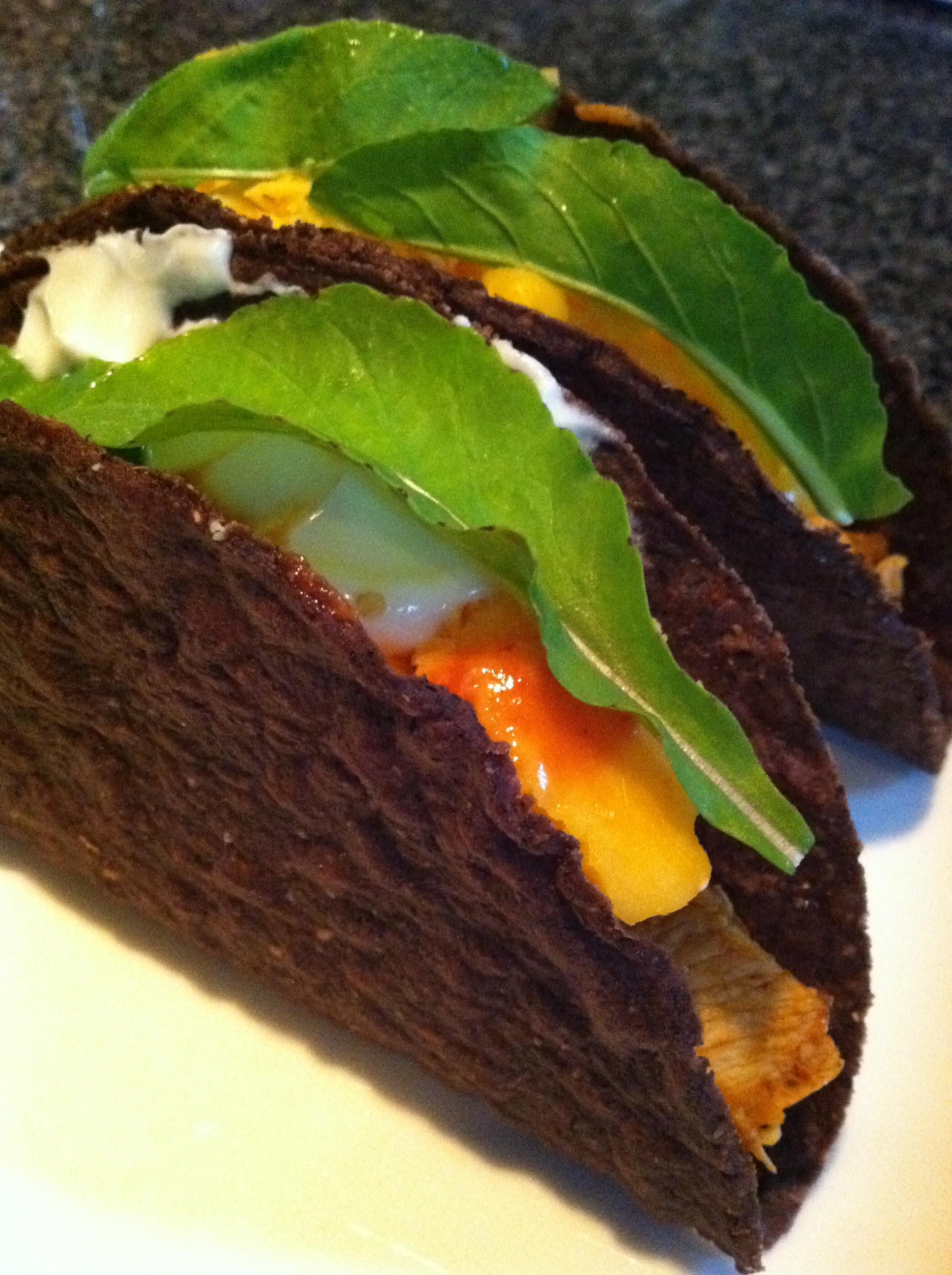
Smoked Chicken Tacos

and made smoked chicken tacos.

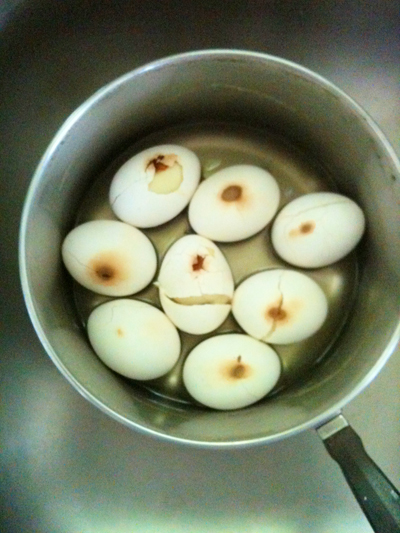
Then our friend June shared her culinary expertise with Robert

Burned Hard Boiled Eggs

Know you are not alone!

Disasters do happen. Deal with it.

Deal with it with a sense of humor and look at it as an opportunity to go get Chinese food.

Why Spoon Feast?

“One of the very nicest things about life is the way we must regularly stop whatever it is we are doing and devote our attention to eating.”

~Luciano Pavarotti and William Wright, Pavarotti, My Own Story

Hammered Spoons

Spoons! The first utensil we learn to eat with is my favorite way to taste and eat. A spoon cradles the food, carries the sauce and tips into your mouth with an elegance a fork misses.

Spoons are collected, neglected and are inspired into many uses. Use the back as a mirror, clap them together to make music and conjure silliness by hanging them off the end of your nose.

A spoon is the best for digging into a bowl of ice cream in the summer or a nice warm comforting bowl of soup in the winter.

On Spoon Feast you will find ways to improve your techniques and skills, discover interesting recipes, some simple and some challenging.

Discover flavors and textures, what they are and how to use them.

Find out how to grow your own herbs so you always have an abundance of fresh herbs for cooking and wonderful recipes to use fresh herbs from your garden.

Eating locally and globally will be explored both for the home cook and the foodies who like to eat out on the town.

Let the adventures begin! Get your spoons ready, we’ve got a lot of tasting to do.