Pepper Jelly, Another Southern Staple

Chances are, if you live in the southern USA, you have seen and tasted pepper jelly. Pepper jelly is one of those staples that can be used in many things.
Hostess Saver

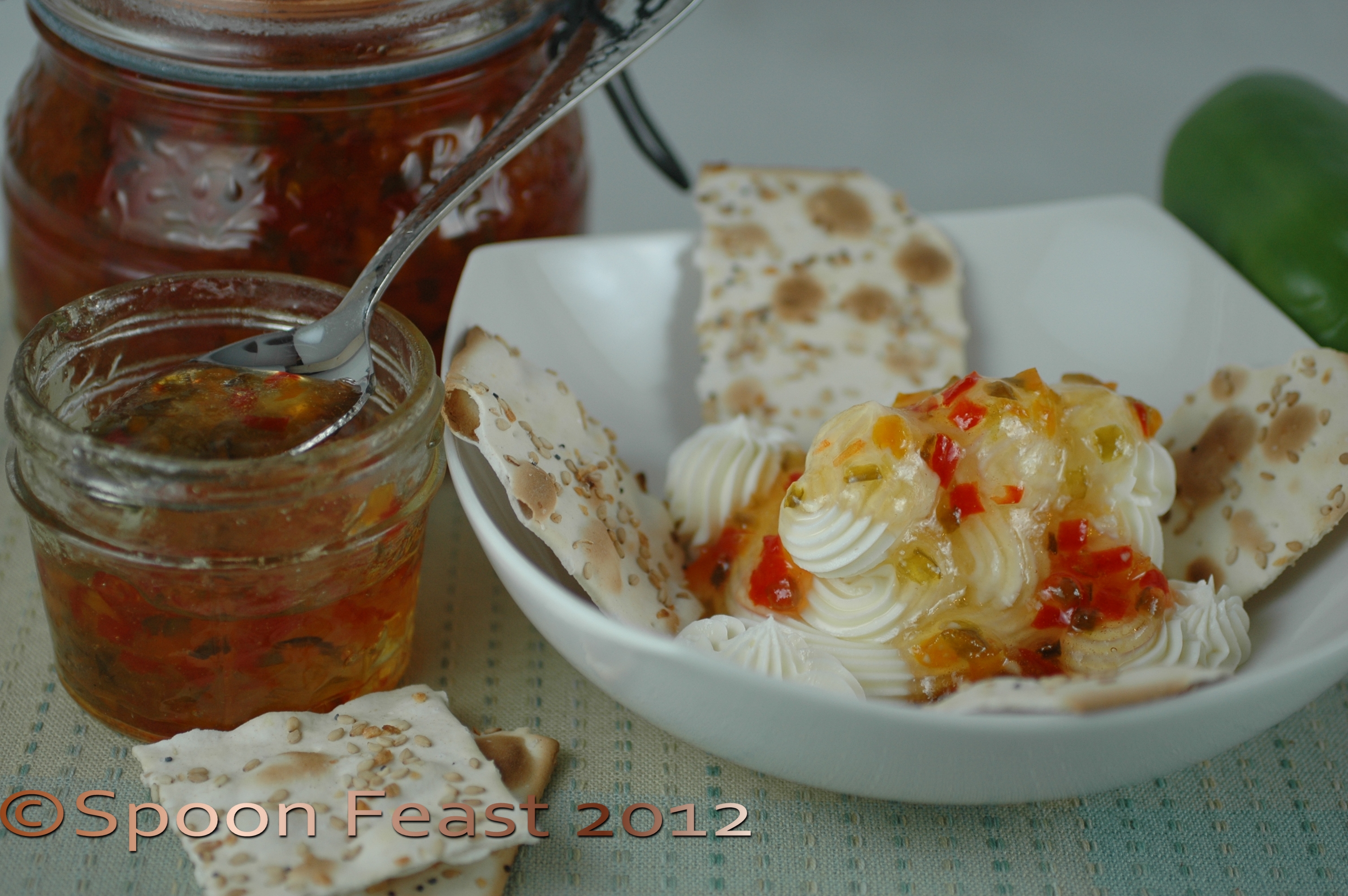
It saves a hostess when guests show up; pour some pepper jelly over cream cheese and some crackers and you have a marvelous snack with wine, beer or even iced tea.

It adds a special something to pan-fried pork chops and makes scrambled eggs amazing. Slathering some onto a biscuit or over some ham will leave you in taste bud heaven.

While pepper jelly is a bit on the pricy side ($4.99 USD for a small 6 oz jar) it can be made rather quickly and you can adjust the heat to make it hot or just make it sweet.

When you make this, set aside time to give it your full attention because it needs to be stirred constantly to prevent lumping and scorching.

As always, when working with hot sugar, be careful. Keep a bowl of ice water near your working space so if you get splashed, you can plunge it into ice water to prevent a bad burn.

There are many recipes for pepper jelly. This one does not use a large amount of pectin so it sets on a medium gel which makes it perfect for pouring over cream cheese, making a sauce or slathering onto a nice hot buttermilk biscuit.
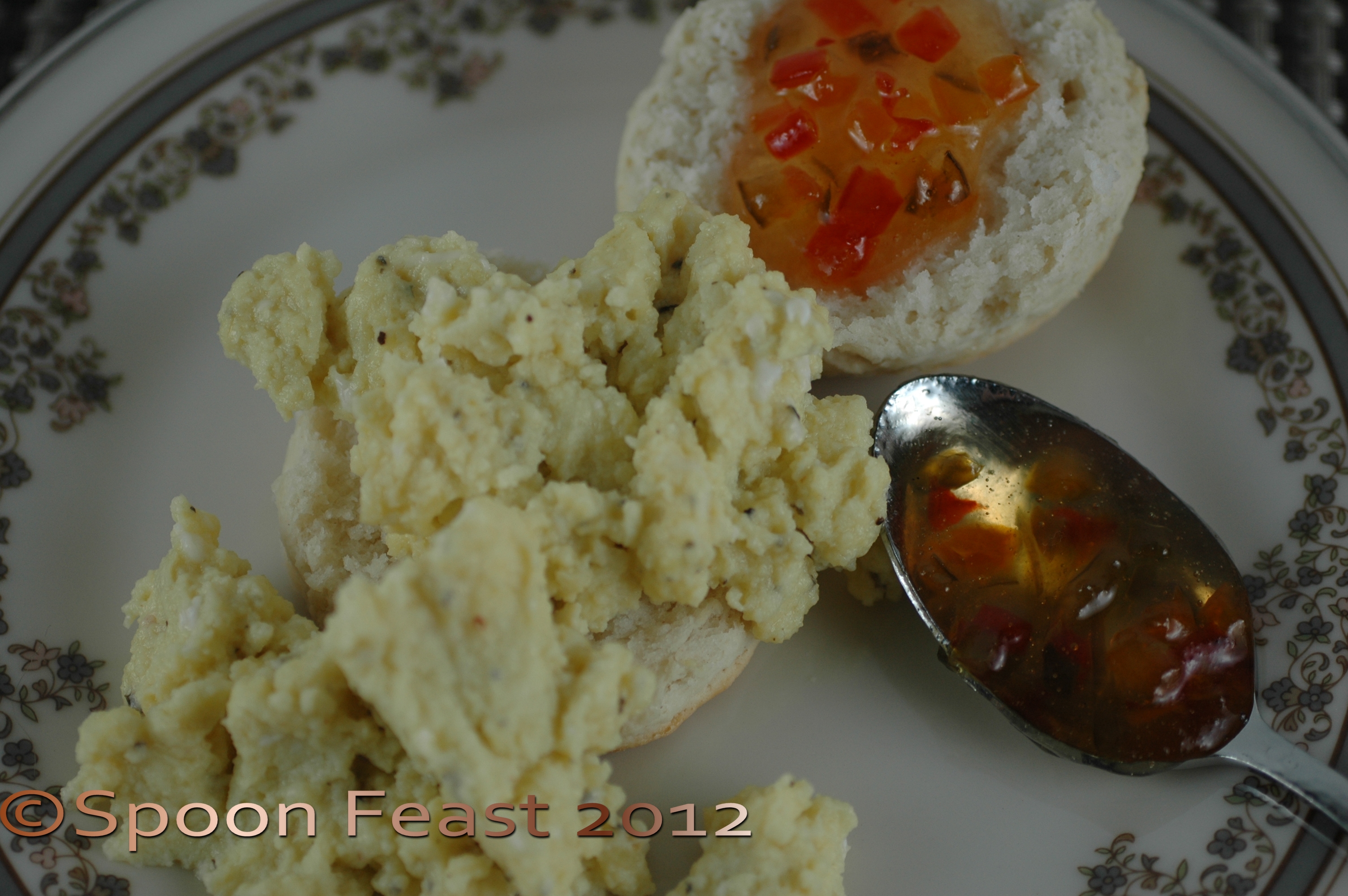
Pepper Jelly Biscuit with herb and cheese scrambled eggs

Southern Pepper Jelly

1 1/4 cup of finely diced red and orange peppers (one large pepper of each color)

3/4 cup finely diced green pepper

2 tablespoons finely diced jalapeno pepper OR 1 small Habanero

Wear gloves when handling hot peppers. If you get the hot peppers on your skin, soak the skin in milk, 1/2 & 1/2 or cream.

Do not rub your eyes or touch small children or babies with hands that have just handled hot peppers.

1/2 cup apple cider vinegar

1 1.75 ounce package of powdered pectin

1/2 teaspoon kosher salt

2 1/2 cups granulated sugar

Take your time cutting the peppers. The best jelly has lovely evenly diced cubes of multicolored peppers floating the jelly. If you just hack and chop, you see uneven strands and bits and pieces of peppers which isn’t so nice to look at through the jar or when you are eating the jelly.

Here is how to cut a nice looking pepper:

Wash the peppers and remove any sticky labels.

Trim the top and bottom off, remove the stem and save the trimmed ends for kebab or in a salad or stir-fry.
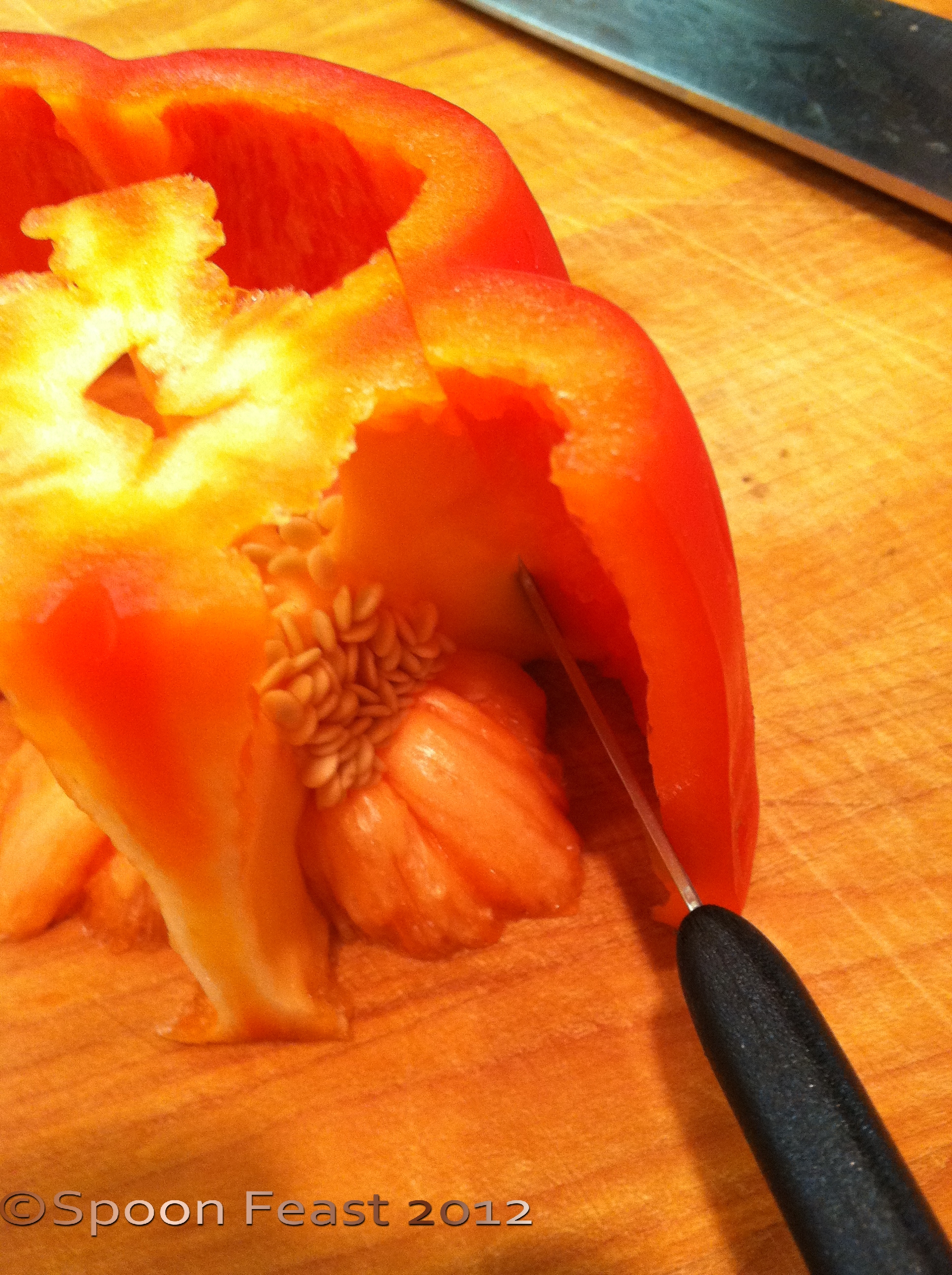
Remove the ribs and seeds, open the pepper so it lays flat, skin side down.
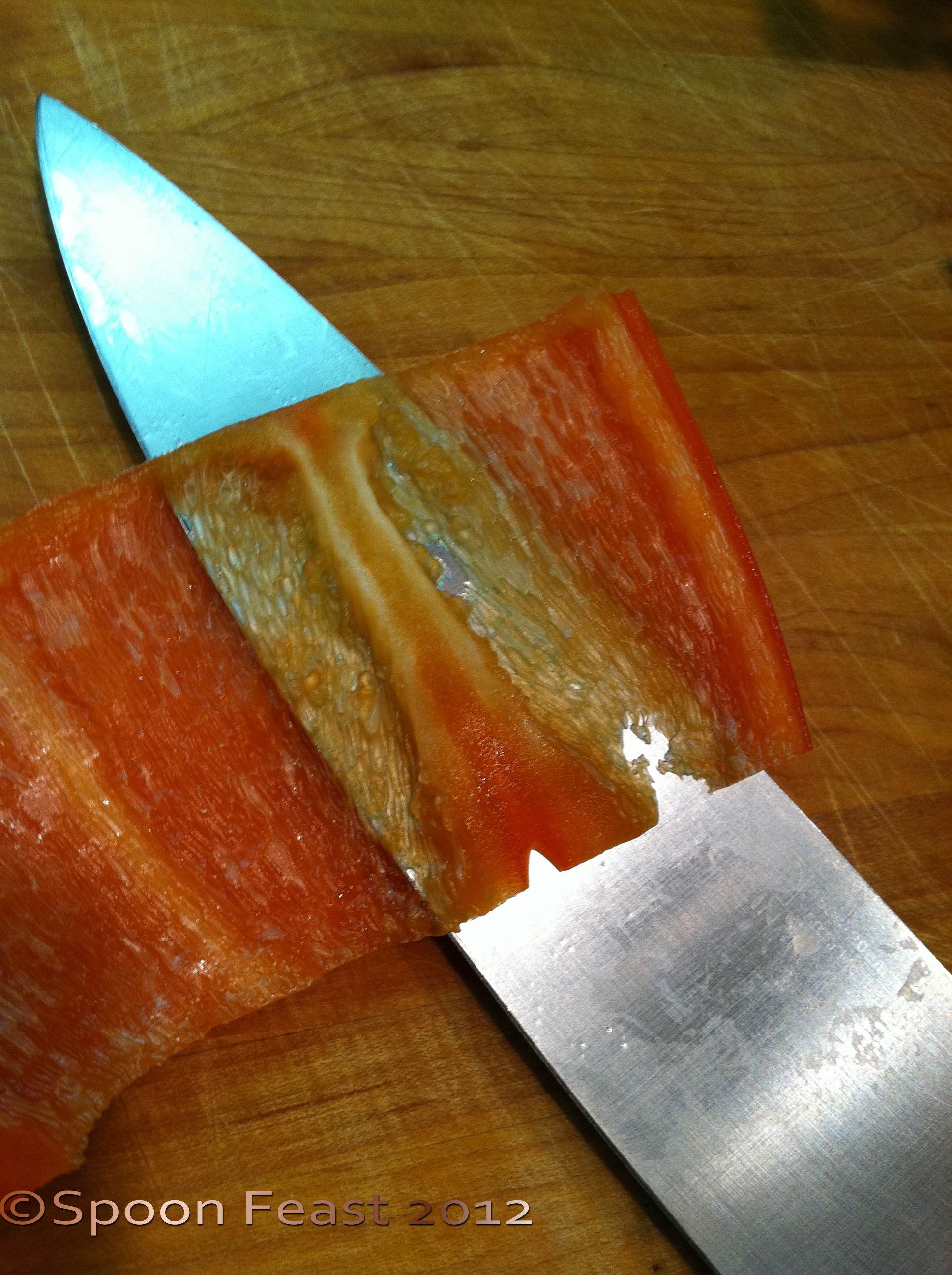
Carefully remove the membrane

See how much prettier the pepper is with the membrane removed?

Slice into julienne, cut even slices all the way down the pepper strip.
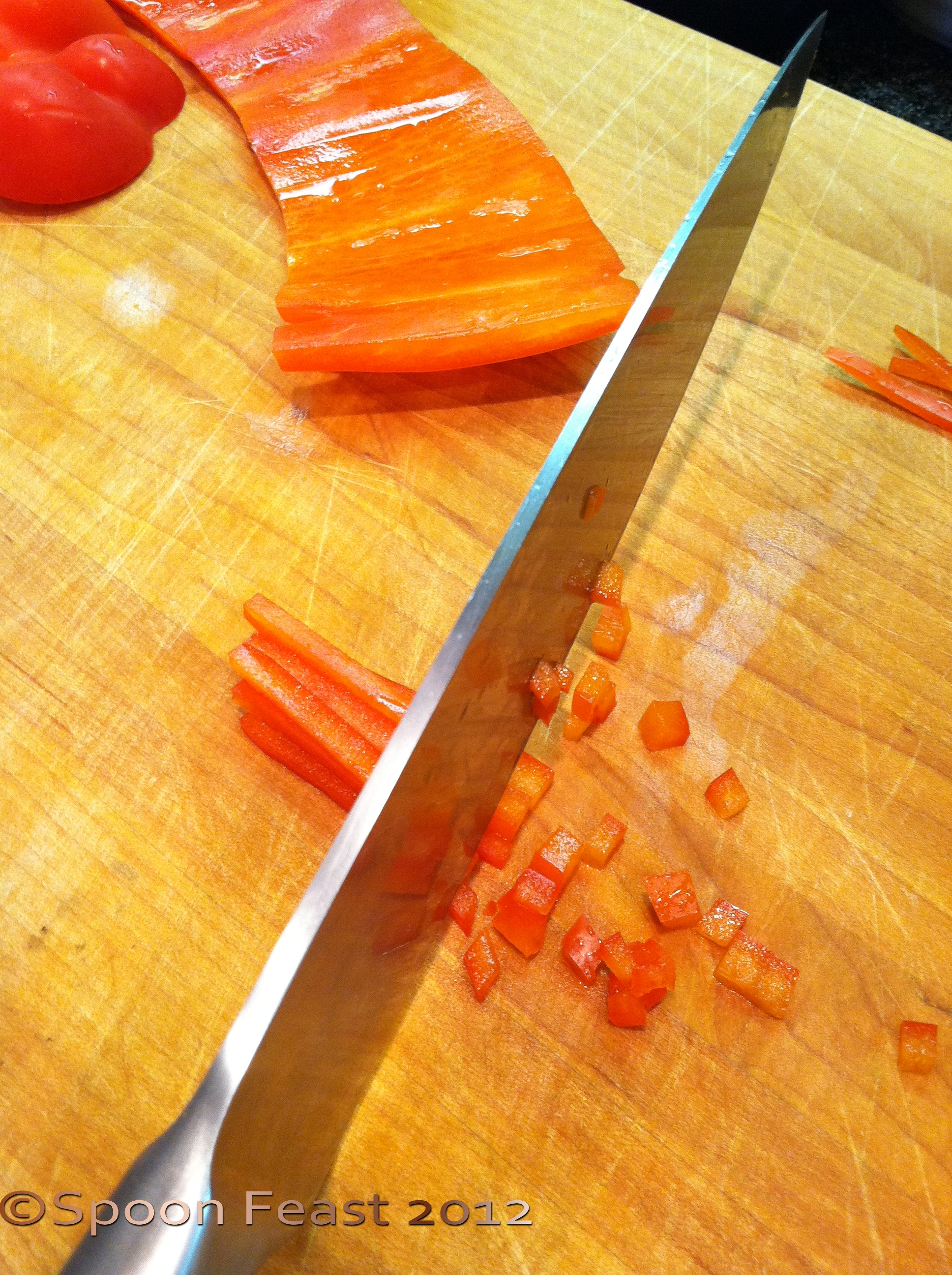
Turn the julienne and cut into dice. The cubes should be of even size.
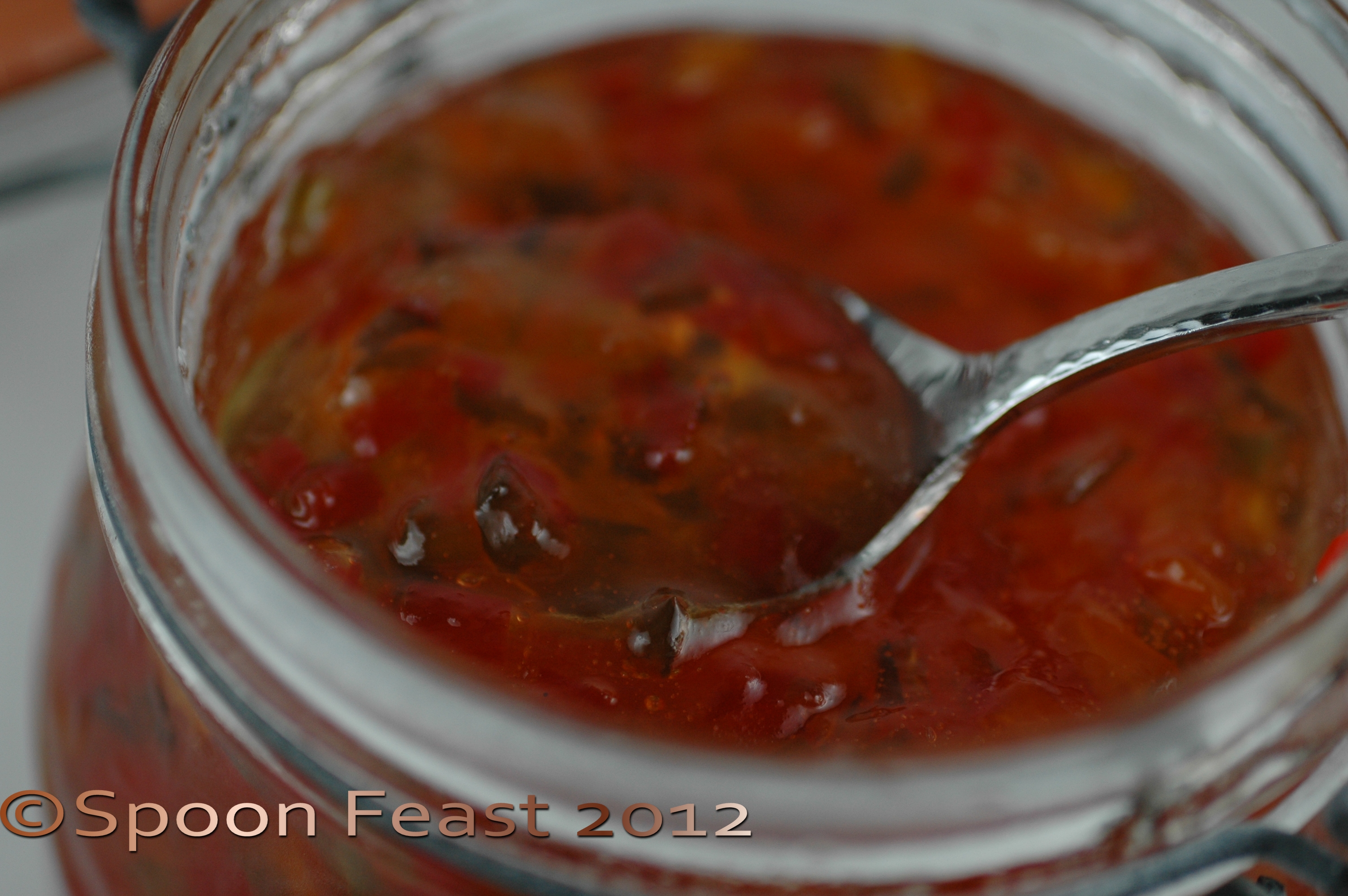
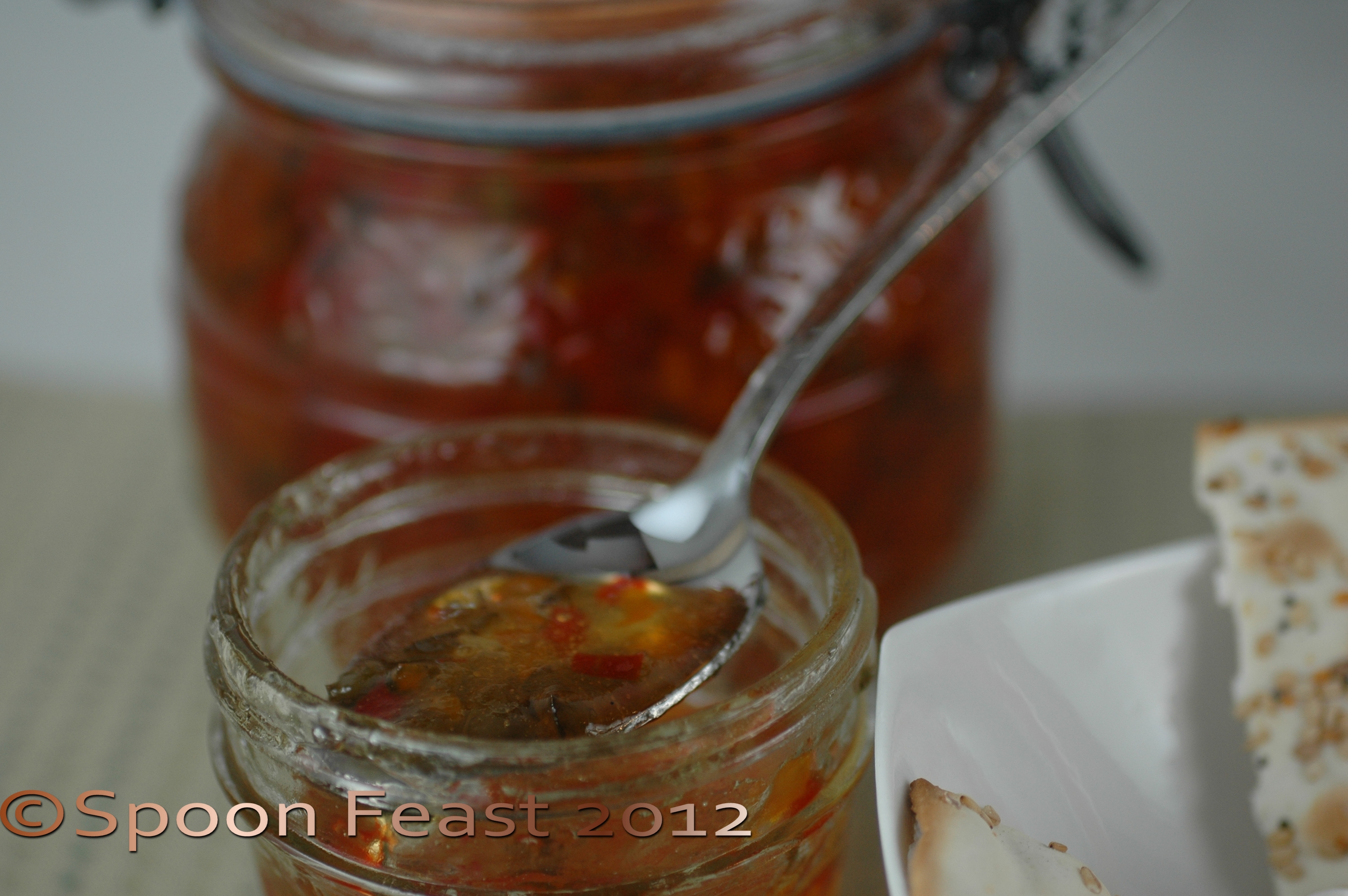
Pepper Jelly, a southern staple and hostess saver.

Slice the pepper so it becomes one long strip. Lay the pepper out with the skin side down. Remove the seeds and ribs from inside the pepper.

Using a sharp knife, remove the membrane from the inside of the pepper, leaving the plump pepper flesh. Just take a very thin slice from the surface to remove the membrane.

Make long thin slices from the pepper (Julienne cut), then turn the strips and cut them into cubes. Do this carefully so you create a bowl full of nicely diced peppers.

Trust me, it really makes a difference to take the time to do it right.

Place the diced peppers, vinegar and pectin into a saucepan. Bring to a boil over high heat, stirring constantly.

Be careful of vinegar fumes, turn your exhaust fan on so you don’t get all choked up.

When the mixture comes to a full rolling boil, add the sugar.

Return the mixture to another rolling boil, then boil it for 1 full minute while stirring constantly.

Remove from heat and skim off any foam that may have formed on the top.

You can process the jelly in canning jars, hot water bath etc to seal and make them shelf stable. (Great idea for gifts)

Or using clean, sterile jars, fill and invert them on the counter to cool. Once cool, turn them over and they seal will set, but you will need to refrigerate the jars.

This makes slightly over a pint.

Soften cream cheese, to fancy it up a bit, put it in a piping bag and pipe the cream cheese out in a decorative pattern rather than just plopping a chunk of cream cheese on a plate.

But if you want to, you can do it that way. Lots of southern folks do.
A Southern Staple: Simple Syrup

Bottle of simple syrup

This basic southern staple, simple syrup, is a must have in any kitchen or bar.

This style of syrup is used all over the world for lots of things, not just in the south.

It is, however the secret to true southern iced tea.

Simple syrup is easy and quick to make and there are endless ways to use it in the kitchen and bar.

Basic Simple Syrup

Ingredients:

  • 2 cups granulated sugar
  • 2 cups water, enough to cover the sugar by 1/2 inch.
  • 3-4 drops lemon juice

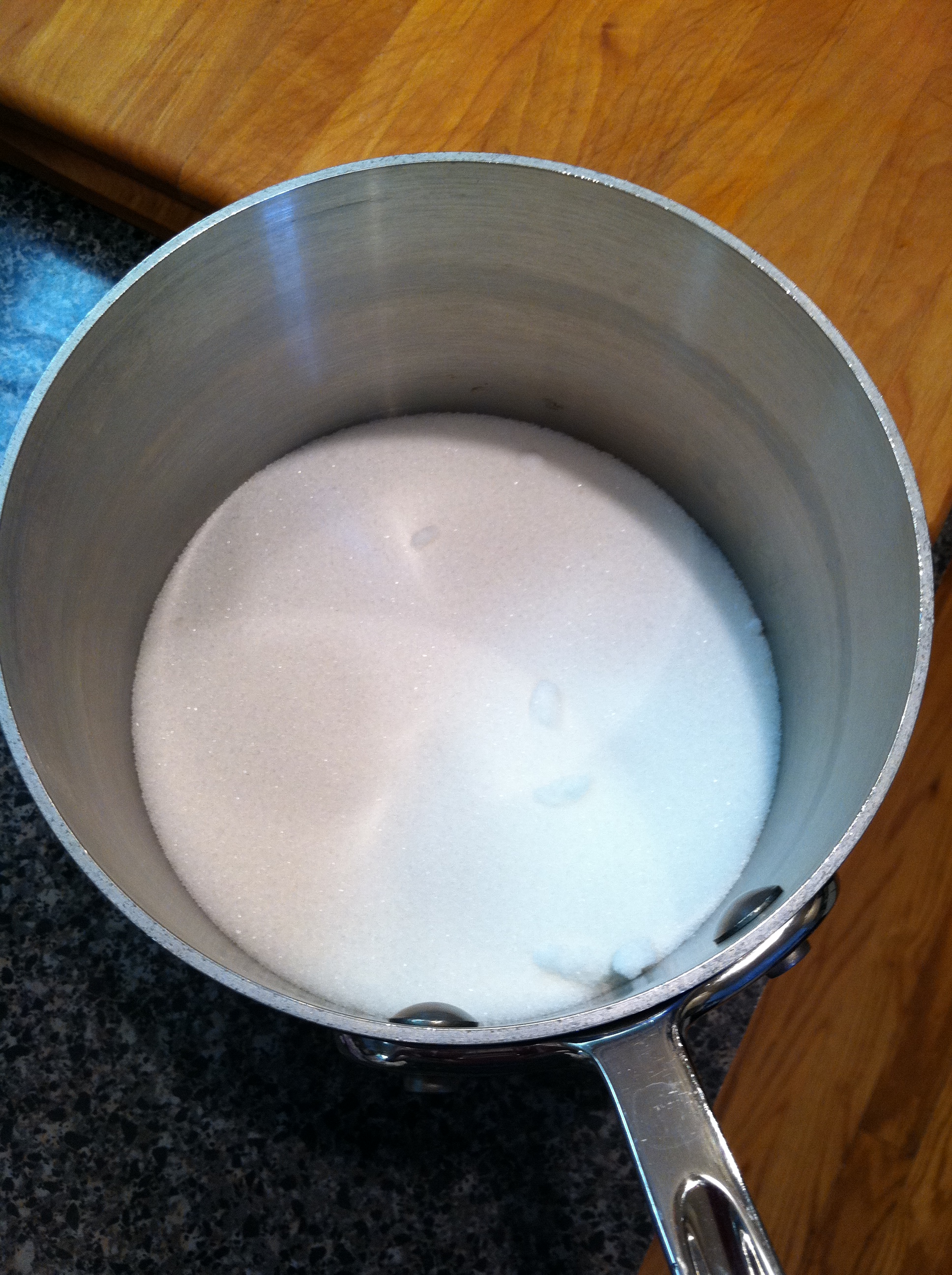
Put sugar in a sauce pot

Add water to cover sugar by 1/2 inch; add 2-3 drops of lemon juice, stir

Bring to a boil; boil for 1-2 minutes

Place a ‘sign or symbol’ to signify pot is hot;
Put the pot away from accidents to cool

Method:

Put the sugar in a sauce pot, add water to cover the sugar by 1/2 inch. Stir well.

Place the pot over high heat; add the lemon juice and bring to a boil.

Stir, not constantly, but often enough to prevent scorching on the bottom.

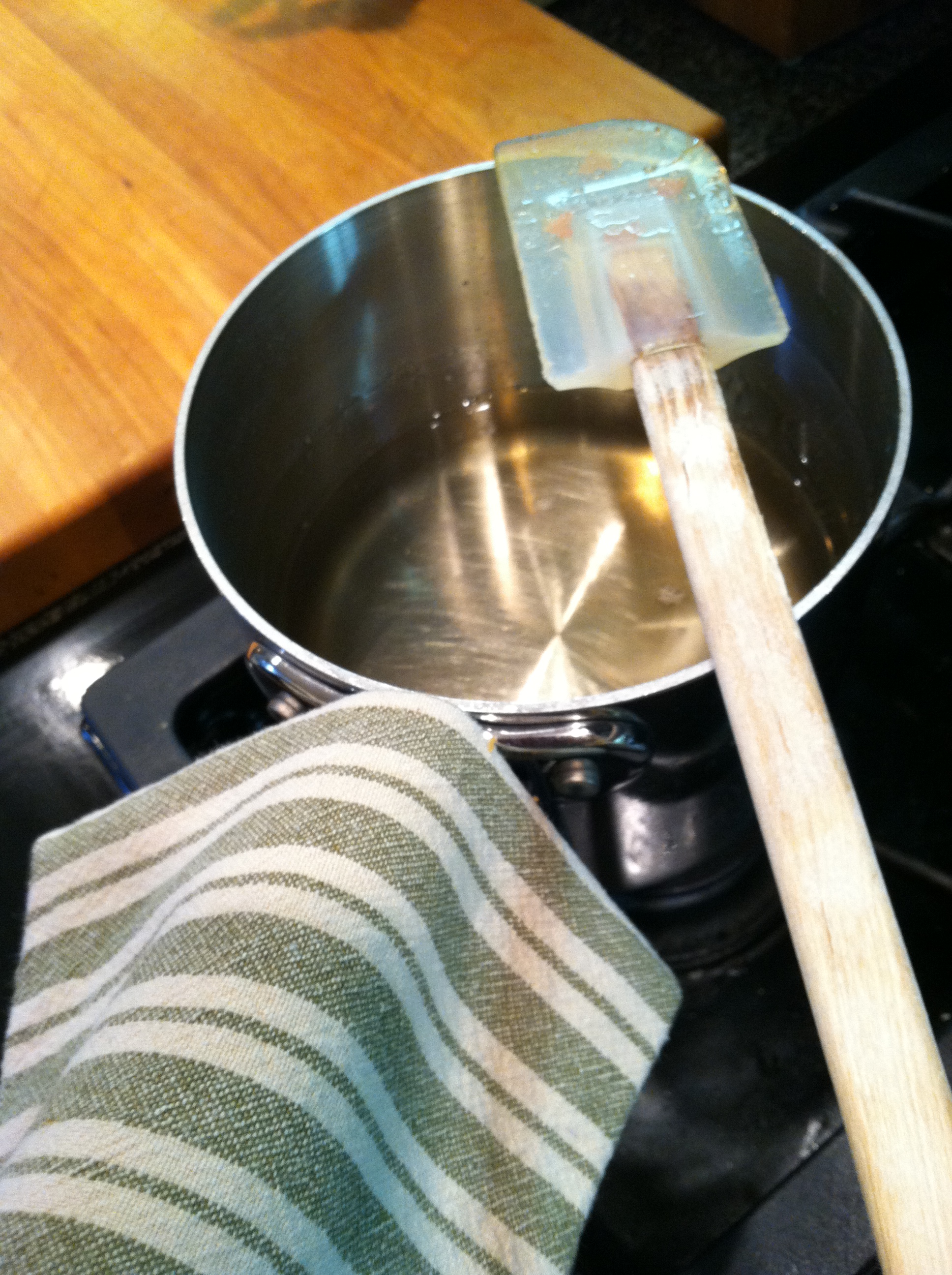
Once the mixture comes to a boil, the sugar will turn clear. Allow to boil for 1-2 minutes, turn off.

Cool the mixture before transferring to a jar or bottle.

While the sugar syrup is cooling, put some kind of “sign or symbol” on the  handle so others know the pot and contents are hot and to leave the pot alone.

Use caution and place the pot well to the back of the stove out of harms way.

Sugar burns are very nasty and go really deep. Avoid at all costs, especially around children.

The syrup is shelf stable. Keep it handy to sweeten iced tea, lemonade, tea or coffee, use it over fresh fruit, in meringues, or even in marinades and specialty bar drinks.

You can infuse flavors into simple syrup, add a vanilla pod, lemon, lime or orange zest, fruit puree, basil, lavender, or mint for a few ideas. Be sure to strain the flavor elements out before using. The vanilla pods or herb leaves do look nice in the bottle.

My favorite way to use this syrup is to splash some into iced tea and top with a lemon wedge.

The perfect thirst quencher!

Iced Tea and Simple Syrup

Oatmeal Cranberry Cookies

Interview Cookies

I was asked to bring cookies to a job interview one day so I made a batch of Oatmeal Cranberry Cookies. Walking across the street for the interview, I realized the cookies were still on my kitchen counter. Going in empty-handed was not an option so running home as fast as possible, I grabbed the cookies and waltzed into the interview only a few minutes before it was time to start. Typically being there 5-10 minutes early is preferred rather entering right on time. Luckily I lived close by.

I was right about going home to get the cookies. There was a “refreshment” table set with a big empty space for the platter. Milk, tea, coffee, plates and napkins –  a successful interview hinged on good cookies. The interview panel was outfitted by the colleges cookie monsters.

Being cookie monsters, they were satisfied munching while they took turns grilling me with questions. After the cookie interview, it was required to film a ten-minute lesson of their random choosing.

I wondered what they wanted to eat next.

After several more interviews over several weeks, they awarded me the position.  I always wondered if they were curious why I talked so fast or was out of breath at the initial interview. Probably not.

My son called from college the other day and asked for some cookies. These will work nicely.

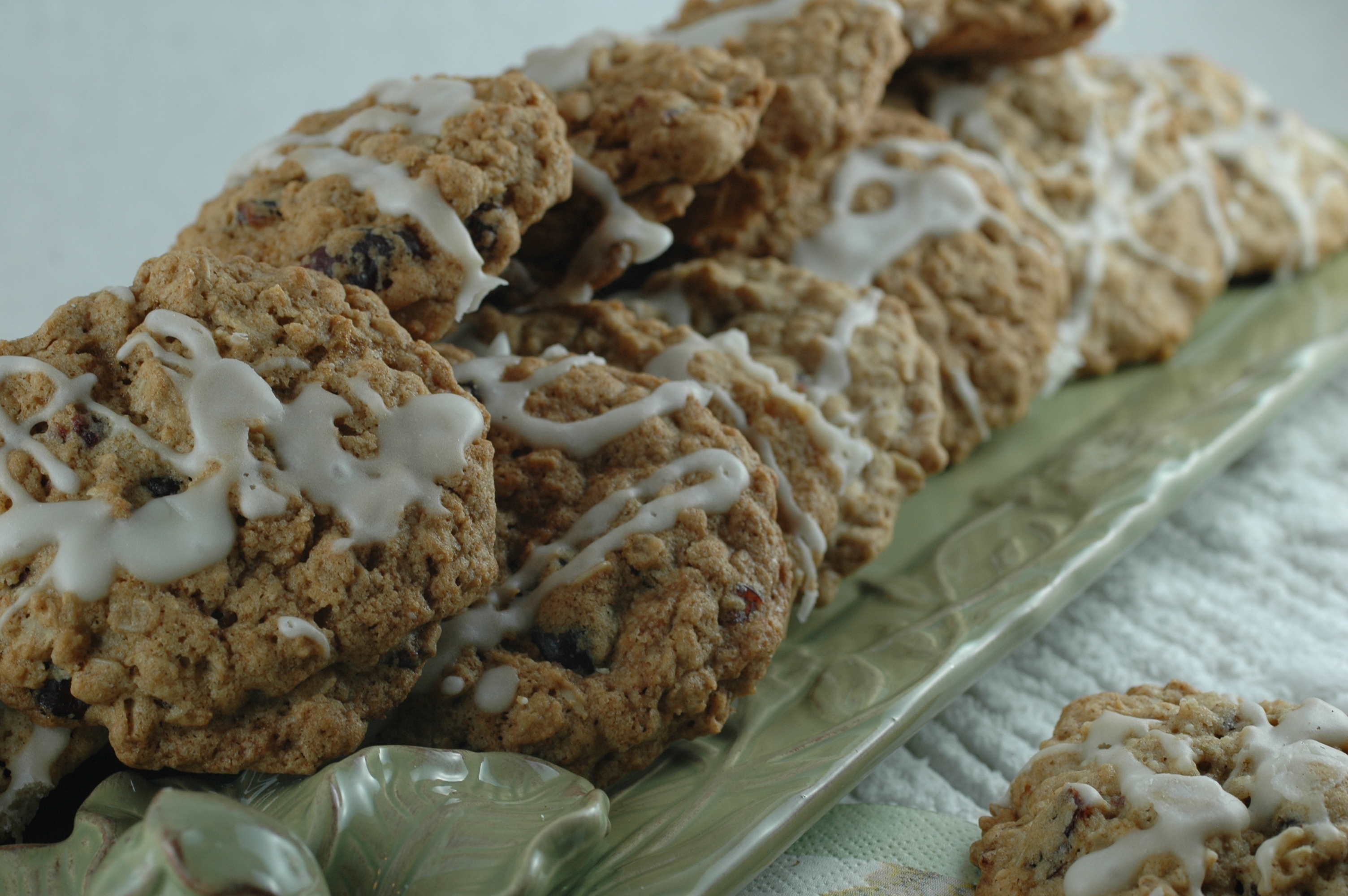
Oatmeal Cranberry Cookies

Recipe adapted from Quaker Oats Company “Vanishing Oatmeal Cookies”
  • 1/2 cup ( 1 stick) + 6 tablespoons soft room temperature butter
  • 3/4 cup  dark brown sugar, firmly packed
  • 1/2 cup granulated sugar
  • 2 large eggs
  • 1 teaspoon vanilla
Dry Ingredients
  • 1- 1/2 cups all-purpose flour
  • 1 teaspoon baking soda
  • 1 teaspoon ground cinnamon
  • 1/8 teaspoon ground allspice
  • 1/2 teaspoon non-iodized salt
Measure to fold in last
  • 3 cups uncooked old-fashioned oats
  • 1 cup dried cranberries

Pre-heat oven to 350°F

Using an electric mixer, beat the butter and sugars on medium speed until creamy.

Add eggs and vanilla; beat well.

Combine flour, baking soda, cinnamon, cloves and salt in a large bowl.

Mix  the dry ingredients together well with a dry whisk, spoon or fork.

On low-speed, slowly add the dry flour mixture to the creamed eggs and sugar.

Add the oats, then the cranberries, mix well to combine all ingredients.

Use a scoop and scrape it along the edge of the bowl to level the portion size for consistent sized cookies

Drop by rounded spoonfuls, or use a cookie scoop, onto a parchment lined sheet pan. Space 2″ apart.

Space evenly 2" apart to allow spreading. Use silpat or parchment on the baking sheet.

Bake at 350°F for 8-10 minutes or until light golden brown. Remove from oven and allow the cookies to cool on the sheet pan for 5 minutes before transferring to a wire cooling rack. Use a spatula to lift the cookies from the parchment.

Cool completely.

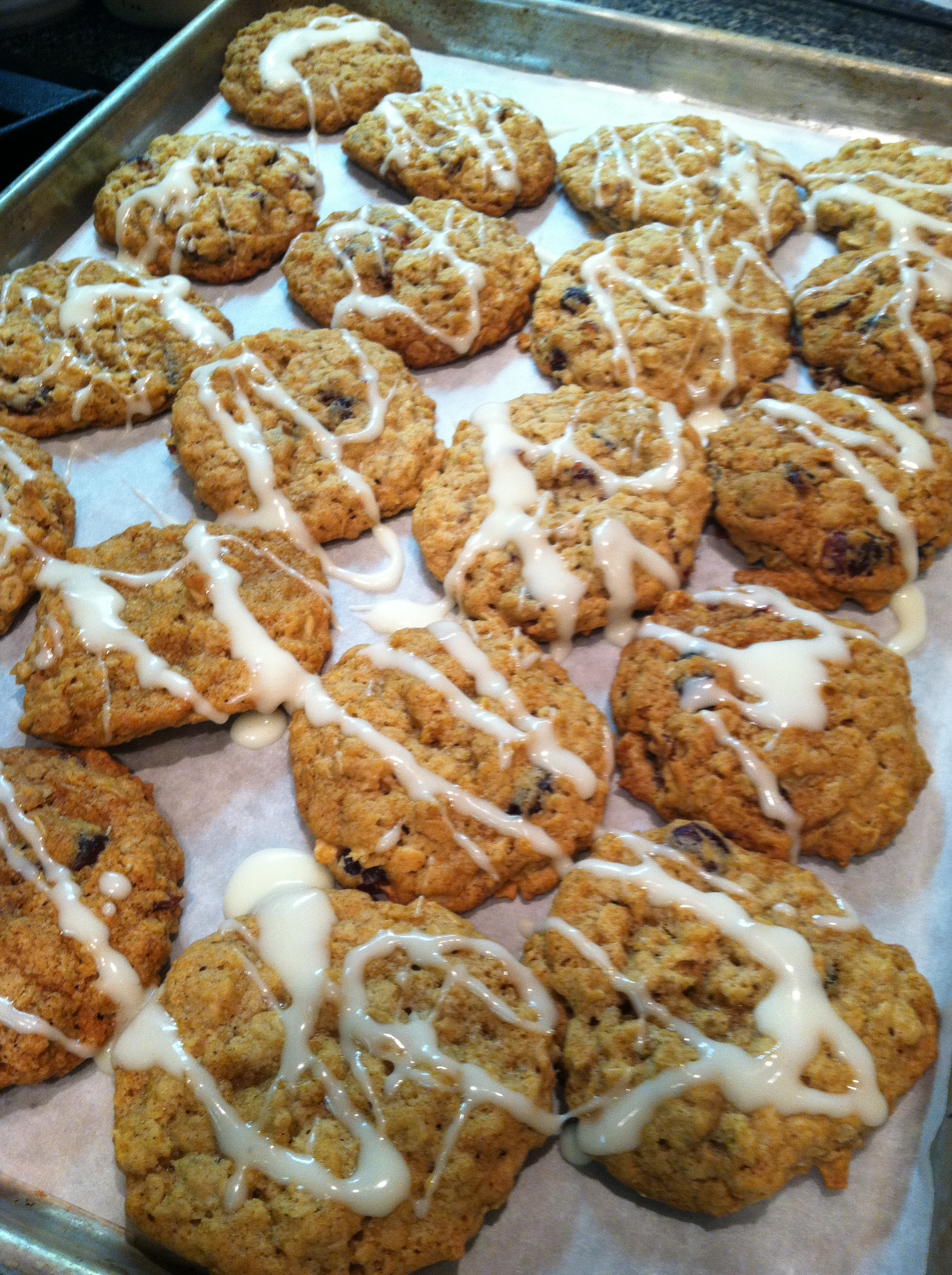
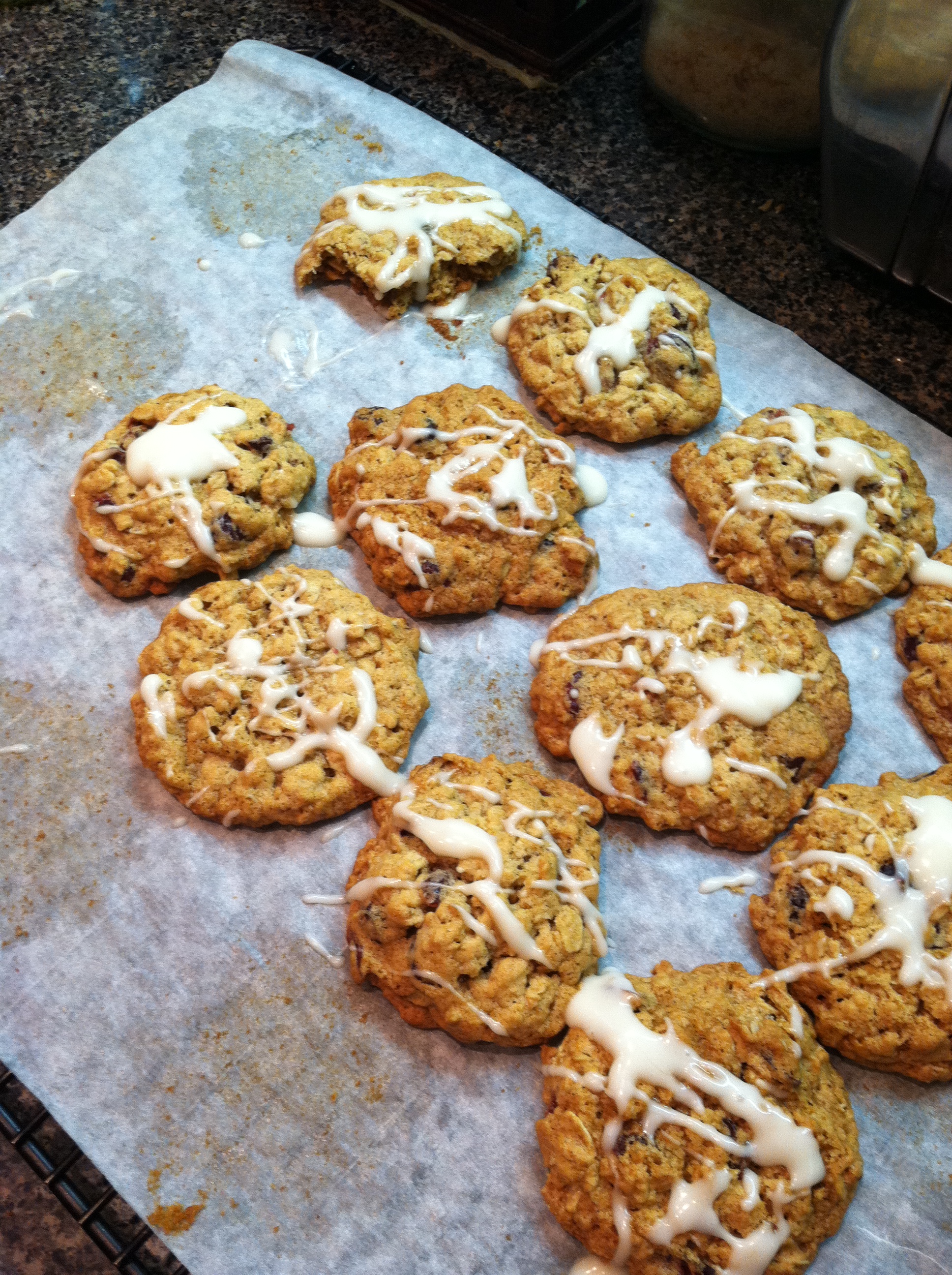
Drizzle the cookies with icing. Make note of the parchment and tray under the cookies to catch icing drips.

Watch out, cookies disappear before they are finished!

Drizzle with fondant icing if desired.

Fondant Icing

1 cup 10x confectioners sugar

pinch of salt

1/2 tablespoon milk and more as needed.

Place the 10x sugar in a bowl. Add the milk and stir. Drip more milk, drop by drop, into the sugar until drizzling consistency is reached.

It is easy to make this too liquid so start with a small amount of milk first and add while stirring. It changes quickly.

Using a fork, drizzle the frosting over the cookies while still on the cooling rack.

Allow the frosting to dry before storing in an air tight container.

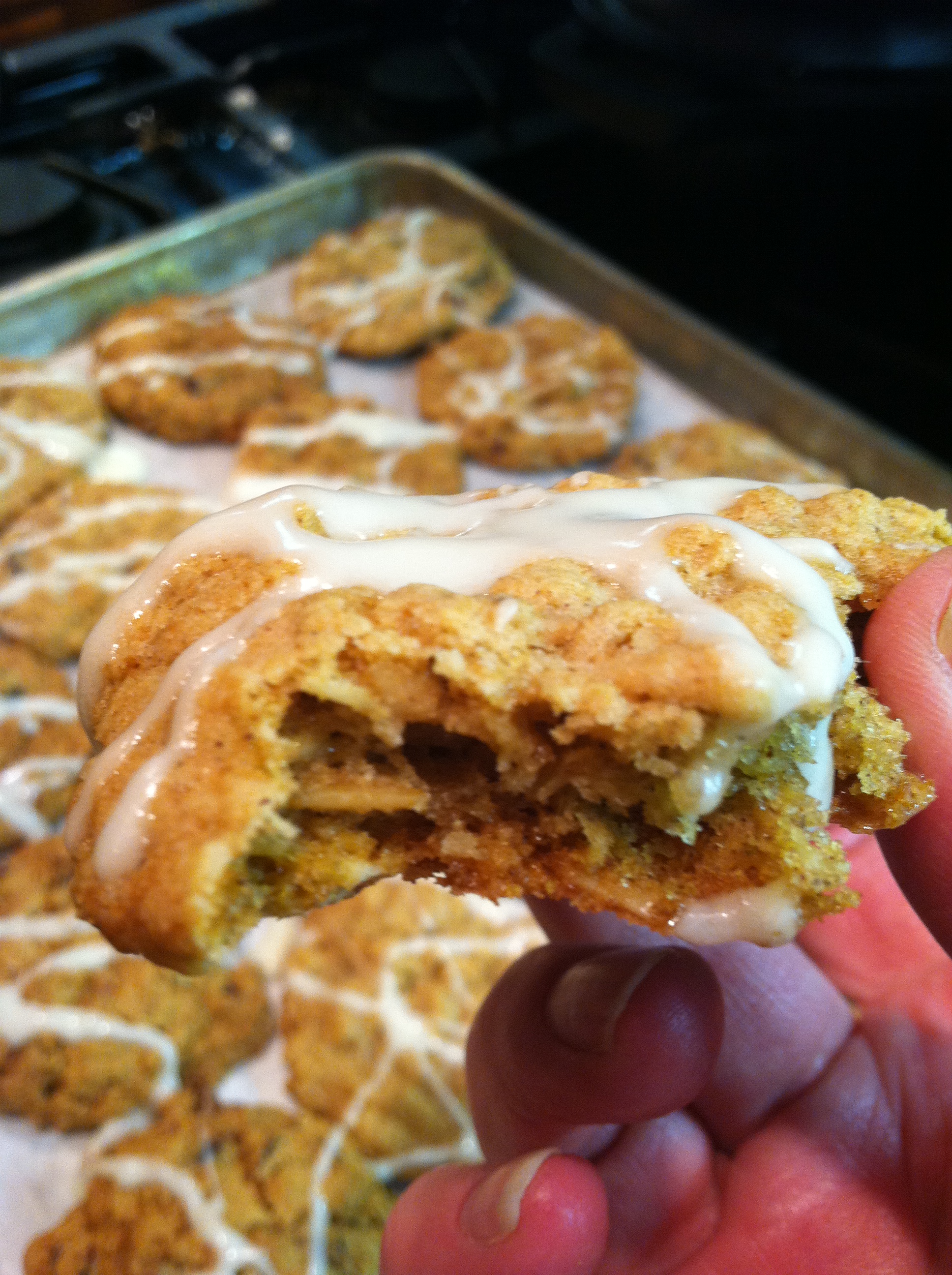
These cookies are best inside of tummies, guarded by a glass of milk or cup of tea.

Take a bite!

Potato Chip Cookies

I wrote this post on Potato Chip Cookies before I realized how many others have recently posted recipes for potato chip cookies. In studying some books on food photography, cookies were an “assignment”. These have been on my mind lately and decided to make them for pictures.

Oh well, here is another version that isn’t adapted from Emeril or Smitten Kitchen. Guess a good thing is hard to keep quiet!

We have enjoyed these for years. So addicting and rich a small batch is all you need.

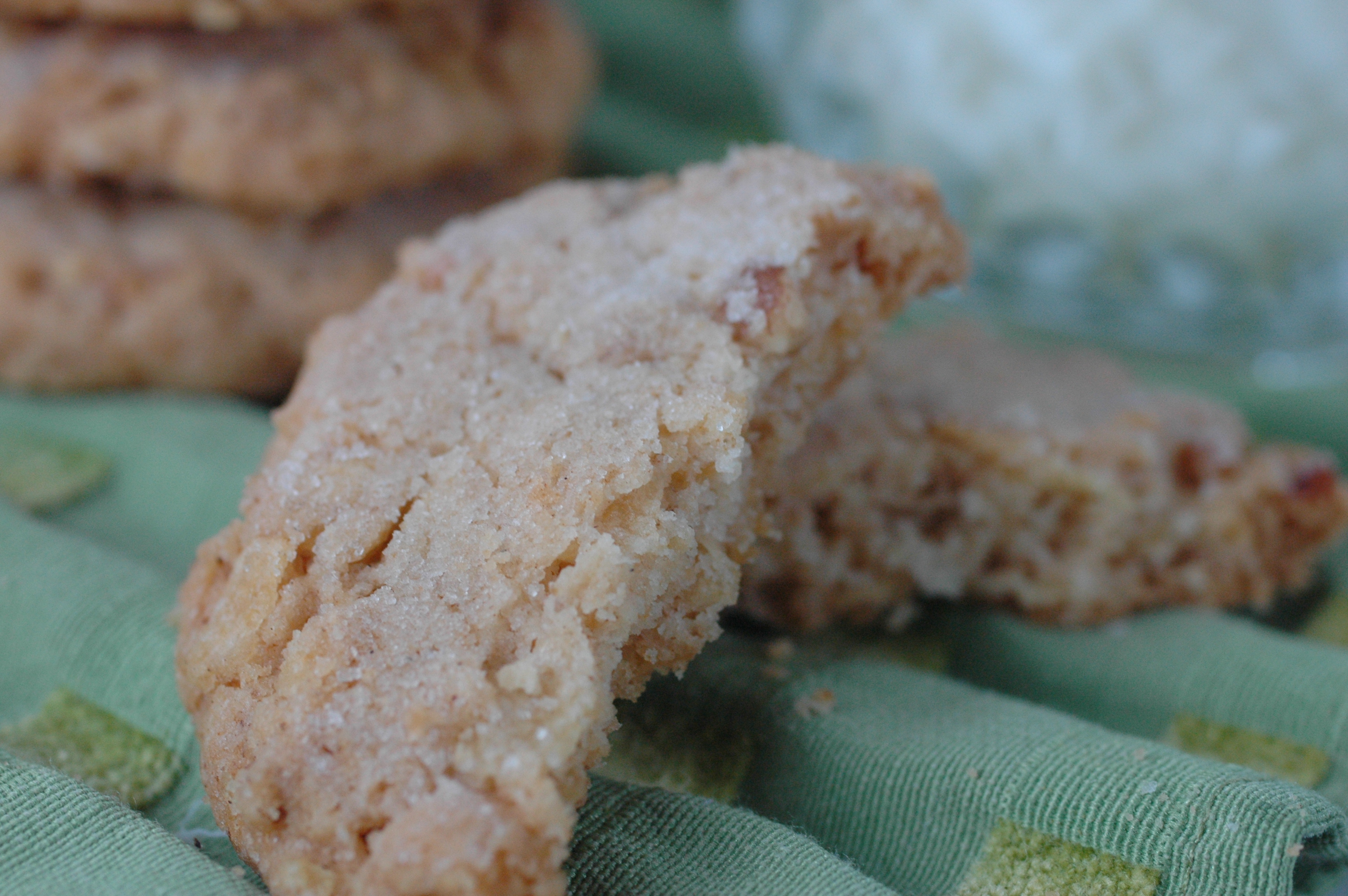
These potato chip cookies are a style of shortbread. There is no salt in the recipe due to the addition of the crushed potato chips. It is a simple and deliciously sweet and salty cookie. They remind me of Pecan Sandies.

The use of baking powder is optional. Using it creates a meringue like texture to the cookie. Quite yummy.

This recipe was discovered in Mom’s Big Book of Cookies which has many delightful cookie recipes, many of which are “kid helper” friendly. I tweaked it a little bit.

If you wanted, you can add some dark chocolate chips to the mix or melt chocolate and dip half the cookie in the melted chocolate.

Or perhaps use pretzels instead of potato chips.

After this potato chip shortbread cookie, maybe a bacon shortbread cookie would be in order. . . just sub out minced crispy bacon for the potato chips and see what you end up with.

Potato Chip Cookies

1/2 cup soft butter

6 Tablespoons granulated sugar

1 teaspoon vanilla extract

3/4 cup all-purpose flour

1/2 cup finely chopped pecans

1/2 cup crushed regular potato chips (non flavored-low fat ones work too)

1 teaspoon baking powder – optional

  • Pre-heat the oven to 350°F
  • Line a baking sheet with parchment paper or use a silpat silicone  mat
  • Cream the butter and sugar together
  • Add vanilla
  • Scrape down the sides of the bowl
  • Measure the flour, baking powder, if using, chopped nuts and crushed chips into a bowl and stir together well.
  • Incorporate the dry mixture into the creamed butter, sugar and vanilla.
  • Make 1 inch sized balls and place 2 inches apart on the baking sheet.
  • Using a flat-bottomed glass of cup, flatten each ball, dipping the bottom of the glass into sugar between each cookie.
    • Or you could roll the balls in sugar and then flatten them
  • Bake 10-12 minutes or until the edges of the cookies begin to turn golden brown.
  • Cool on the baking sheet for 5 minutes before moving the cookies to a cooling rack.

Serve with a tall cold glass of milk.

Pâté de Fruit et “Pâté du Vin”

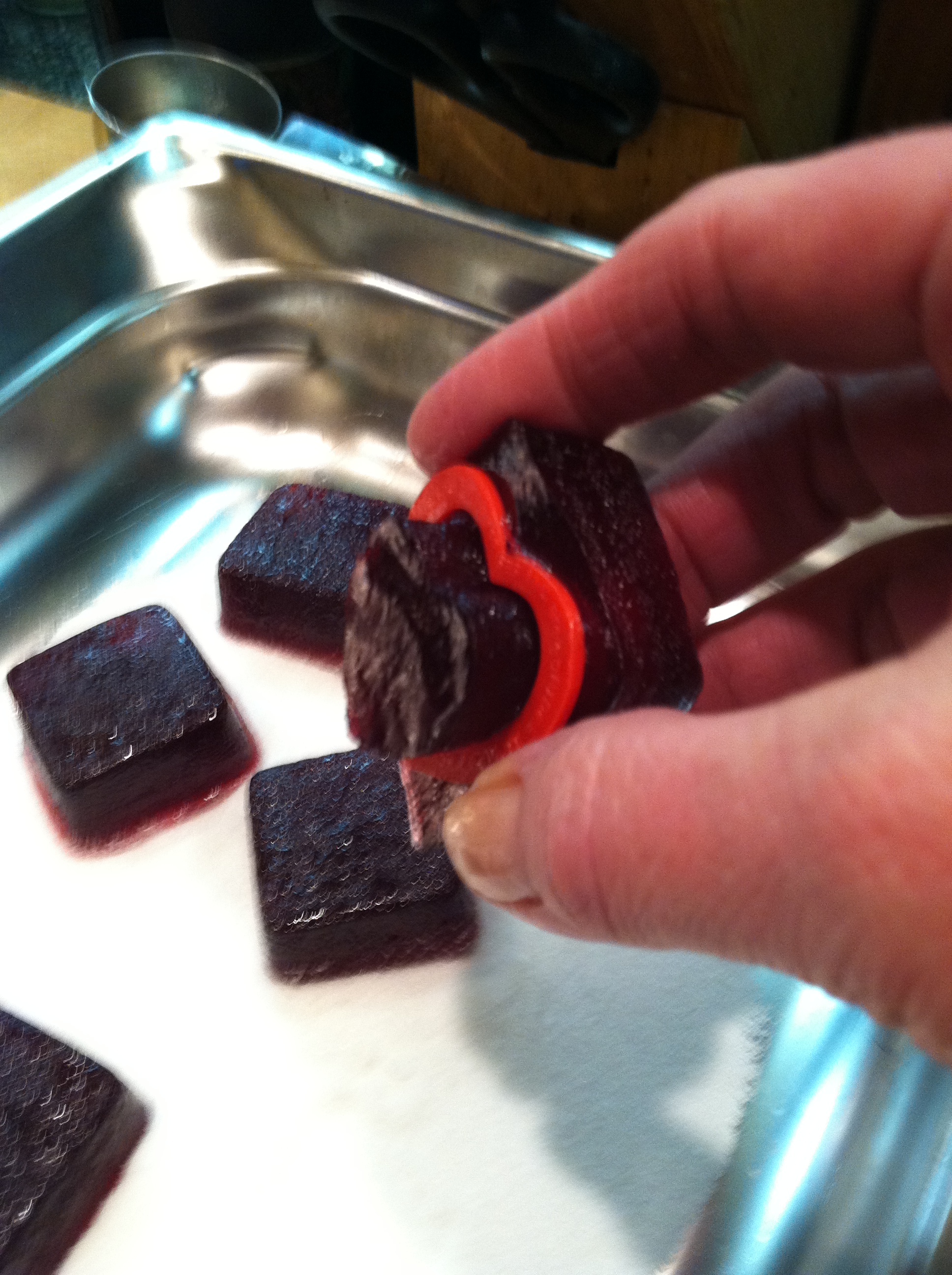
These gleaming tender fruit gems known as “Pâté de Fruit” are delicious and irresistible. There are so many different recipes for these fruit geleés. If you want a real quality product, use a recipe that includes glucose syrup and pectin rather than gelatin.

These are considered quite a special gift and if purchased, this quality could be expensive.

Remember “Chuckles” candy from your childhood? Those are similar to fruit geleé but they had gelatin.

Gelatin, in my opinion, leaves the geleés much too “tough” and bouncy. The whole concept is for the geleé to have a slight tooth that melts into a pool of exploding fruit or wine flavor. There should be nothing to chew, just a lovely melting in your mouth and the slight crunch of the coating sugar.

The actual time required to make these isn’t much but it needs your full attention for about 20-30 minutes.

You have to whisk constantly while the mixture is on the heat. Then act fast after you remove it from the heat because the geleé mixture sets quickly.

Have everything you need ready to pour. After you pour the cooked mixture into the desired mold, let it sit for at least 8 hours, or longer, to set.

Do not refrigerate. Refrigeration will melt the sugar on the geleés.

So, Here’s how you do it

Please weigh all ingredients.

If you don’t have a small digital scale, go buy one. It is essential if you are serious about baking. They are not expensive but you can pay as much as you want to for one.

Wine or Fruit Geleé “Pâté de Vin/Fruit”

  • 3 ounces unsweetened applesauce
    • Spread it out on a parchment lined sheet pan. Place it in a preheated 200°F oven for 30 minutes. This is to evaporate some of the moisture out of the applesauce. Scrape it up with a bench scraper or spatula and put it into a heavy bottomed sauce pan with the following ingredients:
  • 8 ounces wine OR smooth and strained fruit puree (raspberry, strawberry, mango, passion fruit, pineapple, etc.)
  • 1 ounce light Karo syrup made without High Fructose Corn Syrup or use glucose syrup
  • One  3-ounce package liquid pectin or 3 ounces powdered pectin (not the one for low sugar)
  • 12 ounces granulated sugar
  • 1 teaspoon salt
  • 1 teaspoon lemon juice
  • 8 ounces granulated sugar for dusting the finished geleé

While applesauce is drying in the oven, prepare the mold you want to use. Spray it with non-stick pan spray or line it with parchment paper. Leave an overhang to make removing the geleé from the pan easy.

Blend the wine or fruit puree with the applesauce, syrup, liquid pectin in a heavy bottomed sauce pan.

If using powdered pectin, mix it with a small amount of the sugar to help prevent clumping.

Over high heat, while whisking constantly, bring the mixture to a boil.

Add half of the sugar, once it melts and nears boiling, add the remaining sugar.

Bring to a boil and boil for 3 minutes. Whisk constantly to avoid scorching and clumping.

Add the lemon juice.

Working quickly, pour into desired molds, smooth with a spatula, cover with an oiled parchment paper and let sit for 8-12 hours.

If you made one pan, remove the geleé to a cutting board and cut into desired shapes.

If you used candy or silicone molds remove them carefully from the molds.

Dip each geleé into sugar to coat. Serve or place in an airtight container and hold them at room temperature for several months.

If you like these and enjoy making fruit geleés, check out  Passion Fruit Geleés by Savory Simple.

Our recipes area similar and she has cups and tablespoon measurements on her recipe for Passion Fruit Geleé.

Enjoy making and eating these tender morsels of Pâté de Fruit or Pâté de Vin. I think they are quite special.

Glazed Lemon Shortbread

Glazed Lemon Shortbread

My son loves these. He is going back to school soon and when he gets there, a box of these sweet treats from home will be waiting.

This twist on traditional shortbread adds fresh lemon zest in the mix and fresh lemon juice in the glaze. One secret is to use a very fine microplane on the fruit so the zest is very fine.

If you like the lemon version, branch out and try making them with orange, or lime or tangerine or grapefruit. Kumquat maybe?

The amazing part of good shortbread is how they just melt in your mouth. Then take a nice sip of tea. Sit back and enjoy.

There are several pictures at the end of the post, so scroll down.

Glazed Lemon Squares

  • 1 cup butter
  • 1 cup confectioners sugar (10x)
  • Zest from 1/2 lemon (Use the other half in the glaze)
  • 1 Tablespoon vanilla extract
  • 2-1/2 cups AP flour
  • 1/2 teaspoon salt

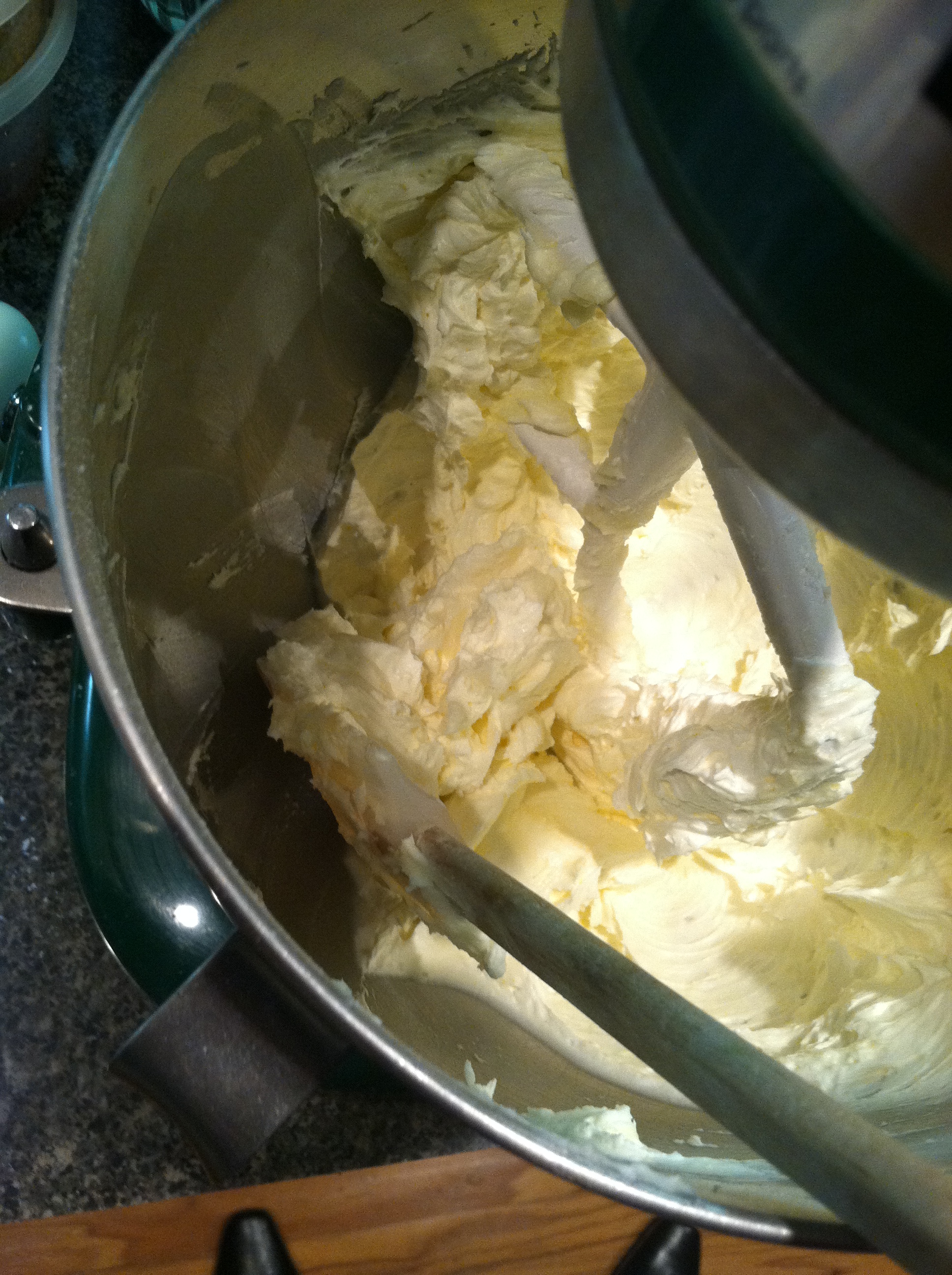
Using a mixer on high-speed, cream butter,  10x sugar, zest and vanilla 3-4 minutes; until light and fluffy.

While the butter and sugar are creaming, measure and mix the flour and salt into a bowl.

Scrape down the bowl.

On low-speed, add the flour mixture to the creamed butter and sugar.

Mix only until the mixture comes together and resembles crumbs.

Do not over mix! Over mixing will develop the gluten in the flour and give you a ‘tough cookie’ rather than a tender one.

Transfer the dough to a non-stick 9 x 12 cake pan.  Cover with plastic wrap and pat the dough evenly into the pan.

Place in the refrigerator or freezer until the dough becomes thoroughly chilled.

Traditionally, you can prick the shortbread with a fork for decoration. You can choose not to.

If, for some reason, you get a wild hair on and decide to add baking powder to the mix, I would strongly suggest you do prick the dough to prevent bubbles and warping.

Preheat the oven to 300°F. Clean up the kitchen.

Once the dough is chilled, place it in the oven and bake for 35 minutes or until the edges are just beginning to turn golden brown. The shortbread will remain pale.

Remove from oven and cool on a rack.

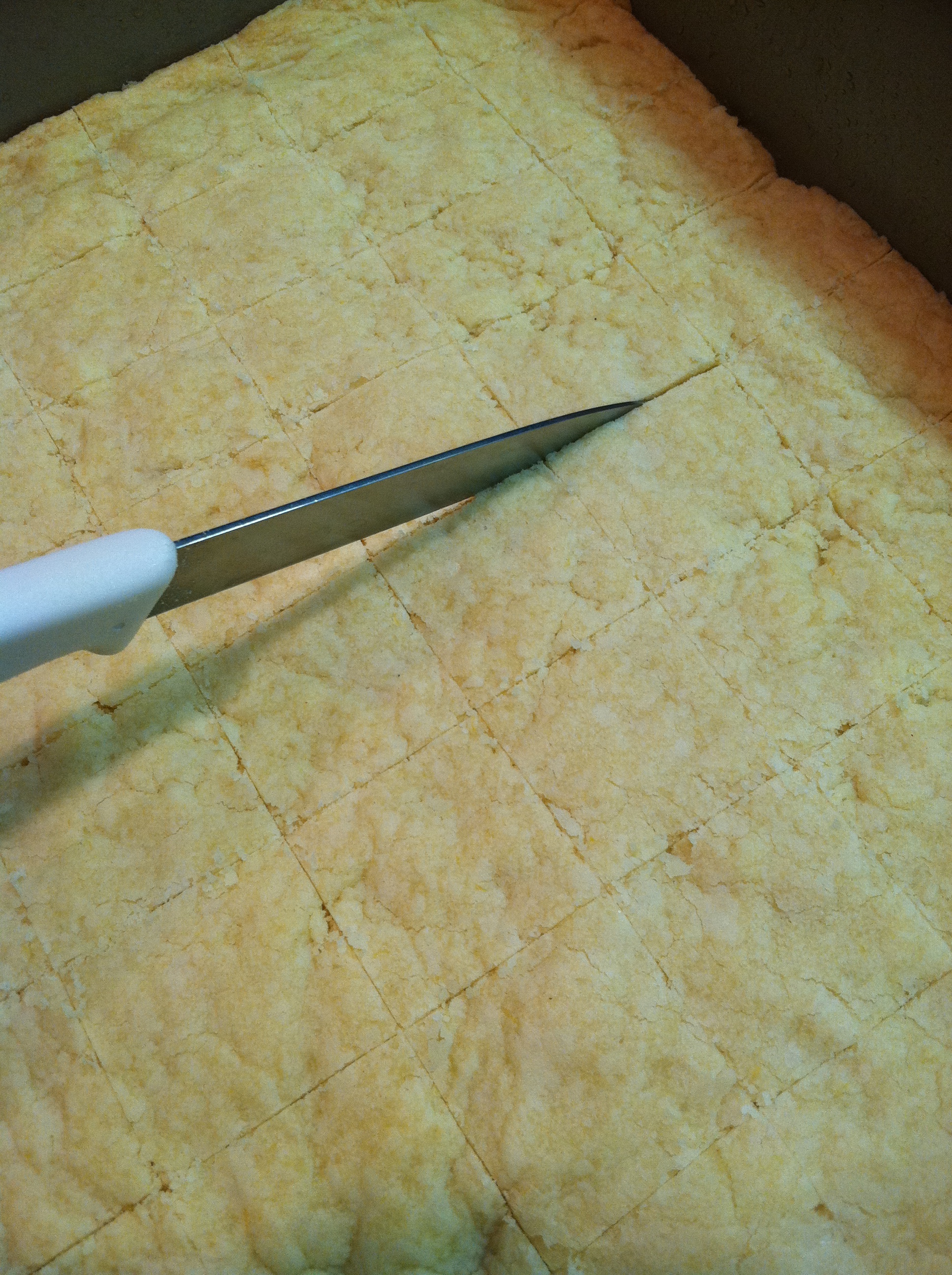
Cut the shortbread while still warm. You get a cleaner cut edge.

Once cooled; remove the cut shortbread and put them on a rack which is placed over a clean sheet pan.

Make the glaze just before you are going to pour it over the cookies.

Be sure the cookies are completely cool so the glaze does not run or melt off.

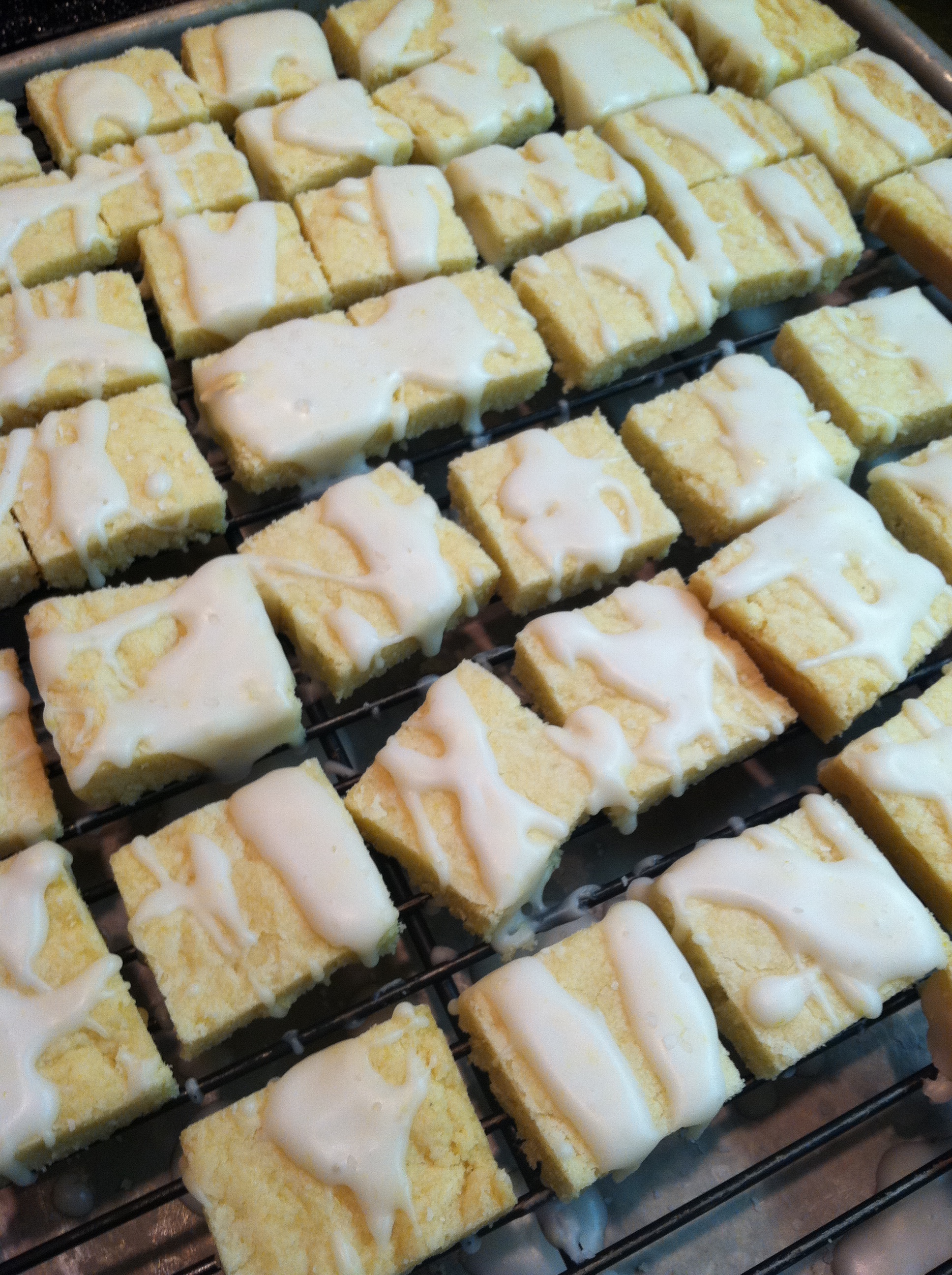
Randomly pour the glaze. You can do it randomly or evenly, which ever you prefer.

DO NOT spread the glaze as the cookies are crumbly and you will not have a smooth glaze. If you make a lot of glaze you can cover them and decorate them like petit fours.

I like to sprinkle a fine touch of finely ground fleur de sel on the top of the shortbread cookies.

Sweet, tart, salty, smooth. . .

To make the Lemon Glaze:

  • Zest from the other half of the lemon used in the mix
  • 2 cups confectioners sugar (10x)
  • 1/4 cup lemon juice

Sift the sugar to ensure no lumps.

Add the zest, stir it in and then add the juice. Mix until smooth with a fork. Whisking will add too many bubbles.

Pour over cooled shortbread cookies.

Allow glaze to dry about an hour longer before storing.

Use a fine Microplane to zest the fruit

Cream butter and sugar. Don't forget to scrape down the bowl sides.

Add flour; mix only until combined

Cover with plastic, pat evenly into pan. Chill.

Cut while still warm for a clean edge.

Place on a rack and glaze