How to Boil Potatoes for Making Mashed Potatoes

To make perfect mashed potatoes, you need to use the right kind of potato.

Russet potatoes are the potato of choice because of their high starch, low moisture content.

Read All about Potatoes  to learn which kind you choose for different dishes.

Wash, peel and cut potatoes into uniform sizes so they cook at the same rate.

Wash and peel to potatoes. It is advisable to use 1 potato per person plus 1. Left over mashed potatoes can be used in many ways and you will be lucky if there are any left over.

Put the cut potatoes into a sauce pan and cover them with COLD water.

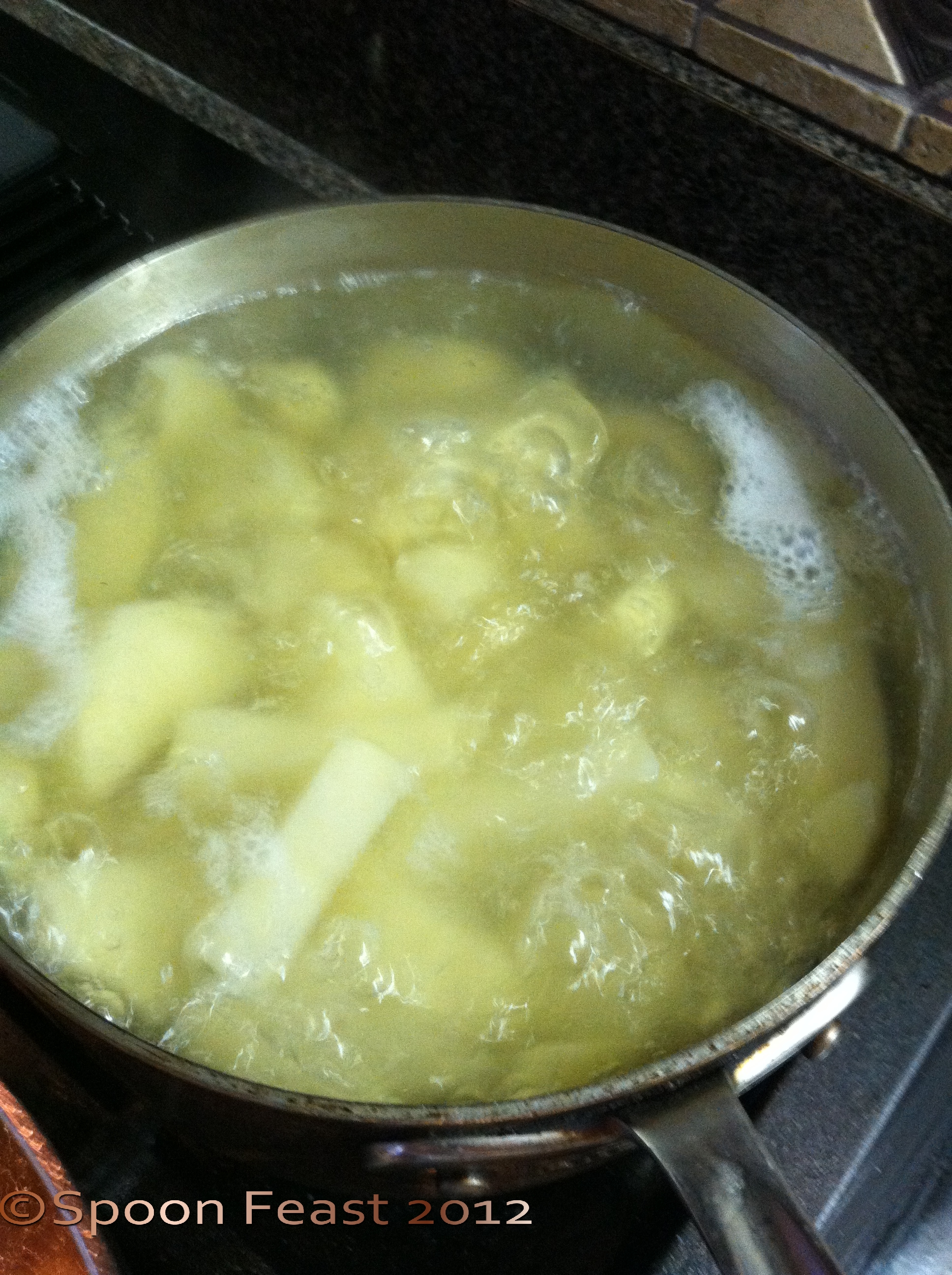
Cover cut potatoes with cold water; bring to a boil.

Once the potatoes boil, add salt. Please don’t forget to add salt while boiling the potatoes. If you do, you will be left with very bland potatoes. Remember potatoes absorb flavor best while hot.

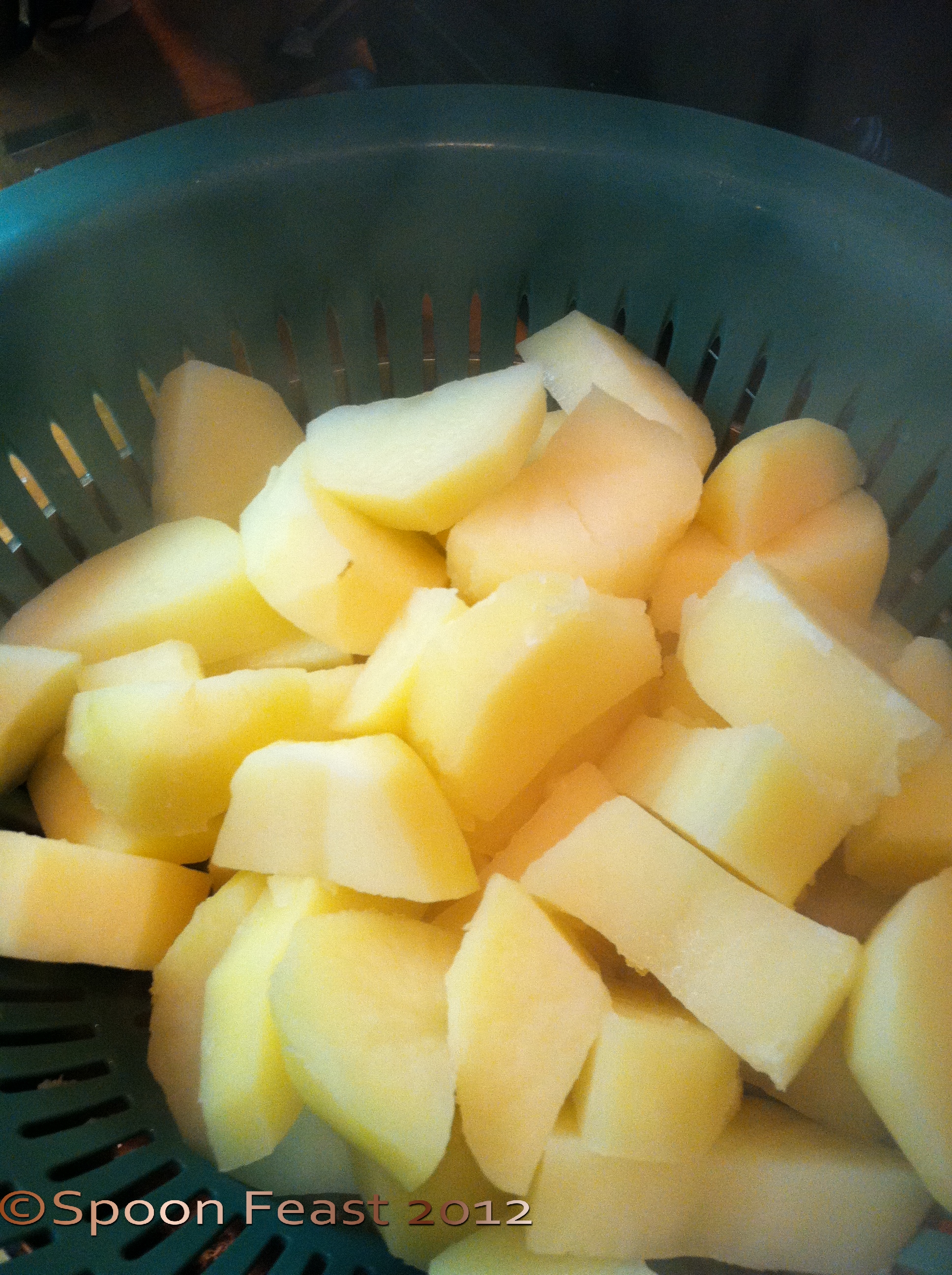
When the potatoes are cooked, drain. Process the potatoes through a ricer to produce perfect mashed potatoes.

Once the water comes to a boil. test to see how done the potatoes are. They should be almost done when they come to a boil.

Drain the potatoes when they are done.

Press the cooked potatoes through a ricer to get a fluffy lump-free texture.
A ricer is a good investment. This one belonged to Tyler’s grandmother. She used it to make spaetzle and soup noodles made with Romano cheese and lemon.

After ricing your potatoes will be light and fluffy.

In a small sauce pan, Bring 1/2-1 cup of cream to a boil. Add 2-3 tablespoons of butter to the hot cream, melt the butter. Carefully add just enough hot cream and butter to the potatoes to just moisten them and bring them together.

Be careful of over stirring which would cause the potatoes to get gluey, which isn’t very appetizing.

Adjust the seasonings with kosher salt and white pepper (so you don’t see black pepper flecks in the nice white potatoes).

Fluffy Mashed Potatoes

To serve, you can mound them with a spoon, scoop or my favorite way is to pipe them out using a smooth tip, in decorative designs on the plate.

We used to do this at the restaurant and I always loved how it looked.

These are some of the ways to pipe mashed potatoes onto a plate.

So, there you have perfect mashed potatoes.

What can you do with left overs?

Make potato pancakes, add scallions and make potato scallion cakes, use them to thicken cream soups. Use left over mashed potatoes to top a casserole or to make Shepard’s Pie.

If you wanted to make them more low-fat, skip the cream and butter and use chicken stock instead. I would still use a bit of butter, but you won’t need much.

Bon Appétit!

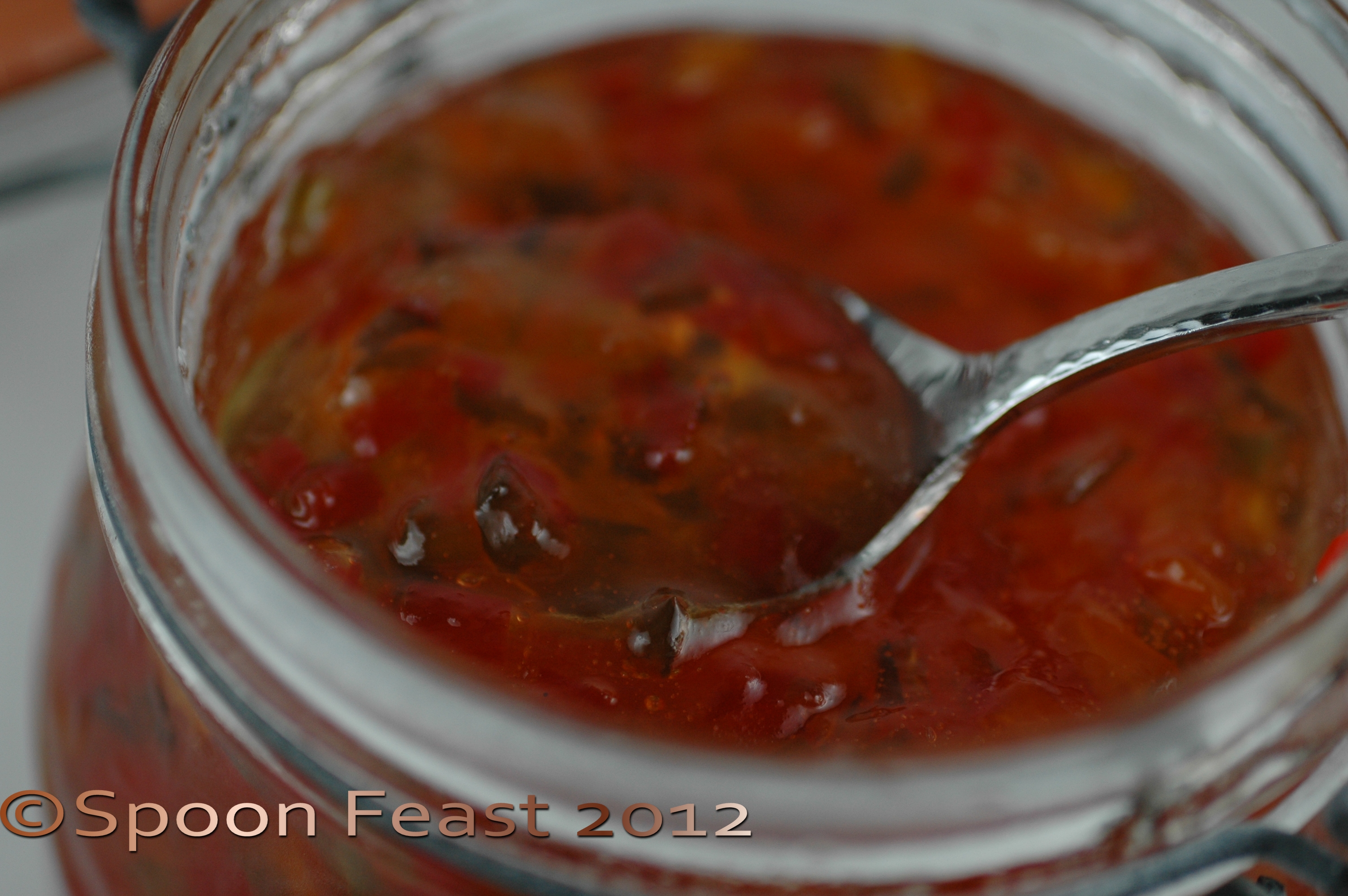
Pepper Jelly, Another Southern Staple

Chances are, if you live in the southern USA, you have seen and tasted pepper jelly. Pepper jelly is one of those staples that can be used in many things.

Hostess Saver

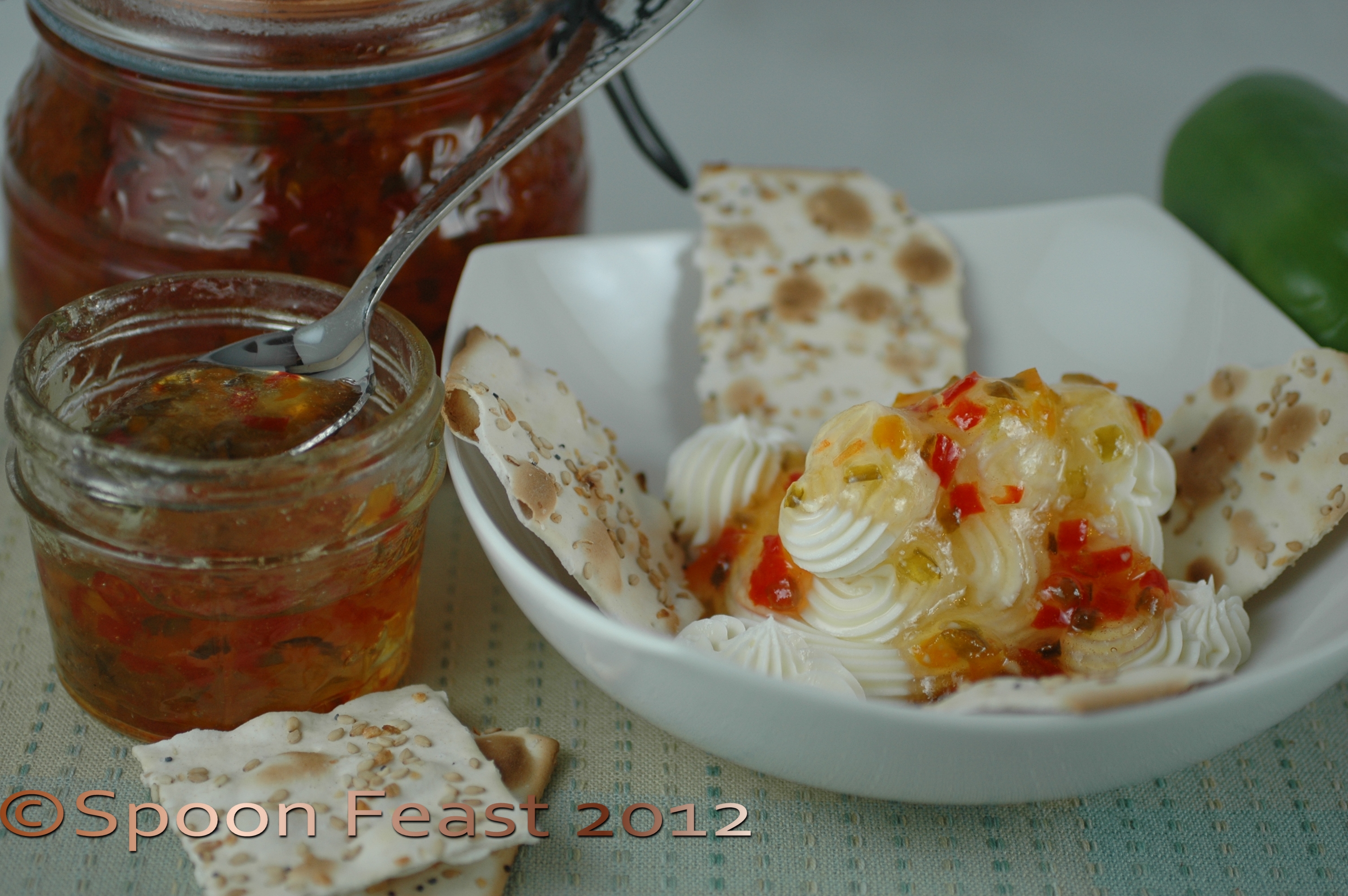
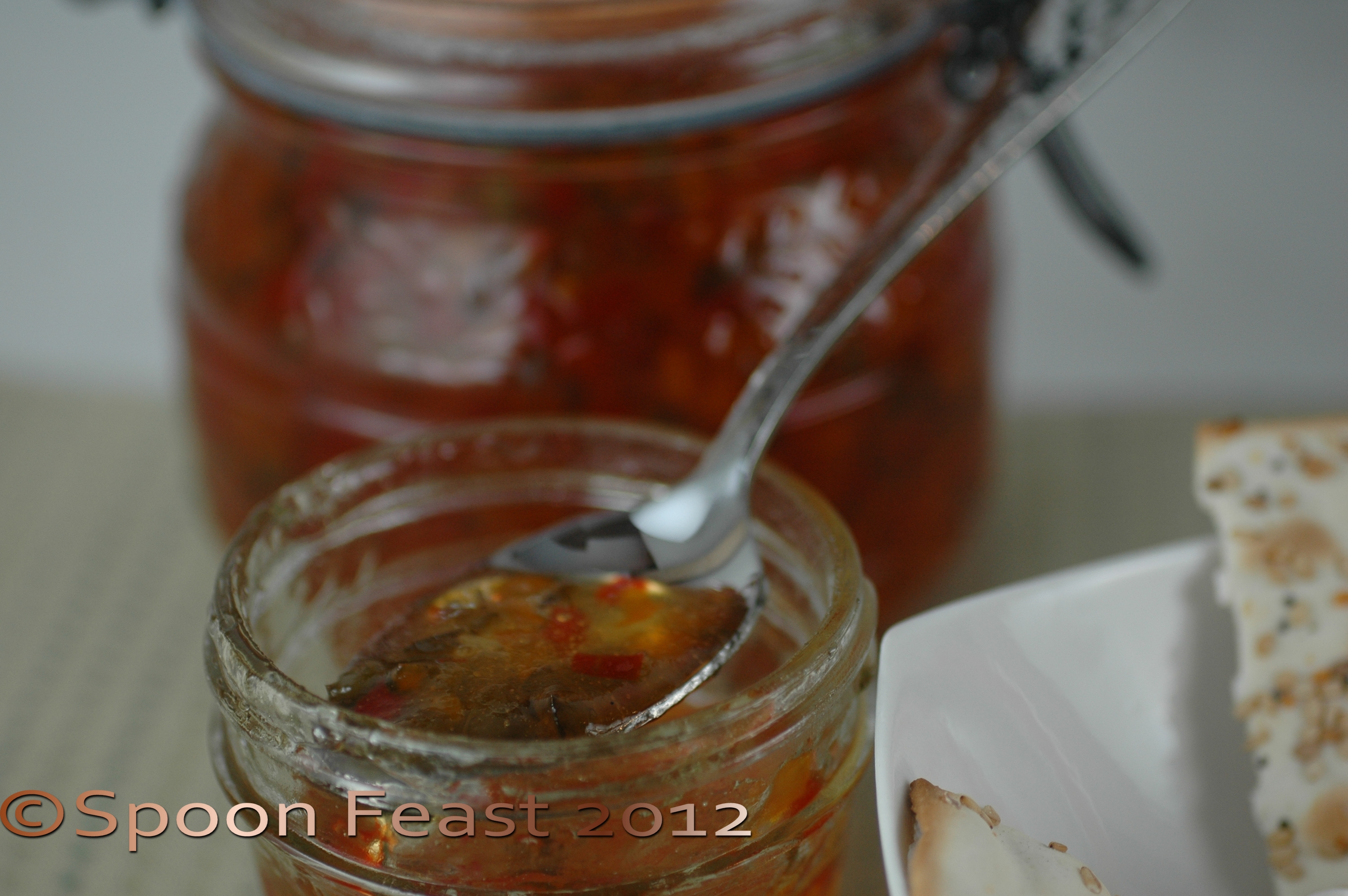
It saves a hostess when guests show up; pour some pepper jelly over cream cheese and some crackers and you have a marvelous snack with wine, beer or even iced tea.

It adds a special something to pan-fried pork chops and makes scrambled eggs amazing. Slathering some onto a biscuit or over some ham will leave you in taste bud heaven.

While pepper jelly is a bit on the pricy side ($4.99 USD for a small 6 oz jar) it can be made rather quickly and you can adjust the heat to make it hot or just make it sweet.

When you make this, set aside time to give it your full attention because it needs to be stirred constantly to prevent lumping and scorching.

As always, when working with hot sugar, be careful. Keep a bowl of ice water near your working space so if you get splashed, you can plunge it into ice water to prevent a bad burn.

There are many recipes for pepper jelly. This one does not use a large amount of pectin so it sets on a medium gel which makes it perfect for pouring over cream cheese, making a sauce or slathering onto a nice hot buttermilk biscuit.

Pepper Jelly Biscuit with herb and cheese scrambled eggs

Southern Pepper Jelly

1 1/4 cup of finely diced red and orange peppers (one large pepper of each color)

3/4 cup finely diced green pepper

2 tablespoons finely diced jalapeno pepper OR 1 small Habanero

Wear gloves when handling hot peppers. If you get the hot peppers on your skin, soak the skin in milk, 1/2 & 1/2 or cream.

Do not rub your eyes or touch small children or babies with hands that have just handled hot peppers.

1/2 cup apple cider vinegar

1 1.75 ounce package of powdered pectin

1/2 teaspoon kosher salt

2 1/2 cups granulated sugar

Take your time cutting the peppers. The best jelly has lovely evenly diced cubes of multicolored peppers floating the jelly. If you just hack and chop, you see uneven strands and bits and pieces of peppers which isn’t so nice to look at through the jar or when you are eating the jelly.

Here is how to cut a nice looking pepper:

Wash the peppers and remove any sticky labels.

Trim the top and bottom off, remove the stem and save the trimmed ends for kebab or in a salad or stir-fry.

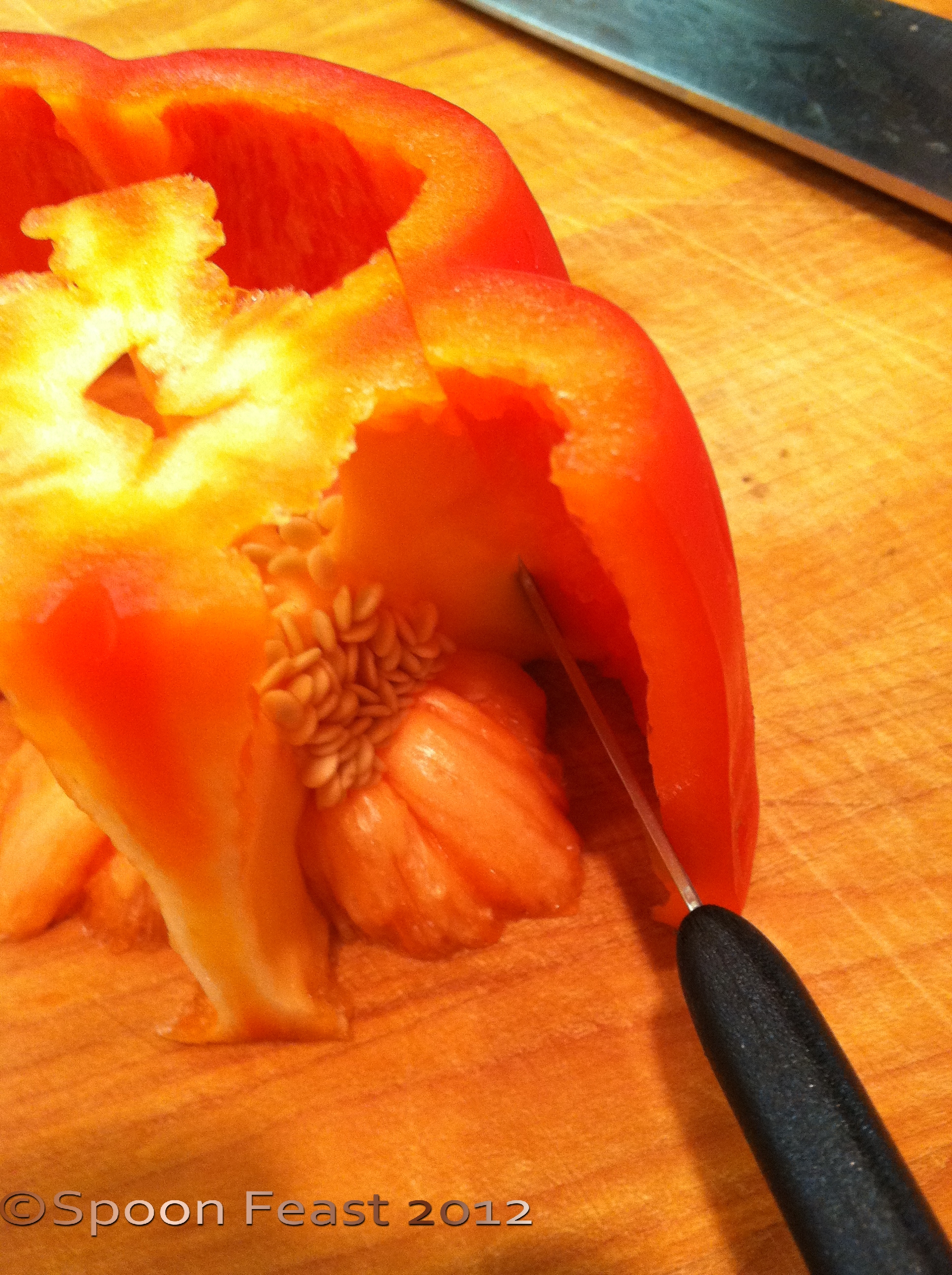
Remove the ribs and seeds, open the pepper so it lays flat, skin side down.

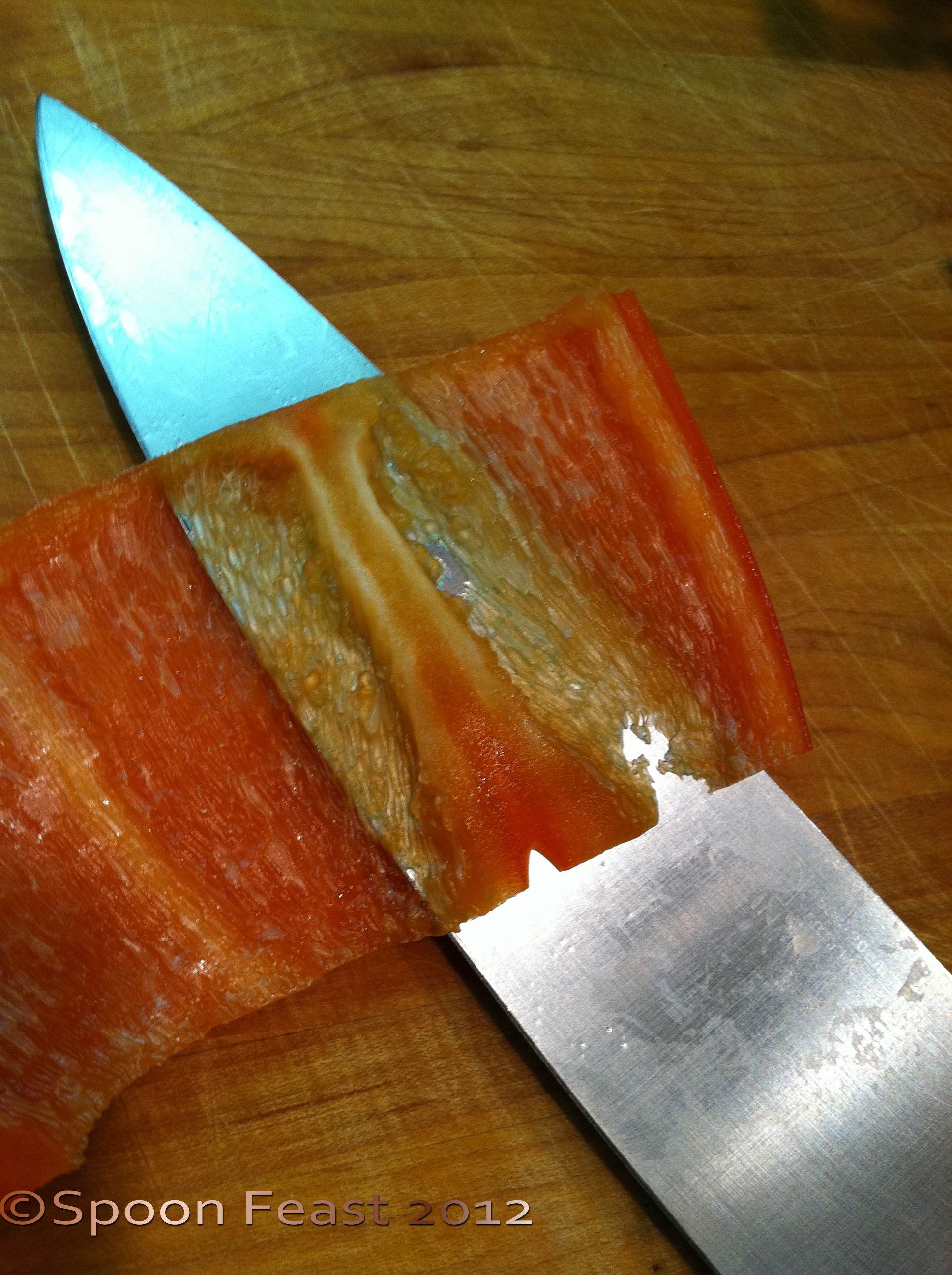
Carefully remove the membrane

See how much prettier the pepper is with the membrane removed?

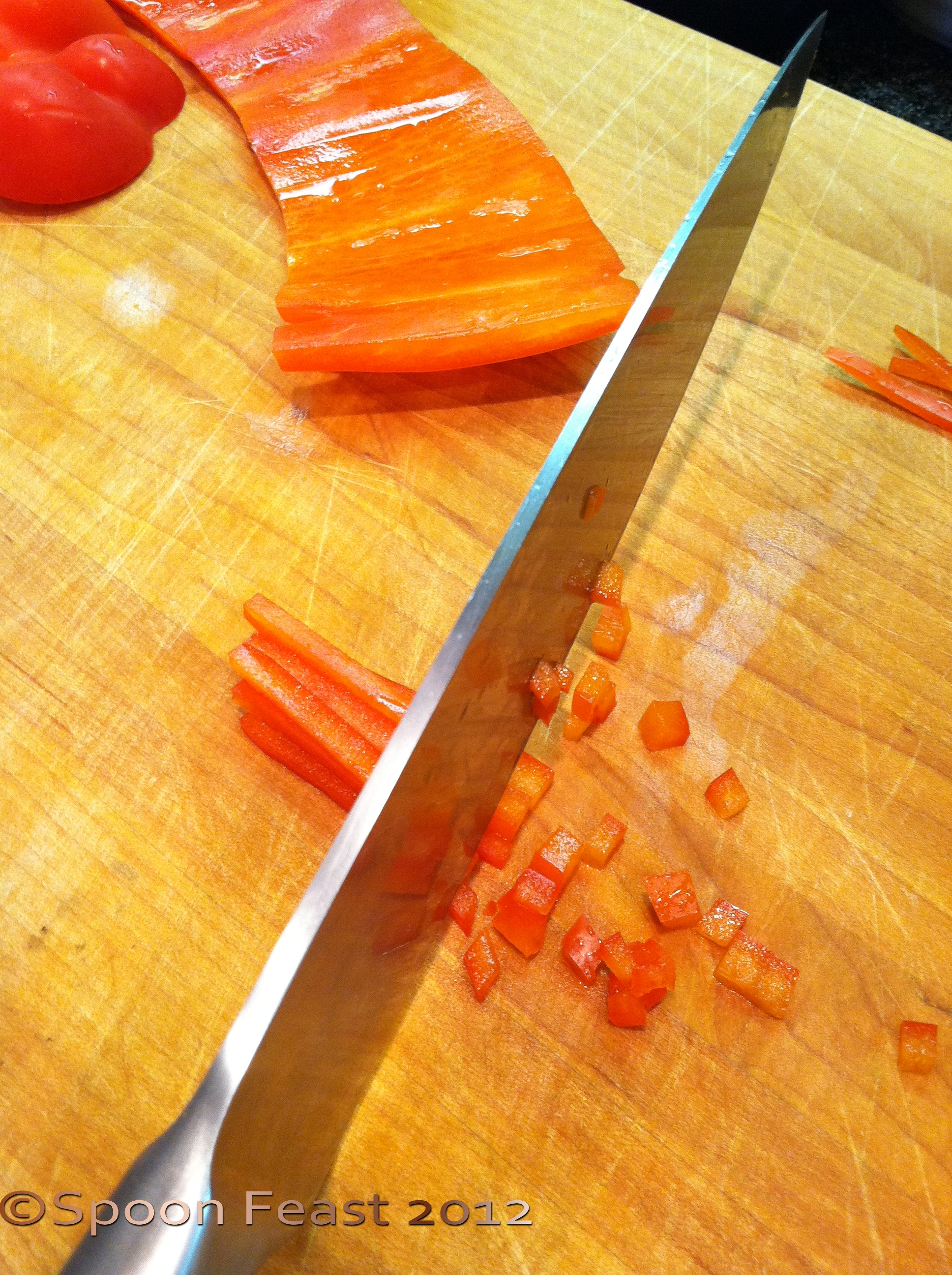
Slice into julienne, cut even slices all the way down the pepper strip.

Turn the julienne and cut into dice. The cubes should be of even size.

Pepper Jelly, a southern staple and hostess saver.

Slice the pepper so it becomes one long strip. Lay the pepper out with the skin side down. Remove the seeds and ribs from inside the pepper.

Using a sharp knife, remove the membrane from the inside of the pepper, leaving the plump pepper flesh. Just take a very thin slice from the surface to remove the membrane.

Make long thin slices from the pepper (Julienne cut), then turn the strips and cut them into cubes. Do this carefully so you create a bowl full of nicely diced peppers.

Trust me, it really makes a difference to take the time to do it right.

Place the diced peppers, vinegar and pectin into a saucepan. Bring to a boil over high heat, stirring constantly.

Be careful of vinegar fumes, turn your exhaust fan on so you don’t get all choked up.

When the mixture comes to a full rolling boil, add the sugar.

Return the mixture to another rolling boil, then boil it for 1 full minute while stirring constantly.

Remove from heat and skim off any foam that may have formed on the top.

You can process the jelly in canning jars, hot water bath etc to seal and make them shelf stable. (Great idea for gifts)

Or using clean, sterile jars, fill and invert them on the counter to cool. Once cool, turn them over and they seal will set, but you will need to refrigerate the jars.

This makes slightly over a pint.

Soften cream cheese, to fancy it up a bit, put it in a piping bag and pipe the cream cheese out in a decorative pattern rather than just plopping a chunk of cream cheese on a plate.

But if you want to, you can do it that way. Lots of southern folks do.

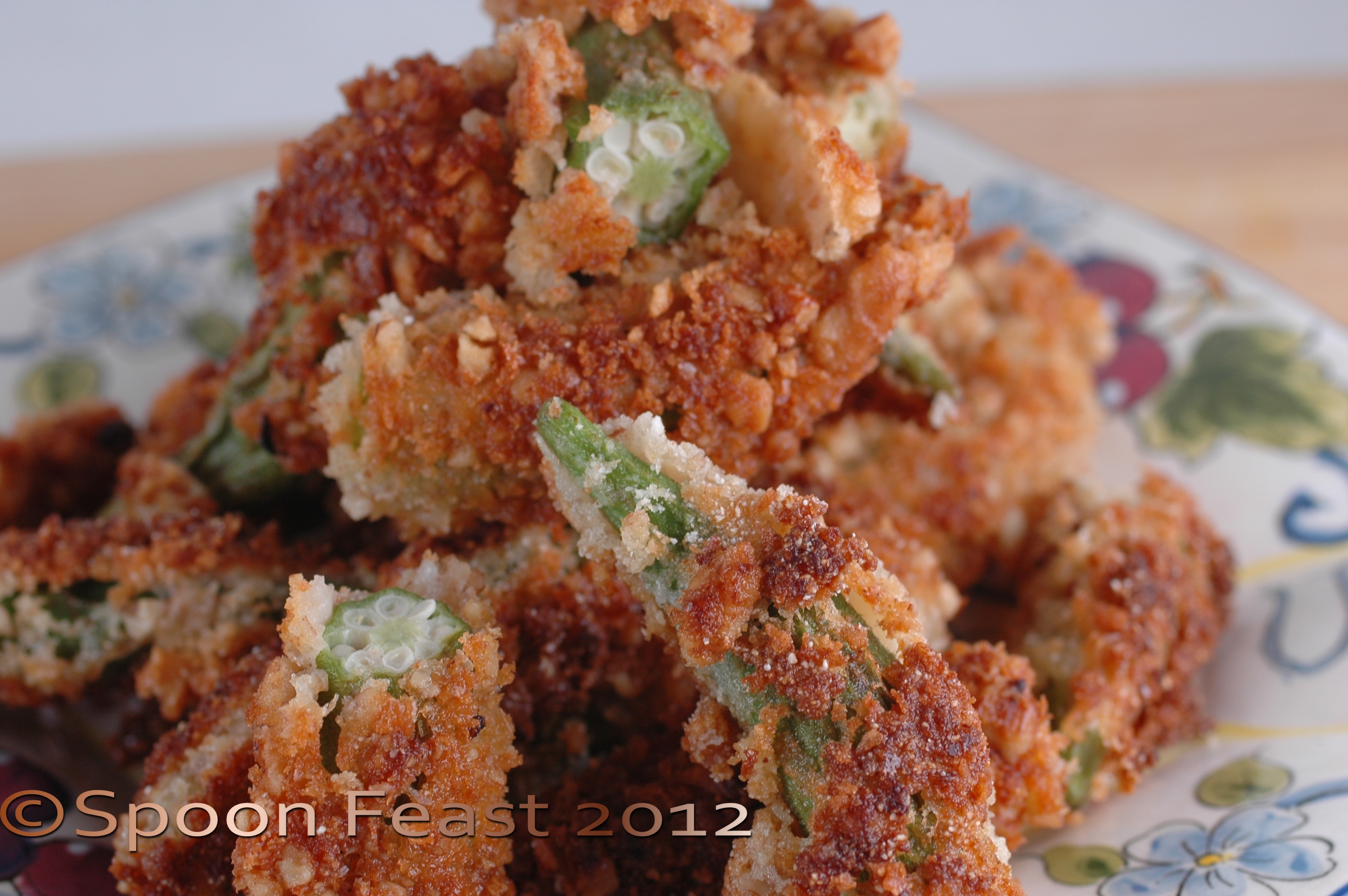
Pecan Crusted Fried Okra

Southern Cooking has to include okra of some kind so I thought Pecan Crusted Fried Okra would be interesting.

Okra

How many of you like okra?

The most common perception of okra is that is disgustingly slimy. I have to give you that it is slimy like a world of snails would love.

I’ll never forget the first time I had stewed okra and tomatoes and all I could think was “what is wrong with you people?” It didn’t help that the person who made the dish was a terrible cook. (Bless her heart!)

Then I discovered pickled okra and fell instantly in love.

Quickly I learned there are ways of preparing okra that avoid the slimy aspects of this misunderstood vegetable.

Used in vegetable soup, okra will give the broth a nice thickness, not too thick but not watery either. I love the little balls of seed that float into the soup, yummy.

Okra

Okra (Photo credit: NatalieMaynor)

Okra is found all over the world and is used in many cultures and cooked in just about as many different ways as you can find recipes.

I am working on developing content for Charlotte Cooks which begins filming the new PBS season in August.

We are filming a segment on Southern Cooking and that must include some kind of okra dish.

Robert thought it should be fried okra. So as I researched and thought, the idea of combining the southern love of cornbread, buttermilk and pecans with okra.

This is the result of my study.

Pecan Crusted Fried Okra

1 pound fresh okra – choose young tender ones over older more sturdy okra

1 cup Martha White Self Rising Buttermilk Cornbread Mix

(Use more as needed)

1 cup buttermilk

(Use more as needed)

1 cup coarsely chopped pecans

1/2 cup panko bread crumbs

Mix pecans and panko together, use more as needed

Vegetable oil as needed to fry

Fine ground sea salt

Method:

Set up a standard breading procedure with trimmed okra, cornbread mix, buttermilk, mix the pecans and panko together in the third pan.

Standard breading procedure set up:
Use cornbread mix, buttermilk, pecans and panko

Wash and dry the whole okra pods.

Trim the tops off the okra, leave the pods whole other than the top.

Bread the okra by coating in flour, then buttermilk, then pecan mix.

Have a pan with enough oil to come half way up the okra in the pan.

Only enough oil to come half way up the okra. Don’t move them around too much.
See, even mine had some drop the breading. Keep those as “cooks treats”.

Cook on medium high heat about 3 minutes on each side. The breading will be golden brown.

Using a slotted spoon or slotted spatula remove the golden brown okra from the hot oil and drain on a fresh paper towel.

Season with a light sprinkle of fine salt.

Serve with Texas Pete Hot Sauce.

Be careful, not only are these lovely morsels tasty and addicting but they will disappear before you know it!

When calculating how much to make, always make more because you will need it.

OK, now here’s the thing. Many of you will experience the breading does not really want to stay on the okra. It is hard to bread an okra and have it stay on like it should.

Following the standard breading procedure making sure to get each pod coated in flour first then coat totally in the buttermilk then pecans you will have the best chance of keeping the breading intact.

Once they hit the pan, let them cook. Don’t move them around too much or you WILL see the breading all fall off. This is why they don’t get deep-fried too. Just enough oil to come about half way up the okra while in the pan.

Make sure the oil is hot so the okra start cooking as soon as they hit the pan.

Putting them in a cold pan and cold oil will result in soggy oil filled  okra. That is disgusting. Oil and slime. Avoid it.

When they are done, pile them up on a plate and serve.

Jump back quick because they will disappear before you set the plate down.

A Heaping Plate of Pecan Crusted Fried Okra

Ya’ll come and don’t be late for dinner!

How to Boil Pasta

Cooking spaghetti. Photo by Eloquence.

See how the oil sits on top? Do not put oil in pasta water, it just goes down the drain. Oil pasta after cooking.

Dear Tyler,

Here is another assumption I made. Since your father is Italian, and you grew up eating pasta, I assumed you knew how to cook it.

Boiling pasta is really quite simple.

You need to use a pot big enough to hold enough water to cook the amount of pasta you need. Err on too much water rather than not enough water.

English: Boling water in colour

Bring the water to a boil. A boil is when the bubbles actively break the surface. A boil measures 212°F (100°C) on a thermometer. A lid on the pot will help water boil faster. If you live in a high altitude (like the mountain house) water won’t boil without a lid, and the boiling point decreases 1° every 500 feet in elevation (or 1° C every 285 meters). it has everything to do with atmospheric pressure. Actually, boiling point is quite a science subject.

Always salt the water AFTER it reaches an active boil. In the science community, adding a solute to the water creates a solution that raises the temperature of the boiling point. Scientists will argue that it is not necessary to add salt because the amount of increased temperature isn’t worth it to ‘cook faster’. This is not why we add salt.

We add salt for flavor.

We add salt after a boil is reached so the salt does not pit our pots over a lifetime of poor cooking habits.

Most of all, we add salt to things we boil for flavor. Boiled potatoes are ever so bland when salt is left out. The amount required isn’t much, just enough to lightly flavor the water.

Be aware, when you add salt to boiling water, the water will flare up momentarily. Be ready for it to avoid getting burned.

Choose your favorite pasta and read the package it comes in. Look for cooking directions for the time it takes to cook the pasta to “Al-dente“. Each pasta will have different cooking times.

Place the pasta in the pot, stir it up so it does not stick together. If using a long pasta, don’t break it so it fits in the pot! Short strands are hard to twirl onto the fork.

Lean the noodles up against the side of the pot and using tongs, as the pasta under the water softens, fold the rest of the pasta under the water. Be sure to stir it all around so nothing gets stuck either to other pasta strands or the bottom or sides of the pot.

This is especially true of fettuccine or linguine and other flat pasta.

Comparison between different types of long Ita...

Comparison between different types of long Italian pasta (Photo credit: Wikipedia)

Set a timer fort the required time.

If cooking fresh pasta, the time will be very short, dried pasta takes longer.

Drain the pasta in a colander and try to save about a cup of the pasta water.

Boiling pasta

Boiling pasta. Fold the ends under the water as the pasta softens. (Photo credit: Wikipedia)

Did you notice there was never a mention to put oil in the water while boiling?

Ha! That is because the oil sits on the top of the water while the pasta is below the water. It does nothing to keep the pasta from sticking together.

Stirring the pasta after you first put it in the water does.

After draining, put the pasta into a serving bowl and drizzle with a great olive oil.

Serve as you like.

If you are going to use the pasta in a salad or need it cold, rinse the pasta in cold water after draining to stop the cooking process. Drizzle with olive oil to prevent sticking.

If the pasta gets dry or you need more moisture in your sauce, add a small bit of the pasta water. This is why you do not want to over salt the water. Only salt it enough to make it taste good.

If you want to re-heat pasta that has been refrigerated, simple bring water to a boil and dip the pasta in for a minute or so, just to warm it, not cook it. This can be done in a small amount of water.

Drain and serve as desired.

This works for all kinds of pasta, semolina, whole wheat, rice, artichoke, quinoa etc. Read the package for length of cooking time.

Short pasta

Short pasta (Photo credit: Wikipedia)

Short pasta

Short pasta (Photo credit: Wikipedia)

Pasta is a great budget stretcher so learn to cook it correctly.

The basic technique:

Boil the water – use lots of water!

Salt after water boils

Stir the pasta after adding to boiling water to prevent sticking

Drain

Drizzle with olive oil and serve

OR

Drain, rinse  in cold water to cool and drizzle with oil.

Enjoy!

Love, Mom

Pasta again!

Pasta again! (Photo credit: HatM)

How To: Standard Breading Procedure

Dear Tyler,

You asked how to bread something to make Tonkatsu or Parmesan style dishes. So here it is!

If you want to bread something so the breading actually stays on the product, you need to follow a standard breading procedure,

It is a 5 station set-up. Breading your food using this method ensures a great finished dish.

Flour, Egg wash and Bread crumbs
(To remember the order, think of the abbreviation for the month of February: FEB)

1) Ready to go product – seasoned

2) Flour – just plain flour

3) Egg wash – make it liquid

4) Bread crumbs – You can use any bread crumbs, Panko are amazing in my opinion. Instead of bread crumbs, you can also use any kind of ground nut, crushed potato chips, corn flakes, or plantain chips, Trisket crumbs, coconut, etc.

5) Final breaded product

In this post I am using catfish, but the same method works for everything you want to bread.

Prepare the product, trim it, skin it, pound it thin, what ever you want to do, do it before it gets breaded.

Season with salt and pepper and other seasonings if desired.

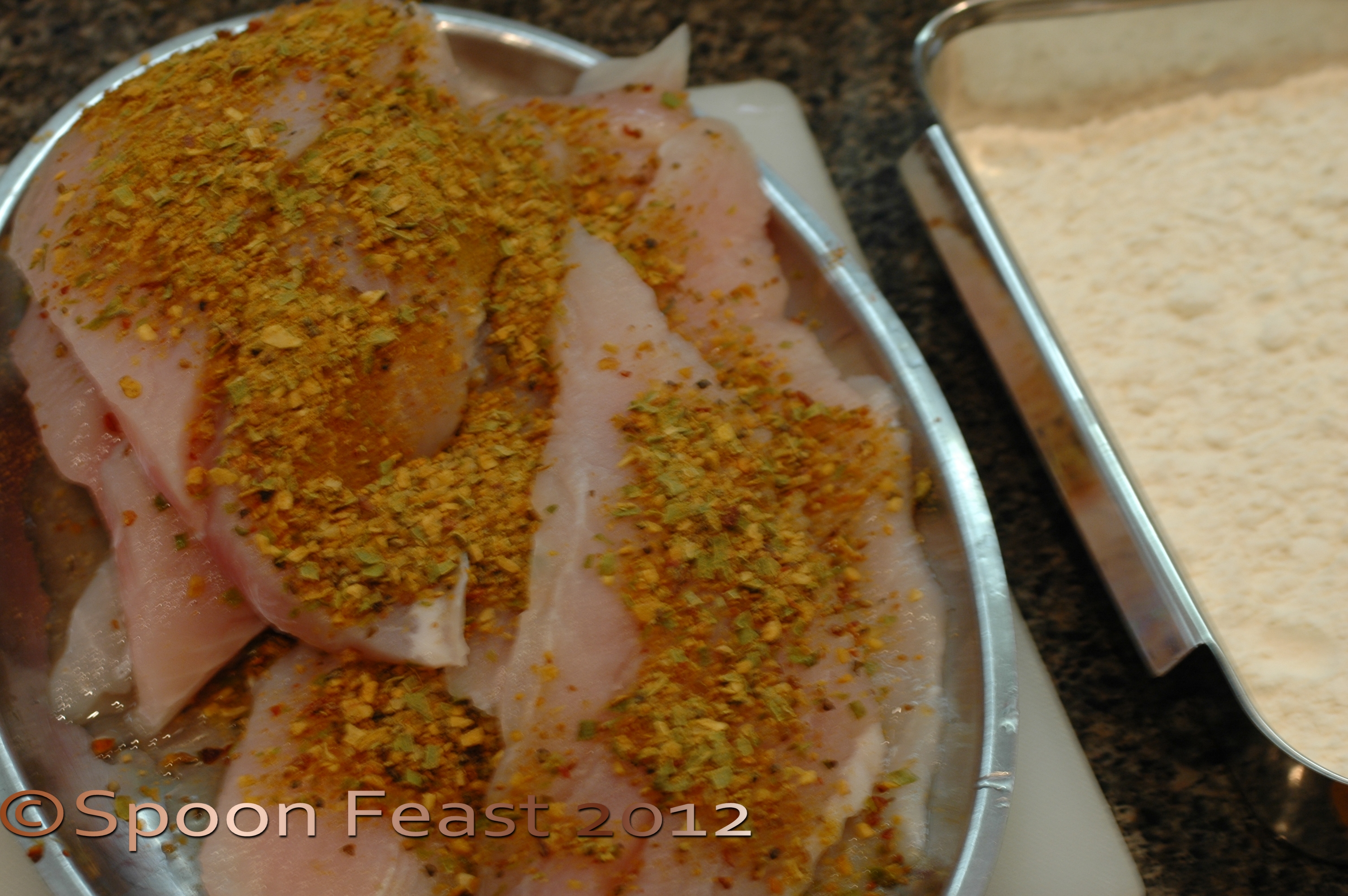
Here, catfish is getting seasoned with lemon ginger seasonings before breading

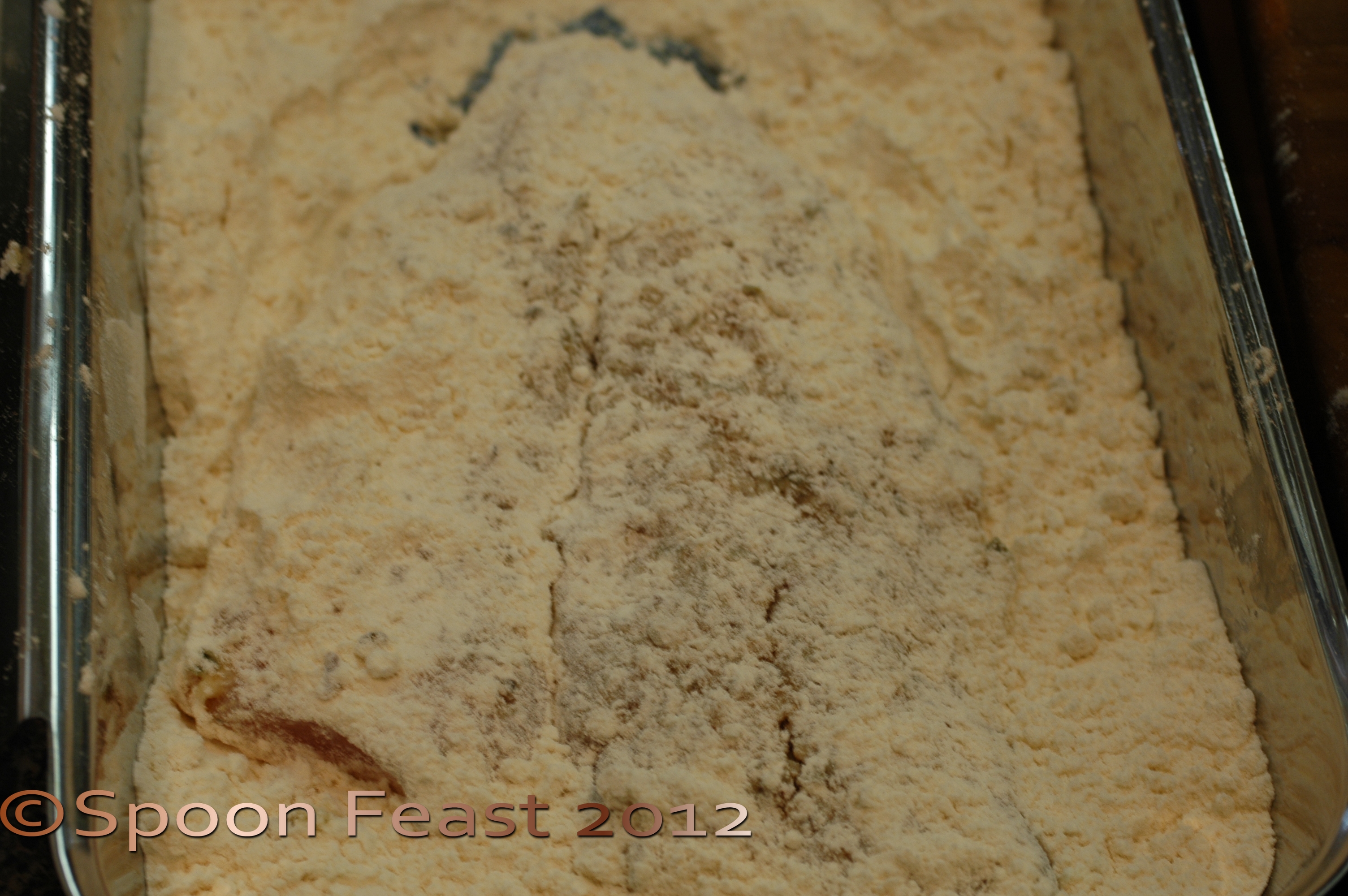
Dip each piece into the flour

Then into the egg wash

Then into the bread crumbs

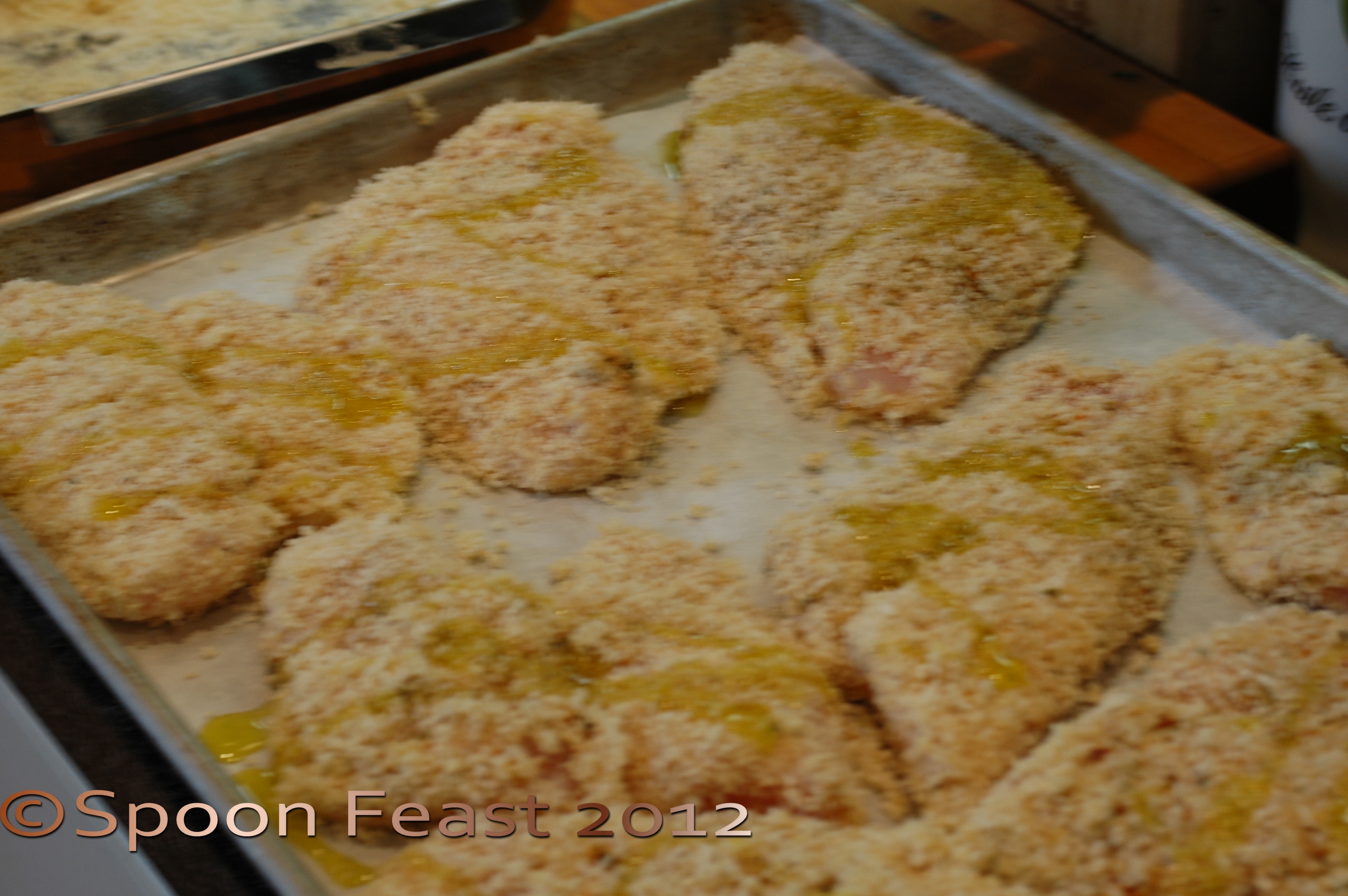
Place the breaded items onto a baking sheet; drizzle with oil.
Bake at 375 F for 20-30 minutes to ‘oven fry’ or pan fry in a saute pan with a small amount of oil.

The family favorite for this is to make “Katsudon”  with thin sliced pork loin or a chicken breast sliced and pounded thin. We serve it over Basmati rice with Bull Dog Brand Tonkatsu Sauce. (I usually buy this in an Asian grocery store.)

Bull Dog Sauce

When using chicken breasts, you can cut them into fingers or slice a large breast into thirds, place each slice into a zip bag (don’t zip it!) and pound gently it so it gets evenly flattened. Season and proceed with the breading procedure.

To pan fry instead of cooking the cutlets in the oven, heat a saute pan to high, add a thin-film of oil to the pan and saute until each side is golden brown.

Pan fry in a thin-film of oil until golden on each side

Add steamed broccoli to round out your meal.

You can take the plain breaded cutlets and serve them with different sauces and sides to create very different meals from breaded cutlets.

Boil some rice, add some frozen green peas when the rice is done. The peas only need to warm through.

Place the fried cutlet on top of the rice and drizzle with Bulldog sauce.

To make a “true” katsudon, place caramelized onions over the hot steamed rice, top with the cutlet and then top it all with an egg. Cover and the steam from the cutlet and the rice will gently cook the egg. Break the egg yolk and stir it in to create a wonderful sauce. Drizzle with Bull Dog Sauce .

Tonkatsu with Bull Dog Sauce

You can create Chicken Parmesan by topping the golden brown cutlet with marinara sauce and cheese – I am partial to Asiago – but Parmesan, or mozzarella are just fine too.

Melt and brown the cheese, serve over pasta and more sauce on the side. Top it all with more cheese and serve with a salad on the side.

Chicken Parmesan

Breaded Cutlet with Lemon

Be careful when pan frying, place the cutlets into the pan so it splashes away from you, not towards you. Once the cutlets are golden brown, you can finish cooking them in the oven that has been pre-heated to 350°F.

Enjoy making these and think of other ways to serve them too. Change the sauce ( try Thai Green sauce!) and starch. Put a cutlet on a bun, add coleslaw and BBQ sauce to make it into a sandwich.Or make Chicken Piccata with lemon and capers.

Let me know if you come up with other ideas!

If you want to freeze the breaded cutlets, freeze them raw as soon as you finish breading them. You can cook from frozen over medium heat.

Love ya!

Mom

Angel Hair Pasta with Tomatoes, Basil, and Broccoli

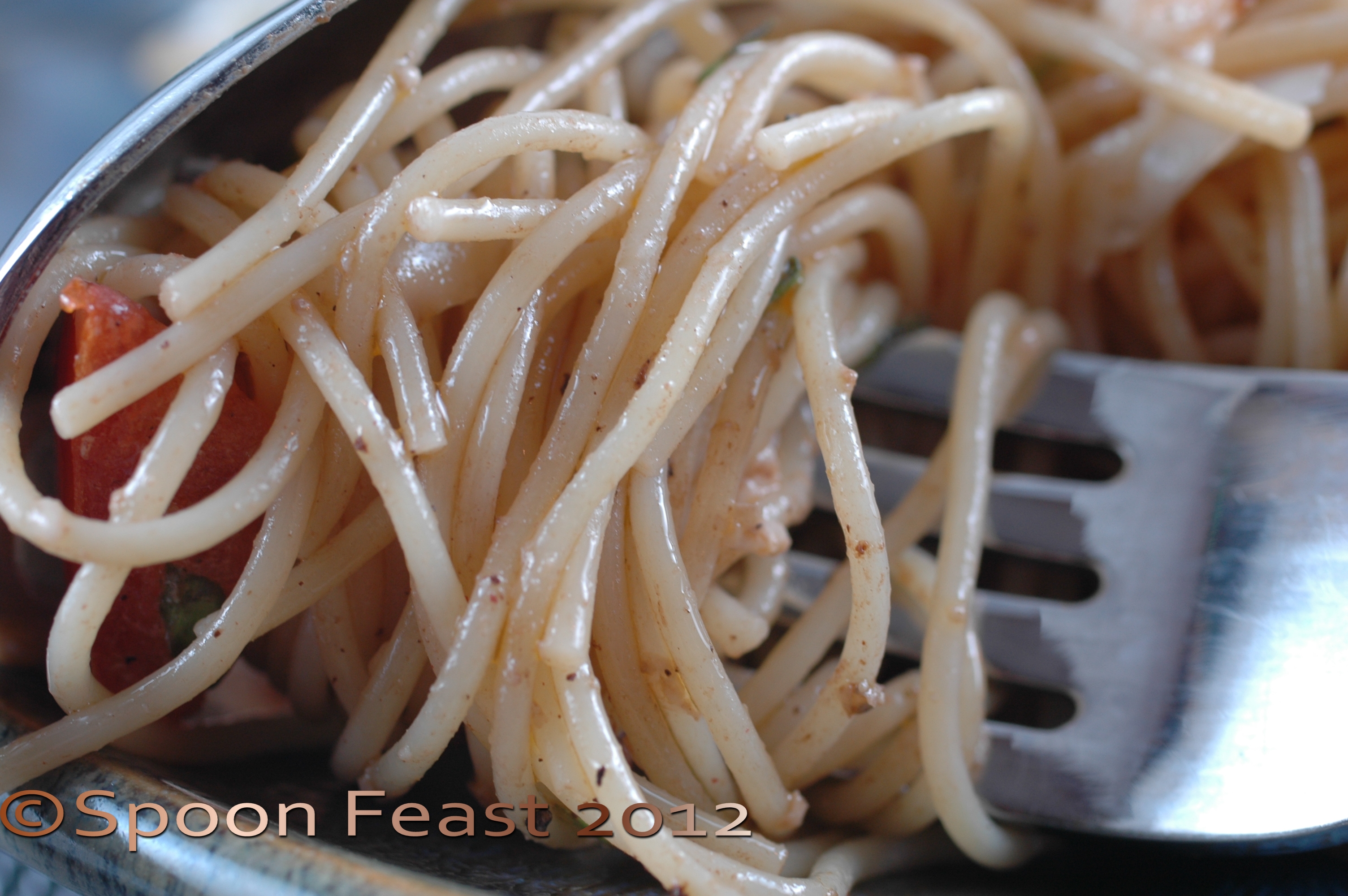
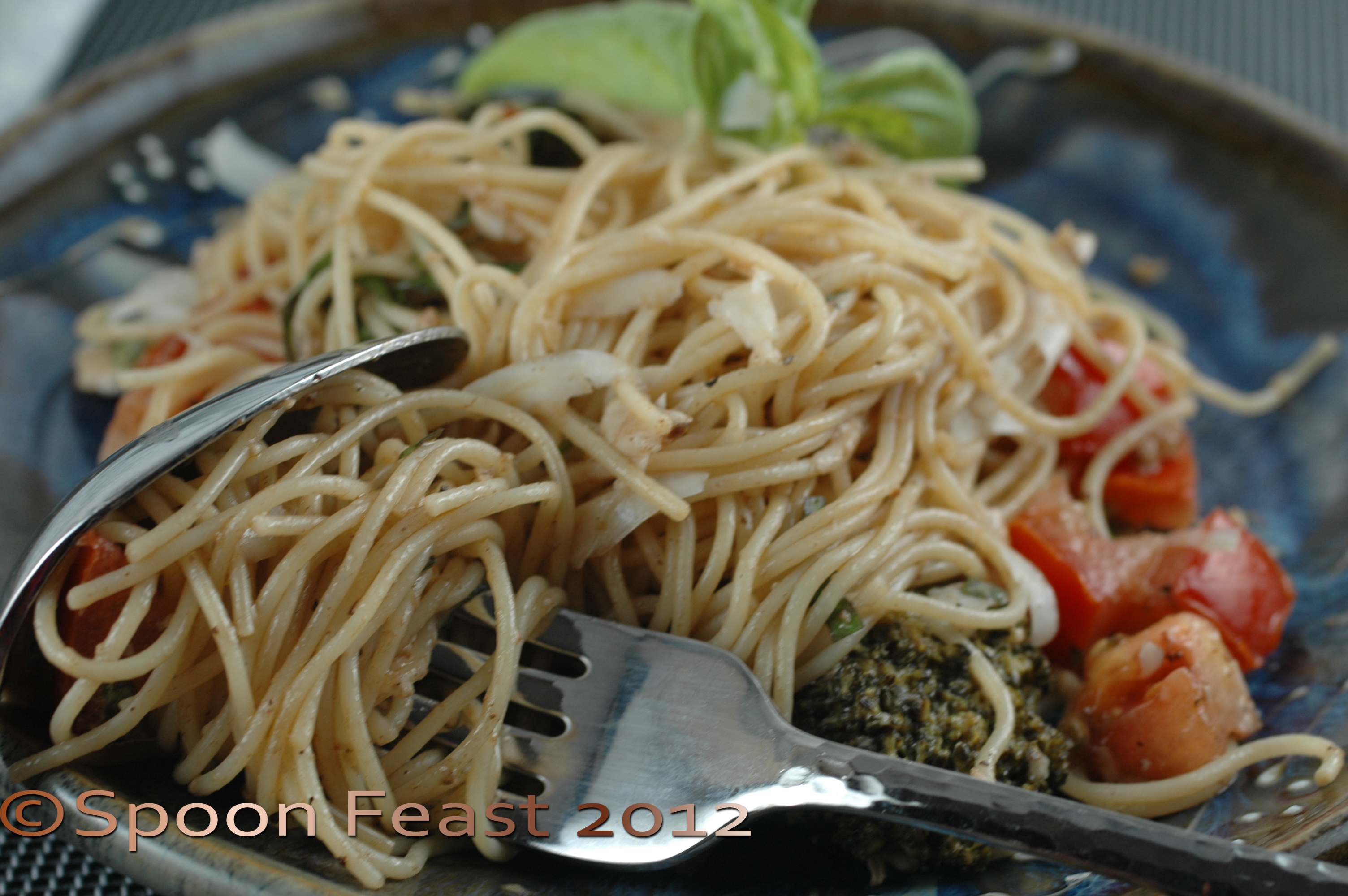
This Angel Hair Pasta with Tomatoes, Basil, and Broccoli is quick and refreshing.

Angel Hair Pasta with Tomatoes, Basil, and Broccoli

Whenever I cook pasta I always cook more than we need for 1 meal. This makes cooked pasta ready to go during summer months for refreshing and quick meals.

If you have cooked pasta on hand, it is only moments to put together a nice meal from what you might have in your refrigerator.

This dish came about because I was hungry and we had angel hair, cooked, steamed broccoli from last night, an amazing vine ripened tomato and a bushy basil plant that needed trimming.

To make this dish, you will need:

  • 1/4 pound cooked angel hair pasta; per person
  • 1 chopped fresh tomato; per person
  • 6 fresh basil leaves, cut into chiffonade (ribbons)
  • 1/4 cup steamed broccoli; per person (optional)
  • Splash of balsamic vinegar
  • Splash of extra virgin olive oil
  • Salt and fresh ground pepper to taste
  • 2-3 whole basil leaves for garnish

Method:

Combine everything but the pasta in a bowl, mix well.

Re-heat pasta in boiling water, drain well. Place the pasta in a bowl or on a plate.

Spoon the tomato mixture over the pasta, garnish with whole basil leaves.

Sprinkle with Asiago or Parmesan cheese if desired.

Enjoy this refreshing summer dish!

Angel Hair Pasta with Tomatoes, Basil, and Broccoli

How to Cook Salmon

Dear Tyler,

There are many ways to cook salmon. I am going to suggest one or two simple methods here to get you going.

I like to cook extra when salmon is on the menu because it makes great salmon salad, like tuna salad. When you were little, the first time you have salmon salad, you came home from school and told me it was the best tuna fish sandwich you ever had.

So you will like salmon as a salad, if you don’t recall.

To make the salmon salad, I used Saffron Aioli, which will be the next posting for you.

To address the salmon:

The easiest way for you to cook it is to  start by rinsing the fish under cold water. If you have a large piece, cut it into pieces about 1″ thick, or as thick as you want your portions to be.

Feel along the flesh to locate pin bones. If you find some, pull them out with needle nose pliers.

Pat it dry with a paper towel.

Rub your fingers over the fish to feel for any “pin bones”. Pull these out with a pair of needle nose pliers. They are hard to get out, that is why we use the pliers. If you don’t have pliers, try to pull them out with your fingers, being careful not to destroy the flesh while doing so.

Be careful not to destroy the flesh as you remove the pin bones. If can be pulled apart easily. Look carefully, see how this part of the fish looks ‘damaged’? It isn’t all smooth and together like the rest of the fish.

If the skin is still on, don’t try to remove it. There is a technique I will need to coach you on later and that will be done in person. The skin will be very easy to remove after the fish is cooked.

Pre-heat the oven to 350°F. (When the light goes out, the oven has reached 350°F) Pre-heating the oven may take up to 5-10 minutes depending on your oven. Plan ahead.

Oil an oven proof dish so the salmon won’t stick.

Season the fish with at least salt and pepper. You don’t have to use much, but a pinch will make all the difference. Use your favorite.
Notice the cut portion size.

Season the fish with your favorite seasonings. Salt and pepper are just fine, add a squeeze of lime or lemon; drizzle with a bit of olive oil.

Place a saute pan on the heat and get the pan hot. Add a small amount of oil to cover the bottom of the pan with a thin-film of oil. You can brush it on or pour it and tilt the pan to get the bottom coated.

Place the salmon in the pan, top serving side down first. Sear it until it is golden brown. If the fish is ‘sticking’ to the pan, wait a minute or two. When the salmon is ready to turn, it will release on its own.

Using a metal spatula with slots in it, to turn the salmon over.

This tool is called a fish spatula –  but it is useful for much more than fish!

Place the pan in the oven to finish cooking the fish while you get the rest of the dinner ready.

Total cooking time for salmon is in the general area of 10-15 minutes, depending on the thickness of the fish, the accurate temperature of the oven and how long does the salmon stay on the burner or in the oven.

Safety Hint!

Only place pans in the oven that have oven proof handles! If the handles are plastic or other than metal, they cannot be put in the oven. Check your pans to see if the handles are oven proof before you put the pan in the oven.

Continue to cook the fish until it is no longer raw in the center. You can eat salmon medium rare and even raw, but I would advise buying “Sushi Grade” salmon if you want to eat it less than done.

Sushi grade will cost nearly double. It goes through a freezing process to kill any parasites that won’t be killed by cooking.

If you want to cook some rice to go with the salmon, plan on cooking that just before you start the salmon. It will take about 20 minutes for basmati rice; 50 to 1 hour for brown and heavier grain rice.

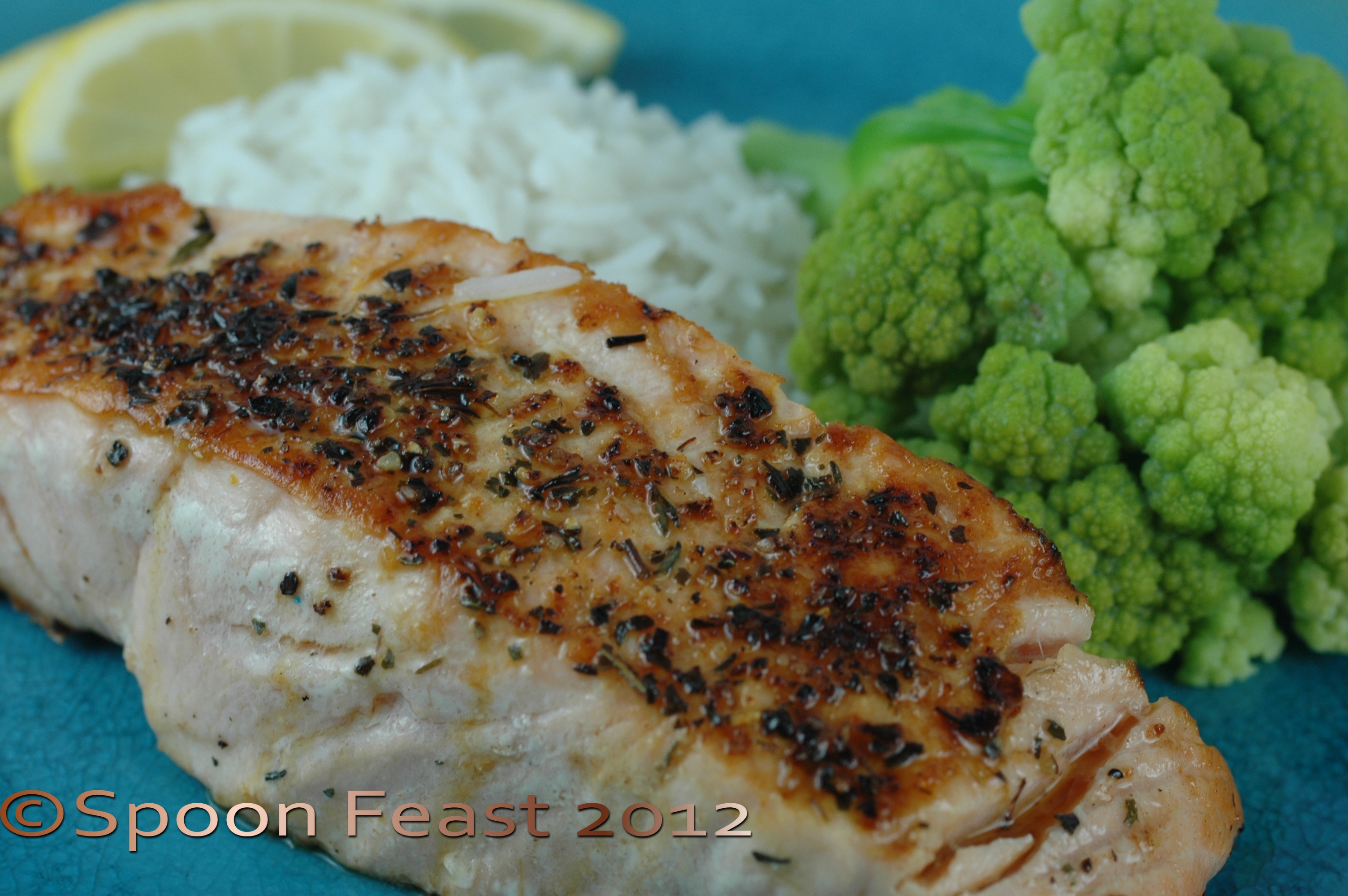
While the salmon is cooking, steam some vegetables. In the photo, I chose “Romanesco” which is like a green cauliflower but the florets form a very interesting logarithmic spiral  growth pattern.

English: The fractal shape form of a Romanesco...

English: The fractal shape form of a Romanesco broccoli. Français : Une tête de chou Romanesco et sa forme fractale. Photo prise avec un appareil Canon D-60 équipé d’un objectif 18-135 mm IS de même marque.  (Photo credit: Wikipedia)

It tastes a bit like a mix between broccoli and cauliflower. Sometimes called Romanesco broccoli or Roman cauliflower, this vegetable has been around since the 16th century.

Since you like broccoli, look for this too. I am sure you will love it just as much. I like it for the wonderful oddness of it all. To me it is just a marvel!

Cook it the same as you would broccoli.

Other ways to cook salmon:

Another way to cook your fish is to wrap it all up in a tin foil bundle and bake it at 350°F for 10 -15 minutes; until it is done.

Squeeze some fresh lemon or lime juice over the salmon, plate it and gobble it all up.

Or

Place the fish on a sheet pan or oven proof dish and instead of sauteing it in a pan, simply place the dish in a pre-heated oven and cook for 10-15 minutes or until done.

The fish is cooked in all cooking methods when it is no longer dark salmon color in the center, it flakes easily and it reads 145°F on an instant read thermometer.

Cold salmon is delicious too.

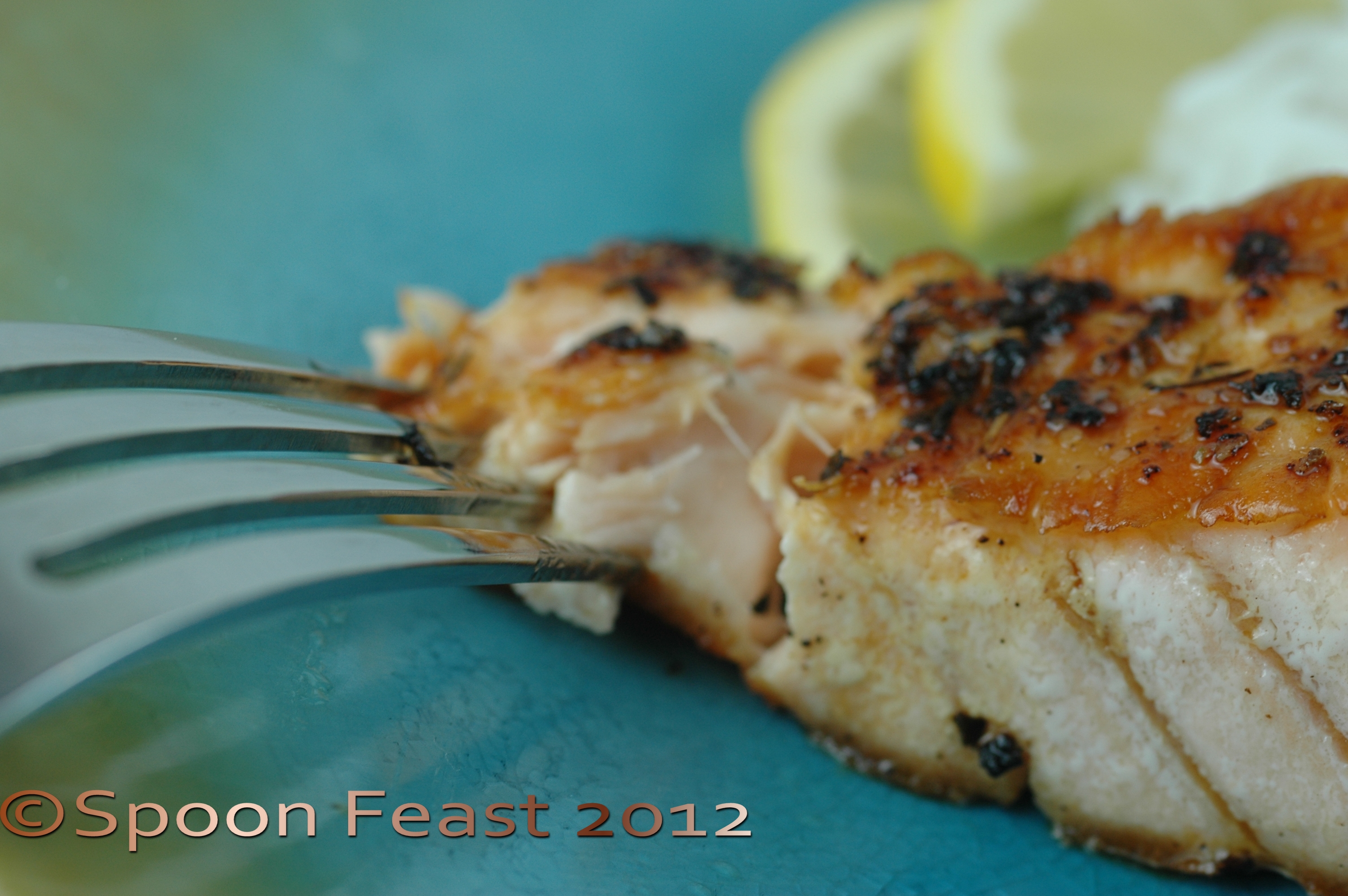
It will flake easily when done.

When thinking about what seasonings to choose for salmon, remember salmon has a salty profile with a tinge of sweetness. Sweet vinaigrette such as raspberry vinaigrette or honey Dijon vinaigrette make a great sauce for salmon.

Mix white balsamic (or dark balsamic) vinegar with Dijon mustard, honey, salt and pepper. Add olive oil to smooth it out and use that as a sauce. Adjust quantities to taste. You don’t need to make a lot.

Whisk it all together and voila! For raspberries, use melted raspberry jam (seedless) or mash some fresh or thawed frozen berries through a wire mesh strainer to get the pulp without the seeds.

That’s another post!

Let me know if you have any questions.

Bon Apetit!

Love,

Mom

Food Safety In the Refrigerator

Everyone needs reminders of how to handle food safely. As a professional who teaches food safety, I believe you can’t hear it enough. Small reminders and a bit of education can help save a lot of grief in preventing a multitude of food borne illnesses for anyone who handles food.

Do you know how to keep food safe in the refrigerator?

Current Contents of Refrigerator

Current Contents of Refrigerator (Photo credit: Natalie Maynor)

This post will outline the basic concept of refrigerator storage to reduce the chance of cross contamination.

The top of the fridge should be home to all ready to eat foods. Sandwich meats, cheese, leftovers get stored above raw products.

Some refrigerators have 2 bottom drawers. Designate one for raw meats and one for fresh produce. If you only have one large drawer, buy plastic storage bin that will fit on one side and designate that for meat storage. Keep all poultry separate from meat.

Raw meats should be stored in the following order

  1. Things that swim
  2. Things that walk
  3. Things that are ground-up walking around
  4. Things that fly or come from things that fly

This is called “The Swim, Walk, Fly System” of refrigerated storage.

To describe each category:

  1. Things that swim

    English: Sushi is a dish made of vinegared ric...

    Raw seafood (Photo credit: Wikipedia)

Raw fresh water and salt water fish, whole or fillets, shell-fish, shrimp, lobster, crab, mussels, oysters, etc.

If it is pre-cooked, it goes with the ready-to-eat category.

2. Things that walk

English: Veal shank used for ossobuco. Dansk: ...

English: Veal shank used for osso buco.  (Photo credit: Wikipedia)

Raw beef, pork, veal, lamb, venison, boar, buffalo

     3. Things that are ground-up walking around

Raw Ground beef

Raw Ground beef (Photo credit: Wikipedia)

Any raw ground beef, veal, pork, venison, buffalo: if it is ground up it goes below whole muscle meats.

      4. Things that fly or come from things that fly

Raw chicken fillet

Raw chicken fillet (Photo credit: Wikipedia)

All raw birds: chicken, quail, turkey, pheasant, squab, duck, and even though it does not fly, ostrich belongs in this category.

Raw eggs belong on the bottom shelf too. If one breaks, it won’t have the chance of dripping all over other things in the refrigerator.

Here is an interesting experiment to try with a raw egg:

English: The white eggshell has been removed b...

English: The white eggshell has been removed by soaking a normal chicken egg into vinegar for 48 hours. (Photo credit: Wikipedia)

Of course don’t eat the egg after.

Make it a habit to wash the drawers and shelves when they get soiled or sticky.

An open box of baking soda will help absorb strong odors.

After handling raw meats, poultry and seafood, be sure to wash and sanitize the knives, cutting boards, sinks and counter tops to prevent cross contamination.

Clorox Clean-up spray does a great job of this. Use gloves when handling to protect your skin.

That’s it for now.

I’m going to go soak an egg.

How to Boil Rice

Dear Tyler,

There are many kinds of rice to choose and methods of how to cook; this post is about how to boil rice. This is the most simple and least complicated method.

You just need to pay attention while it is cooking.

Let’s talk about the forms of rice that are out there. I am not going to go into all the varieties, this is just to tell you how to boil basic rice.

You don’t always have to cook rice.

You already know about the pre-cooked rice packets you can buy either shelf stable or frozen in vacuum sealed packets. These area great to have on hand when you don’t feel like cooking.

Trader Joe’s frozen Brown Rice is so nice and easy! Nuke and eat.

But you pay a price for that convenience. These products are ‘expensive’ in the relative terms of how much rice actually cost.

Rice on its own is cheap. It is a meal staple in many parts of the world for good reason.

I love the taste of rice, white, basmati, brown, mahogany, black or red. I love the texture, the way it carries sauces and serves as a flavor base for lots of dishes.
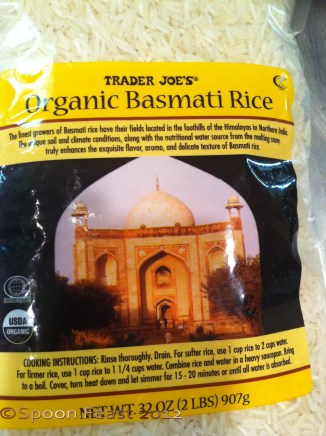
You were brought up on Basmati Rice. White and brown. When you go to the store to buy rice, don’t cheap out and buy the cheapest rice out there.

Choose Basmati or Texmati rice. Basmati rice comes from India and Texmati is the same variety grown in Texas. Honestly, the cost difference isn’t much between cheap rice and a quality rice and the taste is much more pronounced. Tastes more like rice should.

Rice has become so polished and processed that most of what passes for rice these days has very little flavor or nutrients. This kind of rice provides little nutritional value beyond carbs.

Avoid instant rice at all costs. It has horrible flavor, it tastes processed.

Avoid ‘converted or par boiled ‘ rice as well.

We get enough nutrients from our diets to have to worry about the delivery of Thiamine. If we were starving, it would be another issue.

Basmati and Texmati rice is flavorful and nutritious and goes great with lots of dishes. It is not sticky rice so it will have that fall-apart quality desired in fluffy rice.

Here is the key for How to Boil Rice:

Main ratio: 2:1

2 parts water to 1 part rice

So if you use your shoe as a measure, measure two shoes of liquid and one shoe of rice. The point being what ever you measure with, use 2:1. If you use your shoe, sanitize it first.

Whatever measure you are using, make it 2:1

Measure the liquid (so you know how much rice you need), put into a pot with a tight-fitting lid.

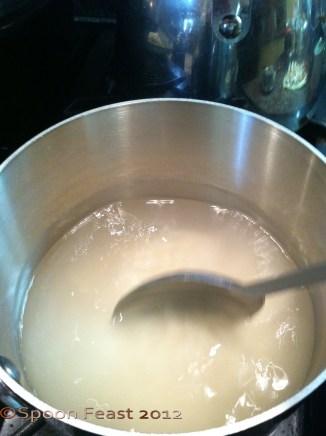
Bring water to a boil. It’s boiling when the bubbles break the surface.

Add salt after water boils

Add salt and then rice

Return to a boil.
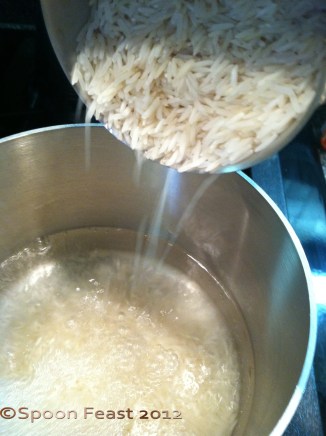
Then add rice; return to a boil
Stir the rice after adding it to the water to ensure nothing is sticking to the bottom of the pot. Put a lid on it and let it simmer.

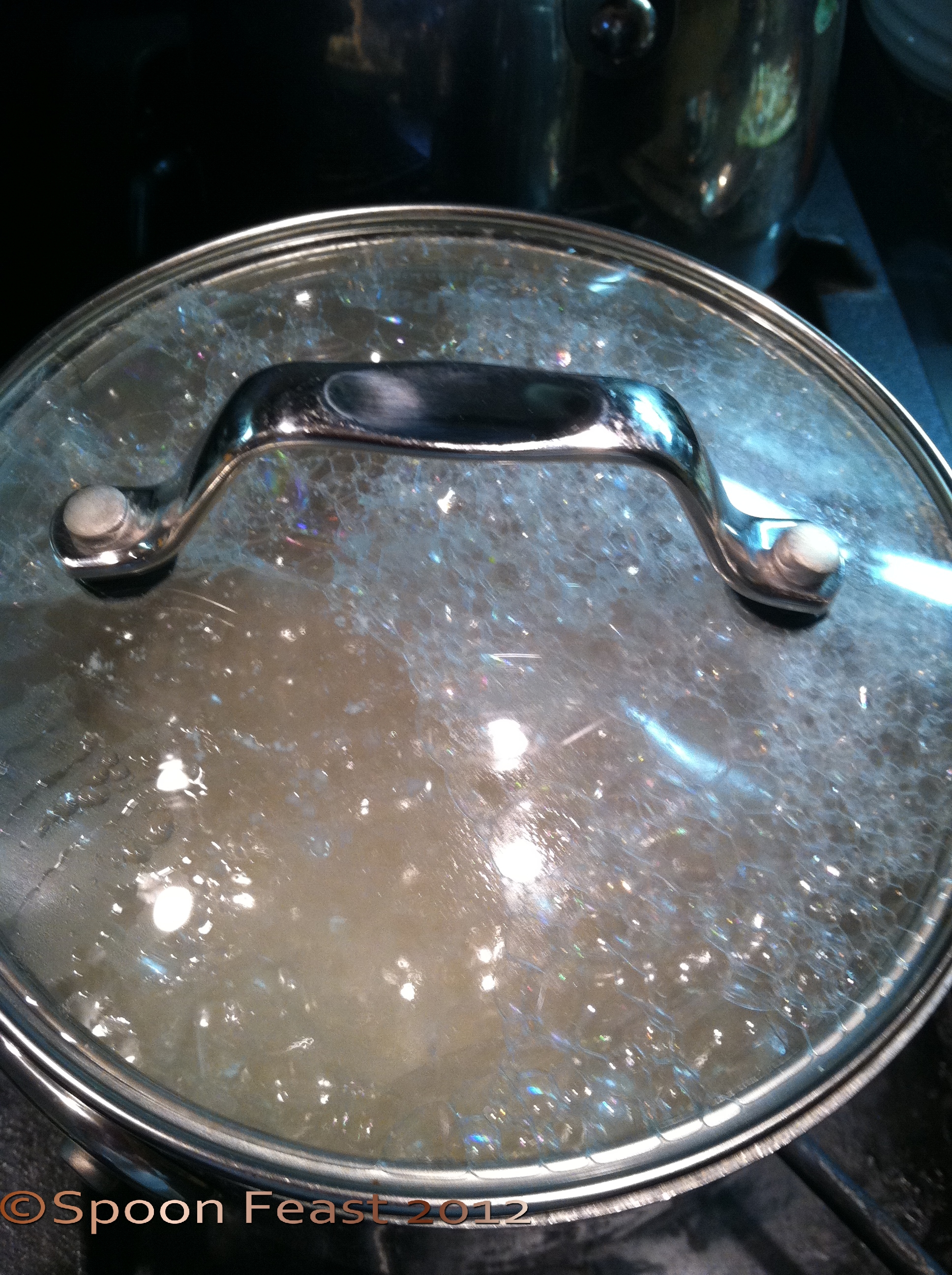
Put a lid on it. Simmer for 15-20 minutes. If you use a glass lid, you can see what is happening while it cooks.

When it looks like this, it is probably done.
Try not to life the lid until you are SURE the rice is done. Time 15-20 minutes before peeking.

Take a large kitchen spoon and see if all liquid has been absorbed. If it has, the rice is done.

Brown and darker rice will need to cook for at least 1 hour with monitoring of the liquid to doneness; adding more liquid if necessary.

Keep your eye on it until you know how your stove works. (Does it run hot or really low on the lowest settings? Adjust your cooking accordingly. All stoves behave differently. Learn how the one you have works by observation while you cook and adjust accordingly. )

Hints to successful rice:

Do not lift the lid once it returns to a boil.

Cover and reduce the heat. Let it go until the liquid is gone.

If you do lift the lid to check, your rice will become gummy and yucky.  It’s like the curse of gummy rice. Don’t lift the lid to peek unless absolutely necessary.

Learn your stove and adjust cooking times. Start noticing how it is doing at 15 minutes cooking.

How?

  • Listen, is it crackling? (Done)
  • Is it boiling still? (Let it keep going)
  • Can you smell smoldering? (May be burnt)

This is where glass lids are really handy. You can peek without lifting the lid.

The surface of done rice will look like this:

When it looks like this, it is probably done.
Try not to life the lid until you are SURE the rice is done.

Tilt the pot to the side, use a spoon to check that the liquid has been absorbed.

If it burns on the bottom, scoop from the surface. The surface rice may not taste burnt. If it does, oh well, it is cheap. Try again tomorrow.

Figure out why it may have burned:

Burner runs hot, forgot the timer, watching TV or playing games

Remember kitchen rules! Make them habits for safety’s sake.

Most of the time when I have burned things it is because I left the room and was distracted.  Please trust kitchen rules.

Once the rice is cooked, fluff it with a fork and serve. There are so many things to serve over rice.
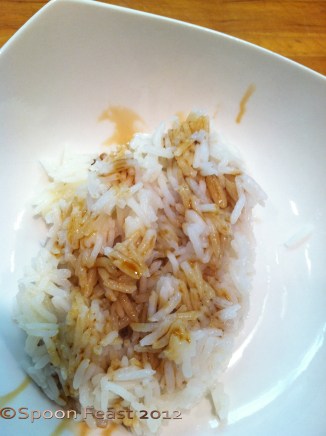
Comfort food! Sometimes I love just a bowl of rice with soy sauce just like this. In fact I ate this one. 😉

Sometimes when my tummy is upset, nothing makes it feel better more than a bowl of rice with a small bit of soy sauce.

Add Ins:

Enhance the rice by adding vegetables, meat, herbs and spices to the cooking liquid to flavor the rice.

My favorite is to add dried onion or vegetable soup mix or fresh thyme, garlic and shallots. Don’t be afraid to season the water the rice is cooked in. The rice will take on whatever flavor is added.

I like to finish the rice with a tablespoon of fresh butter. It really does something to the flavor that I adore.

Best way to clean pots used to cook rice:

As soon as you are done cooking rice and have removed the contents of the pot to another dish, fill the rice pot with COLD water. Let it sit for 20 minutes or so. Add a squirt of detergent if you want. It makes clean-up easier.

All the rice goop will release and rinse away and final clean-up is much easier.

To Serve and store:

Steam some broccoli and serve it over some rice.

Left over rice must be cooled and stored in the refrigerator. You can easily reheat rice in the microwave. Add a small spoon of water, cover and nuke for 30 seconds, stir and do it again. The rice should absorb the water, so don’t use too much, just a hint.

Next is how to make Tonkatsu using the standard breading procedure. (Yeah, I know you love it!)

~Can you get Tonkatsu Sauce? Check your grocery where they sell soy sauce products. It is made by Kikkoman.

Love,

Mom

Safety Rules for the Kitchen

Dear Tyler,

Before you get cooking, there are some extremely important safety rules you MUST follow.

If you don’t, the chance for injury to yourself or property could result.

As you start cooking, make these rules part of what you do automatically.

1) Never leave the kitchen when there is a pot or pan on the stove with a burner on.

If you have to leave the kitchen, turn off the burner.

Leaving things on the stove unattended is one of the leading causes of house/apartment fires.

Find something to do in the kitchen, wash some dishes, wipe down counters or refrigerator shelves, sweep the floor etc. just stay in the kitchen while pots and pans are on the stove.

If you are heating oil, you have to stay right there with it to avoid over heating and catching fire.

To extinguish a grease fire:

Keep a box of kosher salt or a large box of baking soda handy to throw on to a grease fire. Try to cover the pan with the lid to smother the flames.

Throw the baking soda or salt onto the flames to put out the fire if you cannot cover the pan.

NEVER! Never, ever try to put out a grease fire with water! The water will spread the fire and it will ‘explode’ all over you resulting in some pretty nasty burns.

You might want to get a small fire extinguisher to keep in the kitchen, under the sink.

2) Always leave a sign on hot pots or pans to indicate it is hot.

Nothing hurts like grabbing onto a hot handle and burning the palm of your hand! Youch! (An immediate treatment for burns is ice. It cool down the burned tissues.)

A clever way of putting ice on burned finger tips

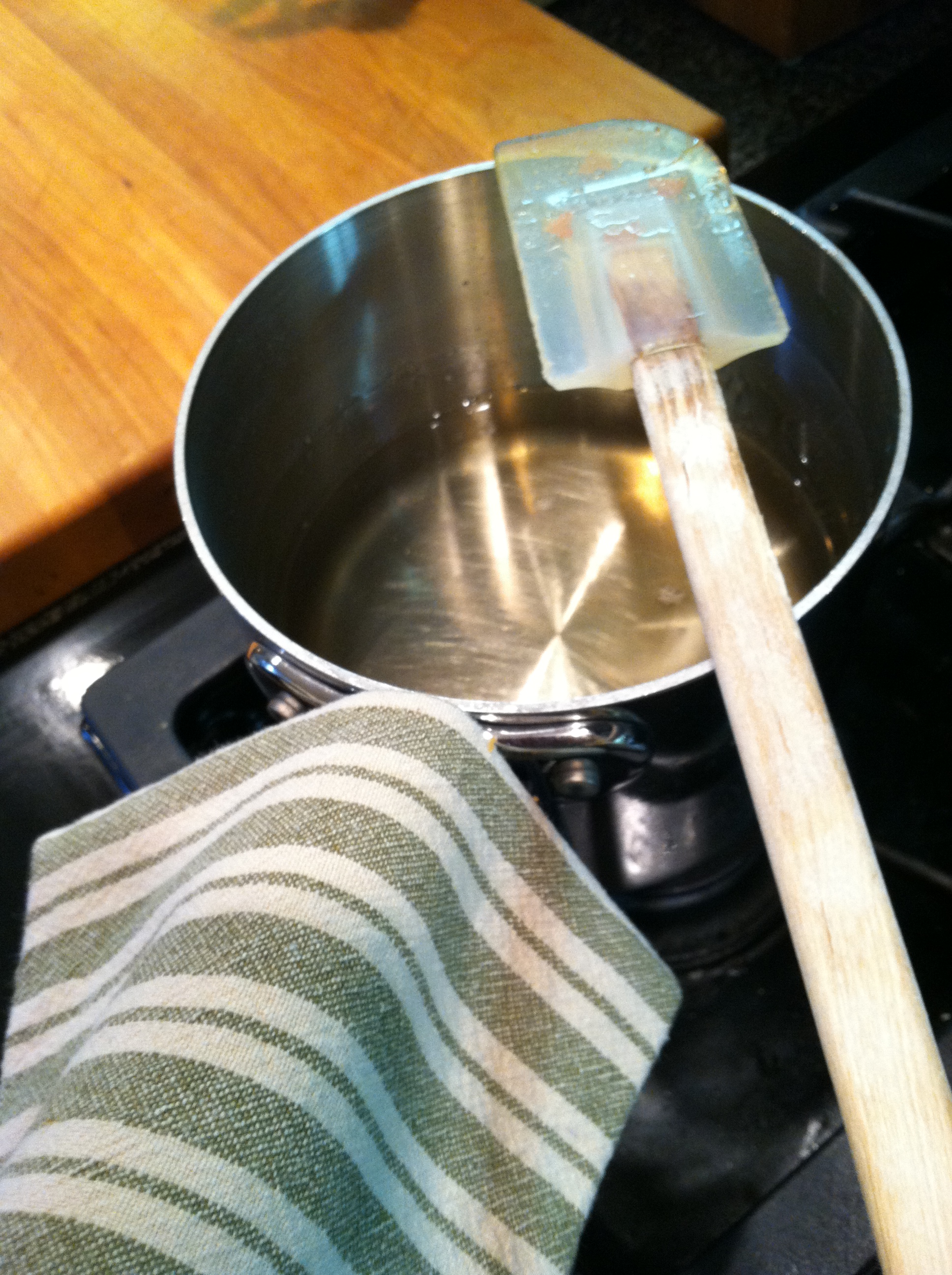
Signal the pan is hot by placing a towel on the handle or on the edge of a pan.

Leaving a clean kitchen towel on the handle or along the side of a sheet pan signals the item it hot.

You can forget when a handle or pan is hot while cooking.

Protect yourself and others from burns by using the towel signal.

3) Probably the most important of all: NEVER, ever catch a falling knife.

Jump back out-of-the-way and let it fall.

So what if it nicks the blade. You will still have your fingers.

Knives are replaceable, your fingers are not.

There will be a post on knife safety soon.

4) Keep all handles and pans so they do not hang over any edges of ranges, counters etc.

Nothing hangs over the edge, the sheet pan and the pot handle should be moved so they don’t hang over the edge.

Turn them so they cannot be accidentally tipped over.

Nothing should be hanging over an edge, turn things so they do not.

Turn items so they aren’t hanging over the edge

Use towels to grab hot handles and hot lids.
Things have been on the stove so they will probably be hot

Always assume handles will be hot and use a folded towel to grab them.

5) Do not allow electrical cords to drape across the counter or any other place.

Put electric units close to the plug.

Unplug when not in use.

This practice prevents tripping over cords and pulling hot pots over onto yourself  or others, resulting in horrible burns.

These are best practices for learning your way around the kitchen.

Kitchens can be dangerous places so please use these safety tips.

Save yourself and others the agony of burns and cuts.

I know you are First Aid trained. Make sure you keep it up.

Have a kit handy to treat simple cuts and minor burns.

Your training will be called upon eventually either for yourself or someone else.

Most important, be able to recognize when you need to seek medical attention and do not hesitate; act quickly.

Natural-path Treatment for Burns:

Whipped egg whites, applied to cover the burn, once the whites dry, apply another layer. Leave on as long as possible.

Seek medical attention if the burn is severe.

Protect the burn from exposure to air.

Never ‘pop’ a blister.

In my work teaching culinary school, I see and tend to many kitchen injuries that can easily be prevented.

Food Safety is something you need to know about too. Read this post and organize your fridge.

I will write more about food safety in another post. For now, be sure to keep all meats cold and on the bottom shelves so they don’t drip on other foods. Keep all left overs cold unless you are eating them.

Get some cellophane wrap (Saran Wrap like) and use it to cover your food in the refrigerator.

If you need to make a sign with the safety rules to post in the kitchen, print them from your computer. Safety reminders are always a good idea.

Reminders help roommates and friends remember too.