Merry Christmas Everyone!
Wishing all of you the best the holiday season brings.
Thank you for taking the time to read my blog.
Chef Pamela



Wishing all of you the best the holiday season brings.
Thank you for taking the time to read my blog.
Cinnamon Palmiers is a fancy name for left over puff pastry sprinkled with cinnamon sugar and baked.
When I was a child, I recall my father making a similar treat from left over pie dough. This is a great way to use all your puff pastry or pie dough scraps; no matter how small they are.

Spread dough strips with butter and sprinkle with cinnamon sugar

Fold the long edge to the center line

Fold opposite edge to center line also. Then fold in half along the center line.
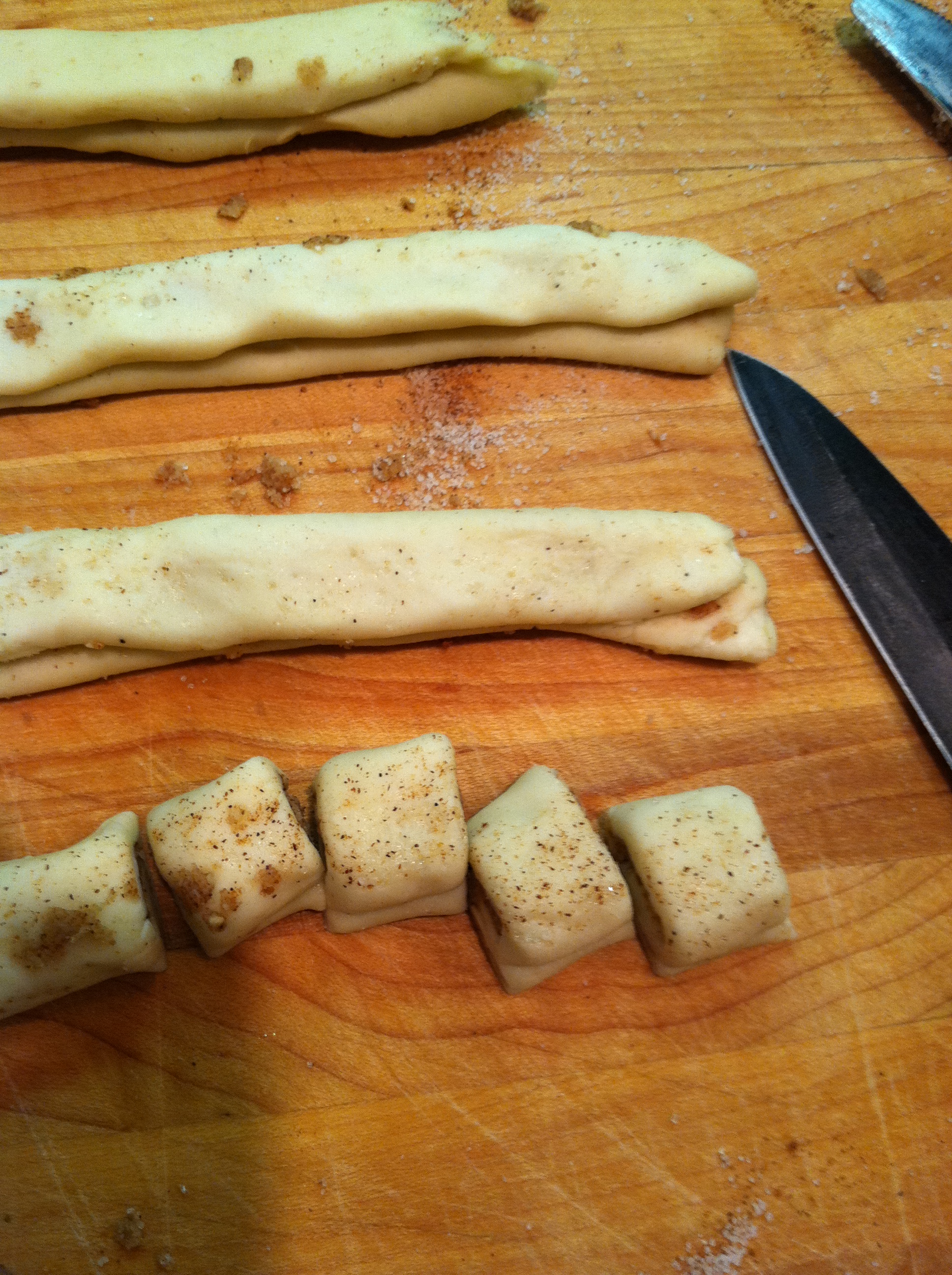
Cut into finger width slices

Place sliced side up/down on a baking sheet; well spaced
Tips:
Fold carefully!
Use a sharp knife to slice for a clean edge.
Keep your pastry cold for best results.
Line your baking pans with parchment paper to prevent sticking.
If you want some, set some aside because these things disappear quickly!

Cinnamon Palmieres and Tea
I was longing for a nice chewy sourdough rye bread with onions and caraway and a good crust the other day. So I decided to make a rye sour first.
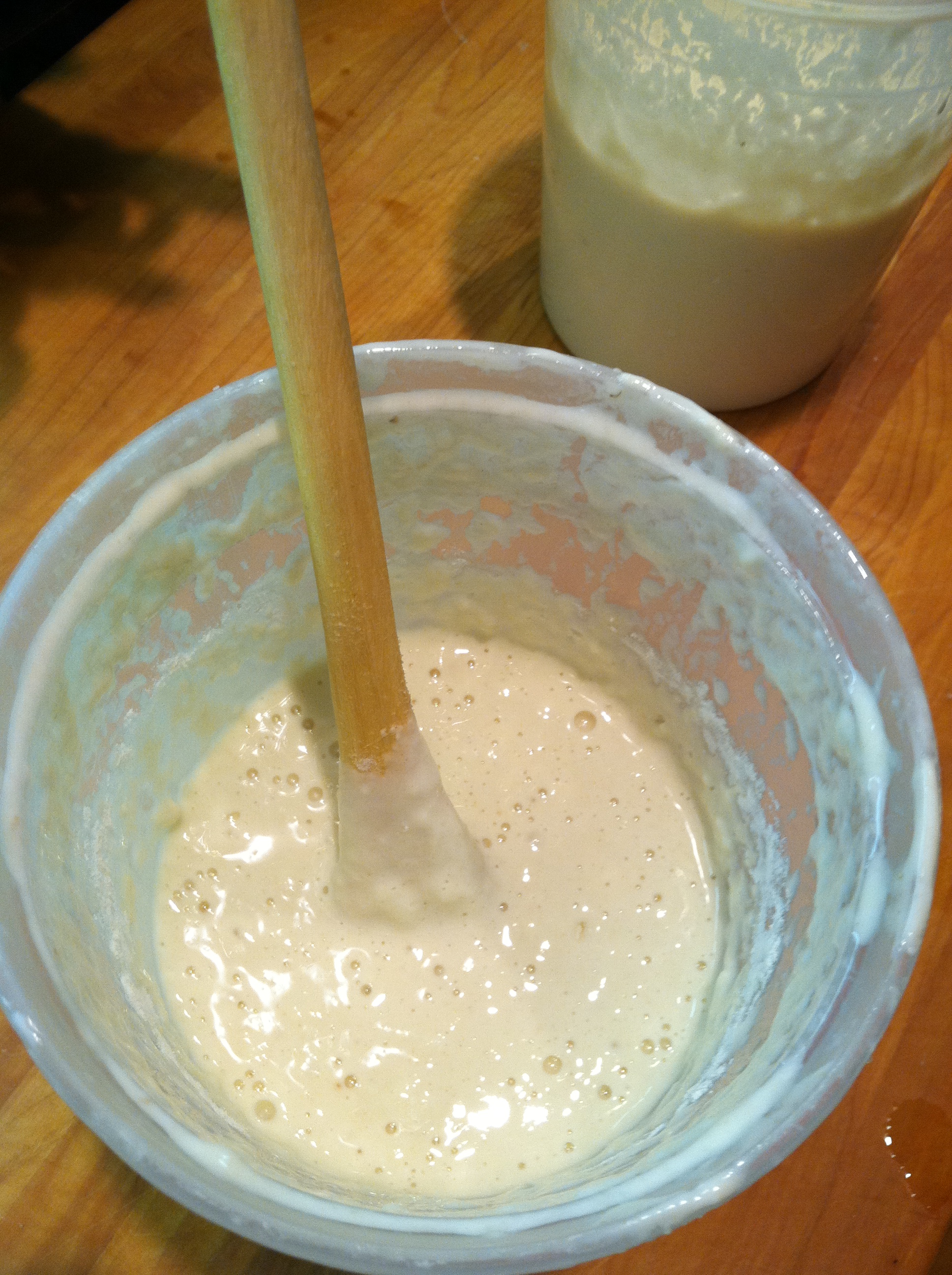
Make rye sourdough starter
Taking 1/2 cup of regular sour dough starter, at feeding time I fed it with:
Mix it thoroughly and let sit in a warm room until it bubbles and doubles in size.
Feed the rye starter again with 1/2 cup rye flour and 1/2 cup water. Allow to double in size again. This process develops some of the flavor for a great rye sourdough bread.
You can refrigerate the starter now for later use or you can use it now. Be sure to save at least 1/4 cup to culture for making more!
Feed the starter every week with 1/4 cup bread flour, 1/4 cup rye flour and 1/2 cup water. Remove the 1/2 fresh onion after it has been in the culture for 1 week and discard.
Measure the flour and salt into one bowl. Mix well.
Measure the warmed water into a large bowl, whisk in the rye starter. Allow to sit for 5-10 minutes.
Make a well in the flour, pour all the water into the bowl and stir with a wooden spoon until all the flour is combined. Pay special attention to the bottom of the bowl.
Cover with plastic wrap – be sure to oil the underside so the dough will not stick when it reaches the top of the bowl.
Allow to double in size.
While the dough is rising, place the dried onions and caraway seeds into a small bowl and just cover then with hot water. We will fold these into the dough after they have been hydrated.
Sprinkle bread flour over the surface of the risen dough. Using a bowl scraper, scrape the dough onto a well floured surface. Pat the dough into a rectangle. Dust any sticky areas with flour as you work.
Spread some of the hydrated onions and caraway over the surface of the dough. Fold one side over 2/3’s of the way, then the other side 1/3 so the onions and seeds are now in two separate layers. Turn the dough 1/4 turn.
The dough will be very tender and soft so work quickly.
Roll or pat the dough into another rectangle and spread any remaining onions and seeds over the surface and fold again; repeating 4 times, dusting sticky spots as you work.
For a batard, roll the dough in to a rectangle once more. Roll the short side up into a tight roll.
Dust a pizza peel with fine ground cornmeal and place the rolled batard on the peel. Cover with either oiled plastic wrap or a flour dusted linen cloth.
Allow to rise for 1 hour. During the last half hour, prepare your oven and steaming process. Follow instructions for baking bread with steam on this link.

Measure and combine flour and salt

Combine warm water and starter
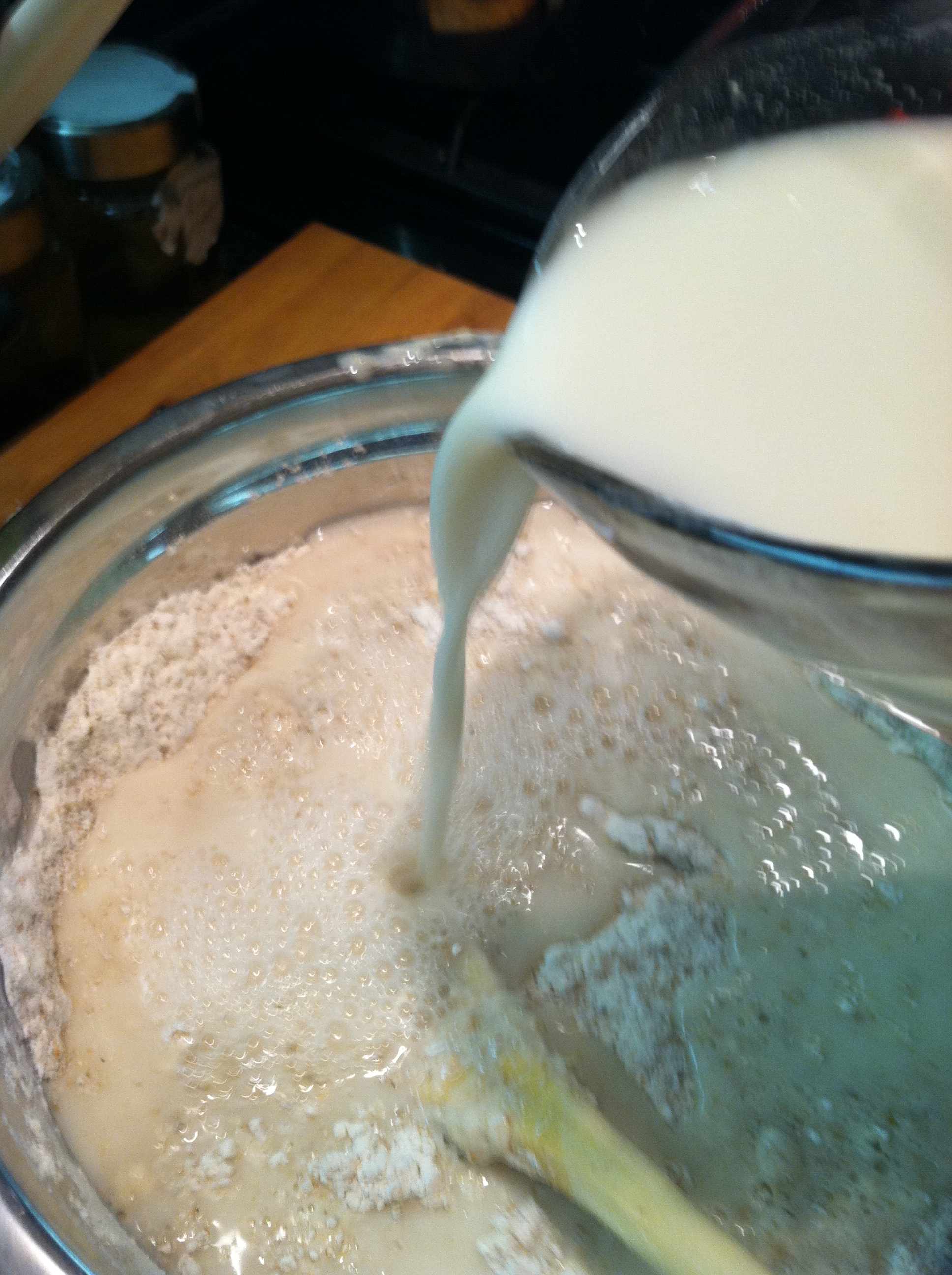
Pour all the liquid over the flour

Stir well to combine
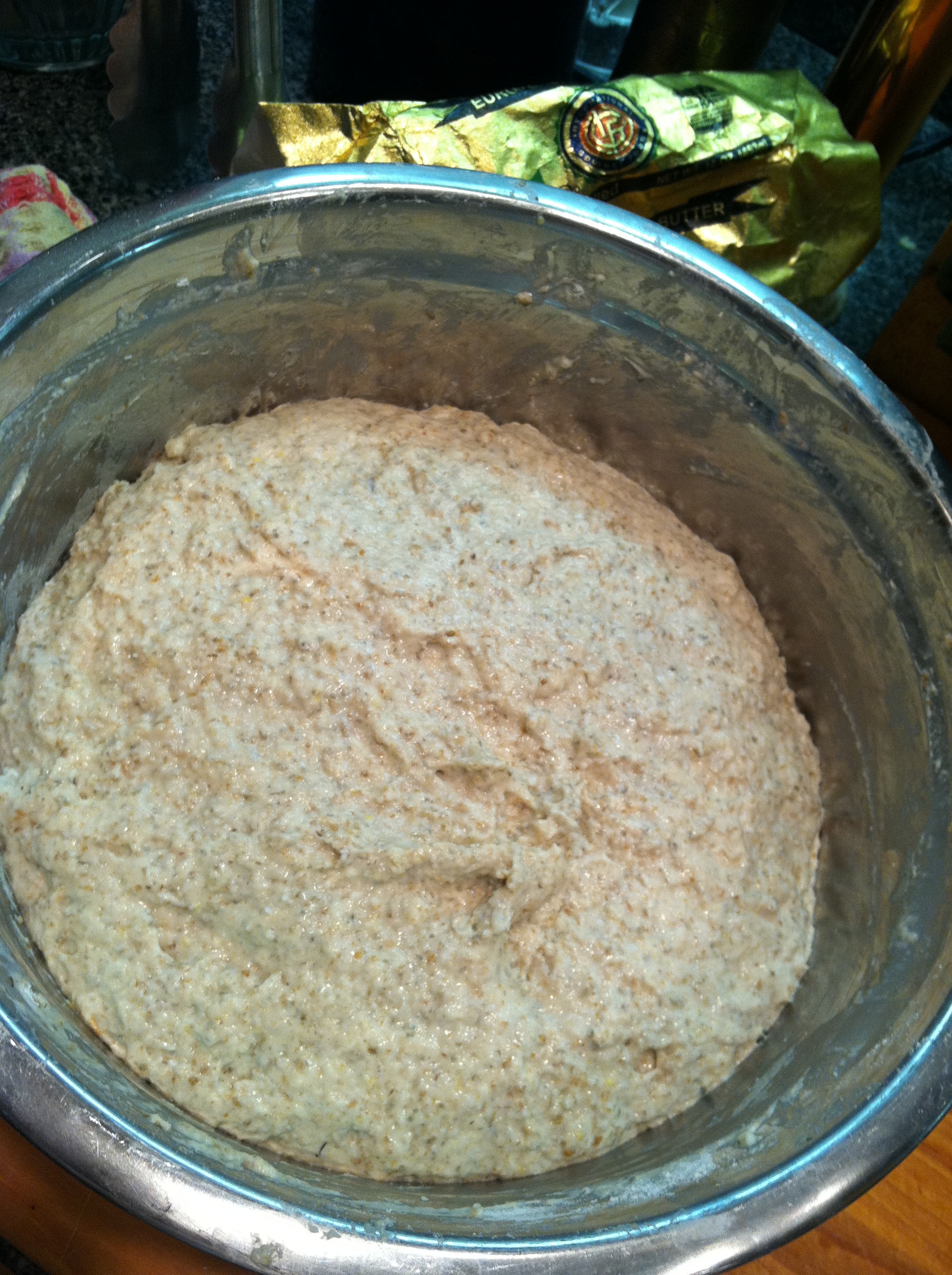
Form a ball

Cover with oiled plastic wrap; let rise 2 hours

Pat the dough into a rectangle; fold 2/3's across

Finish folding

Fold in half and turn 1/4 turn

Folding in additional onions and seeds
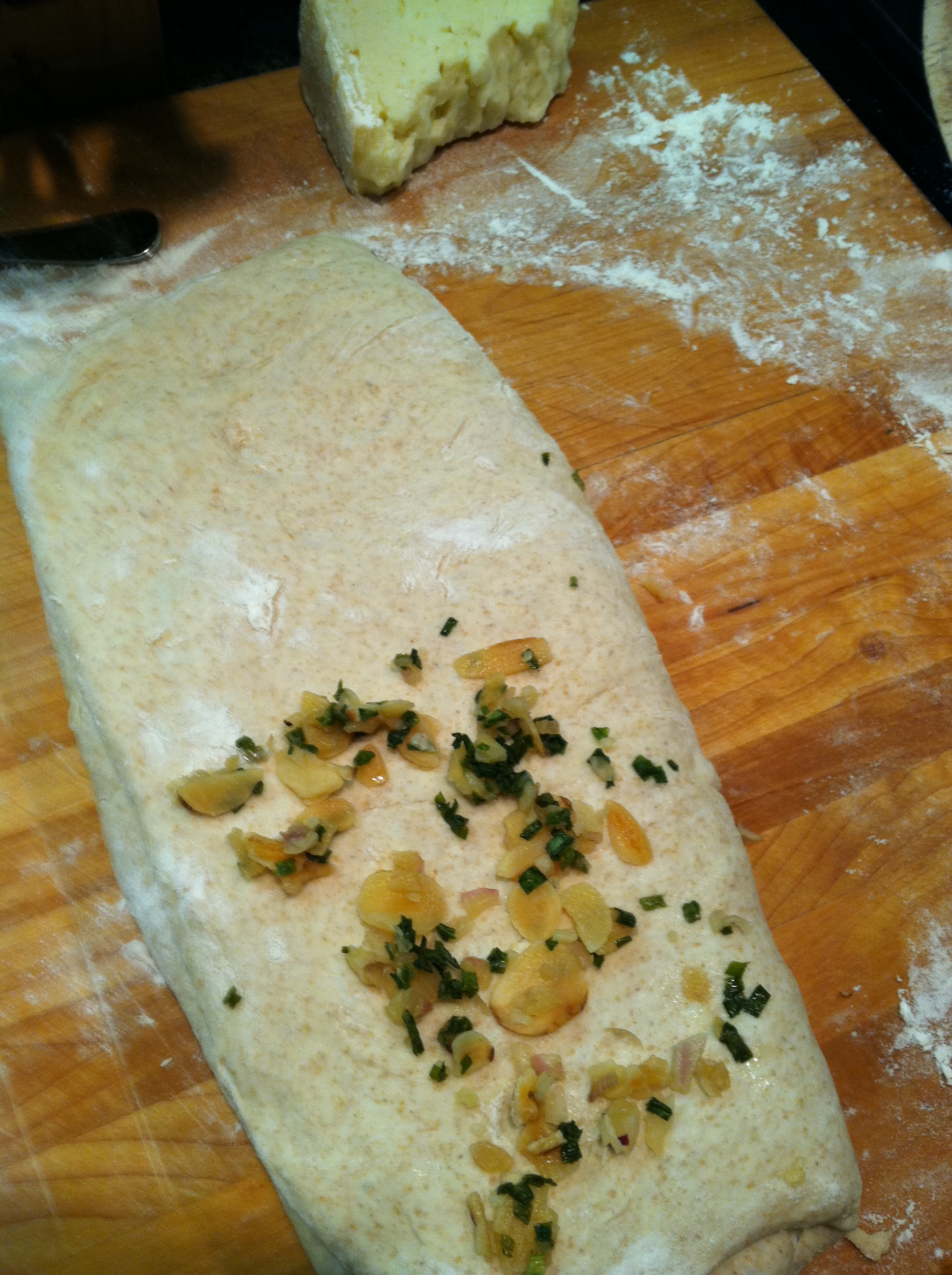
Second fold adding onions and seeds

Finish folding
Now you can shape it in a basket or on a peel or in a loaf pan. Let the dough rise for 1-2 hours; until doubled in size.
Bake with steam for 30 minutes or until the internal temperature reads 190°F for 15 seconds. You will notice the crust is nice and golden brown.
Remove the loaf from the oven and allow to cool completely before slicing.
Enjoy making and eating this Sourdough Rye with Onions and Caraway.

Sourdough Rye with Onions and Caraway

Finished loaves
 Sweet tea seems to be a phenomenon in the American south. In the south, anywhere you go, if you order iced tea, you will get a big glass full of tea which is sweetened to the point of almost being syrup and ice with a slice of lemon.
Unless you ask for “unsweet tea”.
“Regular tea” down here is so sweet it should be called tea syrup. Now days you can hear ‘half and half tea’ please or half unsweet with half lemonade, which in case you don’t know, is called an “Arnold Palmer” around here.
What makes southern sweet tea different from other iced tea is that you sweeten other tea with granulated sugar in your glass. With southern sweet tea, is there is no undissolved sugar collecting in the bottom of your glass. The sugar has already been melted and added. You just squeeze the lemon and sip. (Say “Ah!” with a southern drawl)
If you travel beyond the Mason-Dixon Line and order sweet tea anywhere but in the south, you are going to get some strange looks. They usually bring you unsweet tea and a side of sugar either in a sugar canister or in packets for you to mix your own. While in the south if you just order “tea” you will get a glass of southern sweet tea. Here, that is regular tea.
Anywhere but in the south, regular tea is unsweetened.
If you find they actually have sweet tea and you are not in the south, chances are you have just found someone who is from the south and they are keeping the back-home tradition alive.
Here is how you can make southern sweet tea:
Make simple syrup:

Add 1 cup sugar and 1 cup water

Bring to boil; Simmer for 3 minutes then cool

Boil water and make tea; steep until cool
Add 1 cup of sugar to a sauce pan with 1 cup of water. Stir and bring to a boil-simmer for 3 minutes.
Make sure all the sugar has dissolved. Cool.
Boil 2 quarts of water – add 6-8 black tea bags – orange pekoe cut black tea works best – steep until cool.
Discard the tea bags.
For true southern sweet tea, add all the sugar syrup to the cooled tea, stir well.
Yes, it is s-w-e-e-t!
Like all good southerners, forget about calculating the number of empty calories.
So here are some hints: The popularity of Southern Sweet Tea is becoming increasing all across the country. You may even be able to find it in your grocery store.
IF the label says “extra sweet” honestly folks, believe them. It will be sickening sweet. However, now you can make it on your own, for pennies and control the sweetness.
Back to the tea presentation. . .

Southern Iced Tea
Fill a tall glass with ice, pour the sweet tea over ice, garnish with a wedge of lemon.
If you don’t want your tea so sweet, add the sugar syrup to taste, which is what I prefer to do.
Or if you want to deviate from the true southern tea method, add lemon zest to the sugar when boiling the
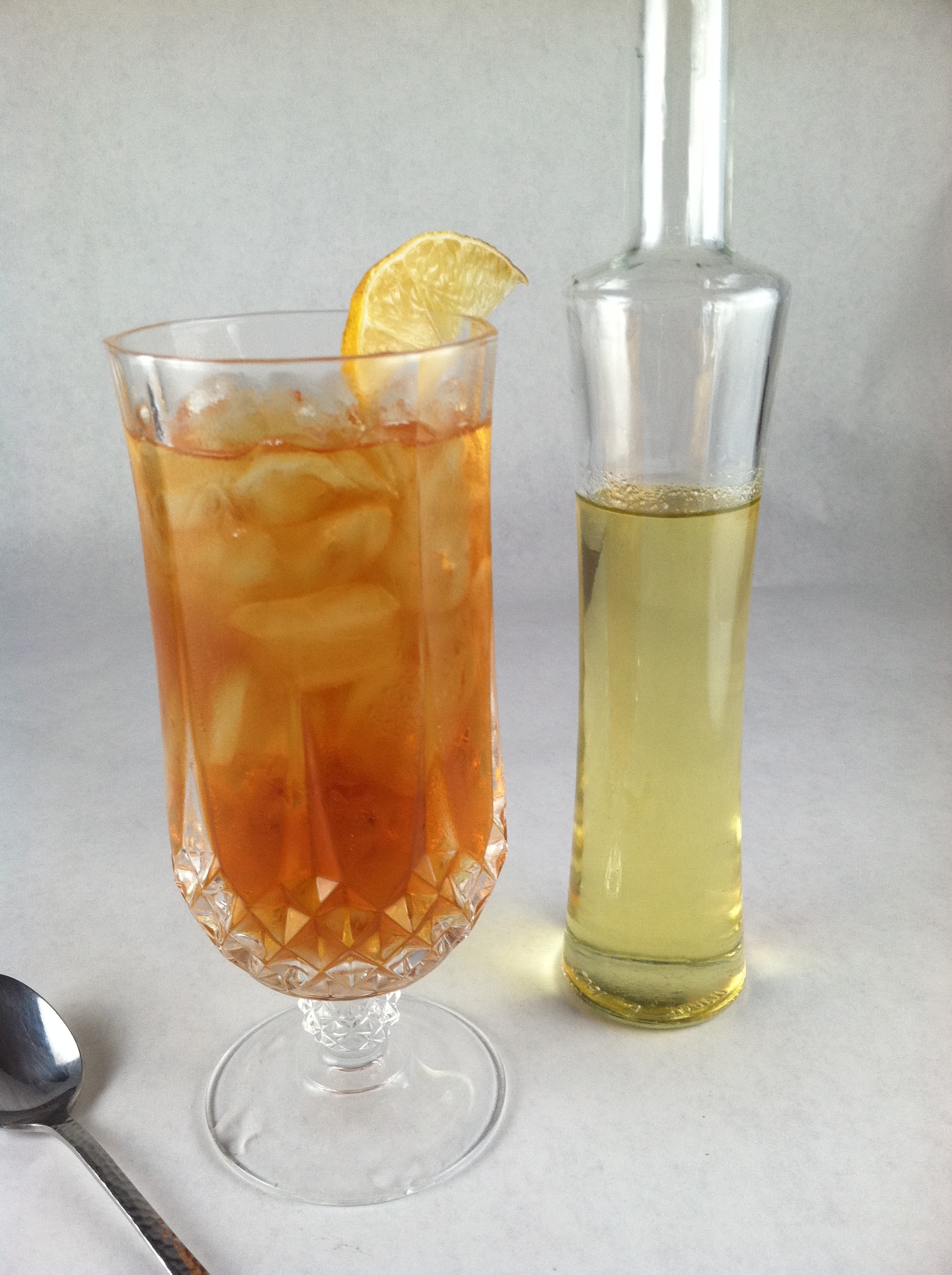
Tea with Lemon Syrup
sugar. Strain the zest out when cool.
Serve the lemon simple syrup with the unsweet tea for guests to sweeten to their liking.
Honestly, there is nothing like a good glass of iced tea – unsweetened or southern sweet tea – both are refreshing!
I discovered this amazing flavored liqueur a few years ago. It needs to steep for about three weeks so if you want to make it for gifts this year, now is the time to get busy!
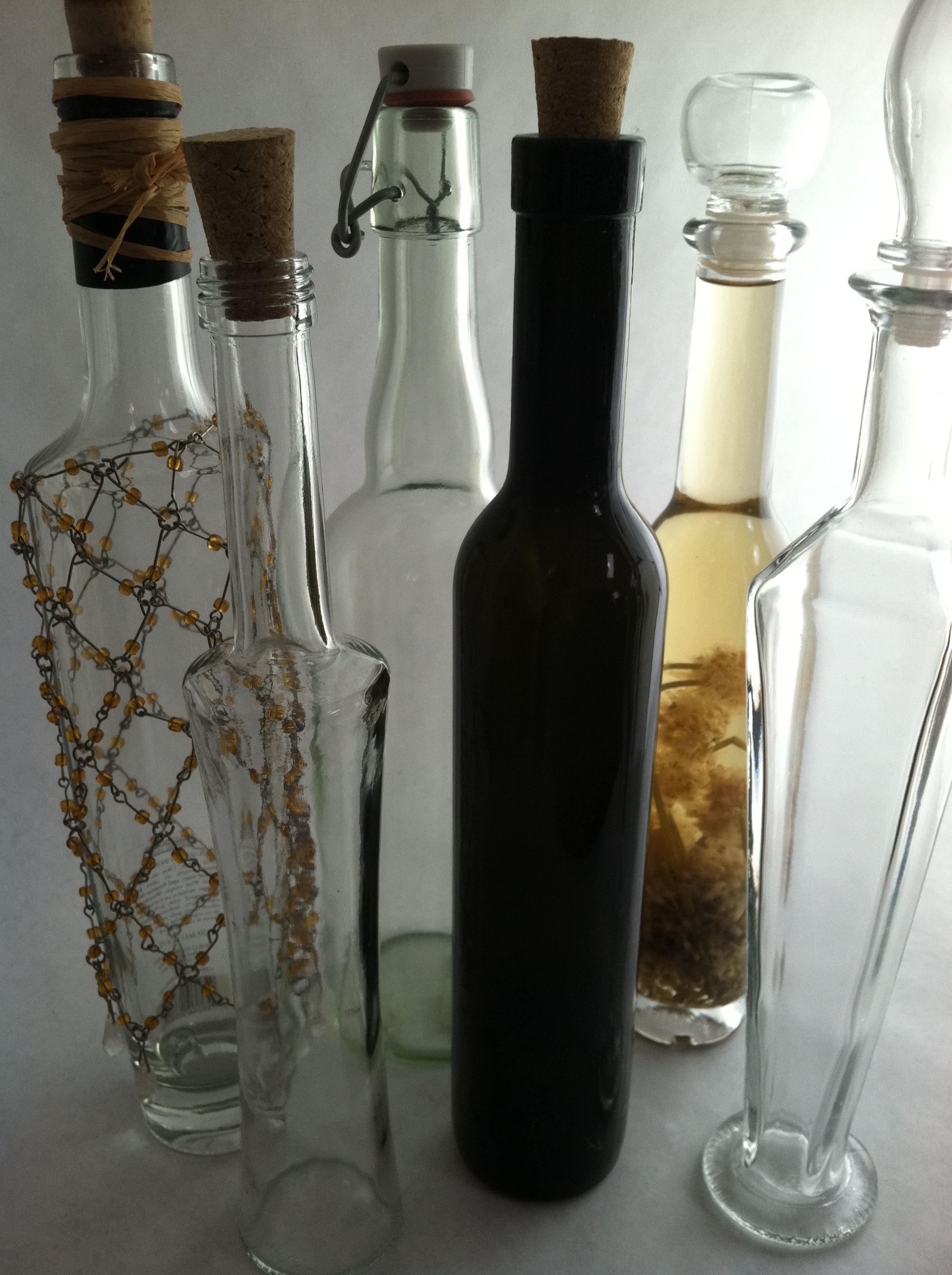
Bottles for liqueur
Gather those amazing bottles you have been collecting all year. If you decide you want to buy bottles, visit
The Sunburst Bottle Company. They have an amazing selection of bottles, jars, tins etc. to choose from.
Be sure to also buy the stoppers of your choice. You can choose decorative stoppers or corks to close your finished bottles.
Another thing that is good to get are shrink bands. You can get 100 for a few dollars and this really makes a nice finishing touch to your bottles. I’ll show you later in this post what they look like and how to use them.
You can make labels on your computer or by hand. Be artistic and creative!
You will see the recipe calls for an American made vodka. This does not need to be premium vodka. American made is specified is because American made vodka, by law, cannot have any flavor or color.
If you prefer to use high-end vodka, you can but it is not necessary. Just do not choose flavored vodka.
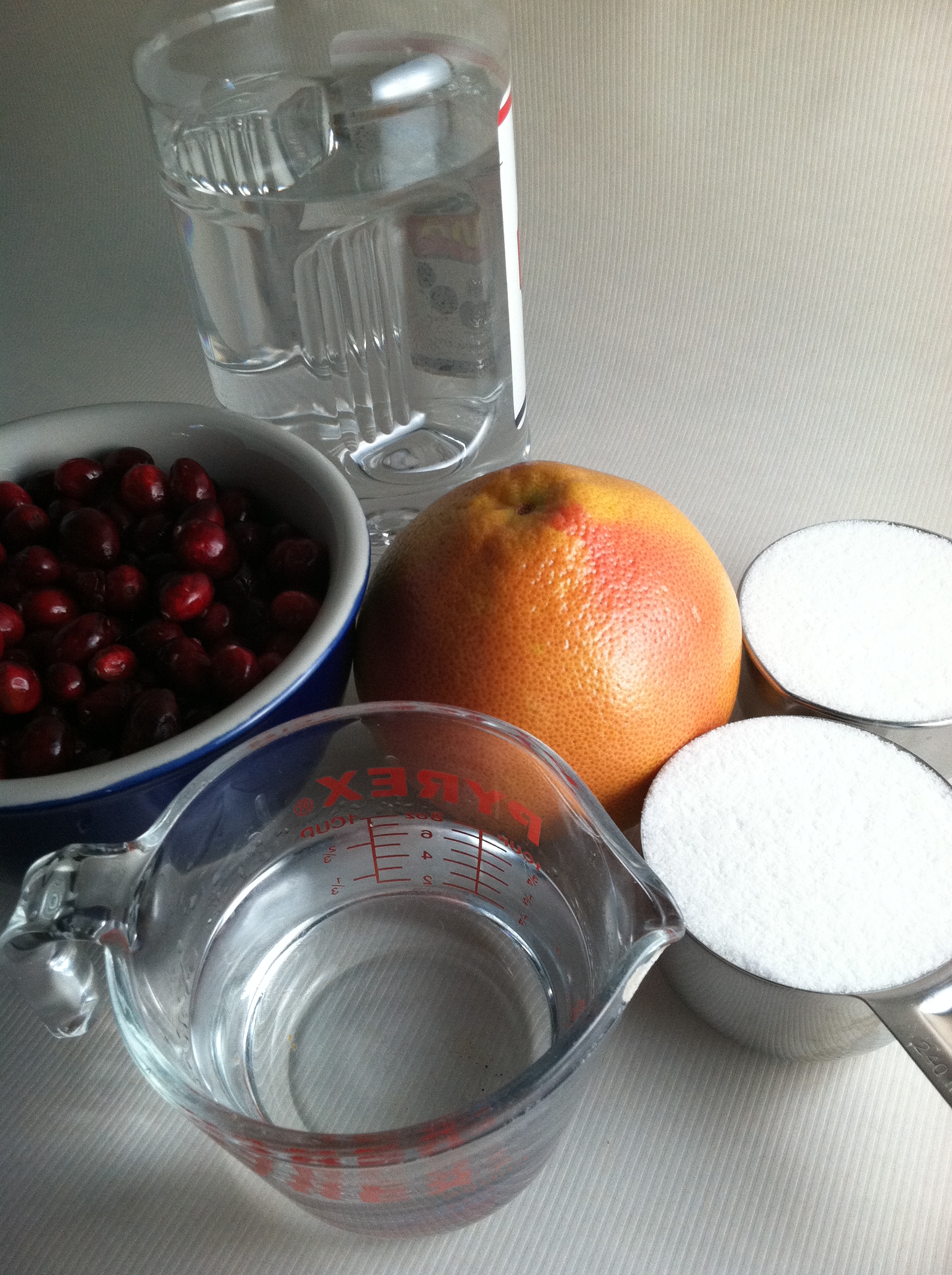
Ingredients for Cranberry Liqueur
To make this Cranberry Liqueur, you will need the following items:
1-12 ounce bag of fresh or frozen cranberries
2 cups granulated sugar
1 cup water
1 1/2 cups American made vodka 100 proof
1 tablespoon grapefruit zest
Equipment:
1 half-gallon capacity glass jar or a one gallon jar if you want to make a double batch.
A drip style coffee filter holder and paper filter (I use an old Melita filter holder and pot I have had for ages; drip the liqueur into the coffee pot and then pour it into the decorative bottle.)
A lid is nice but we can always cover the jar with something else if you can’t locate a lid for the jar.
Decorative bottles for the final product-sterilized in the dishwasher or with boiling water
A funnel
Bottle stoppers
Shrink bands to seal your bottles (optional, but really handy or you could dip the tops in melted wax)

Coarsely chop cranberries

Mix berries and sugar; let sit for an hour to melt

Add the vodka and water; let sit for 3 weeks
Take the cranberries and put them into a food processor. Pulse just to break them up. OR just coarsely chop them with a knife. You want to break the berries up so they can release all of the flavor and color. Do not puree the berries!
Place the berries in the jar, add the sugar and grapefruit zest. Mix it all together and let it sit for about an hour or so to begin melting the sugar.
Add the vodka and water and stir thoroughly so it gets all mixed up.
Notice the lovely color already!
Cover the jar with plastic wrap and then the lid. Place the jar in a dark spot for 3 weeks. Every now and then, take the jar out and shake or stir it to make sure the fruit is not clumping together.
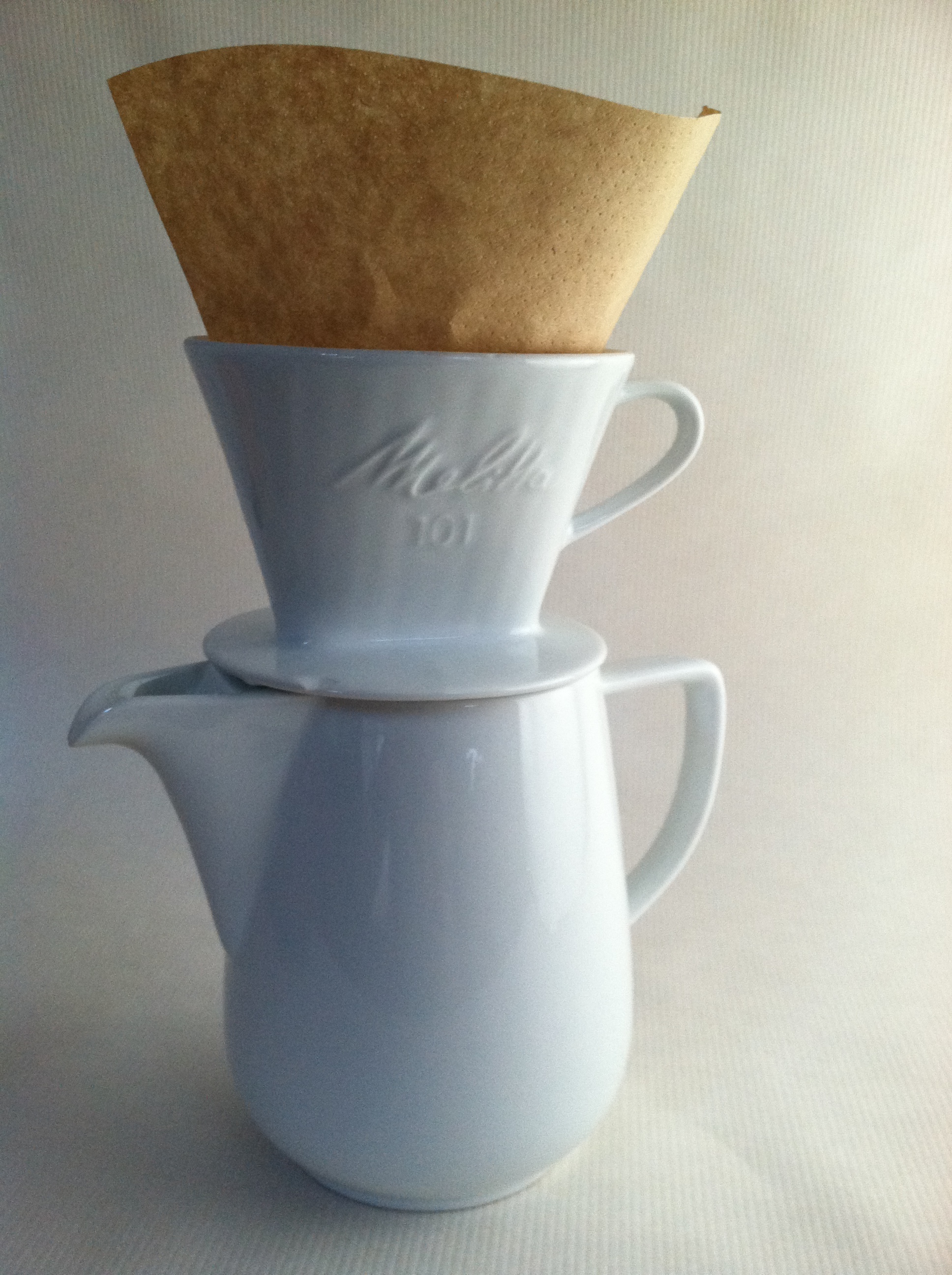
The Melita filtering system
After 3 weeks set up your filtering system. I use an old Melita pot and filter because it is easy and works great for this project.
(NOTE: the pot and filter do not smell or have any coffee residue)
Using a strainer and large bowl, strain the solids from the liquids. Set the solids aside.
Now filter any residue or other remaining elements from the liquid by pouring the liqueur into the filter and allowing it to drip.
It will take its time dripping. Let it drip slowly. Do not rush or try to squeeze it through because you will end up with a cloudy product and the beauty of this liqueur is the lovely, clear cranberry red color.
You will need to use several filters as they get “clogged” with residue as the liqueur drips through.
Once you have filtered the liqueur, pour it into your decorative bottles.
Use your judgement as to whether or not you will need to filter a second time.
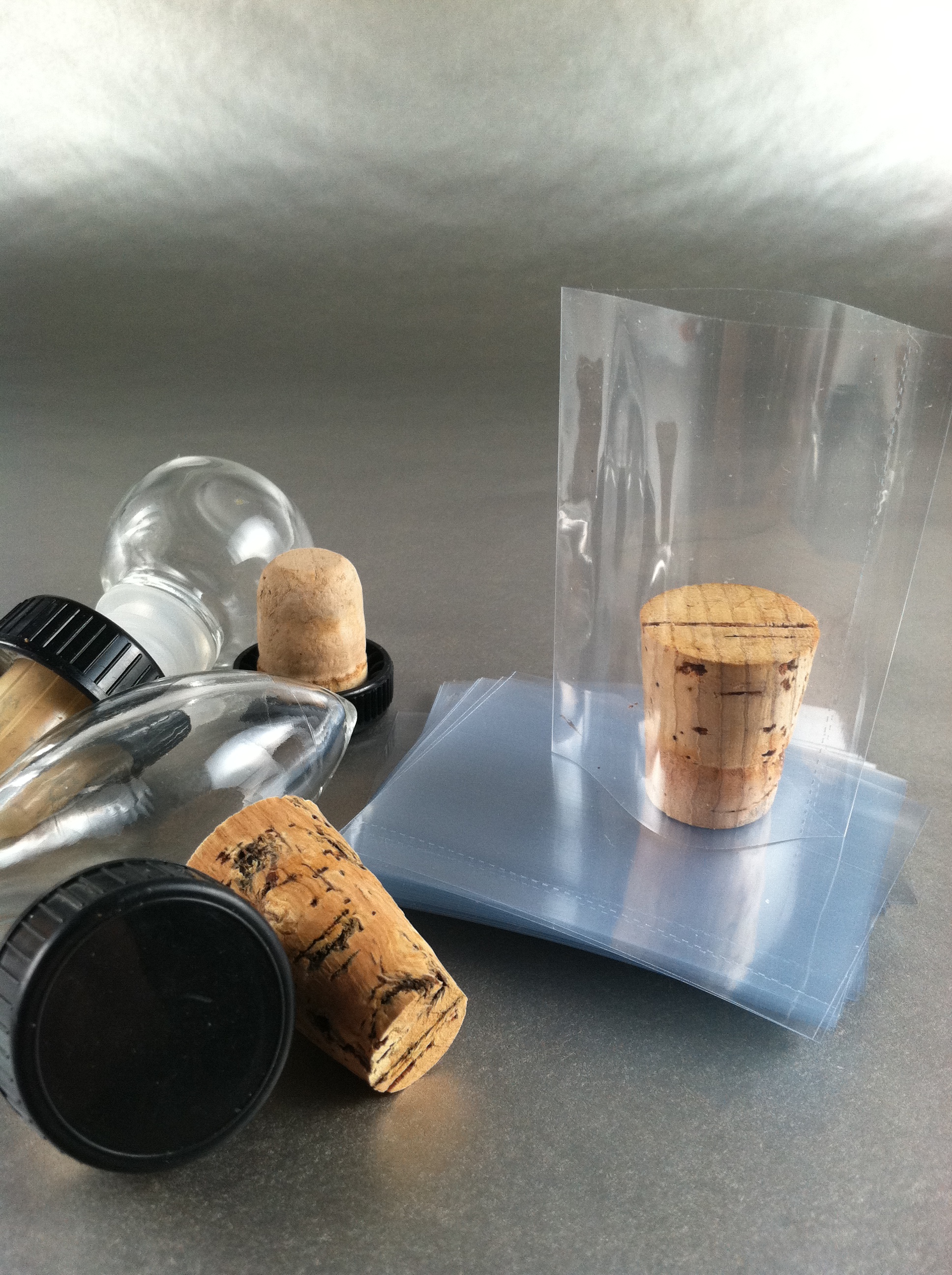
Various stoppers and shrink bands

Clear shrink bands

Place the band over the neck of the bottle; hold in a stream of steam to shrink tight

Steam until the band fits tight
To use the shrink bands, fit a band over the neck of the bottle and the stopper.
Heat water in a kettle to boil.
Hold the bottle and shrink band in the steam coming from the kettle.
Rotate the bottle to shrink the band and seal the bottle.
Wipe the bottle dry and label.
This is our favorite drink to make with this liqueur
Over crushed ice, pour
1 oz Cranberry liqueur
Squeeze of fresh lime
Splash of club soda

Finished Cranberry Liqueur
You can serve this in champagne glasses with a cranberry floating in it at your holiday parties.
Or instead of making Kir or a Mimosa, use cranberry liqueur.
Please be careful because even though this tastes really good, it was 100% proof vodka and now is between that and 80% proof after processing.
Remember lampshades do not look good on anyone.
This survey comes from my observations of my behavior. Not from a survey company or Family Feud.
[Insert drum roll here]
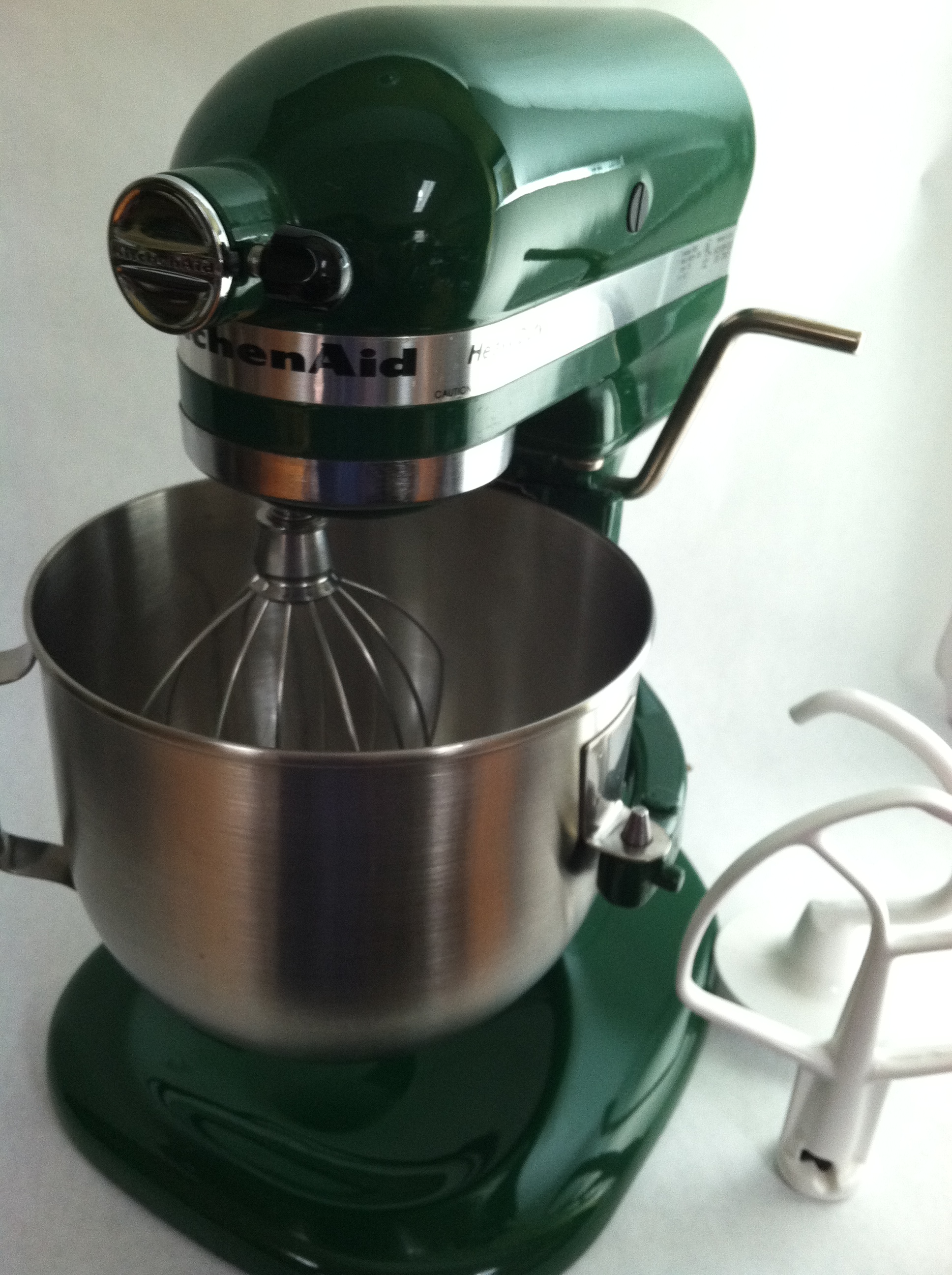
My green workhorse; nearly 20 years old
5 K Bowl lift model-it is old but works like a charm.
Mine is British Racing Green. I also have an Artisan model, 5K, in Copper.
I don’t like the copper as much as the green ‘bowl lift’ model. The copper is prettier than it is useful. Although I have run it through its paces, the heavy-duty mixer just out performs the Artisan model. In my opinion, the tilt head on the Artisan is problematic due to the attachment pin that holds the head of the mixer to the machine stand. When kneading bread or whipping meringue, the pin wiggles loose. If that were to happen, the entire head can fall off the stand. Oops.
Unfortunately, the really fun colors are all Artisan models (tilt-head). Bowl lift models also have some fun colors, just not as trendy. I would like a pink one to use when I shoot my TV shows.
The pin that works loose on the Artisan is the main reason I prefer the bowl lift model. Another reason is the green machine was a gift to myself when I graduated culinary school. It has been like a sous chef to me throughout my career. I love that working monster! We used the green mixer in my restaurant, and in my home for almost 20 years now.
This machine works wonders.
By the way, if purchasing, look for ‘gift with purchase’ offers. There are a lot of attachments you can buy to do all kinds of things.
Look for the:
- Grinder/ shredder
- Sausage stuffer
- Ice Cream Maker (uh huh!)
- Pasta Roller
- by now a baby food maker too.
If you watch out for sales, you can get some great bargains on the attachments. Some require a mail in form so always save your UPC symbols (with the name of the product) and receipts.
Quality cookware lasts a lifetime. With less scorching and less burning, quality cookware let’s you cook better. It is a fact.
The most used pots and pans at home are a 10″ saute pan and various sauce pots.
Invest in high quality cookware, even if it is one pot at a time.
My all time favorite vote goes to the all stainless line from All Clad.
Forget the black line they make, while good, the black turns chalky white if you put them in a high temp dishwasher.
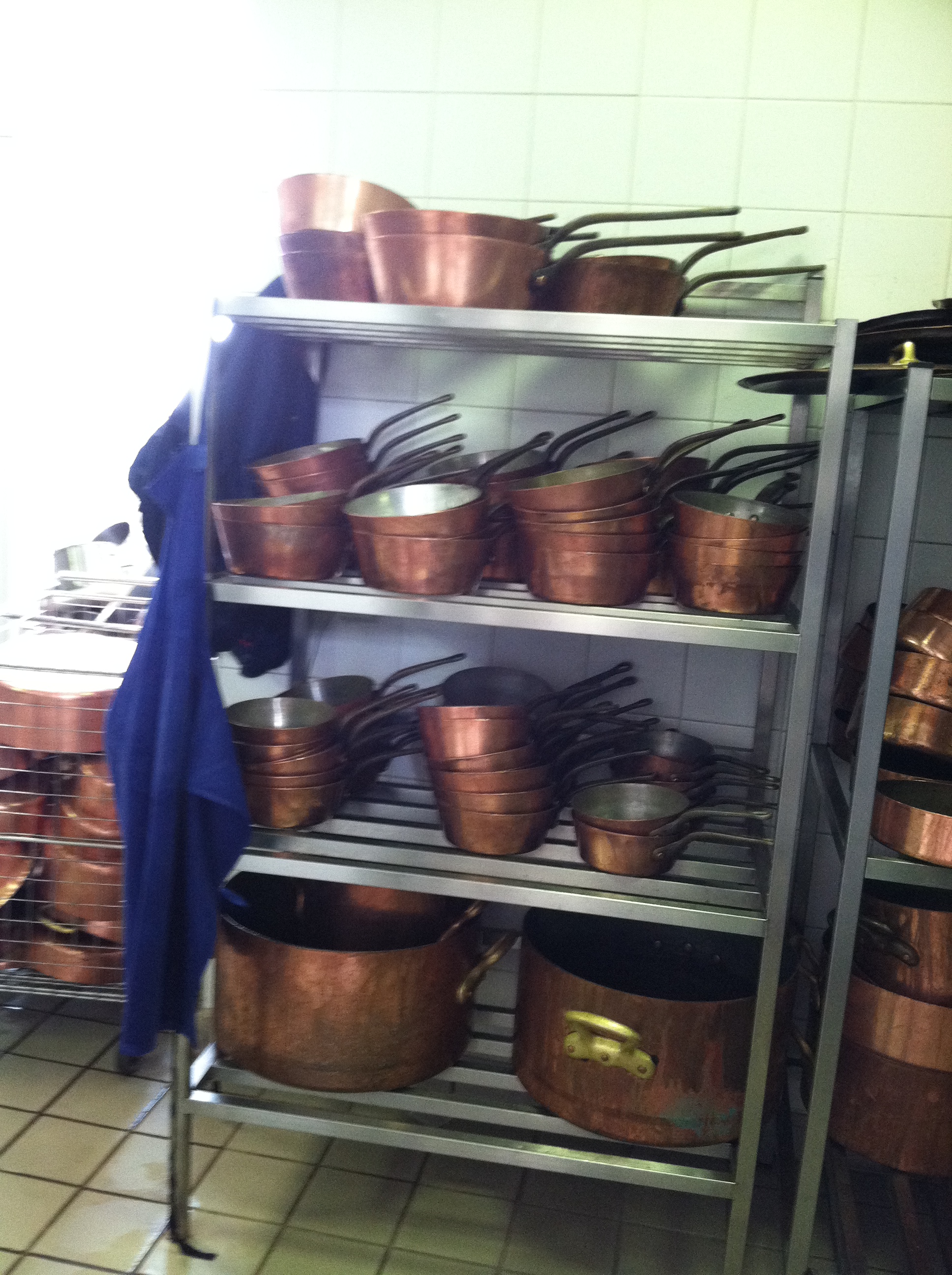
Waiting for polishing
Pots and pans should be washed by hand anyway, but it would be nice to have the pot come out of the dishwasher looking nice and new rather than having lost all the color.
Once you invest in your pots and pans, take care of them properly.
Unless you really like to polish stuff, do not buy copper pots. Pretty but not practical. Even pretty pots will need a polish every now and then.
I scrub my stainless pots and pans with Bon Ami or Bar Keepers Friend each time I use them. It keeps them looking like new.

Microplane Graters
Buy several with different blade styles. Make sure you get and use the covers so you don’t grate your fingers while rummaging through a drawer.
Check out the entire line and choose your favorite. There are several styles. Buy one of each. Give them as gifts – each will cost less than $20.00.
Use them for grating chocolate, cheese, zesting citrus fruits, nutmeg, spices, vegetables, garlic, shallots – as you can see the various blades provide many different options-from fine to ribbons. Very nice.

Kitchen Knives
I like different brands of knives for different tasks. Buy a good 10″ chef knife, a couple of paring knives (don’t spend over $15.00 for a paring knife, it is not necessary)and a stiff boning knife, not a flexible one.
While I own what seems like hundreds of knives, these are the ones I use the most.
Buy what fits your hand best. “Try” them out at cutlery retailers, ask the sales rep about the make, fit, shape, balance etc. Research before you buy as you will discover, or already know, knives are expensive.
One tip for buying a good knife: Buy high carbon/stainless steel blades.
Here is the run down on blade materials:
When it gets older, the blade dulls and because the stainless steel is so hard; it is impossible to sharpen it.
I will do another post about buying and choosing knives soon.
You do not have to buy an entire set!
Start with one you can afford and build. You may find you prefer different brands for different styles of knives and different tasks. For instance, I prefer Global for the chef’s knife but prefer a Henckels

Image via Wikipedia Henckels Boning knife
boning knife and always buy and use Victornox paring knives. The stainless/carbon chef knife in the photo, next to the Global, is Sabatier- this knife is fun, well-balanced and forged from a single piece of steel.
It is a true pleasure to work with a really good knife. It is one of my favorite things.
Learn basic knife skills and learn how to keep your knife sharp. You should have them professionally sharpened once a year; hone them nearly every time you pick up the knife.
Honing does not actually sharpen the knife but re-aligns the edge so the edge stays sharp and centered. You should learn how to do this safely at your knife skills class.
You do know never catch a falling knife, right?
You can replace a $300 dollar knife but you cannot re-grow fingers. Jump out-of-the-way and be grateful that it gets you in the wallet.
Have you ever been cooking something, like scrambled eggs, and notice the end of your spatula has gone down to a nub? Hum.
Ever wonder what happened to it?
Well, it has melted into the food you have been cooking. Maybe it did not melt all at once, but over time it did. Yum, what a thought.
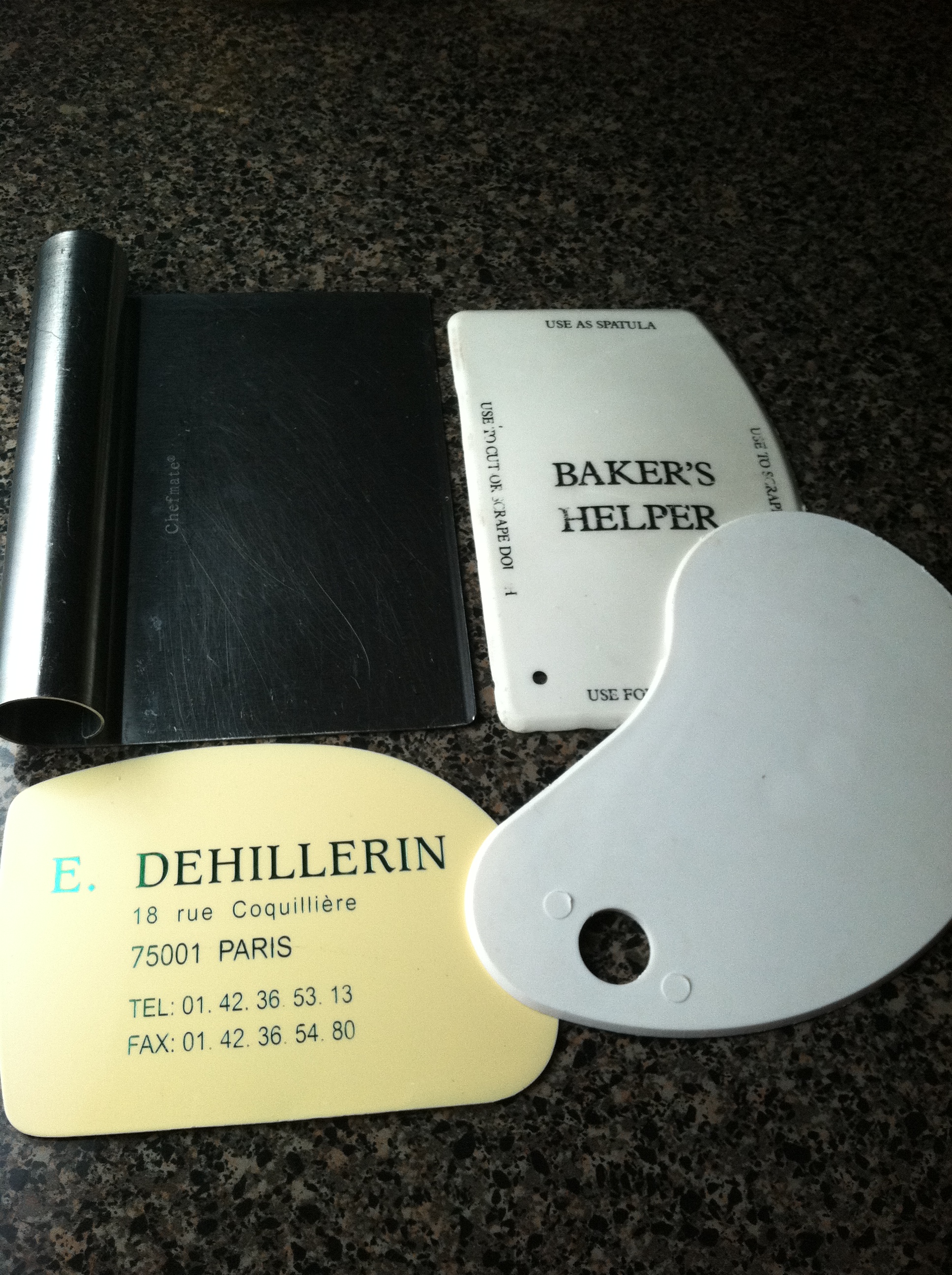
Various Scrapers
But no more! Now you can choose silicone spatulas and get rid of non-heat resistant spatulas once and for all.
These are inexpensive and are very handy. Use the scrapers to pick up cut items from your cutting board, scrape up dough or

Spatulas and Scrapers
flour, scrape a bowl clean. Keep your eyes out for them, pick one or two up when you see them.
The silicone spatulas are heat-resistant. Silicone spatulas are the only ones allowed in my kitchens. No more melted spatulas. You can use silicone spatulas both on and off the heat.
Silicone spatula’s come in great colors, some with designs in them and that also makes them quite fun.
Bowl scrapers have a never-ending list of things they are useful for. Pick some up and see how many times you reach for them.
There you have it; my top 5 kitchen things. Can I add tongs too?
What are yours?
I am well aware of being a total novice to photography.
Writing this blog has me realizing that unless I want to:
then I had better learn something about how to take a picture.
There are many blogs out there with wonderful photos that are original and inspiring. Some bloggers are kind enough to share some of their processes for taking photos.
Here is my spin on photos for blogs:
You can make an inexpensive photo studio with wrapping paper, bamboo garden stakes, straight pins and a science fair style tri-fold cardboard display and a folding table. Add a light and a reflector and you’ve got it.
I use my i-phone 4 as my camera and an older Nikon Cool Pix 4300. Until I really can justify spending $900+ on other camera equipment, this will do. Especially for a young blog.
Keep in mind, low light will produce grainy pictures. Sometime you want the grainy effect, sometimes you do not.
You need to learn how to use the light available to you.
Look at the difference between an overhead accent light on the counter and the photography light in the photos below.

Roses with low overhead accent lights

Roses with photo light

Roses with bright overhead light
Notice how in the low light, photo 1, the roses are grainy.
Pay attention to what is in the background. Notice the difference between pictures 1 and 3.
In 3, no background light, the overhead accent lights have been turned up to high.You get the idea these roses are actually white.
The center photo shows the same roses highlighted by the photo light. I purchased a Lowell Ego Digital imaging Light and now realize 2 lights would be very handy.
You need to play with the set up and your camera angles to work out ‘hot spots’ and shadows. All of these shots need serious lighting work. The point here is to notice the difference in the kind of light you shoot and use it as a tool and skill.
Now all you photo professionals out there, give me a break. I know these are not professional quality and I take them with my i-phone 4. This bit of information is for those wanting to take a picture for their blogs without huge expense. So bear with me. I am just starting to learn.
Here is the set up:
Set up the tri-fold on the dining room table or a 6 ft fold out table (so it can be left up for a few days).
Create the “infinity” background by draping paper across the back and curving it on the table so there is no angle where the paper meets the table, just a nice soft curve. I went to the craft store and found great colors of wrapping paper in the wedding section: silver, Kraft brown, oatmeal, and white. You can use what colors you want, I want the backgrounds to be somewhat neutral.
Insert a bamboo garden stake (or a dowel) through the wrapping paper tube, place it on top of the tri-fold and pull it down to drape. Place straight pins on either side of the dowel to hold it in place.
You can make the reflector of white corrugated plastic or foam core. If you don’t have a photo light, use as much natural light as you possibly can.

Hold dowels in place with straight pins
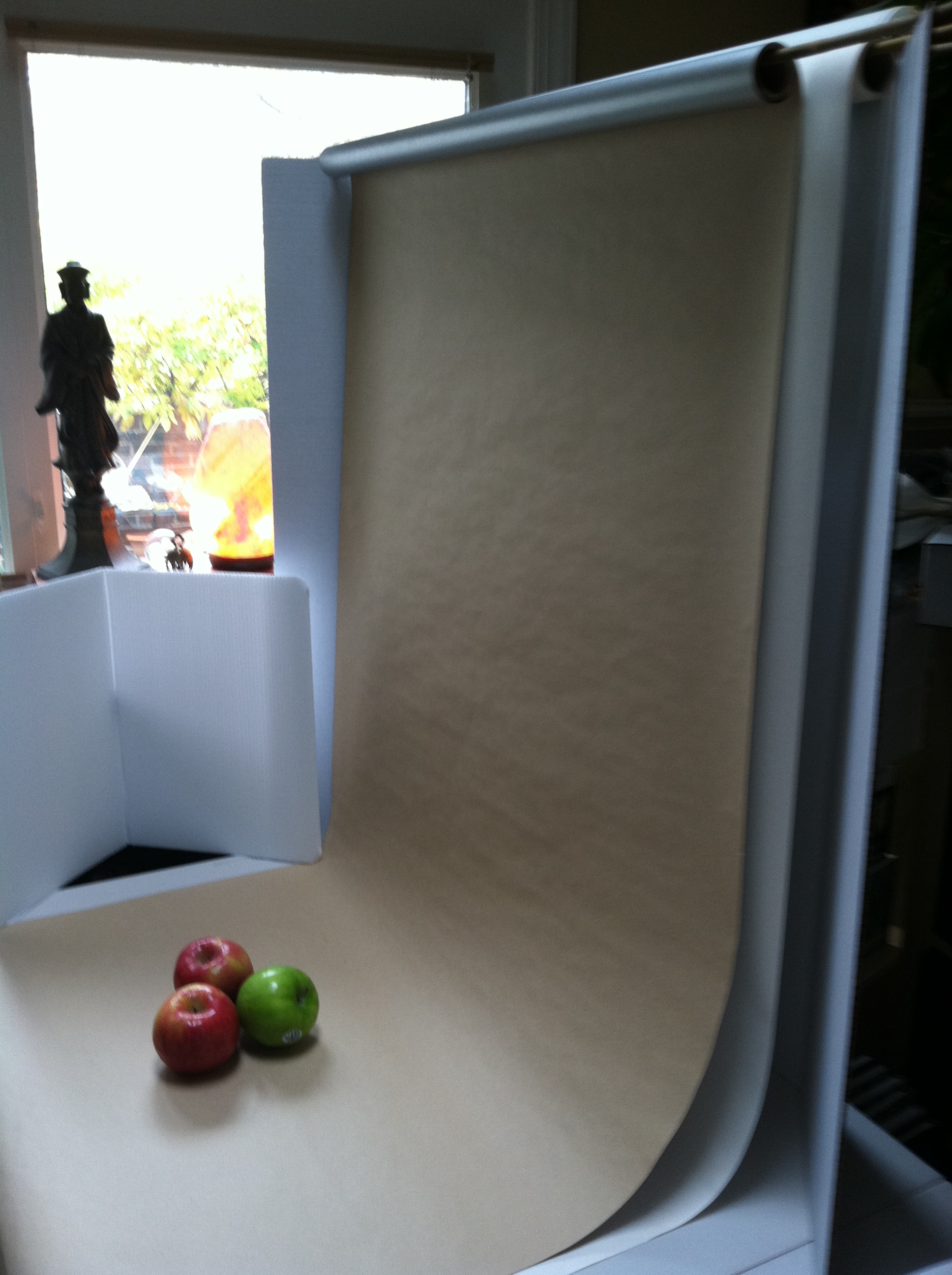
Table top set up with tri-fold and paper rolls

The shooting area

Apples
Notice the background, how the angle curves, everything clean. No smudges, dust or particles. While the apples are not a perfect shot, you can see how easy it is to set up your own work area and play.
You will certainly be able to improve the pictures for your blogs and tell your stories better.
I hope this home-grown approach to taking blog photos helps. I find it fun to play with photography. Who knows, someday the photos will justify that camera expense.
In the meantime, here is a book to read for more professional advice. Helene Dujardin has written Plate to Pixel Digital Food Photography & Styling ISBN 978-0-470-93213-1. She has fantastic explanations of how photography works. Even with my i-phone 4 I am able to use some of the information. By the way, the focus of Helene’s book is food photography.
Another book on food photography is “Food Styling The Art of Preparing Food for the Camera” by Delores Custer ISBN 978-0-470-08019-1.

Roses
Have fun, share your photography journey. This is all one big learning curve!
Thanks for reading this post on novice blog photography.
Does anyone have a used D SLR camera for sale? Nikon, Sony or Canon?

Hunger in America: How to Help – ABC News.
Do you realize that 1 in 6 Americans is hungry?
If you have food on your table and in your refrigerator consider yourself lucky.
This holiday season I would like to ask that we all do something within our
communities to help those who are hungry, adults and children. Hunger knows no race or age. Hunger is something we CAN do something about.
What can you do?
The most important thing is to DO SOMETHING!
Please read the link from ABC News regarding Hunger in America. In the link there are ways to donate time, talent, money so we can all do something about hunger.
Please do something, anything at all.
Please take a look at this link from ABC News regarding Hunger in America here to help you identify ways you can make a difference.
As far as bread making goes this if fast, tasty, chewy bread with a crispy crust. This method creates a wonderful artisan loaf.
Best of all, this no-knead method does not require the use of a cast iron dutch oven or 18 hours of proofing time!

Use this tool or a razor blade to slash the dough
For best results it is highly recommended you have a pizza stone for baking your bread on and a pizza peel for getting the bread in and out of the oven. Also, you will need a broiler pan (something sturdy that won’t warp in high heat) for adding water to create the steam that makes the crust crispy and a razor blade or bakers peel for slashing the dough. You can find both the pizza stone and the peel for less than $20.00 total, even less if you are a clever shopper. (Hint: check out Target.)
Are you ready? Grab the flour and let’s get cooking!
- 3 cups water 100°F
- 1 tablespoon yeast
- 1/2 cup sour dough starter (or 1 additional tablespoon of yeast for a total of 2 tablespoons)
- 4 1/2 cups King Arthur AP or bread flour (use any brand you like)
- 2 cups whole wheat flour
- 2 tablespoons non-iodized salt (kosher, sea, etc)
Mix the starter and yeast with the water. Allow this to sit and bubble while you measure the remaining ingredients.
Measure the flours and salt into a large bowl.
Make a well in the center and pour in the yeast, starter and water mixture. Stir with a wooden spoon to mix it all together.
Cover the bowl with an oiled piece of plastic wrap and place in a warm place to rise for the next two hours. If your home is chilly, use the oven on a proof setting or set at 100°F. A gas oven with a pilot light is often enough warmth to proof the bread.

Risen Dough
The dough should double in size. Depending on how warm your proofing area is, this may take longer or shorter time than 2 hours.
Now here is where it gets tricky.
The dough is very wet and sticky. You do not want to handle it very much.
Heavily flour your working station and your hands.
Remove 1/2 of the dough from the proofing bowl and place on the flour.
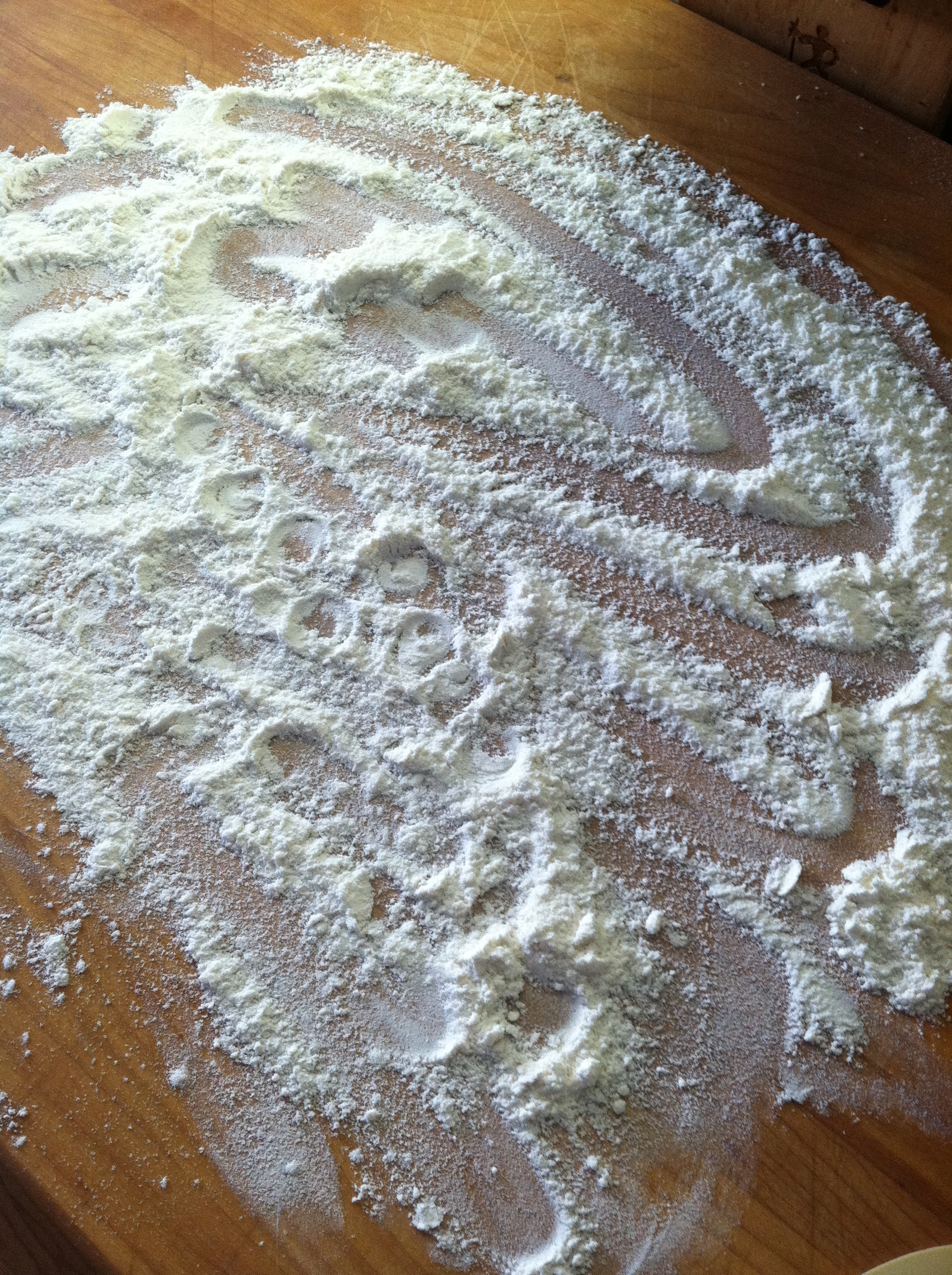
Flour the work station

Shaped Boule
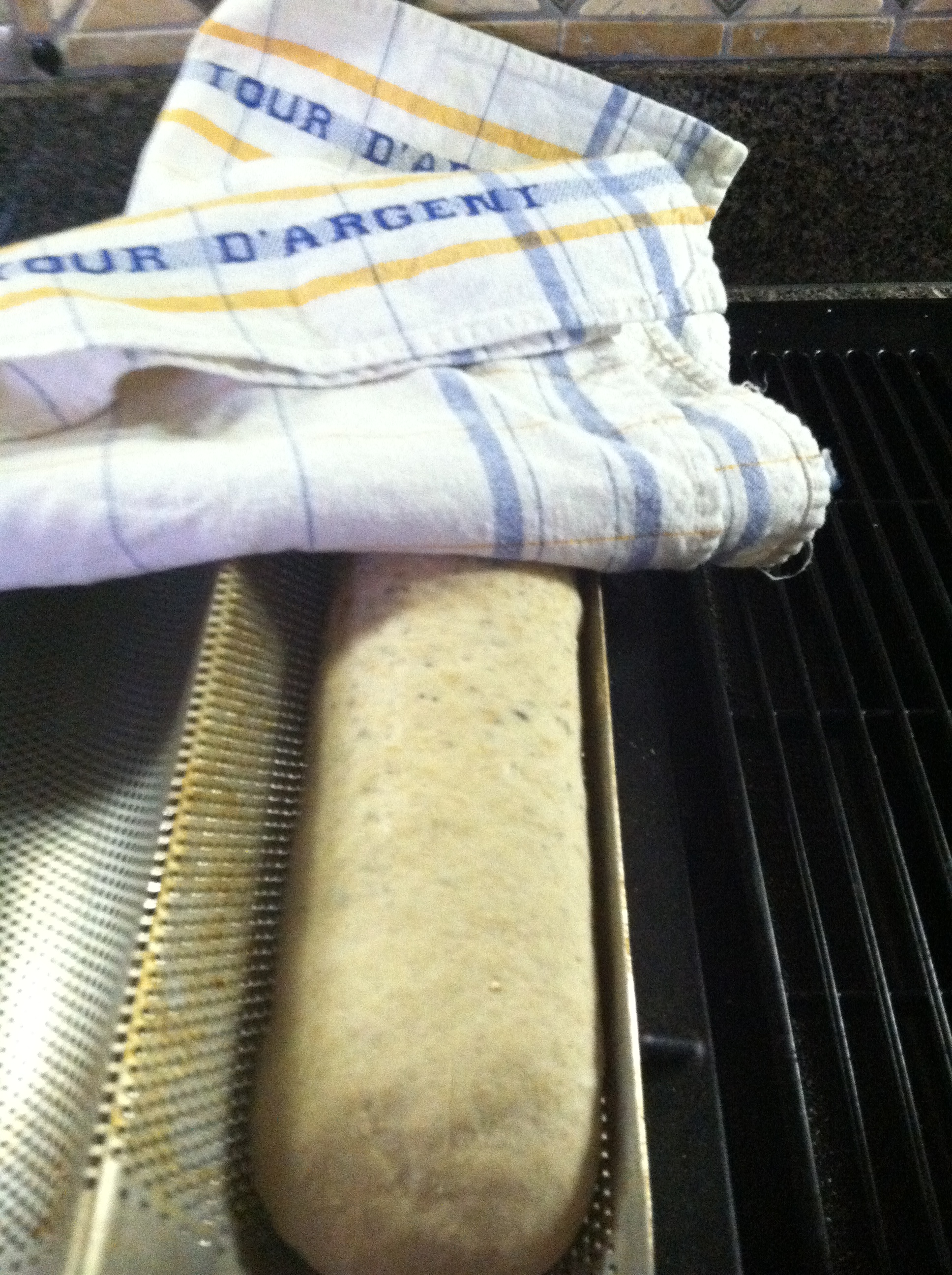
Shaped Loaf
Cover any sticky spots with flour so the surface feels smooth and not sticky. Using a well floured rolling-pin, work the dough into a rectangle about 1/2 inch thick.
Fold the left edge over 2/3’s of the bread, fold the right edge over the folded left side. You should have three layers. Turn the bread 1/4 turn, roll and repeat 4 times.
Lastly, roll into a rectangle. Take the edge closest to you and begin rolling the dough into a cylinder.

Peel with a good layer of cornmeal
Place a good layer of corn meal on the surface of the pizza peel; place the loaf on the peel, near the edge so the dough does not have a long way to slide when placing into the oven.
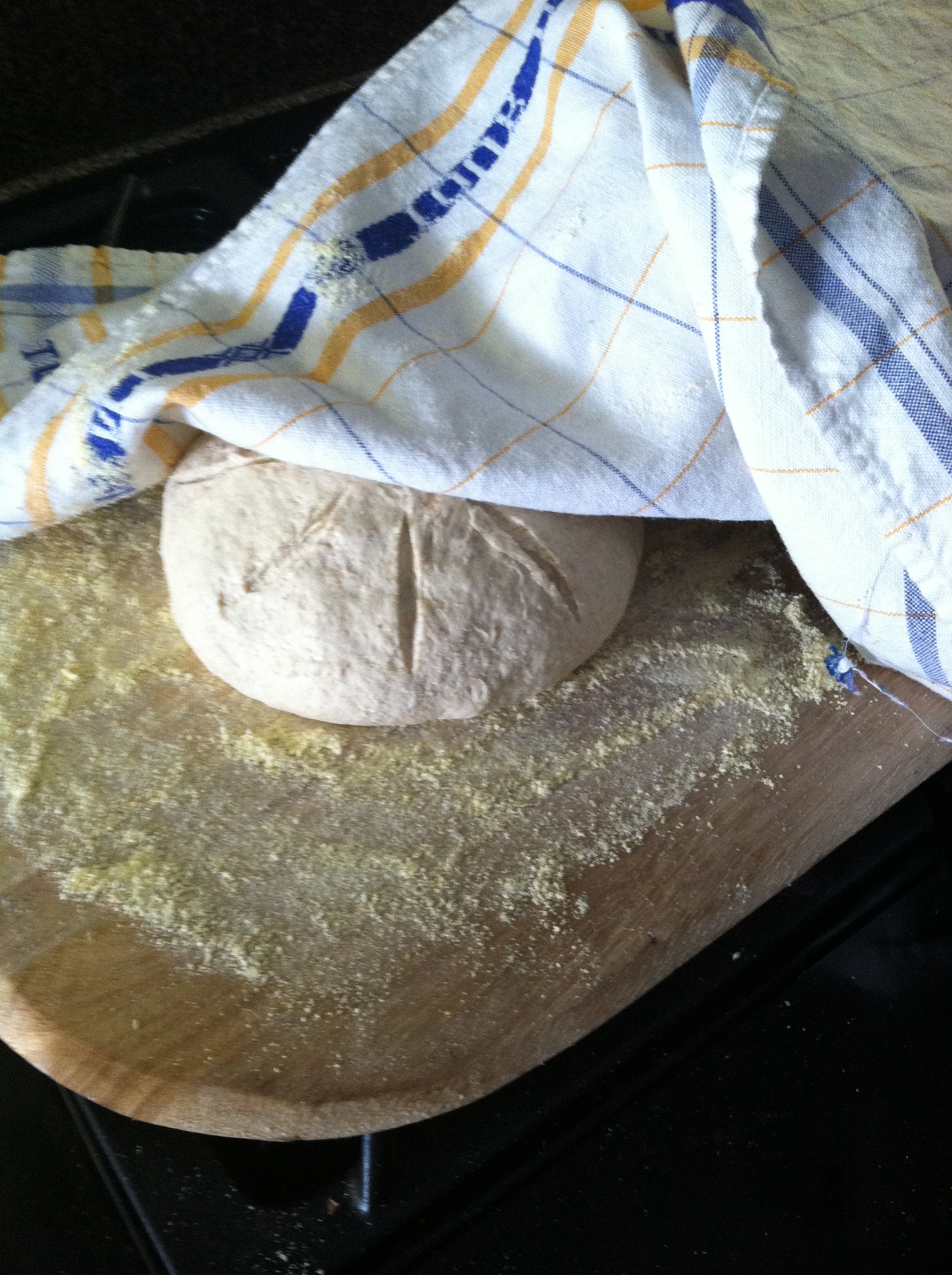
Shape and cover with towel to rise
Cover with a clean towel and allow to rise for about an hour.
In the meantime, while the oven is cold, place the pizza stone on the middle rack of the oven. Place the broiler pan on the bottom shelf and remove the top shelf. You want the bread to have plenty of room to rise!
Pre-heat the oven to 450°F. The oven needs to heat for 30 minutes at 450°F before baking. This ensures the temp is good and hot which is necessary for great ‘oven spring’.
Bring 4 cups of water to a boil in something it is easy to pour, like a kettle.
Once the oven has heated for 30 minutes and the dough has been rising for an hour, and the water is boiling, it is time to bake the bread.
Now, you are going to look at it and say it is floppy and loose and not going to work. Trust me, just go through the process, be patient!
You have to work quickly here. Decide what you are going to do and do it!
Take the peel with the bread on it; remove the towel. Using a razor blade or bakers peel, make 3-4 deep slashes across the top of the bread. This prevents the bread from breaking while it expands in the oven.
Open the oven door and with a quick firm motion slide the bread to the baking stone from the peel. A quick forward back movement is all it takes as long as you have enough corn meal on the peel.
Hint: Once the bread hits the stone, don’t move it.
Quickly close the door.
Put oven mitts on your hands to prevent steam burns. Take the kettle of boiling water; open the oven door, pull the broiler pan out enough to easily pour the water into the pan. CAREFUL, it steams! Fill the bottom of the broiler pan by 1/2 inch. Quickly close the oven door so as not to let all the steam escape.
The steam is what creates the crispy crust. Commercial bread ovens have “with steam” options, home ovens do not.
There are several theories as to how to add steam in the home kitchen.
One will tell you to spray the bread with water while it is cooking.
Folks, if you spray cold or warm water on a 450°F light bulb in the oven, it will burst.
Same with your baking stone: CRACK! So this is not a good method.
Another is to brush the loaves with water just before putting them into the oven.
This dough is already wet. Additional moisture would hinder a smooth slide from the peel to the stone.
Besides the dough is so tender that brushing it at all would collapse whatever has risen.
Slashing is all it can take.
The broiler pan method is most useful.
It does not endanger the stone or bulb.
Just protect yourself from a nasty steam burn.
After you have added the water and started to create the steam, close the door quickly then set the timer for 15 minutes.
Make sure you have more boiling water at the 15 minute mark; open the door and add more water for more steam.
Note the color and the rise on the bread! The amount the bread rises once it hits the heat is referred to as “oven spring” and this bread formula has great oven spring. Yay!
In about 10 more minutes, remove the bread from the oven and take its temperature. When the bread reaches 190°F the bread is done. Remove from the oven and cool on a rack until it is cool.
Slice and enjoy!

Loaves and Boules No Knead Bread

No Knead Loaf
Related articles
Instead of doing a turkey this year, why not try your hand at creating a beautiful crown roast or either pork or lamb?
Having your butcher do it is costly but you can do it yourself and really get all the “Oohs and Ahhs!” from everyone who comes to your table.
The procedure is simple; you can watch how it is done in the Charlotte Cooks episode of “Holiday Meals”.
Grab your bone in pork loin and cook along with the video.
Enjoy!
For a pork crown roast, ask your butcher for a “Frenched” bone in pork loin. You may need to order it so check before you just expect the cut of meat to be in the butchers window. This is a big piece of meat so you will only need 1.
For the lamb, you will need to purchase 2 lamb racks for each crown roast. When buying lamb, keep in mind that the gamier tastes typically come from New Zealand and Australian while American lamb has a milder taste.
I love lamb no matter where it comes from.
When serving lamb, please leave the mint jelly alone! There is a nice condiment you can make with mint that is much nicer.
Place the sugar in the bottom of a saucepan and melt over medium heat. Do not stir while the sugar is melting, just let it melt.
The sugar will melt into a warm caramel. When it is golden brown, carefully pour in all of the vinegar at once.
Be careful as this will spit and spatter!
The sugar will sieze but as the vinegar warms and comes to a boil, the sugar will re-melt.
Add the chopped mint and salt and simmer for 5 minutes.
Spoon over your lamb as desired. This can be served warm or cold.
Store the sauce in the refrigerator, if there is any left.
In culinary terms what you have just made is a “mint gastrique“.
The flavor of the sauce is complex and fresh thanks to the gastrique.
A gastrique is part of an arsenal of skills to use in great sauce making.
This is worth learning.
I hope you all try your hand at a crown roast of pork or lamb sometime this season.
It will surely impress all your family and friends!
Please let me know if you have questions.
You can find all recipes from Charlotte Cooks TV shows by following the highlighted link.
 Spoon Feast