Must Have Mustard

Mustards

I love to make condiments! I must have mustard in many forms in my pantry. Honey Mustard, sweet, savory, mild, smooth, chunky there are so many ways to make gourmet mustard at home

Mustard is so fun and so diverse from sweet to hot, savory to fruity, there is no limit.

Mustard ingredients

This post will give you a recipe for a grainy dark mustard and an apricot mustard. Both are spectacular and very diverse in how you will find ways to use them.

For both of these recipes we use whole mustard seeds. Yellow mustard seeds for the apricot mustard and brown mustard seeds for the grainy mustard.

So here, are the recipes. The method follows both and is the same for both.

Grainy Brown Mustard

1 cup whole brown mustard seeds

3/4 cup water

1/4 cup white wine

1/2 tablespoon kosher salt

1 teaspoon sugar or honey

Additional water if needed for processing

Apricot Mustard

1 cup whole yellow mustard seeds

3/4 cup water

1/4 cup white wine

1 cup dried apricots, rehydrated

1/2 tablespoon kosher salt

Additional water if needed for processing from rehydrating the apricots
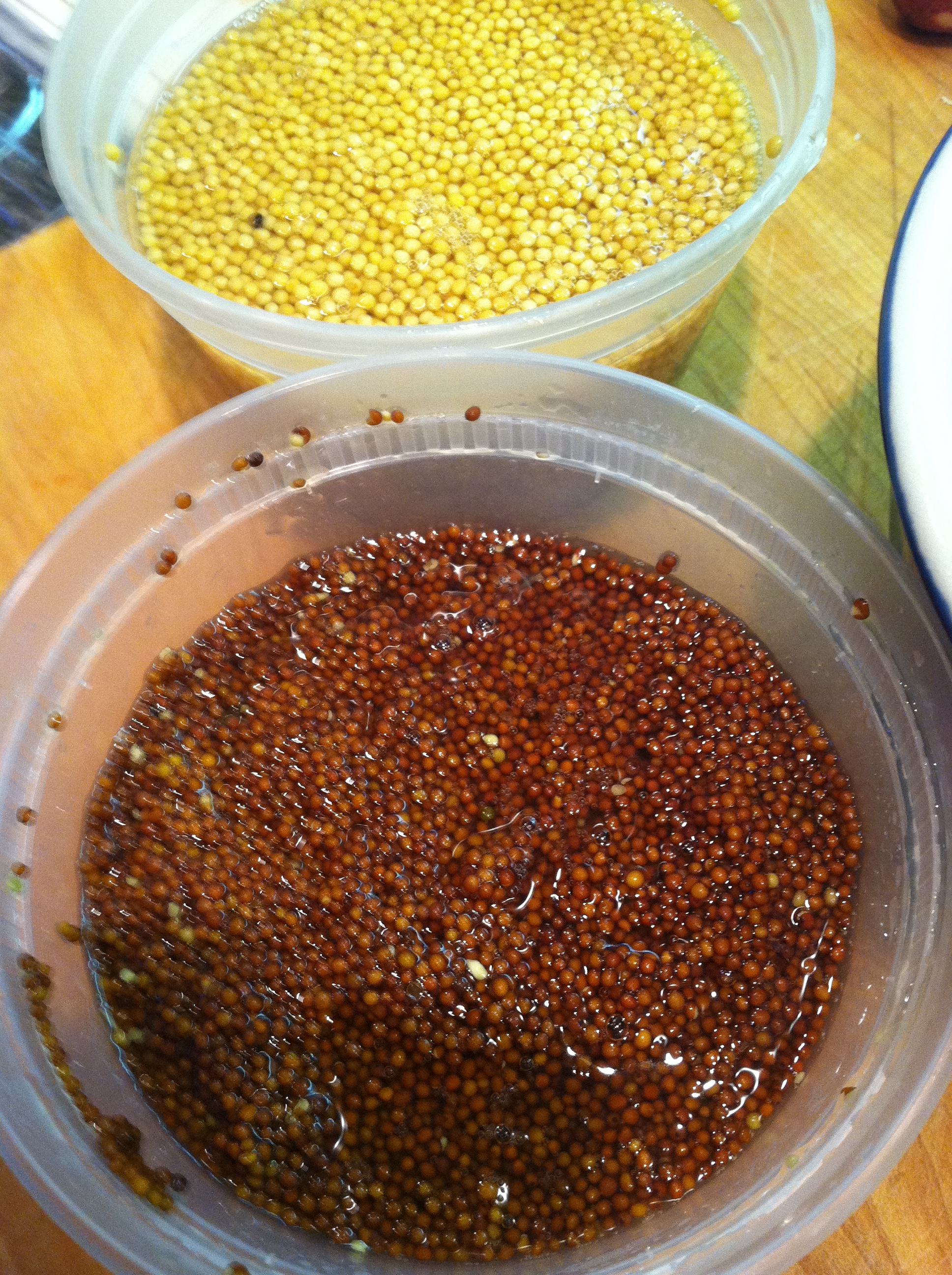
Soak mustard seeds overnight

Method for both:

Soak the seeds overnight in the water and wine. You need to make sure the seeds are totally covered by liquid. Add more liquid if you need.

It is highly recommended to soak the mustard seeds overnight due to how hard the little seeds are. If you tried processing the recipe without soaking, it would take forever to get those seeds broken and start turning into a paste.

Rehydrate the apricots in hot water for 30 minutes, reserve any excess water for processing.

Place all ingredients into a blender or food processor and blend for 3-4 minutes for the apricot mustard to become somewhat smooth and 2-3 minutes for the grainy mustard. If you want more whole seeds in the grainy mustard, do not process as long. Add additional water as needed to make a smooth consistent product.

Store the mustard in a glass, stainless steel or plastic container; not aluminum. The mustard will mellow after about a week. The flavors will develop and become nice and tasty.

I use the apricot mustard for ham, pork or chicken. It makes a nice glaze, marinade or spread.

Use the grainy mustard on sandwiches, in salad dressings or to dip pretzels.

How do you use mustard?
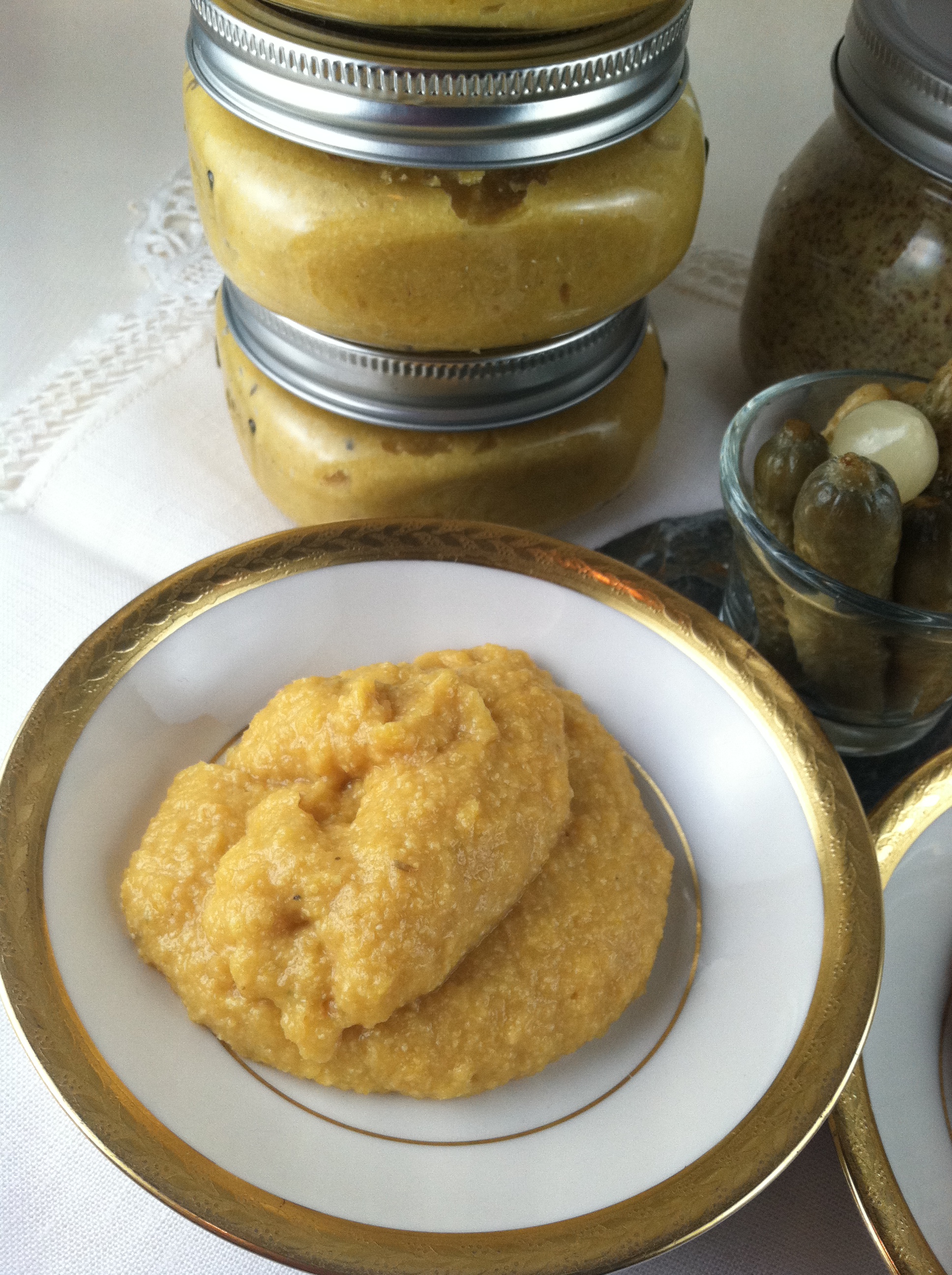
Apricot Mustard

Dark Grainy Mustard

The Beauty Of Pollination

The Beauty Of Pollination

This is spectacular! If you don’t know about ” TED Talks” this is a beautiful introduction.

Please enjoy this video.

Chive Blossom Vinegar and Vinaigrette

Onion chive blossoms

Chive blossom vinegar isn’t a normal thing to be making in January, but my wish for chive blossoms was realized.

This winter had been on the warm side for us. It was just last night the geranium and the jalapeno plants bit the dust to freezing.

While making a salad for dinner the other evening, my thoughts turned to chive flowers and all the yummy things I could do with them.

I thought how nice it would be to have some chive blossoms to add to the salad, or sprinkle some over the baked potatoes.

I was thinking about making more chive blossom vinegar but alas, being January, my desire would have to wait until spring.

Chive blossoms have a delightful onion or garlic flavor, depending upon which type of chive you have. Onion chives have lovely purple flowers that I really like; garlic chives produce white flowers.

But look at what I found!

As I rounded the corner towards my office, right there in front of me was a lovely plot of blooming chives in the schools herb garden.

Yay! Wish granted!

( Now I wish for a million dollars)

I picked as many as I thought I needed and ran home to toss them into the evening salad and make some Chive Blossom Vinegar for salad dressings in about a month.

Chives are quite simple to grow and actually are perennial so they come back year after year. I have both garlic chives and onion chives growing in my garden. They definitely are not flowering now. In fact they look quite pathetic until a bit of warmth cradles them a bit.

Chive Blossom Vinegar

Prepare the blossoms 3 ways: with stem, no stem, single flowers

Use a funnel to fill the bottles

Chive Vinegar

Wash and dry the chive blossoms. Prepare the chive in any of the following ways:

  • Leave as much stem on as you want
  • Use only the tiny flowers
  • use the entire flower heads in tact; no stem
  • leave some stem with the flowers
  • chop some chives to add with the flowers
  • any combination you want

The goal is to make it look pretty and attractive.

  • Place prepared blossoms into an attractive bottle.
  • Boil enough white wine vinegar or rice wine vinegar to fill the bottle.
  • Use a funnel to fill the bottle with the hot vinegar.
  • Cork or seal the bottle.
  • Label with the date you made the vinegar.
  • Let steep for 30 days.

After the flavor has developed, open the bottle and experience the fresh aroma of the chive blossom vinegar.

Use it to make a simple vinaigrette.

Chive blossoms on baked potato

Chive Blossom Vinaigrette over Tomato, Onion, Cucumber Salad

  • 1/2  cup chive blossom vinegar
  • 1/2 tsp kosher salt
  • 1/2 tsp fresh cracked black pepper
  • 1 tablespoon Dijon mustard
  • 1 to 1-1/2 cups of olive oil

Place all the ingredients but the oil into a bowl and whisk to combine.

Whisk in the oil and serve.

This is a temporary emulsion which means you will need to whisk it before using as it will separate.

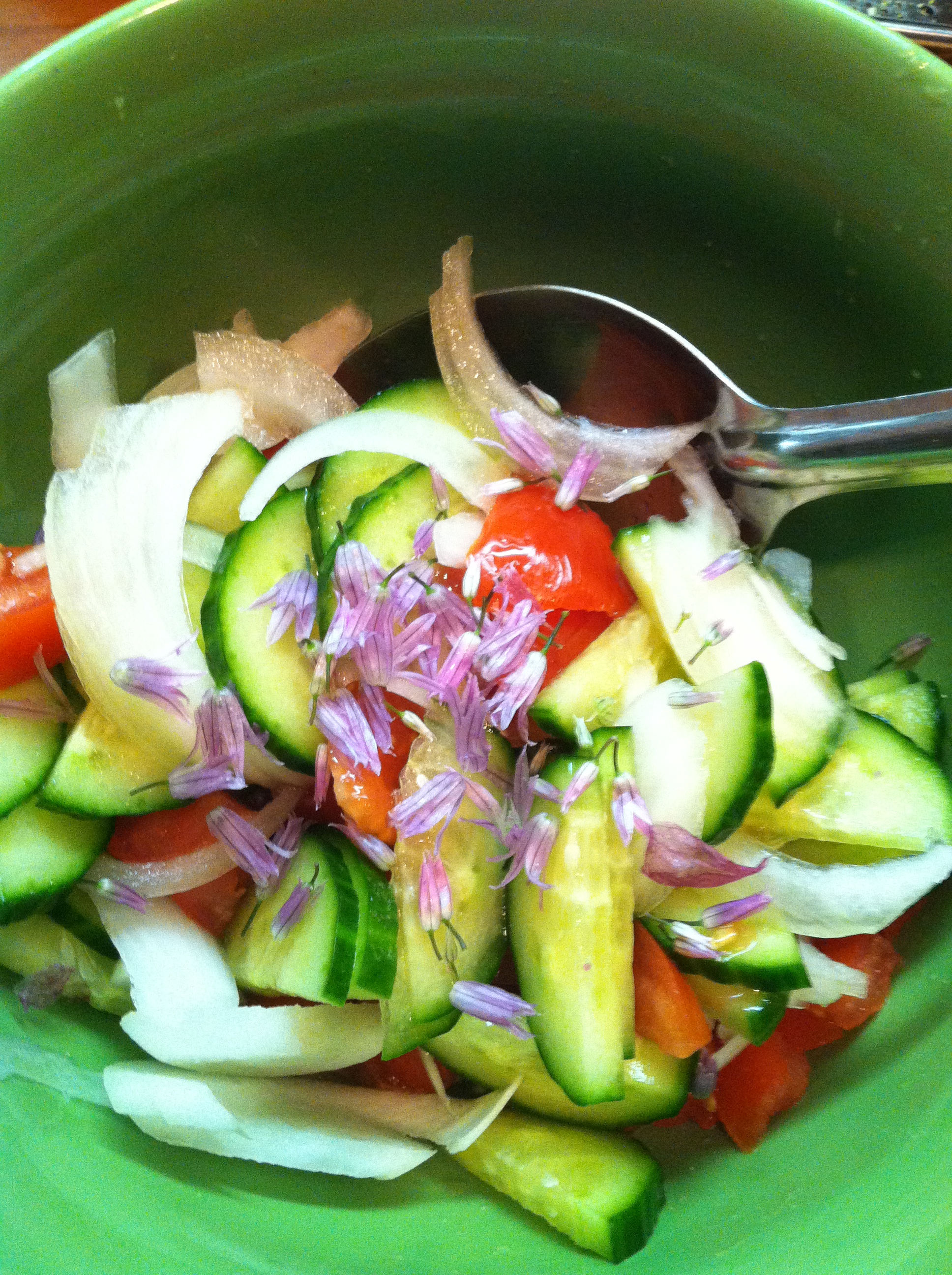
Tomato, onion, cucumber salad with chive blossoms

Tomato, Onion, Cucumber Salad

Serves 2

  • 1 medium tomato, wedged into 8 wedges
  • 1/2 medium sweet onion, sliced thin
  • 1 scallion, sliced thin
  • 1/2 English cucumber, sliced thin
  • Chive blossoms

Toss the sliced vegetables in a bowl and then arrange attractively on salad plates.

Sprinkle the chive blossoms on top

Drizzle Chive blossom vinaigrette over salad and serve.

To make this go over the top, drizzle a few drops of truffle oil over the salad too.

Glazed Lemon Shortbread

Glazed Lemon Shortbread

My son loves these. He is going back to school soon and when he gets there, a box of these sweet treats from home will be waiting.

This twist on traditional shortbread adds fresh lemon zest in the mix and fresh lemon juice in the glaze. One secret is to use a very fine microplane on the fruit so the zest is very fine.

If you like the lemon version, branch out and try making them with orange, or lime or tangerine or grapefruit. Kumquat maybe?

The amazing part of good shortbread is how they just melt in your mouth. Then take a nice sip of tea. Sit back and enjoy.

There are several pictures at the end of the post, so scroll down.

Glazed Lemon Squares

  • 1 cup butter
  • 1 cup confectioners sugar (10x)
  • Zest from 1/2 lemon (Use the other half in the glaze)
  • 1 Tablespoon vanilla extract
  • 2-1/2 cups AP flour
  • 1/2 teaspoon salt

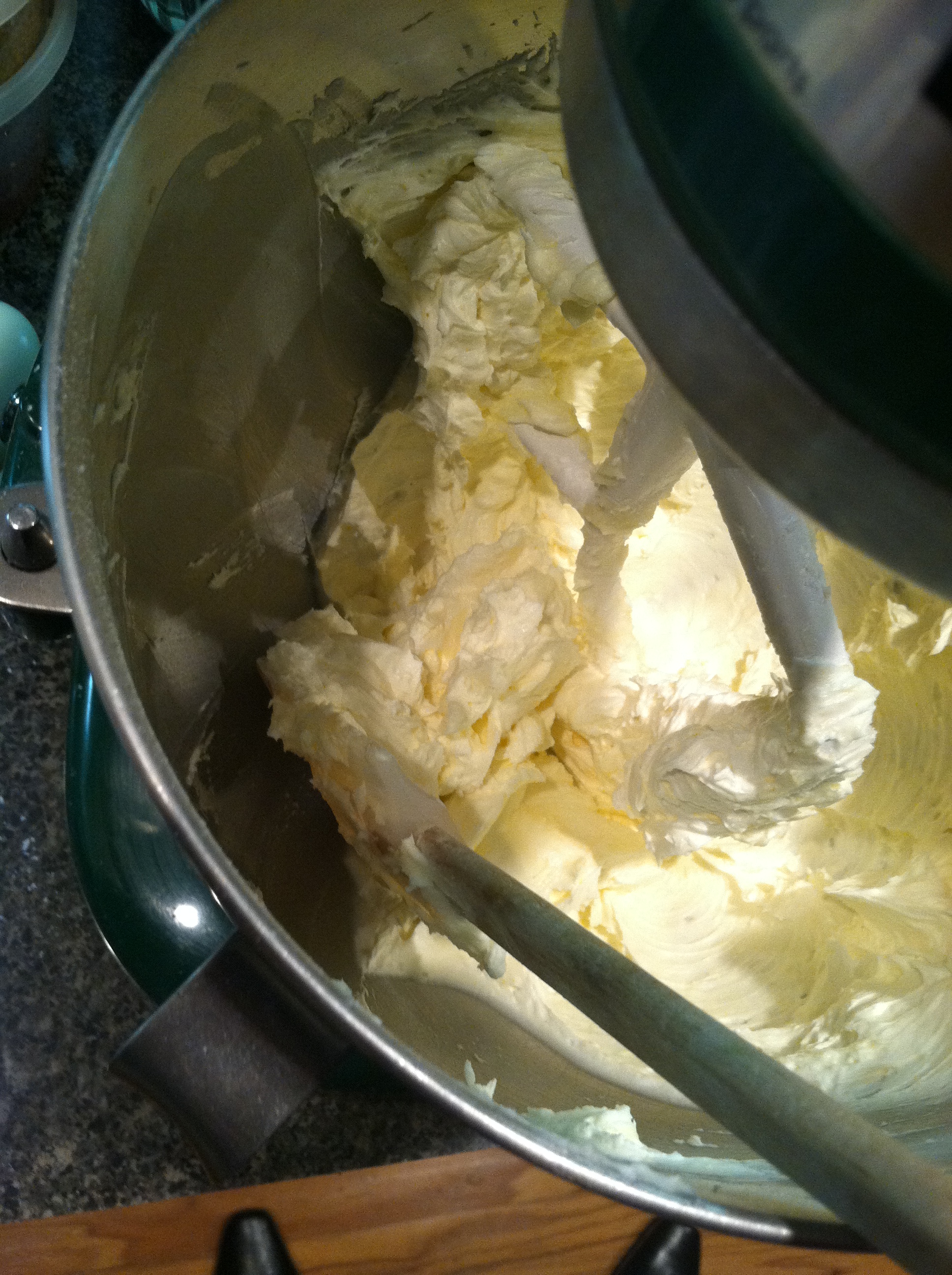
Using a mixer on high-speed, cream butter,  10x sugar, zest and vanilla 3-4 minutes; until light and fluffy.

While the butter and sugar are creaming, measure and mix the flour and salt into a bowl.

Scrape down the bowl.

On low-speed, add the flour mixture to the creamed butter and sugar.

Mix only until the mixture comes together and resembles crumbs.

Do not over mix! Over mixing will develop the gluten in the flour and give you a ‘tough cookie’ rather than a tender one.

Transfer the dough to a non-stick 9 x 12 cake pan.  Cover with plastic wrap and pat the dough evenly into the pan.

Place in the refrigerator or freezer until the dough becomes thoroughly chilled.

Traditionally, you can prick the shortbread with a fork for decoration. You can choose not to.

If, for some reason, you get a wild hair on and decide to add baking powder to the mix, I would strongly suggest you do prick the dough to prevent bubbles and warping.

Preheat the oven to 300°F. Clean up the kitchen.

Once the dough is chilled, place it in the oven and bake for 35 minutes or until the edges are just beginning to turn golden brown. The shortbread will remain pale.

Remove from oven and cool on a rack.

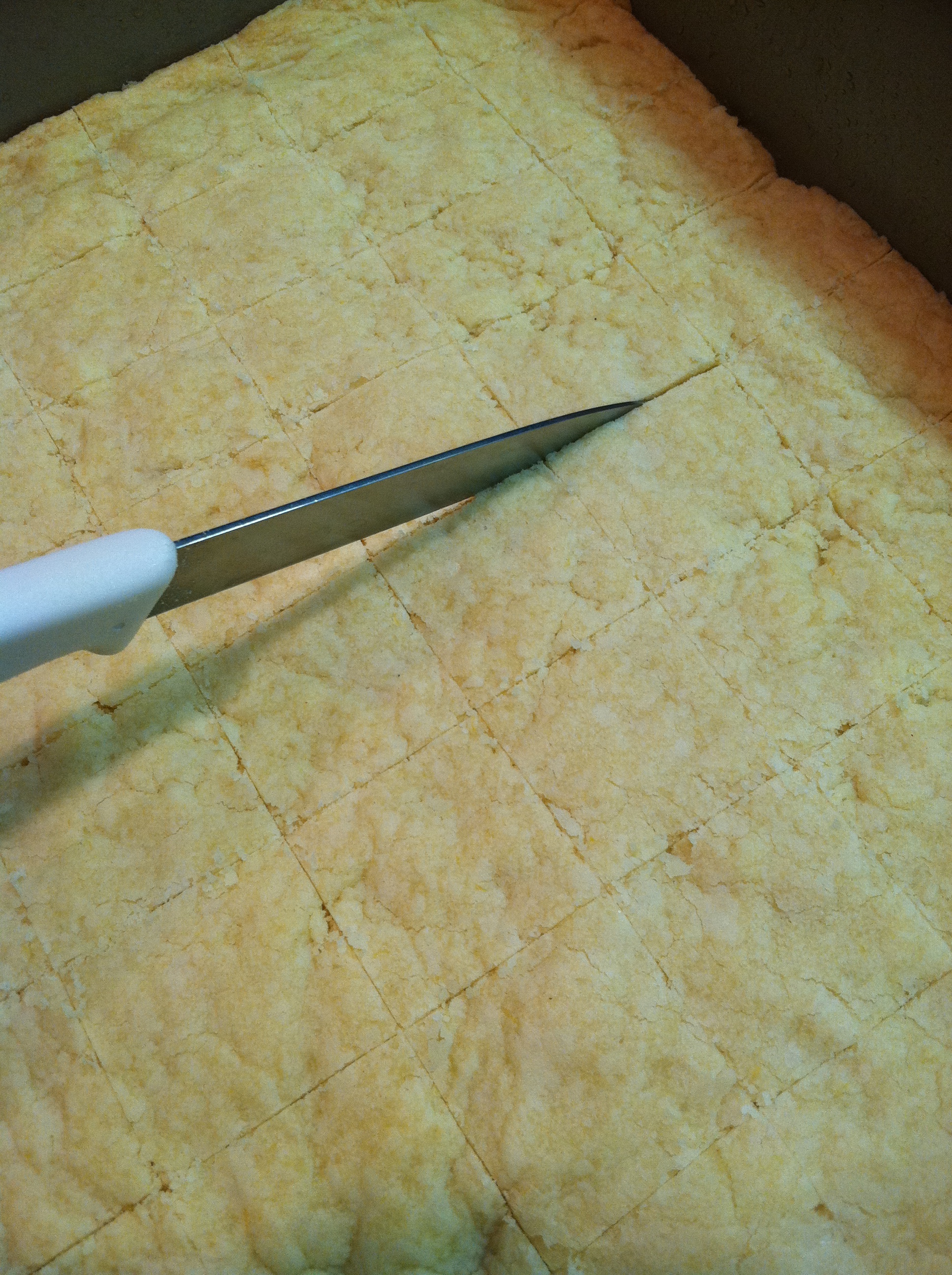
Cut the shortbread while still warm. You get a cleaner cut edge.

Once cooled; remove the cut shortbread and put them on a rack which is placed over a clean sheet pan.

Make the glaze just before you are going to pour it over the cookies.

Be sure the cookies are completely cool so the glaze does not run or melt off.

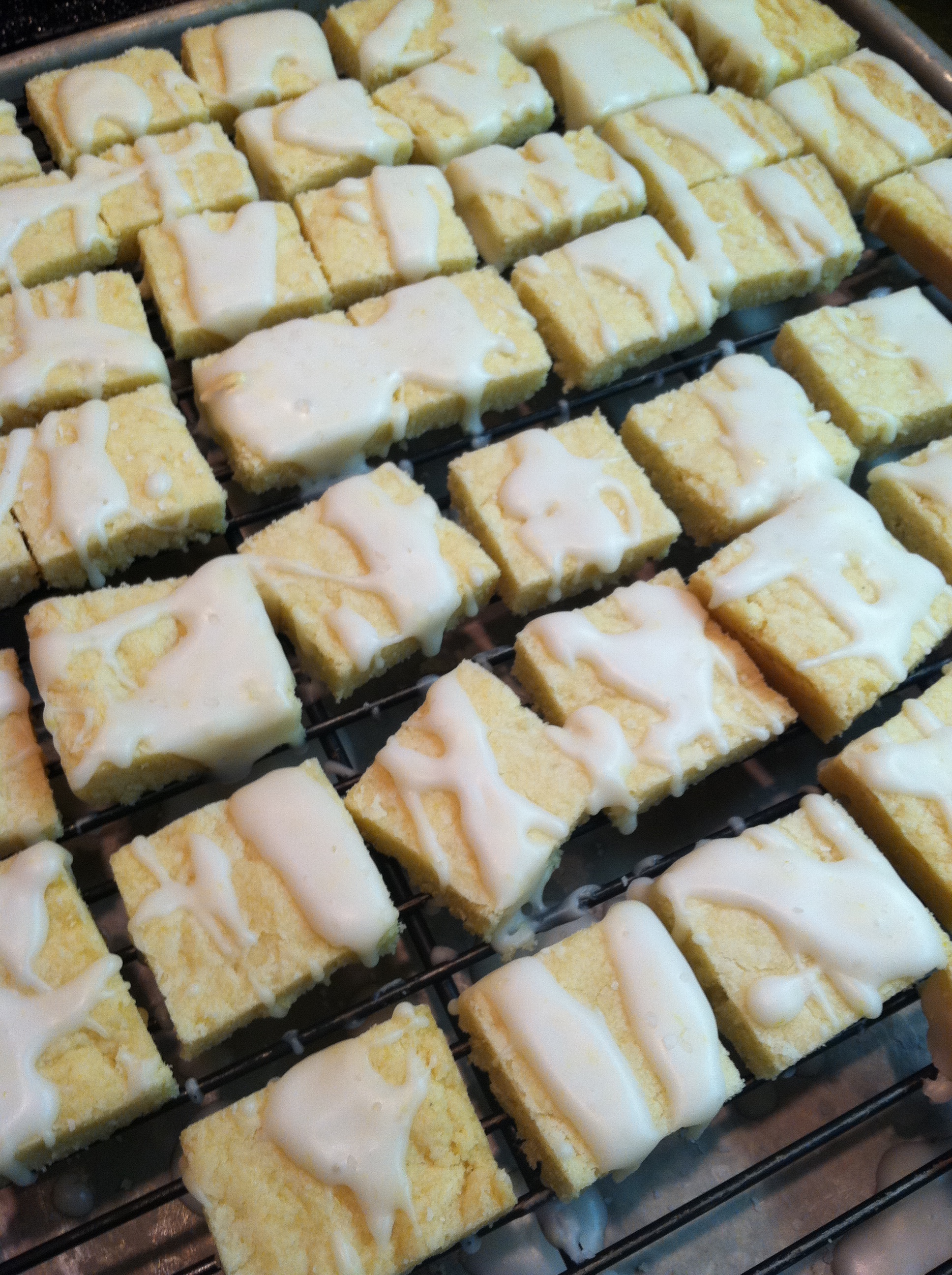
Randomly pour the glaze. You can do it randomly or evenly, which ever you prefer.

DO NOT spread the glaze as the cookies are crumbly and you will not have a smooth glaze. If you make a lot of glaze you can cover them and decorate them like petit fours.

I like to sprinkle a fine touch of finely ground fleur de sel on the top of the shortbread cookies.

Sweet, tart, salty, smooth. . .

To make the Lemon Glaze:

  • Zest from the other half of the lemon used in the mix
  • 2 cups confectioners sugar (10x)
  • 1/4 cup lemon juice

Sift the sugar to ensure no lumps.

Add the zest, stir it in and then add the juice. Mix until smooth with a fork. Whisking will add too many bubbles.

Pour over cooled shortbread cookies.

Allow glaze to dry about an hour longer before storing.

Use a fine Microplane to zest the fruit

Cream butter and sugar. Don't forget to scrape down the bowl sides.

Add flour; mix only until combined

Cover with plastic, pat evenly into pan. Chill.

Cut while still warm for a clean edge.

Place on a rack and glaze

Black Bean Soup

A simple and quick recipe for a warm and hearty soup.

I prefer to use Bushes Brand of  canned beans but you can use what you want. You can even soak your beans and make this from dried. But that isn’t so quick.

Quick and Easy Black Bean Soup

  • 2 15-ounce cans seasoned Bushes Brand Black Beans
  • 1-1/2 cups chicken stock
  • 1/2 cup chunky salsa – your desired level of heat
  • 1 tablespoon chili powder
  • 1 tablespoon dried onions
  • 1/2 tablespoon dried minced garlic
  • 1/2 tablespoon dried oregano
  • 1 Tablespoon kosher salt

Garnishes:

  • Small diced onion
  • Chopped Cilantro
  • Shredded cheddar cheese
  • Sour cream
  • Chunky salsa
  • Hot Sauce

Open the cans of beans and put them in a sauce pot along with the chicken stock and all remaining ingredients.

Using a immersion blender, slightly puree the soup just enough to break up some of the beans, but not all of them.

If you don’t have an immersion blender, then place a generous cup of beans into a blender or food processor or even mash them by hand. Add the mashed beans back to the soup.

Bring to a boil, stir frequently while preparing the garnishes.

Ladle the soup into soup bowls, garnish with desired garnishes. Serve with tortilla chips and salsa on the side.

My Favorite Breakfast

This is my favorite “special occasion” breakfast.

It set the tone for the entire day!

My favorite breakfast

Why not me and why not now?

This post is not about food, but about motivation. What gets us going?

“We ask ourselves, who am I to be brilliant, gorgeous, talented, fabulous? Actually, who are you not to be?

You are a child of God. Your playing small does not serve the world. . . There is nothing enlightening about shrinking so that other people won’t feel unsure around you”

~Marianne Williamson, spiritual activist, author, lecturer, and founder of the Peace Alliance

These questions cross my mind from time to time; Why not me and why not now?

Hiding from our talents does nothing to further the world along or to reach the potential we are capable of reaching with focused effort.

We all have talents somewhere.

The problems lay in not defining or creating a focus on which to either concentrate or to direct our activities. Without direction how do we know what to focus on or in what direction to go?

Using an old analogy: when you start on a trip and head out the driveway, which way to go? Interstate, airport? How do we get to where we are going? Do we know where we are going or just wandering around?

This is why I make goals and lists of the steps I think will take me there.

Oddly enough, I have found making lists really works for me. Even if I scribble a few places to go, things to pick up while out, people to visit or weeds to pull in the garden, if it is on my list, it gets done. This works for simple and complex projects. Make a list of baby steps.

I used to teach at another college in Georgia. One year they had written some clauses in my employment contract that would require me agree to teach culinary arts at the #1 top security all-male prison in the state. I visited the area once and my blood ran cold.

(Think female in a high security all male prison – not for me! Very, very scary)

As I read my employment contract renewal, I saw a clause that said I would agree to work at the prison and anywhere else they decided anywhere, any time. I thought about what would I really like to do instead and it came to me that what I really wanted, above all else, was my own restaurant and to be my own boss.

So, I outlined the steps it would take to open my restaurant. Less than a year later, I had quit the teaching position and opened a wine room for tasting and sales; a kitchen shop for everything you could want for your kitchen, a recreational cooking school and a cafe.

Writing the business plan really helped clarify what I wanted, when and who I needed to help.

This was a great experience that clearly demonstrated that having a clear plan of action really works.

Recently I have been wanting to fulfill more of my potential and have felt like my wheels have been spinning without traction.

So I decided this is the year to work on the book I have wanted to write for a while. Obviously a cookbook. If I don’t get it started, it will never take shape.

Why not me and why not now?

If not me,  who?

If not now, when?

I have two neighbors who have awakened me to ask those questions more and more and to seriously ponder the answers.

One woman, Donna, had retired earlier this year. She and her boyfriend went to Spain on  vacation to celebrate. She began to not feel well while on the trip so when she returned, she scheduled a doctors visit. The outcome of that visit was she had stage 4 pancreatic cancer. She spent the last months of her life  in and out of various therapies. She died this fall, only 7 months after being diagnosed.

Another neighbor is “90 and 1/2″ as she would proudly tell you. She is active and refuses to have any help because she says as soon as she doesn’t keep moving and doing things she won’t be able to. The other day, she severely burned both of her hands in a flash grease fire, was rushed to a burn unit for surgery and now cannot use her hands at all for anything. Now, her family is looking at placing her in assisted living because she needs full-time, all the time help.

They say she will be alright but it will take several months for the burns and surgery to heal. To someone who measures “90 and 1/2″, this may be a long time for her. It definitely changes the rest of her life.

This illustrates clearly we have no idea what in coming down the pike for us. So why do I squander days of not really doing anything?

We have no guarantee of time. We have no guarantee of talent or success.

All we have control of are our choices and intentions.

So my challenge to you is to ask yourself

“Why not me? Why not now?”

Make a plan and see what happens.

Cinnamon Palmiers

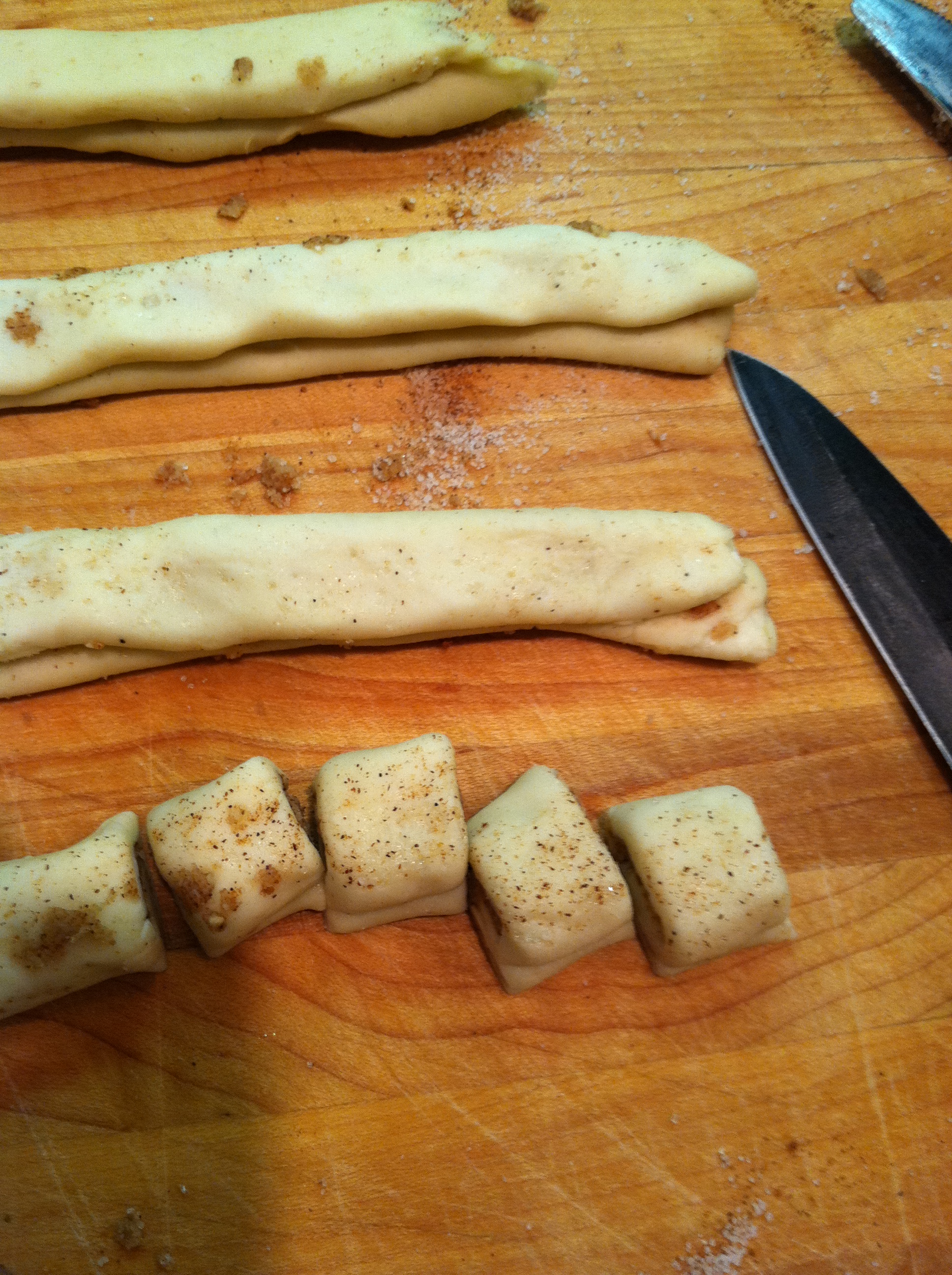
Cinnamon Palmiers is a fancy name for left over puff pastry sprinkled with cinnamon sugar and baked.

When I was a child, I recall my father making a similar treat from left over pie dough. This is a great way to use all your puff pastry or pie dough scraps; no matter how small they are.

Spread dough strips with butter and sprinkle with cinnamon sugar

Fold the long edge to the center line

Fold opposite edge to center line also. Then fold in half along the center line.

Cut into finger width slices

Place sliced side up/down on a baking sheet; well spaced

Tips:

Fold carefully!

Use a sharp knife to slice for a clean edge.

Keep your pastry cold for best results.

Line your baking pans with parchment paper to prevent sticking.

If you want some, set some aside because these things disappear quickly!

Cinnamon Palmieres and Tea

Sourdough Rye Bread with Caraway and Onion

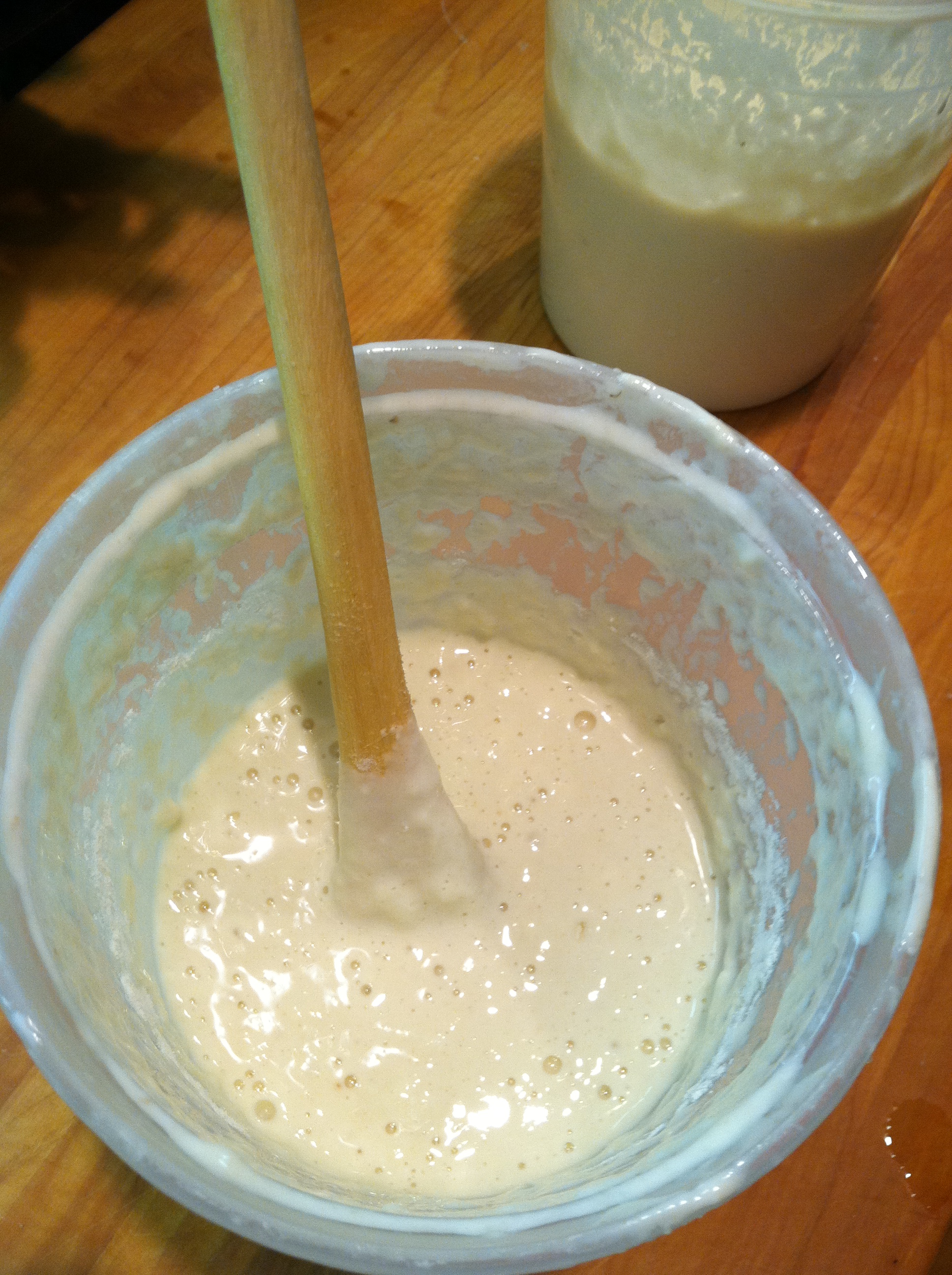
I was longing for a nice chewy sourdough rye bread with onions and caraway and a good crust the other day. So I decided to make a rye sour first.

Make rye sourdough starter

Taking 1/2 cup of regular sour dough starter, at feeding time I fed it with:

  • 1/3 cup rye flour
  • 1/3 cup water ( between 90-100°F)
  • 1/2 tablespoon each caraway seeds and dried onions
  • 1/2 of a fresh onion
  • 1 Tablespoon sprouted barley malt syrup (totally optional)

Mix it thoroughly and let sit in a warm room until it bubbles and doubles in size.

Feed the rye starter again with 1/2 cup rye flour and 1/2 cup water. Allow to double in size again. This process develops some of the flavor for a great rye sourdough bread.

You can refrigerate the starter now for later use or you can use it now. Be sure to save at least 1/4 cup to culture for making more!

Feed the starter every week with 1/4 cup bread flour, 1/4 cup rye flour and 1/2 cup water. Remove the 1/2 fresh onion after it has been in the culture for 1 week and discard.

Sourdough Rye Bread with Onion and Caraway

  • 4 1/2 cups bread flour
  • 2 cups rye flour
  • 2 Tablespoons kosher salt
  • 3 cups water between 90-100°F
  • 1 cup rye sourdough culture
  • 2 Tablespoons dried onions
  • 1 Tablespoon caraway seeds

Measure the flour and salt into one bowl. Mix well.

Measure the warmed water into a large bowl, whisk in the rye starter. Allow to sit for 5-10 minutes.

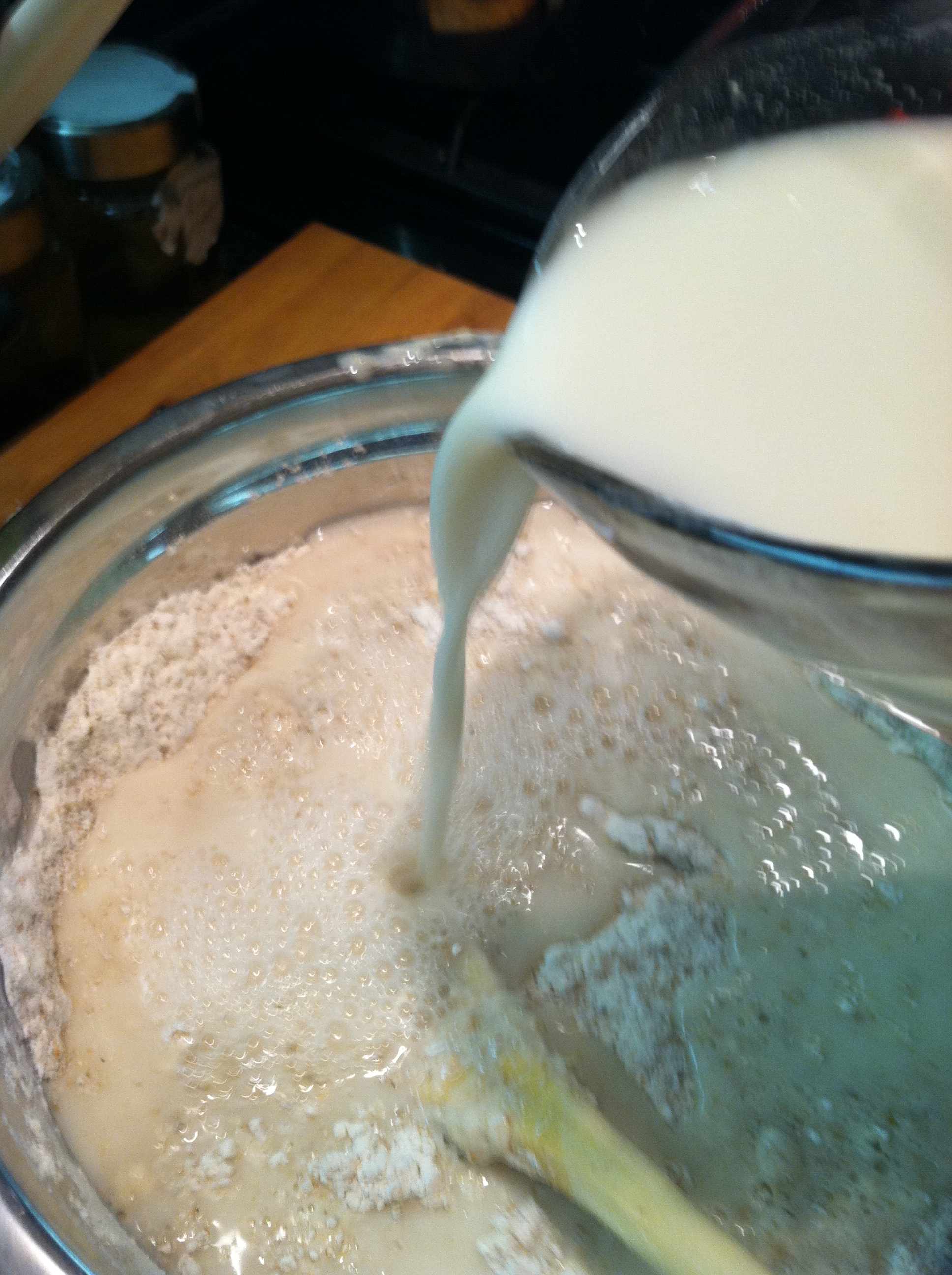
Make a well in the flour, pour all the water into the bowl and stir with a wooden spoon until all the flour is combined. Pay special attention to the bottom of the bowl.

Cover with plastic wrap – be sure to oil the underside so the dough will not stick when it reaches the top of the bowl.

Allow to double in size.

While the dough is rising, place the dried onions and caraway seeds into a small bowl and just cover then with hot water. We will fold these into the dough after they have been hydrated.

Sprinkle bread flour over the surface of the risen dough. Using a bowl scraper, scrape the dough onto a well floured surface. Pat the dough into a rectangle. Dust any sticky areas with flour as you work.

Spread some of the hydrated onions and caraway over the surface of the dough. Fold one side over 2/3’s  of the way, then the other side 1/3 so the onions and seeds are now in two separate layers. Turn the dough 1/4 turn.

The dough will be very tender and soft so work quickly.

Roll or pat the dough into another rectangle and spread any remaining onions and seeds over the surface and fold again; repeating 4 times, dusting sticky spots as you work.

For a batard, roll the dough in to a rectangle once more. Roll the short side up into a tight roll.

Dust a pizza peel with fine ground cornmeal and place the rolled batard on the peel. Cover with either oiled plastic wrap or a flour dusted linen cloth.

Allow to rise for 1 hour. During the last half hour, prepare your oven and steaming process. Follow instructions for baking bread with steam on this link.

Measure and combine flour and salt

Combine warm water and starter

Pour all the liquid over the flour

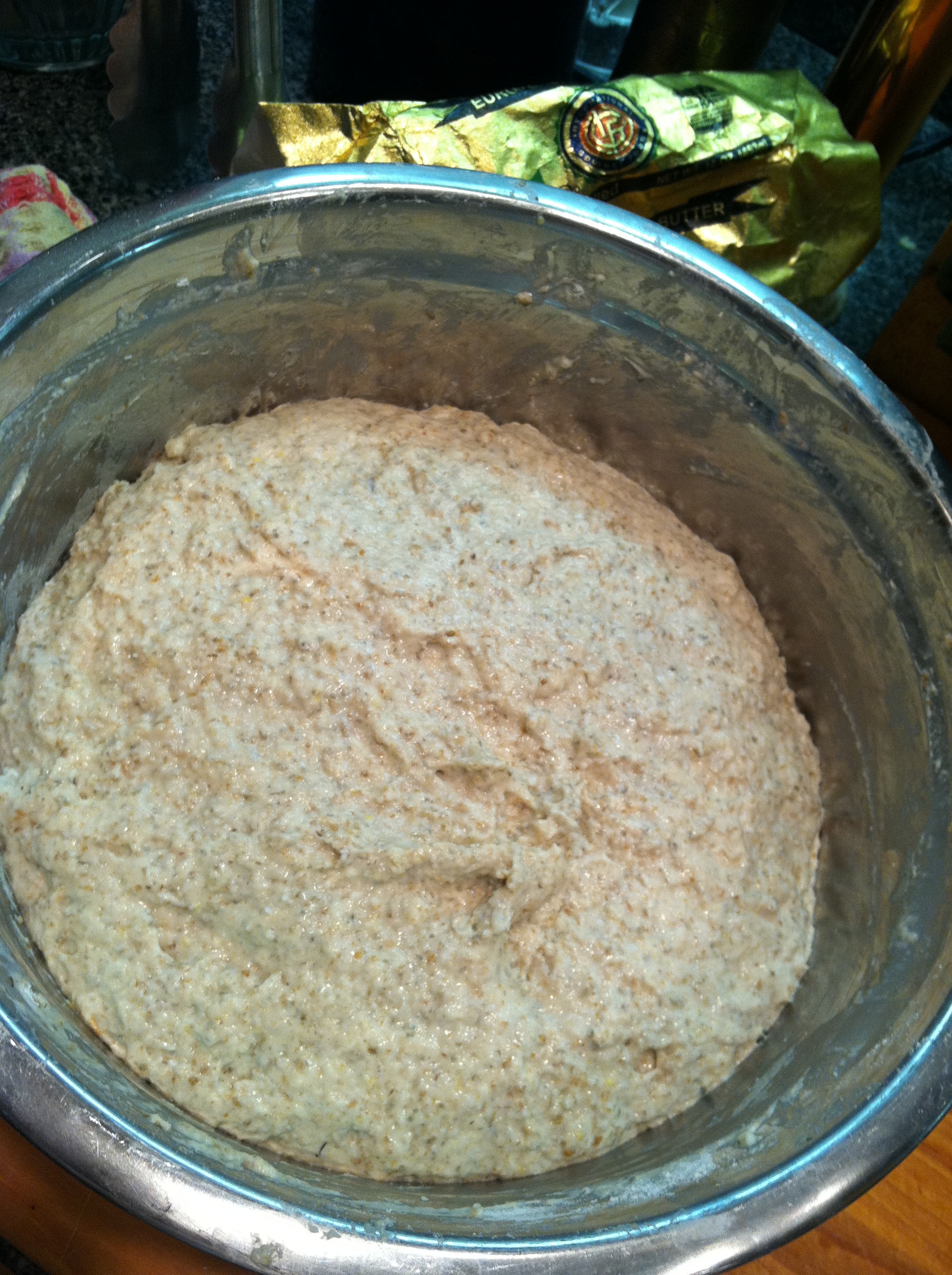
Stir well to combine

Form a ball

Cover with oiled plastic wrap; let rise 2 hours

Pat the dough into a rectangle; fold 2/3's across

Finish folding

Fold in half and turn 1/4 turn

Folding in additional onions and seeds

Second fold adding onions and seeds

Finish folding

Now you can shape it in a basket or on a peel or in a loaf pan. Let the dough rise for 1-2 hours; until doubled in size.

Bake with steam for 30 minutes or until the internal temperature reads 190°F for 15 seconds. You will notice the crust is nice and golden brown.

Remove the loaf from the oven and allow to cool completely before slicing.

Enjoy making and eating this Sourdough Rye with Onions and Caraway.

Sourdough Rye with Onions and Caraway

Finished loaves

Southern “Sweet Tea”

Sweet tea seems to be a phenomenon in the American south. In the south,  anywhere you go, if you order iced tea, you will get a big glass full of tea which is sweetened to the point of almost being syrup and ice with a slice of lemon.

Unless you ask for “unsweet tea”.

“Regular tea” down here is so sweet it should be called tea syrup. Now days you can hear ‘half and half tea’ please or half unsweet with half lemonade, which in case you don’t know, is called an “Arnold Palmer” around here.

What makes southern sweet tea different from other iced tea is that you sweeten other tea with granulated sugar in your glass. With southern sweet tea, is there is no undissolved sugar collecting in the bottom of your glass. The sugar has already been melted and added. You just squeeze the lemon and sip. (Say “Ah!” with a southern drawl)

If you travel beyond the Mason-Dixon Line and order sweet tea anywhere but in the south, you are going to get some strange looks. They usually bring you unsweet tea and a side of sugar either in a sugar canister or in packets for you to mix your own. While in the south if you just order “tea” you will get a glass of southern sweet tea. Here, that is regular tea.

Anywhere but in the south, regular tea is unsweetened.

If you find they actually have sweet tea and you are not in the south, chances are you have just found someone who is from the south and they are keeping the back-home tradition alive.

Here is how you can make southern sweet tea:

Make simple syrup:

Add 1 cup sugar and 1 cup water

Bring to boil; Simmer for 3 minutes then cool

Boil water and make tea; steep until cool

Add 1 cup of sugar to a sauce pan with 1 cup of water. Stir and bring to a boil-simmer for 3 minutes.

Make sure all the sugar has dissolved. Cool.

Boil 2 quarts of water – add 6-8 black tea bags – orange pekoe cut black tea works best – steep until cool.

Discard the tea bags.

For true southern sweet tea, add all the sugar syrup to the cooled tea, stir well.

Yes, it is s-w-e-e-t!

Like all good southerners, forget about calculating the number of empty calories.

So here are some hints: The popularity of Southern Sweet Tea is becoming increasing all across the country. You may even be able to find it in your grocery store.

IF the label says “extra sweet” honestly folks, believe them. It will be sickening sweet. However, now you can make it on your own, for pennies and control the sweetness.

Back to the tea presentation. . .

Southern Iced Tea

Fill a tall glass with ice, pour the sweet tea over ice, garnish with a wedge of lemon.

If you don’t want your tea so sweet, add the sugar syrup to taste, which is what I prefer to do.

Or if you want to deviate from the true southern tea method, add lemon zest to the sugar when boiling the

Tea with Lemon Syrup

sugar. Strain the zest out when cool.

Serve the lemon simple syrup with the unsweet tea for guests to sweeten to their liking.

Honestly, there is nothing like a good glass of iced  tea – unsweetened or southern sweet tea – both are refreshing!