Christmas Sugar Cookies

Cut-out Christmas Sugar Cookies are some of my favorite cookies not only to make but sneaking one in with a cup of tea is pure heaven.

A festive plate of Christmas Cookies

A festive plate of Christmas Cookies

Although they may look sweet, they really aren’t too sweet. Well, kinda sorta.

They make great little gifts to children and adults enjoy them too.

To make the cookies, make the dough and cut out the shapes you want. I like using impression cutters so decorating is more like coloring.

Impressed snowmen

Impressed snowmen

The angel impression

The angel impression

Rolled Out Christmas Sugar Cookies

  • 8 ounces soft butter (or 2 sticks, or 1 cup)
  • 1 cup granulated sugar
  • 2 eggs
  • 1 teaspoon vanilla extract
  • 2 – 3/4 cup all-purpose flour
  • 1 teaspoon baking powder
  • 1 teaspoon salt

Preheat the oven to 400°F.

Cream the butter and the sugar, add the eggs one at a time, add the vanilla and mix to combine.

Measure and mix the flour and baking powder together in a separate bowl.

Scrape the bottom of the bowl; add the flour 1 cup at a time, until it all comes together.

Separate the dough into 2 balls. Cover 1 and roll out the other.
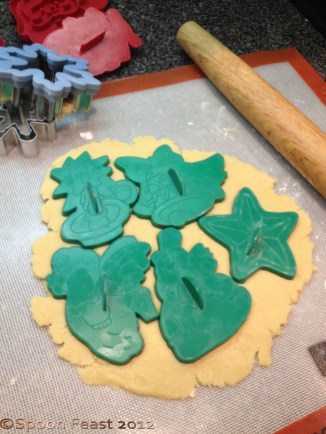
Roll out he dough and lay the cutters out.

Roll out he dough and lay the cutters out.

Lightly flour the counter and rolling-pin. Roll out to 1/4 inch thick or the thickness you desire. Just don’t make them too thin or else they will be very hard to decorate.

Cut out the desired shapes and place them on a parchment lines baking sheet.

Bake in a pre-heated 400°F oven for 6-8 minutes. The bottom of the cookies should be golden brown and the top will be pale when they are done.

Cool completely before frosting.

Lay the baked cookies on a baking sheet, organized by shape. It will make it easier to decorate them faster.

Lay the baked cookies on a baking sheet, organized by shape. It will make it easier to decorate them faster.

Butter Cream Frosting for Decorating Cookies

  • 1 cup Crisco or vegetable shortening’
  • 1 cup butter (or 8 ounces or 2 sticks)
  • 1 teaspoon vanilla extract
  • 1/2 teaspoon vanilla extract
  • 1/2 teaspoon salt
  • 4 cups 10x confectioners sugar
  • 3 tablespoons milk

Whip the Crisco and butter together, add vanilla and salt.

Add the 10x sugar a little at a time, moistening with milk as needed.

Color with food coloring and use piping bags to create your own designs, outlines, fill ins etc.

Make them as detailed as you want. Personally, I like making these things come to life and do details with all kinds of decorating sugars and piping tips.

I bought a Wilton box of 18 gel food colors and decided to make a bit of every color. I also bought a roll of disposable piping bags and some tips for each bag. There were a lot of bags and colors which makes coloring with frosting in piping bags quite fun.

Take a clean rimmed sheet pan, line it with parchment. Choose 4-5 cookies to decorate and lay them on your sheet pan. With the coloring bags and decorative sugars laid out in front of you, pick and choose and start decorating.

Eat your mistakes.

Get friends, family and kids involved. It really is quite fun!

DSC_0051

One of the snowmen

One of the snowmen

A red-headed angel with a blue dress on

A red-headed angel with a blue dress on

Holly in her hair. . .

Holly in her hair. . .

A fun tray of decorated cookies. Decorating on a tray catches all the tiny sugar bits that don't stick to the cookies.

A fun tray of decorated cookies. Decorating on a tray catches all the tiny sugar bits that don’t stick to the cookies.

A cozy snowman

A cozy snowman

DSC_0012


After the cookies are decorated, I lay them out to look at them all.

After the cookies are decorated, I lay them out to look at them all.

DSC_0015

Each gift box will get at least one of these. They make great additions to cookie platters and kids love them.

Actually, I do too. I make them every year and love giving them away.

Turn on some Christmas music, whip up some frosting and decorate to your heart’s content.

4 Safe Methods for Thawing Food

Color-enhanced scanning electron micrograph sh...

Color-enhanced scanning electron micrograph showing Salmonella typhimurium (red) invading cultured human cells (Photo credit: Wikipedia)

Food safety is a serious subject. I am passionate about preventing food borne illness. I have been teaching the subject to restaurants, hospitals, schools, dietary managers, nursing homes and at the college level since 1991. I am a Food Safety expert.

This is the launch of a series of food safety articles.

The first subject is on 4 Safe Methods of Thawing Foods.

There are 4 safe methods for thawing food. Following one of these methods can help prevent making your family and friends sick with a food borne illness.

1. Thaw under refrigeration.

This takes some planning. Sort out  your refrigerator so you have a designated drawer on the bottom of your fridge to hold raw meats.

If you want to defrost a whole 3 pound chicken, it will take about 4 days to thaw. You need to plan a place where it can do so safely. All thawing meats should be positioned so they are not dripping onto any foods below them. Place them in containers to catch thawing juices.

In My Fridge

In A Fridge (Photo credit: Nikita Kashner)

Store food according to:”Swim, Walk, Fly”

  • Ready to eat foods on top
  • Things that swim (Including oysters, clams etc. If it comes from the water, it is considered a “swimming thing.”
  • Things that walk around (On hooves and feet and have fur or hair like pork, lamb, beef, or Ostrich.)
  • Things that walk around but are ground up, like ground pork or ground veal or hamburger. These get cooked to a higher temperature than steaks, chops or roasts.
  • Things that fly ( Chickens, ducks, squab, quail, and even though turkeys don’t fly, they also fall into this category)
  • This is based upon internal cooking temperatures which will be explained in another post. For now remember and practice
  • “Swim, Walk, (Ground-up Walk),Fly”

So what happens when you don’t have the time?

2. Thaw under clean drinkable water that is 70°F or less, and either running or changed frequently.

A bowl in the sink with cold water, but not hot, is fine for thawing a package of chicken for dinner. As long as you change the water about every half hour. If water logging is a concern, place the item in a zip lock bag and place that in the water.

The water should be changed every 30 minutes.

This is not a method to use while you are at work. Why? Because the water needs to be changed every 30 minutes or lightly running so the water is exchanged as thawing occurs.

Never thaw in the sink for longer than 4 hours! That is the amount of time it takes any bacterial colonies to grow to dangerous levels.

Never, ever thaw on the counter or just left in the sink. This is a very bad and risky practice.

Keep you eye on the product, it will thaw faster than you think it will.

3. In a microwave as long as the item will be cooked immediately after thawing.

My concern here would be the quality of the item. I can’t think of anything that benefits from a run in the microwave.

But, as long as you cook the item as soon as you finish nuking it to thaw, this is considered a safe method.

Be sure to clean and sanitize the inside of the microwave after you finish thawing.

4. You can thaw food as part of the cooking process.

day fifty three | a piece of meat

(Photo credit: I Are Rowell)

The best examples here are frozen vegetables into soup stock, frozen french fries into the oven or fryer oil and frozen burgers going directly onto the grill.

Again, your call on the quality issue of cooking meats from frozen. I find the texture isn’t as nice than if you thawed it under refrigeration which is my thawing method of choice.

So there you have it. 4 Safe methods to thaw foods.

This information is from ServSafe® an educational division of The National Restaurant Association (NRA). These are the best practices that are used to train food handlers in  all restaurants, hospitals, nursing homes, schools and dietitians.

I have a dual role with the NRA to both teach and administer the exam for ServSafe®. Food safety is a passion of mine. No one should ever suffer an illness from food you eat.

Learn how to prevent such things from happening.  Become advocates for your own food safety. If you see a bad practice, speak up!

Implement good food handling practices every time you touch food.

It really is that important.

Please let me know if you have any questions!

None - This image is in the public domain and ...

The Worlds Best Olive Oil and a Give Away!

On a weekend outing recently I had the honor to meet an inspiring , charming Greek man whose family owns olive groves in Greece.

The family produces some of the best olive oil I have ever tasted. Pure, green, fruity, this oil is unlike anything you have ever tried.

The olive tree, one of the bases of Greek agri...

The oil is extra virgin, undiluted. This means this oil is from the first cold pressing of ripe olives. The category of extra virgin olive oil is required to have an acidity of .o8%. Theros  Undiluted Extra Virgin Olive Oil is .045%.

If you are lucky, you will get a bit of the denser oil that filters to the bottom of the barrels. There is a very small amount of this because most of the oil is drained off and bottled in the clear state. Because the oil is undiluted, more of the ‘solids’ will fall to the bottom of your bottle. Shake it up if you like or save it for an ultimate treat near the end of your oil.

Theros also produces and sells unfiltered olive oil.

When we were children, we lived in Seville, Spain for a few years. My mom would slather us kids in olive oil and tell us to go play outside for a while. After we would come in, bathe and go to bed. Our skin and hair were so smooth and lovely. I remember the distinct aroma of the rich olive oil on my skin. I loved it.

When I smelled Theros oil, my memories of Spain came flooding back, the rich ripe aroma of olive oil. I wanted to slather it and go play. Amazing, we were brown as berries but we never worried about sunscreen then, and didn’t get sunburned. Mostly anyway.

The trend lately is to know where your food comes from, buying local, sustainable, etc.  I find it limiting  to say “we only use food from 100 miles of where we are.”

Why be so limited when the world has become so accessible?

Here is a way to extend the boundaries of local to include the world. In this case Greece. Who can say no to Greece?

Taken by Nick Fraser in 2005. The fruit of an ...

Taken by Nick Fraser in 2005. The fruit of an Olive Tree (Photo credit: Wikipedia)

The Greek economy is in pretty bad shape now. In a small way, buying olive oil helps support the families who grow and harvest the olives. In small ways, each purchase can help the Greek economy. Small yes, but it is something.

By using our purchasing power, and choosing to buy authentic Greek olive oil, authentic Greek Feta cheese, and authentic Greek Yogurt is our own small ways we can contribute positively to support Greek economy so they can begin the recovery they need as the break away from the European Union and the Euro takes place. (In my opinion, it is a matter of when, not if.)

The Italians have had such a world-wide demand on their olive oil, most of what you find in common supermarkets can no longer be trusted to be quality olive oil of any grade.

Italy exports so much olive oil the country itself is left to buy olive oil from Spain and Greece to grace their tables. If you are buying olive oil in a market in the US, chances are rare you will see

Simple meze of feta cheese and olives: charact...

Simple meze of feta cheese and olives: characteristic Greek flavours. (Photo credit: Wikipedia)

olive oil from anywhere else but Italy.

However, with the olive oil awareness and a more sophisticated demand by consumers, your chances are improving that you will find other countries of origin.

A few days ago I tested this theory in my local grocery and was pleasantly surprised to find 1 brand of Greek olive oil and 1 brand of Spanish – the rest were Italian.

Greece is ranked second in the European Union for their production of olives – 147,500 tonnes in 2010. I do not know how much was pressed into varying grades of olive oil vs being brined to eat as olives.

It would be extremely interesting to take a sabbatical from work and go harvest olives in Greece, take the olives to be pressed and learn about brining olives to make them palatable. Then to France to harvest grapes.

What a fall that would be!

Give Away Time!

Theros Olive Oil has agreed to give away 6 bottles of

Theros Undiluted Extra Virgin Olive Oil

To win one here’s what you have to do:

  1. Follow Spoon Feast on WordPress
  2. Like Theros Olive oil on Face Book and check out the amazing photos of the process
  3. Leave a comment on their Facebook page about why you like olive oil and ways you use it
  4. Leave a comment on this Spoon Feast post about why you like olive oil and ways you use it

6 winners will be chosen based upon meeting all 4 criteria above.

We will choose the most creative and delicious ways you use olive oil.

Winners will be chosen by a panel of Spoon Feast advisers.

All domestic and international shipping arrangements will be made directly with Theros Olive Oil.

You will have until Friday, June 15th to participate!

Winners will be announced on Sunday, June 17th.

Treat yourself, Check out Theros Greek Extra Virgin Olive Oil!

English: Olives in olive oil.

Olives in olive oil. (Photo credit: Wikipedia)

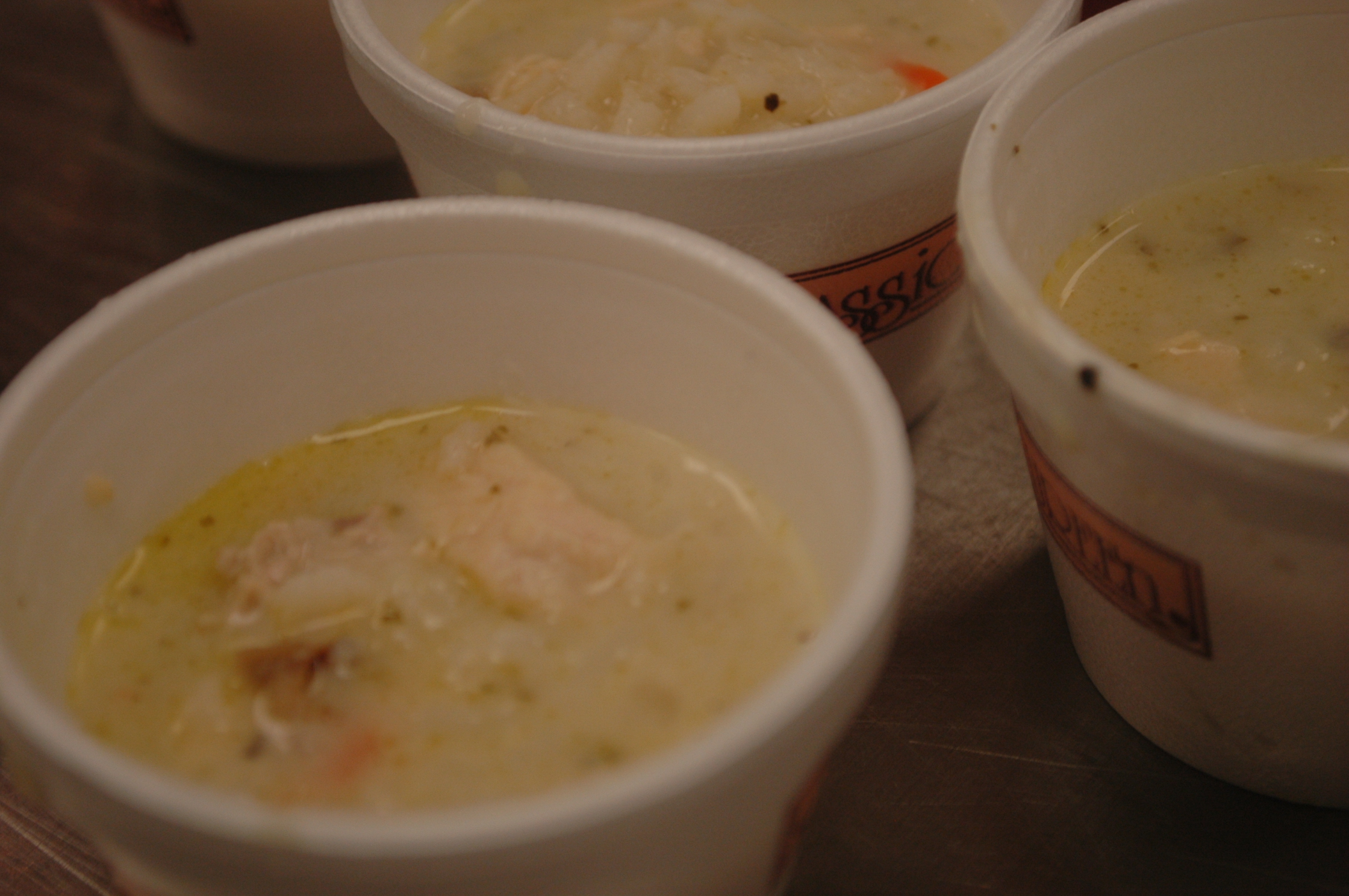
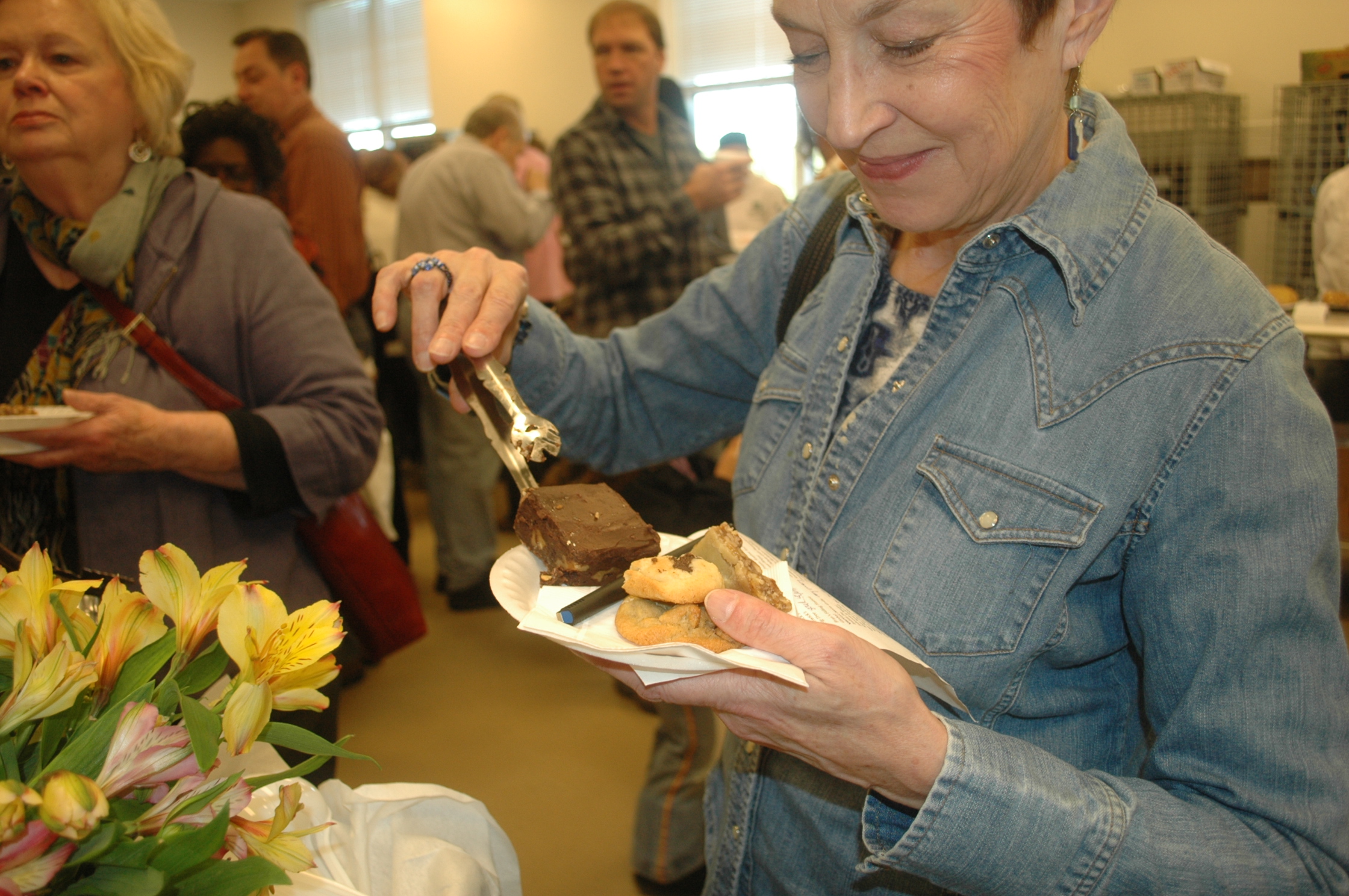
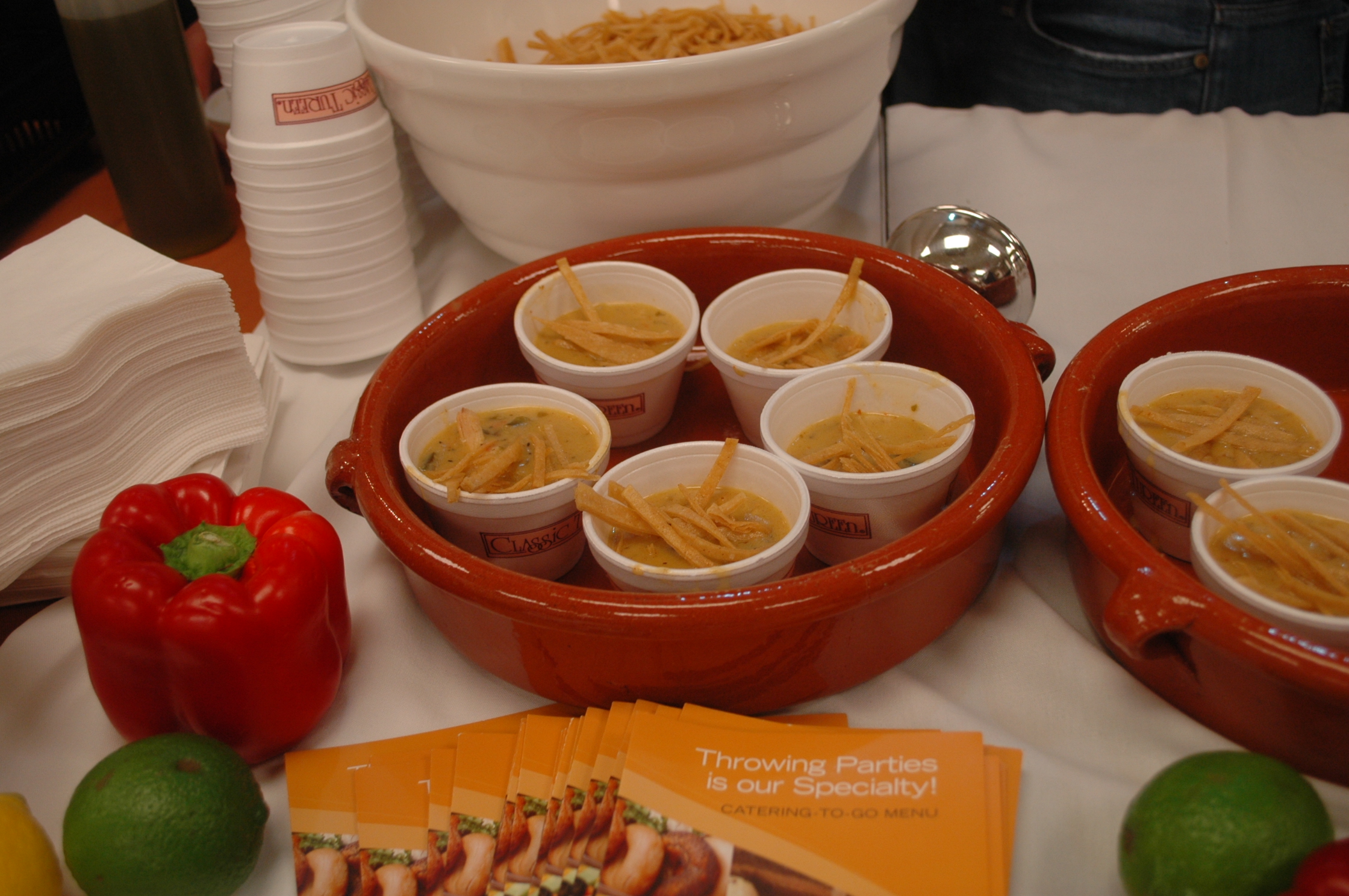
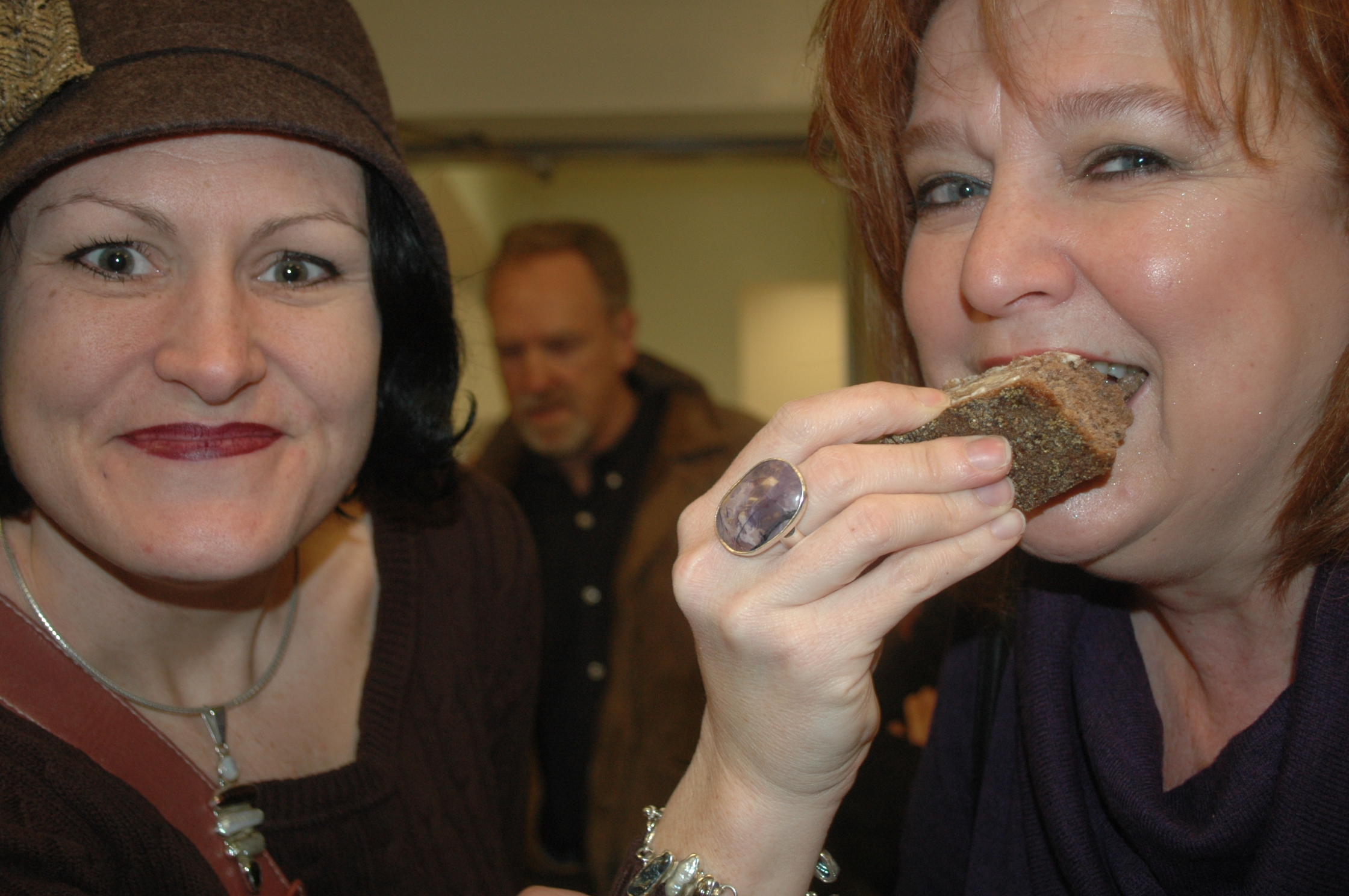
Images of Soup on Sunday 2012

This slideshow requires JavaScript.

Please enjoy these images from Soup on Sunday 2012

Soup on Sunday

Every year on the last Sunday in January, the Culinary Arts Department at Central Piedmont Community College hosts a fundraiser “Soup on Sunday” to raise money for Charlotte area Hospice.

35 restaurants make at least 5 gallons of soup, stations are set up  in our teaching kitchens, dining room, classrooms and hallways to offer up various tastings of soup, breads, pizza, desserts, drinks and pottery.

“To taste only” is misleading – you get to eat 35  two-ounce samples of soup. That is over 1/2 gallon of soup! Not to mention the breads, pizza, desserts and chocolates. So you  actually get stuffed or stuck on your favorite things.

Local potters make bowls for the occasion. Buying a bowl is part of the tradition. If you like, you can use your bowl to sample the soup or have a big bowl of your favorite.

The event is fun, exciting and raises a decent amount of money for the cause. This year tickets sold for $40 which includes your choice of bowl or $30 to taste only.

We expect over 700 people this year, maybe more since the weather is amazing. 2 years ago we had to reschedule due to snow and then we competed with the Super Bowl when we finally got to host the event. This year will make up for that!

Local culinary schools like The Art Institutes and Johnson & Wales show off their wares in desserts and chocolates. It is fun to watch the students “strut their stuff” at events like these.

Additionally students get involved with volunteering. A concept some have never considered yet is so important for a vital community.

Hospice is a great cause for end of life care. I am glad we can do something for them who do so much for us when needed.

What do you volunteer for that helps build your community?

Our Director of Sanitation Maneuvers

Food Safety

English: Template for Template:Food safety

Image via Wikipedia

Nearly every day we hear of  food safety related issues in the news: salmonella, Listeria, E coli, norovirus, hepatitis a,b,c, Shigella contamination and food recalls. While most people think these issues are concern only to the commercial food industry, the truth is these issues matter at home too.

Food safety is a passion of mine. We all expect restaurants to handle the food they prepare safely and not transmit any food borne illnesses. Protecting  public health through training and education is expected, encouraged and required by laws and regulations.

The general public has a notion of what they expect from a restaurant as far as sanitation standards are concerned but neglect to apply those same expectations to their home kitchens.

How well do we do at home?

Food borne illness outbreak investigations begin in the victims home. Often it is found we have made ourselves sick.

If we look at the top five areas the Center for Disease Control and Prevention (CDC) has identified as the most likely to produce a food borne illness, we can analyze how to do better at home.

1. Buying food from unsafe sources

2. Failing to cook food adequately

3. Holding food at incorrect temperatures

4. Unclean equipment and utensils

5. Poor personal hygiene

Let’s take a look at each area and see what we can do to improve the sanitation of our home kitchens. A little knowledge can save a lot of discomfort while preventing a food borne illness outbreak.

1. Buying food from unsafe sources

Know where your food comes from. If you buy from farmers, ask about their agricultural practices. Are they organic? Do they have documentation to prove it? Can you come visit the farm?

For grocers and other markets, look around and see how clean it is. Notice handling habits of employees and don’t be afraid to speak up when you see something you think should be corrected.

Transport your food from the store to home in cooler bags and properly put the food away as soon as you get home.

Use the rule of 2 hours or less out of refrigeration. This includes walking around the store, taking it home, unpacking and putting it away. Do it quickly. Don’t buy groceries and then just “run in for a minute” anywhere. Food has the priority over just about anything else short of a medical emergency.

Remember this rule: Any food that has been out of refrigeration for 4 hours or more has to be thrown away.

Color-enhanced scanning electron micrograph sh...

Image via Wikipedia Color-enhanced scanning electron micrograph showing Salmonella typhimurium (red) invading cultured human cells Credit: Rocky Mountain Laboratories, NIAID, NIH

2. Failing to cook food adequately

Cook poultry well done. That is at least 165°F (74°C) for 15 seconds. There should be no pink or red juices and no red or pink near the bones.

The inside of muscle meat is considered sterile until pierced. So don’t go poking your fork in the steaks for the grill if you want them on the rare side. Poke them only after the outside has been seared.

3. Holding food at incorrect temperatures

Hot food hot and cold food cold. The temperatures are 135°F (57°C) for hot food and 41°F (5°C) for cold foods. Anything in between is optimal for bacterial, viral and parasitic growth.

DO NOT thaw frozen proteins on the counter or in the sink. Thaw in the refrigerator, or under lightly running water that is 70°F (21°C) which means the water is cold, not warm or hot!

Always sanitize the counter, sinks, tools, towels, aprons etc. after handling proteins using a bleach solution of  1/8 tsp bleach to 1 quart of cold water.

4. Unclean equipment and utensils

After each use and before starting another one, all used equipment must be washed, rinsed and sanitized before starting another task. Run things through the dishwasher on the sanitizer cycle with heat dry.

When was the last time you cleaned out the refrigerator and washed all the drawers, walls and shelves? Do this task on a weekly basis and daily as spills occur.

None - This image is in the public domain and ...

Image via Wikipedia

5. Poor personal hygiene

Wash your hands, wash your hands, wash your hands. When handling food, you can’t wash your hands too much.

If you have a wound or injury that has broken flesh, cover the wound with a bandage and wear a glove.

Do not prepare food for other people when you are ill.

Sorting out your home refrigerator

If you know what order foods should be stored in, you can avoid the risk of causing a food borne illness in your home.

Here is a simple rule I call “Swim, Walk, Fly”

From the top down designate areas for:

    • Ready to Eat (vegetables, salads, cakes, fruit, drinks, cheese)
    • Things that swim (fish, shrimp, seafood – fresh and salt water)
    • Things that walk (Beef, pork, lamb roasts or steaks)
    • Walking things that are ground up (Ground beef, ground pork, ground lamb)
    • Things that fly (chicken, quail, turkey, duck, pheasant, squab, eggs)

All flying things are to be on the very bottom. Keeping items in this order will prevent any cross contamination. Teach your family how to properly store things in the refrigerator too.

Cover and label all food correctly.

Date when things go into the refrigerator and then throw them out after 7 days.

Cool food before placing them in the refrigerator. Remember to cool food quickly – four hours or less or else throw it out.

Use ice baths, cut into smaller portions, increase the surface area by spreading the food on a sheet pan are all methods to cool food quickly before storing.

Pack groceries carefully. Keep all proteins in separate plastic bags.

Do not mix muscle meats with ground meats; keep them separated.

Keep all poultry separate from everything.

If you use cloth bags for your groceries, be sure to wash them once a week or more often if they become soiled or stained.

Designate different bags for meat and bags for produce.

Food Safety is not just for professional food handlers. It is for everyone.

A little bit of knowledge can go a long way in preventing some pretty serious food borne illnesses.

Implement your own food safety program at home today.

If you need any help as to how to get started, let me know. I’ll be glad to help.

Hunger in America: How to Help – ABC News

Members of the United States Navy serve the ho...

Hunger in America: How to Help – ABC News.

Do you realize that 1 in 6 Americans is hungry?

If you have food on your table and in your refrigerator consider yourself lucky.

This holiday season I would like to ask that we all do something within our

communities to help those who are hungry, adults and children. Hunger knows no race or age. Hunger is something we CAN do something about.

What can you do?

  • Locate your local food bank- volunteer and contribute
  • Sponsor a food drive at your work. Collect non perishable foods for donation.
  • To be successful gathering food, it helps to offer suggestions as to what you want : canned vegetables, canned soup, dried soup mixes so you don’t end up with all one kind of item.
  • If you know of a family who could benefit from food donation, make a donation basket or box and leave it anonymously.
  • Make a whole bunch of cookies or bread and take it to a Ronald McDonald house or nursing home. Cookies and bread are feel good food and these people deserve to feel better.
  • Volunteer at a soup kitchen or place that is serving holiday meals to the hungry and homeless.
  • Deliver goodie boxes or baskets to women and children shelters.
  • Get involved with your church groups outreach programs.
  • Start your own community outreach-perhaps something that extends beyond the holidays. Hunger is year round.

The most important thing is to DO SOMETHING!

Please read the link from ABC News regarding Hunger in America. In the link there are ways to donate time, talent, money so we can all do something about hunger.

Please do something, anything at all.

Please take a look at this link from ABC News regarding Hunger in America here to help you identify ways you can make a difference.