Cooking Quickie: “What does it mean to ‘Butter the Casserole’?”

“Cooking Quickies” are simple cooking questions heard from readers, students and general people. Please send your “Quickie Questions” to spoonfeast@gmail.com

Cooking Quickie:

What does it mean to “butter the casserole?”

This refers to a vessel in which you are putting a mixture of ingredients where they are going cook for a period of time.
What they want you to do is take butter and smear it all over the inside food contact surface.

The purpose is to make the food easy to remove so it does not stick to the inside of your cooking vessel.
I say ‘cooking vessel’ because it can be a heat proof glass dish (aka. Pyrex), a clay dish, a porcelain ramekin, a stainless steel pan, loaf pan etc. There a lot of choices.

Instead of butter you can also spray the inside surface with an oil spray such as PAM. Fewer calories and just as effective.

When making cakes or souffles, you would also dust the butter with flour, sugar, Parmesan cheese as appropriate.

Some pan release sprays have both oil and flour in them, read the labels. These are commonly called ‘Bakers Spray’. Some pan sprays contain alcohol.  I prefer the ones that are 100% oil. The alcohol evaporates leaving a much thinner coat behind which could result in some sticking.

Be sure to look closely at the inside your casserole dish and make sure you got every little place coated with butter.

You can use hard or soft butter (it smears easier), salted or unsalted. You can even use margarine if you want.
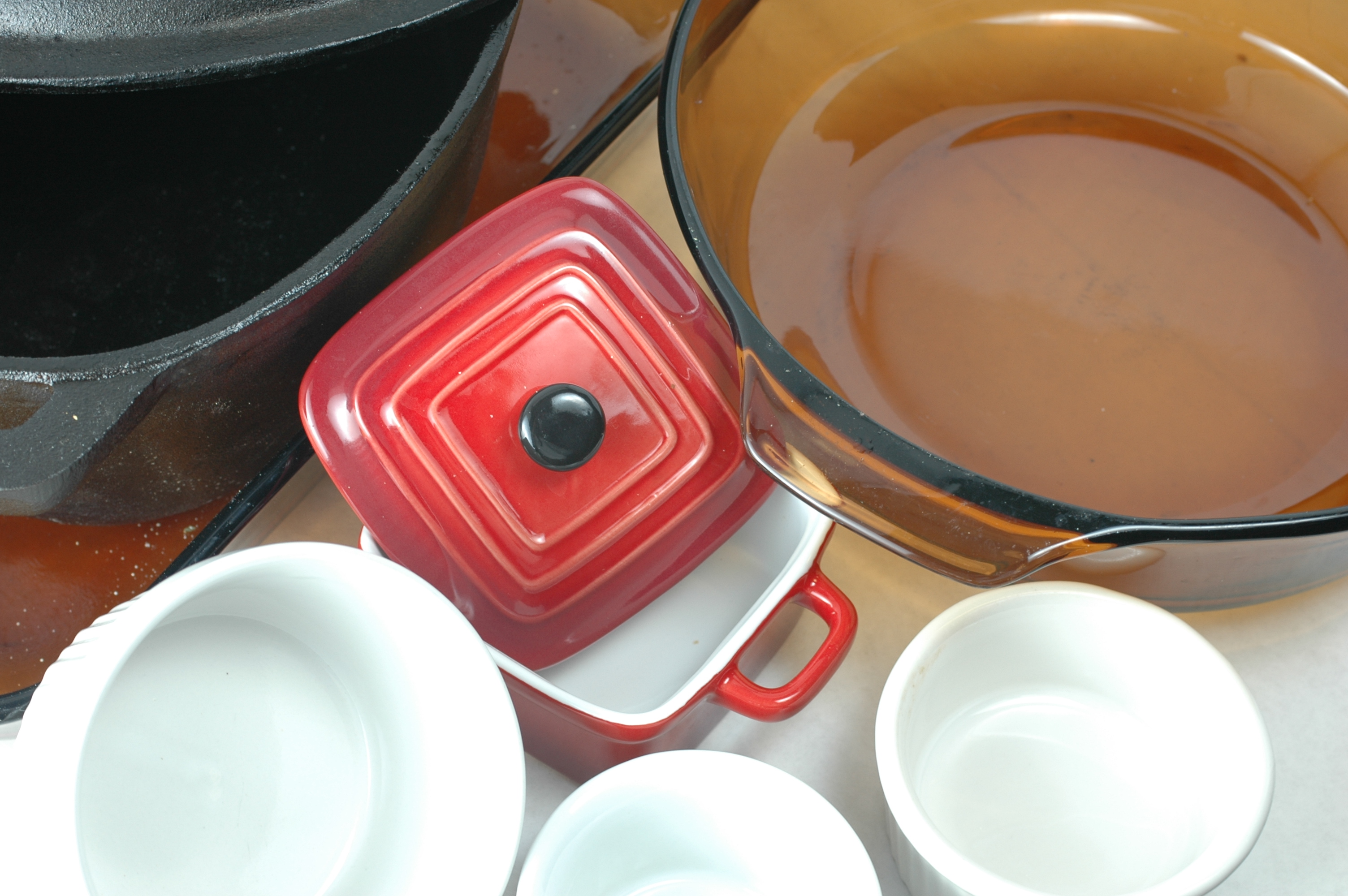
Various casserole Dishes

Writing in Cookbooks

Not too long ago, another bloggerThe Ranting Chef, wrote about writing in his cookbooks. He said he didn’t write in books until recently. He came up with a great way of categorizing their favorite recipes and those recipes with the highest ratings were listed in the front of the book by a ranking system he devised.

Writing in cookbooks is a wonderful thing to do. I make notes of variations, adjustments, likes and dislikes. What works and what does not work is also clearly noted.

The only cookbooks I don’t write in are those that I consider “art” cookbooks. Even then, if I make an adjustment of note, I’ll print it along side of the appropriate text.

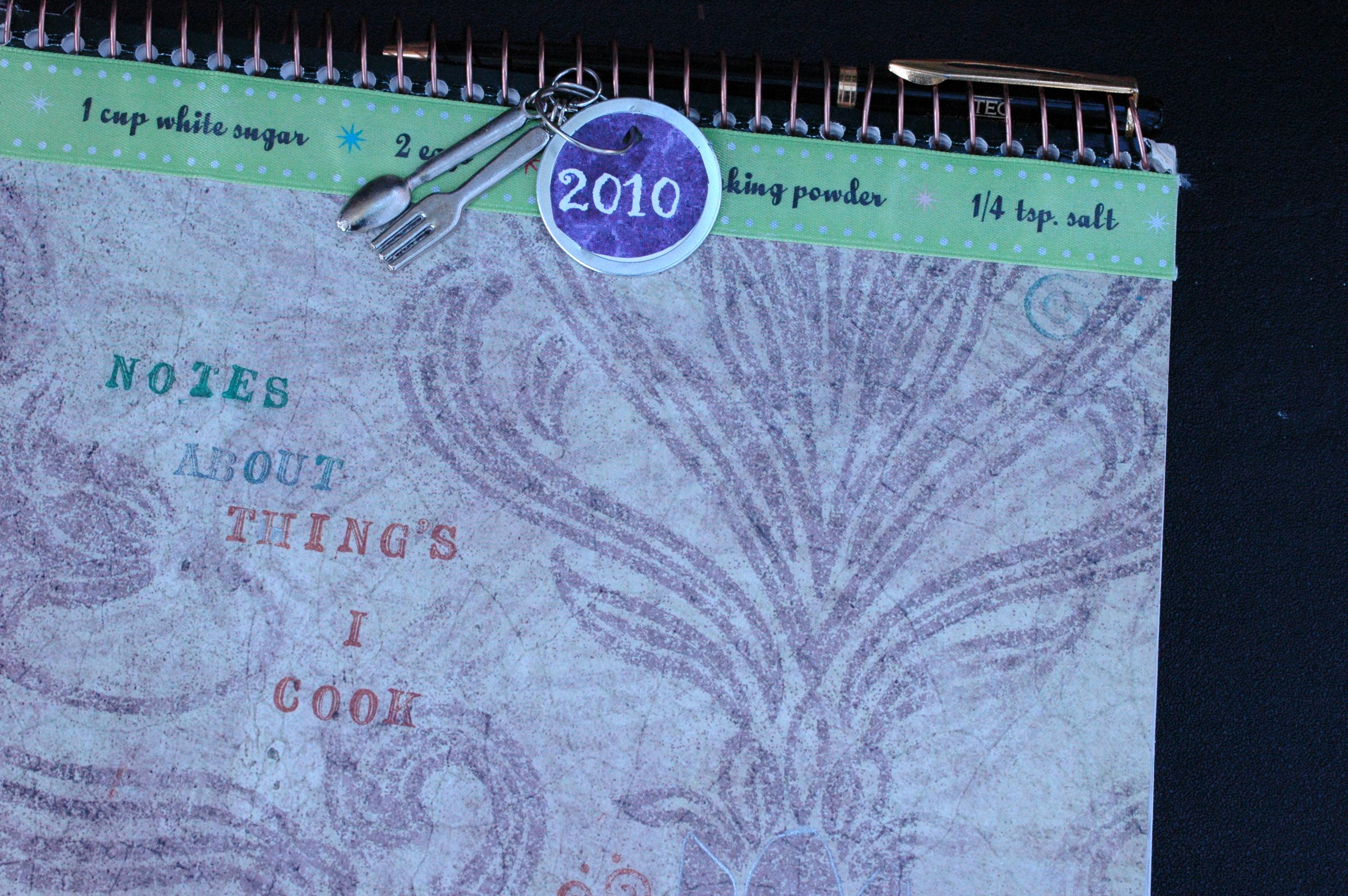
There is a spiral bound notebook I keep nearby in the kitchen to collect thoughts, ideas and original recipes. I keep post-it tabs on pages I want to find again and again.

My cookbooks are my tools as are my knives and micro-planes. They do you no good if you don’t use them.

Cookbooks are meant to tease you into making something you haven’t tried before. To learn a different technique, style or how to handle a new ingredient. Valuable lessons.

Not all recipes work. When first looking at a recipe, I’ll scan it for technique, style and ingredients and ingredient ratio. After all a recipe is only a mathematical ratio of ingredients with the factor of heat applied.

Many recipe writers don’t understand the complex relationship of ingredients. Considering an ingredients function: liquid, acid, fat, sweeteners etc. and how they interact, and how the ingredients relate to each is crucial for a recipe to work out. I have a text-book that has so many typos in it (shame, shame!) I am not going to use it anymore.

When we discover a recipe in class that isn’t working, we make notes about it directly in the book. Some students look at me as if I just sprouted another head when I tell them to note it “in the book”. The book is a tool and unless you use it, it won’t do you much good.

Leaning on a book  too much instead of learning the essence of the dish, a book becomes a crutch without deeper learning. Learn to scan and analyze what your recipe is trying to tell you. Notice ratio relationships, techniques and methods. Notice ingredient combinations.

Soon you will develop your own recipes and menus from looking at what you have on hand rather than depending on a book to help you decide what to cook.

Learn cooking correctly, you will use a recipe as an idea rather than follow it word for word. If you learn the five basic “Mother Sauces” you will be able to recognize the methods and techniques and be able to say to yourself ” Oh, I know how to do that, it’s a bechamel” and be able to use that as a jumping off point rather than following the recipe exactly.

Most of all, remember not all recipes work.

So, Ranting Chef, I applaud your recipe rating system.

Keep writing and making notes in those books. You won’t need to remember the recipe needs 32 ounces, not 3.

Cookbook Shelf

Cookbook Shelf (Photo credit: LollyKnit)

Lobster-cide

No more “lobster-cide”; I can’t kill lobsters anymore. Being a chef, and an instructor who used to be able to teach such things to poor unsuspecting students, this isn’t something you’d admit out loud.

I was reading Domestic Diva MD‘s post on having to cut up a chicken and kind of understood what she was crying about. I can butcher chicken and birds quite well, it doesn’t bother me at all.

Suppose that is because they are dead when they arrive on my cutting board.

This is a wooden chopping board with a chef's ...

Image via Wikipedia

Lobsters, on the other hand, come in live and kicking and probably pretty frustrated by having their claws banded shut. (thank goodness!) or OUCH! pegged shut. ( The would probably be more angry than frustrated.)

Lobsters shipped for consumption in the United...

Image via Wikipedia

They flicker their feelers at you, roll their odd eyes and foam at the mouth for desire to be back in the water.

They try to walk around so you have to watch them or put them where they can’t get away.They often pack fresh seaweed with them so they have something familiar on their death ride besides a waxed box with ice. That is most likely not the reason, but it is my guess for now.

In order to kill them correctly, you need to rub them between the eyes to calm them down and ‘put them to sleep’ before plunging a 12″ razor-sharp knife into their brains.

“Kills them instantly.” says Eric Ripert

Has he ever been a lobster? How does he know?

I can’t do that anymore. I am bothered by being able to do it in the first place. Once they are dead, no problem, just can’t kill them.

The last time I had to kill lobsters was for a dinner party I was doing for a friend in Atlanta. 14 lobsters for the appetizer.

14 live and kicking lobsters. I could hear them scratching around inside the box, slightly muffled by the seaweed packed in the box with them.

I placed them in the kitchen sink. I got creeped out by so many large weird leggy things scrambling around in the sink, I had to put some of them back in the box.

Then the killing started.

Rubbing the space between the eyes, they calm down. Ready, Aim, Plunge and split the thing in two.

OH! How it writhes and wiggles after!

After forcing myself to do all 14, I was a total basket case. Crying, kneeling down begging forgiveness for taking their lives, who was I after all to decide it was their time to die?

It was quite a horrible struggle emotionally and morally. I won’t kill lobsters anymore.

Not that way. If necessary, I’ll put them into a perforated hotel pan and pop them into a fully active steamer and slam the door shut for 8 minutes.

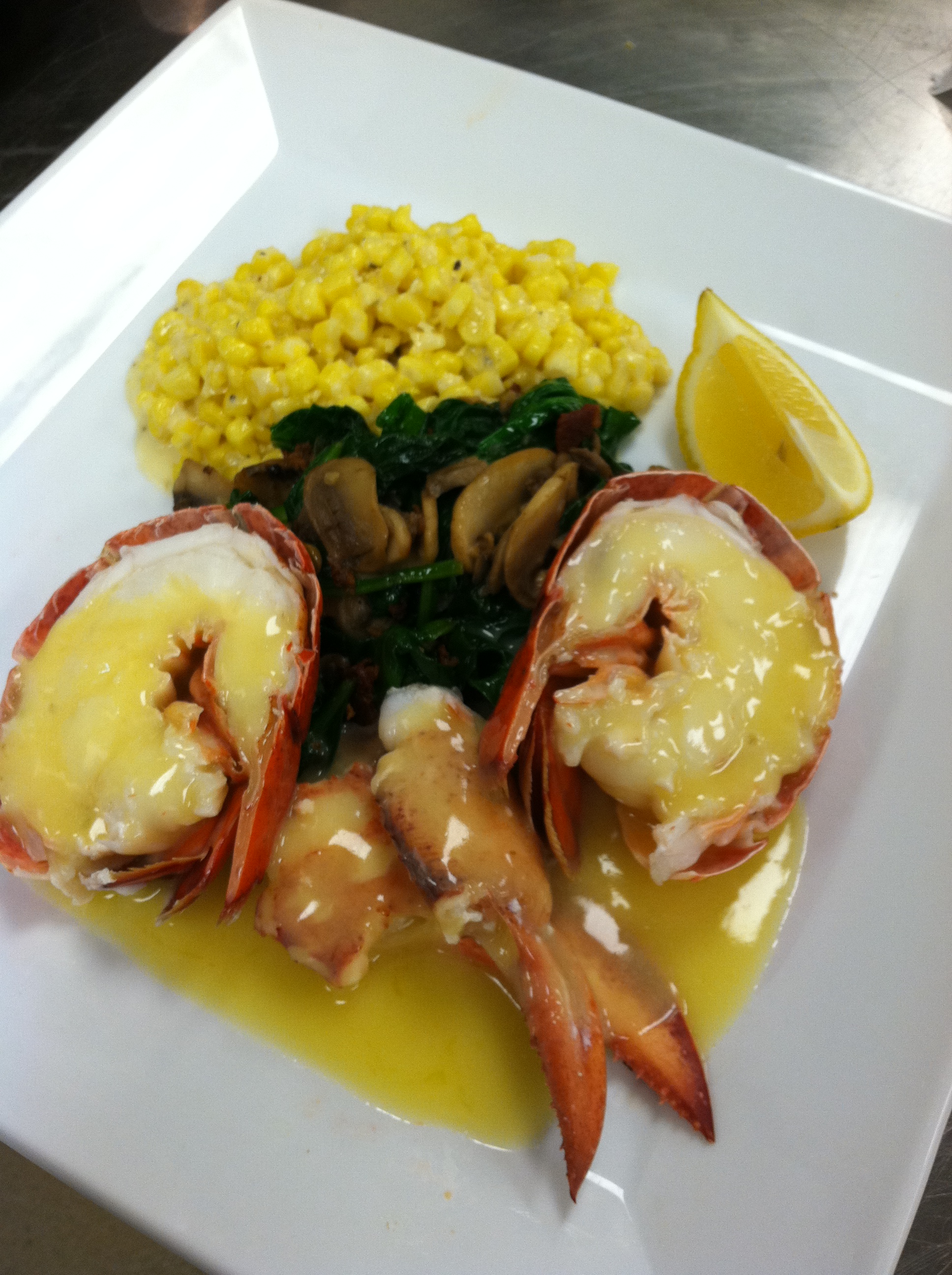
When I return, voila! Lobster meat. The shells have turned red and there lies the perfect ready to eat lobster, after you rip off its tail and claws.

(I worry about the students who ‘get a kick’ out of learning this. Glad they only get 1 lobster)

Melt some butter and Bon Apetit!

Just don’t ask me to kill them anymore.