All About Potatoes – What is the difference?

In this post, I will attempt to explain all about potatoes, explain the varieties available and when to choose one over another.

What is the difference between potatoes?
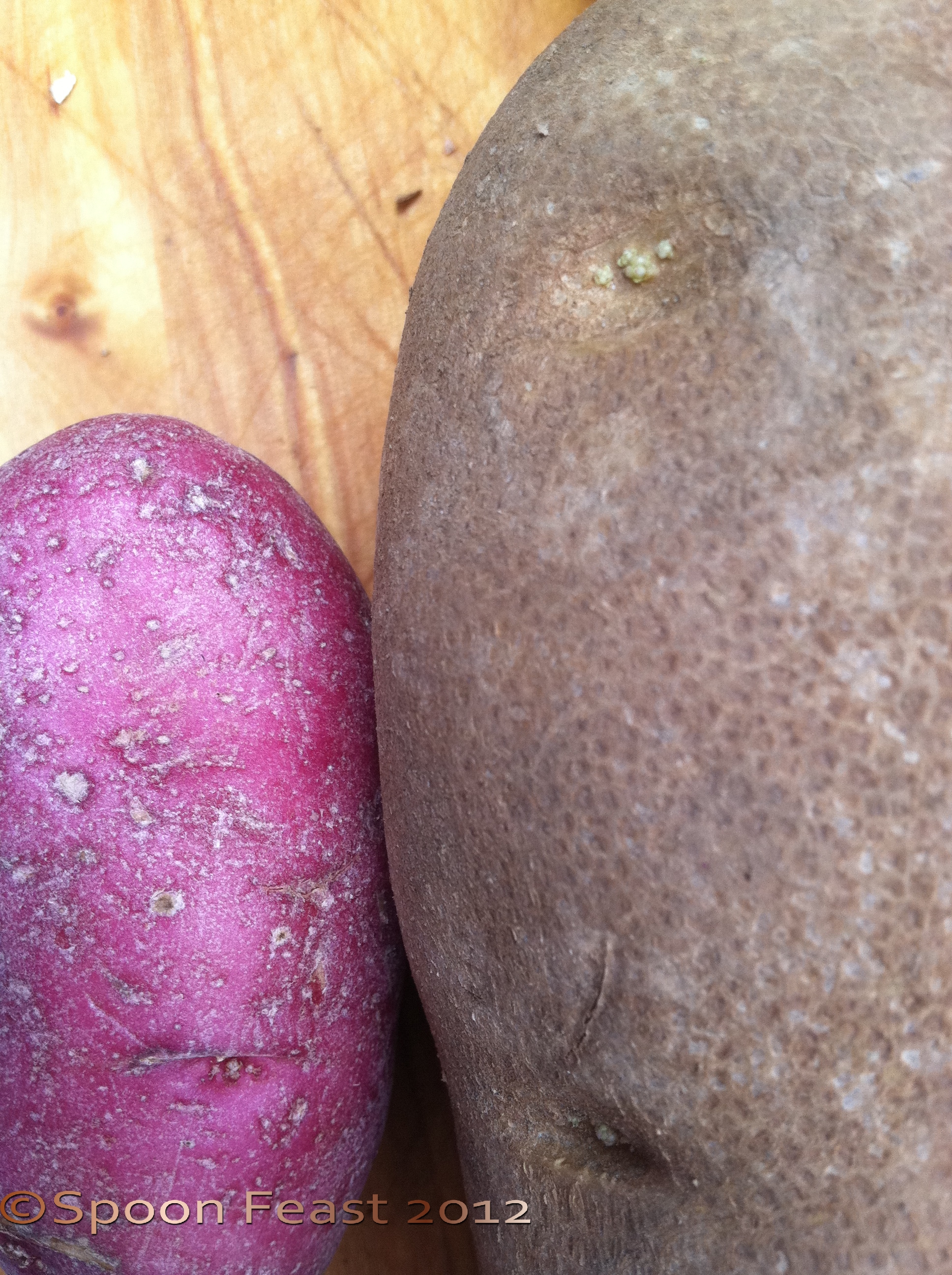
Red skin and Russet Potatoes

Next time you go shopping for potatoes, you will have a lot more knowledge about them after reading this post.

Have you ever:

  • Tried to make french fries from scratch only to have them turn out limp and soggy?

  • Tried to make potato salad or put nicely diced potatoes in a soup only to have the potatoes all fall apart?

  • Ever had your mashed potatoes turn out like glue?

  •         Had a baked potato explode on you in the oven? (Technique rather than variety is the secret)

It all has more to do with the potato you chose to make the dish with than your culinary skills, which I am sure are impeccable.

There are few categories in the potato world. Basically there are low-moisture, high-starch varieties and high-moisture, low-starch varieties.

The high starch varieties will fall apart if cooked in liquid but create light and fluffy mashed potatoes, crisp french fries and crispy chips.
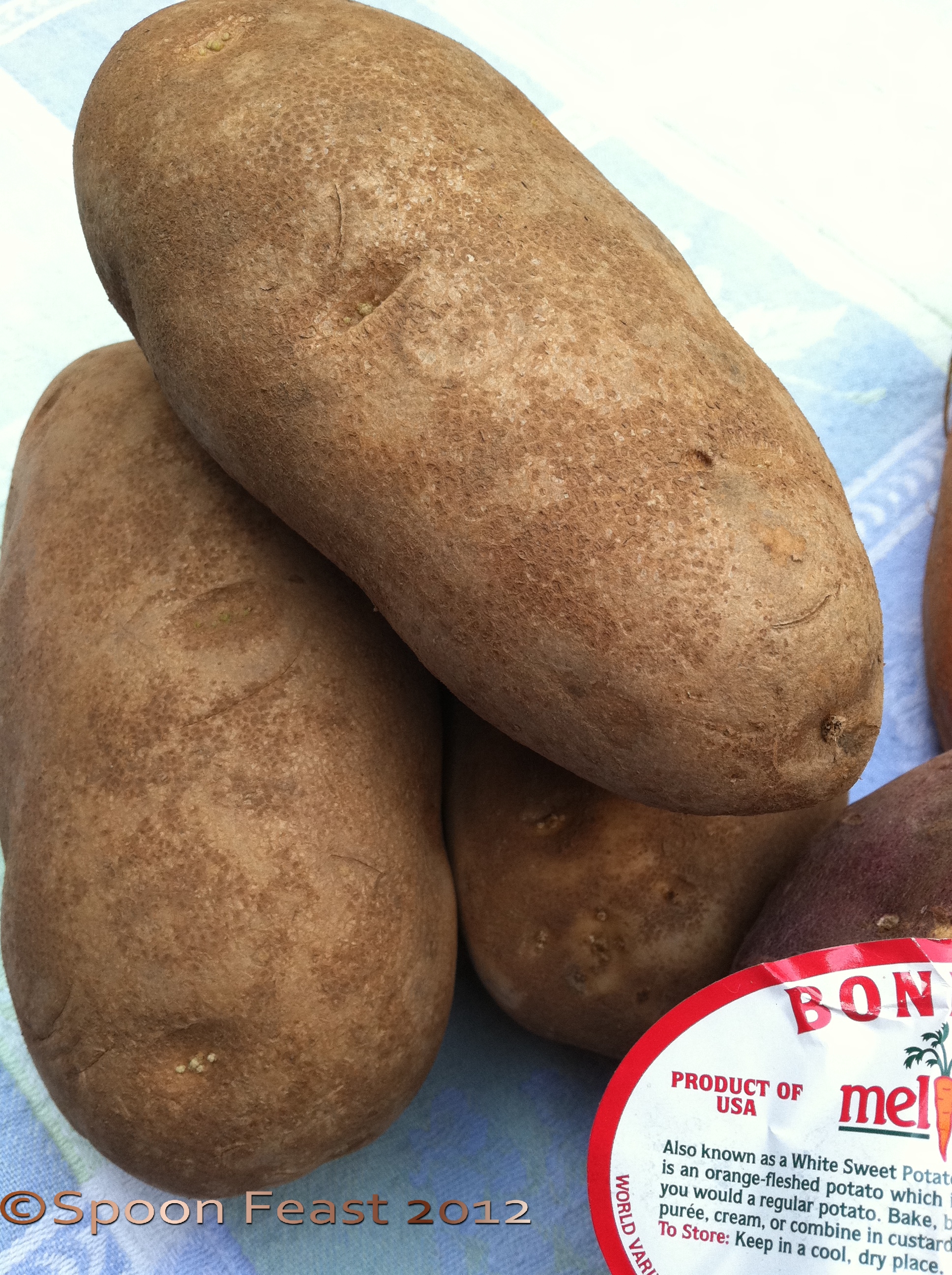
Russet Potatoes – notice the dark, thick skin. Compare this to a new potato which has a thin tender skin.

The russet is the king of the low moisture-high starch category. These potatoes have thick dark skins as opposed to the thin tender skin of new potatoes.
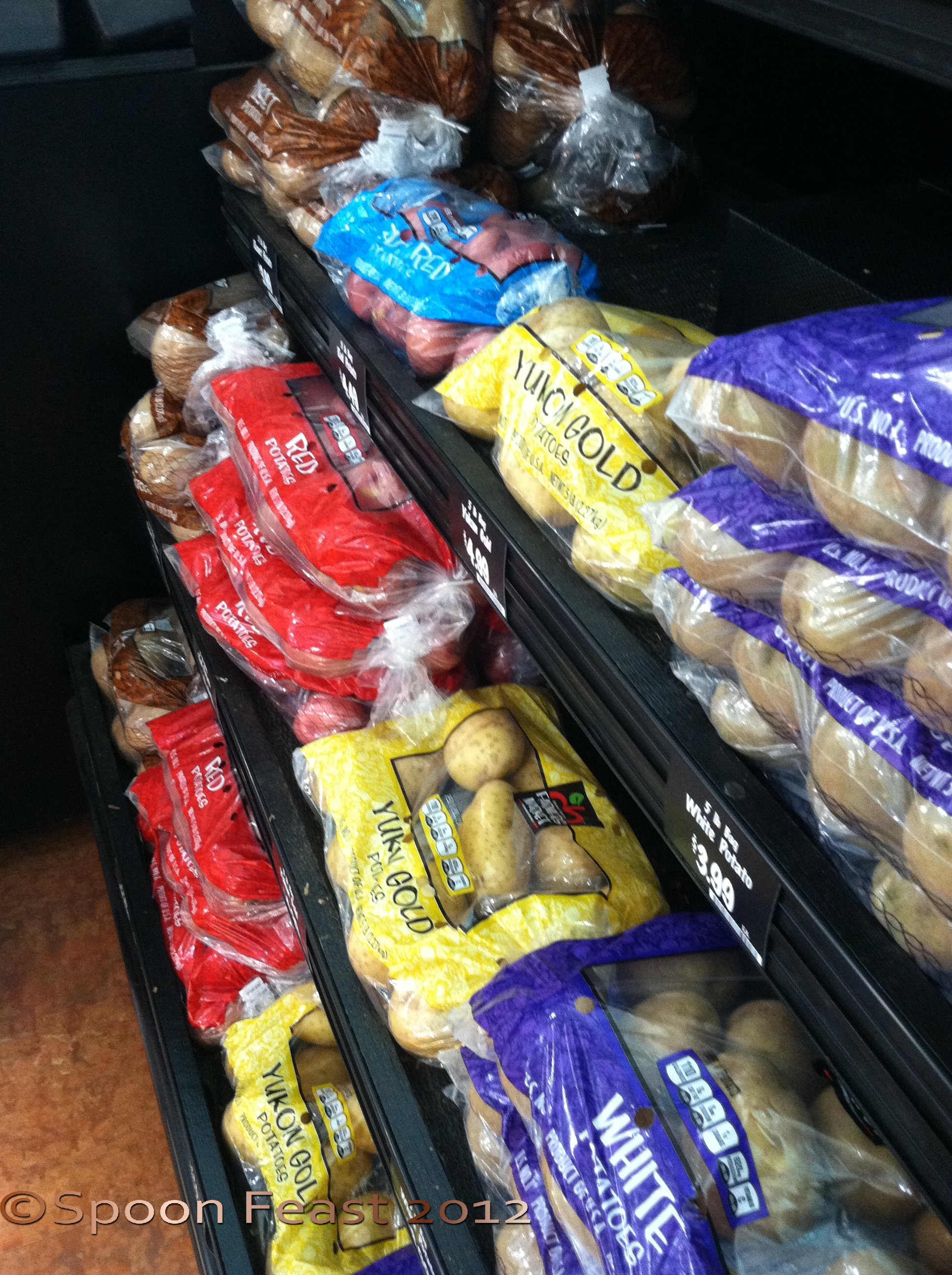
Yukon Gold: thin skin, shallow eyes and golden flesh

The low starch – high moisture category belongs to red potatoes, Yukon gold, new potatoes. All potatoes with a tender thin skin will be high moisture, low starch potatoes.

These potatoes hold their shape in soups, casseroles and salads. Their tender skins are often deep-fried and used a receptacles for dips, spreads, chili and salsa.

Go to the store and buy some of each variety and compare them. Cut them, notice the textures. Cook some of both using a variety of cooking methods and compare results. Make notes so you can remember what you discover during this experiment.

Then we have sweet potatoes and yams.
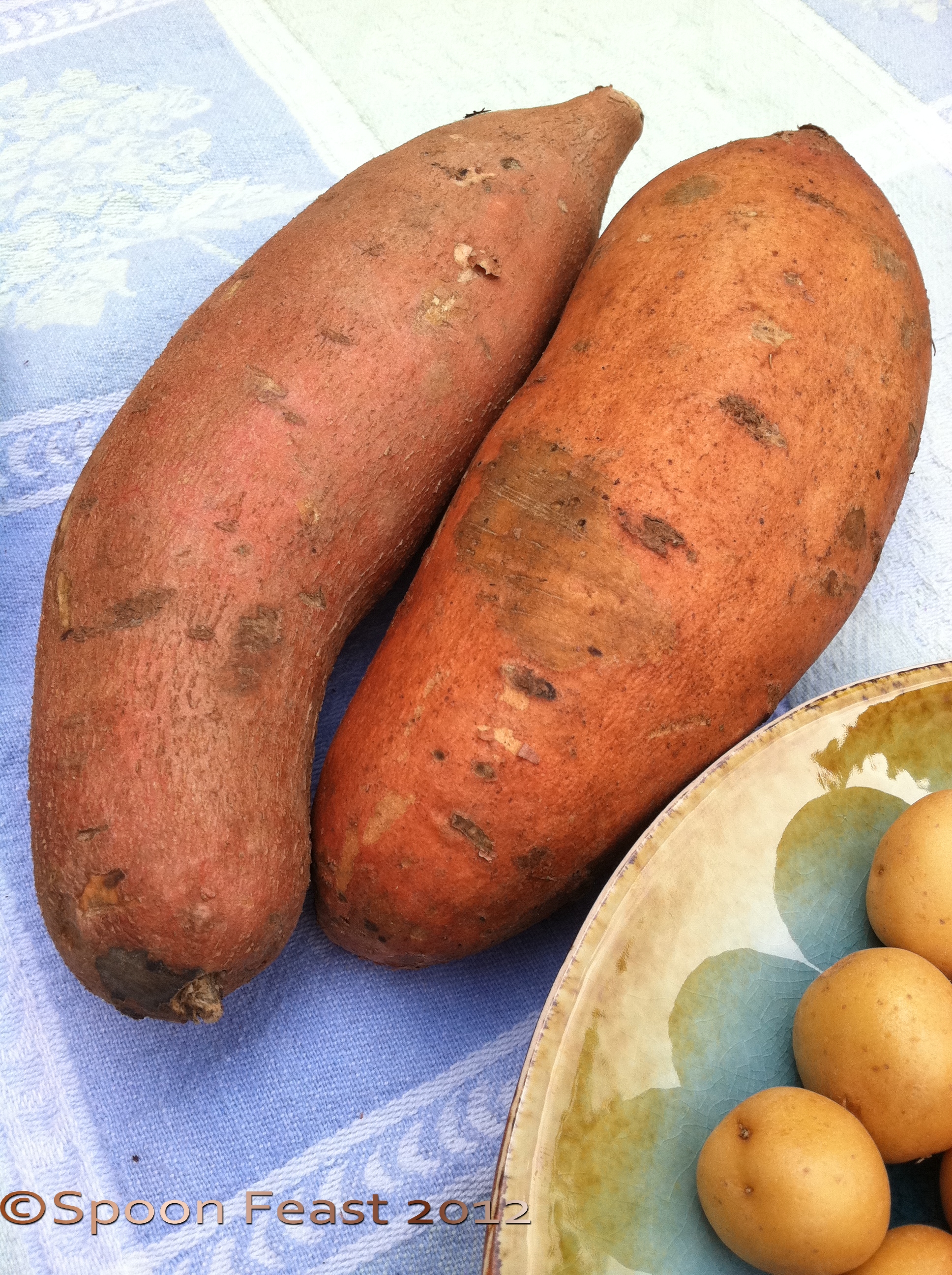
Yams are not as high is sugar as sweet potatoes are but they taste just a good. Be careful with large varieties of these potatoes as they can get very stringy. Choose smaller, even sized, good color and smooth skins when selecting these potatoes for purchase.

Typically, sweet potatoes and yams can be used interchangeably and can be applied to a many cooking methods. The skins are not edible. Colors vary from pale yellow to deep orange and now there are garnet and purple varieties too.

Tiny new potatoes, fingerling potatoes, “potato gems” are all varieties that belong in the low starch, high moisture variety. their size and shape make them special in that you can cook them without peeling or cutting them if you wanted.

Fingerling potatoes

Some of this variety are so moist and tasty, you never miss the butter.

Have you ever seen a blue or purple potato? They really are blue or purple throughout. And they stay that way when cooked.

When you have purple asparagus or purple carrots, they lose the purple color when cooked.

Purple potatoes do not! For the most part, you can use them as a high moisture low starch potato, but they do mash well without turning into glue or paste.

Additional varieties from the potato world include Malanga, Boniato which take to any cooking method potatoes do.

Boniato, inside flesh is white. Use these as you would sweet potatoes.
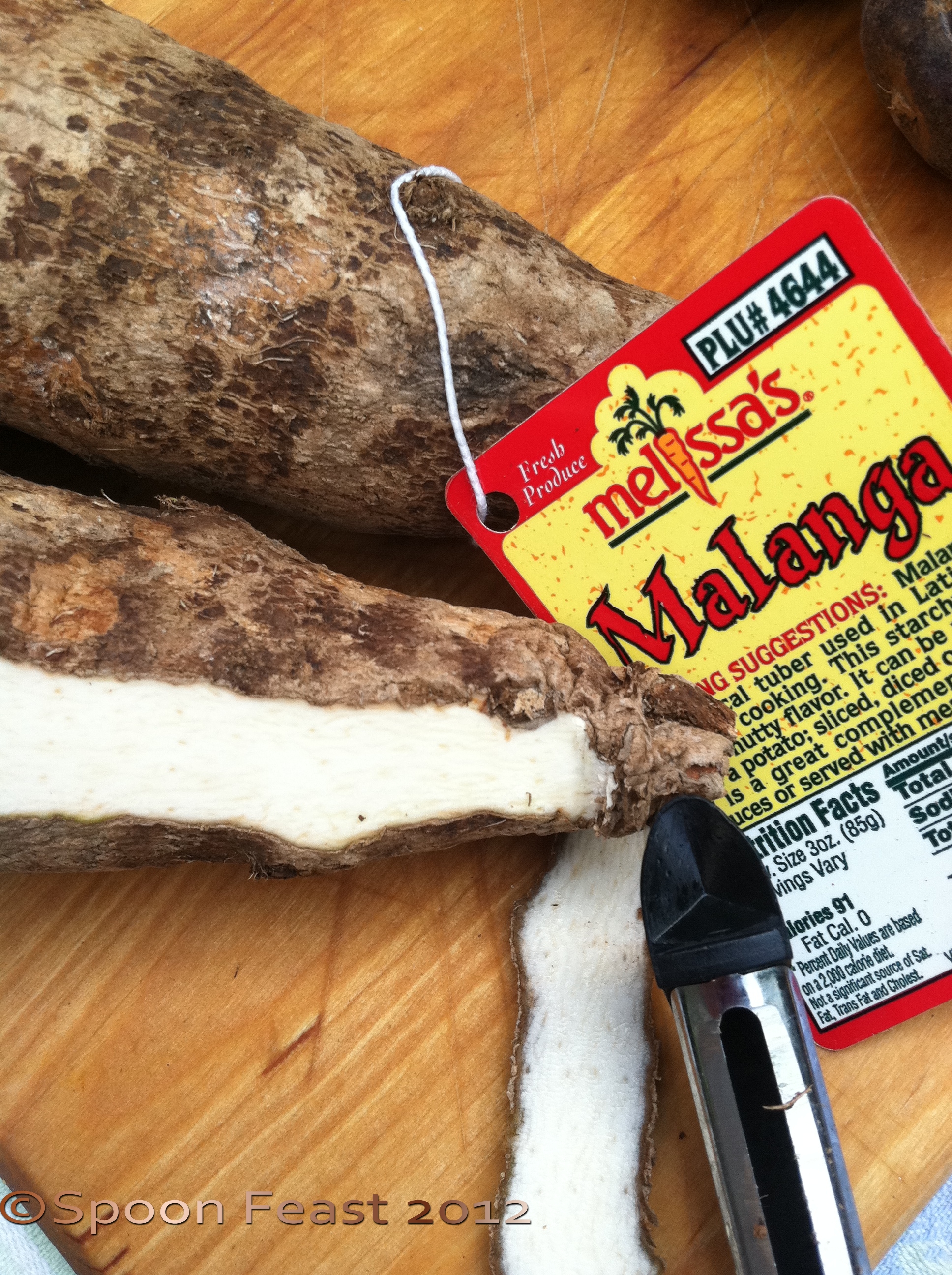
Malanga

Here in the US, Melissa’s Brands offer several unusual varieties not only of potatoes but of all unusual, hard to find produce items.

Be adventurous and try a different kind of potato next time you go shopping.

When choosing what potato you want, if you want a potato to hold its shape as in soup, choose a high moisture low starch.

For fluffy mashed potatoes, select russets and run cooked potatoes through a ricer, not a mixer. perfect mashed potatoes is another post soon.

For great french fries you need a low moisture potato with high starch. Again russets are your best choice but you can also use “All-purpose potatoes” or “chef’s potatoes”. These labels indicate a moderate amount of starch and moisture and can be used in any potato recipe.

This is why sweet potato fries are mostly limp, they have too much moisture to get fluffy like russets do. Sweet potatoes also break down your frying oil faster due to the amount of natural sugar in the potato.

Quick run down:

Fluffy baked potatoes, mashed potatoes and french fries use russet potatoes

To hold the shape as in soup, potato salads, use red or white skin potatoes, you can also find blue ones in this category.

Never store potatoes in the refrigerator. The cold converts the starch to sugar.

Always store potatoes in the dark, in a dry place. I keep mine in a cabinet that isn’t used much.

If potatoes area stored in light, they will develop a green skin which is a toxic substance known as “solanin”

It would take a boatload of solanin consumption to have an effect, but it is an intestinal irritant. You choose.

There will be doing a series of posts of cooking potatoes and selecting the right one for the recipe in the next few weeks.

In the meantime, choose something different and play!
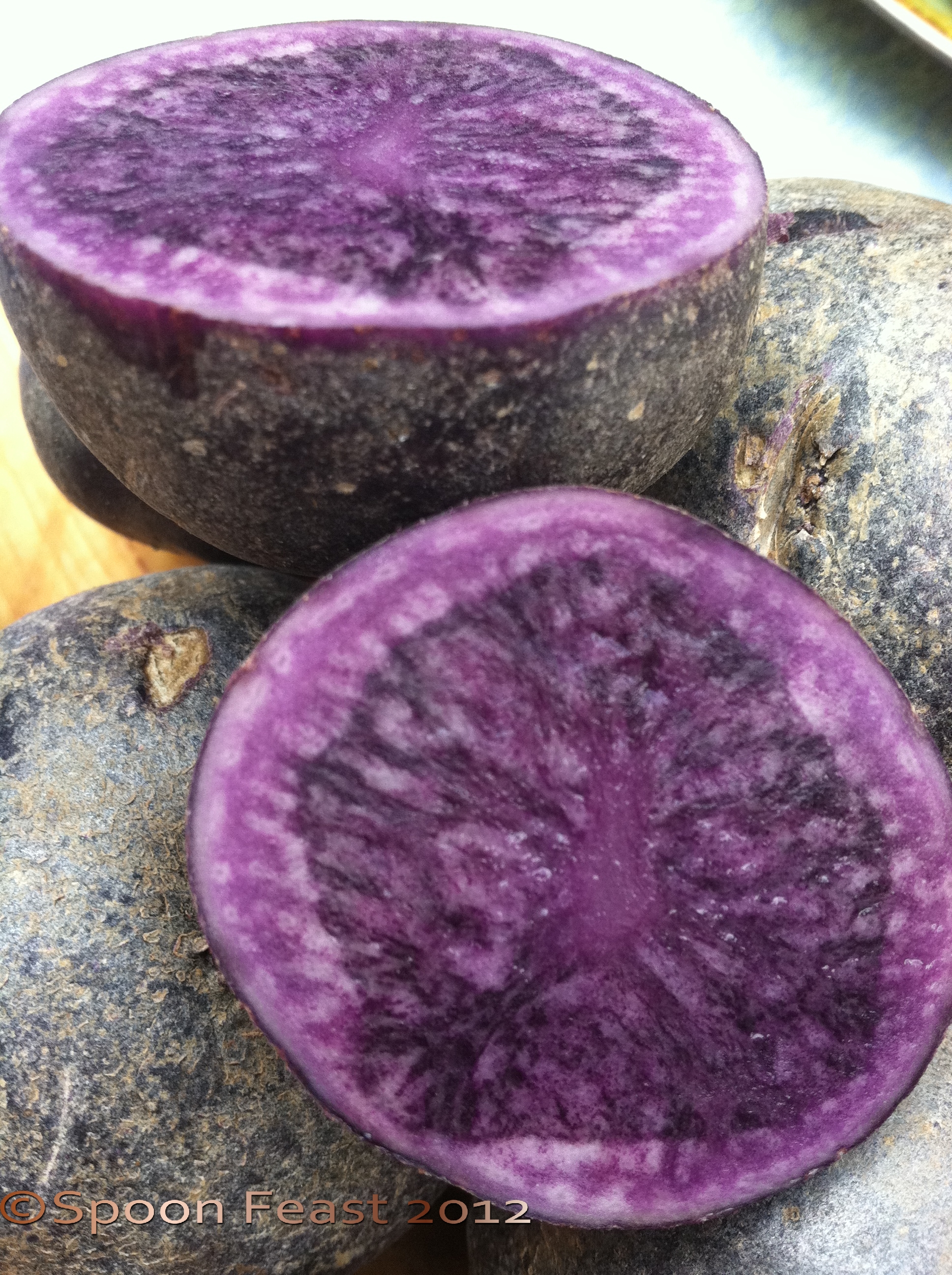
Inside of a purple potato; notice the color of the skin in the background.

Inside a baked garnet sweet potato; isn’t that a great color?!

The Bread Show

We had a wonderful weekend in the North Carolina mountains visiting friends. This post is to provide a quick link to the bread show we did on Charlotte Cooks not too long ago.

In my mind, the show was a comedy of errors with too hot lights, dough rising way too fast in response to the too hot lights. . . Sometimes, you just have to laugh!

If you want to make m “No-Knead Sourdough Bread“, here is the visual.

Spero, this one’s for you!

SPOILER ALERT!
I am working on a post about some amazing Greek olive oil I discovered this weekend.
Watch for the next post for a chance to try some too!

An Easy “Grill Pan” Dinner

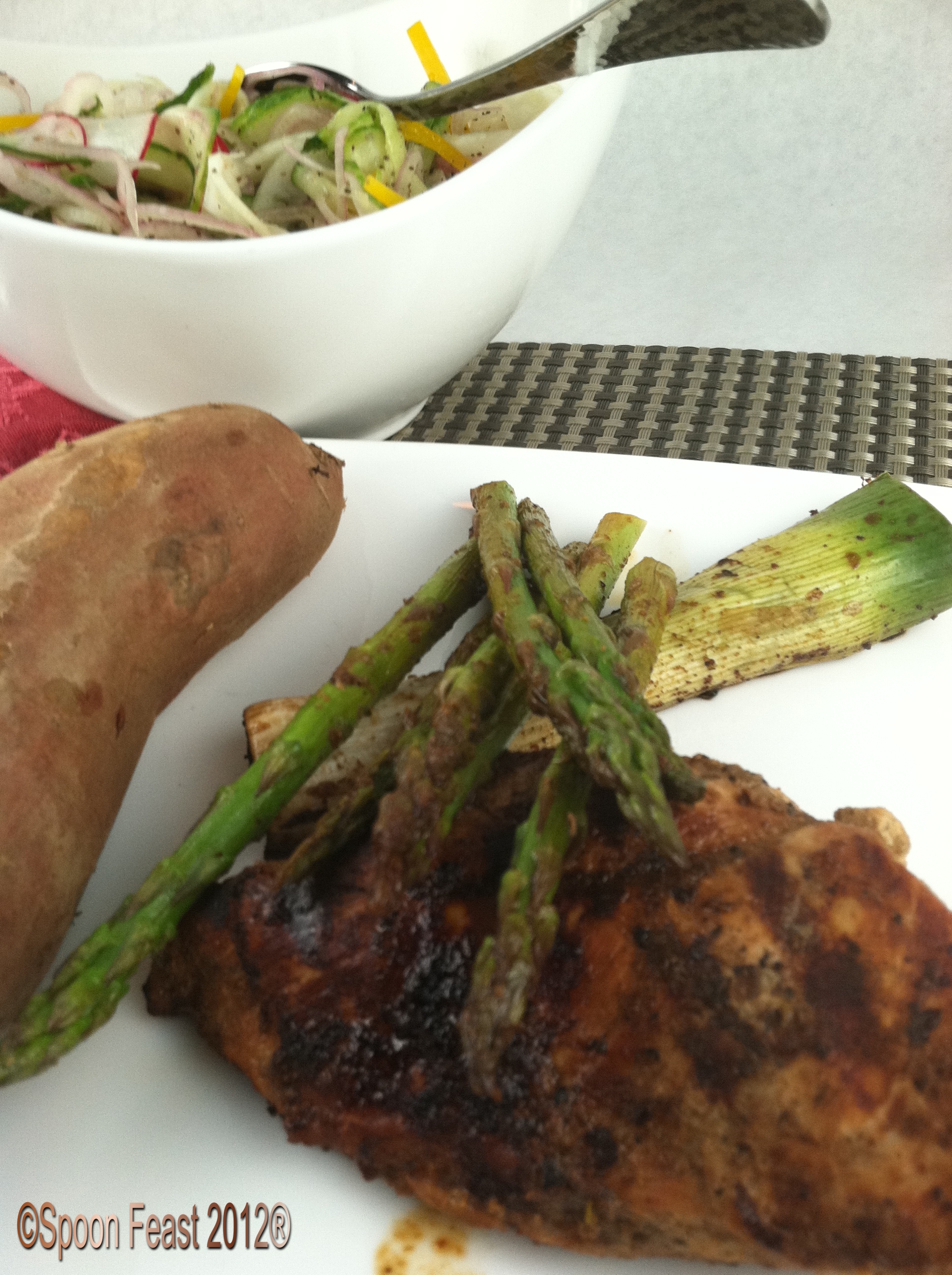
Looking for a quick and easy meal the other night, I came up with this meal that was cooked all in my grill pan.

Chicken was marinated in Mojo Criollo, a Latin marinade of sour orange, herbs and spices.

There were a couple of leeks which I split in two and placed them cut side down to grill.

When the chicken was done, it was pushed to the side of the pan and I added fresh trimmed asparagus and grilled that until it was done too. Asparagus only takes a few minutes.

Sweet potatoes baked in the oven, a salad made by ‘shaving’ radishes, cucumbers, yellow pepper, and fennel, drizzled with rice vinegar and olive oil, salt and fresh pepper rounded out the meal.

Voila! Dinner is ready.

During this wonderful season of abundant fruits and vegetables, make sure you add more to your diet. The vitamins, minerals and fiber contribute to a healthy diet and contribute to manageable weight maintenance.

Indulge and explore white the season is right!

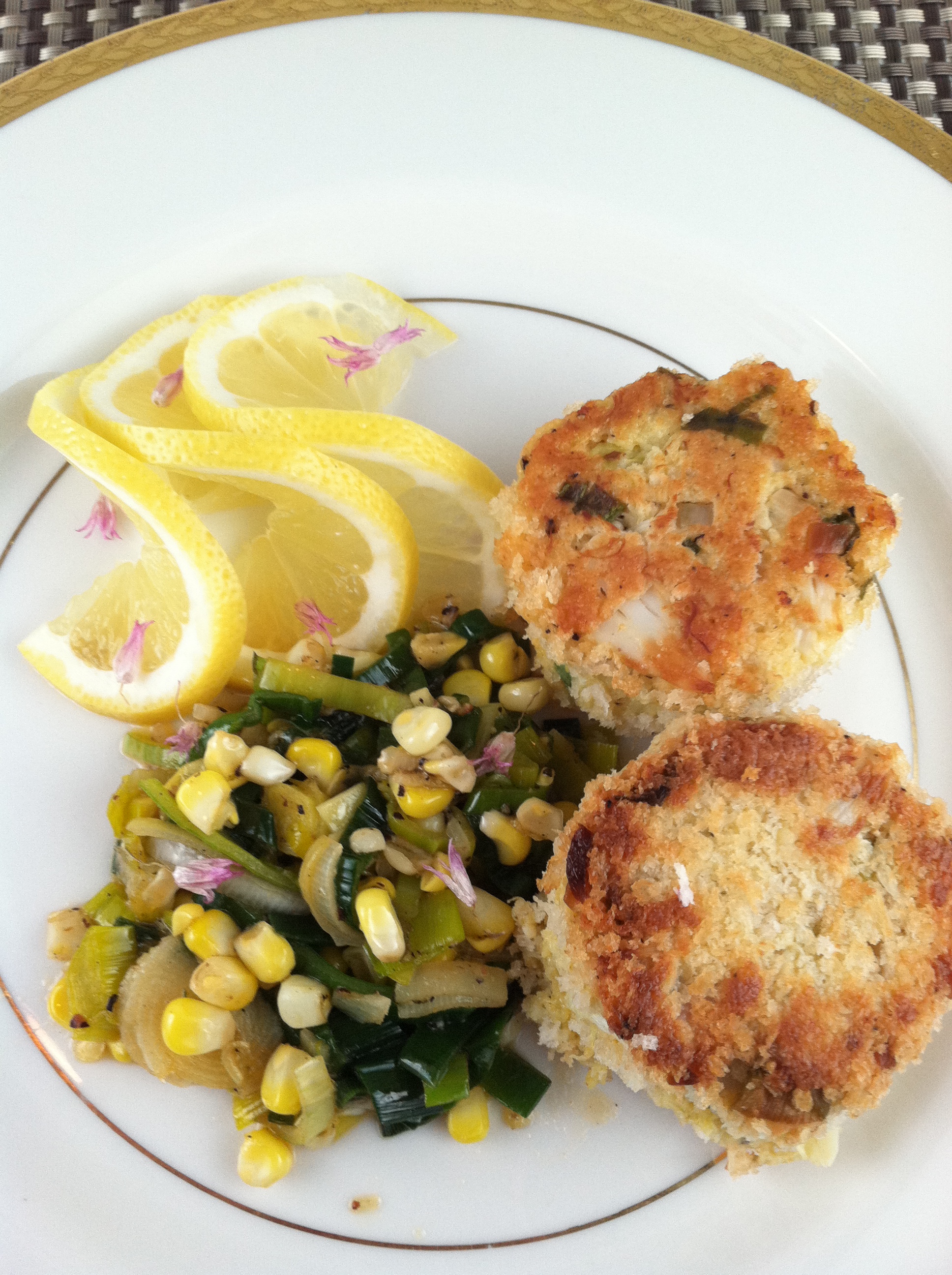
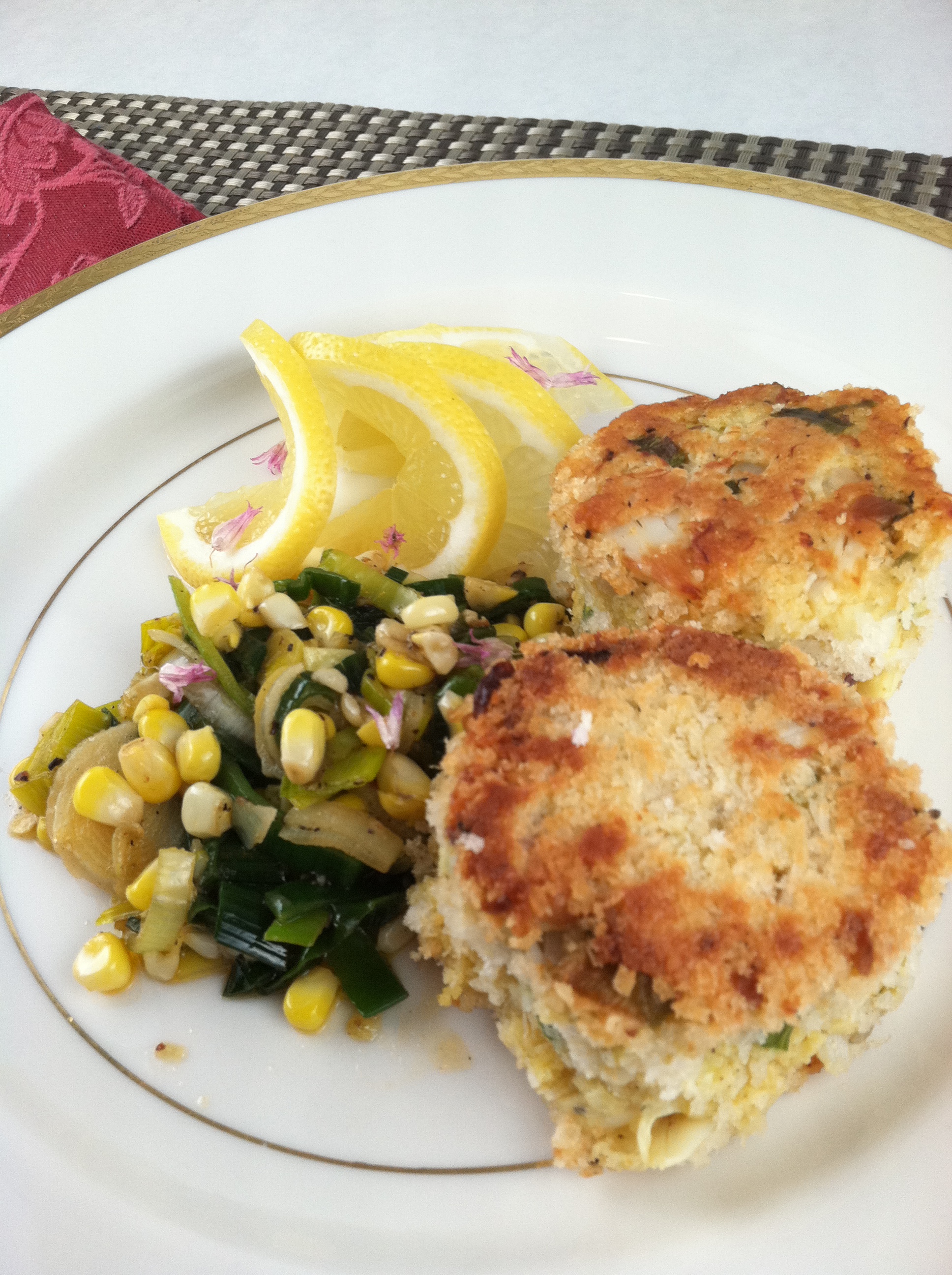
Crab Cakes with Leeks and Corn

Crab Cakes with Leeks and Corn

Crab Cakes get so abused. Tender sweet succulent crab; why do so many ruin the delicate flavor by adding red or green peppers to the mix?

When I think of crab cakes, I think of the delicious flavor of crab, not a nasal hit of red or green peppers. While I love peppers, they do have their place. In my opinion, that place is not in a crab cake.

What is the star of your dish? Is it the crab? How much did you pay for the crab? Usually a lot of money or labor if you cleaned your own crabs. Why would you want to hide the star of your dish with the pungent flavor of red or green pepper?

Peppers have a dominate flavor, they overpower everything. Which is why they are the stars in the dishes they are featured. Stuffed peppers, sausage and peppers, red pepper hummus, roasted pepper salads, great dishes with strong dominate flavors.

If you didn’t guess already, adding peppers to delicate crab meat is a pet peeve of mine. I feel strongly about it. If you like peppers in your crab cakes, fine, I’d ask you though if you really know what crab tastes like.

Enough of that rant, on to the crab cakes!

Crab, any kind of crab, has a delicate flavor. Enhance the flavor with a dab of smooth Dijon mustard, sautéed shallot, roasted garlic and sliced scallions or chives and lemon zest. Hold the mix together with an egg and coat the outside of each formed crab cake with a layer of panko bread crumbs and you have an amazing cake for either an appetizer, entrée or salad. How to and the recipe are below.

Crab comes in many forms. You can purchase live blue crabs  or king or queen crab legs and boil your  own for a great outdoor dinner party.

Colossal size crab meat from Blue Swimming Cra...

Colossal size crab meat from Blue Swimming Crab. Courtesy of Newport International. (Photo credit: Wikipedia)

Crab comes in canned or pasteurized form in addition to fresh. Here is the translation as to what kind of crab you are getting according to classification:

  • Colossal Lump: Very large white, unbroken pieces of crab.
  • Jumbo Lump:  largest white pieces of crab meat from the body portion adjacent to the back fin appendage. may contain broken pieces.
  • Back fin: A blend of large lump pieces and special meat.
  • Special: Flake white meat from the body portion of the crab.
  • Claw: This meat is from the crab claws. It is darker in color but sweeter in flavor.
  • Cocktail Claws: Claw meat intact on the claw with the outer shell removed.

Colossal Lump is typically the most expensive. If you think of the labor that goes into cleaning a crab, you would understand why.

Cocktail Claw crab meat from Blue Swimming Crab.

Cocktail Claw crab meat from Blue Swimming Crab. (Photo credit: Wikipedia)

The other night there was a pasteurized can of jumbo lump in my fridge. We had crab in salads and make crab cakes.

There were leeks and corn in the fridge too so I sautéed a nice side to go with the crab cakes.

Leek and Corn Saute

2 tablespoons vegetable or olive oil

1 shallot, sliced

1 clove garlic, minced fine

1 leek, washed and sliced thin

1 cup frozen corn or cut fresh corn from 2 ears

1/2 cup dry white wine or chicken stock

Salt and pepper to taste

Heat a saute pan over medium heat, add oil, shallot and garlic, stir.

Saute leeks and corn

Add rinsed leeks and corn, saute 2-3 minutes, add white wine and simmer until the pan is nearly dry. Taste and season with salt and pepper. Set aside and keep warm.

Crab Cakes

1/2 pound jumbo lump crab meat (or any market form you like but cocktail claws)

1 egg

1/2 cup panko bread crumbs

1 tablespoon fresh lemon zest and juice from 1 lemon

1 tablespoon minced shallots

2 scallions thinly sliced, white and green part

1 teaspoon minced roasted garlic

1 teaspoon old Bay Seasoning

Salt and pepper to taste

Optional: 1 tablespoon capers

To remove any cartilage that may still be in the crab meat, place the meat on a parchment lined sheet pan, place it in a 350°F oven for 2-3 minutes. Any cartilage will turn bright white or red and can easily be picked out.

Working in a restaurant, the sheet pan method is used to quickly identify any unwanted cartilage. This method also preserves the shape of the meat if using precious lump meat. High volumes of crab meat can be processed quickly this way.

Combine everything in a large bowl except the crab,  add the crab meat last so it does not get broken up too much.

Carefully, take a small handful and shape the crab cake between your thumb and forefinger as if you are making a hand gesture to say OK. This makes the sides and size consistent.

Roll each cake carefully in breadcrumbs.

Heat a saute pan with 2 tablespoons of oil. Cook the crab cakes until golden brown on each side. If you move them very little while cooking they won’t fall apart.

Serve with lemon, sautéed leeks and corn on the side.

Crab cakes with leek and corn

Potatoes Au Gratin

I have been on a comfort food kick the past few days; Potatoes au Gratin are one of my favorite creamy delicious side dishes.

We always had them as a kid sometimes from scratch and sometimes from a box. The box variety always fascinated me.

The clear plastic looking chips, the powdered sauces, pour over boiling water and bake. Voila! Potatoes au gratin or Scalloped Potatoes all from a box. It was amazing stuff.

Making the same potatoes from scratch is far more satisfying, both nutritionally and esthetically.

First you have to get some good starchy potatoes – russets are the best as they are a ‘high-starch, low moisture’ category of potato.

Peeling is your option, but be sure to scrub them clean.

Have everything ready to go before you start slicing the potatoes so they don’t turn colors on you.

If you don’t know what I mean about potatoes turning color, take a slice and just let it sit out on the counter or on a plate. Look at it again in 5 minutes. It is oxidizing with exposure to air. Process potatoes quickly to avoid this color change happening.

“Green” on the potatoes is called “Solanin” and it is a sign of a potato that has been stored incorrectly with an exposure to light.  To avoid green potatoes, always store potatoes in a cool, dark place.

While it would take quite a bit of solanin to cause severe damage, it is an intestinal irritant. Simply cut away the green with your peeler. It isn’t very deep.

Do not store potatoes in the refrigerator, the cold converts the starch to sugar. Restoring to room temperature, over a few days will convert back to starch.

I made this dish for Robert and me but it would easily feed four. I used an All-Clad oval stainless baker pan, you can use any oven-proof dish you want. Adjust the quantities if using a large pan.

Potatoes Au Gratin

Serves 2-4

  • 1 or 2 large russet potato, peeled and sliced thinly
  • 4 whole large shallots, peeled and sliced thinly
  • 1/2 container Herbs and Garlic Boursin cheese (or 1/2 cup any shredded cheese of your choice)
  • 1 cup heavy cream, brought to a boil
  • 2 tablespoons flour
  • Salt and pepper
  • Optional: Monterrey Jack cheese to top and get all golden brown

Method:

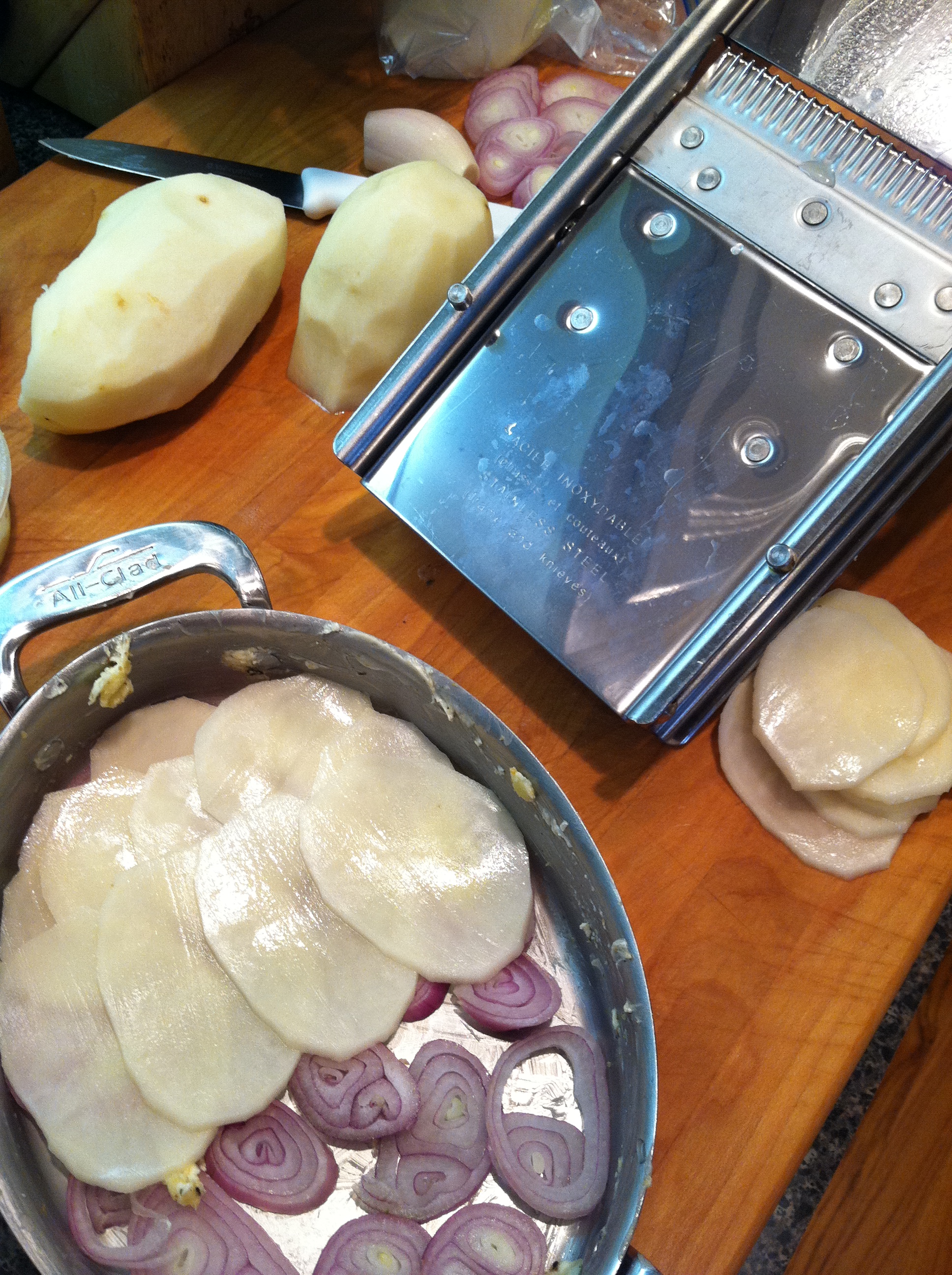
Thinly slice potatoes and shallots by hand or use a mandolin.

Be careful when slicing on a mandolin! Slicing on the mandolin ensures even slices so they cook at the same rate.
HINT: Slice shallots by hand.

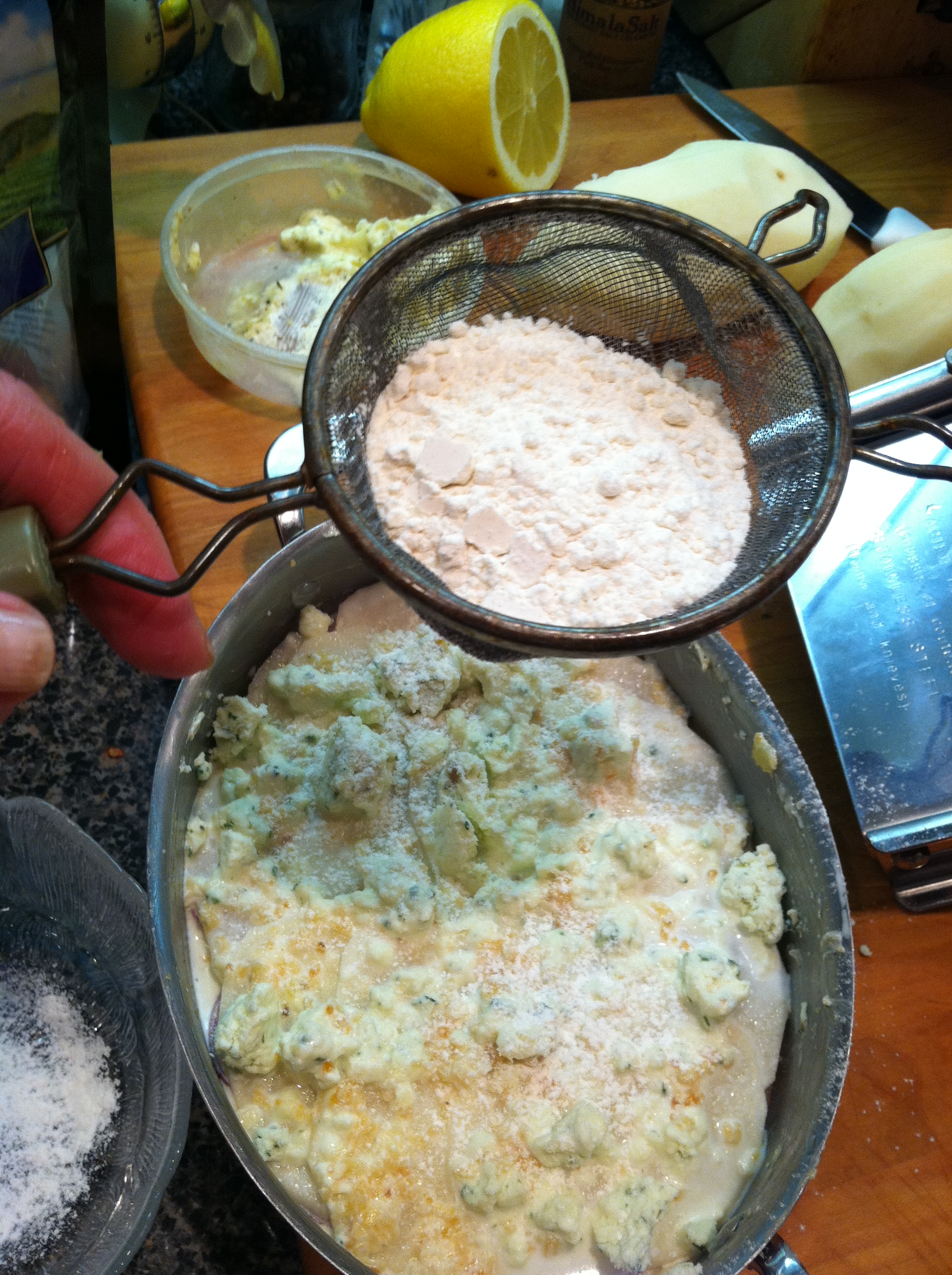
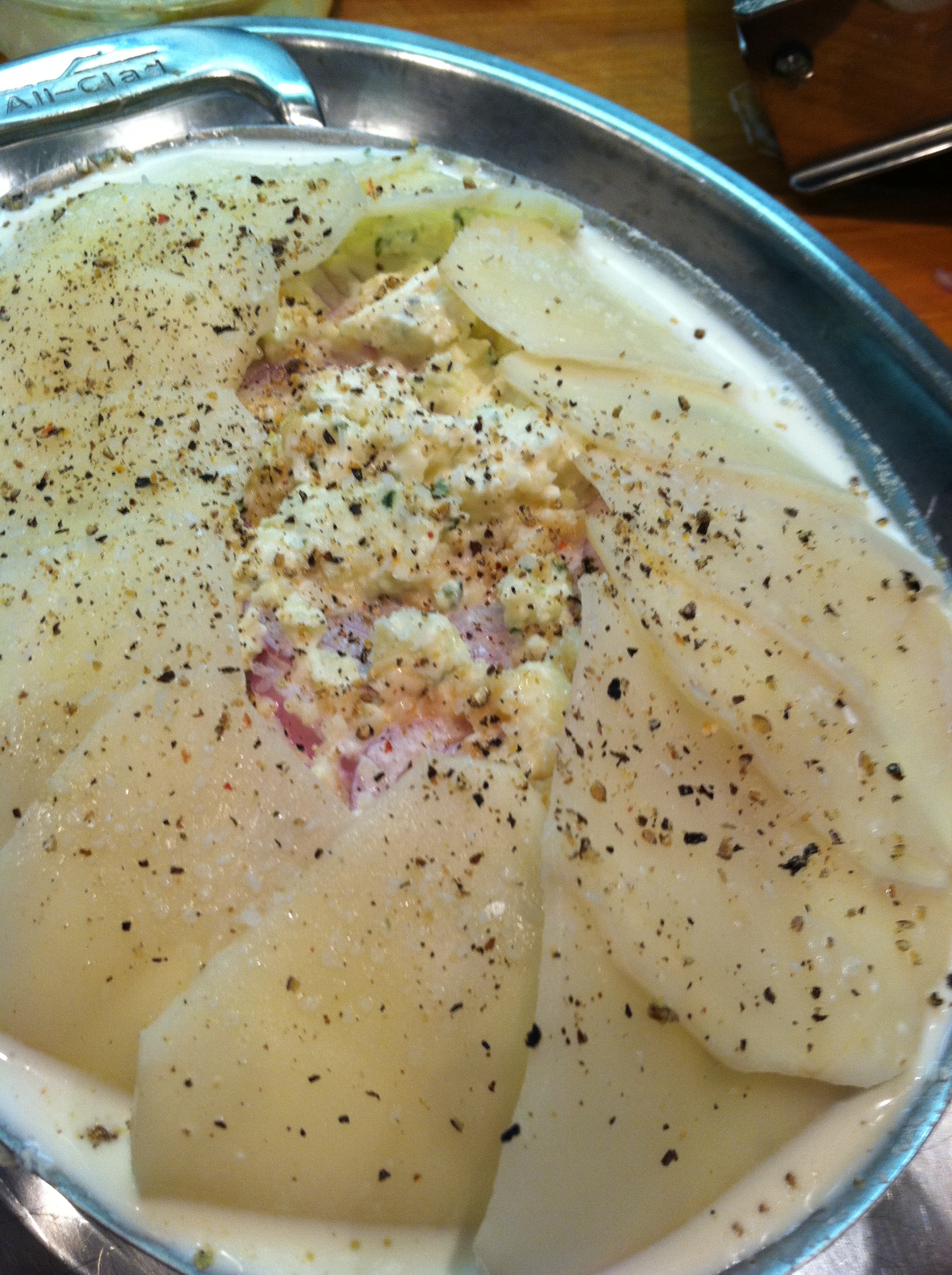
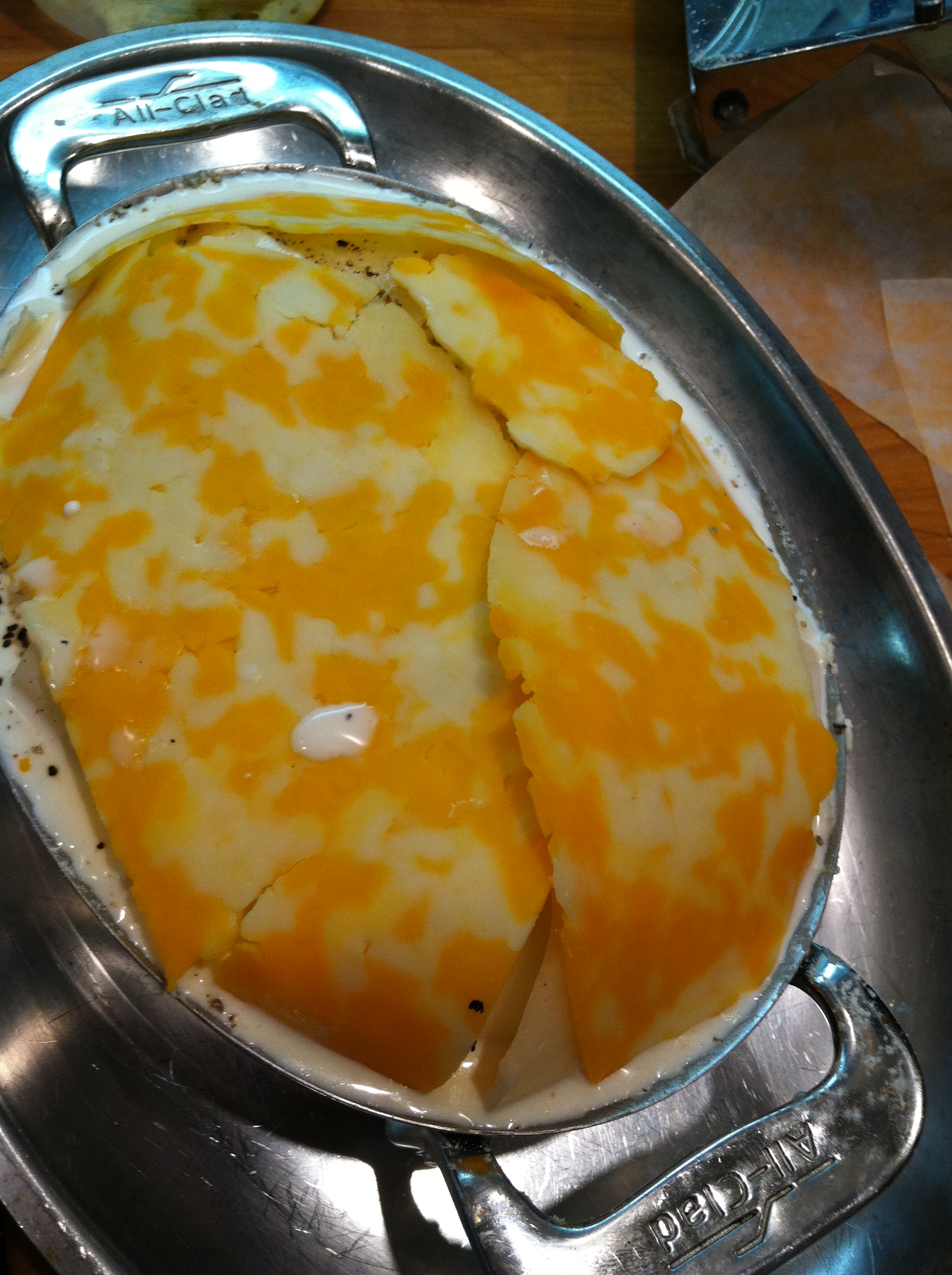
Butter the dish, place a single layer of sliced shallots on the bottom of the pan, top with potatoes laid in a single layer, top with shredded cheese, spoon 1/4 cup of warm cream, sprinkle with salt and pepper, drizzle a light sprinkling of flour and repeat layering until the dish is full. The top layer should be cheese.

Here is the layering sequence again:

  1. sliced shallots
  2. sliced potatoes
  3. cream
  4. salt and pepper
  5. flour
  6. cheese
  7. repeat leaving cheese as the top layer

Butter the dish, layer shallots then potatoes

Notice how the potatoes are shingled into a layer

Sprinkle flour over the cheese and potato layers

Keep alternating layers to the top

Top with cheese and bake

Place the filled dish on a parchment paper lined baking sheet to catch all spills. Place in a 400°F oven for 1 hour or until the dish is bubbling and golden brown on top.

We usually gobble these up pretty quickly but if you have any leftover, cut them into shapes and reheat either in the microwave or the oven until nice and warm in the center.

Variations on the theme:

  • Scalloped Potatoes: Leave out the cheese and make sure enough cream covers the top slightly. Top with breadcrumbs; Bake the same way.
  • Add your favorite herbs for an herbal variety.
  • Use different cheese: Goat cheese, Havarti, Asiago, fontina, add some bleu to the mix.
  • Use cheese that you know will melt nicely. If you want to make this with cheddar, please add some hoop cheese to it for melting purposes. Cheddar does not melt well all on its own.

I’m sure your family will enjoy this as much as mine does. Your home will smell wonderful as they cook. Since they are in the oven for so long, it is a good time to plan a baked chicken or pork chop to go along with the potatoes.

Sometimes I’ll have a plate of just potatoes au gratin for lunch, if there is any left over.

Plated Potatoes au Gratin