Ketchup or Catsup? Make Your Own

Whether you call it Ketchup or Catsup, we all love vibrant tomato ketchup for one reason or another. I can’t imagine eating pot roast without it, and it is divine with burgers and fries.

Did you know you can make it at home? Leave all the preservatives, artificial flavorings, high fructose corn syrups, red dyes behind you and follow this recipe. This looks vibrant, tastes great and your friends and family will simply LOVE it! Best of all, you know exactly what is in the food you are serving.

Picmonkey Homemade tomato ketchup

This is one small way we can take control of our food and avoid GMO‘s, high fructose corn syrup and other hidden sugars, fats, salts and preservatives. Take a stand against Big Food and learn to make your own ketchup! It’s small, but it will have a very healthy effect of your family!

Homemade Ketchup

For the spiced vinegar:

  • 1-1/2 cups white distilled vinegar
  • 2 teaspoons whole cloves
  • 1 teaspoon broken stick cinnamon
  • 1 teaspoon celery seed

For the ketchup:

  • 5 ½ pounds tomatoes
  • 1 cup granulated sugar – separated into two ½ cup measurements
  • ½ medium onion chopped fine
  • 2 cloves minced garlic
  • ½ teaspoon cayenne pepper
  • 1 tablespoon non-iodized salt

Method:

Combine the first four ingredients. Bring to a boil; remove from heat then set aside to cool.

Wash the tomatoes. Bring a large pot of water to a boil. Remove the core from the top of the tomatoes and cut a shallow X into the bottom end.

A "Tomato Shark" makes removing the blossom end simple and quick
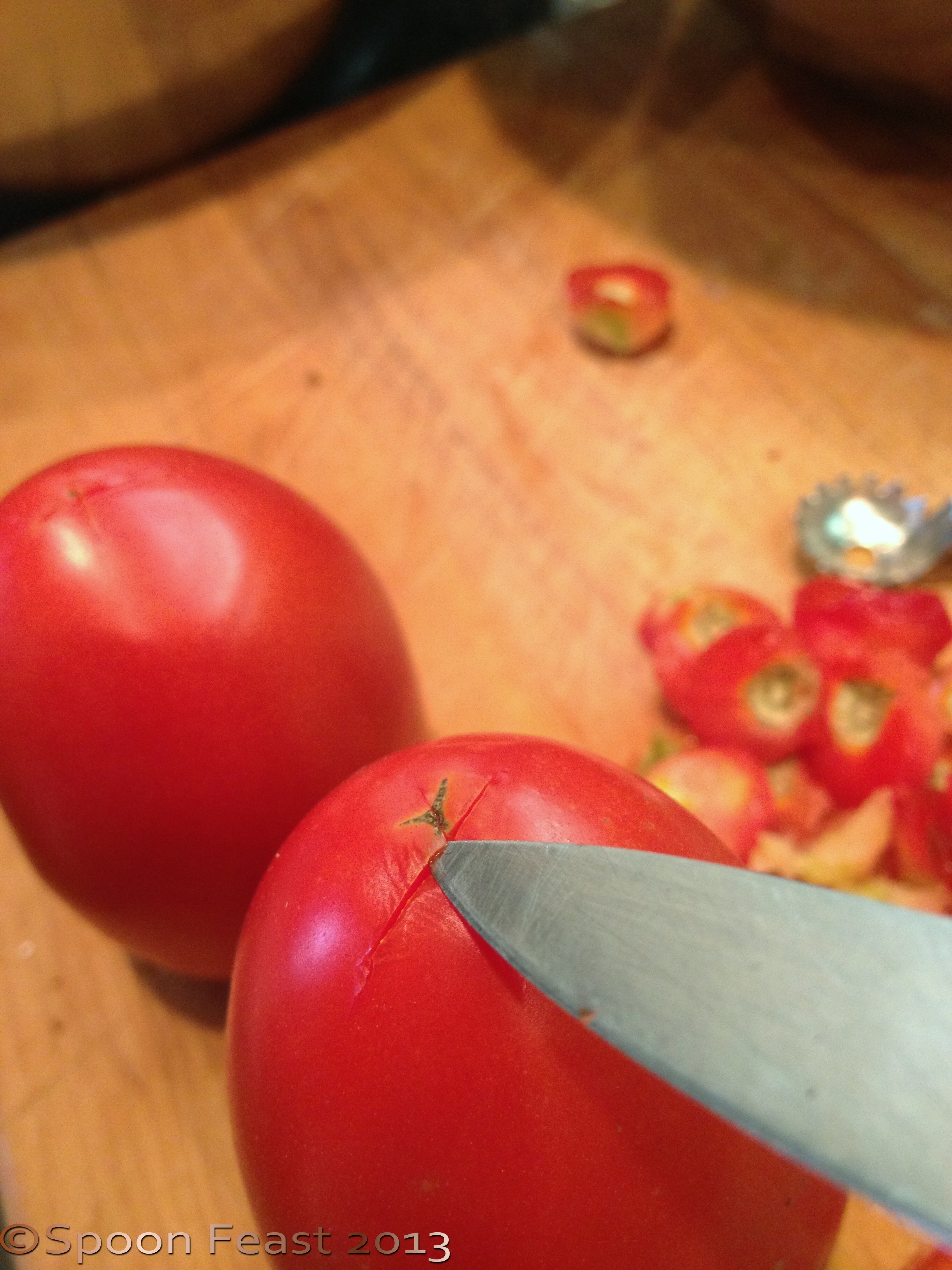
A “Tomato Shark” makes removing the blossom end simple and quick

Scratch a shallow X on the bottom

Scratch a shallow X on the bottom

The skin will split when ready, the more ripe the tomato, the quicker this happens.

The skin will split when ready, the more ripe the tomato, the quicker this happens.

When the skin splits, plunge into ice water to stop cooking.

When the skin splits, plunge into ice water to stop cooking.

Slip the skins off the tomatoes, cut and squeeze out the seeds.

Slip the skins off the tomatoes, cut and squeeze out the seeds.

Set a large bowl of ice water near the pot of boiling water. Place the prepped tomatoes into the boiling water. As soon as the skin splits, remove and place the warm tomatoes in the ice water to stop cooking.

Slip the skins off the tomatoes. Slice them in half around the center of the tomato, not from top to bottom. Squeeze gently to remove all seeds. Do this over a strainer that is over a bowl to catch the juices that come from squeezing the seeds out.

Cut the tomatoes in quarters. Combine half of the tomatoes with ½ cup sugar, onion, garlic and cayenne pepper in a deep stainless steel pot. Bring to a boil and allow the tomato mixture to boil vigorously for 30 minutes, stirring often to avoid scorching.

After 30 minutes, add the remaining tomatoes and sugar and boil for another 30 minutes. At this point you will need to stir it often as the mixture gets thick.

Strain the vinegar and discard the spices. Add the spiced vinegar to the boiling tomato mixture, stirring constantly for 15 minutes or until the desired texture is reached.

Test the consistency by placing a small amount of the ketchup on a small plate. There should be no watery run off. If there is, keep cooking.

For smooth ketchup, puree using a stick blender, or use a blender to puree the hot mixture. Bottle the hot mixture in sterilized jars or another non-reactive container.

Store under refrigeration unless processing in a water bath canner. An “Old Wives” trick is to wrap each jar in brown paper to protect the color during storage. Not necessary if you store the jars in the refrigerator.

A vibrant bowl of homemade ketchup

A vibrant bowl of homemade ketchup

How to Make Mustard

Learning how to make mustard can be as simple as mixing a few things together or as complicated as soaking a few seeds. It’s not hard at all to make.

Make Your Own Mustard

While there are many different kinds of mustard you can make, this is a kinder gentler mustard, not too pungent.

All it takes is mix the ingredients together, heat until thick, bottle and cool.

Simple!

Make Basic Mustard

  • 1/2 cup dry mustard powder, Coleman’s is my favorite.
  • 2 1/2 tablespoons all-purpose flour
  • 1/4 cup brown sugar, light or dark doesn’t matter
  • 1/2 teaspoon kosher salt (non-iodized)
  • 1/2 cup good quality white wine vinegar

Measure and mix everything in a heat-resistant bowl until a thin smooth paste forms.

Place the bowl over a pot of boiling water to make a double boiler, heat the mixture until it becomes thick. As the mustard thickens, whisk so it remains smooth.

Use a silicone spatula to get all the mustard in to a clean glass jar.

Allow to cool, cover, label and store.The mustard needs to sit for at least 2 hours before serving. The mustard will also “mellow” as it ages in the refrigerator.

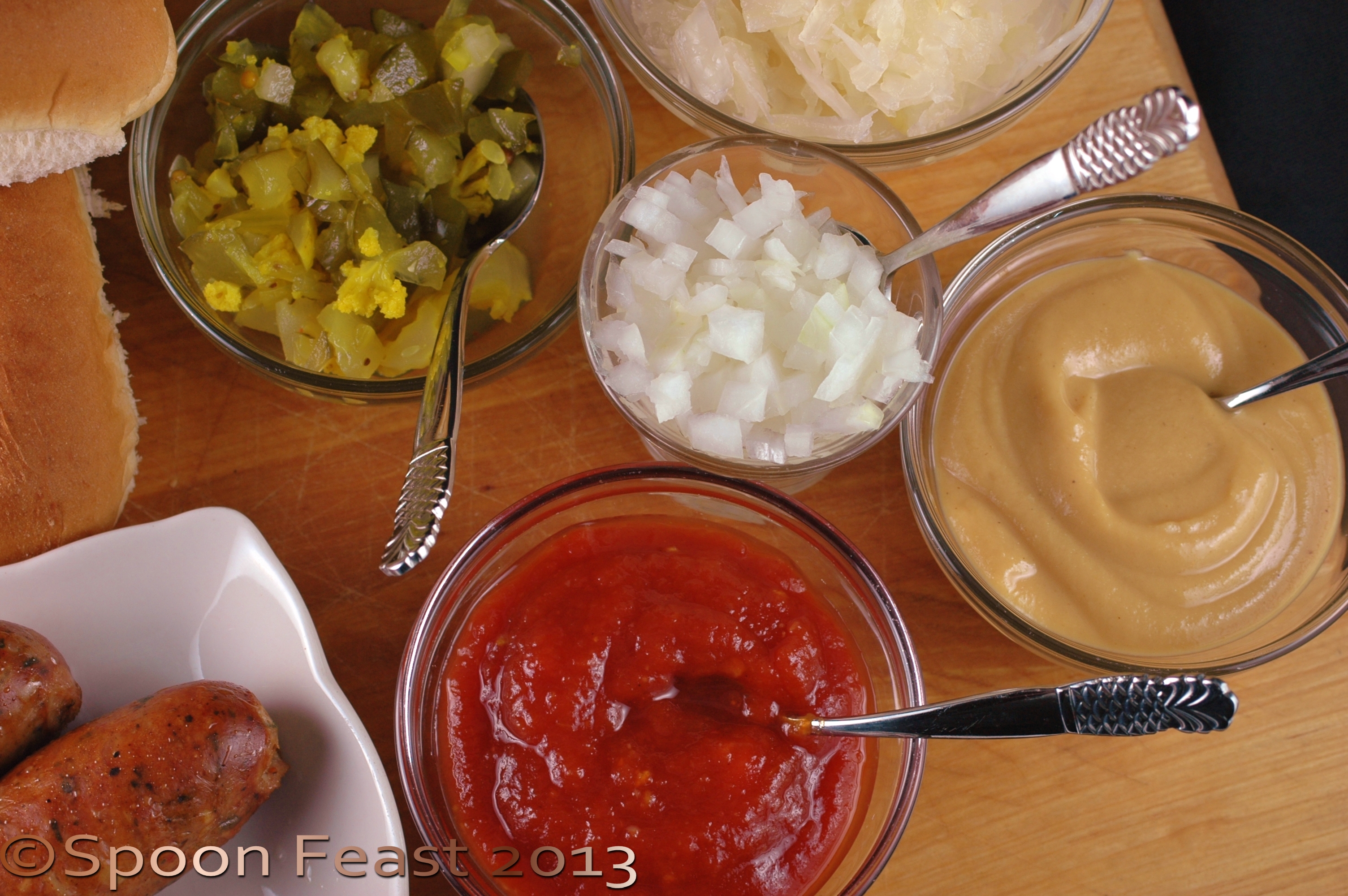
Homemade Ketchup, Mustard and Relish

Homemade Ketchup, Mustard and Relish

I haven’t had a jar around long enough to tell you how long it lasts.

Use it as you would any mustard but be warned, it will spoil you from buying  processed store-bought mustard.

Dip a tasty sausage into mustard!

Dip a tasty sausage into mustard!

Decorate your hot dog the homemade mustard

Decorate your hot dog the homemade mustard

More mustard recipes coming soon such as whole grain mustard, Dijon style, champagne honey, and pear/apple mostarda.

Learning how to make mustard is an easy thing to do to reduce your consumption of processed foods.

Basic Mustard

Basic Mustard – Got a Pretzel?

Sweet Pickle Chips

Making Sweet Pickle Chips

Making Sweet Pickle Chips

I have to admit I have a great weakness for sweet pickle chips.

Well, actually not just sweet pickle chips, I have a weakness for nearly ALL things pickled.

Chances are if it hangs around on a pickling day it just may get processed into some kind of something sweet or sour or both.

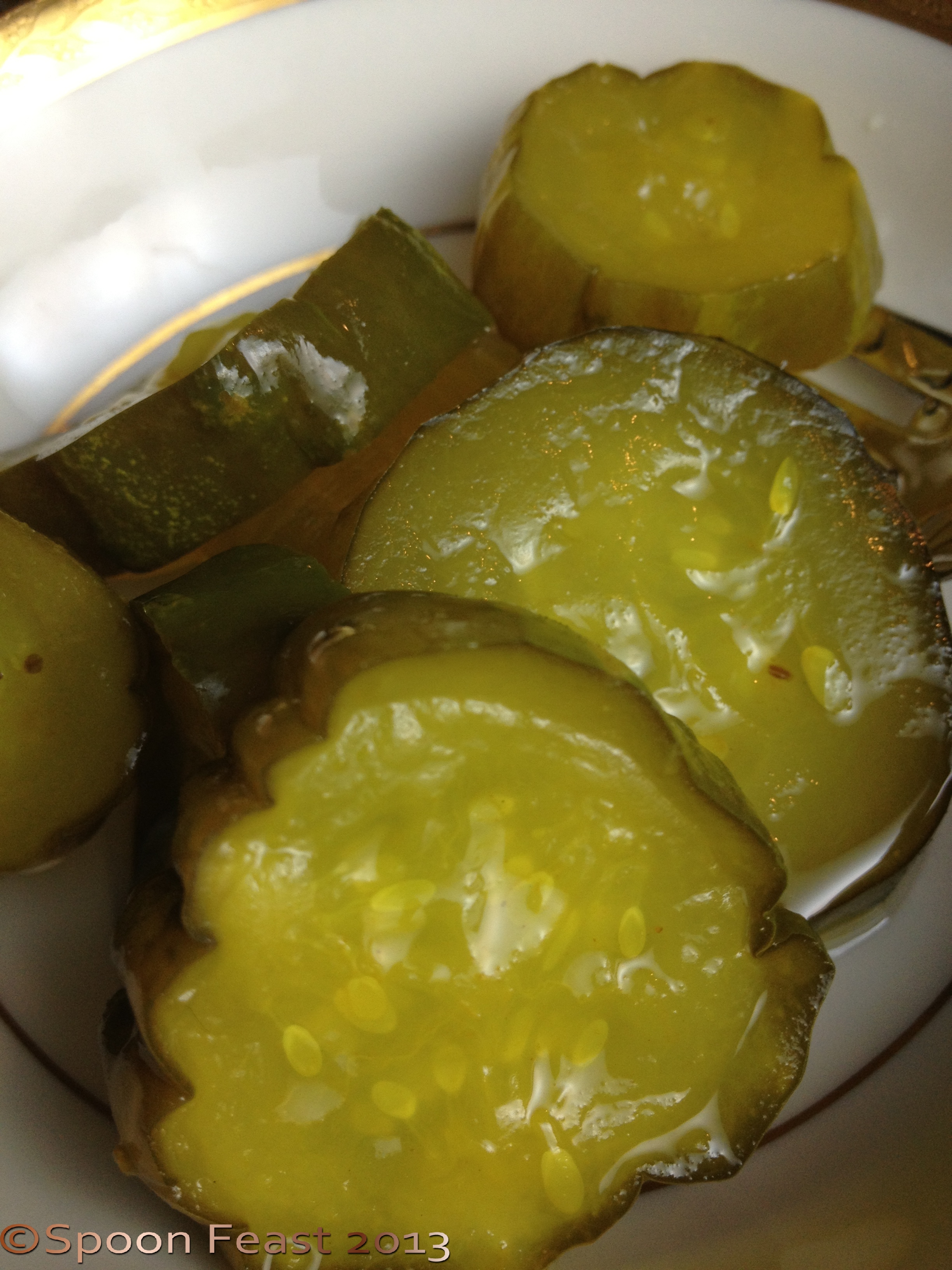
Sweet Pickle Chips

Sweet Pickle Chips

There is something about the simple process and the synergistic reaction of all the ingredients that results in some of the most amazing flavors on earth.

OK, I can get carried away with pickles, but who wouldn’t? I’d rather look at silly pickle pictures on Facebook than all those animal pics. At one time, at another house, in another time, there was a 100 gallon propane tank above the ground to one side of the property. I wanted to paint it like a giant pickle. The gas company told me I would get fined so I didn’t. It was the perfect shape for a giant pickle too!

I get my love of pickles from my Dad. For years now, whenever it is time for a gift, I send him a renewed subscription to The Pickle of the Month Club. He loves them!

Anyway, back to these little gems. They aren’t too sweet. Here are a few pointers:

  • Select cucumbers the size of the pickles you want (Look at the diameter and the length)
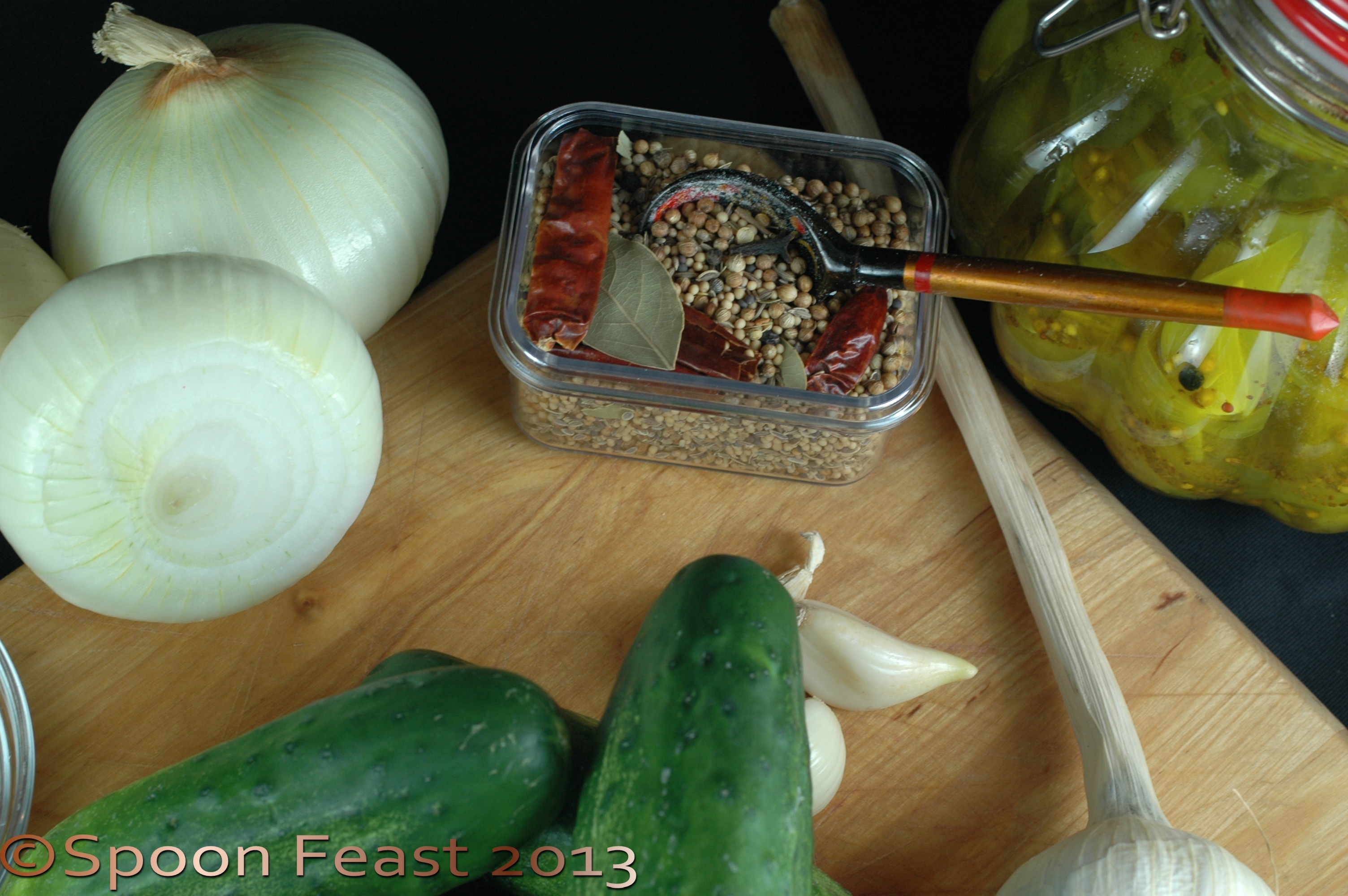
  • A basket of goodies to pickle!

    A bowl of goodies to pickle!

  • Dissolve 1/2 cup salt in some luke-warm water. Add enough ice to cool the water down to cold. After washing add the cucumbers , soak them for 30 minutes in the salt water. There should be enough water to cover the cucumbers.
  • By the way, they will float, so dunk them a bit as you work around them. Play like they are submarines . . .

Soaking does a couple of things:

  • Helps eliminate any bugs and garden debris
  • Starts extracting excess water from the cucumbers so they absorb more brine. This step also helps to not dilute the brine when the cucumbers are added later.

Sweet Pickle Chips

Making Sweet Pickles Chips

Making Sweet Pickles Chips

Ingredients:

  • 2 pounds of wax-less Kirby cucumbers, cleaned and cut into slices 1/4 inch thick
  • 8 ounces sweet onion, sliced into 1/4 inch thick slices

Simmering Brine:

  • 1 quart of water
  • 12 ounces apple cider vinegar
  • 1 tablespoon sugar
  • 1 1/2 teaspoons kosher salt
  • 1/2 teaspoon mixed pickling spice

Mix brine ingredients in a large pot, bring to a boil. Once boiling, add the sliced cucumbers and onions, return to a boil and lower heat. Simmer for 10 minutes.

Drain, discarding liquid unless processing another batch.

Pickling Vinegar Brine

  • 10 ounces white vinegar (NOT WINE Vinegar!)
  • 13.5 ounces granulated sugar
  • 1 Tablespoon celery seeds
  • 1 teaspoon mixed pickling spice
  • 1 teaspoon ground turmeric
  • 1/2 teaspoon crushed  whole allspice berries
  • 2 bay leaves

Optional:

  • 2-3 cloves fresh garlic – for a fresh garlic flavor
  • 1-3 dried red chili pods or red jalapeno pepper – to give some heat!

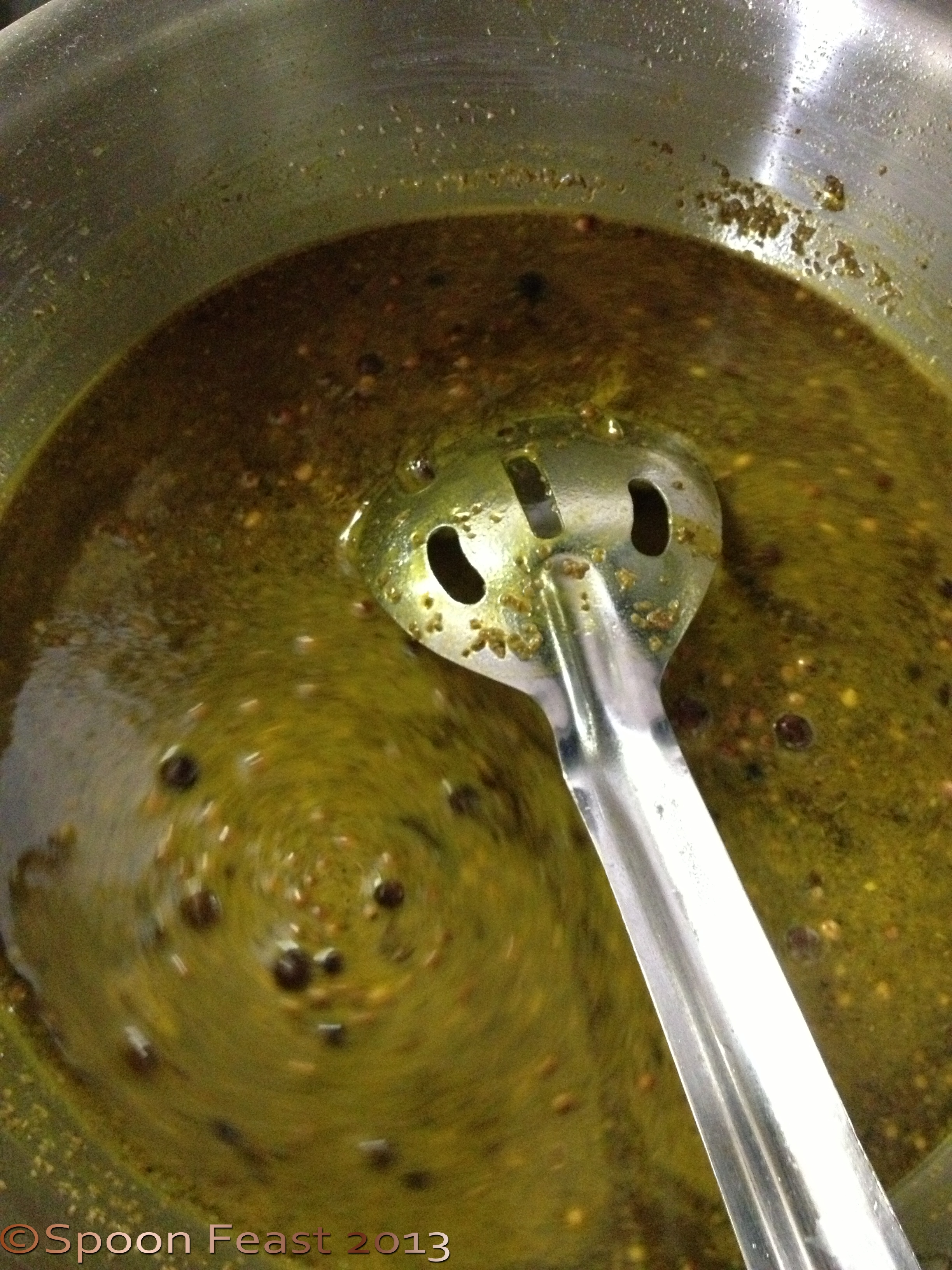
Combine everything in a sauce pot and bring to a boil. It will need to be stirred to encourage the sugar to melt.

Stir the spices and sugar as you bring to a boil for the Pickling Brine.

Stir the spices and sugar as you bring to a boil for the Pickling Brine.

This mixture needs to be boiling when the vegetables are done simmering.

Procedure:

Wash the cucumbers in water slightly warmer than the cucumbers. Soak in a large bowl of cold water with 1/2 cup salt in it.

This helps eliminate any insects and garden debris that may be lurking on the cucumbers.

Mix the simmering brine ingredients, put on the range top over high heat to bring to a boil.

Mix the pickling vinegar brine and put that over high heat, stirring often to prevent the sugar from burning.

Drain the cucumbers after they have been soaking for at least 30 minutes.

Slice the cucumbers and onions into 1/4 inch slices.

Slice the cukes 1/4" thick

Slice the cukes 1/4″ thick

When the simmering brine reaches a boil, drop in the cucumbers and onions, return to a boil, then simmer for 10 minutes.

Drain the vegetables, discarding liquid (Unless processing another batch).

Place the cukes and onions in a large canning jar. Using a wide mouth funnel, pour the boiling pickling brine into the jar all the way to the top. Leave as little head room as possible. Everything must be submerged under the pickling brine.

If you find there are pieces that want to float, place a small glass plate or dish on the surface to hold everything down.

At first the jars may appear cloudy but as the turmeric and celery seeds settle to the bottom, the vinegar will clear up and you can enjoy looking at gleaming bottles of an amazing turmeric colored sweet pickles!

A Jar of Sweet Pickle Chips

A Jar of Sweet Pickle Chips

Resist eating them for at least 4 days but they are amazing if you can hold off for 3-4 weeks. Everything mellows and they become one divine pickle. But if you must, you can taste the next day, just remember they will mellow considerable as they age.

Once you try these, the half sour pickles and the pickled cauliflower, and pickled beets, you will never buy pickles again! I really like that idea – “No processed food unless you process it yourself” is my new motto!

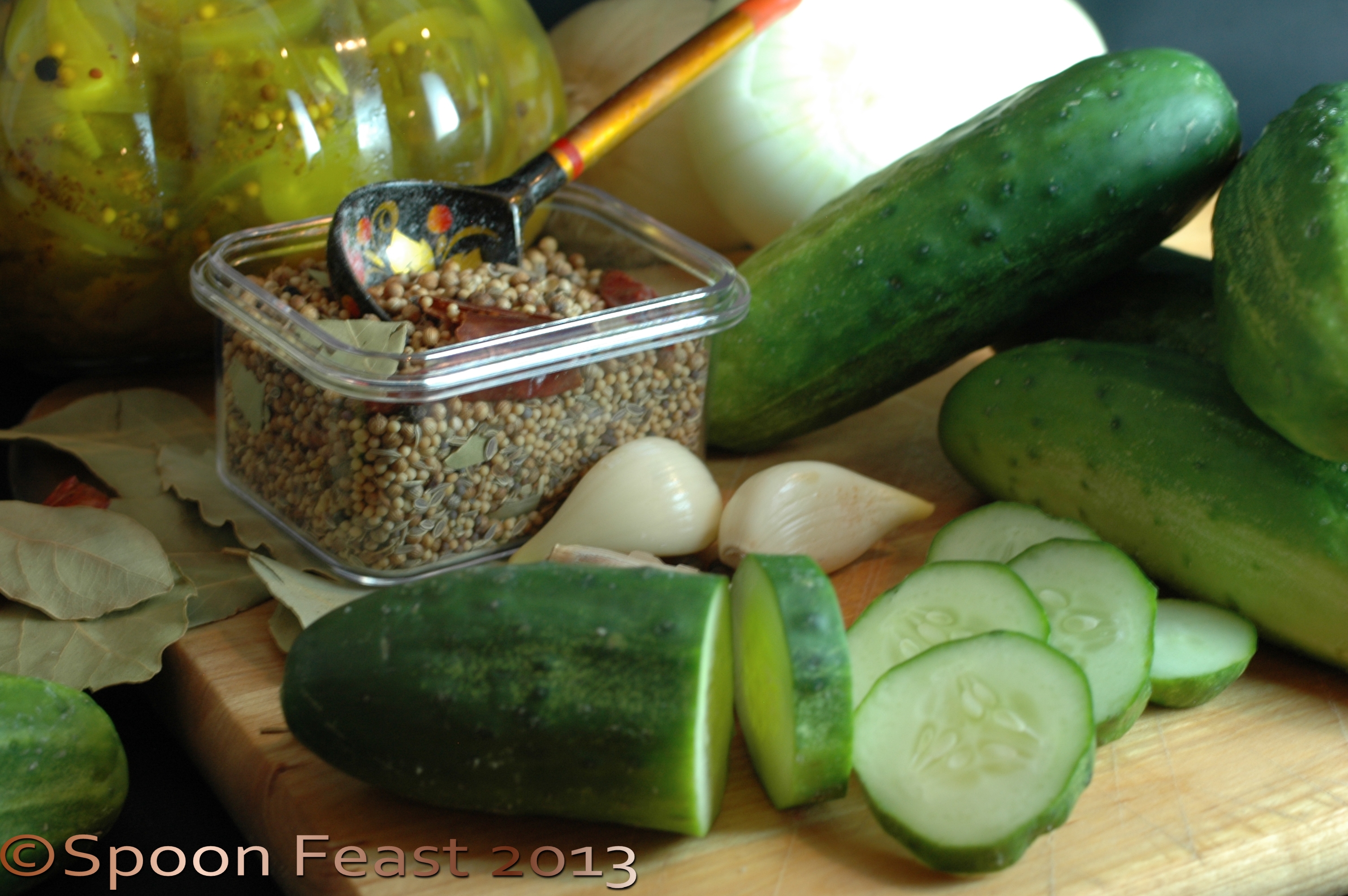
Slicing cucumbers for Sweet Pickle Chips

Slicing cucumbers for Sweet Pickle Chips

You may notice this recipe is the same as the pickled cauliflower recipe and it is! All I have done is substituted the main pickling ingredient.

Cool thing with these is if you ever need pickle relish and don’t have any, simple chop of some of the pickles and onions and you have a great relish! Especially if you add a red chili or sweet red pepper, but not much. The flavor would overwhelm everything else in the jar.

Remember to serve the onions too! If you use a sweet onion like Vidalia, they become another kind of special.

Keep these in the refrigerator unless you want to process them in a canning process to make them shelf stable.

A Jar of Sweet Pickle Chips

A Jar of Sweet Pickle Chips

I find the sweet pickle chips don’t last long enough to can so just get set to make more.

Enjoy!

Pickled Cauliflower

Pickled cauliflower ingredients

Pickled cauliflower ingredients

I don’t know about you, but I LOVE cauliflower, especially when its pickled cauliflower! When I was little, I would go into the jar of mixed pickles in the refrigerator and pick out the few bits of cauliflower that could be found. It was always disappointing because if you were lucky, you could find two pieces in a single jar.

And my dad likes it as much as I do. I always wanted to see a jar of pickled cauliflower on the shelves of the grocery, but when I have seen them, the contents have always been disappointing.

Yummy Pickled Cauliflower!

Yummy Pickled Cauliflower!

SO, using a pickling method I use to make sweet pickles, I used cauliflower instead of cucumbers with lip-smacking good delightful flavor.

Pickled Cauliflower

Ingredients:

  • 2 pounds of cauliflower, cleaned and broken into 2-3 bite size bits – measure after cleaning the cauliflower
  • 8 ounces sweet onion, sliced into 1/4 inch thick slices

Simmering Brine:

  • 1 quart of water
  • 12 ounces apple cider vinegar
  • 1 tablespoon sugar
  • 1 1/2 teaspoons kosher salt
  • 1/2 teaspoon mixed pickling spice

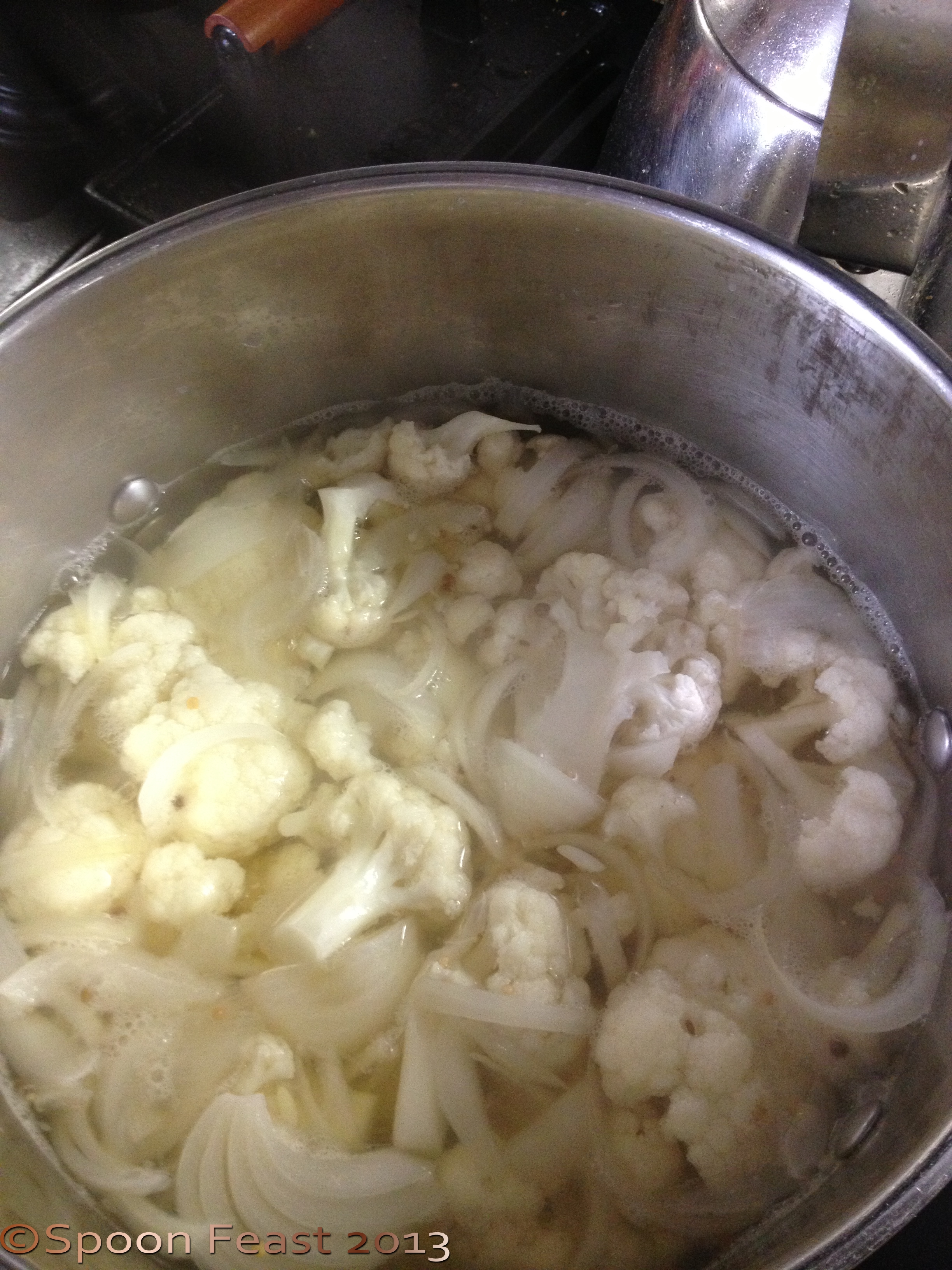
Mix brine ingredients in a large pot, bring to a boil. Once boiling, add the cauliflower and onions, return to a boil and lower heat. Simmer for 10 minutes.

Boil the vegetables in the simmering brine for 10 minutes

Boil the vegetables in the simmering brine for 10 minutes

Drain, discarding liquid unless processing another batch.

While vegetables are simmering, make the vinegar pickling brine.

Pickling Vinegar Brine

  • 10 ounces white vinegar (NOT WINE Vinegar!)
  • 13.5 ounces granulated sugar
  • 1 Tablespoon celery seeds
  • 1 teaspoon mixed pickling spice
  • 1 teaspoon ground turmeric
  • 1/2 teaspoon crushed  whole allspice berries
  • 2 bay leaves

Optional:

  • 2-3 cloves fresh garlic – for a fresh garlic flavor
  • 1-3 dried red chili pods or red jalapeno pepper – to give some heat!

Combine everything in a sauce pot and bring to a boil. It will need to be stirred to encourage the sugar to melt.

Stir the spices and sugar as you bring to a boil for the Pickling Brine.

Stir the spices and sugar as you bring to a boil for the Pickling Brine.

This mixture needs to be boiling when the vegetables are done simmering.

Procedure:

Wash the cauliflower in water slightly warmer than the cauliflower. Cut into florets. Soak in a large bowl of cold water with 1/4 cup salt in it.

This helps eliminate any insects that may be lurking on the vegetable.

Mix the simmering brine ingredients, put on the range top over high heat to bring to a boil.

Mix the pickling vinegar brine and put that over high heat, stirring often to prevent the sugar from burning.

Drain the cauliflower it should soak for at least 15 -30 minutes.

When the simmering brine reaches a boil, drop in the cauliflower and onions, return to a boil, then simmer for 10 minutes.

Drain the vegetables, discarding liquid (Unless processing another batch).

Place the cauliflower and onions in a large canning jar. Using a wide mouth funnel, pour the boiling pickling brine into the jar all the way to the top. Leave as little head room as possible. Everything must be submerged under the pickling brine.

If you find there are pieces that want to float, place a small glass plate or dish on the surface to hold everything down.

At first the jars may appear cloudy but as the turmeric and celery seeds settle to the bottom, the vinegar will clear up and you can enjoy looking at gleaming bottles of an amazing pickled cauliflower!

Fresh and Pickled cauliflower

Fresh and Pickled cauliflower

Keep these in the refrigerator unless you want to process them in a canning process to make them shelf stable.

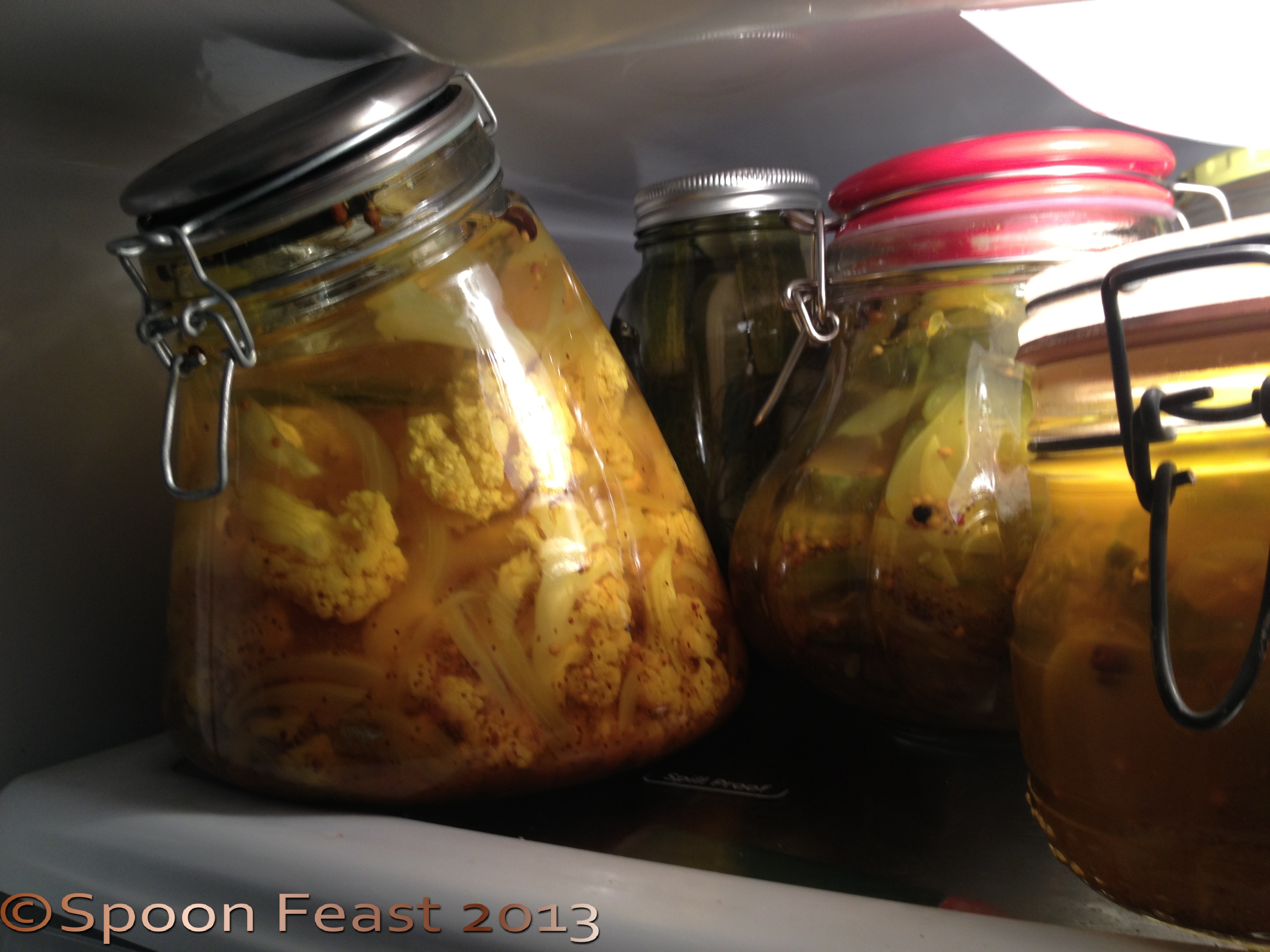
Pickles Cauliflower, Sweet Pickle Chips and Half-Sour Pickles chilling

Pickles Cauliflower, Sweet Pickle Chips and Half-Sour Pickles chilling

Fresh and pickled cauliflower

Fresh and pickled cauliflower

I find they don’t last long enough to can so just get set to make more.

Enjoy!

Onion Scapes

This post is about the beautiful onion scapes growing in my garden.

Enjoy the photos.

IMG_5639 IMG_5638

Refreshing Summer Beverage – Agua Fresca!

Ah, Summertime! Time for refreshing summer beverages and relaxation in the shade. This Summer, discover the simple pleasure of Agua Fresca.

Simple to make, tremendously refreshing, and limitless varieties.

Some varieties have pureed fruit such as cantaloupe, honeydew or watermelon, others feature berries and herbs while others call for cucumber or carrot slices.

My favorite flavor is citrus so to make it, use 1 lemon, 1 lime, 1 orange and 1 grapefruit if there is one on hand. Additionally I add herbs such as mint, basil or sage on occasion too.

This one is citrus with mint.IMG_5627

Slice the fruit into thick slices, remove any seeds and place the slices into a large pitcher.

Add the mint leaves and a small amount of sugar (or leave the sugar out entirely).

Use a wooden spoon or a muddler to gently crush the mint leaves and the fruit. All you want to do here is to start the release of juice and essential oils.

IMG_5622Fill the pitcher with water, fill another glass with ice and pour. Garnish with mint leaves and a citrus slice.IMG_5626

Prop your feet up and enjoy!

If by any odd chance you have any remaining at the end of the day, remove the fruit to store the beverage overnight. If the fruit is left in, the drink will turn quite bitter from the pith of the fruit. Sometimes you can get a second pitcher out of the fruit too.

I do hope you enjoy this version of agua fresca.IMG_5628

Proud of Potatoes!

IMG_6510

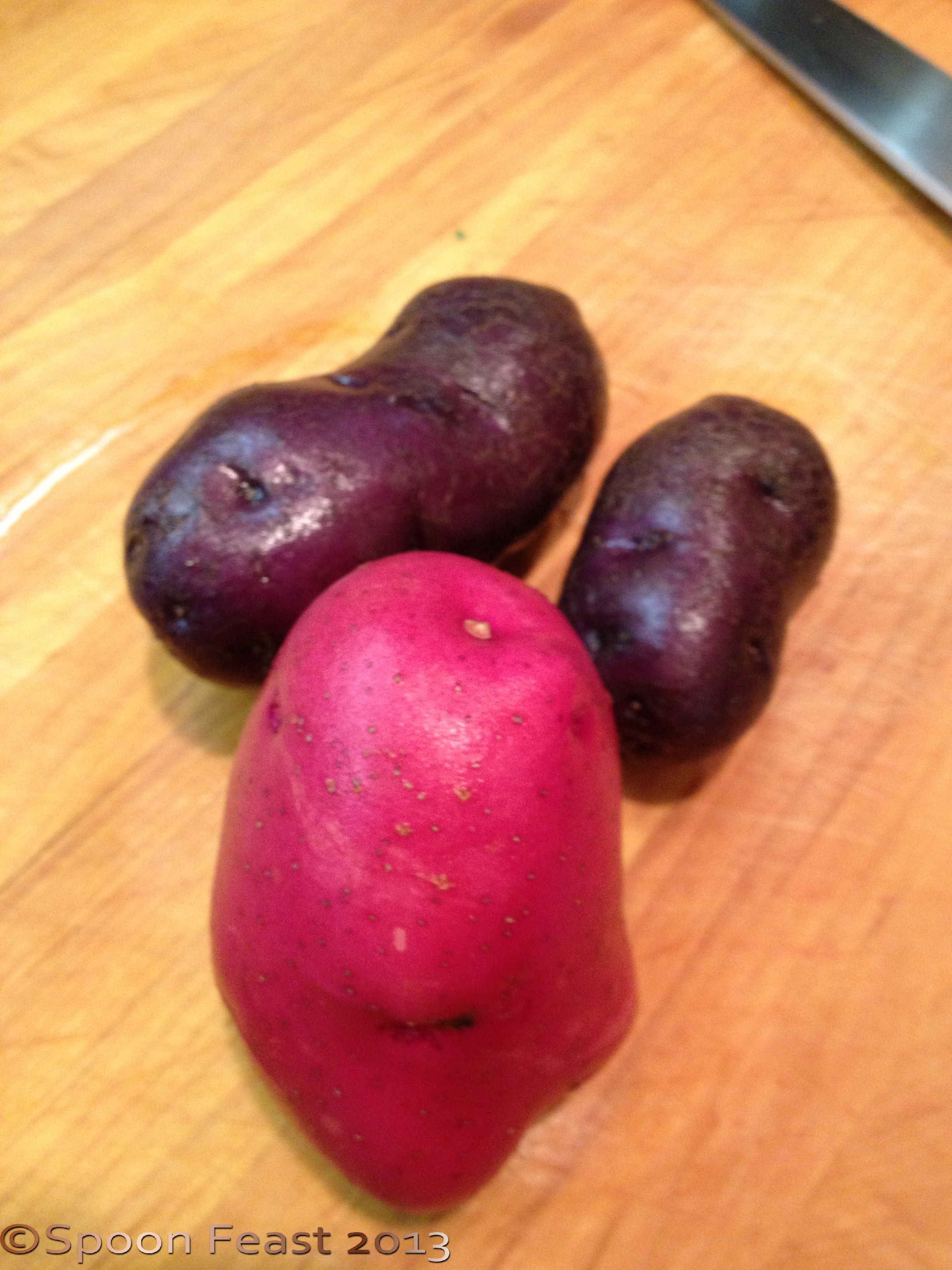
A few of the potatoes, there are red, yellow fingerlings and Peruvian blue growing.

I harvested a few potatoes two weeks ago and was quite proud of my potatoes!

Somewhere, I read that they are supposed to dry a couple of weeks before you eat them so I put them in a bag and let them be until last night.

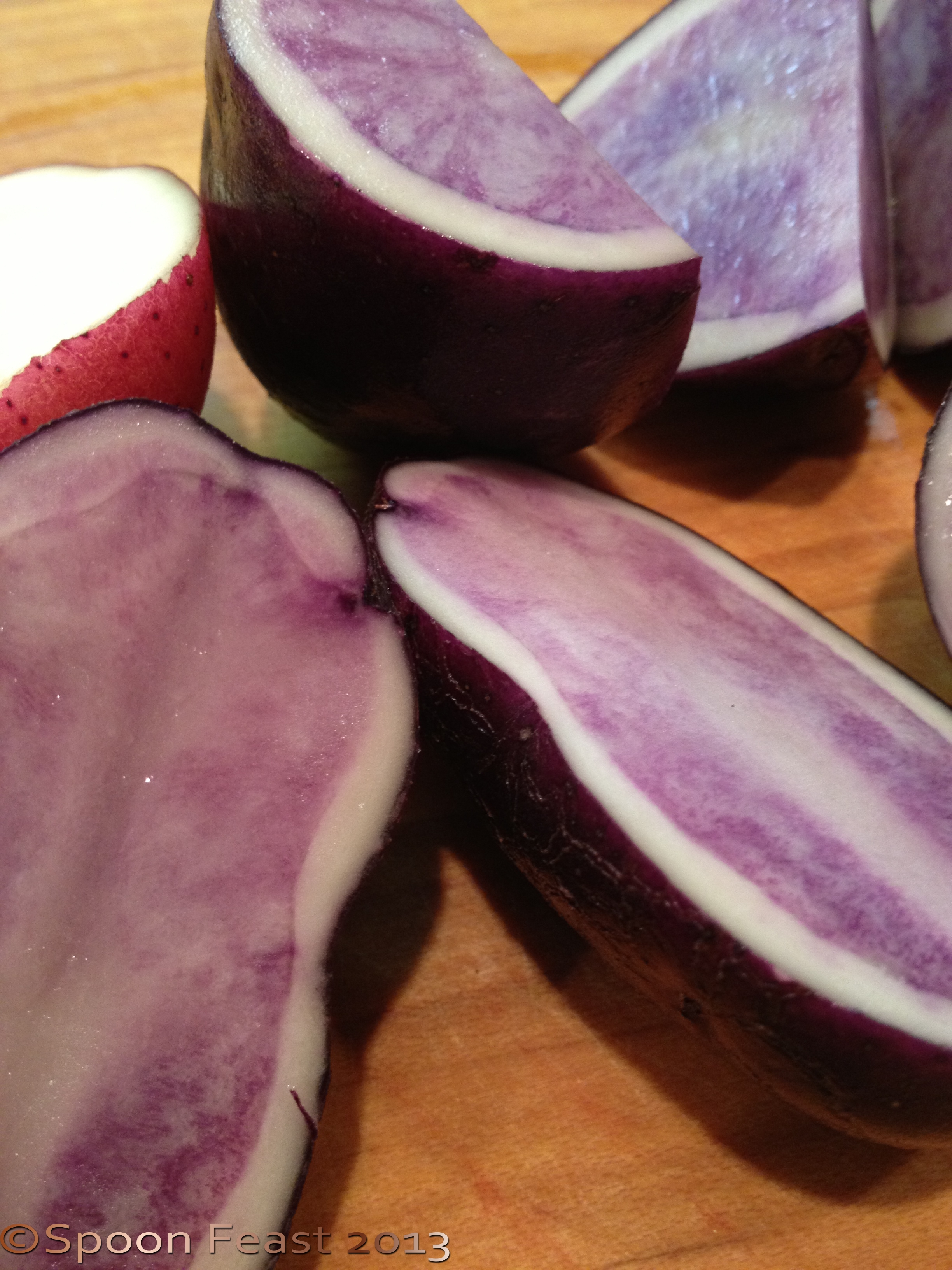
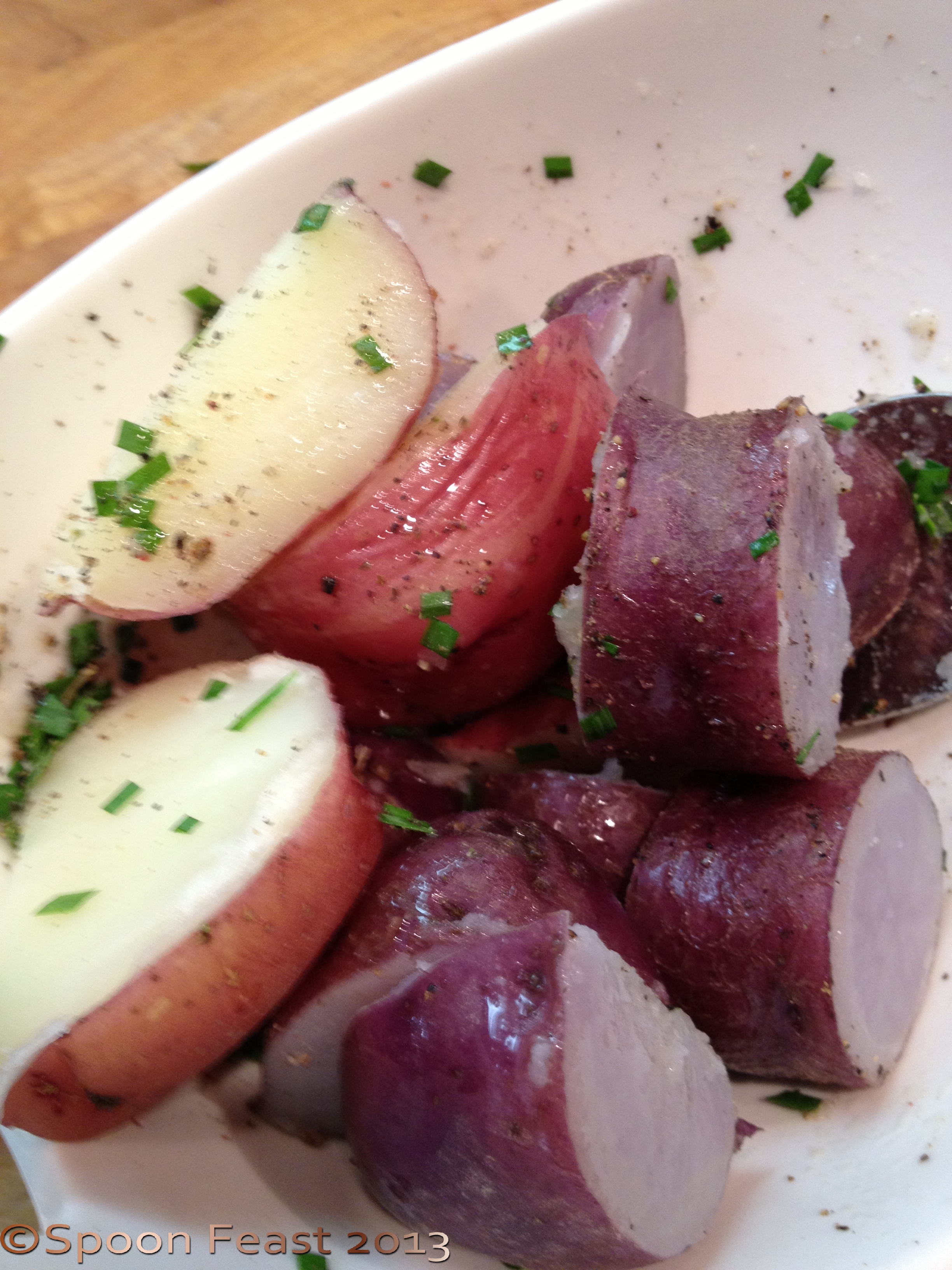
Look at the inside!

Look at the inside!

Scrubbed potatoes were cut and placed into a pot with cold water and put over high heat. Once the water boiled, salt and herbs were added to water to steep flavor into the potatoes as they cooked.

You can learn more about potato varieties on my post: All About Potatoes

Boil until the potatoes are done, drain and season with snipped chives and a small dab of butter  or olive oil if you like.

YUM!

YUM!

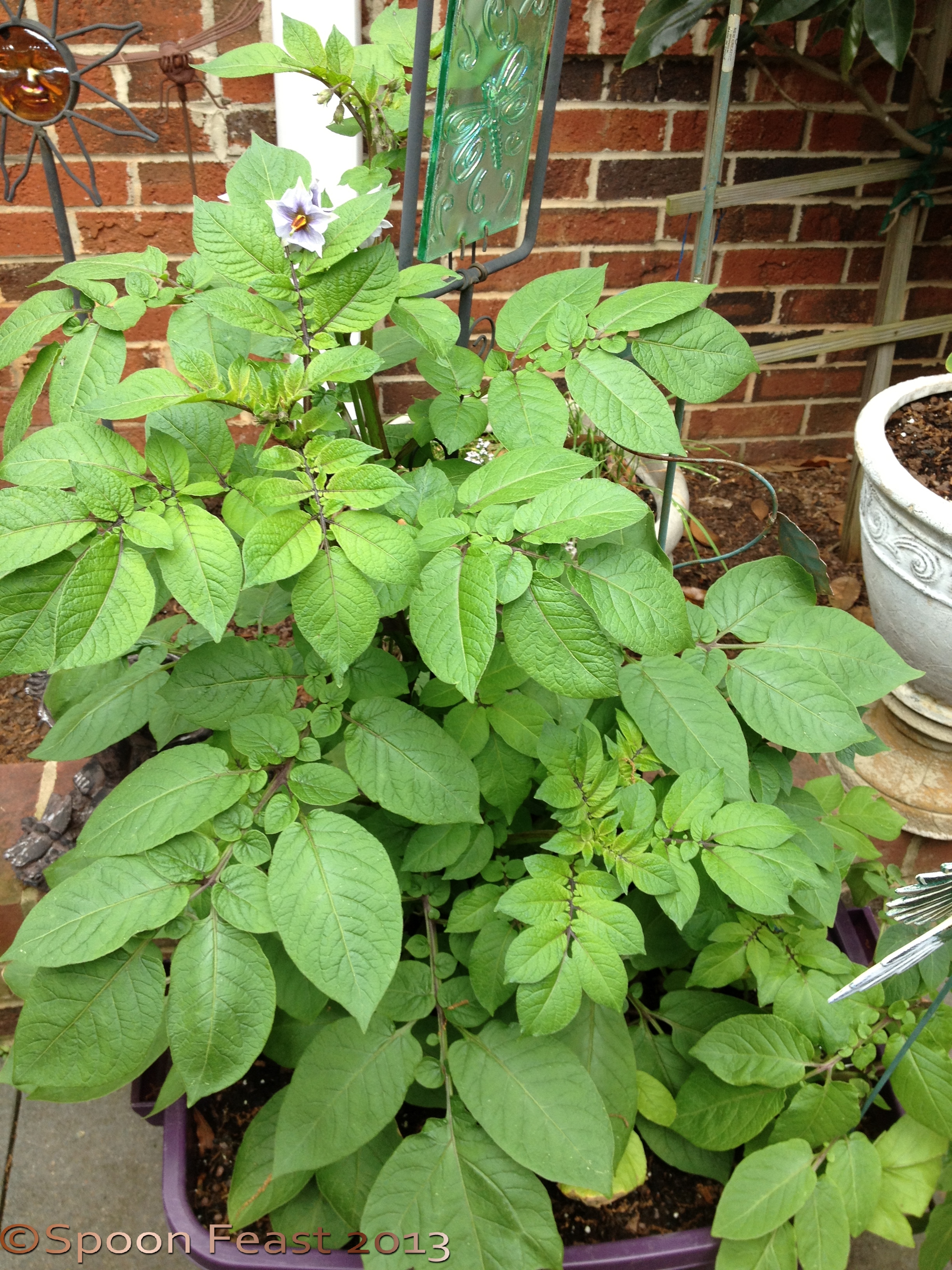
The Peruvian Blue Plant

The Peruvian Blue Plant

The flower

The flower

IMG_5631

So far, it has been quite fun to grow the potatoes. The Peruvian Blue potato plants are actually quite lovely. I’ve kept adding more soil to mimic “hilling” and hopefully, this will result in decent results meaning actually having some potatoes.

I showed the first harvest to Robert he said “looks like its going to be a long winter.” I do hope there are more potatoes to find when it is time! It’s like finding buried treasure when it comes time to dig them out of the ground.

I grew the Peruvian Blue in a 55 gallon purple Rubbermaid bin that I drilled drainage holes in the bottom to drain excess water.

Someone told me that the bags rotted, a pot would have to be quite large so since I had a bunch of bins, one became the container to grow Peruvian Blue Potatoes.

Someone else told me of a large garbage can with a door cut into the side so you could open the door, reach in and harvest a dinners worth of potatoes, close the door and the plant carries on.

How cool is that idea?!

I’d have to think of how to build something though as I’m not to sure everyone would agree on a garbage can with a door cut into the side, growing a potato plant as part of the landscaping.

Now if I lived on a farm . . .

My tomatoes are pitiful. Blossom drop plague. But at least we have a few potatoes.

Charlotte Cooks Wins a Telly Award!

We won a Telly Award for our Shrimp Creole show!

https://i0.wp.com/www.wtvi.org/wp-content/uploads/2013/02/Cooks_Orange_Chicken.jpg

While I can’t post the video yet, here is the recipe for the dish. I hope they release the video soon on You Tube. I think it is circulating now on the channel so I’m guessing when they air a new show this one will become available. When it does, I’ll update this post to include the video.

Until then, enjoy making this recipe which also features Raw Kale Salad.

Creole inspired by NOLA cuisine.

NOLA Style Shrimp Creole

  • 2 pounds Peeled and De-veined Shrimp, save shells to make Shrimp Stock
  • 2 Tablespoons Butter
  • 1 Tablespoon Vegetable Oil
  • 3 Tablespoons All- purpose flour
  • 1 Large Onion, finely chopped
  • 2 Ribs Celery, finely chopped
  • 1 small Green Pepper, finely chopped
  • 2 Tablespoon Creole Seasoning
  • 2 Tablespoon Tomato Paste
  • 2-1/2 Cups Very Ripe Fresh Tomatoes, Diced
  • 1/2 Cup Dry White Wine
  • 2 Cups Shrimp Stock
  • 2 Tablespoon Garlic, minced
  • 2 Bay leaves
  • Cayenne to taste
  • Kosher Salt to taste
  • 1 teaspoon Black Pepper
  • 1 teaspoon White Pepper
  • 1 bunch Fresh Thyme
  • 2 Tablespoon Tabasco or to taste
  • 1 Tablespoon Worcestershire Sauce
  • 1/2 Cup Green Onions, green tops thinly sliced, white part sliced into 1/4″ thickness
  • 2 Tablespoons Flat Leaf Parsley, minced

Melt the butter in a large sauce pan with the vegetable oil over medium high heat.

Add the flour and stir so it looks like wet sand on the beach.

When the butter begins to froth add 1/2 cup of the onions. Cook until the onions are golden brown.

Add the remaining onions, celery, and bell pepper.

Reduce the heat to medium and season with 1 Tablespoon Creole Seasoning and a healthy pinch of salt.

Sweat the vegetables until soft.

Add the tomato paste mixing well, and cook, stirring constantly, until the paste begins to brown, add the fresh tomatoes. Stir well.

When the tomatoes start to break down into liquid add the white wine, bring to a boil and boil for 1-2 minutes.

Add the Shrimp Stock, remaining Creole seasoning, garlic, bay leaves, black pepper, white pepper, cayenne (to taste), and thyme.

Bring to a boil then reduce to a low simmer.

Simmer for 30-45 minutes.

Add the hot sauce, Worcestershire, and adjust seasonings.

Bring the sauce to a boil, reduce the heat to low and add the shrimp.

The key is to not  to over cook your shrimp. Let them slowly simmer in the sauce until just cooked through.

If you boil them, they get tough so just simmer gently. They cook quickly!

Serve with boiled rice and garnish with the remaining green onions and parsley.

Serve immediately.

Serves 4.

I hope you join us in WTVI-PBS Charlotte Thursday evenings at 8:30 to see our new shows.

As always, thanks for watching Charlotte Cooks!

A Basic Fresh Goat Cheese: Chevre

I made Fresh Goat Cheese!

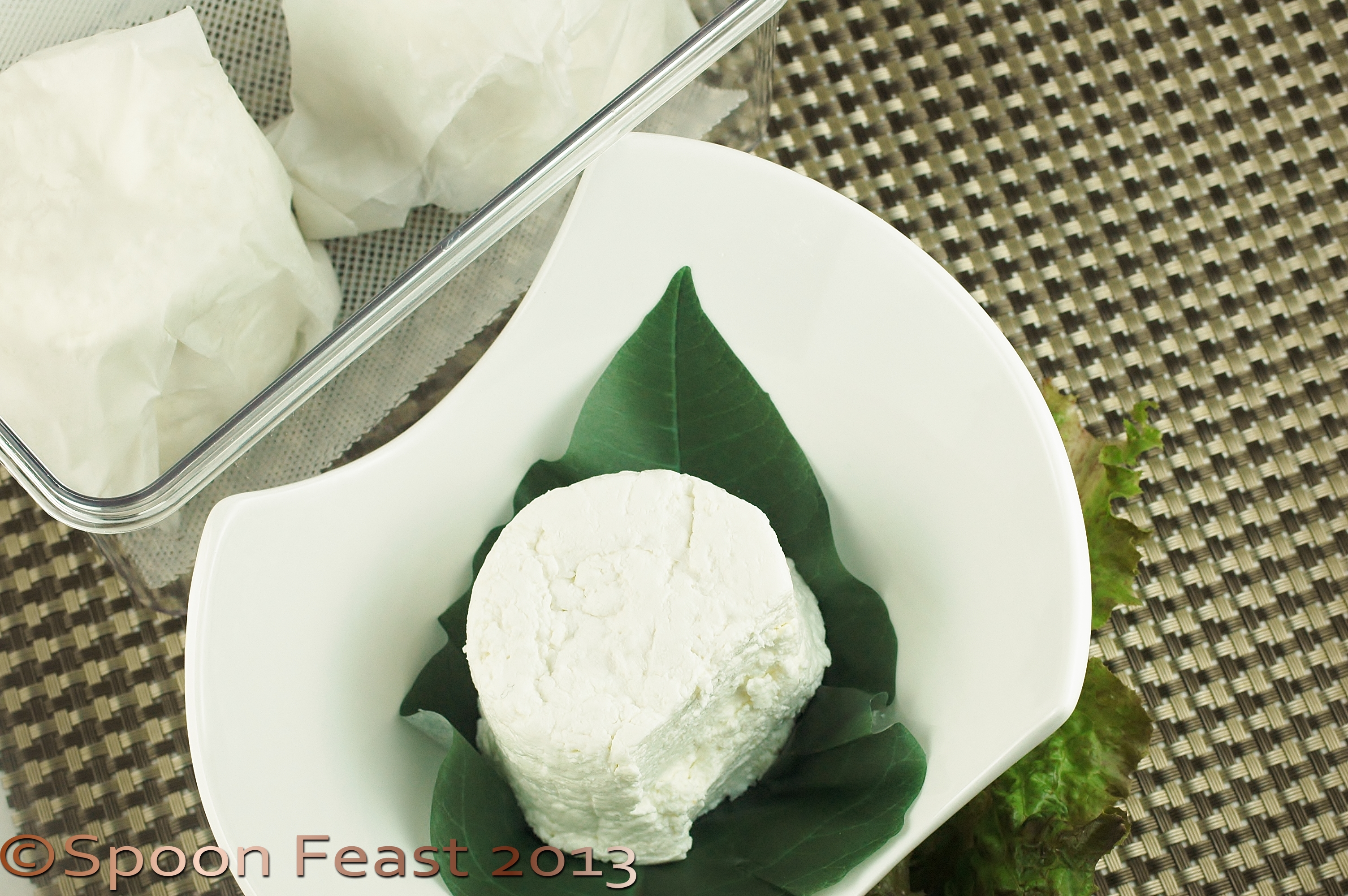
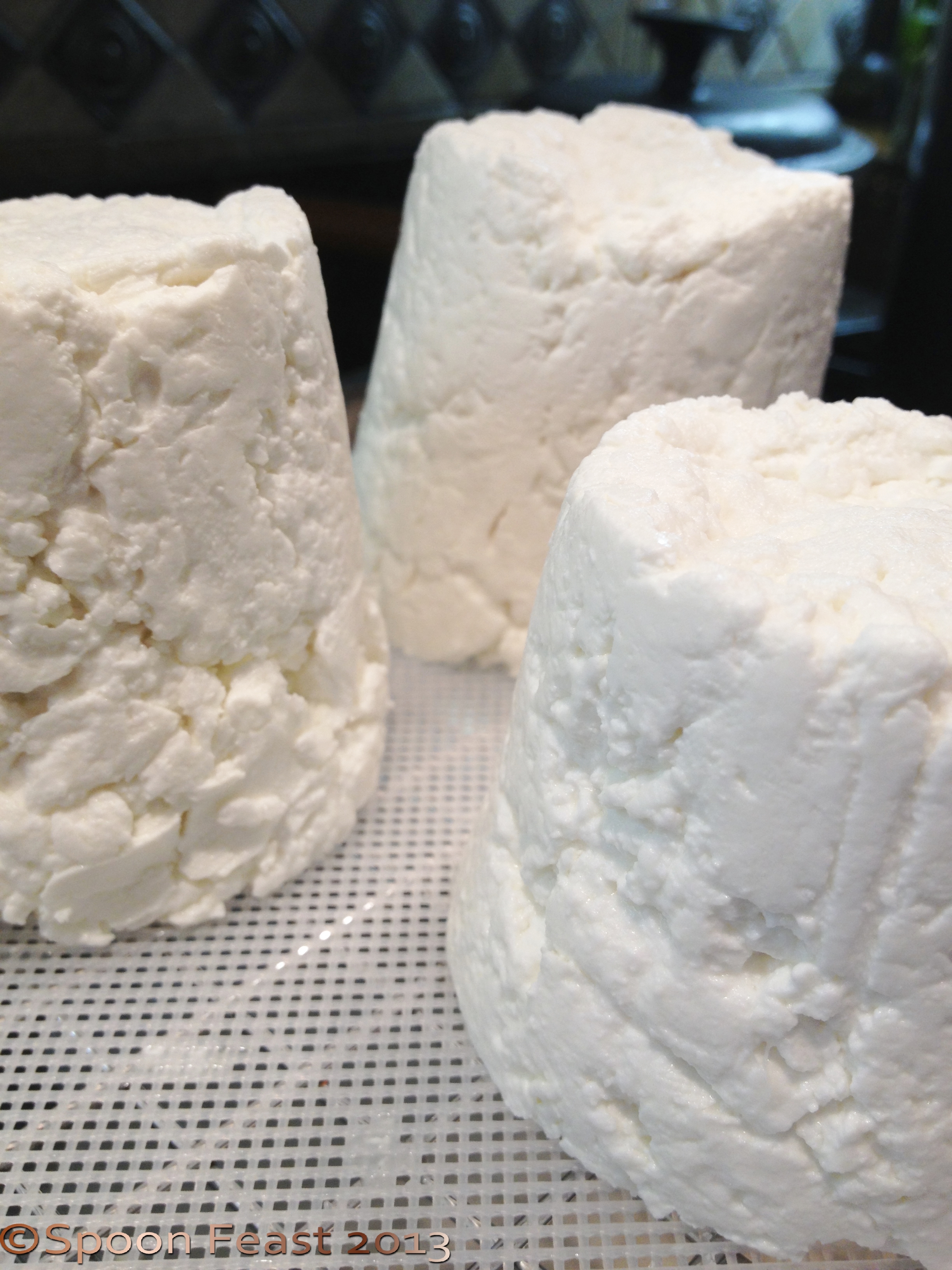
Fresh Goat Cheese!

Fresh Goat Cheese!

Actually I was surprised at how quick and easy it actually was to make. Having the right equipment and getting good milk are key.

I get most of my supplies from The New England Cheese Making Supply which is a great resource for everything cheese.

Ever since I returned from the cheese making workshop a few weeks ago, my hands have been looking forward to getting into some milk.

First I had to find a source for good, clean, fresh goat milk for goat cheese and I still need to source Jersey cows for their milk for other cheese. For now, I have goat!

I LOVE the “barnyard” flavor of a strong goat cheese. While in France, I fell in love with Pouligny St. Pierre goat cheese which is a creamy smooth aged amazing bit of heaven to put into your mouth. It is my goal and intention to make some of that here, but obviously with the “terroir” of North Carolina.

OK, so here’s how I made this batch of Fresh Chevre:

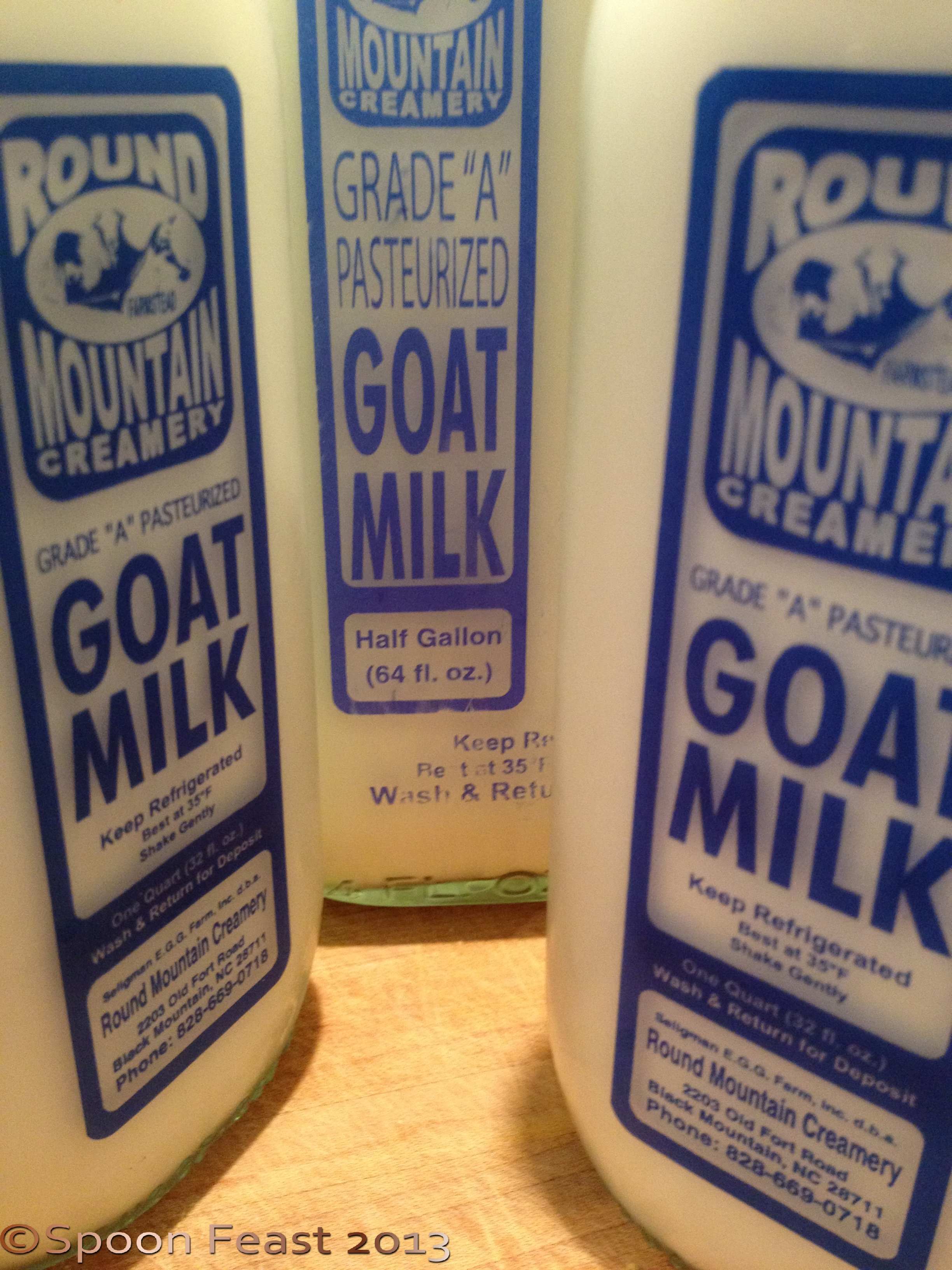
I started with one gallon of fresh Goat Milk from Round Mountain Creamery in Black Mountain, NC. The milk comes in glass bottles, which I love!

Order a batch of CHEVRE culture from New England Cheese Making Supply. One packet will culture one gallon of milk, so plan what you want to make. I never seem to order enough.

Additionally if your milk is pasteurized (PLEASE find milk that is low temp processed as Ultra-Pasteurized milk does not work for making cheese) you will need 1/4 teaspoon of calcium chloride per gallon of pasteurized, cold-stored milk.

In my next batch, I want to ripen it for a few weeks so I will be adding other cultures for different effects.

Equipment needed:

2 large pots; the small one holds 1 gallon easily. I can use the larger pot for larger batches. Just need to find a pot to nest it inside of for a reasonable price.

2 large pots; the small one holds 1 gallon easily. I can use the larger pot for larger batches. Just need to find a pot to nest it inside of for a reasonable price.

2 large stock pots: the one the milk goes into needs to be stainless steel (Non-reactive)

The second one needs to be large enough to make a double boiler or bain marie, the first needs to nestle into the large one so you can heat the milk easily and slowly.

A good thermometer: You NEED to be in control of temperatures, not too high or too low.

Cheese Muslin, butter muslin, closely woven cheese cloth– the normal loose woven is way too loosely woven. Invest in a yard or two, wash it and use it over and over.

Use cold water to remove any cheese particles, then hand wash. Rinse and boil it in a pot with some baking soda for 5-10 minutes, rinse and hang to dry. It will be fresh and good to go for the next round of cheese!

Here is how to make the cheese:

Wash and sanitize everything!! Have a pot of boiling/simmering water to drop cheesecloth, molds, tools into to sanitize them before they come into contact with cheese.

Pour the milk into the pot, place it over the water (about 80°F). Warm the milk to 72-78°F.

Please be aware that this will feel cold to the touch, this is not warm milk, just milk warmed from refrigeration to 72-78 degrees.

Open 1 packet of the Chevre culture and sprinkle it over the top of the milk. Allow it to hydrate for 2-5 minutes before stirring it into the milk.

Goat milkAdd 1/4 teaspoon calcium chloride is using cold-stored pasteurized milk.

Allow this to sit undisturbed for 6-12 hours. This is the hardest part as you want to go see what is happening and you want it to hurry up and do its thing. But be patient, it takes time.

This batch sat for 8 1/4 hours before testing the cleave of the curd. When it is ready to test, you should see a thin layer of whey over the curd and a slight separation from the sides of the pot.

Testing the cleavage break

Testing the cleavage break

Insert a knife or a spoon, slightly on the surface, the curd should cleave clean and the whey that floats into the separation should be clear.

Carefully lift the curds with a strainer into a colander lined with cheese muslin. Be sure to place the colander over a large bowl to catch the whey.

Gently fold the cheesecloth over the curds and allow them to drain for 6-12 hours again, depending upon your desired finished texture. Less time for sweeter cheese, more for tangy cheese. The longer the whey stays in contact with the curd, the more tangy it gets.

You must be very careful NOT TO PRESS the curds. Allow them to drain gently at this point. The whey should be clear dripping, if it is cloudy, you are losing milk fat and your cheese will be dry.

You can also put it into molds at this point if you are using a mold. It will result in a smoother sided end product.

Control the room temperature and the curd temperature to maintain as close to 72-78°F as possible. I let the curds form while still in the bain marie as the water in the host pot will maintain the temperature of the curd mass.

I usually let this happen overnight while sleeping. The next day is such a surprise!

Unfold the cheesecloth and reveal your fresh cheese! Now it is time to salt. For this batch, 1.5-2 teaspoons of non-iodized cheese salt.

You can consider the cheese finished at this point but this is also where you can be a bit creative.IMG_6161

As you fold in the salt, also consider adding other flavors like herbs, minced garlic or shallots or onions, crushed peppercorns, ash, use your imagination.

IMG_6171Store your fresh goat cheese in a bowl or tub and consume within 10 days. Refrigerate the cheese, but allow it to come to room temperature before serving to allow all the wonderful flavors to come through.

A Word About Seasonings:

Please use dried seasonings and herbs due to the risk of bacterial contamination that may be introduced by using fresh herbs and seasonings. If you use fresh, be sure to eat the cheese soon. It can’t hang out for a while like plain cheese.

A Word About Food Safety:

The temperature the milk gets processed is in a temperature range that is smack dab in the extreme temperature danger zone. Everything you use needs to be “sterilized” in the boiling water bath before it comes in contact with the curds or milk. I cover my curd formation and the curd draining with a glass lid (so I can see what is going on!) to prevent anything falling or flying into the curd mass.

Since my kitchen is FULL of wild yeast from all the bread I make, the introduction of wild yeast is totally possible. This could have a spoiling effect on the curd. This is another reason I boil things before they touch the milk/curds.

The hardest part is WAITING! I strongly suggest you get to a farmers market and buy some goat milk and try this. It is easy, very tasty and you will feel so good about making a tasty goat cheese you’ll make more.

If you do make any cheese, take notes on the temperatures, conditions, milk etc so you can repeat successful processes. Most of all remember DO NOT USE Ultra-Pasteurized milk!

So that’s Fresh Chevre in a nut shell. There is a lot of information out there on making cheese. I’m really just starting and am looking forward to making more!

Please let me know how you do if you make some fresh Goat Cheese!

A Cheese Making Workshop

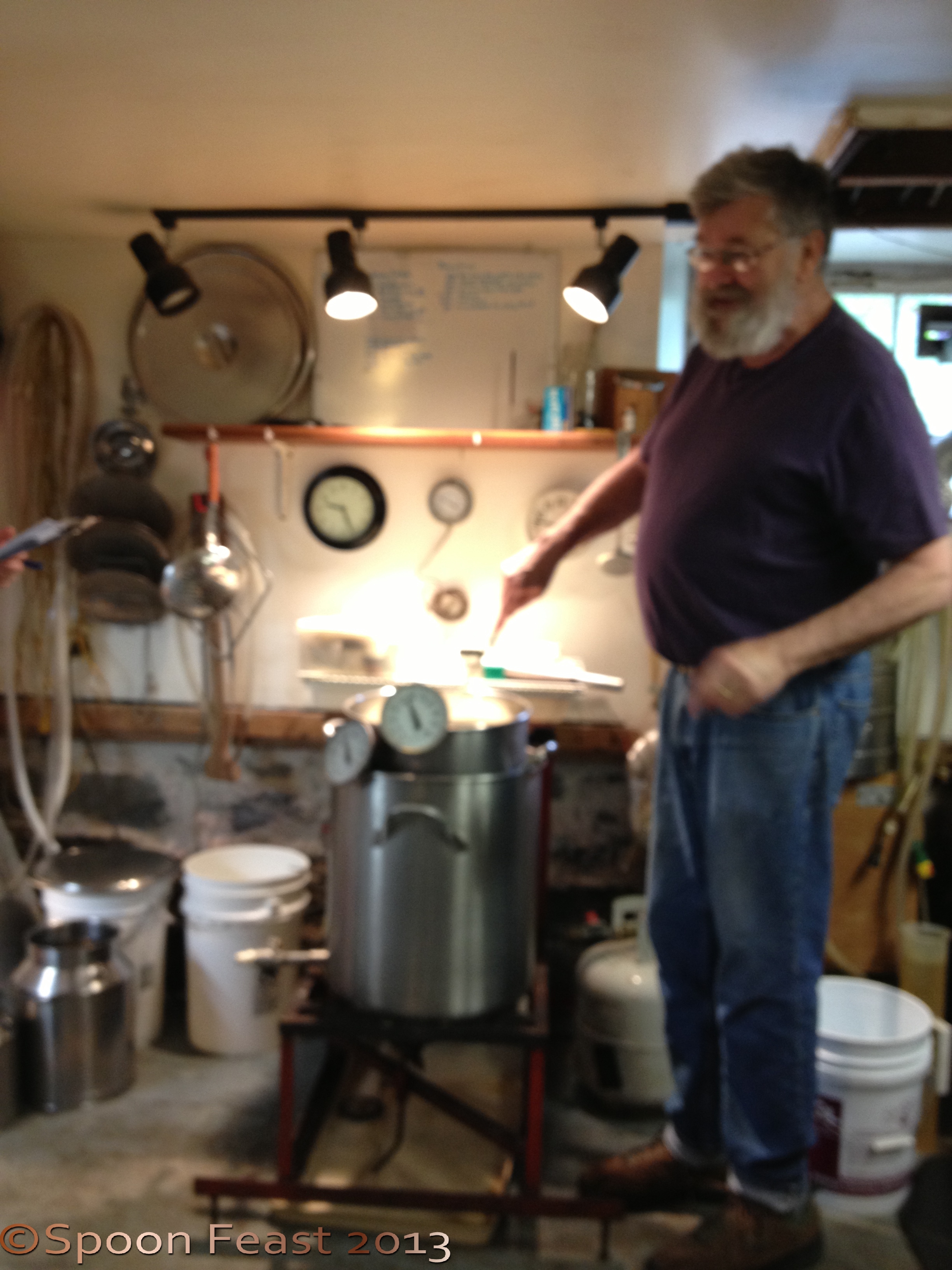
This past weekend two of my colleagues and I got to travel to Shelburne Falls, Massachusetts to take a Cheese Making Workshop conducted by cheese master Jim Wallace.

Master Cheese Maker, Jim Wallace

Master Cheese Maker, Jim Wallace

We learned about the processes of making Cheddar, Camembert and Vacha Toscana, about a lot of the science, theory and instinct involved in cheese making as well as an evaluation of the cheese each of us brought for him to trouble shoot.

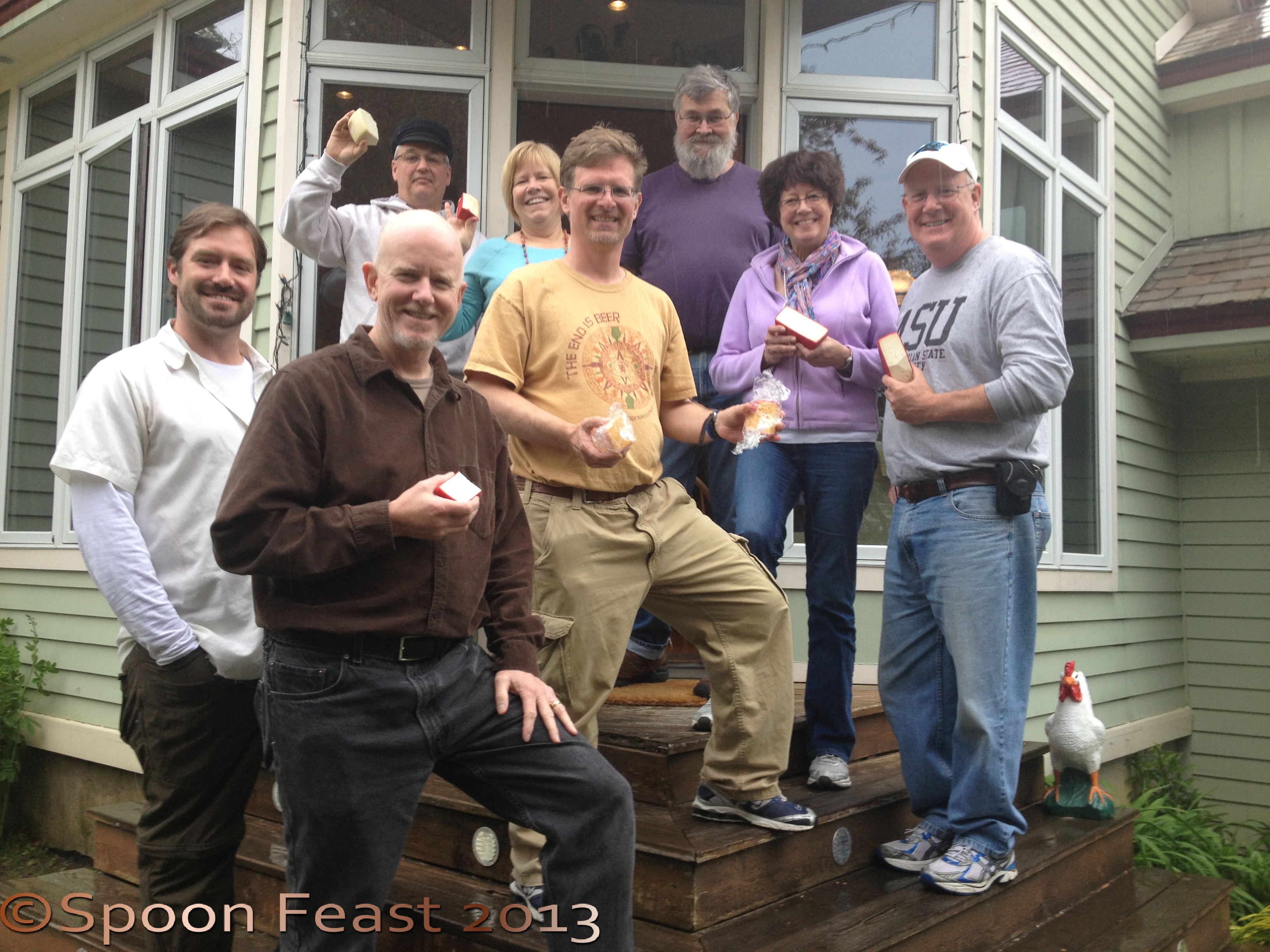
We had a great group: Seth from Vermont/New York, Martin from St. Augustine, Michael and Belinda from Pennsylvania who want to buy a boat soon and sail the eternal summer; two of my colleagues and myself.

Our Group

Our Group

Each of us have tinkered with cheese for a few years and this workshop allowed us to take our skills to another level. I hope we can stay in touch somehow, I want to hear about the cheese making adventures at sea!

Jim’s cheeses are not only beautiful but very tasty.

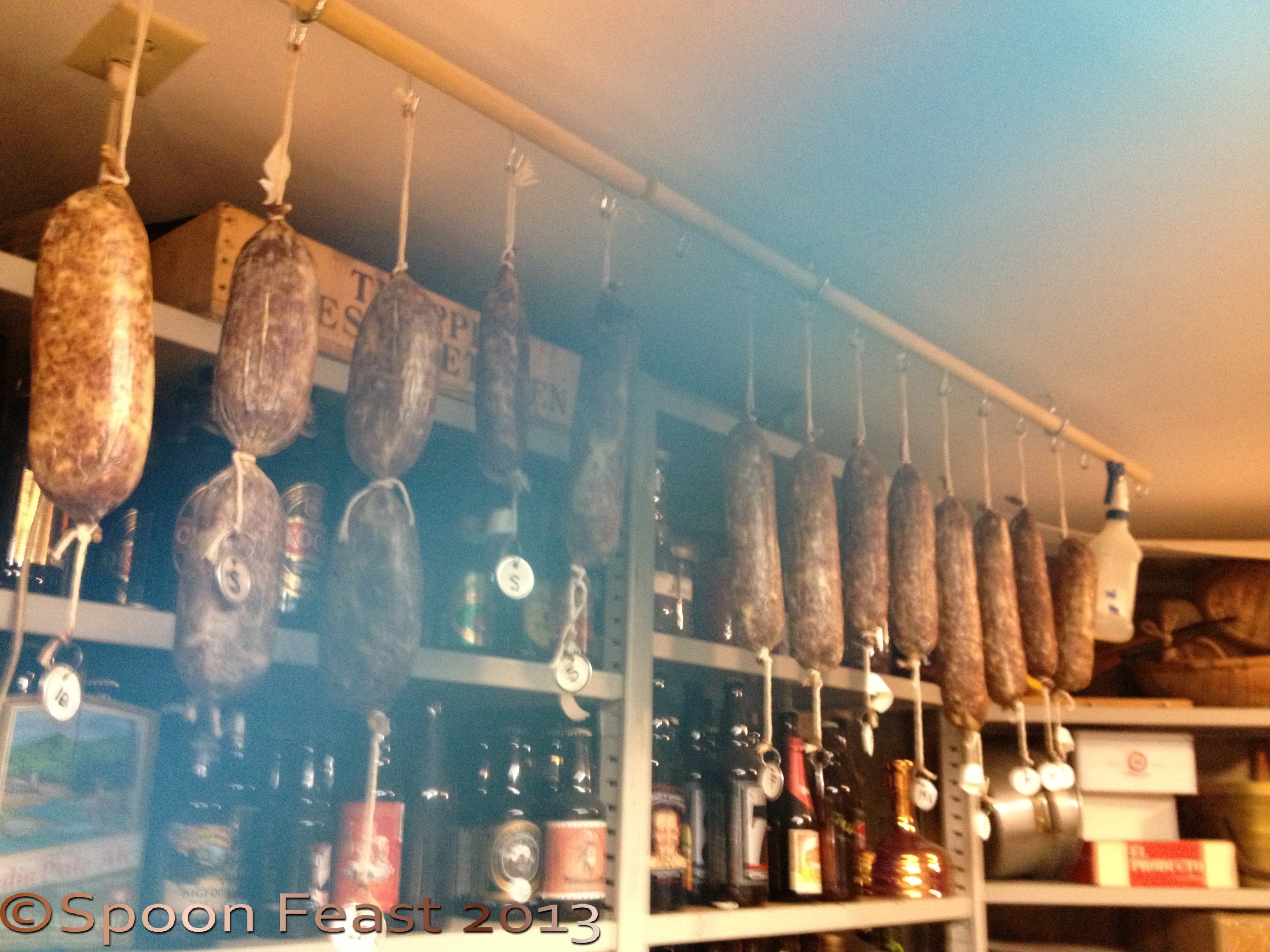
Cheese in the cave

Cheese in the cave

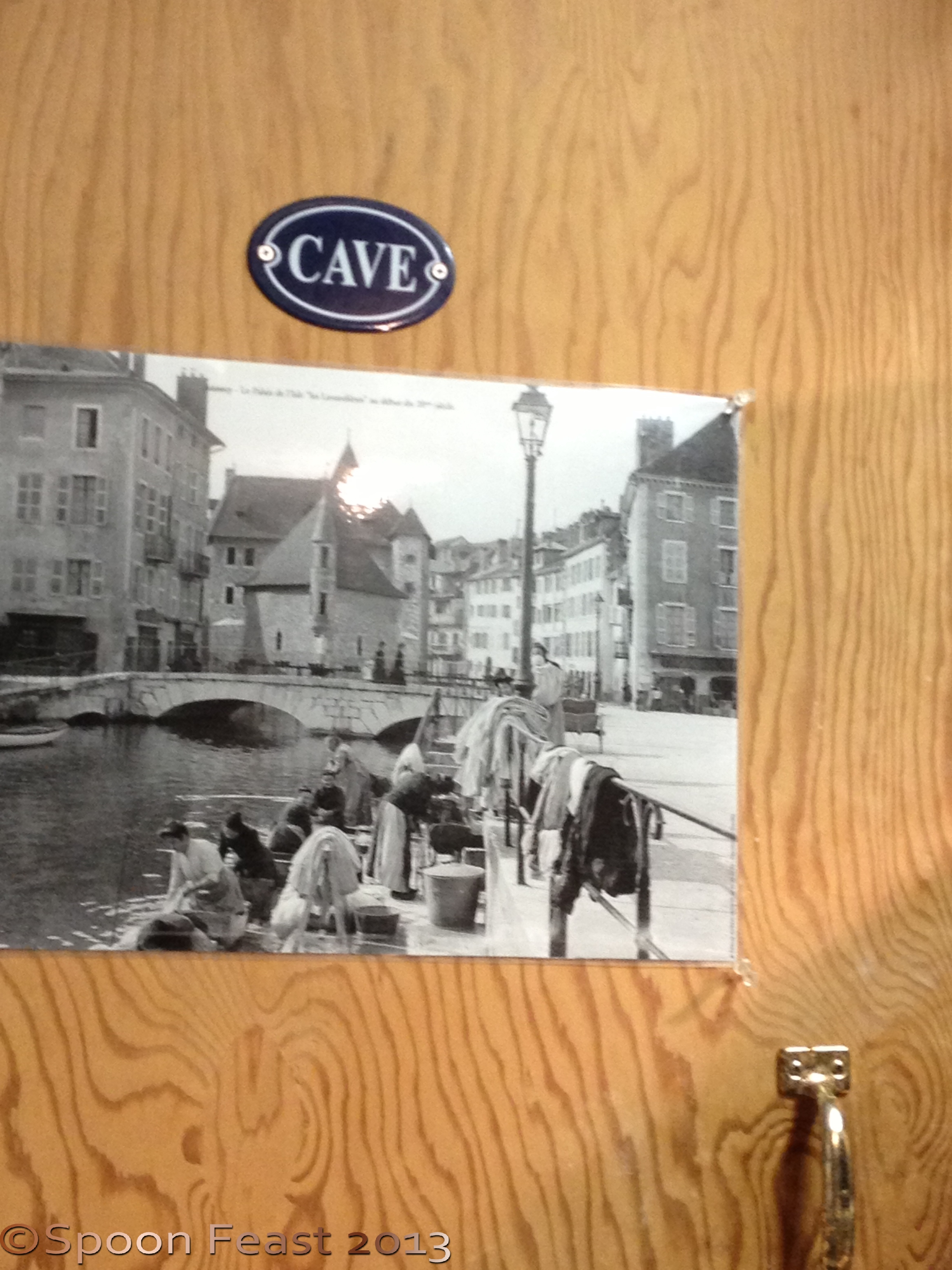
His “Cave” and drying rooms are places I could spend hours.

Cave door

Cave door

The drying room

The drying room

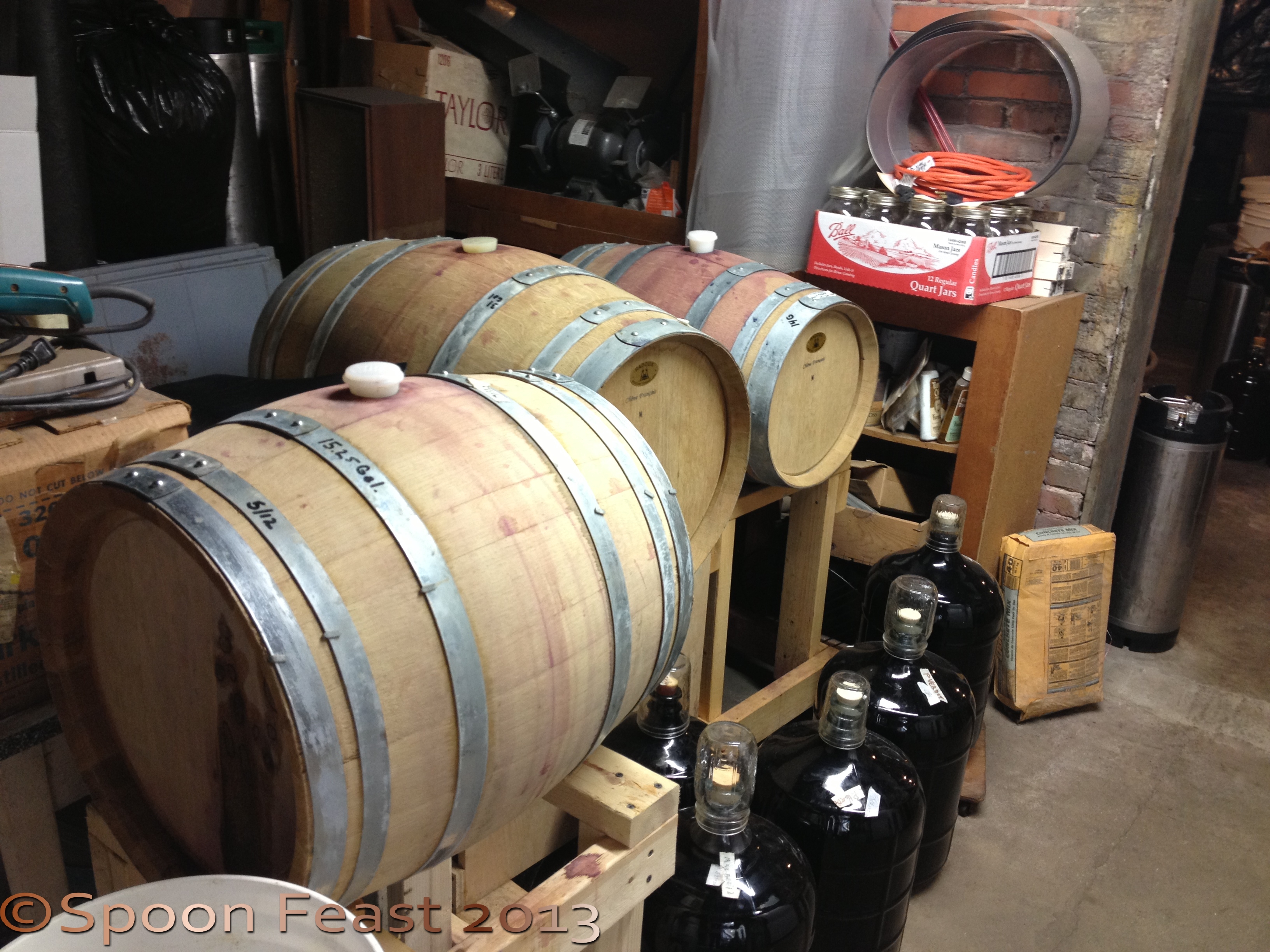
In addition to making cheese, Mr. Wallace also makes some lovely wine and impressive beer.

Wine making

Wine making

The workshop began at 9AM with the introduction of milk, cultures, rennet, stirring, curd cutting,

PH lab

PH lab

draining, molding and finally pressing.

I was amazed how easy it seems to be to make Camembert. Can’t wait to try it!

Jim’s lovely wife Robin made lunch for us both days. The table was full of lively conversations, great food, cheese, wine and beer. (Jim told us we must have been a special group as he doesn’t usually share his beer and wine with classes. So if you go, don’t expect it!)

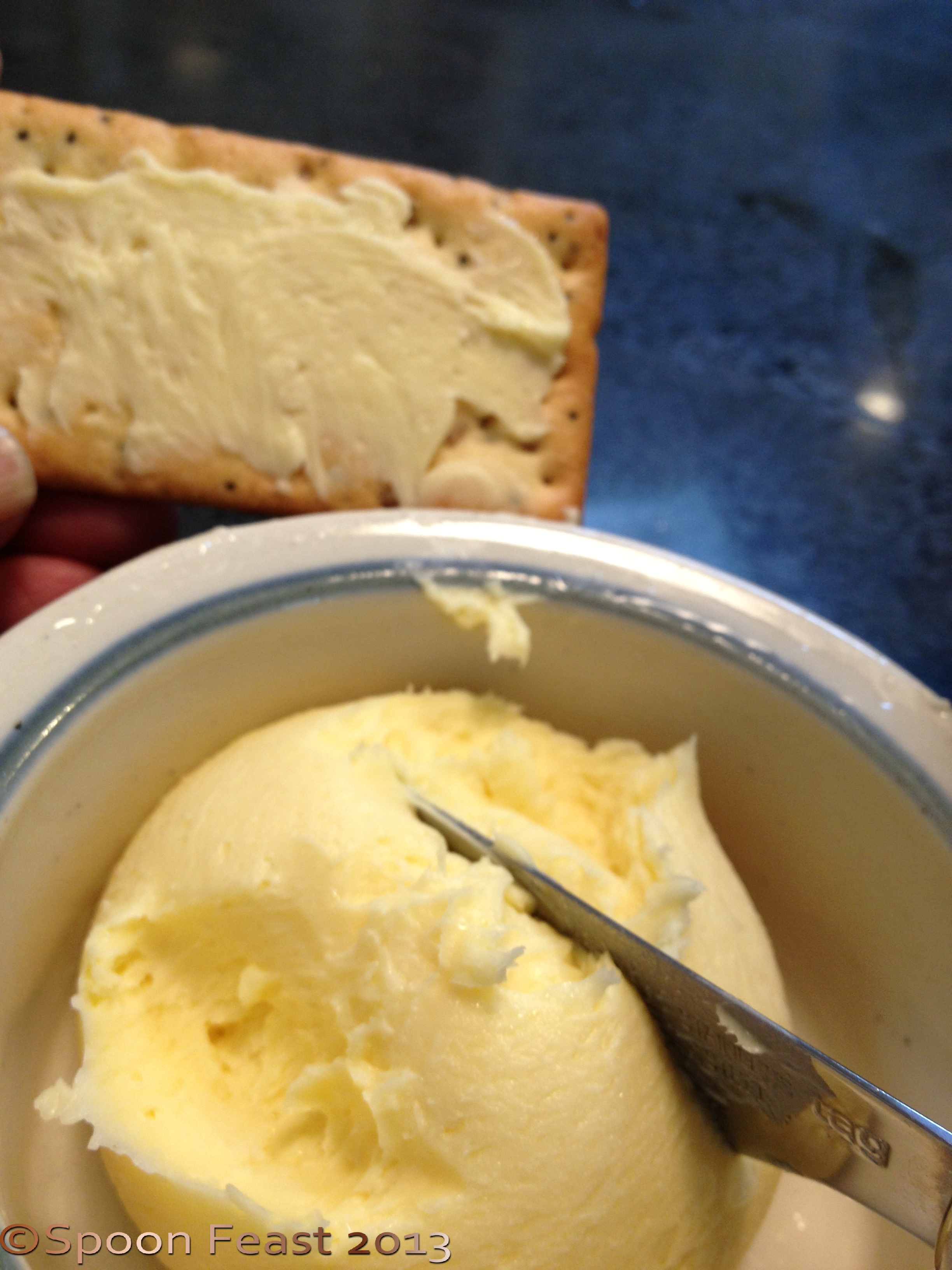
Sunday morning, Robin and Jim were making fresh butter from the butterfat that floated to the top of the whey from Saturdays cheese making.

Really fresh butter! Boy did that butter taste good!

Really fresh butter and you know how much I love butter!

Really fresh butter and you know how much I love butter!

Both Jim and Robin were professional photographers who traveled and sold their work at shows. This resulted in an amazing collection of original art work from photographs of their own and others, sculpted art pottery, bead work, and dinner/serve ware style pottery. It was great to be in the presence of so much creative energy.

Jim works with Ricki Carroll of The New England Cheese Making Supply on development, workshops, recipes and website.

If you have any interest in cheese making, I highly suggest you get in contact with Jim to see what he has coming up. He has limited space so make you plans early.

You can contact him at jim@cheesemaking.com.

He can give you the cost, dates and availability of up coming workshops. I would say these aren’t for someone who has never made cheese before because he gets quite technical. If you never made cheese before, find a local class that teaches mozzarella, marscapone, lemon cheese, cream cheese and other quick, easy fresh cheese.

If you like the process, play with making a couple aged cheese, THEN go take a workshop from Jim.

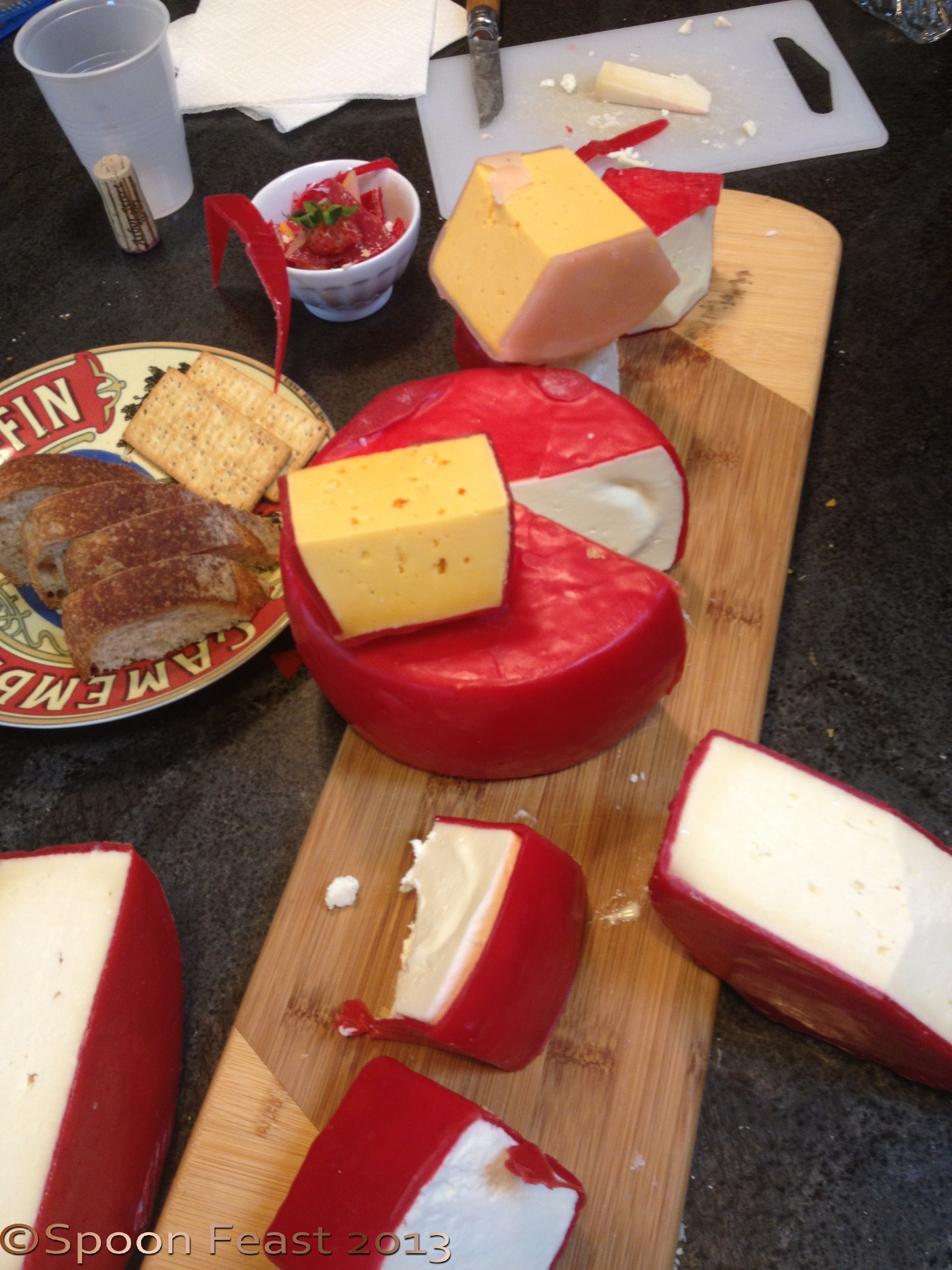
These are the cheeses that everyone brought for the evaluation session

These are the cheeses that everyone brought for the evaluation session

Bring your cheese with you and he will tell you what you did right, what went wrong and give great advice about your cheese. Everyone got a lot out of this session.

I will create posts on the cheese we made and the cheese we make now that we are back from the workshop.

It will be quite fun and interesting to get to make these. The challenge will be in allowing them to ripen and age enough before cutting into them.

Some age for a couple of weeks, and others several months, We think once we get the process started, we can have a perpetual flow of amazing artisan and farmstead cheese.

Watch for these posts over the summer!

If you take a workshop from Jim, let me know what you get to make as his workshops are all different. We guess it depends upon what his cave needs and his social schedule as he always brings cheese.

You’ve got to pace yourself though, it is easy to get cheesed out if you don’t normally have a lot of cheese in your diet.

Let’s make some cheese!

Aged Cheddar

Aged Cheddar

Almost ripe Camembert

Almost ripe Camembert

Aging Vacha Toscana

Aging Vacha Toscana

Jim's cheese we tasted at lunch. The Bavarian Feta (rectangle cheese top left) is my favorite!

Jim’s cheese we tasted at lunch. The Bavarian Feta (rectangle cheese top left) is my favorite!