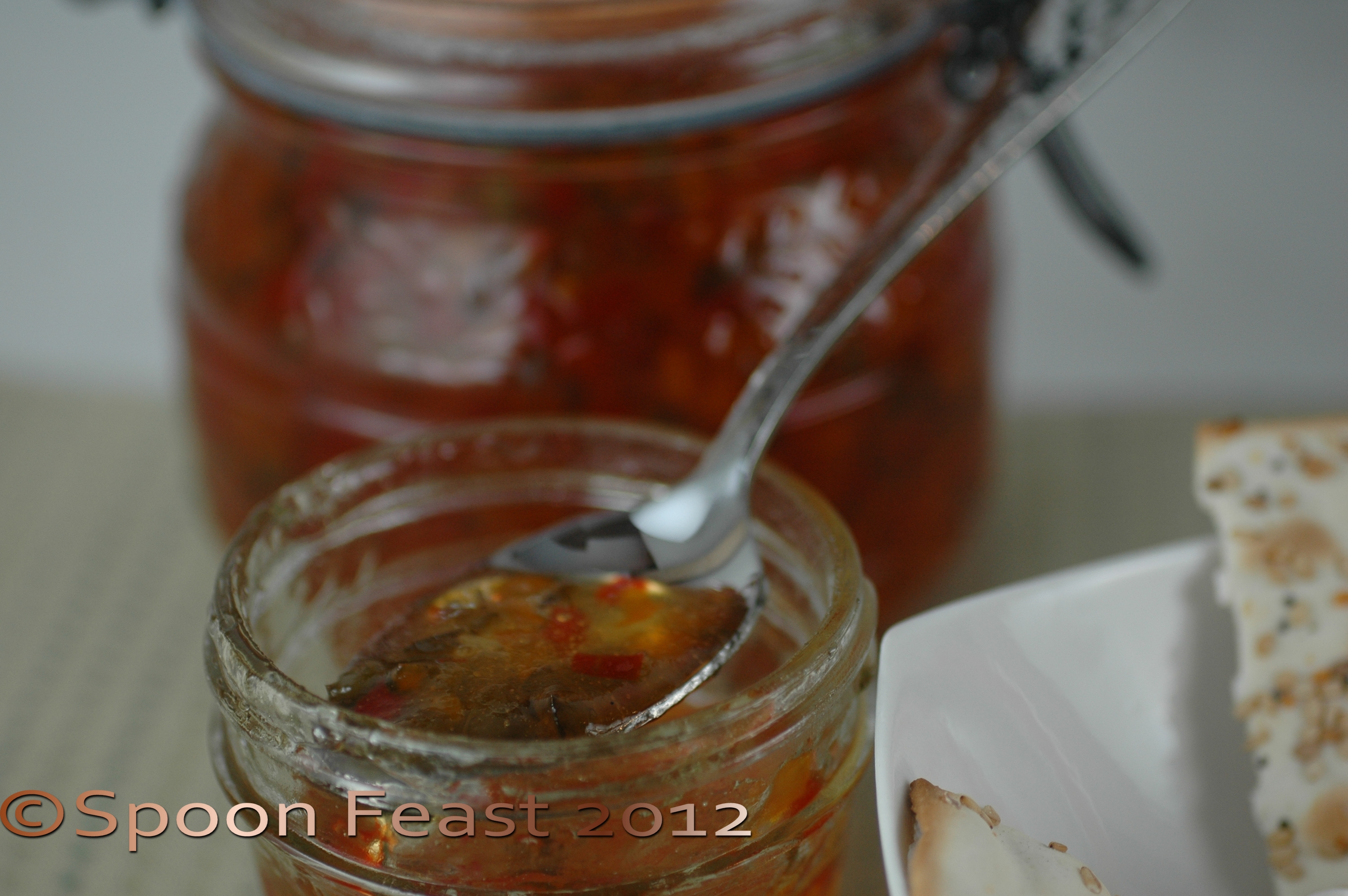
Fresh Herb Wreath

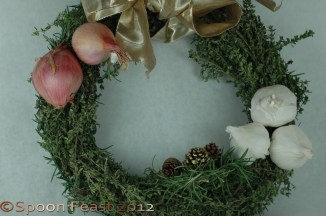
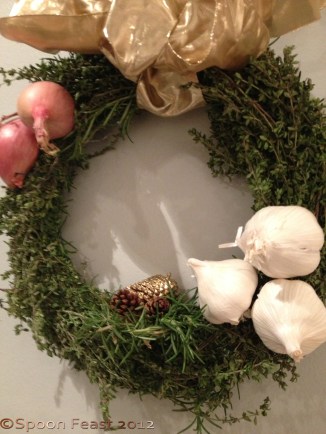
DSC_0007Making a fresh herb wreath is easy and very fragrant. I love fresh herbs which is why I grow them, lots of them. If you don’t grow them now, consider starting a herb garden. It will save you a ton of money, you will always have fresh herbs on hand and you can have enough to make things like this. So grow yourself a money-saving herb garden.

You will be dizzy with how great this smells!

Herbs: Thyme, oregano and rosemary

Herbs: Thyme, oregano and rosemary (Photo credit: Wikipedia)

To make a fresh herb wreath, you will need:

  • 1 wire wreath frame
  • 1 package of fine floral wire
  • a bunch of fresh herbs
  • Whole garlic and shallots, not peeled

Cover your work space with paper to catch all the leaves that she during the wiring process.

Lay the wreath form on the paper and start attaching bundles of herbs to the frame.

For this wreath I used fresh Thyme and Rosemary.

Overlapping the ends of the herbs, fill the frame all the way around.

With a skewer, pierce a hole through the bottom of the garlic and shallots. Thread a floral wire through the hold and attach the garlic and shallots to the herb frame.

English: Christmas Wreath Being Made

English: Christmas Wreath Being Made (Photo credit: Wikipedia)

English: A basket of garlic (allium sativum) o...

English: A basket of garlic (allium sativum) offered for sale at the farmers’ market in Rochester, Minnesota (Photo credit: Wikipedia)

Tie a ribbon and hang. I made a small wire loop on the back of floral wire for the hanger.

The herbs will dry. You can use this in cooking if you like, but I am only using it for decoration this year.

It smells so good!

Fresh Herb Wreath

Fresh Herb Wreath

Entertaining

Entertaining is a word that can strike fear or pure pleasure in people.

Hors d’oeuvres spoons

The prospect of entertaining need not be a burden, just have a plan of action to make everything go smoothly. Don’t be afraid to begin planning well before your party. Allow yourself time to work on the details so when your party time arrives you will be well prepared to host a spectacular event.

Choose your location

Consider using your home to host your party. Take a look around and see how many people can comfortable fit. If they are going to be seated, is there enough seating and adequate space? Is this a standing conversing party? The occupancy changes if you are doing a seated dinner vs. a cocktail style party.

If you live in a small apartment, there may be a communal area you can reserve. If you live is a temperate climate or at the beach, consider holding your event outdoors. On the beach, in a park or back yard are all great locations.

Determine your guest list

Choose a varied guest list to keep the conversations lively. If everyone had the same interests, there will be a lot of ‘shop-talk’ instead of exchanging ideas and discovery conversations.

Please be considerate and don’t invite ex’s or enemies to the same events.

Strive for a balance of genders. Be considerate of those who are couples and who are singles. Being the only single at a party full of couples can be socially odd as can being the only couple at a singles party. Strive for a good mix.

Is there a theme?

It could be Christmas or Holidays, Halloween, Valentines Day, Kentucky Derby Day, Wedding, St. Patrick’s Day or Talk Like a Pirate

International Talk Like a Pirate Day

International Talk Like a Pirate Day (Photo credit: ParaScubaSailor)

Day or a just because.

Having a theme will make your choice of decorations and menu easier.

Plan you menu

Plan your menu

Unless you are having a dinner party, most party food should be small and able to be eaten without the use of a knife. Think about trying to balance a drink and eat while trying to impress someone you are just meeting.

My rule is 1-2 bites in size.

Make your favorite nibbles in bite size. Martha Stewart’s Hors d’ Oeuvres is one of the best references out there. If you ever see it, buy it.

Cover of "Martha Stewart's Hors d'Oeuvres...

Cover via Amazon

This post is not about menus or recipes but about how to plan a party so you don’t lose your mind in the process.

As I host a party or two this season, I will have menus and recipes.

Look at the space you have to display food. You are going to make yourself miserable if you plan more food than you can accommodate.

Decide what tables and surfaces you are going to use for what. A kitchen counter (clean and uncluttered) is nice for a beverage station.

If you need to borrow a table or two, make arrangements.

Write out your menu and make small labels. Take out your plates and dishes and decide what food is going on what plate. Put a label on each dish you decide to use. Arrange to borrow or buy or rent what you need beyond what you have.

Your menu should not require you to be in the kitchen longer than 10-15 minutes while guests are present. Plan a do ahead menu so you can spend time with your guests.

If you are planning an elegant holiday gathering and need stem-ware or nice glasses you can

A table full of glasses

go to the dollar store and see what they have. Often they have exactly what you need.

If you really don’t want to store 60 wine glasses, you can always rent them. Same with china and silverware, unless you choose to go

Rental Party Accessories

paper and plastic.

If you plan on entertaining more than once every year or so, you may want to buy a few nice display pieces. Large platters, staggered tray displays, small chafing dishes. Evaluate what you use and if it is worth storing.

Hint: If you go paper, buy a good quality. There is nothing worse than cheap paper plates and cheap plastic silverware. Same with paper napkins. Quality matters.

Plan your decor

Decor does not need to be elaborate. Use branches, pine cones, leaves, candles, berries, fruit, nuts, ribbons, even glass vases filled with Cheetos work.

Once I bought river stones and put them through the dishwasher. I lined trays with the hot rocks and placed food on the hot rocks to keep food warm. The rocks were scattered all over the table along with geodes, slabs of cut rock, and slate.

Ball and Mason jars make great candle holders for outdoor events.
Send your invitations at least two weeks ahead of time, three weeks is ideal. Ask for an RSVP so you have an idea how many to expect.

Make your shopping list.

Make your ‘need to do’ list.

Plan your activities on a calendar so you keep track and get everything done on time.

Make your parties enjoyable. If you want casual, make it casual, formal, make it formal. Make it what ever you are comfortable with hosting.

If you find you need help, either ask friends or hire one or two to clean things up and keep platters and dishes full.

Beverages

Don’t feel obligated to provide a full bar. Provide a party cocktail for everyone, red or white wine. Ask people to bring their own drinks. Be sure you have non-alcoholic beverages too.

Be a good host and NEVER allow your guests to drink and drive.

Have the number of a taxi service on hand so you can call inebriated guests a ride home. If you allow a drunk person to drive away, you could be held liable for any damages they cause if they were to get in an accident.

With December approaching, plan on having a party this season.

I always love the energy that remains in the house after a nice party, especially during the holidays.


How To Roast a Turkey

Dear Tyler,

Roasting a good turkey takes time.

A roast turkey prepared for a traditional U.S....

See the pop-up timer in the bird? (the white thing)

Your first turkey!

The adventure begins.

If you use an aluminum roasting pan, put a sheet pan under it and do not lift the foil pan without the sheet pan support.

The bird:

Defrost:

See the post on 4 ways to safely thaw food.

Whenever you handle poultry products, act as if you are handling potential contaminates.

Defrost in the refrigerator: at least 5 hours per pound.

If on roasting day it is still not thawed, complete the thawing under clean running water. Again, see 4 safe methods for thawing food.

Be sure to wash your sink both before and after rinsing the bird.

Remove the bird from the wrapper. Do this in the sink because of all the juices that will be in the bag from defrosting. If your bird has a bag of giblets, neck and livers, remove it. Some use these to make a stock and gravy but I don’t.

Your Grandfather (my dad) loves the neck! He would boil it and then pick all the little slivers of meat off the tiny neck bones, savoring every morsel.

You, on the other hand, can throw them away unless you like such things.

Rinse the bird.

Pat the bird dry with paper towels.

Pre-heat the oven to 400°F.

Before the oven gets hot, take a look at the shelves and adjust them so the turkey will fit in. In my oven the only rack that will fit is the bottom rack. It leaves just the right amount of space between the top heating elements and the bird.

While the oven is preheating, finish preparing the bird.

Place your aluminum roasting pan onto a sheet pan for safety. The aluminum pan is not strong enough to hold a 15-pound bird without support.

Chop carrots , celery and onions (not you, Tyler) to line the bottom of the roasting pan.

Chop your carrots and celery into chunks and place them on the bottom of the pan. If you liked onions, you would put some of those in there too. Since you don’t like them, leave them out.

Place the turkey, breast side up into the pan. Tuck the wings under the shoulders so the tips don’t burn in the long roasting process.

Gently loosen the skin and press some seasoned butter under the skin. This will help baste the bird as it roasts.

Season the skin and place some herbs, orange or citrus fruit into the cavity. Season inside the bird too. Season it with salt, pepper, your favorite spice mixture, what ever seasonings you like.

Tie the legs together and plump up the breasts.

Cover with bacon strips to baste the turkey during the initial phase of roasting. Remember the large bird will roast for several hours. After the first 2-3 hours, the bacon will be done, remove it and this becomes the “cooks treat”. Continue roasting the bird, basting every 30-40 minutes. The skin will crisp and become golden brown. If the skin starts to get too brown before the bird is done, tent it with foil.

Cover the surface of the turkey with bacon strips.

Place the supported roasting pan into the oven. Reduce the heat to 325°F. Roast until the internal temperature reads 165°F or higher in the leg or thigh. For your 15 pound bird that will take about 3 1/2 to 4 hours, maybe longer.

My 17 pound bone-in breast took 6 hours.

If the bird starts to get too brown, cover it with a tin foil tent.

When the bird is done, remove from the oven and allow the bird to rest at least 1/2 hour (covered in foil) before carving.

How do you carve a turkey? I found this video on You Tube that shows you step by step.

I didn’t have time to make a video for you, sorry.

Enjoy your Turkey! Take pictures of your first.

How odd in our culture, roasting your first turkey is some kind of right of passage.

I love cooking this meal and hope you do too.

Watch the carving video, use a sharp knife and enjoy your dinner!

Here is a tip:

Place your cutting board in a sheet pan to catch all the juices that run out while carving. Stir these juices into your gravy.

Tyler, remember, I am just a phone call away if you get stuck.

There are also many other “Turkey Hot Lines” for those  who get stuck.

If all else fails and you totally blow it, Chinese restaurants are usually open on Thanksgiving as an Emergency Back-up Unit.

Love you!

Mom


How to make Cranberry Sauce – easier than you think!

Dear Tyler:

Cranberry Sauce is easier than you think! Glad you asked. It is very exciting to be cooking your first Thanksgiving Feast! So here is the recipe you asked for:

How to make cranberry sauce

Forget the can. Grab a bag of fresh cranberries, sugar and some water, oranges and sherry (a fortified wine, like Marsala) and we can have an array of cranberry sauces to amaze everyone.

Here are 3 super easy and full of flavor cranberry sauces. The only one I don’t think you’ll try is the sherry one, but one day, perhaps you will enjoy the complexity of flavors of sherry and cranberry.

The first recipe is found on nearly every bag of fresh cranberries.

Easy Cranberry Sauce

  • 1 12-16 ounce bag of fresh cranberries or equivalent  of frozen berries.
  • 1 cup water
  • 1 cup sugar
  • pinch of salt

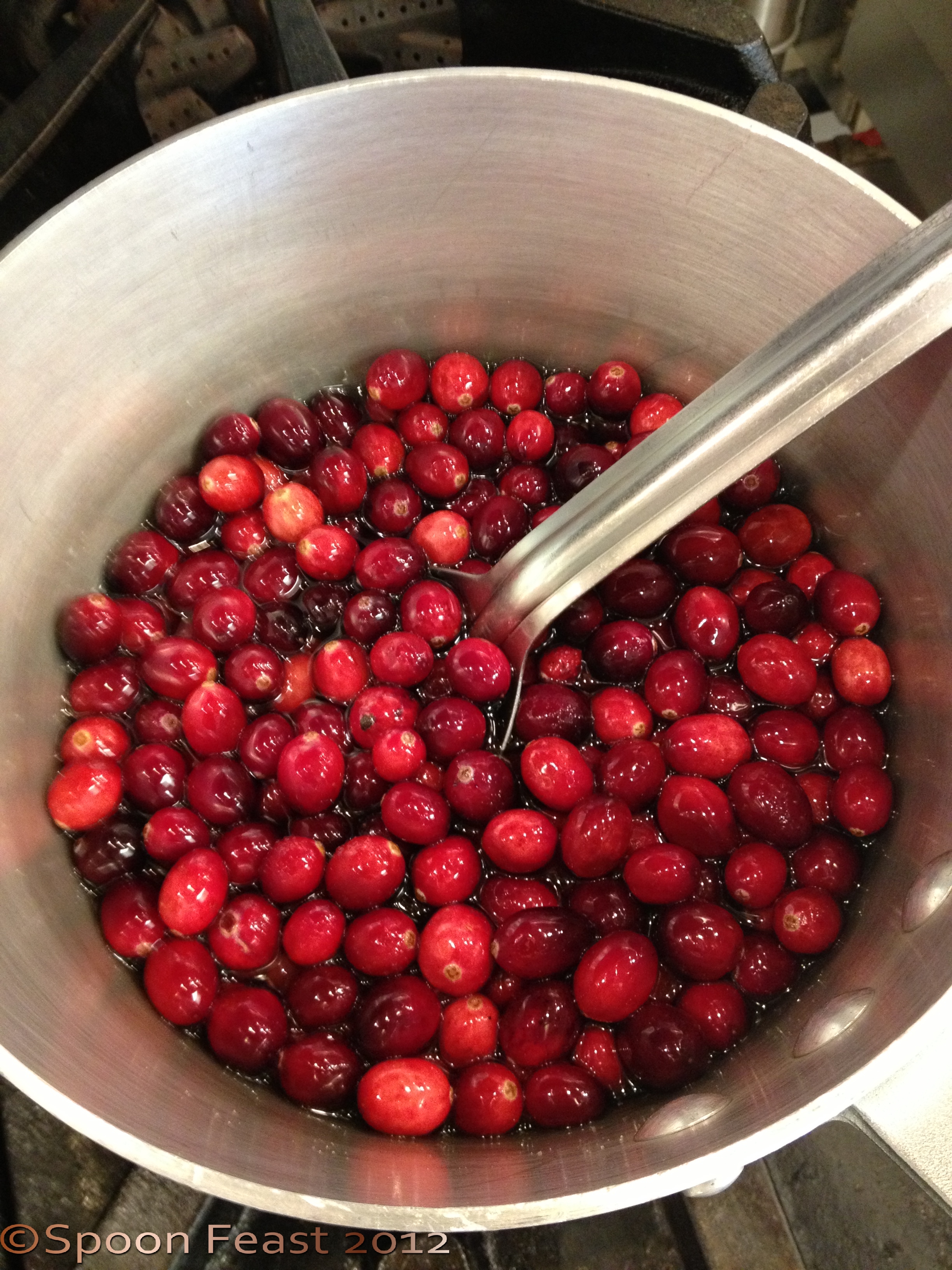
Put it all in the pot and bring to a boil

Add all ingredients to a  deep sauce pan. Bring to a boil, reduce heat and simmer at an active simmer for 5 minutes.

Boil then actively simmer for 5 minutes. Serve warm or cold.

Serve warm, room temperature or cold with roasted or grilled meats. Especially Thanksgiving Turkey!

Cranberry Orange Sauce

  • 1 orange, cut into quarters
  • 1 12-oz bag fresh or frozen cranberries
  • 1/2 cup sugar
  • pinch salt

Remove the pithy core and seeds’ cut into quarters. Use a blender or food processor to puree.

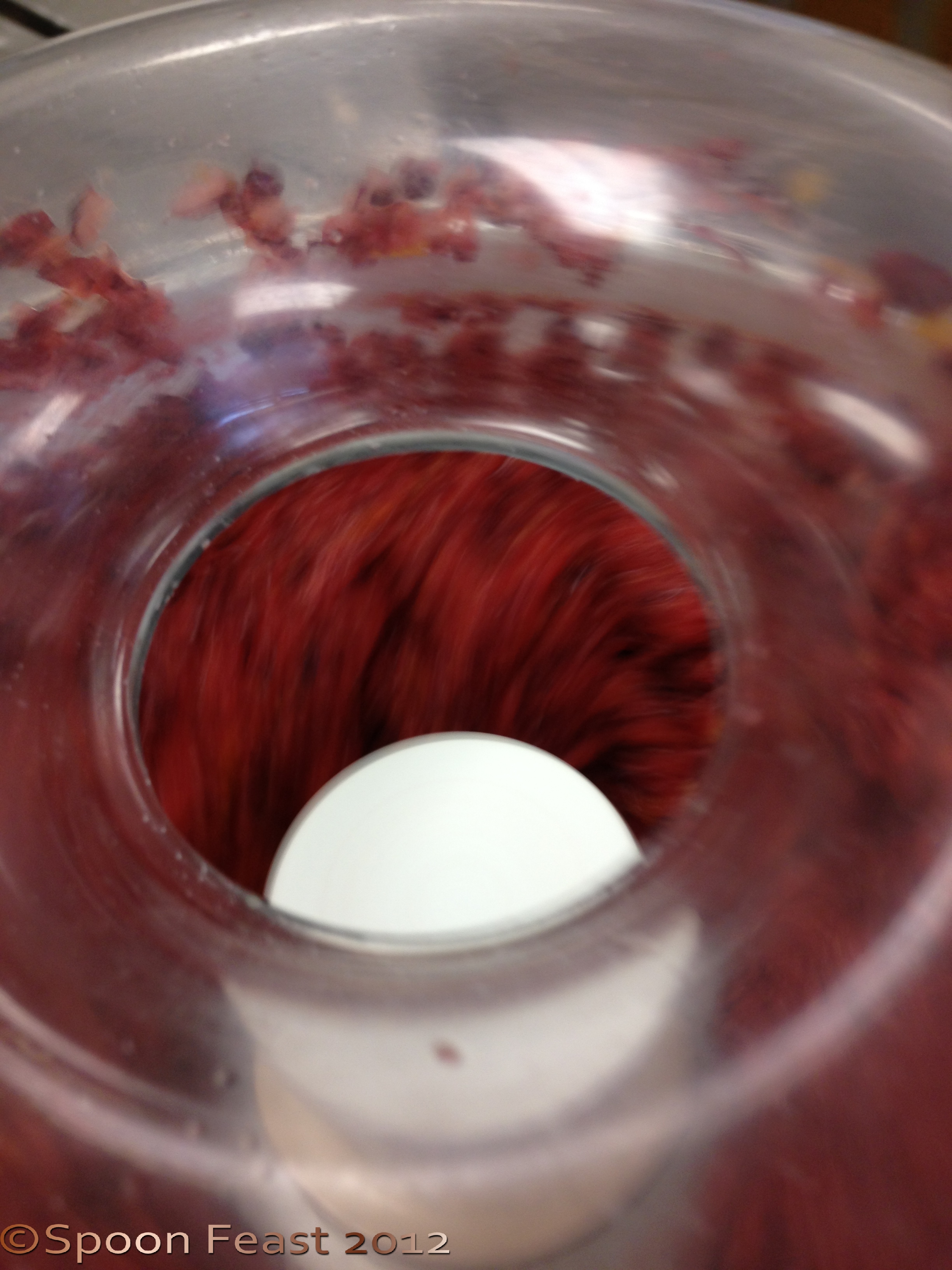
Remove the seeds and the pithy core. Add the oranges, cranberries and sugar to a food processor or blender and puree until almost smooth. Thin with either cranberry or orange juice if needed.

Process until smooth

Place in a container and serve with just about whatever you want. I like turkey especially.

If you make this with frozen cranberries, you get a sorbet like consistency. Delicious!

Sherried Cranberry Sauce

  • 1 12-16 ounce bag of fresh cranberries or equivalent  of frozen berries.
  • 1 cup water
  • 1 cup sugar
  • pinch of salt
  • 1/4 cup dry sherry
Cranberry Sauce 003

Cranberry Sauce 003 (Photo credit: MGF/Lady Disdain)

Add all ingredients to a  deep sauce pan, except the sherry. Bring to a boil, reduce heat and simmer at an active simmer for 5 minutes.

Stir in the sherry. Blend until smooth if desired. Strain if you want a smooth sauce.

Serve warm, room temperature or cold with roasted or grilled meats.

These are the 3 most popular cranberry sauces our family uses.

So here you go. You can now carry on Turkey traditions!

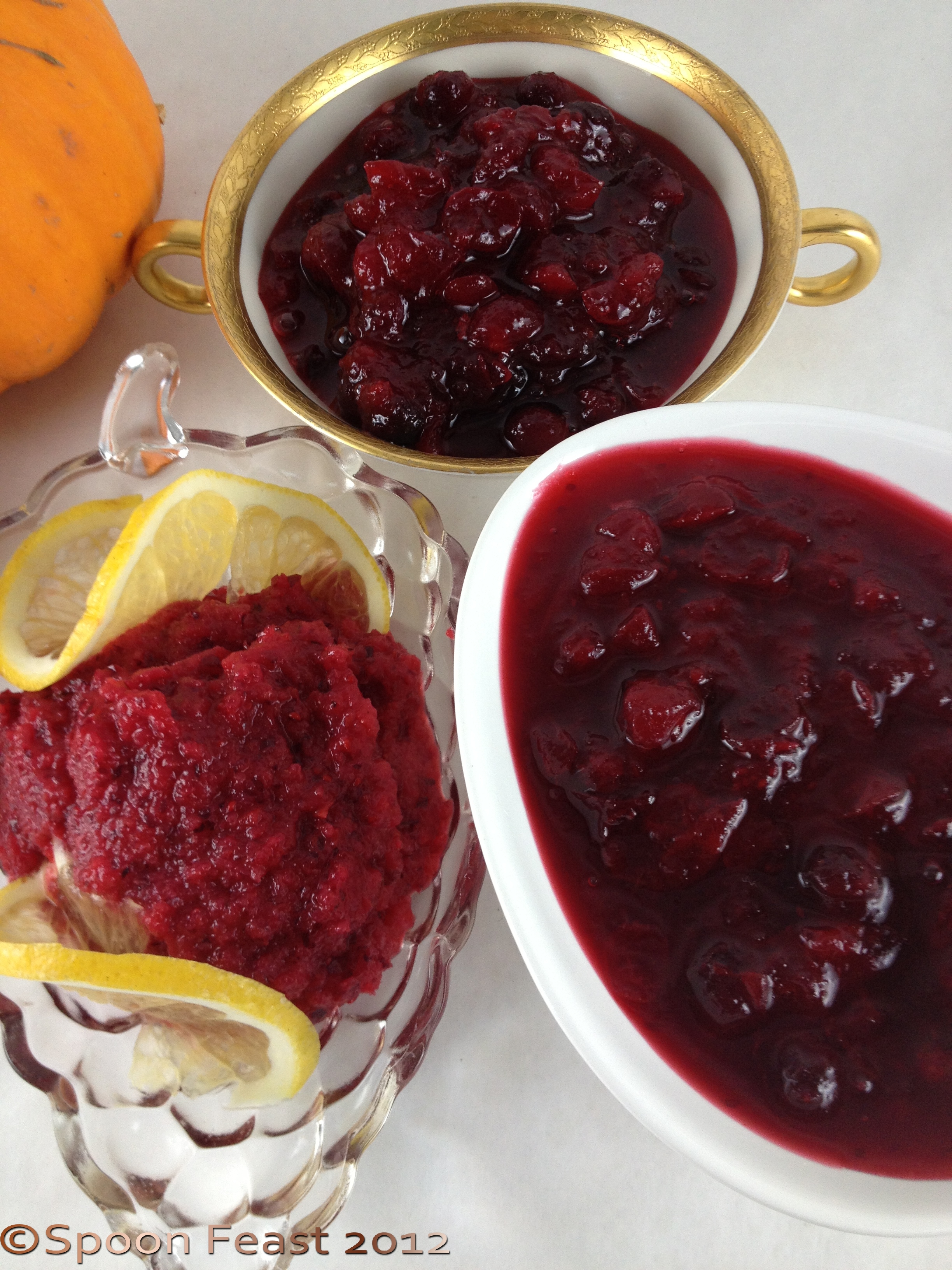
3 Cranberry sauces from left to right: Orange Cranberry, Easy Cranberry Sauce and Sherried Cranberry Sauce

Tomorrow:

Since you are cooking your first turkey Thursday, I’ll write a post on:

How to Roast a Turkey

Love,

Mom

An Easy Crust for Pies and Tarts

Here is a super simple dough to use for pies and tarts. One key to working with any tart dough is to keep it cold. This allows the fat to melt while baking which creates light, flaky crusts.

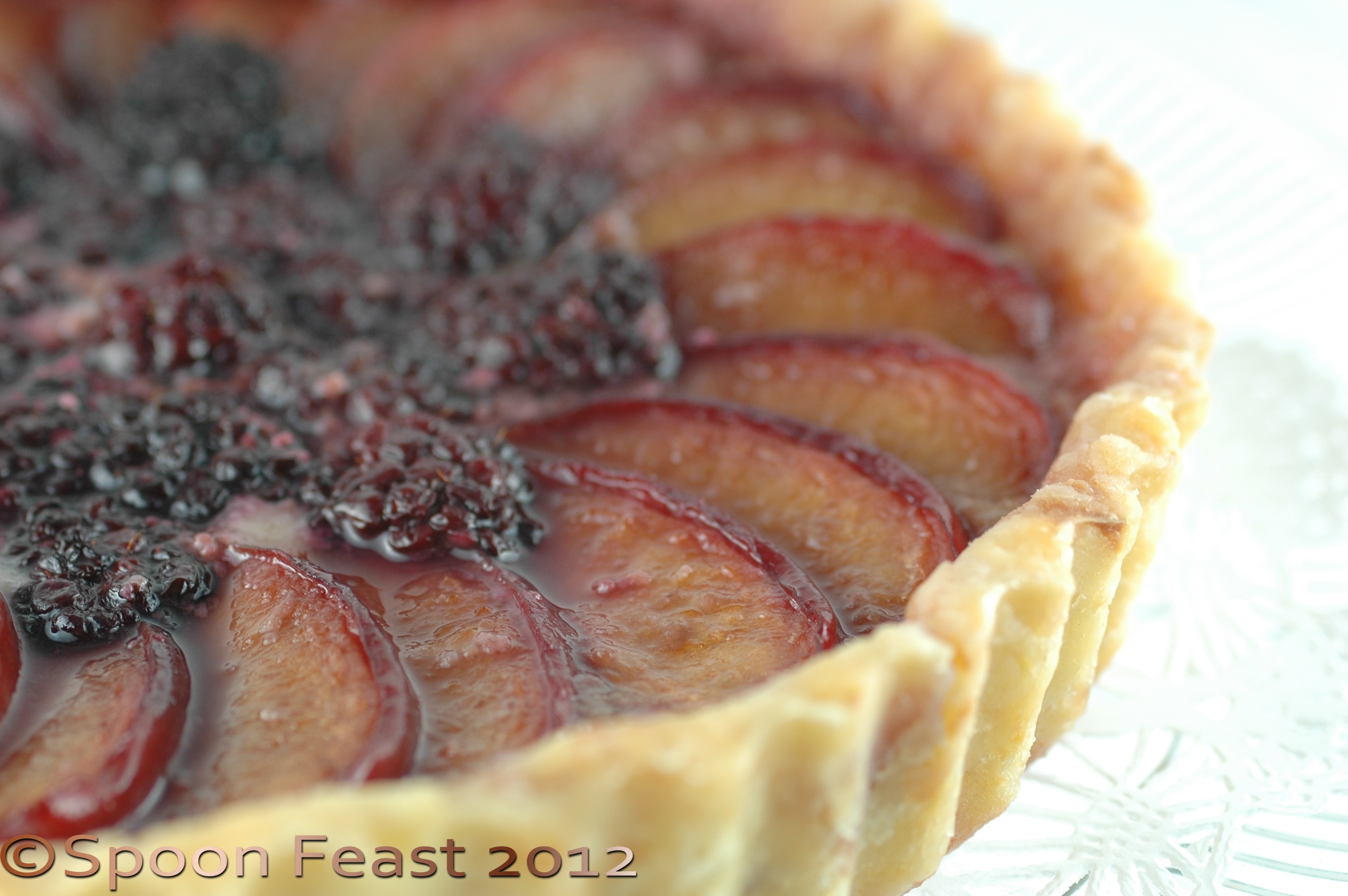
Plum Blackberry Almond Tart

With lots of holiday events approaching, here is a simple basic approach to a nice pie or tart dough.

If you want a double crust, double the recipe. This only makes 1 crust.

Easily done by hand, you can also use a food processor, just pulse the ingredients without the water, add water, bit by bit to make the dough mass. You may use all the water, only some or you may need more. It depends on how much moisture your flour holds.

Easy Pie or Tart Crust

  • 1 cup all-purpose flour
  • 1 tablespoon sugar
  • 1 teaspoon salt
  • 3 ounces cold butter, cut into small cubes
  • 3 – 5 tablespoons ice-cold water

If creating the crust by hand, combine the salt and sugar with the flour. Cut the cubed butter into the flour using a pastry cutter, two knives or a fork.

English: A dough blender; also called a pastry...

English: A dough blender; also called a pastry blender. (Photo credit: Wikipedia)

Cut the fat into the flour

When the mix resembles a coarse mixture (you still want to see some globs of butter, don’t make it smooth) add the ice-cold water tablespoon by tablespoon.

The mass should come together. Only use as much water as you need to bring the ball together. You may need more water or less water. This is why you add it bit by bit.

Add enough water to just bring the dough ball together when you squeeze it.
You want to see blobs of fat in the dough, not smooth.

Press the dough into a ball and place it between 2 pieces of plastic wrap. Press it into a disk.

Refrigerate until cold.

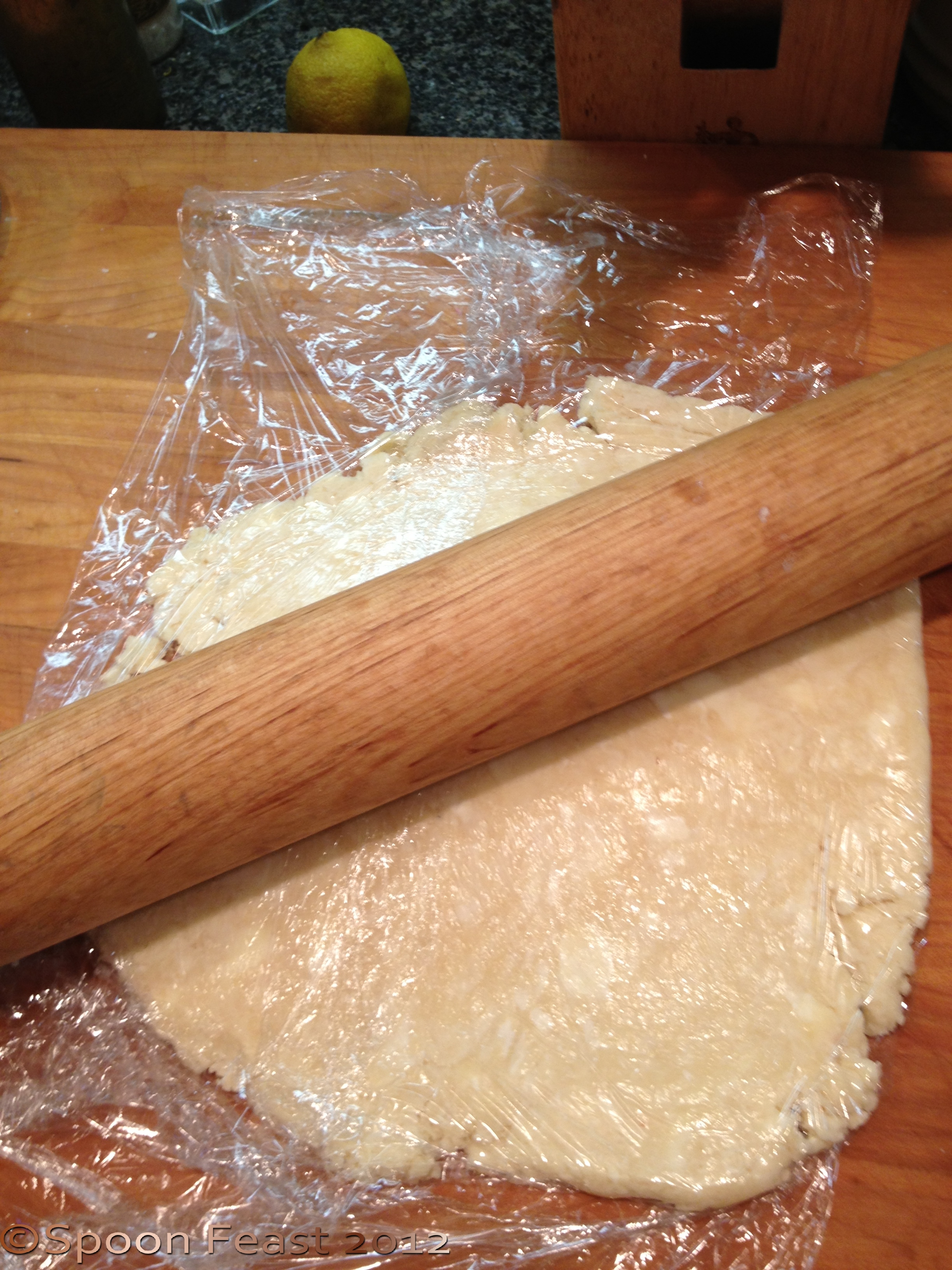
Roll the dough between sheets of plastic wrap

Roll the chilled dough out to the size you need while it is still in between the wrap. This makes it easier to handle and is much easier to clean up too.

Remove one side of the plastic wrap. Position the dough over the pie or tart pan and press it into place.

Alternatively, you can press the dough into the pan and then chill while you prepare the filling.

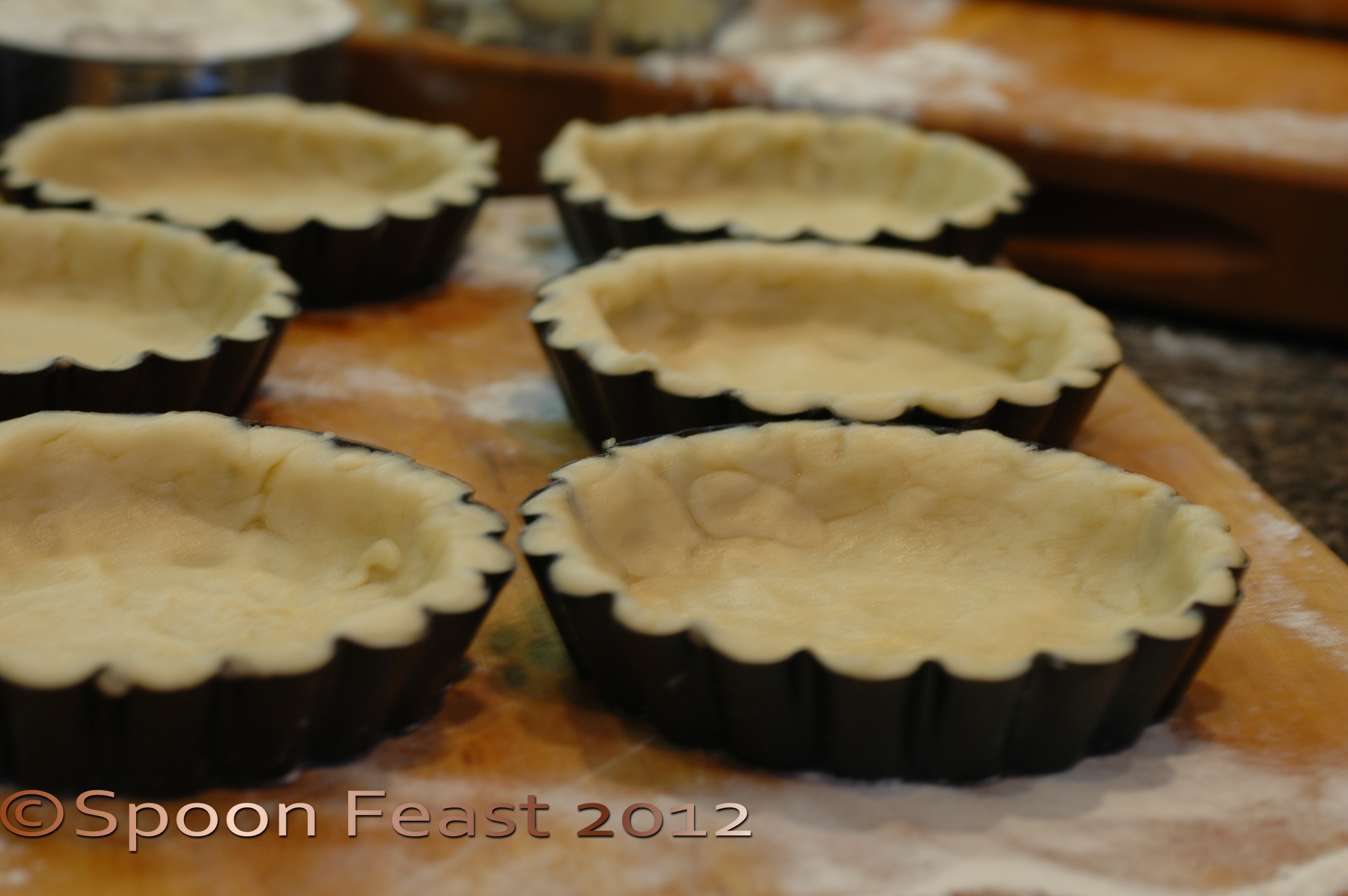
Much easier is to use the fluted tart pans with the removable bottoms. Press the dough into the tart pan. Make sure you have at least 1/4 inch at the sides and at the curve of the pan so it is strong enough to stand on its own when the pan is removed.

Small fluted tart shells ready for filling

The fluted edge pans give all your tarts such a professional finished look, they are so worth the investment. Since they come in many sizes, you can make large tarts or small individual ones and any size in between.

Ready to fill and bake. See the fat? That means you will have a flaky crust.

Fill them just as you would a pie.

If you use a top crust, decorate it with dough cut outs instead of just a pile of dough on top of the filling.

Or use a strusel topping or leave the fruit exposed and glaze with melted apple or seedless raspberry jelly when the tart is done. This puts a “sealing glaze” on the fruit and makes it shiny. The photo of the Plum and Blackberry Almond Tart at the beginning of this post is finished with melted red currant jelly.

Here are some of my thoughts about using other ingredients besides water and butter.

Butter: Fat is fat, at least the melting point of butter is lower than body temperature. Fat provides tenderness and flavor to the crust. I’d rather eat butter than Crisco or lard or hydrogenated oils like margarine. I have yet to try coconut oil.

Water: Some recipes will ask you to use vodka instead of water. It provides a flaky crust too. Alcohol evaporates faster than water therefore creating a flakier crust. Try it if you like. I don’t drink distilled spirits so it never occurs to me to use vodka.

Flour: Use a good quality organic flour. You can use gluten-free flours too. I’m just not too sure how strong the non-wheat flours will hold up in a fluted pan once the outer ring is removed. My experience is most gluten-free baked goods are crumbly due to the lack of gluten.  Not sure how to over come that but since I’m not gluten-free, I use King Arther’s unbleached AP flour and I get pretty crusts.

I do know if I had to go gluten-free, I would miss pie crust, tarts, and good chewy bread tremendously.

No matter what liquid you use, just be sure it is ice-cold. I use a large measuring cup with lots of ice and water and scoop what I need from there. When finished, I pour the cold water into a glass and make lemonade or tea. I suppose you could do the same with vodka. Use lots of ice.

Bake off empty shells by lining with parchment and filling with rice or beans and baking until done. Fill with fresh fillings.

Fill unbaked shells with fruits, custards, fillings and bake until golden and bubbly. Times vary but usually take 45-55 minutes in a 350°F oven.

There are so many finishing and fillings!

Use any left over scraps to make dough cut outs. Egg wash them and sprinkle with sugar. Bake on a cookie sheet until golden brown. Use these on the top of the tarts, place them when the tart is still hot from the oven or serve as a garnish with each serving.

Be creative.

4 Safe Methods for Thawing Food

Color-enhanced scanning electron micrograph sh...

Color-enhanced scanning electron micrograph showing Salmonella typhimurium (red) invading cultured human cells (Photo credit: Wikipedia)

Food safety is a serious subject. I am passionate about preventing food borne illness. I have been teaching the subject to restaurants, hospitals, schools, dietary managers, nursing homes and at the college level since 1991. I am a Food Safety expert.

This is the launch of a series of food safety articles.

The first subject is on 4 Safe Methods of Thawing Foods.

There are 4 safe methods for thawing food. Following one of these methods can help prevent making your family and friends sick with a food borne illness.

1. Thaw under refrigeration.

This takes some planning. Sort out  your refrigerator so you have a designated drawer on the bottom of your fridge to hold raw meats.

If you want to defrost a whole 3 pound chicken, it will take about 4 days to thaw. You need to plan a place where it can do so safely. All thawing meats should be positioned so they are not dripping onto any foods below them. Place them in containers to catch thawing juices.

In My Fridge

In A Fridge (Photo credit: Nikita Kashner)

Store food according to:”Swim, Walk, Fly”

  • Ready to eat foods on top
  • Things that swim (Including oysters, clams etc. If it comes from the water, it is considered a “swimming thing.”
  • Things that walk around (On hooves and feet and have fur or hair like pork, lamb, beef, or Ostrich.)
  • Things that walk around but are ground up, like ground pork or ground veal or hamburger. These get cooked to a higher temperature than steaks, chops or roasts.
  • Things that fly ( Chickens, ducks, squab, quail, and even though turkeys don’t fly, they also fall into this category)
  • This is based upon internal cooking temperatures which will be explained in another post. For now remember and practice
  • “Swim, Walk, (Ground-up Walk),Fly”

So what happens when you don’t have the time?

2. Thaw under clean drinkable water that is 70°F or less, and either running or changed frequently.

A bowl in the sink with cold water, but not hot, is fine for thawing a package of chicken for dinner. As long as you change the water about every half hour. If water logging is a concern, place the item in a zip lock bag and place that in the water.

The water should be changed every 30 minutes.

This is not a method to use while you are at work. Why? Because the water needs to be changed every 30 minutes or lightly running so the water is exchanged as thawing occurs.

Never thaw in the sink for longer than 4 hours! That is the amount of time it takes any bacterial colonies to grow to dangerous levels.

Never, ever thaw on the counter or just left in the sink. This is a very bad and risky practice.

Keep you eye on the product, it will thaw faster than you think it will.

3. In a microwave as long as the item will be cooked immediately after thawing.

My concern here would be the quality of the item. I can’t think of anything that benefits from a run in the microwave.

But, as long as you cook the item as soon as you finish nuking it to thaw, this is considered a safe method.

Be sure to clean and sanitize the inside of the microwave after you finish thawing.

4. You can thaw food as part of the cooking process.

day fifty three | a piece of meat

(Photo credit: I Are Rowell)

The best examples here are frozen vegetables into soup stock, frozen french fries into the oven or fryer oil and frozen burgers going directly onto the grill.

Again, your call on the quality issue of cooking meats from frozen. I find the texture isn’t as nice than if you thawed it under refrigeration which is my thawing method of choice.

So there you have it. 4 Safe methods to thaw foods.

This information is from ServSafe® an educational division of The National Restaurant Association (NRA). These are the best practices that are used to train food handlers in  all restaurants, hospitals, nursing homes, schools and dietitians.

I have a dual role with the NRA to both teach and administer the exam for ServSafe®. Food safety is a passion of mine. No one should ever suffer an illness from food you eat.

Learn how to prevent such things from happening.  Become advocates for your own food safety. If you see a bad practice, speak up!

Implement good food handling practices every time you touch food.

It really is that important.

Please let me know if you have any questions!

None - This image is in the public domain and ...

Easy Grilled Vegetable Rosemary Skewers

The other day Robert was going to the lake with some of his friends. They were going to grill out and get caught up on each others lives.

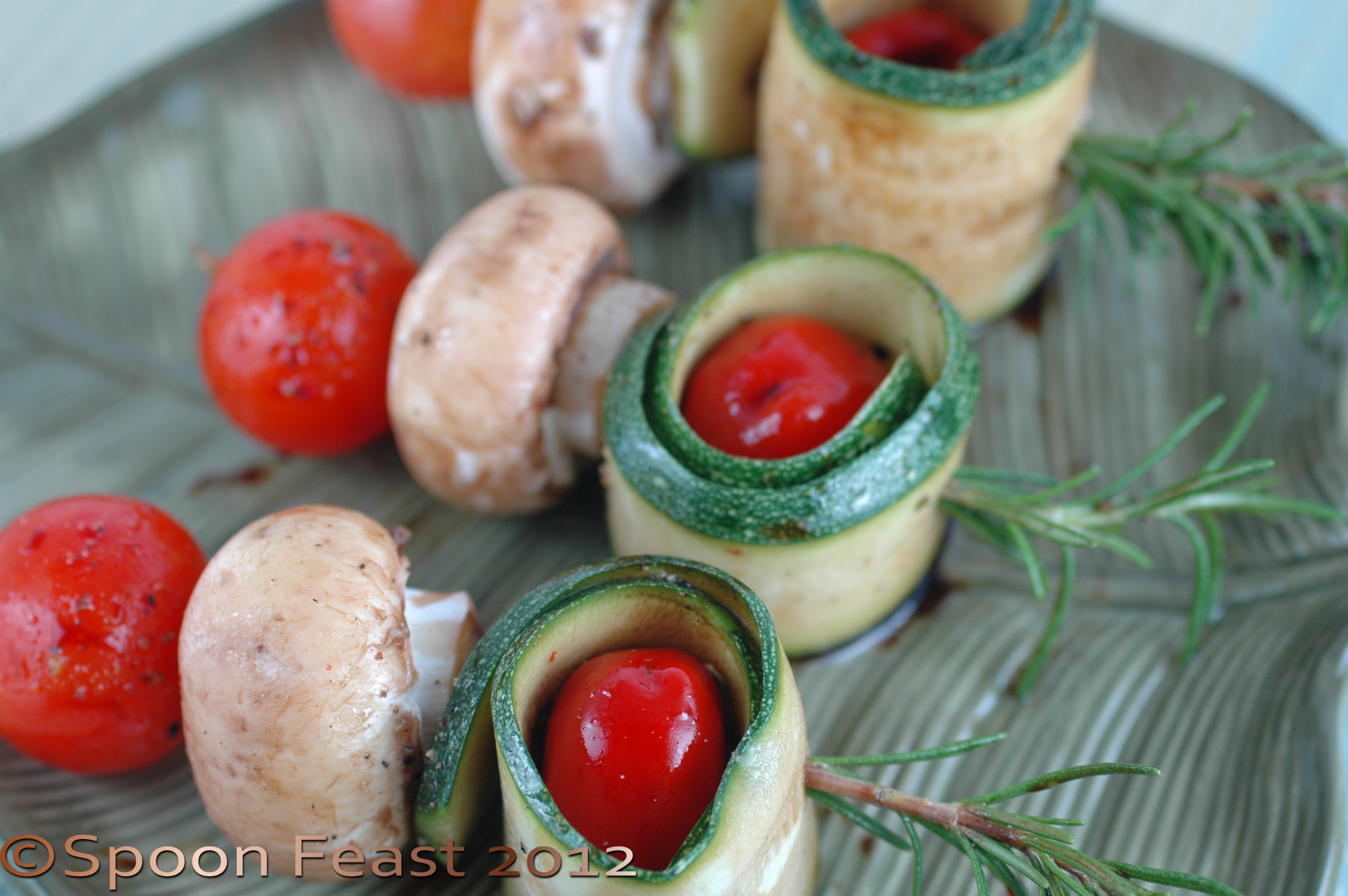
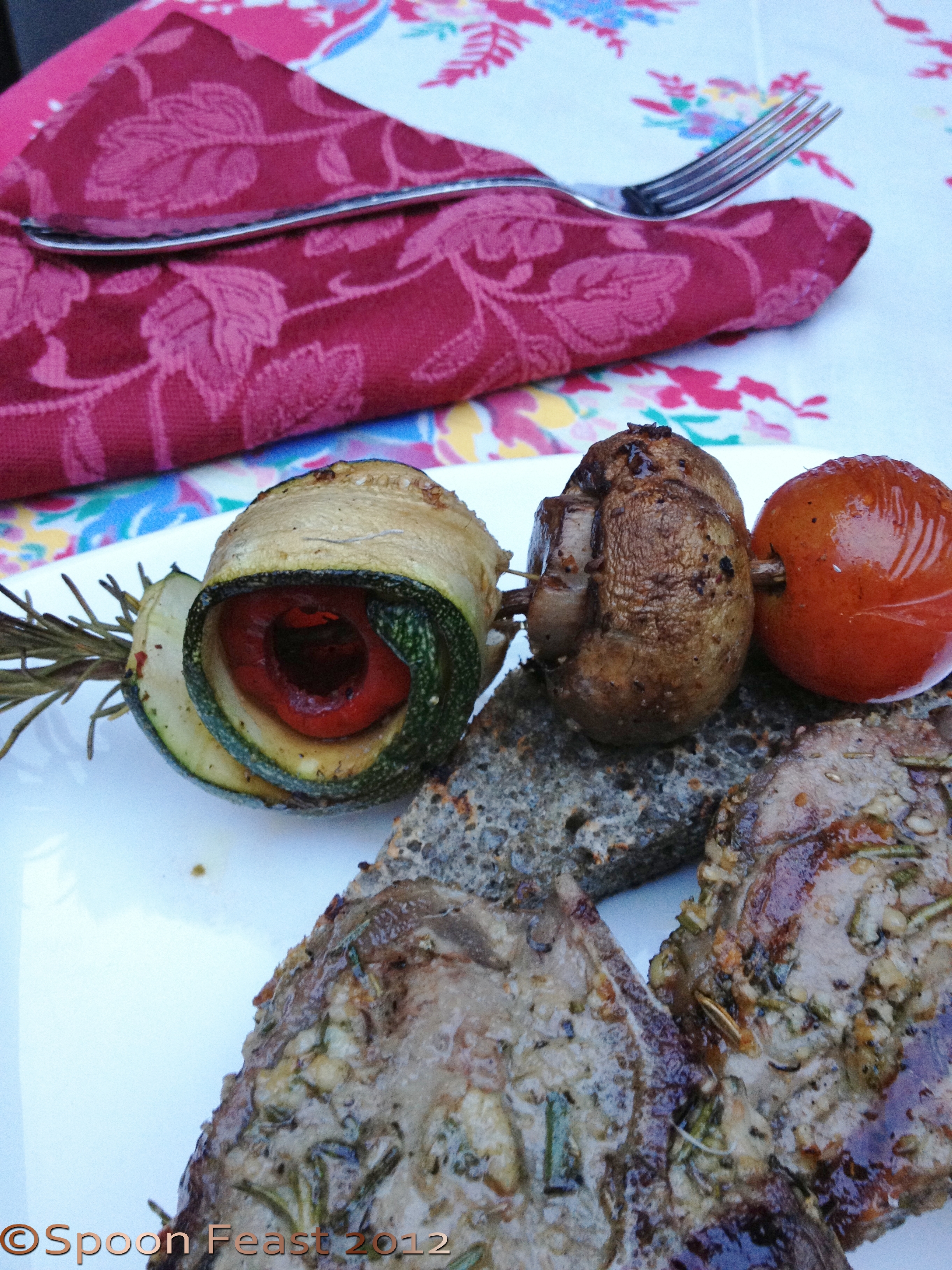
He asked me if I could make a vegetable they could grill so I made these vegetable kabob on rosemary skewers.

Rosemary Vegetable Skewers

To make these skewers, cut the rosemary twigs on a bias to form a point.

You will need:

  • 2-3 zucchini
  • Whole button mushrooms
  • Pappadew peppers
  • Cherry tomatoes
  • Rosemary stems
  • Balsamic Vinaigrette

Slice zucchini very thin the length of the zucchini. Wrap the zucchini around a drained pappadew pepper, thread it onto a rosemary skewer.

Next, thread a button mushroom, the top with a cherry tomato.

Marinade in a balsamic vinaigrette for at least 30 minutes.

Season each skewer with kosher salt and pepper.

Grill on each side for 2-3 minutes each side or cook over indirect heat for about 8-10 minutes.

Serve with grilled meats.

Since Robert does not eat red meat, when he stays out I usually turn into a carnivore. This particular evening I had some beautiful lamb chops marinated in garlic, rosemary, mint, lavender, oregano, olive oil, and black pepper. We grilled fresh buckwheat bread seasoned with olive oil and rubbed with raw garlic. Marvelous.

I had some mint sauce I made from an arm load of mint during the summer so I couldn’t wait to eat some lamb.

With Robert away, my friend Joanie and I grilled and set the table in the courtyard, poured some wine and had quite a feast.

All because of a rosemary vegetable skewer.

Lemon Marmalade

Bitter Orange Marmalade made with Seville Oranges is one of life’s truly great pleasures. The intensity of the orange, the bitter-sweet finish that mixes with melted butter on good toast is something that could inspire sonnets.

Tempting Bite!

So humbly, I go into making a marmalade from the abundance of lemons in my kitchen. It is worth noticing that some recipes ask for the white pith to be removed, some include the entire lemon, some just peel and lots of interesting versions in between.

The main ratio you want to have for making a lovely marmalade is 1 part water: 1 part citrus fruit:  1 part sugar

All ingredients are equal parts and there are only three ingredients. Water, fruit and sugar. Simple recipe, right?

Armed with this knowledge, you can make as much or as little as you like. For me, I’ll make at least 4 pints and put it into 1/2 pint jars.

This makes a good gift and the holidays are just around the corner.

Lemon Marmalade

Remember the ratio

  • 1:1:1
  • Water
  • Lemons
  • Sugar

Wash and soak the lemons for at least 30 minutes. Scrub them gently.

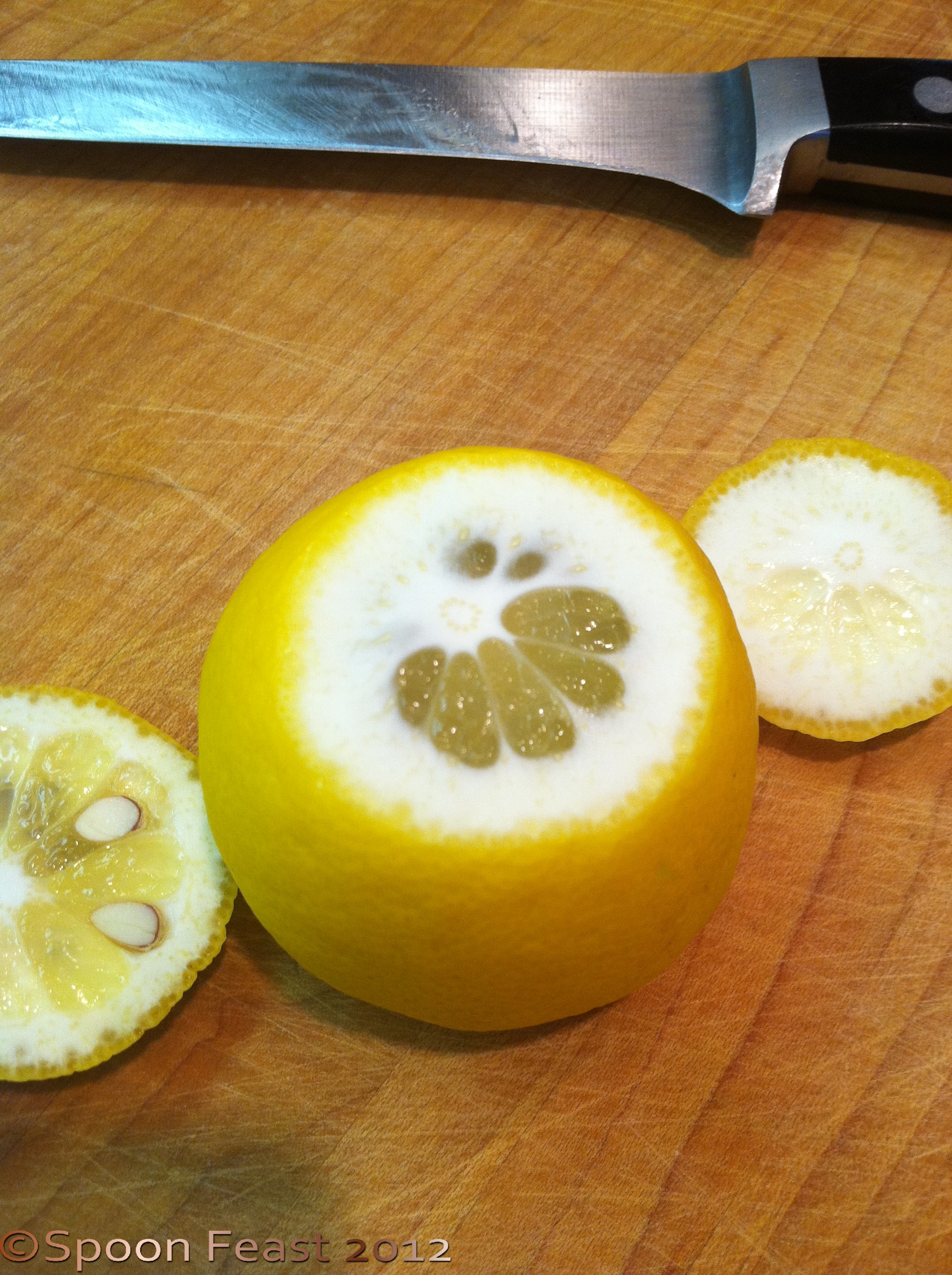
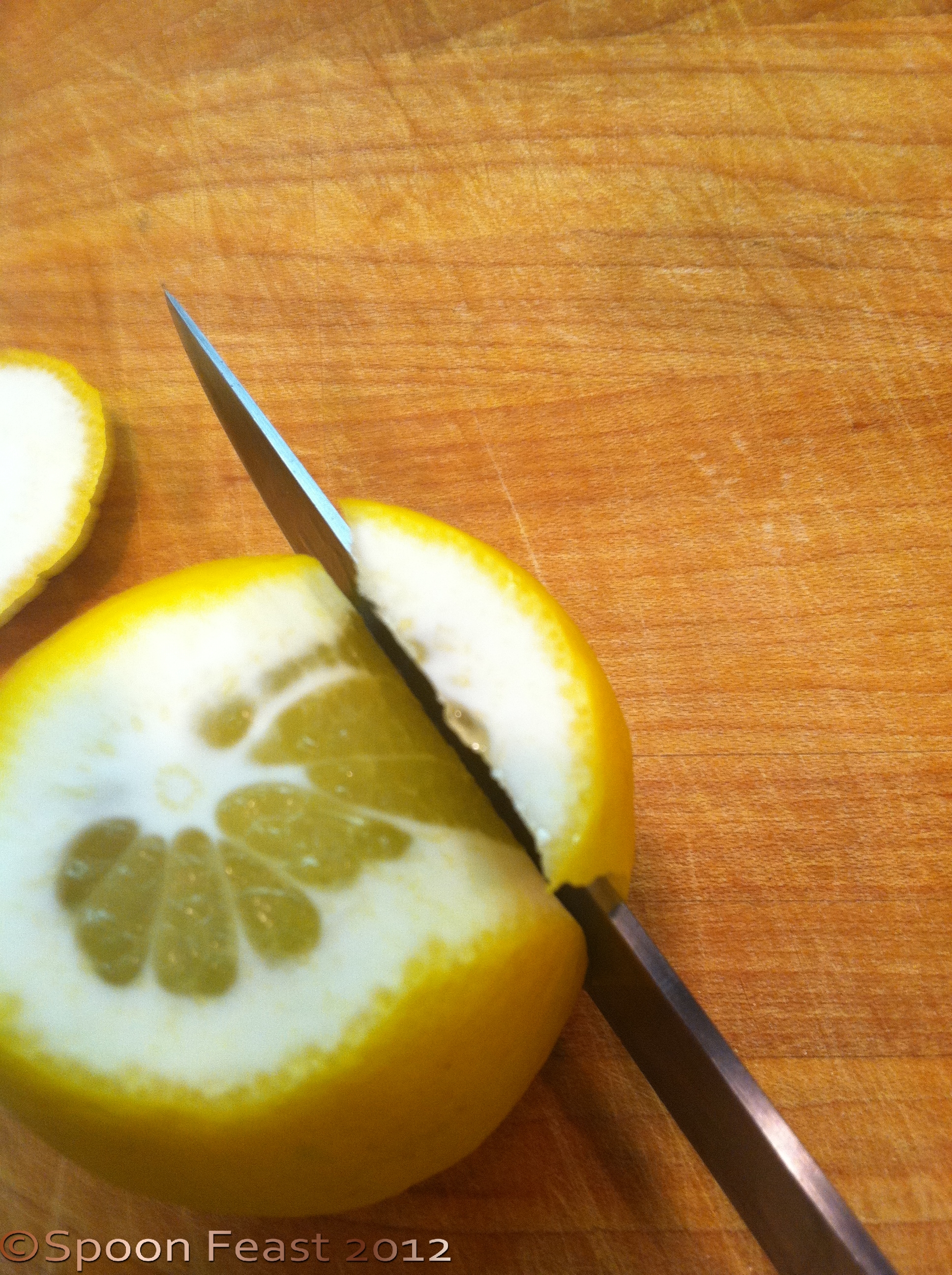
Remove the zest using a 5-hole zester or a sharp knife. The best appearance comes from cutting thin strips of the peeling.

Peeled lemons. Sometime the citrus will have a thick pith between the zest and the fruit. Remove the peel, cut the pith away just as you would to remove the peeling for sectioning citrus. Refer to the “Related Article” below.

Pile the strips to cut into fine strips. Notice how much of the pith left on the peels. This will ensure a desirable bit of bitterness. This adds so much to the complexity of flavors involved in a great marmalade.

Cut the fruit into quarters; remove the core and slip out all the seeds. Reserve core and seeds in a bowl; chop the fruit and place it into another bowl. Try to reserve as much juice as you can.

Measure chopped fruit and sliced peel to determine how much water and sugar are needed. Remember equal parts of all three.

Here you have the chopped seedless fruit, the sliced zest and the trimmings from seed removal in separate bowls. Place all of the trimmings into a cheesecloth, tie it and put into the pot to cook with the fruit, water and sugar. You will want to remove it after cooking. Add the same amount of water, sugar. and the fruit and peel to a deep heavy bottomed pot.

Bring to a boil, stirring to prevent sticking and burning.

Once the mixture comes to a boil, reduce the heat to an active simmer. Place your thermometer into the mixture and let it simmer until it reaches 220°F.

Remove from heat. Please be careful handling this as it is hot melted sugar and can really cause a nasty burn. Keep a small bowl of ice water near to dip your hand into just in case it splashes.

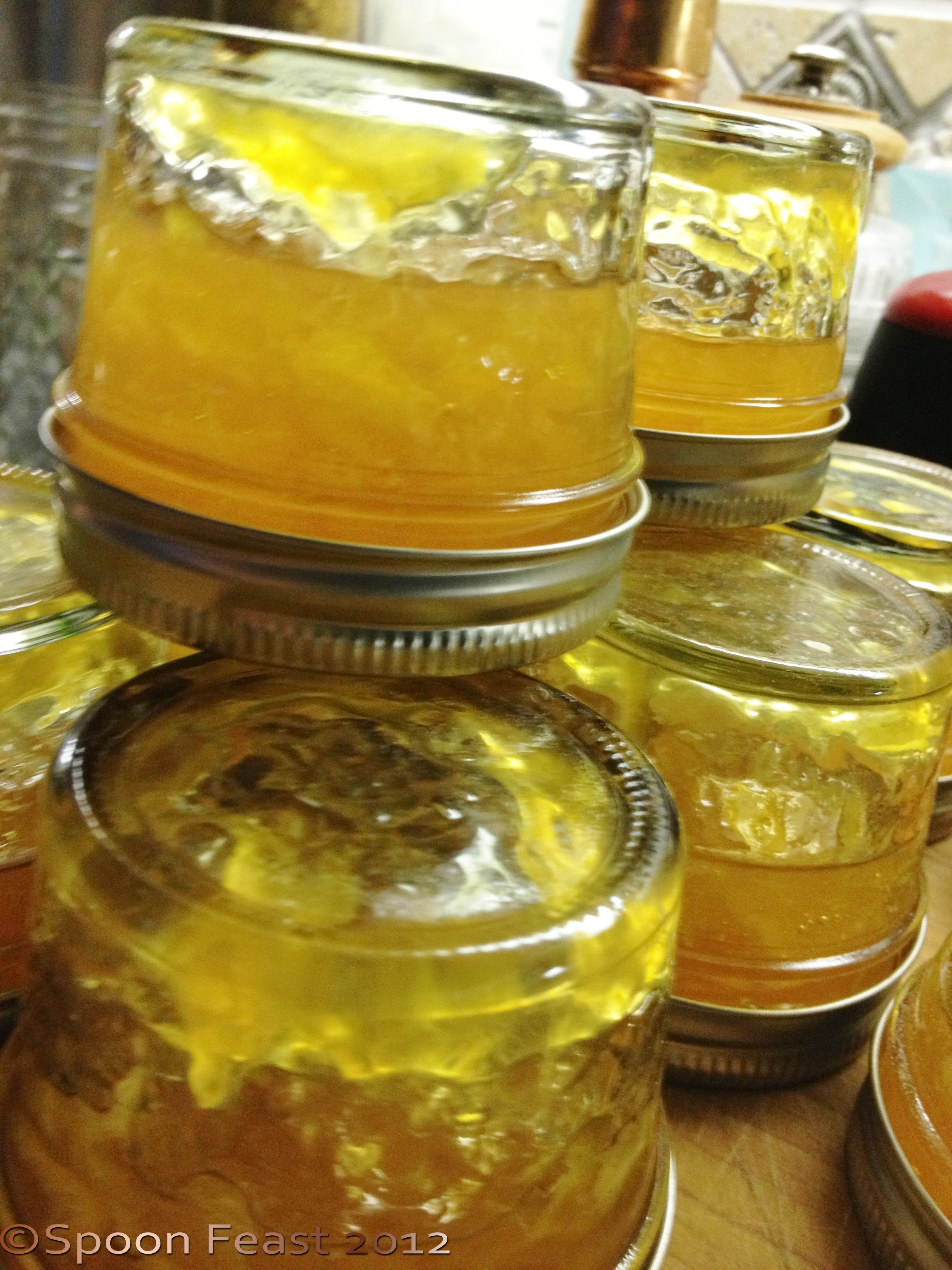
Fill sterilized jars with the hot marmalade, place the lids on and flip them upside down to cool. This will seal the jar.

Cooling jars upside down will seal them or you can use traditional canning methods.

I use small 1/2 pint jars so I can have extra to take along with me when ever I need a small gift. These are also great office gifts and hostess gifts too.

When the Keller family of  Dundee Scotland started making Bitter Orange Marmalade, they bought a lot of oranges from Spain they thought were sweet. Upon the discovery of the oranges being bitter, Mrs. Keller took them into her kitchen and boiled them with water and sugar to make what became the wildly popular “Bitter Orange Marmalade”.

In my opinion the best marmalade is full of fruit and peel with that lovely bitter element tucked into the sweet flavor.

California made marmalade is made with sweet oranges therefore does not have that bitter bite marmalade fans enjoy.

Lemon Marmalade

When buying or making marmalade you can get the fruit just the way you like it. I like it full of chunked fruit with lots of peel. You can make it (and buy it) with just peel too.

Making marmalade is easy as long as you have time and a candy thermometer. Besides, there is something quite satisfying to see a line of nice glistening jars all full of  lovely marmalade that you made.

It makes you feel as if you can do anything.

How To Section Citrus Fruit

Cutting citrus fruit into sections, also called a supreme, is a basic skill.

Culinary students should learn this skill in the first class they take.

However, with that said, I find it odd that in class some students don’t know how to section citrus fruit, even in an advanced class.

I also observed this student who once shown how to do it, passed it on to another team-mate to complete. They in turn, did something else. Not being my class, all I could do is observe and makes notes to myself.

Note to self: Knife Skill Test; Measurement Test for class. If you are a student, consider this heads up!

The process is quite simple and the technique applies to all citrus fruits.

If you are going to want the zest for anything, remove the zest before removing the peel. Personally, I like to dry the zest and keep it handy for quick flavor blasts in a bland dish.

Cut the top and bottom from the fruit.

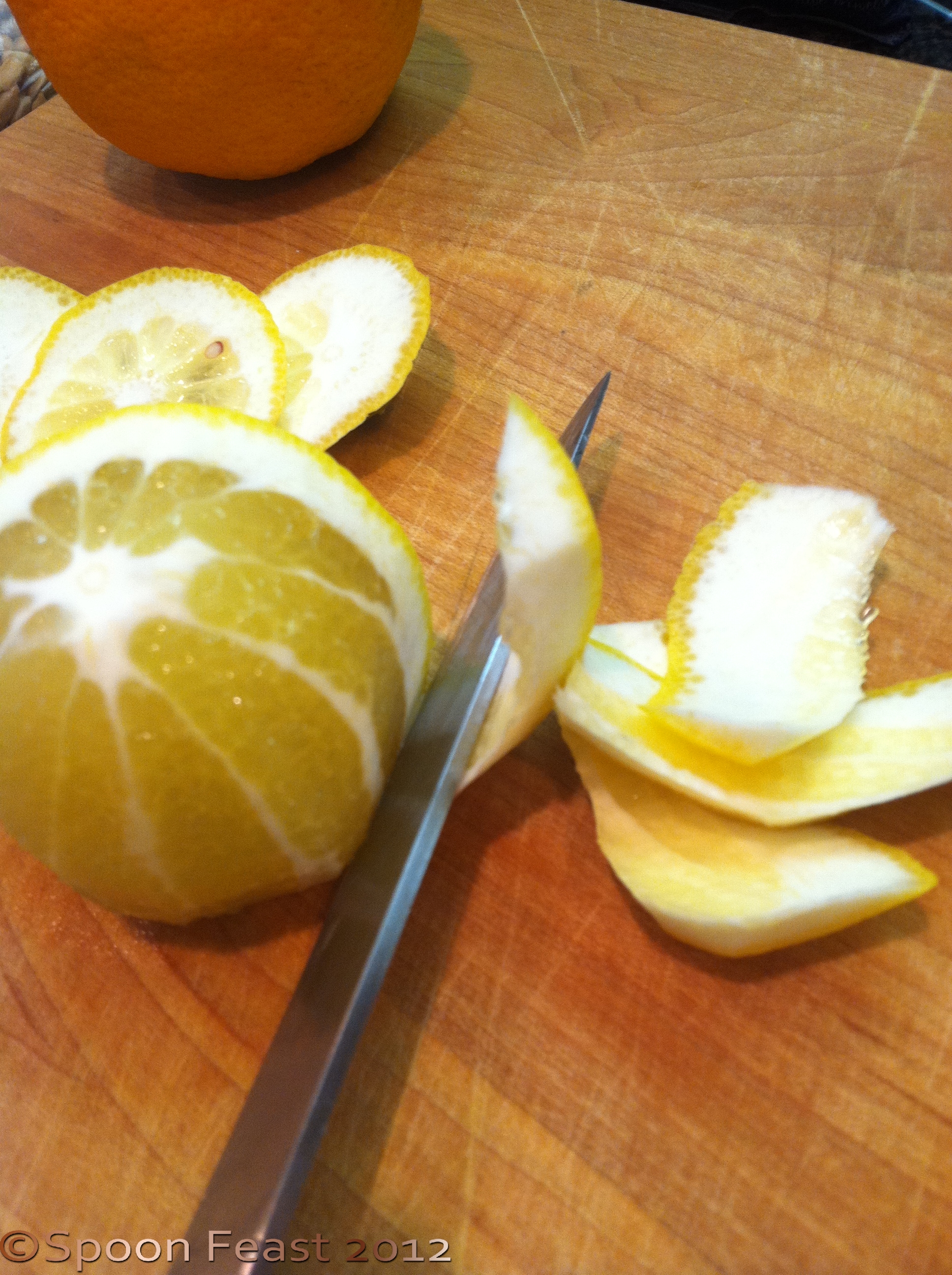
Cut the peel down the side, removing the pith and exposing the inner fruit.

Cut the peel away all around the fruit.

Work over a bowl to catch all the juices that drip while you cut the fruit sections out.

Remove the sections

Using a sharp knife, cut between the membranes and slide the cut section into a bowl.

Continue all around the fruit until all sections are removed. Squeeze the juice into the bowl with fruit sections.

Discard remaining peel, any seeds and membrane.

All used up.
For total mileage, roll it in salt and give your copper pots a polish.

The sections should be free of seeds, pith and peel.

Use them in salads, salsa, on grilled or fried meats or poultry or seafood.

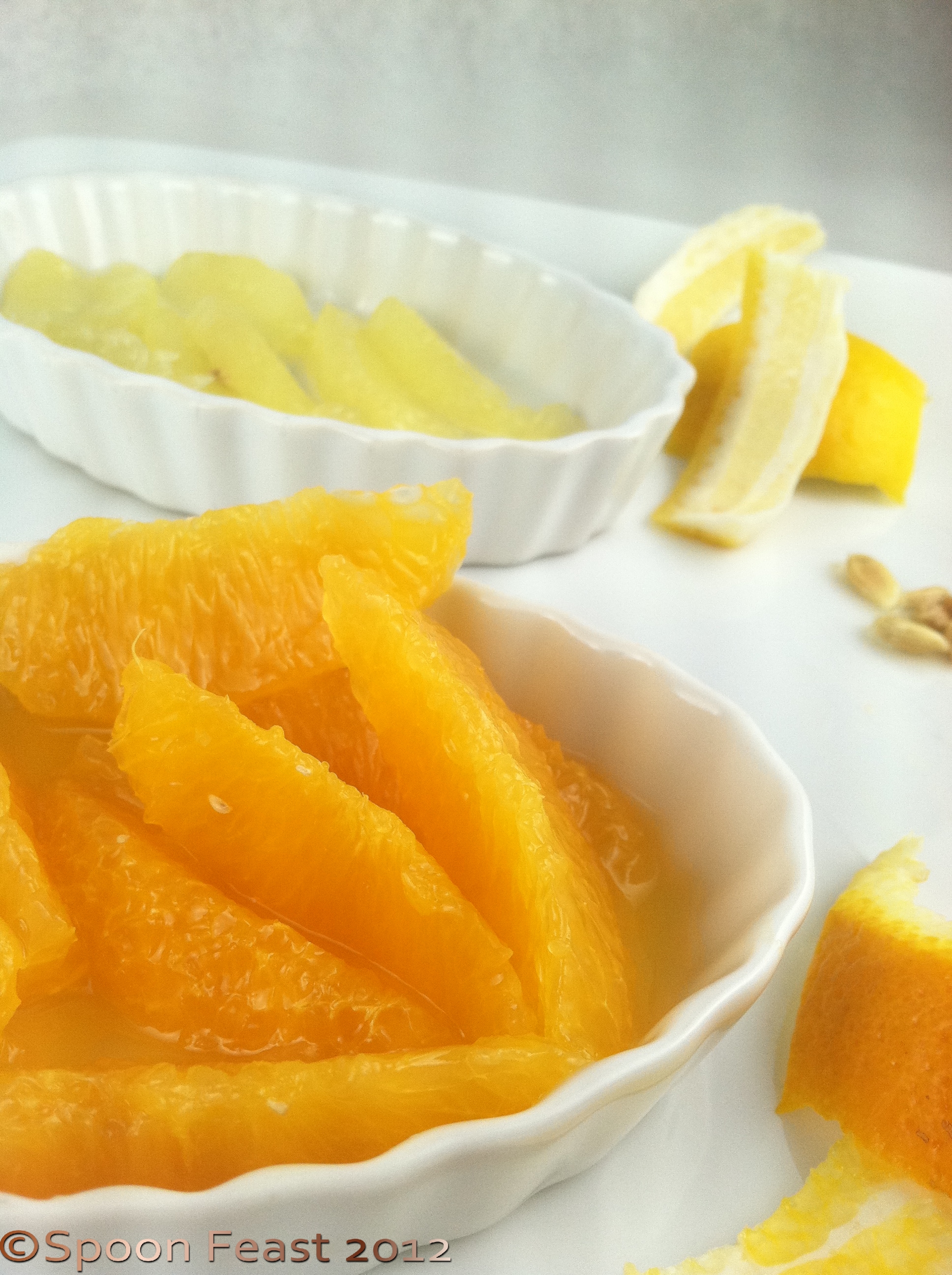
A bowl of citrus segments is really nice with vanilla ice cream or to accent fruit desserts.

Orange and lemon segments

Refreshing!

Pepper Jelly, Another Southern Staple

Chances are, if you live in the southern USA, you have seen and tasted pepper jelly. Pepper jelly is one of those staples that can be used in many things.

Hostess Saver

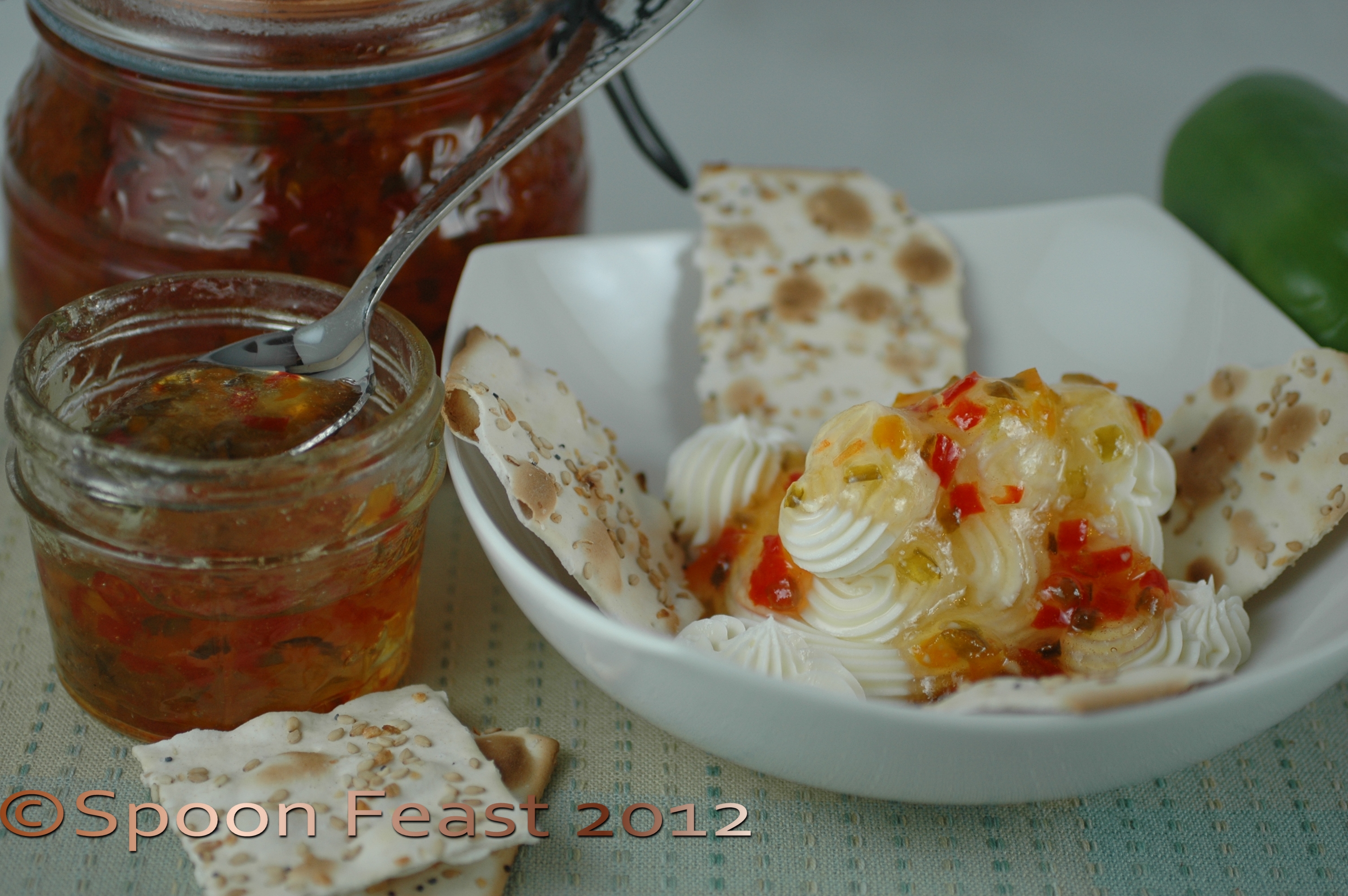
It saves a hostess when guests show up; pour some pepper jelly over cream cheese and some crackers and you have a marvelous snack with wine, beer or even iced tea.

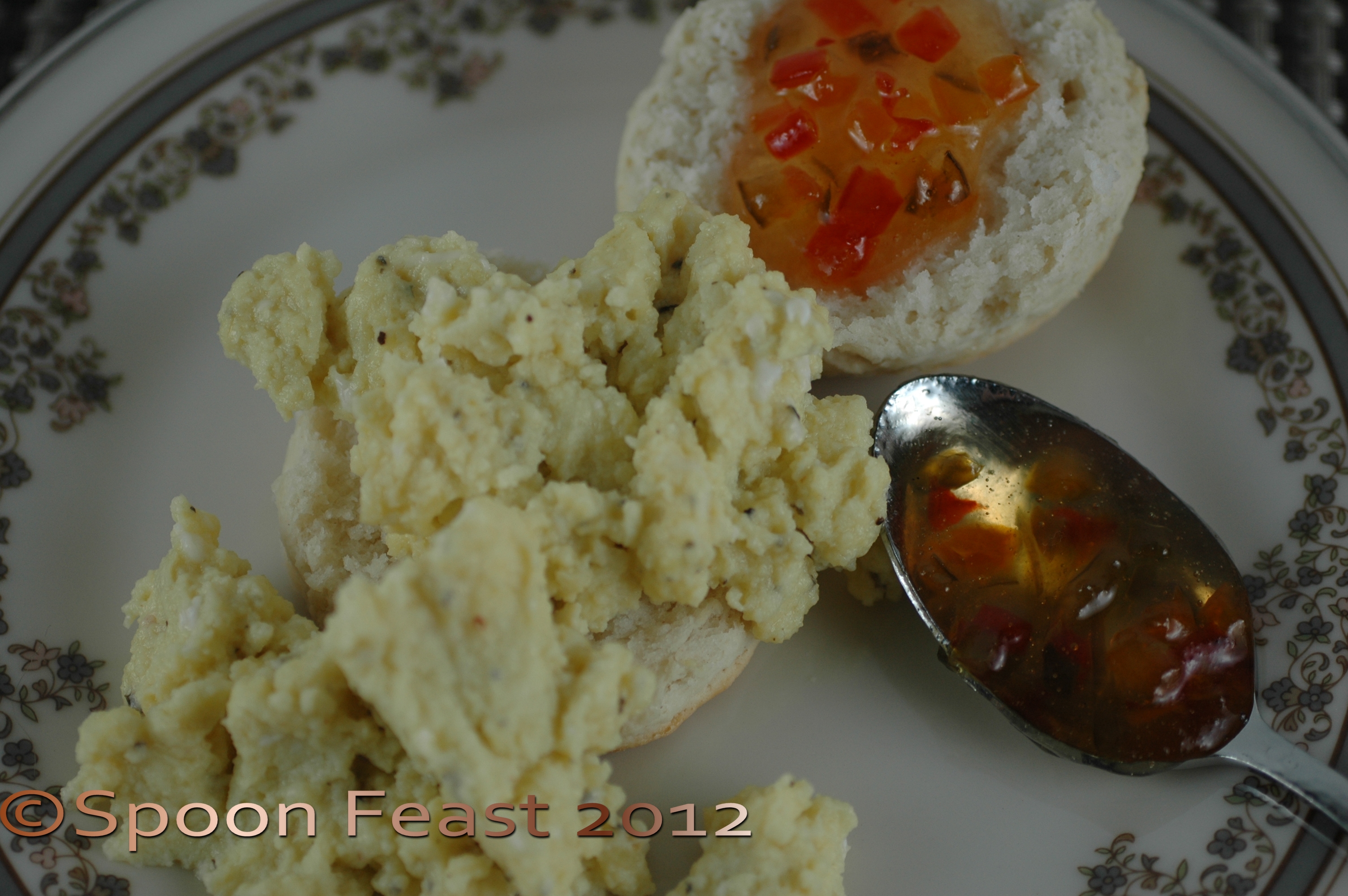
It adds a special something to pan-fried pork chops and makes scrambled eggs amazing. Slathering some onto a biscuit or over some ham will leave you in taste bud heaven.

While pepper jelly is a bit on the pricy side ($4.99 USD for a small 6 oz jar) it can be made rather quickly and you can adjust the heat to make it hot or just make it sweet.

When you make this, set aside time to give it your full attention because it needs to be stirred constantly to prevent lumping and scorching.

As always, when working with hot sugar, be careful. Keep a bowl of ice water near your working space so if you get splashed, you can plunge it into ice water to prevent a bad burn.

There are many recipes for pepper jelly. This one does not use a large amount of pectin so it sets on a medium gel which makes it perfect for pouring over cream cheese, making a sauce or slathering onto a nice hot buttermilk biscuit.

Pepper Jelly Biscuit with herb and cheese scrambled eggs

Southern Pepper Jelly

1 1/4 cup of finely diced red and orange peppers (one large pepper of each color)

3/4 cup finely diced green pepper

2 tablespoons finely diced jalapeno pepper OR 1 small Habanero

Wear gloves when handling hot peppers. If you get the hot peppers on your skin, soak the skin in milk, 1/2 & 1/2 or cream.

Do not rub your eyes or touch small children or babies with hands that have just handled hot peppers.

1/2 cup apple cider vinegar

1 1.75 ounce package of powdered pectin

1/2 teaspoon kosher salt

2 1/2 cups granulated sugar

Take your time cutting the peppers. The best jelly has lovely evenly diced cubes of multicolored peppers floating the jelly. If you just hack and chop, you see uneven strands and bits and pieces of peppers which isn’t so nice to look at through the jar or when you are eating the jelly.

Here is how to cut a nice looking pepper:

Wash the peppers and remove any sticky labels.

Trim the top and bottom off, remove the stem and save the trimmed ends for kebab or in a salad or stir-fry.

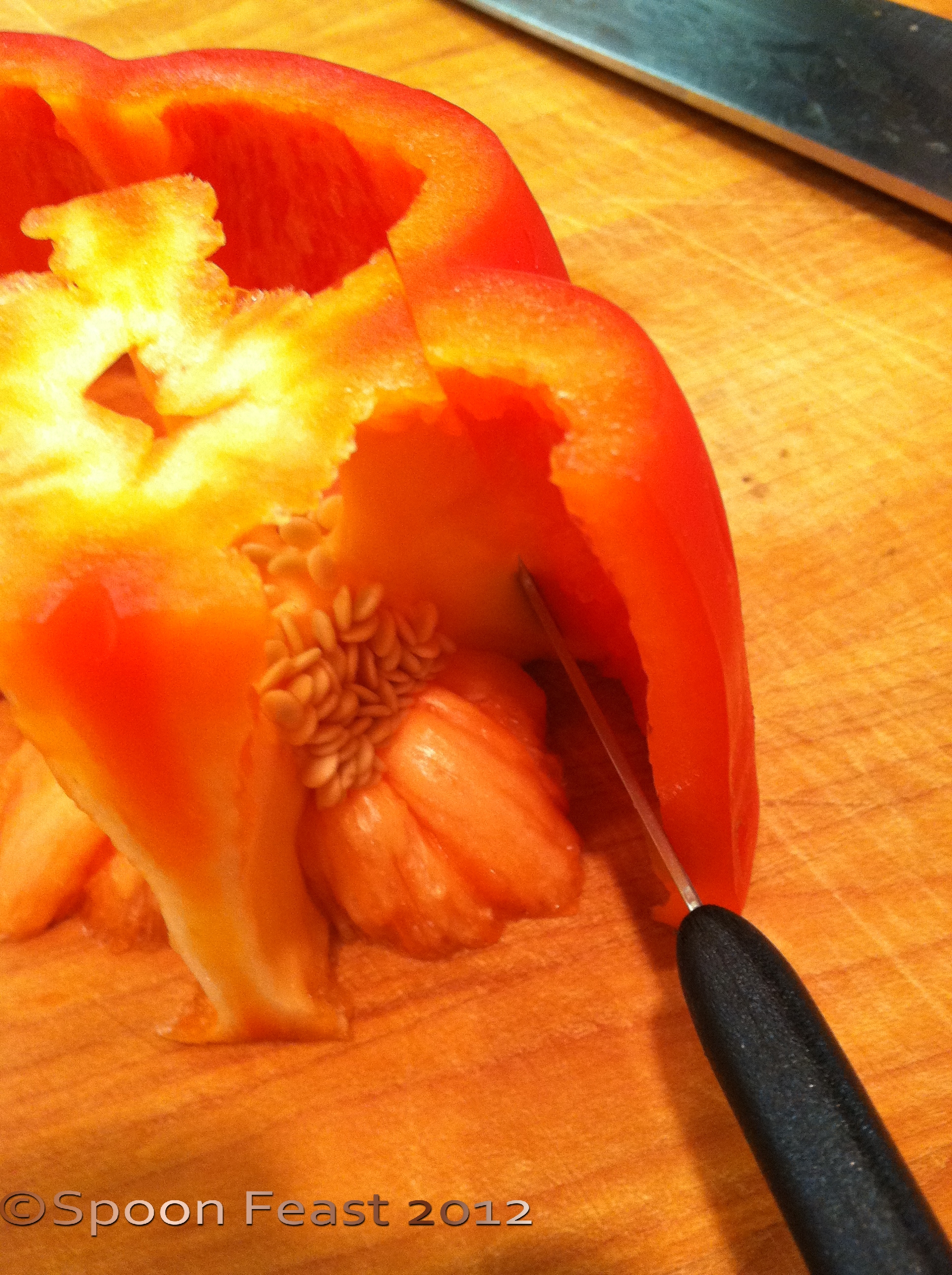
Remove the ribs and seeds, open the pepper so it lays flat, skin side down.

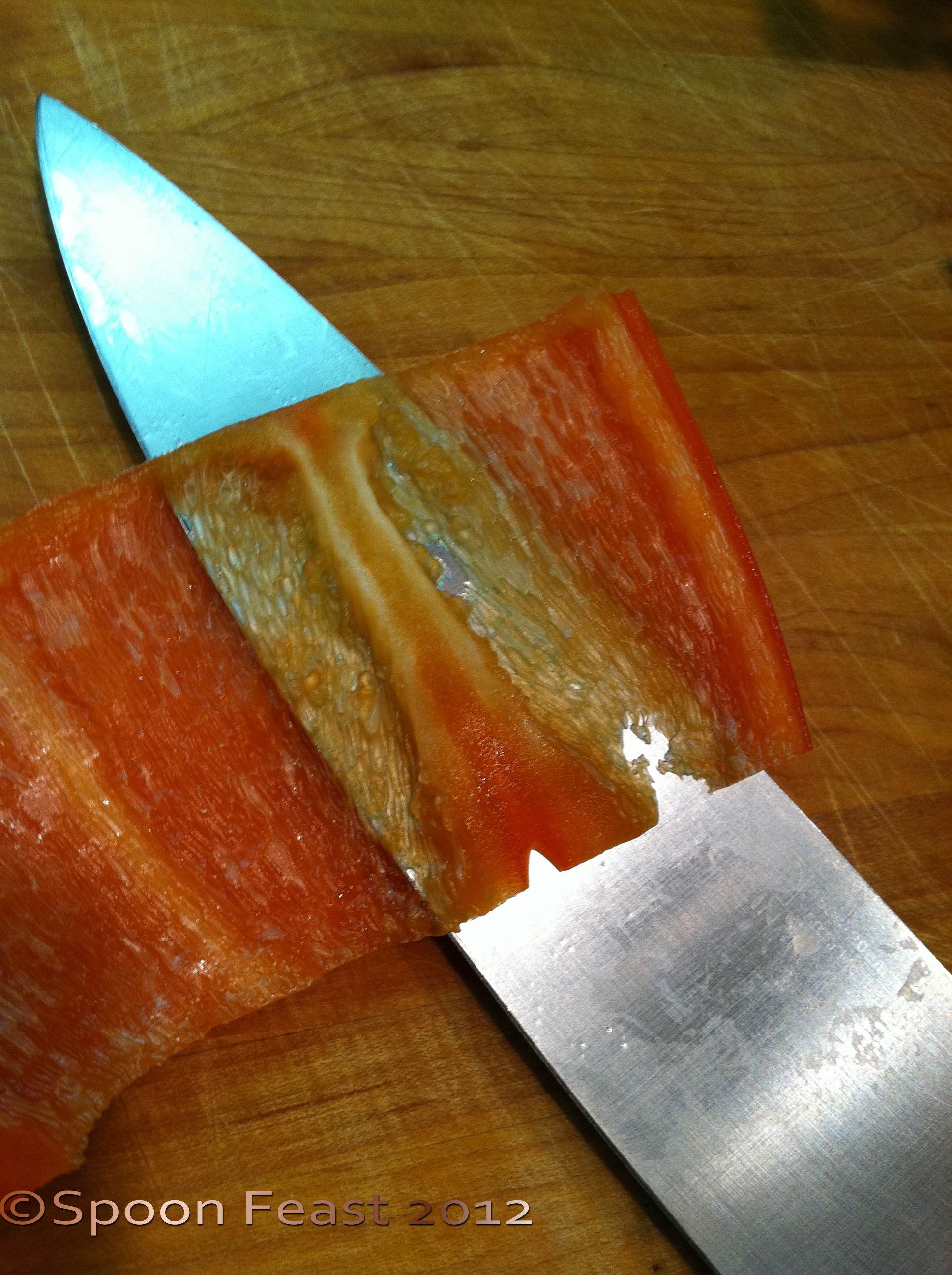
Carefully remove the membrane

See how much prettier the pepper is with the membrane removed?

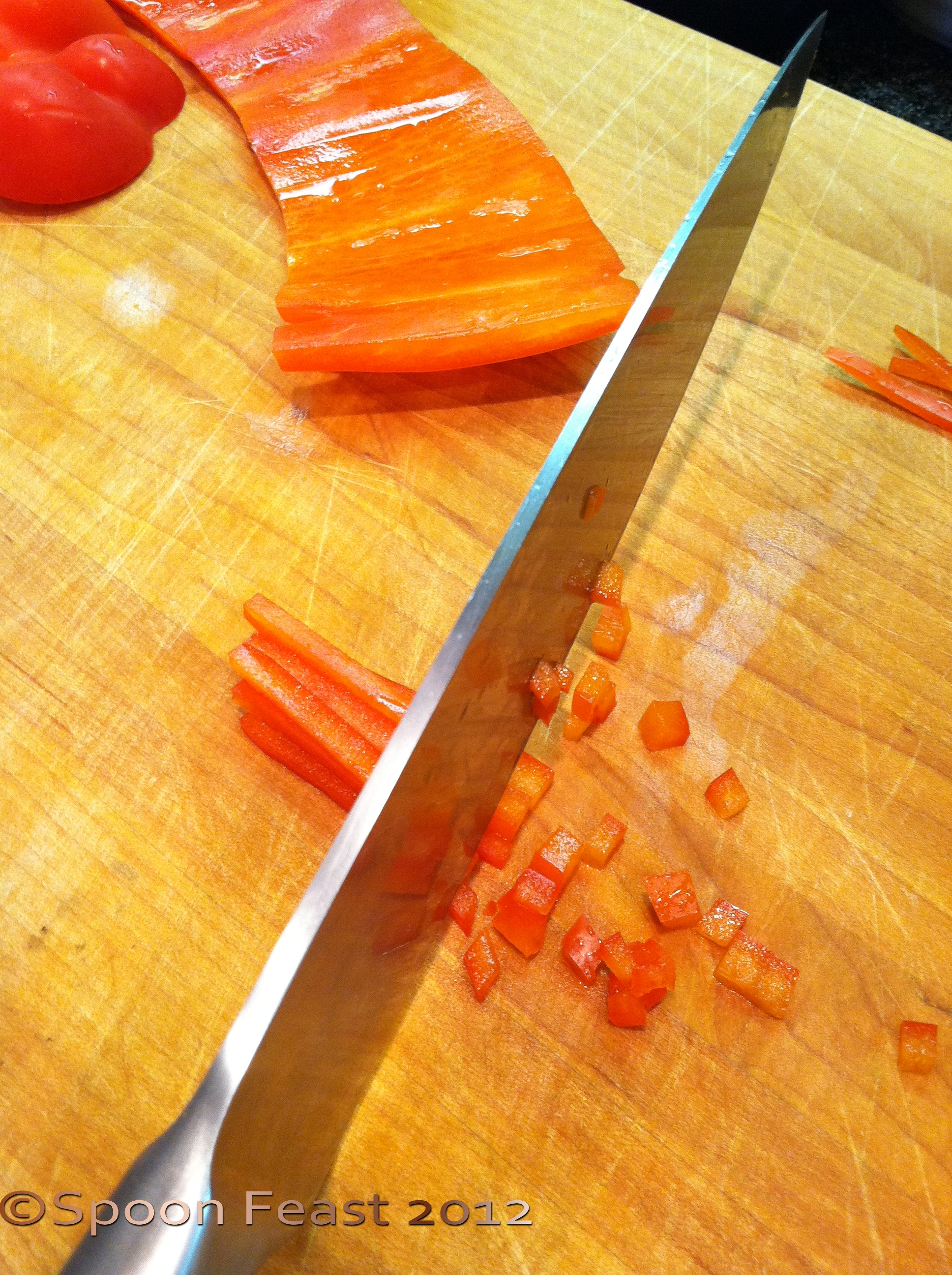
Slice into julienne, cut even slices all the way down the pepper strip.

Turn the julienne and cut into dice. The cubes should be of even size.

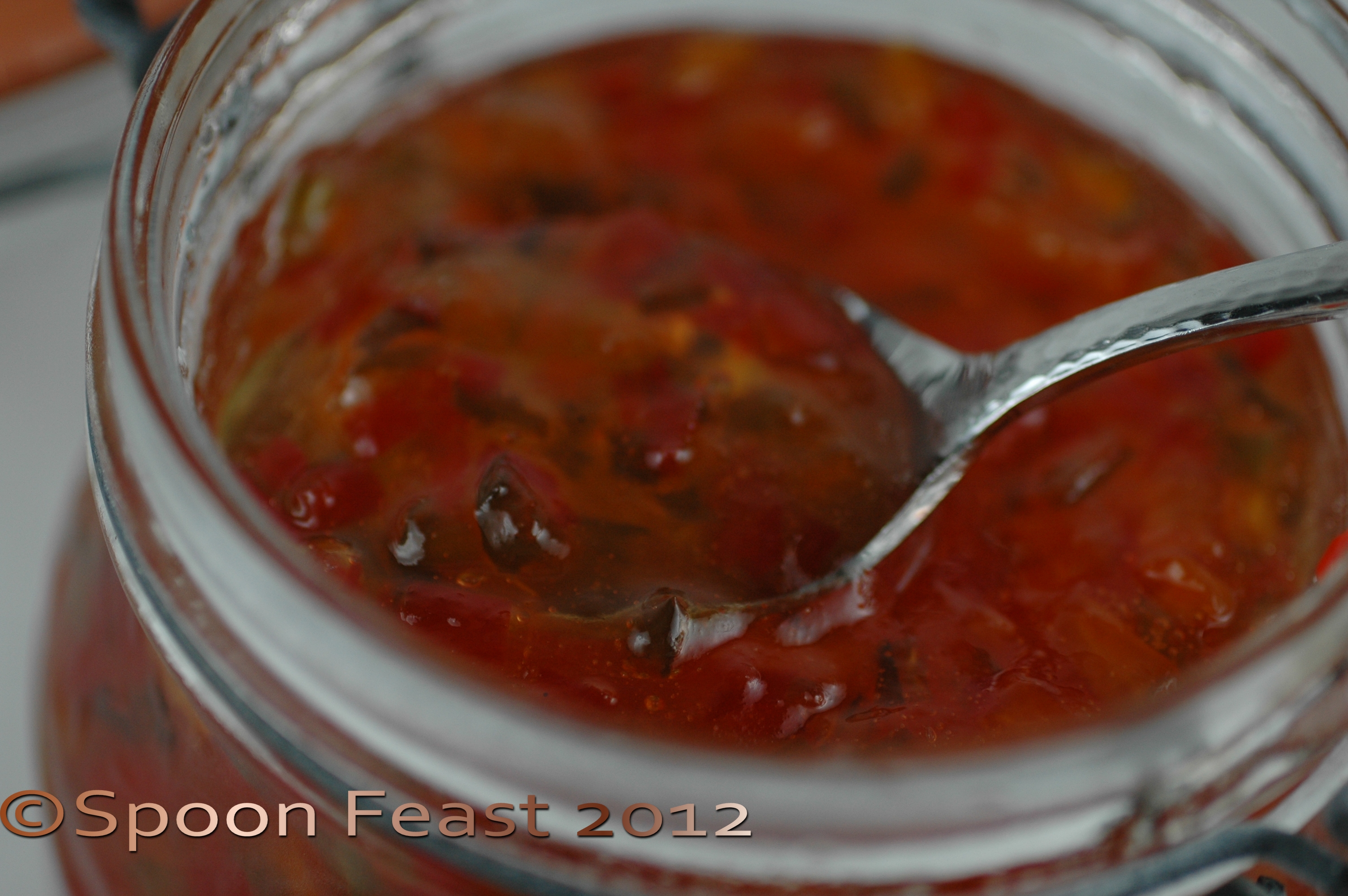
Pepper Jelly, a southern staple and hostess saver.

Slice the pepper so it becomes one long strip. Lay the pepper out with the skin side down. Remove the seeds and ribs from inside the pepper.

Using a sharp knife, remove the membrane from the inside of the pepper, leaving the plump pepper flesh. Just take a very thin slice from the surface to remove the membrane.

Make long thin slices from the pepper (Julienne cut), then turn the strips and cut them into cubes. Do this carefully so you create a bowl full of nicely diced peppers.

Trust me, it really makes a difference to take the time to do it right.

Place the diced peppers, vinegar and pectin into a saucepan. Bring to a boil over high heat, stirring constantly.

Be careful of vinegar fumes, turn your exhaust fan on so you don’t get all choked up.

When the mixture comes to a full rolling boil, add the sugar.

Return the mixture to another rolling boil, then boil it for 1 full minute while stirring constantly.

Remove from heat and skim off any foam that may have formed on the top.

You can process the jelly in canning jars, hot water bath etc to seal and make them shelf stable. (Great idea for gifts)

Or using clean, sterile jars, fill and invert them on the counter to cool. Once cool, turn them over and they seal will set, but you will need to refrigerate the jars.

This makes slightly over a pint.

Soften cream cheese, to fancy it up a bit, put it in a piping bag and pipe the cream cheese out in a decorative pattern rather than just plopping a chunk of cream cheese on a plate.

But if you want to, you can do it that way. Lots of southern folks do.