Mushroom Risotto

I made mushroom risotto just to see if there could be any left over to make the risotto balls Frugal Feeding made. Only he called them Rosemary and Garlic Arancini. I suppose that is the correct Italian name for them more than “risotto balls.”

By any other name they are still just as good.

Let’s make  Mushroom Risotto and if you have any left, you can hop over to Frugals site and make the Arancini.

But first a note on how to clean mushrooms:

Think of them like little sponges. if you run them under water or (horrors!) soak them in a bowl of water to ‘clean’ them, you are water logging the poor little mushroom. The mushroom will release that water while you cook, you will not get a good color on them when cooking. Instead of saute, you will be braising them.

Instead, wipe them with a clean towel, trim the tough part of the stem (shiitake – remove the entire stem, it is tough) your are ready to go.

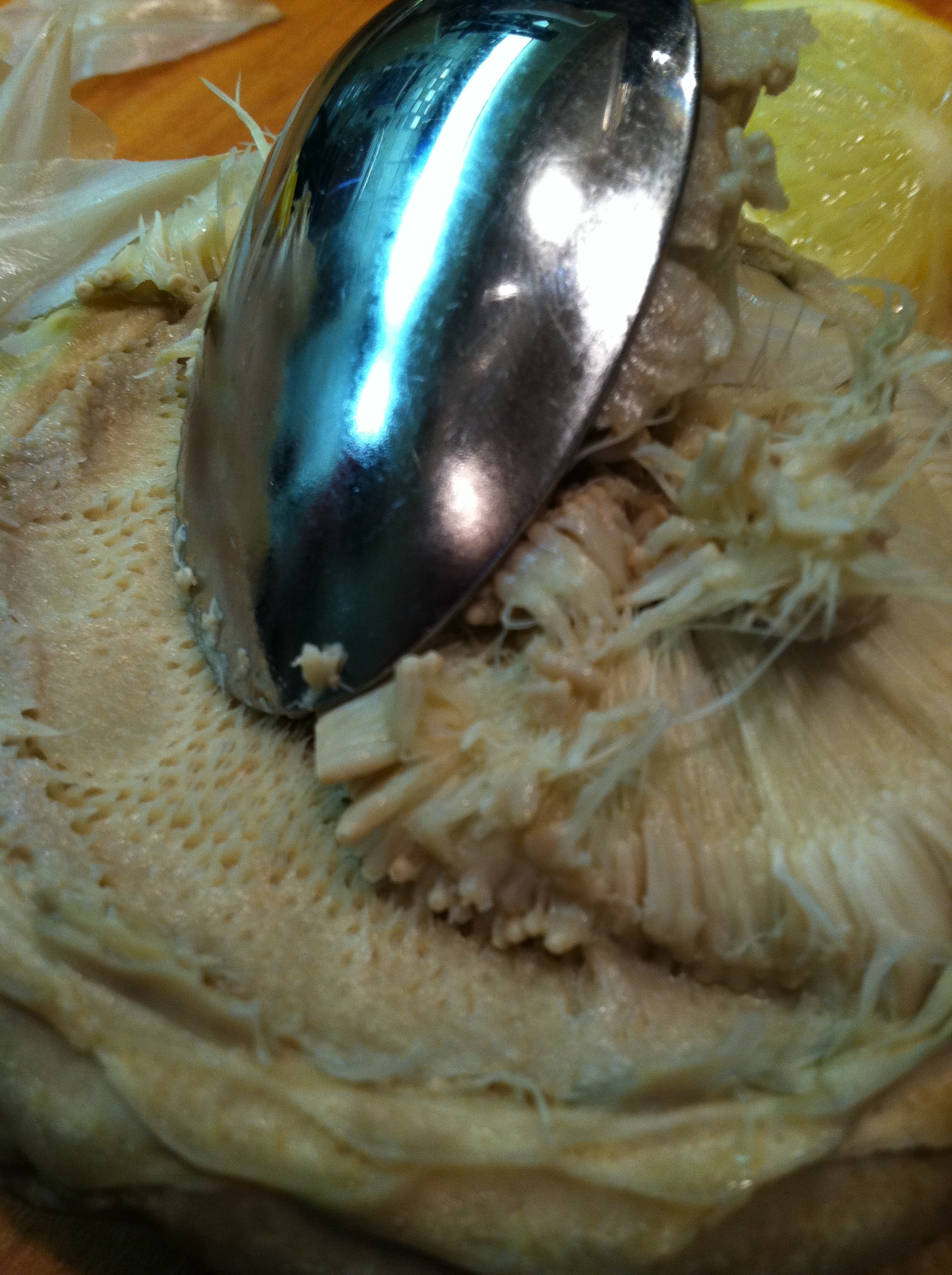
Portobello mushrooms can be ‘peeled’ to create a prettier mushroom. Use a spoon to scrape out the gills and then peel the lip of the mushroom to remove the top layer, peeling towards the top middle of the mushroom cap.

Save the scraps for flavoring stocks for soup or sauces.
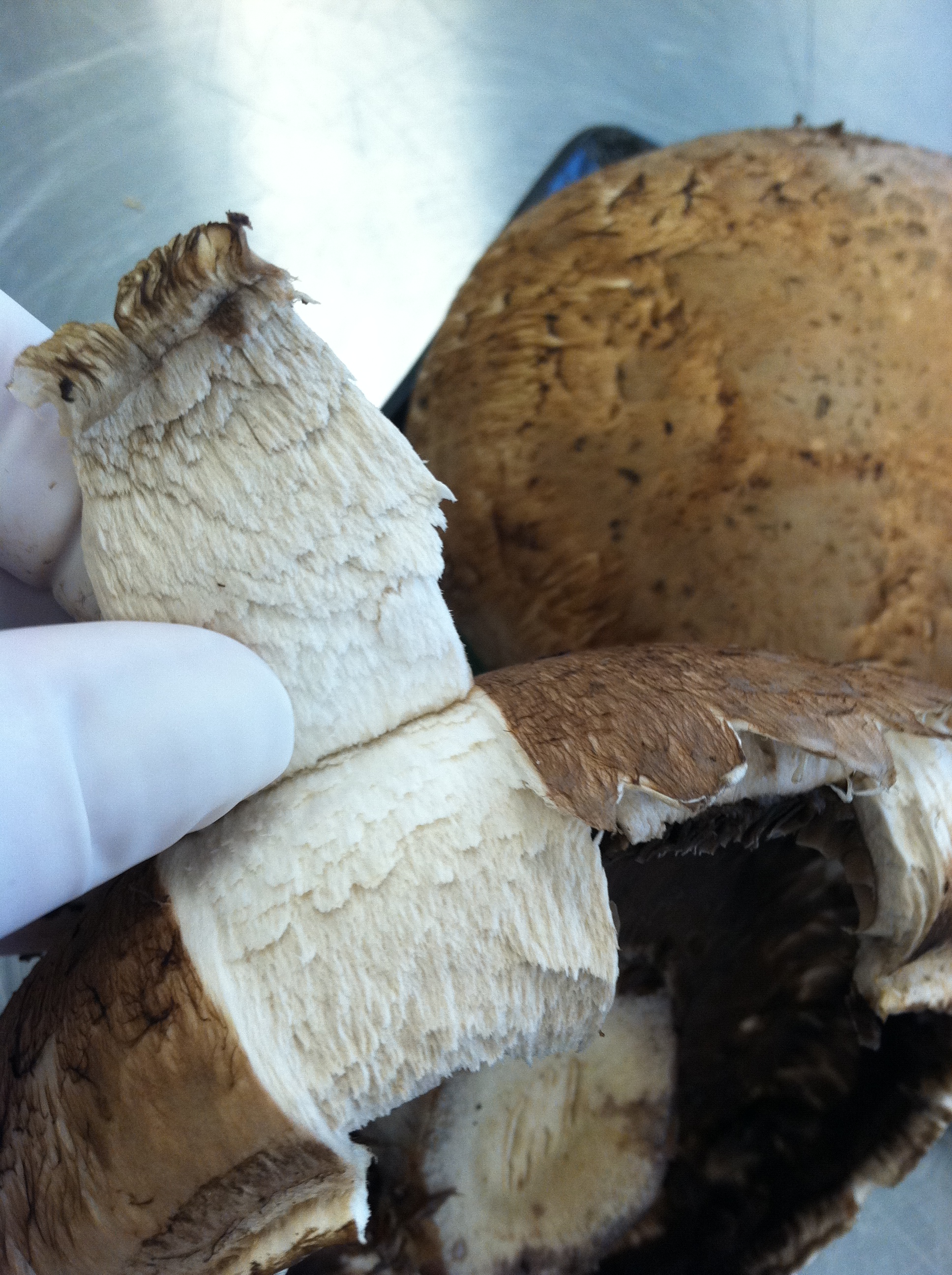
Peeling a Portobello

Use a spoon to scrape out the gills

1 peeled Portobello and 1 not peeled ; see the difference?
Save those scraps! Freeze them.

Mushroom Risotto

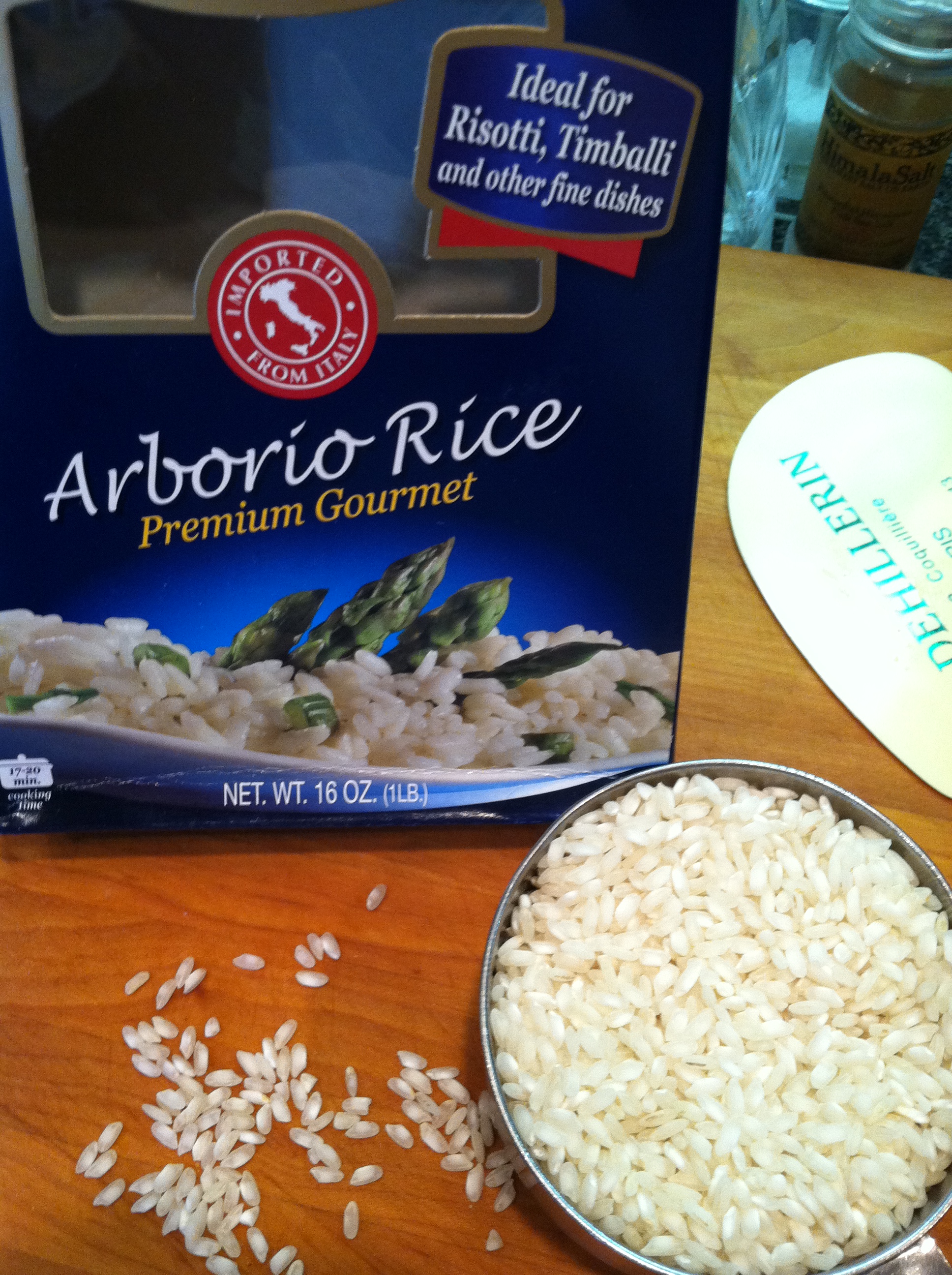
1 cup arborio rice

2 tablespoons finely minced shallots

1 tablespoon  fresh minced garlic

1 cup cleaned and sliced fresh mushrooms of your choice
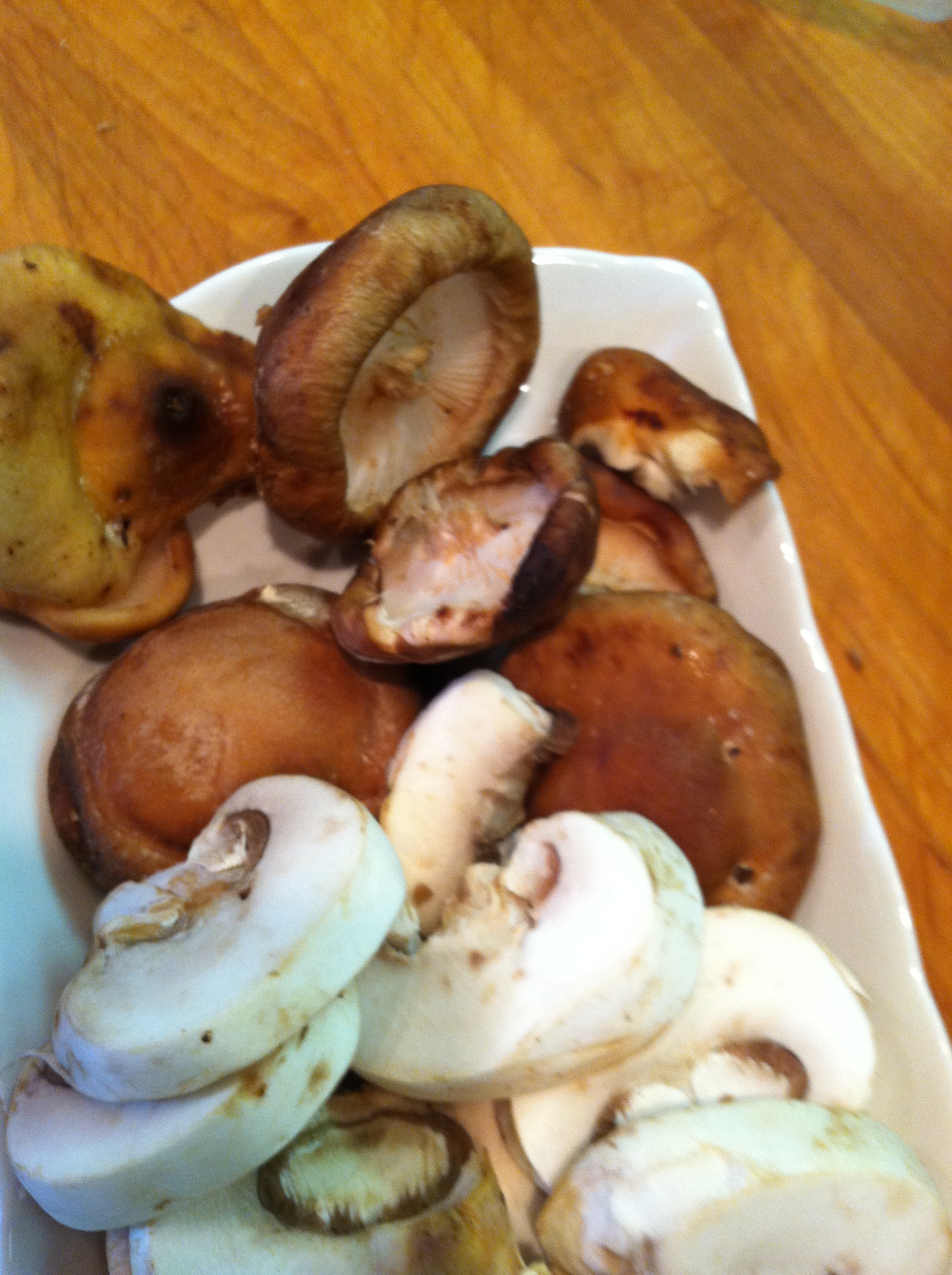
White button and shiitake mushrooms

If you use Portobello mushrooms, be sure to clean the gills out from under the cap. They turn everything a dark, almost black color.


1 up to 1 quart of warm chicken stock

If you use a stock that has salt in it, adjust your salt flavor at the end. Salt concentrates as liquids evaporate.

1/2 cup dry white wine

1 cup Parmesan cheese, shredded, not graded

1 tablespoon butter

Salt and pepper to taste

Cook the mushrooms first in the same pan you will cook the risotto. This allows the mushrooms to develop that deep flavor for which mushrooms are so famous.

Sautéed Mushrooms

  • 1 pound mushrooms of your choice, cleaned and sliced
  • 2 tablespoons oil or clarified butter
  • 1 shallot sliced
  • 2 clove fresh garlic smashed and minced
  • 1/2 cup white wine
  • 1 sprig fresh thyme
  • salt and pepper to taste

Heat the pan over high heat, add oil.

Add mushrooms sliced shallots, garlic saute until they begin to develop color and start to release their juices. Add white wine to deglaze and cook until the pan is nearly dry.

Now add the rice and continue with the risotto recipe below.

Note: This is a great way to saute mushrooms for any other way you want to eat mushrooms, steak, Quiche, soup

  • Heat the chicken stock in a pot and have it nearby with a ladle.
  • In the same pan you cooked the mushrooms above, add the rice.
  • Saute for 2 minutes. Stir to coat the rice with the mushroom goodness in the pan.
  • Ladle about 8 ounces of warm stock into the rice pan.
  • Stir to combine and continue stirring until the stock has been absorbed.
  • Repeat 3 more times.
  • Taste the rice, there should be a slight bite to the grain, known as “al-dente.”
  • The last addition will be 1/2 cup white wine, stir until the wine has been absorbed.
  • Stir in the Parmesan cheese and the butter.
  • Adjust seasonings and serve.

Warm chicken stock, have a ladle handy

Saute the mushrooms, shallots, garlic, thyme and wine to develop flavor in the mushrooms before adding rice. Cook down to nearly dry again.

Add rice, saute to coat the rice with oil and mushroom jus

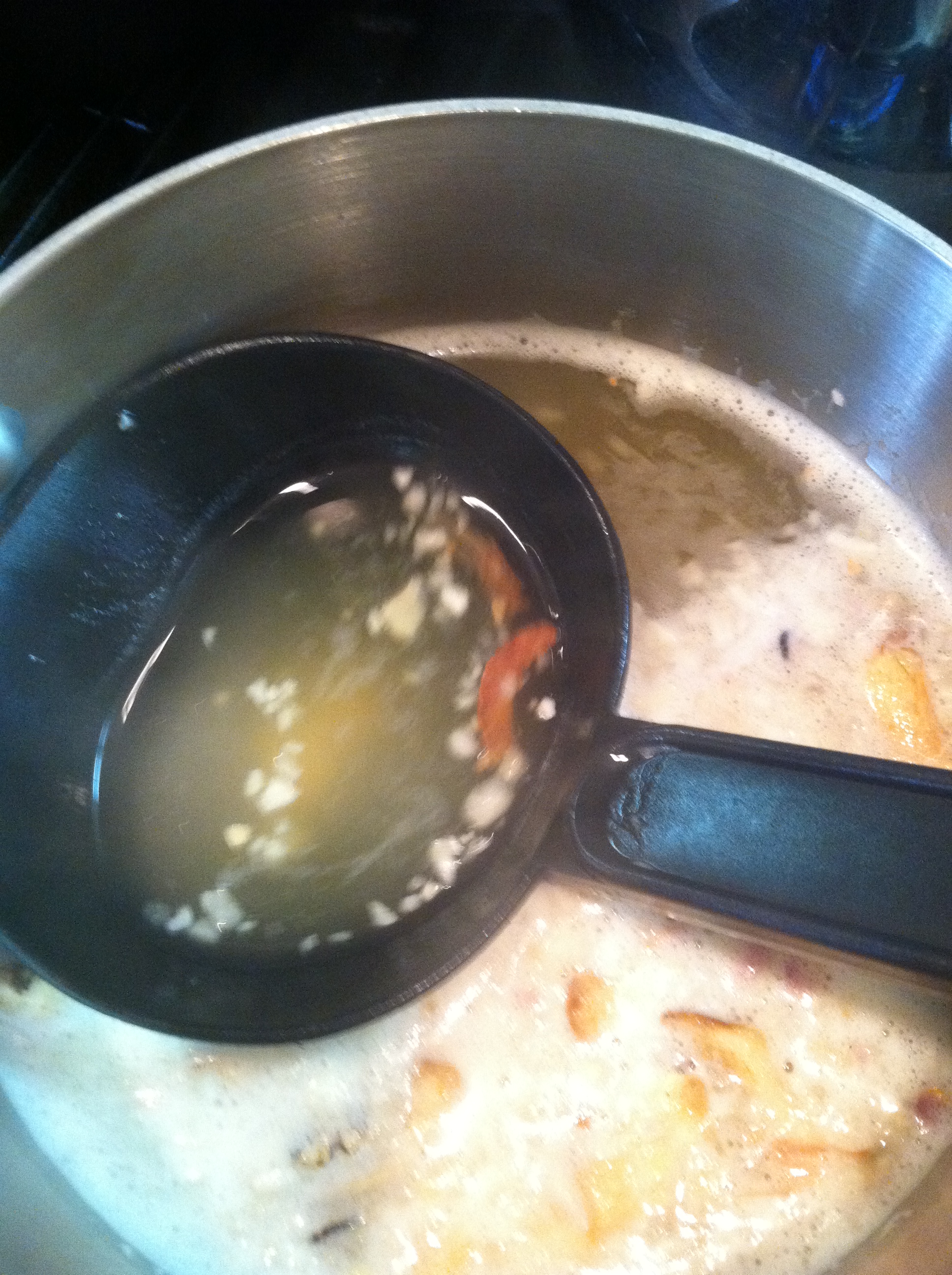
Add warm stock and stir until absorbed

Stir until all stock has been absorbed; add more stock

Add more stock and keep stirring

I learned to make risotto the old-fashioned way; by stirring a lot. Stirring makes it creamy. There are some methods where you cook it much like you do plain rice. I don’t find the results as creamy as the stir-like-a-madman method.

Besides, it gives your arms a decent work out.

If you want to make risotto and hold it for serving later, take it only half way through the steps of adding stock. Cool it down.

When you are ready to finish, heat more stock, add the rice and finish the cooking process.

Serve immediately as risotto can get quite gluey as it cools down after it finishes cooking.

I made enough to have some leftover for the Arancini but when I went to make them, there was no leftover risotto.

So the myth continues, there is no such thing as leftover risotto.

I haven’t seen much leftover wine either.

Why is that?

Robert said to just make more risotto and make the Arancini immediately.

I think he just wants more risotto.

Mushroom Risotto

“Feed Me Chef!”

Our dear friend June had a mile marker birthday recently. Our gift to her was to go out to the “Feed Me Chef” dinner at Zink American Kitchen in Charlotte, NC.

Robert and June

What a wonderful experience! The premise of the Feed Me Chef dinner is to sit around the bar area that is right up to and nearly in the kitchen. The chef will then create a 5 course meal for you of their choosing.

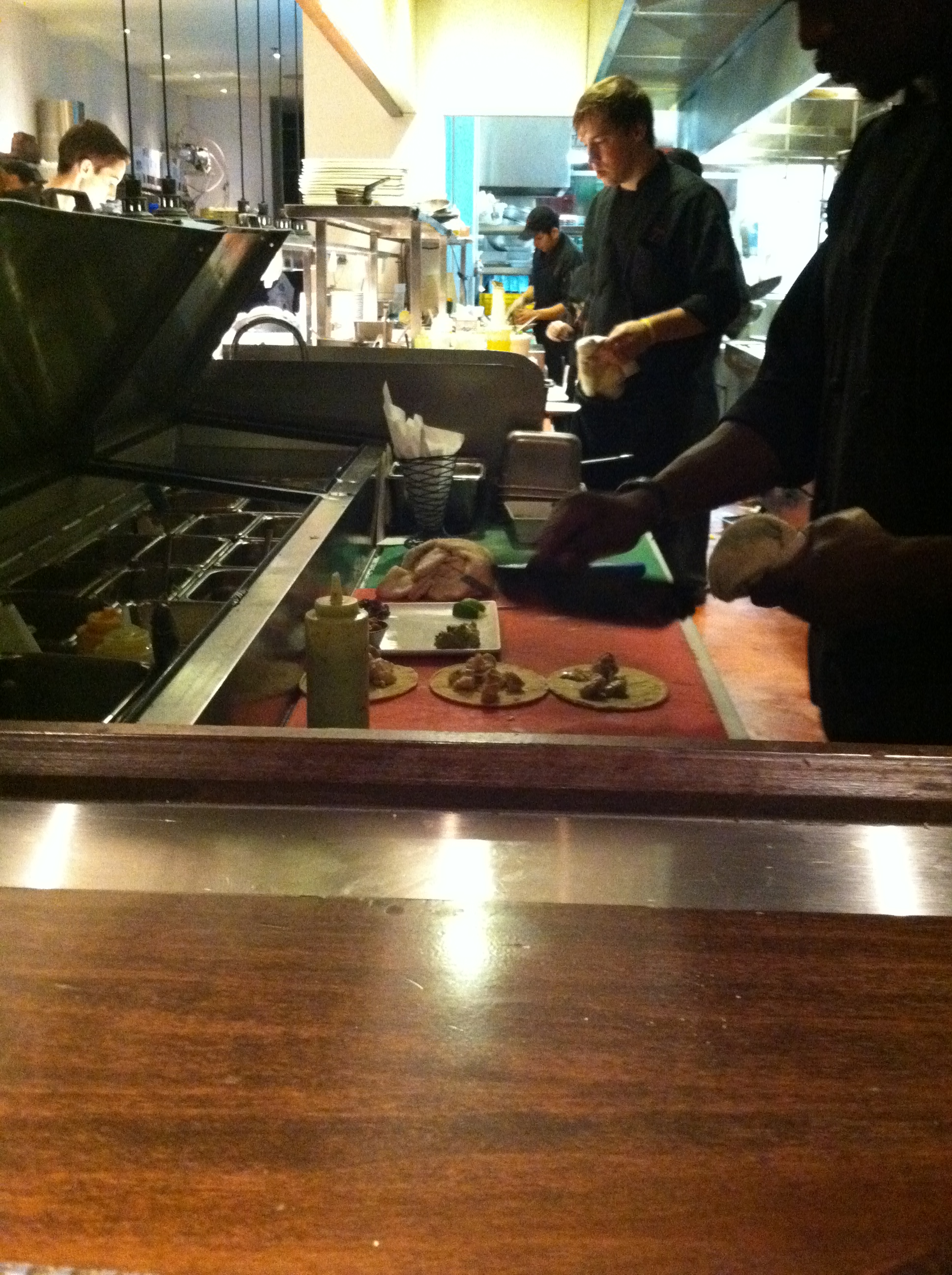
You can watch the kitchen in action

Sitting there, you get a birds-eye view of the kitchen operations from gearing up, getting slammed with the dinner rush and then slowing down slightly as we left 2 hours later.

The hostess had called earlier in the day to ask about allergies, diet restrictions and if there was anything in particular we wanted. These parameters were given to Chef Amy who in turn gets to be creative and create a 5 course meal.

The kitchen crew operated very well together. There was clear communication, effective movements and great looking food. Everyone knew their job and did it well. It was great entertainment.

And you want to know something? In this open kitchen all the crew, both front and back of the house, were so polite not only to the guests, but most important, to each other.

“Please, thank you, you’re welcome, excuse me”, all used frequently amongst the staff even when they were at their slammed best. How refreshing.

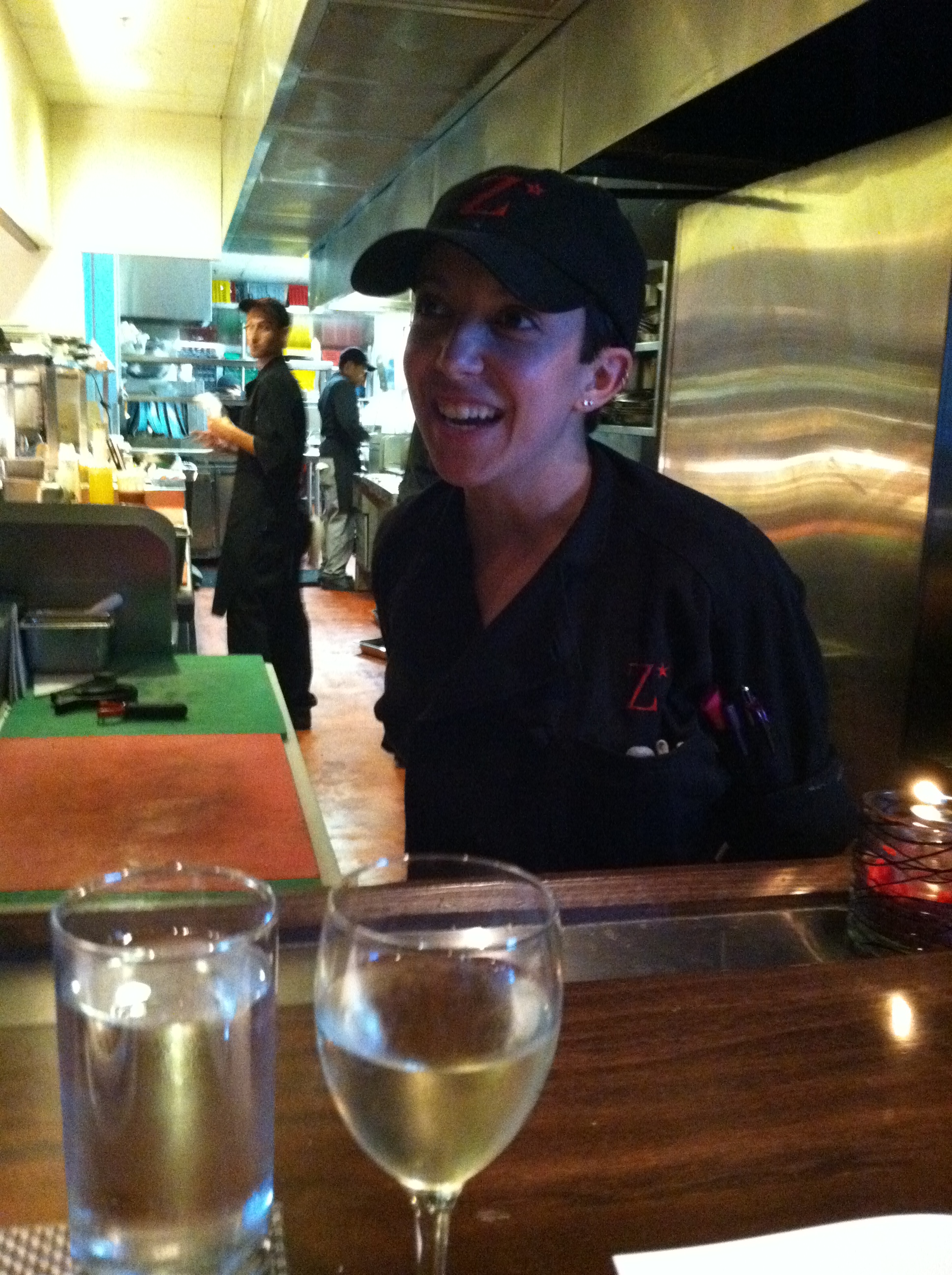
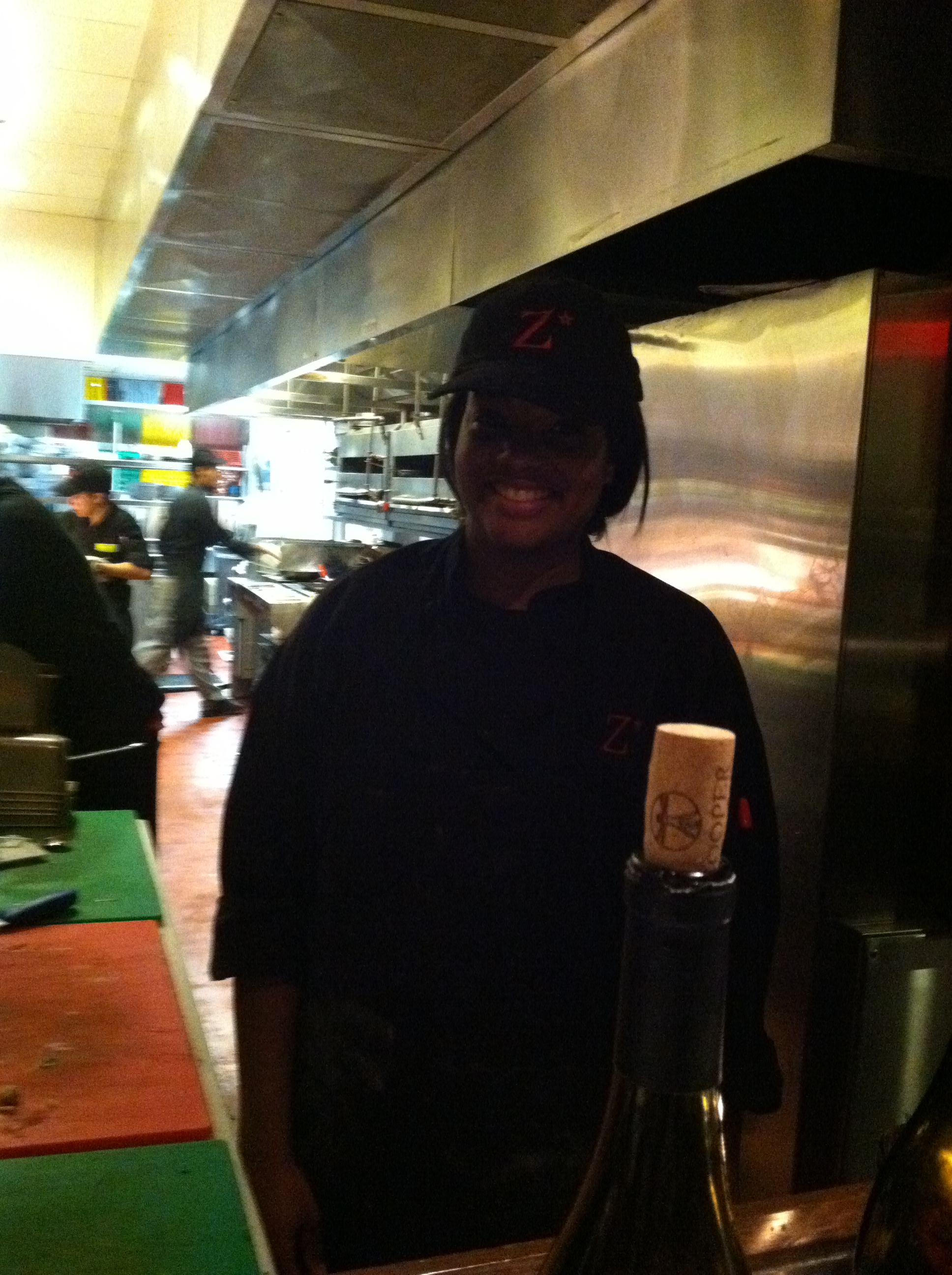
Chef Amy Kumpf

Our chef this evening was Amy Kumpf who was delightful, fun, charming, very skilled and knowledgeable in her craft. If was a lot of fun to watch her and her crew work through the dinner rush, very smooth.

She planned a menu for us and paired the wine for each course. Settling in, our meal began.

Course #1

Yellow Tomato Caprese Salad

Yellow Tomato Caprese

Instead of using fresh basil, Amy fried the basil for the salad. The result was delicate umami touched with sweet tomato that danced around in your mouth with a party going on.

Amy reduced balsamic vinegar to a coating glaze which she drizzled over the assembled salad. She chose yellow tomatoes, delicious fresh mozzarella, fried basil and balsamic reduction.

Definitely whetted the appetite. It was beautiful and delicious.

To pair wine with this course, Amy chose Cooper Mountain Pinot Grigio from Willamette Vally.

Perfect pairing.

Course #2

Plancha Seared Snapper with Fire Roasted Tomatoes and Cucumber Salsa

Snapper in Tangine

This dish alone would be worthy to come back for again and again. Fabulous!

The cucumber salsa had mango, red peppers, mint, honey and other things. It was very well made, knife skills showed.

Fire roasted tomatoes are roasted and grilled with red peppers and blended to create  a lovely sauce they use on several dishes from pizza to our snapper. This was served in  crisp white Moroccan style tangine.

Tangine

Wine paring: Chamisal Vineyards 2011 Central Coast Stainless Chardonnay (unoaked) Crisp and perfect with the complex flavors of this dish.

Course #3

Hickory Salmon

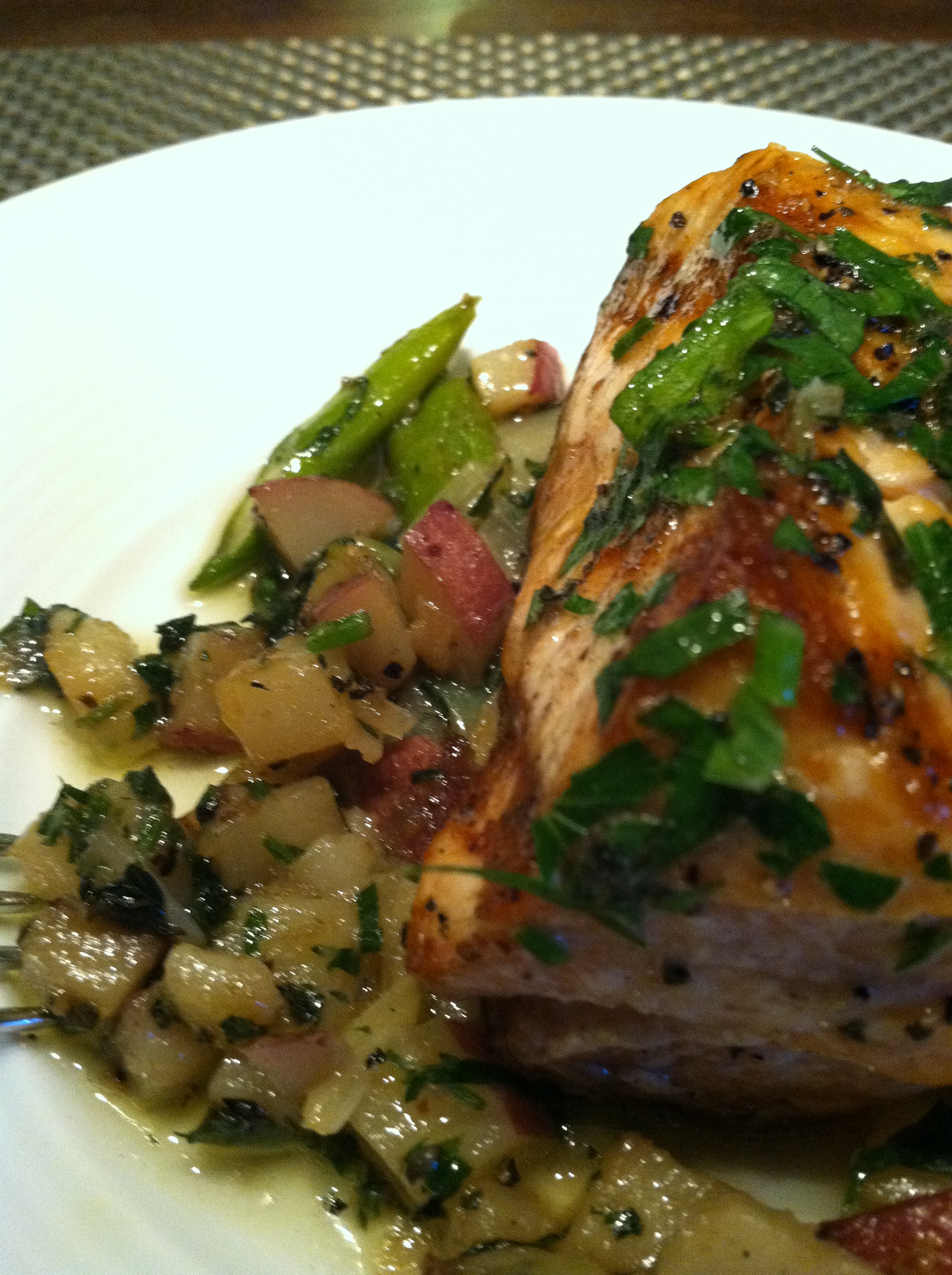
Hickory Salmon with Slow Cooked Potatoes and Asparagus

Another genius dish. The potatoes went so well with the salmon, sweet 100 tomatoes are slow roasted to add a sweet acid punch to the richness of the potatoes and  salmon. Additionally on the plate were fennel confit and melted leeks. Eating this was a pure pleasure experience.

Wine pairing: For some odd reason I didn’t record the Pinot noir chosen for this dish. It was the only one we thought didn’t complement the food. We enjoyed the wine tremendously, just didn’t like the paring.

Perhaps another Pinot with a fruitier base as most US Pinots are known. This one was in the “Burgundian” style which made it rich and robust with full tannins. These rich robust wines are normally my preference. But not with this dish.

The sweet salty nature of the salmon and the delicate texture of the fish wanted something a bit milder.

Course #4

Grilled Flank Steak with Smoked Tomato Cream Sauce and Shaved Asparagus

Seasoned and grilled to perfection. The meat was tender, juicy and full of flavor.

Shaved asparagus was created by peeling asparagus length wise with a “Y” peeler. You can do a lot with a vegetable and a Y peeler. Here, Amy created ‘pasta’ for us with thin shavings of asparagus.

Grilled Flank Steak

By this time we were getting full.  So I tasted everything and then decided to bring the rest of this dish home to eat for lunch and jump into dessert.

Wine Pairing: Brazin Old Vine Zinfandel, Lodi, 2009

Course #5

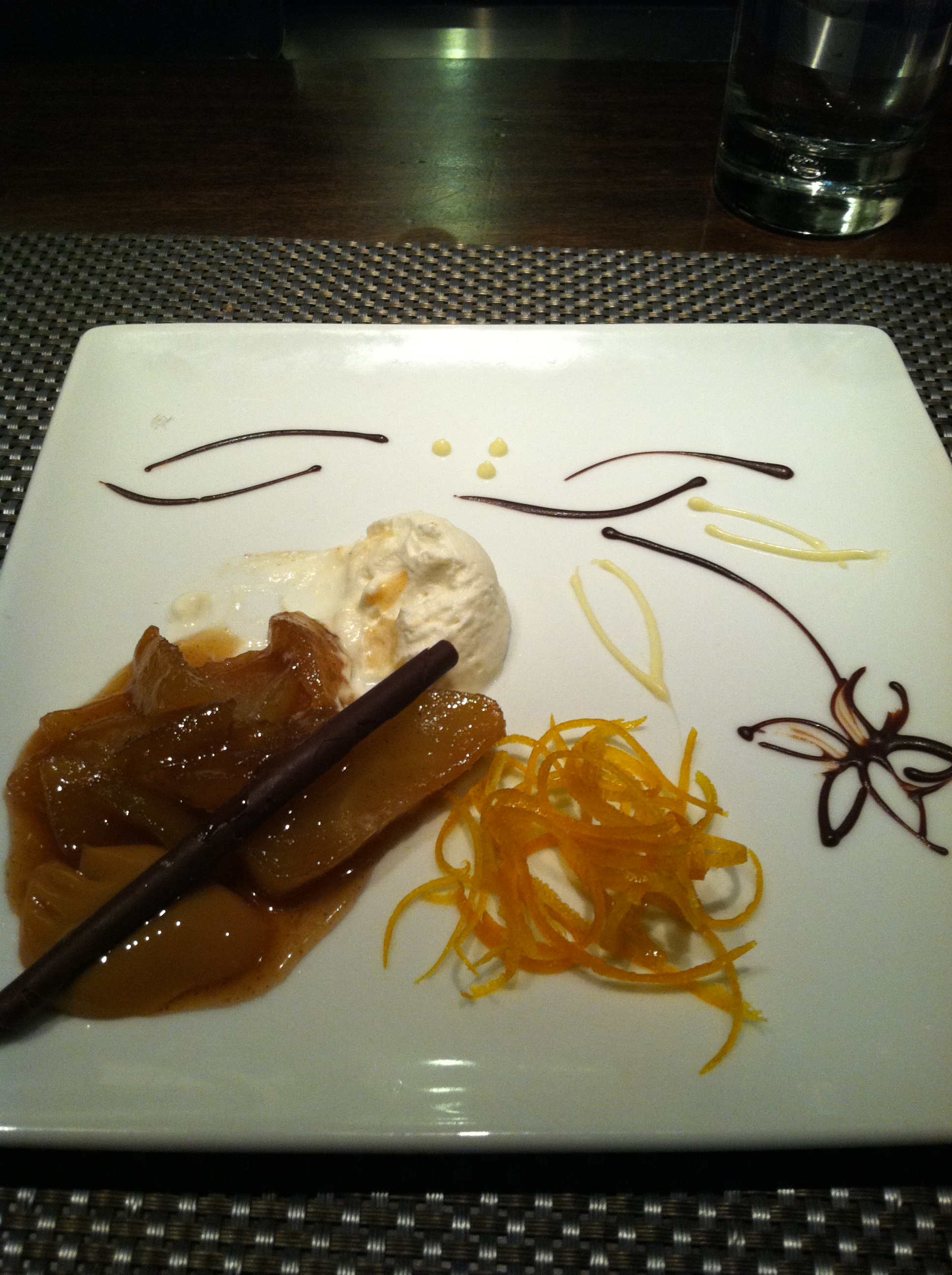
Warm Apple Compote, Whipped Caramel Cream, Orange Confit, Dulche de Leche and Dark Chocolate

I got a pleasant surprise when the dessert chef came out. She was a student of mine. She said she was nervous but for no reason. Her dessert fit the bill perfectly. (No flour products – part of Junes diet; hence the asparagus pasta.)

Pastry Chef Sheena

Although our tummies were full, we managed to consume every bite.

Brilliant wine paring and fine ending to a great meal: Late  Harvest Mer Soliel

Apple Compote

Robert and me

All in all, we had a great meal and an outstanding evening. I could eat like that every time we go out. The idea of not knowing what your next course will be is intriguing.

We will have to do this again soon and I suggest you go find a place near you who does this kind of service. Ask at your favorite restaurant. Sometimes this style of dining is called a “Chef’s Table” and sometimes tables are in the kitchen. Depends on what the health code is in your area. You may discover such tables need to be reserved well in advance.

We had a delightful interaction with the staff. The entire evening was great fun.

Naturally, if you find yourself in Charlotte, NC, head over to South park and stop in at Zink and say “Feed Me Chef!”

You will be glad you did.

These photos were taken in low-light conditions of the restaurant with the i-phone 4.

How to Roast a Chicken

Here is another basic skills post about how to roast a chicken. The same principle applies to most birds, large or small. Ducks are just a bit different due to the amount of fat on them.

To select a whole chicken, carefully look at the wing tips, they should not be brown in any way. Slightly red is OK but no brown. Look at the neck area, same thing. These areas show age on market chickens. If they are fresh, they will be ‘chicken color’ and possibly red tips on the wings. No brown, green or purple.

The chicken should also not have any odor. Give it a sniff. Pass it by if you smell anything.

Sometimes the inside of the bird contains a small bag of the heart, liver, neck and gizzard. Remove this from the inside of the bird. Throw it away unless you eat heart, liver, neck and gizzard. My father made wonderful sauce from these parts. Sometimes I saute the hearts and livers but there is only one inside each bird so they become the cooks treat. YAY!

Thoroughly rinse the bird inside and out. Pat the bird dry.

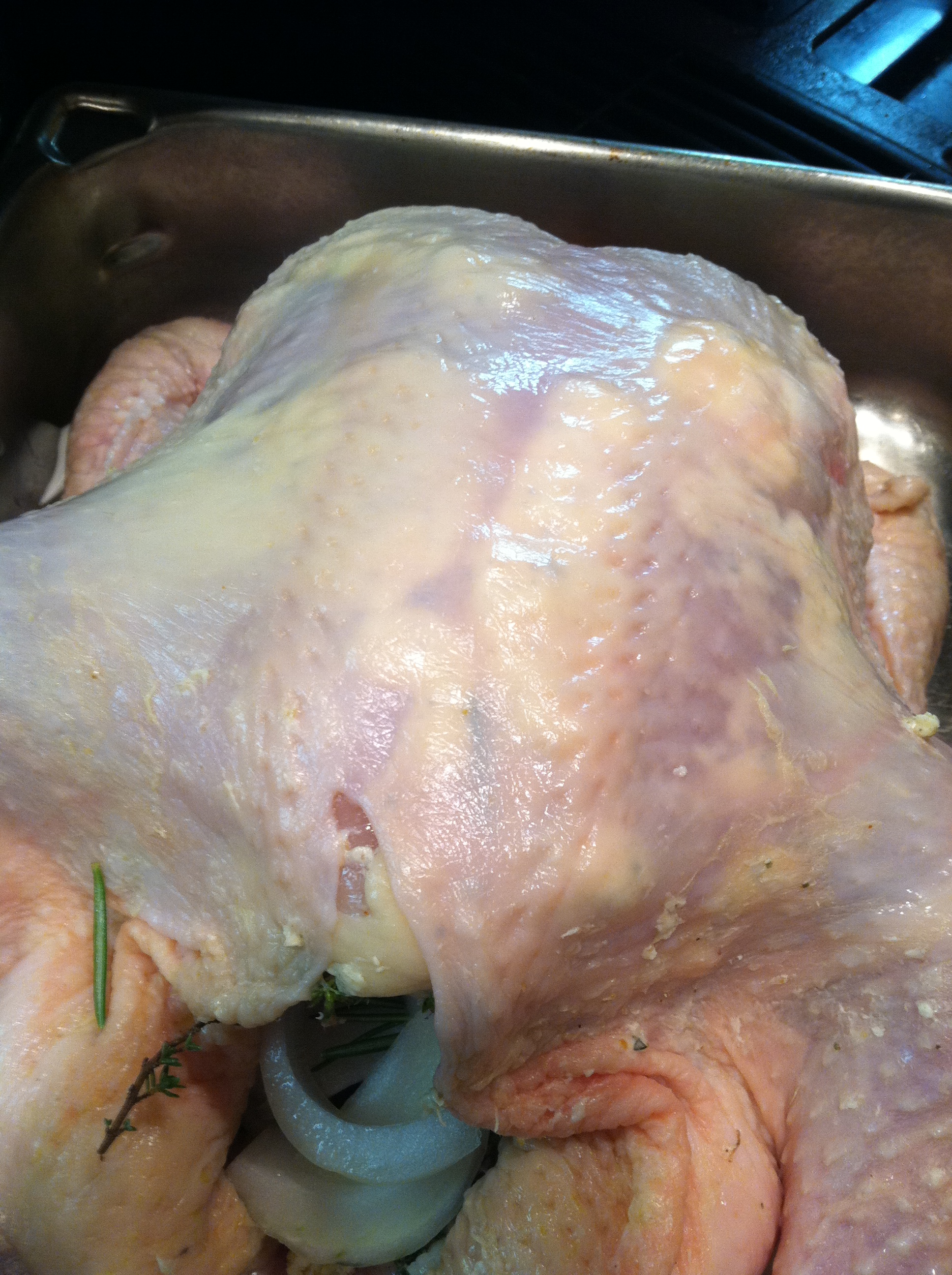
Carefully, using your fingers, loosen the skin but do not tear it.

Look carefully, see the butter under the skin?

Insert compound butter between the skin and the meat, smoosh it around so it almost covers the meat and then rearrange the skin back in place. This will baste the meat with herbs and butter while the bird roasts.

What is compound butter? Soft butter with herbs and seasonings mixed in. Any combination, any flavors, your choice. Toss it in a mixer, mix it up, place in a container and use it anywhere you would use butter. The butter I used here contained thyme, garlic, lemon, shallot and pepper.

To give the bird some flavor while roasting, insert herbs, onion and garlic into the cavity. For this bird I used rosemary, thyme and onion and a bay leaf.

For food safety sake, if you want stuffing, bake it in a separate pan. See note below regarding food safety.

On the bottom of the roasting pan, place chopped carrots, celery and onion (25% carrots, 25% celery, 50% onion ratio) and 1/2 cup or so of water or stock.

Professionally, we call this vegetable ratio “mirepoix”.

Tie the legs together with butchers twine or cotton string. Run the string around the legs and thighs and tie it off under the wings. This holds the bird together in a nice compact bird-like shape, controls the legs and plumps the breasts.

This is how you get a good-looking finished bird that isn’t splaying its parts all over the place.

Season the birds skin. I used Montreal Steak Seasoning for this one. Season as you like.

Season, tie the legs and truss the chicken. Place on top of vegetables to roast.

Place the tied and stuffed bird in the roasting pan on top of the vegetables.

Roast the bird in a 350°F oven for about 2 hours or so for a 3 pound bird. Please use a thermometer to test for 180°F internal temperature in the thigh, not near a bone.

The dark meat takes longer to cook so you test there. Please be sure to cook your chicken all the way.

There is nothing as unappealing as cutting into a whole roasted bird and have blood come out. Obviously, it goes back into the oven to finish cooking, if that happens.

When the bird is done, allow it to “rest” for about 15-20 minutes before carving. This is when I prepare the vegetables and put the final touches on the meal.

Food safety really comes into play with handling chicken.

  • Keep the bird cold.
  • Sanitize the work area with a mild bleach after preparing and handling the bird.
  • We are trying to avoid contaminating our families with Salmonella and Campylobacter jejuni in particular.
  • If your bird is frozen do not allow it to thaw on the counter or in the sink. Put it under cold water that you change frequently or in the refrigerator which takes 2-3 days to thaw, so plan ahead.
  • Always sanitize everything that chicken and your hands come in contact with during preparation with a mild bleach solution when you finish. Knives, boards, spoons, counters, sinks, knobs, handles, towels, aprons, etc.

To make a sauce, use the drippings in the bottom of the roasting pan. Deglaze with chicken stock or white wine. Strain the liquid from the roasting pan into a sauce pot. Bring to a simmer.

Mix equal parts of butter and flour together in a small bowl. Drop small pea sized pearls of the flour and butter mixture into the simmering stock, whisk to incorporate. Season as desired. Simmer for 10-15 minutes to cook out the starch taste. Finish with a pat of cold butter whisked in, adjust salt and pepper. Strain again if desired.

Roasted chicken with sauteed beet greens

We sautéed the beet greens we had on hand from the pickled beet post. Yummy stuff.

There will be another post soon on “How to Cut Up a Chicken”

Enjoy roasting your chickens! I adore the aroma, it smells like home and all things wonderful.

Oatmeal Cranberry Cookies

Interview Cookies

I was asked to bring cookies to a job interview one day so I made a batch of Oatmeal Cranberry Cookies. Walking across the street for the interview, I realized the cookies were still on my kitchen counter. Going in empty-handed was not an option so running home as fast as possible, I grabbed the cookies and waltzed into the interview only a few minutes before it was time to start. Typically being there 5-10 minutes early is preferred rather entering right on time. Luckily I lived close by.

I was right about going home to get the cookies. There was a “refreshment” table set with a big empty space for the platter. Milk, tea, coffee, plates and napkins –  a successful interview hinged on good cookies. The interview panel was outfitted by the colleges cookie monsters.

Being cookie monsters, they were satisfied munching while they took turns grilling me with questions. After the cookie interview, it was required to film a ten-minute lesson of their random choosing.

I wondered what they wanted to eat next.

After several more interviews over several weeks, they awarded me the position.  I always wondered if they were curious why I talked so fast or was out of breath at the initial interview. Probably not.

My son called from college the other day and asked for some cookies. These will work nicely.

Oatmeal Cranberry Cookies

Recipe adapted from Quaker Oats Company “Vanishing Oatmeal Cookies”
  • 1/2 cup ( 1 stick) + 6 tablespoons soft room temperature butter
  • 3/4 cup  dark brown sugar, firmly packed
  • 1/2 cup granulated sugar
  • 2 large eggs
  • 1 teaspoon vanilla
Dry Ingredients
  • 1- 1/2 cups all-purpose flour
  • 1 teaspoon baking soda
  • 1 teaspoon ground cinnamon
  • 1/8 teaspoon ground allspice
  • 1/2 teaspoon non-iodized salt
Measure to fold in last
  • 3 cups uncooked old-fashioned oats
  • 1 cup dried cranberries

Pre-heat oven to 350°F

Using an electric mixer, beat the butter and sugars on medium speed until creamy.

Add eggs and vanilla; beat well.

Combine flour, baking soda, cinnamon, cloves and salt in a large bowl.

Mix  the dry ingredients together well with a dry whisk, spoon or fork.

On low-speed, slowly add the dry flour mixture to the creamed eggs and sugar.

Add the oats, then the cranberries, mix well to combine all ingredients.

Use a scoop and scrape it along the edge of the bowl to level the portion size for consistent sized cookies

Drop by rounded spoonfuls, or use a cookie scoop, onto a parchment lined sheet pan. Space 2″ apart.

Space evenly 2" apart to allow spreading. Use silpat or parchment on the baking sheet.

Bake at 350°F for 8-10 minutes or until light golden brown. Remove from oven and allow the cookies to cool on the sheet pan for 5 minutes before transferring to a wire cooling rack. Use a spatula to lift the cookies from the parchment.

Cool completely.

Drizzle the cookies with icing. Make note of the parchment and tray under the cookies to catch icing drips.

Watch out, cookies disappear before they are finished!

Drizzle with fondant icing if desired.

Fondant Icing

1 cup 10x confectioners sugar

pinch of salt

1/2 tablespoon milk and more as needed.

Place the 10x sugar in a bowl. Add the milk and stir. Drip more milk, drop by drop, into the sugar until drizzling consistency is reached.

It is easy to make this too liquid so start with a small amount of milk first and add while stirring. It changes quickly.

Using a fork, drizzle the frosting over the cookies while still on the cooling rack.

Allow the frosting to dry before storing in an air tight container.

These cookies are best inside of tummies, guarded by a glass of milk or cup of tea.

Take a bite!

Arugula and Pickled Beet Salad

Today’s shared bounty is some lovely arugula (aka rocket). The added bonus of this shared bounty is roots! After washing what we would eat, I choose some to plant and grow more.

Thanks Adria!

Washed and refreshed, arugula is ready for a terrific, quick and easy salad from things created over the last few days for posts on Spoon Feast.

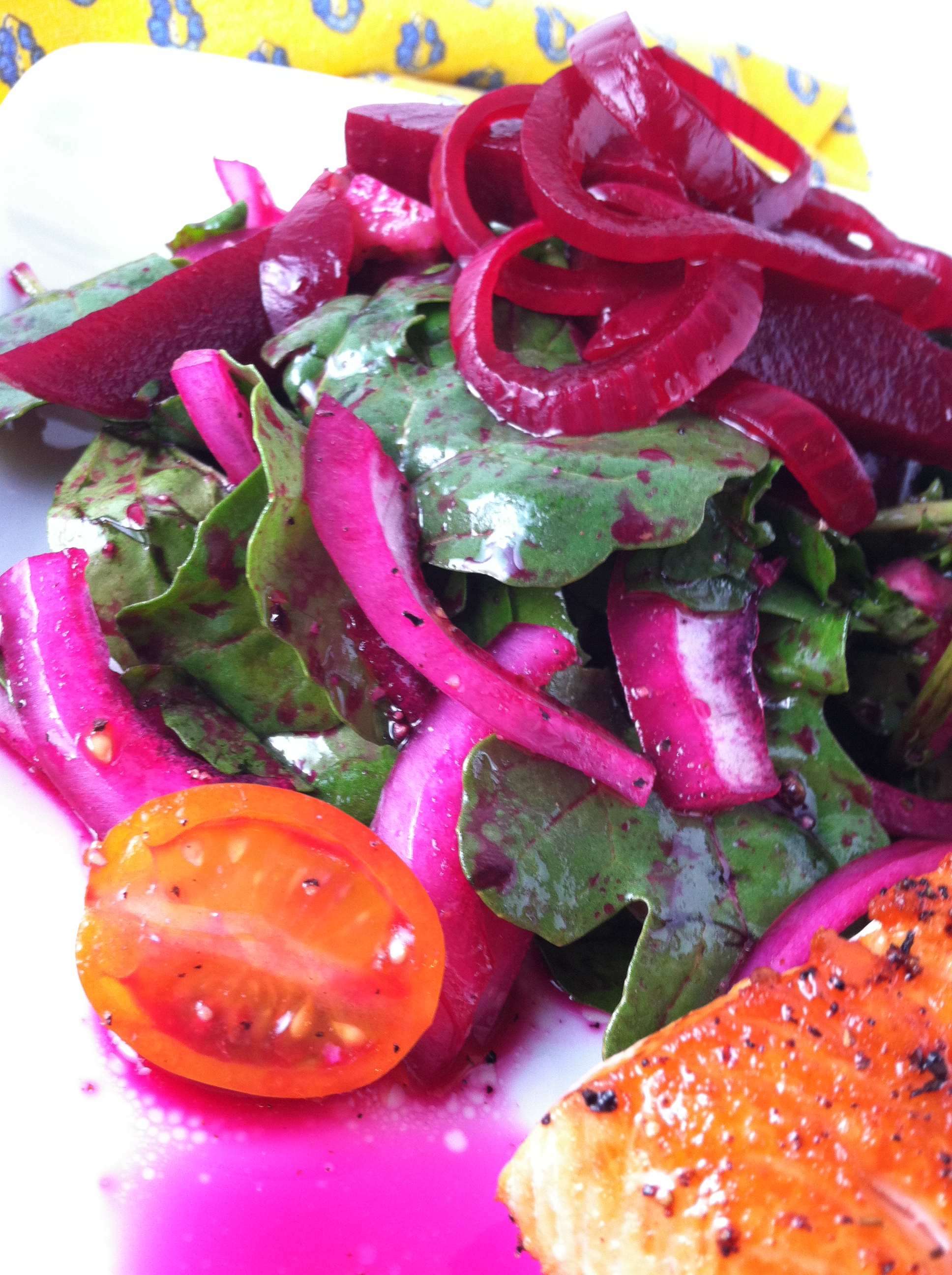
Picking some fresh red-leaf lettuce from the garden, combining it with arugula, garnishing with fresh tomatoes, cucumbers, steamed artichokes, pickled beets and hard-boiled eggs.

All food gathered from a walk to the farmers market Saturday and shared bounty from friends and colleagues. Oh, add salmon, wild caught, from Alaska.

We tossed the salad with a chive blossom vinaigrette to bring it all together then added croutons and slabs of fresh bread and a few shavings of cheese.

You could use the beet juice from the pickling jar and drizzle a bit of olive oil for the dressing.

I drank champagne; Robert, Stella Artois.

We got to eat the duck, kale and white bean soup earlier

This is how we get to use up a weekend of playing in the kitchen. I don’t just write about recipes and food, we live it. Every day, every meal.

Only a small percentage of what I really cook ever gets written about. I call that “cooking without documentation.”

I cook and create food every single day for as many meals as I can. Sounds like we would be fat porkers, but we aren’t.

Eat responsibly is the key. Love and enjoy food but don’t overdo it.

Robert loves the results. I must admit, it sure is fun to finish with all the cooking and writing and photography; go take a bath and fall asleep. The next day go down to the kitchen and enjoy all the tasty things there are to eat over the next couple of days.

It leads to more posts, more food and photographs.

Robert does not like his food photographed.

Arugula and Pickled Beet Salad with Salmon

So, I make a plate to shoot before we eat. Maybe that’s why he doesn’t like his food photographed, he wants to eat first.

I try not to waste food by eating what is photographed. Sometimes it is necessary to dedicate a plate to the shoot. Others, the plate gets consumed as soon as the camera lights fade.

This time of year is my favorite as there is so much produce, fruit, and flowers available to play with.

I encourage you to try using arugula/rocket in a salad. It is great to top a pizza or drop into soup.

Use arugula/rocket just as you would spinach, raw and cooked. The home-grown varieties  seem to have more peppery flavor than commercial products.

Let me know how you like this crazy green.

Oh, Grasshopper!

Fair warning: If you are squeamish about grasshoppers or insects, move on to the next post. Just a fair warning.

There is a student in my Garde Manger class who brought grasshoppers to class.

A pan of grasshoppers

Even though eating grasshoppers is not the mainstay diet of my readers, I thought it was so interesting I had to write about it. I am not an extreme food consumer, but if it was all there was to eat, I speculate a way would be found.

Comedienne Mary Asher and the Grasshoppers

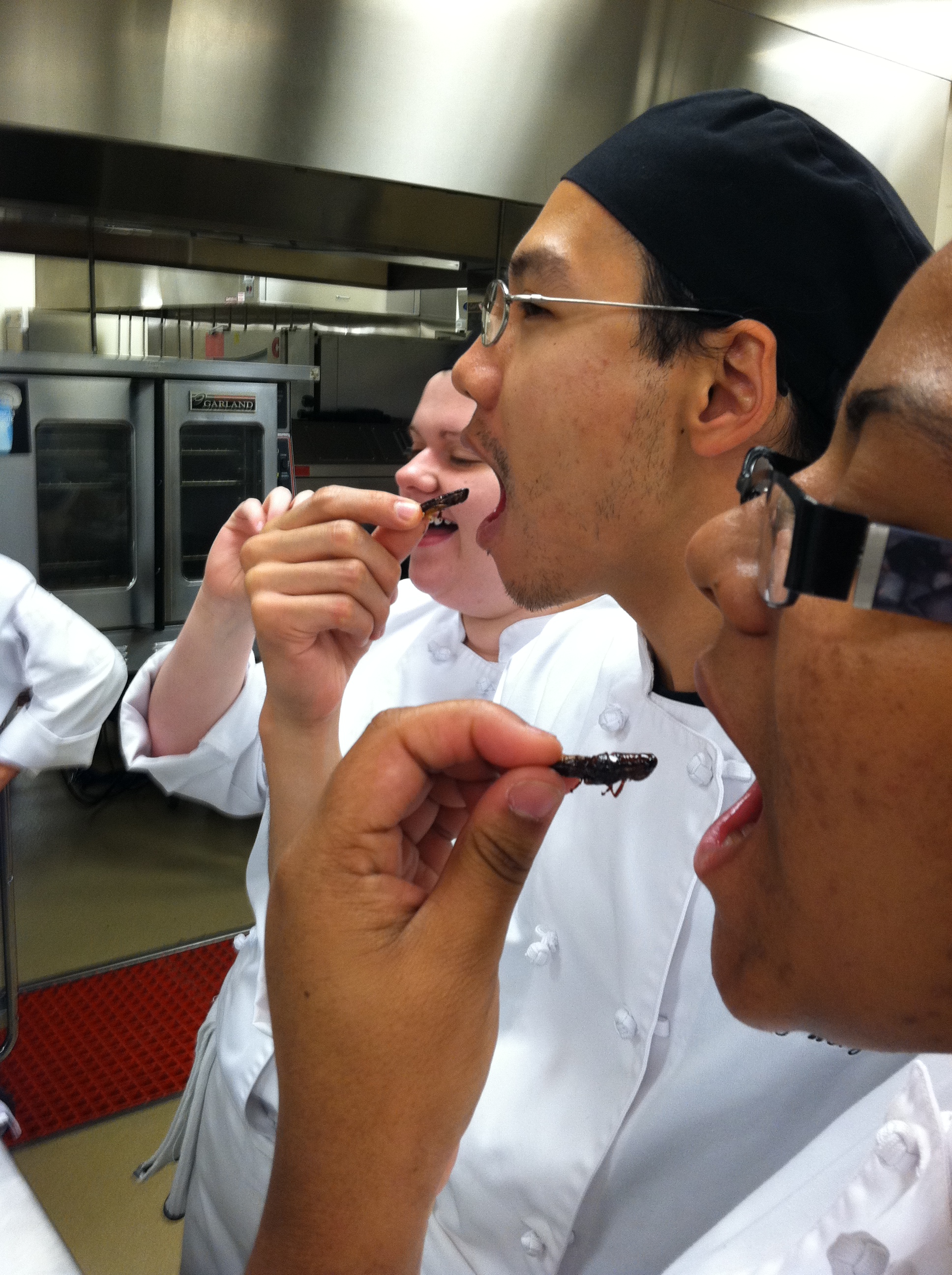
I couldn’t bring myself to eat one, however, several students were excited to try.

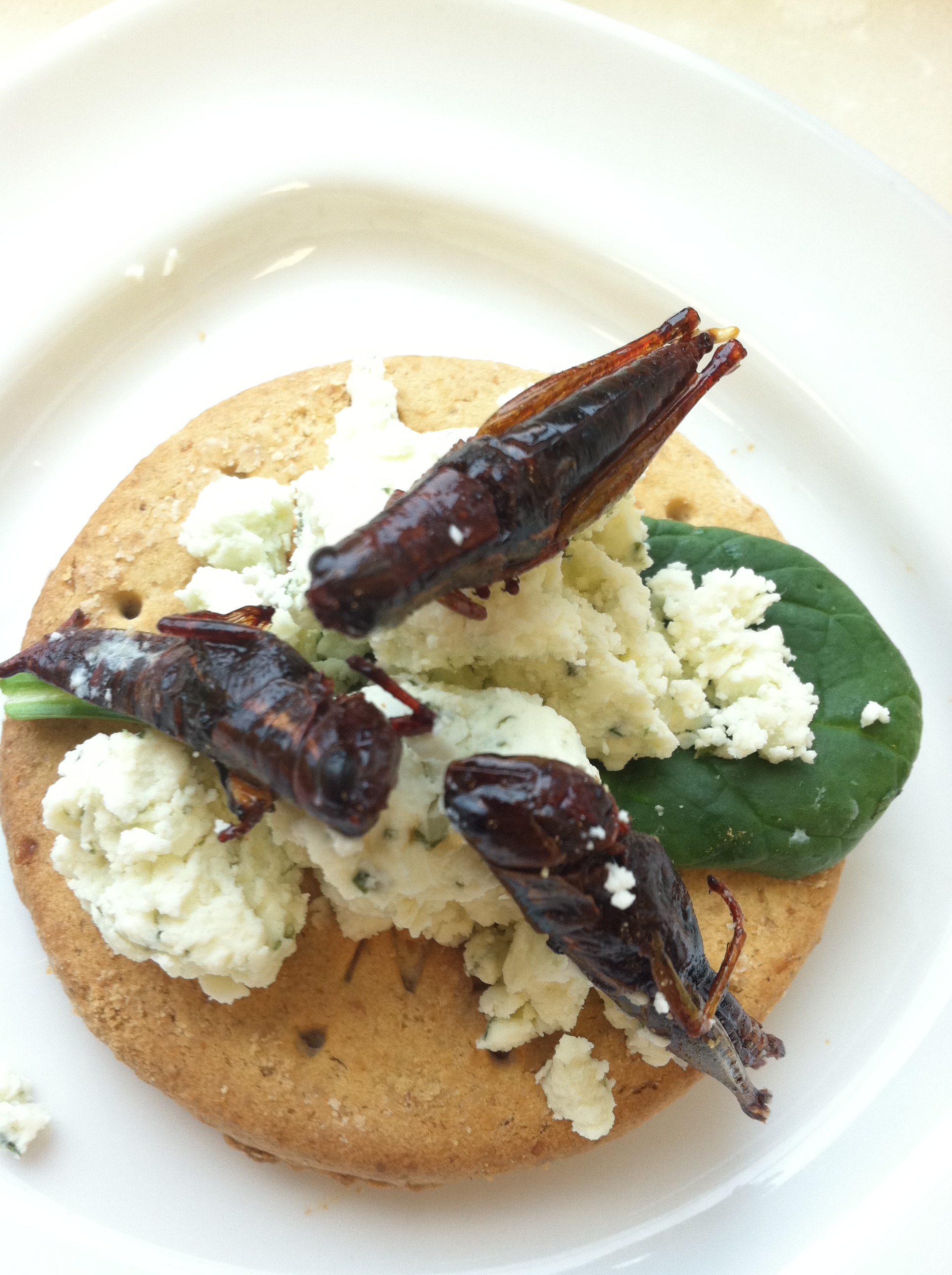
Yong made them nice and crispy and made a Korean style teriyaki sauce and another of his teammates, Andrew, covered them with dark chocolate. Some were paired with cheese on a cracker.

Yong was telling us how in Korea, they raise grasshoppers in very clean ‘grasshopper farms’. I visioned tall blades of lush grass with jumpy, springing green grasshoppers leaping blissfully from blade to blade.

It was fun to watch the adventurous eaters explain: “crunchy like a grassy twig”, “Can I pull the legs off?”, “I don’t like the wings”, “Are they overcooked?” “They make me want to jump around.”

Snacking Grasshoppers

Chocolate Grasshoppers

Grasshoppers with cheese and crackers

Serving Grasshoppers

At least he didn’t bring in hissing cockroaches.

Artichokes!

Artichokes from the market

I found the most amazing artichokes in the farmers market this week. They were huge and hybrids. These artichokes did not have any of the thorns or much of a “choke’ inside either.

The woman at the market asked me “how do you cook them so they are tender?”

Steam them.

I had to find a domed lid to fit the steamer; the artichoke was so big!

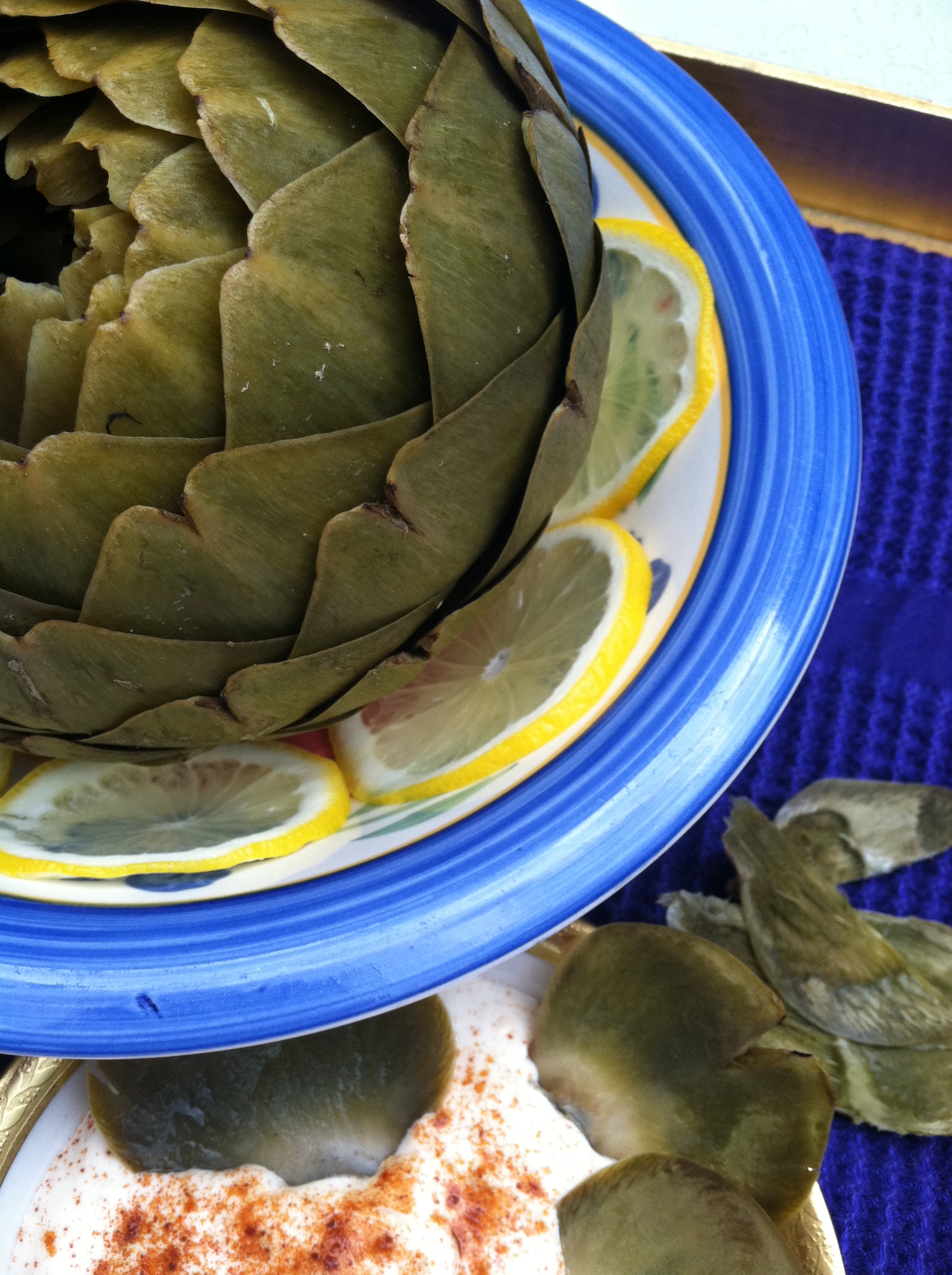
All I did with this artichoke is cut the stem so it would fit in the pot with the lid on it and steam. It had to be steamed for about an hour and 15 minutes. Once the water came to a boil, the heat was turned down to low. You will need to check the water level to be sure you don’t burn up a good pot.

If you find the non-hybrid type that have the small thorn on each leaf, you will need to use the kitchen shears and clip them off. After your cut a few, wipe the edges with a cut lemon to prevent the artichoke from turning black.

Any cut you make on a raw artichoke, swipe it with a piece of cut lemon to preserve the color and keep it from oxidizing.

You can tell the artichoke is done cooking when the leaves pull off easily and a knife is easily inserted into the base of the artichoke with no resistance. Do this from the bottom so as not to ruin the presentation.

There are a lot of things you can do with an artichoke but today, I am just steaming it and serving it with a couple of sauces.

We will eat it as an hors d’ oeuvre with aperitif before dinner. Serving like this is also an interesting way to put out a snack when guests and friends come visit. We usually gather in the front yard about an hour or so before dinner and friends join us for great conversations, drinks and sometimes an hors d’ oeuvre or two.

A word of caution, artichokes make cheap red wine taste great and good red wine taste awful. So if you are serving artichokes, serve a decent inexpensive red wine.

Please don’t go down as low as Trader Joe’s Two Buck Chuck. That is truly awful stuff. The only thing that makes that better is pouring it down the drain.

The sauces:

Yogurt Sour Cream Sauce

  • 1/4 cup plain Greek yogurt
  • 1/4 cup sour cream
  • 2 tablespoons mayonnaise
  • 1 teaspoon smooth Dijon mustard
  • 1 teaspoon fresh lemon juice
  • 1/8 teaspoon garlic powder
  • 1/8 teaspoon onion powder
  • Salt to taste
  • Sprinkle of sweet paprika for garnish

Mix it all together. Sprinkle sweet paprika lightly over the top.

Let is rest to allow the flavors to blend.

Dip artichoke leaves in sauce.

Lemon Butter Sauce

  • 1/2 cup butter
  • 1 lemon, zested and juiced

Melt the butter, add the juice of the lemon and 1/2 of the zest. Warm through.

Place a couple of slices of lemon in the bowl to serve. Dip artichoke leaves into sauce.

How do you eat a whole artichoke?

Starting at the bottom base, carefully pull a leaf off. It should separate easily. Dip in sauce if desired.

Place the inside of the leaf against your bottom teeth, lightly bite down and scrape the artichoke flesh off the leaf with your bottom teeth and discard the remaining leaf. You have to pull the leaf to effectively scrape it against your teeth.

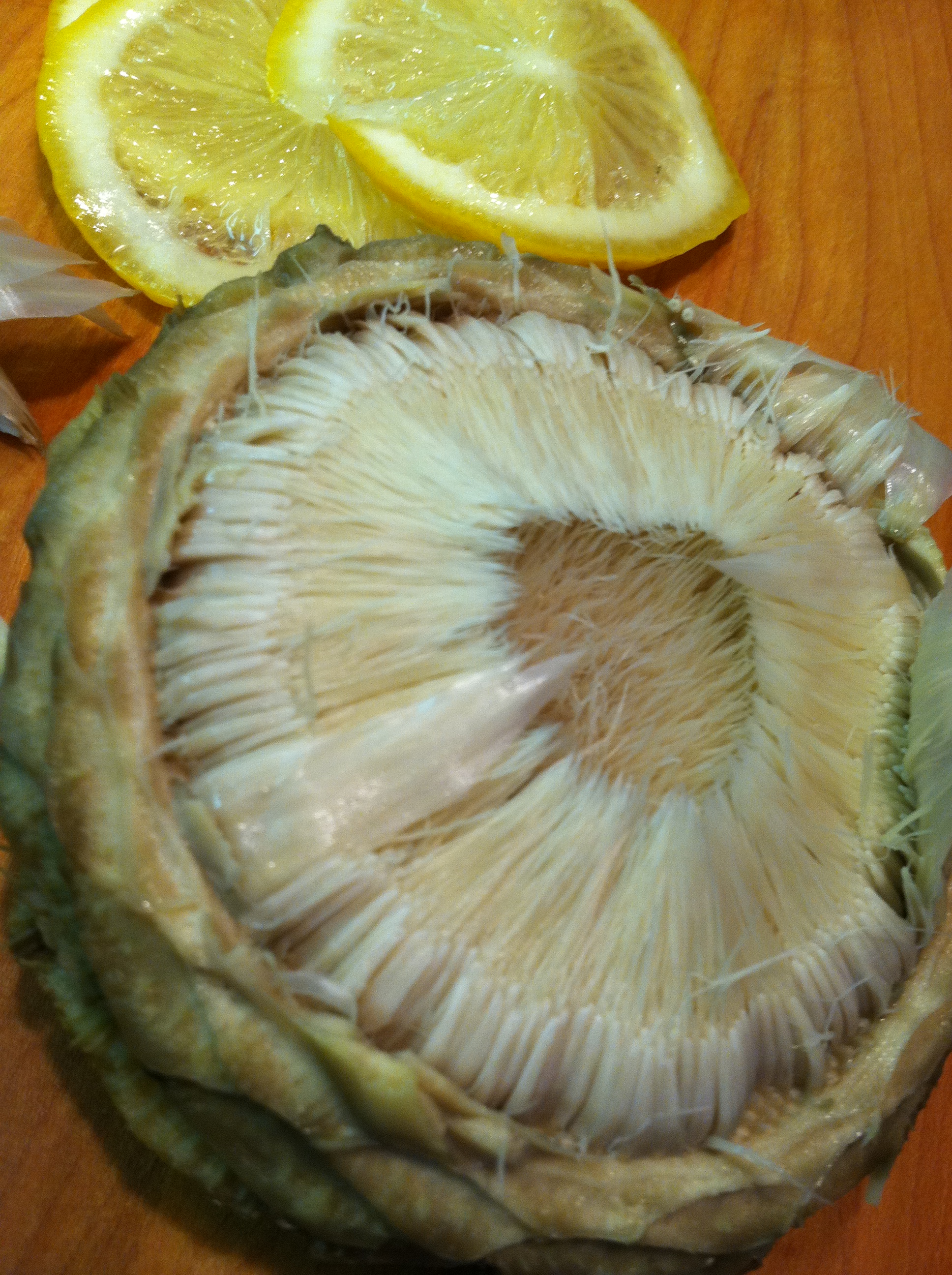
As you consume the leaves, the bottom will become visible. Once all the leaves have been consumed, you will find a “choke” in the very center. It is anchored by the bottom of the artichoke.

The "choke"
Notice how fuzzy it is; not leaf like at all

Scrape the choke away from the bottom; discard

The cleaned artichoke bottom

This is how it looks upside down

Cut artichoke bottom ready to use in salads, dips, etc.

You do not eat the choke because it is inedible and if you attempt to eat it, you will choke!

Scrape away the choke and eat the bottom. For this part, you will need a knife and fork.

You can always save it for slicing, mashing into Spinach Artichoke dip, salads or leave it whole and stuff it for a completely different dish.

If you have any leaves left over, scrape the flesh from the leaves with a spoon and make soup, salad dressings or use the artichoke scrapings in stuffing. There isn’t much shape to the scraping, use it like you would something mashed.

You can try making them the Roman way too. (Thanks, Barbara!)

Steamed Artichoke with Yogurt Sour Cream Dip and Crispy Kale Chips

Pickled Beets

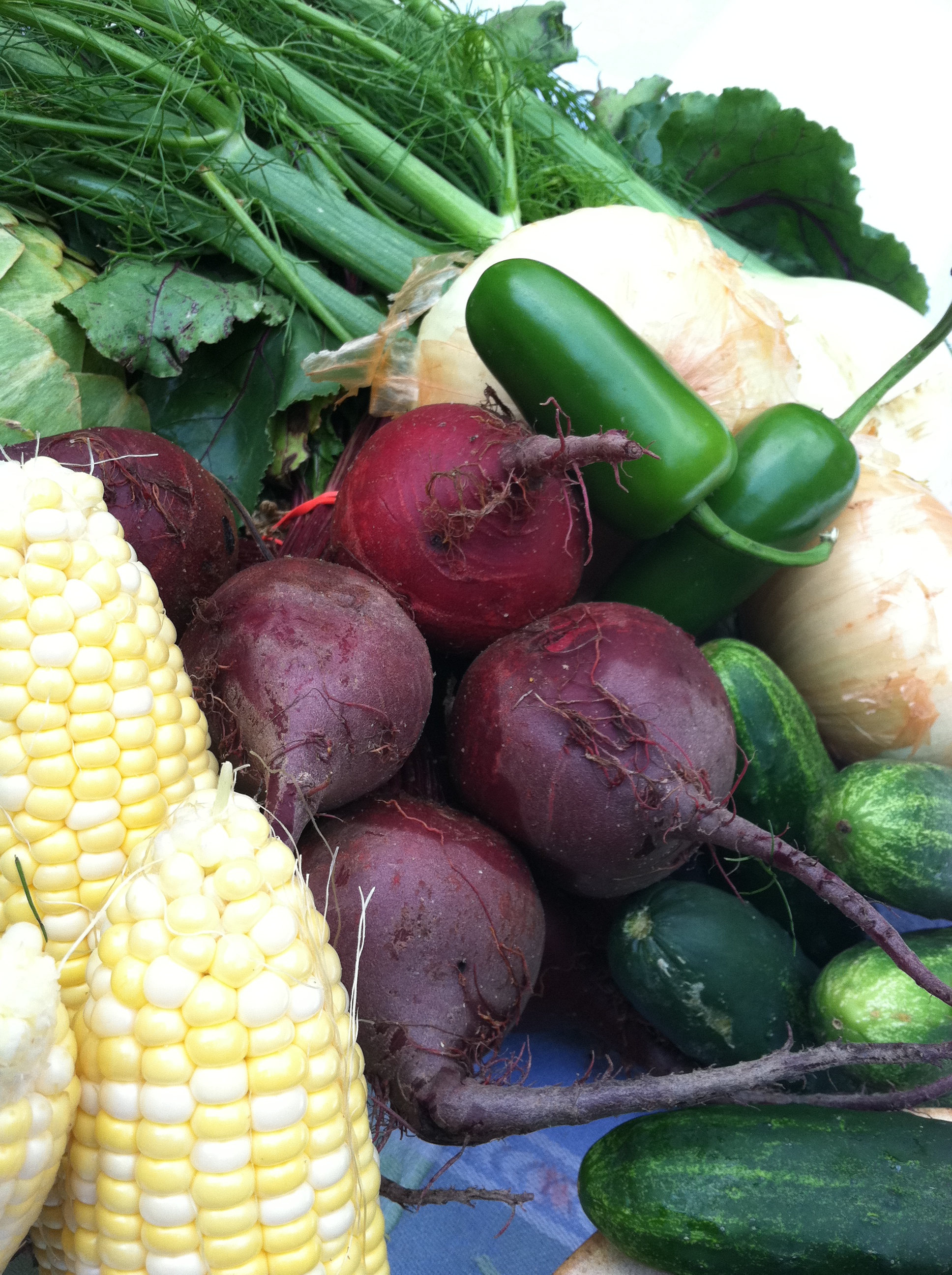
Pickled beets jumped out at me this weekend while at the farmers market. I brought home a beautiful bunch of beets with the greens, for just $2.50 this was a real steal.

I made a list of what I could do with them: Roasted beet salad with blood orange vinaigrette, Beet chutney, beets in butter with a splash of rice vinegar and in the end, pickled beets won.

I suppose I thought the bunch of beets was larger than it really was.

The first step in all the recipes is to cook them.

There are several ways, the best method and least messy is to steam them.

Here’s the thing about beets. They will “bleed” this lovely magenta color everywhere and leave a legacy of stains behind them.

Trick of the trade: Don’t cut, nick or peel them before cooking.

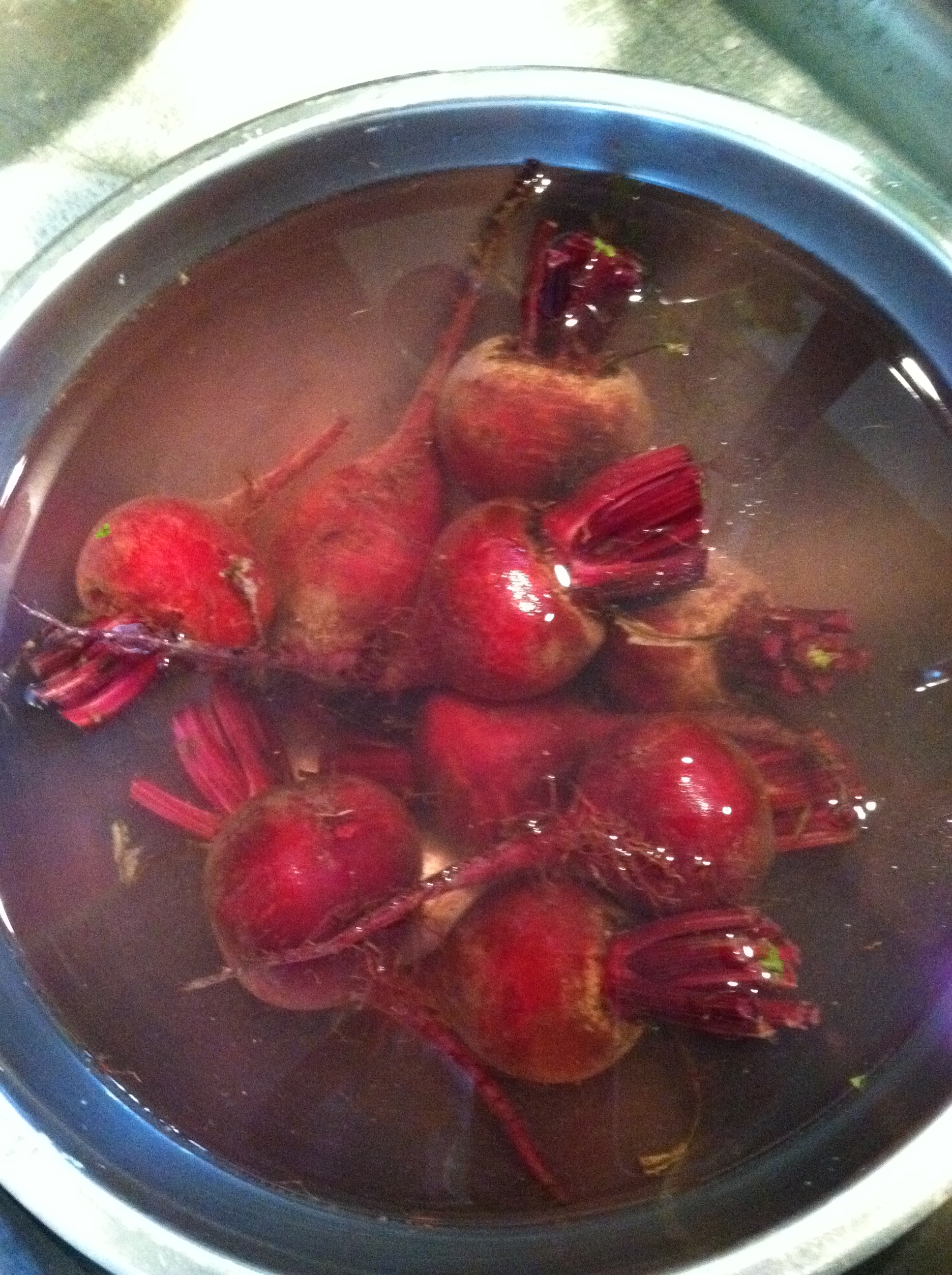
Trim leaving 1-2″ of stem; soak to remove soil and sand.
Do not peel or cut.

Trim the roots from the stems by cutting at least 1-2 inches of stem remaining on the root end. Leave the tap-root end in tact also, don’t trim it, just tuck it out-of-the-way.

Gently wash the beets to remove excess soil and sand. Don’t scrub them as they have a thin skin. Soaking for a few minutes is usually good.

Keep the greens. Set them aside in a large deep bowl of cold water. Remove any yellowish or ‘spotted’ leaves you wouldn’t want to eat.

Soak the leaves in cold water. Swish the leaves in the water gently. The sand will fall to the bottom of the bowl. Lift the leaves from the bowl without disturbing the bottom and repeat at least 4 times. You will be amazed how much sand and soil the leaves can hold.

Soak greens to remove dirt, and sand.
Change water 3-4 times

Lastly, rinse the leaves under running water, wrap in a towel, cover with plastic wrap or bag and store in the refrigerator until you want to use them in the next couple of days. That is another post.

How to use the beet greens is another post coming soon. The greens need to be cared for as soon as you remove the root ends so you don’t lose quality. If the greens look limp at first, they crisp up during the soaking process.

If you buy beets with greens and plan to use them later, separate the green tops and the root ends because the greens will pull nutrients, sugars and moisture from the roots during storage. (same with radishes, carrots, bulb onions etc.)

This recipe for pickled beets is simple and very flavorful. Some folks say they can eat the entire batch at once but that’s not recommended.

Steaming the beets takes the longest amount of time.

So here is how to make Pickled Beets:

Pickled Beets

  • Servings: 2 quarts
  • Difficulty: medium
  • Print

1 bunch of beets (8 medium size beets as close to the same size as possible)

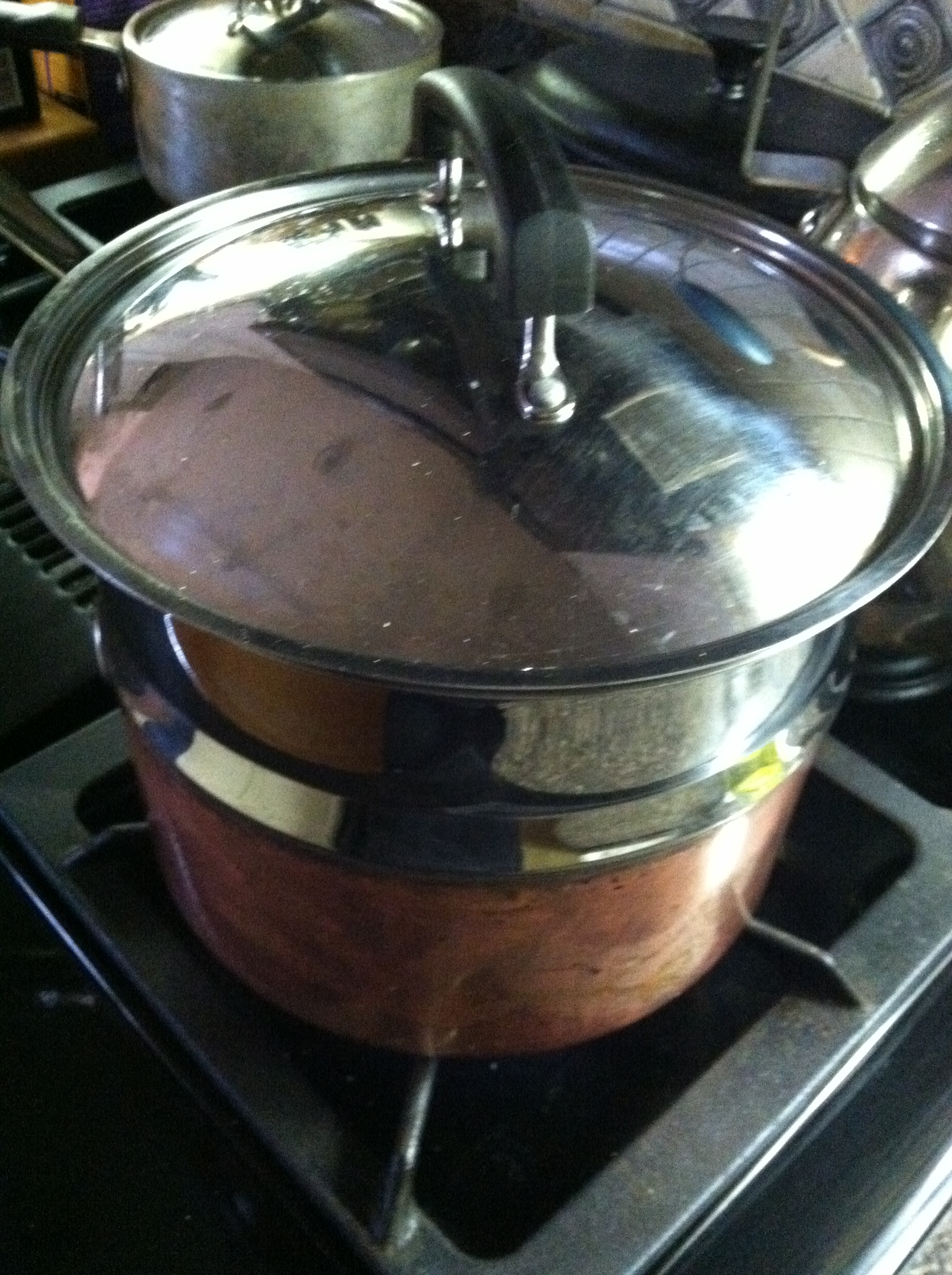
Steam the beets by placing them in a steamer pot with a tight-fitting lid. Use good quality water to steam the beets. You will use 1/2 cup of this water in the pickling brine.

Steam the beets until tender

Steam the beets until easily pierced with a paring knife, just as you test a baked potato for doneness.

Do not pierce the beets often or all over as they will “bleed”. You want them to retain the color. Just test the biggest ones.

When the beets are done,  save the water in the bottom pot and place the beets in a big bowl of cold water. Once they are cool, underwater, using your hands, slip the skins off.The skins slip off very easily.

Set the peeled beets aside in another bowl.

Peeling underwater helps keep your hands from staining magenta.

Using a cutting board you can bleach later, trim the top and bottom, then slice the beets into thick slices and place them back into the bowl.

Make the brine and have the jars or containers you are going to store the finished beets in ready to fill.

Pickling brine

  • 3/4 cup apple cider vinegar
  • 3/4 cup water from steaming pot with beet drippings
  • 2 tablespoons sugar
  • 1/2 teaspoon kosher salt (or any non-iodized salt)
  • 3-4 black peppercorns
  • 2-3 whole cloves
  • 2 bay leaves
  • 1 cinnamon stick
  • 1 small sweet onion sliced

Bring the beet water and vinegar to a boil, add the remaining ingredients, including the onion and return to a boil. Boil for 1 minute.

Pour the hot mixture over the beets and gently stir with a rubber spatula to ensure all the beets are coated.

Pour the hot brine over beets, place in storage jars, cool. Serve cold.

Gently place the beets and all the brine into the storage jar. Allow to cool then refrigerate.

The pickled beets are ready to eat after 24 hours. One of my favorite parts are the onions that get pickled too. Slightly crunchy and  what a taste treat!

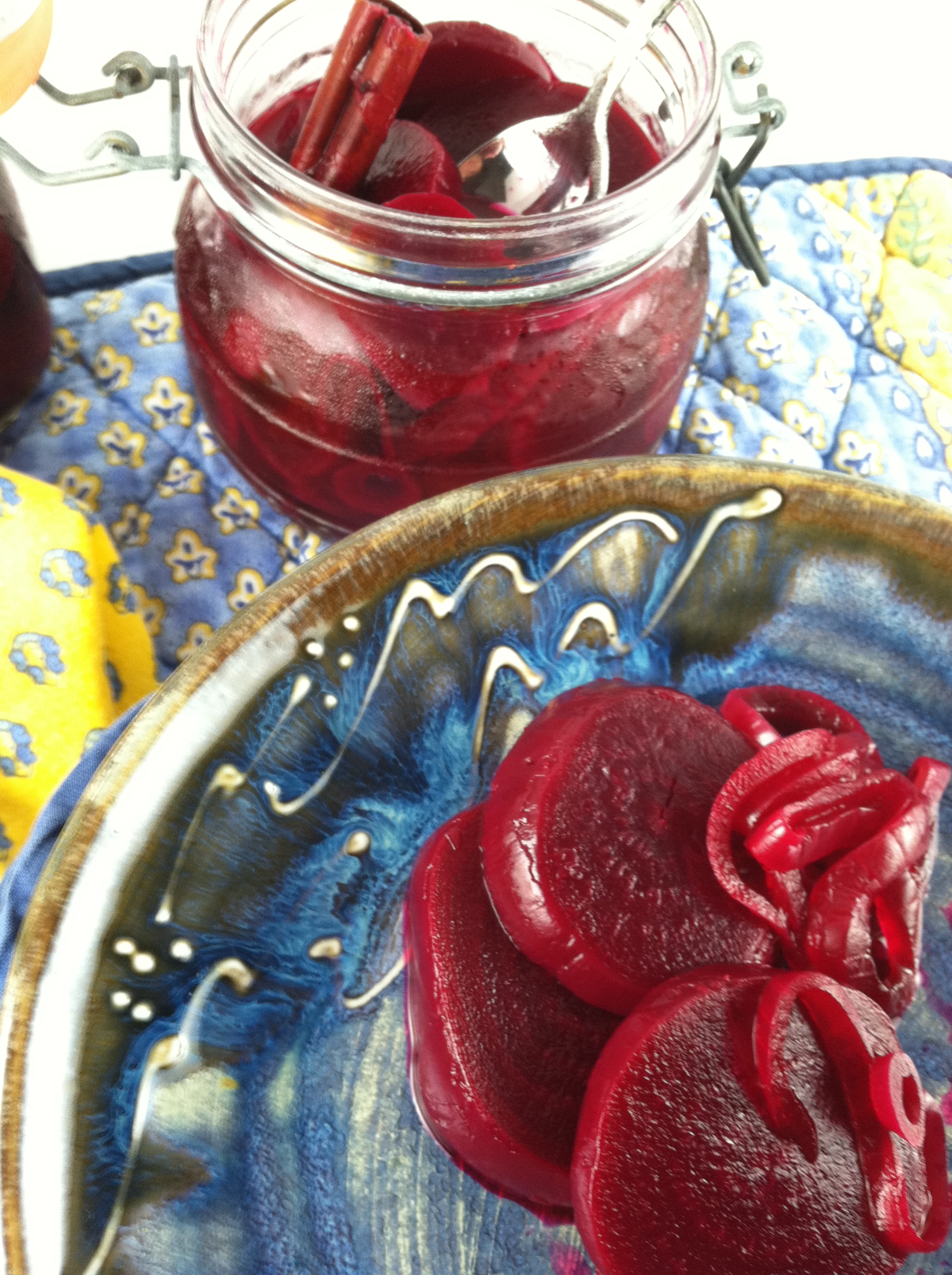
Pickled beets

Pickled Beets – I could eat the whole jar!

Serve very cold.

Roasted Duck, Kale and White Bean Soup

Since it is cold and raining outside, making a soup from roasted duck, kale and white beans sound good. It is time to use up what is in the refrigerator.

Roasted Duck, Kale and White Bean Soup

You will need

  • 2 tablespoons olive oil
  • 1/2 sweet onion, diced small
  • 2 carrots, peeled and sliced thin
  • 1 tablespoon minced fresh garlic
  • 1 small russet potato, peeled and diced small
  • 3-4 sprigs of fresh thyme
  • 1 quart chicken stock
  • 1 cup leftover roasted duck meat, diced small
  • 1 cup cooked or 1-15 oz. can of white beans, drained
  • 1 medium tomato, peeled, seeded and diced OR 1-15 oz can diced tomatoes
  • 2 cups roughly chopped and stemmed fresh kale
  • Salt and pepper to taste (Start with 1 tablespoon and adjust to suit your taste)
Carrots of many colors.

Carrots of many colors. (Photo credit: Wikipedia)

Saute the onions and carrots in oil for 3 minutes, add the garlic, potatoes and thyme, stir.

When the onions are translucent, add the stock and bring to a boil.

Add the duck and the white beans, bring to a simmer.

Add the tomatoes, simmer for 5 minutes.

Stir in the kale and simmer for 5 minutes more.

When the carrots and potatoes are done, adjust the seasonings with salt and pepper.

Serve with good bread and crispy kale chips.

Baked Crispy Kale Chips

If you love potato chips, you will probably love baked crispy kale chips too.

They are so simple to make, quick and nutritious, and you can’t stop eating them!

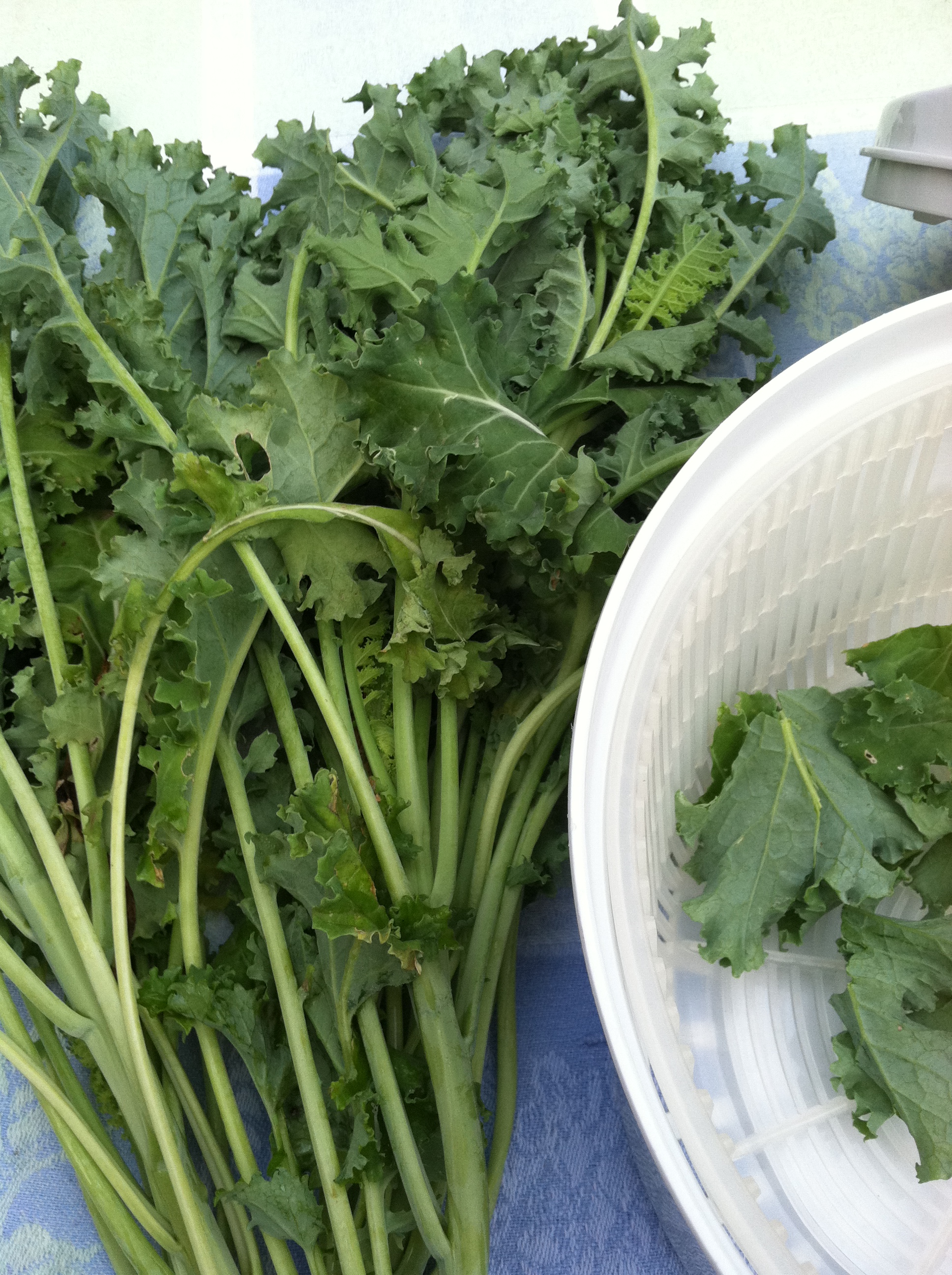
The shared bounty this week was baby kale.

ImageHere is how you make the baked crispy kale chips.

Preheat the oven to 350 degrees F. Line a baking sheet pan with parchment. Do not use an insulated baking sheet pan.

You will need:

  • 1 bunch fresh kale
  • olive oil
  • sea or kosher salt (do not used iodized table salt)

Prepare the kale.

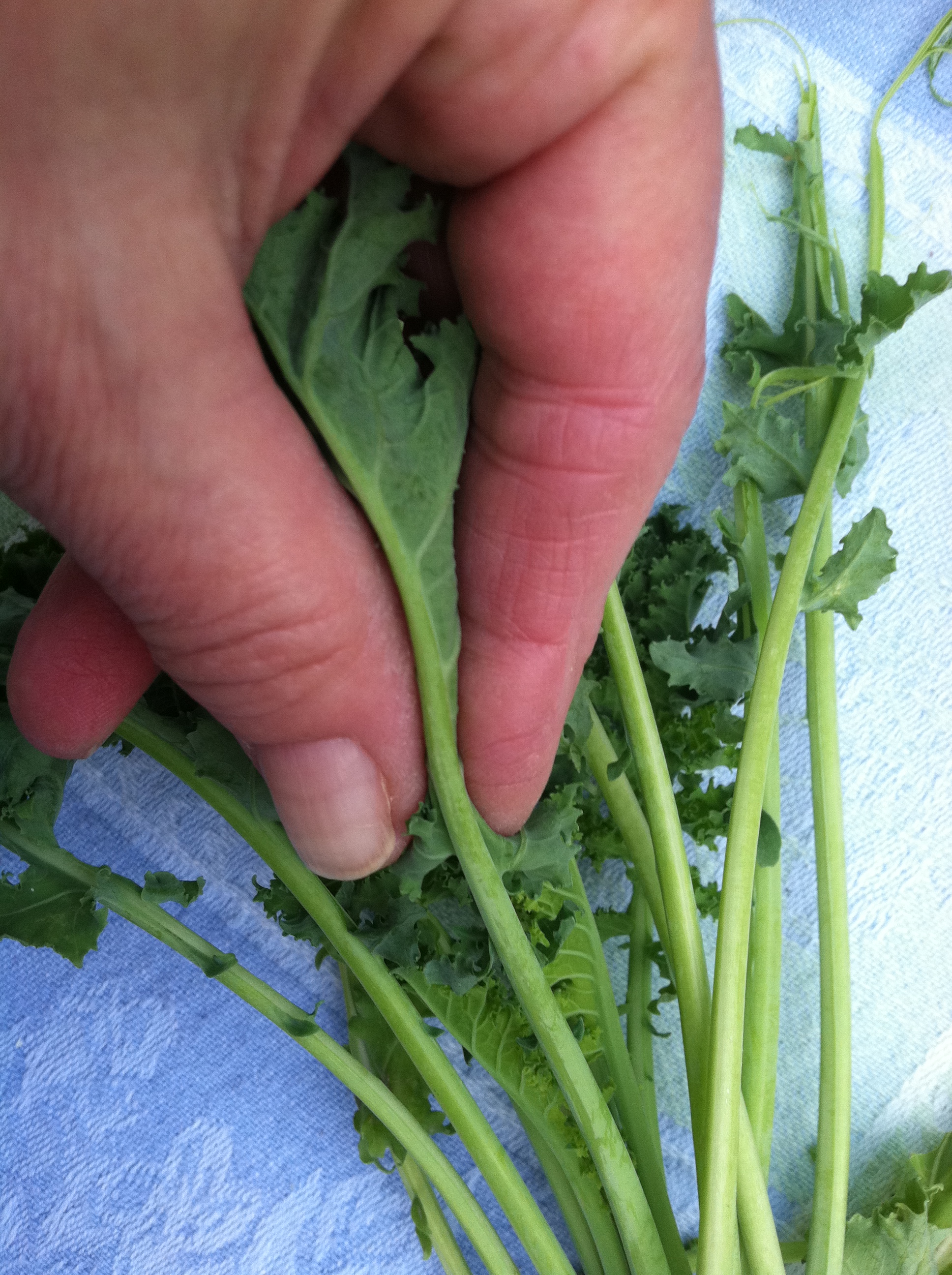
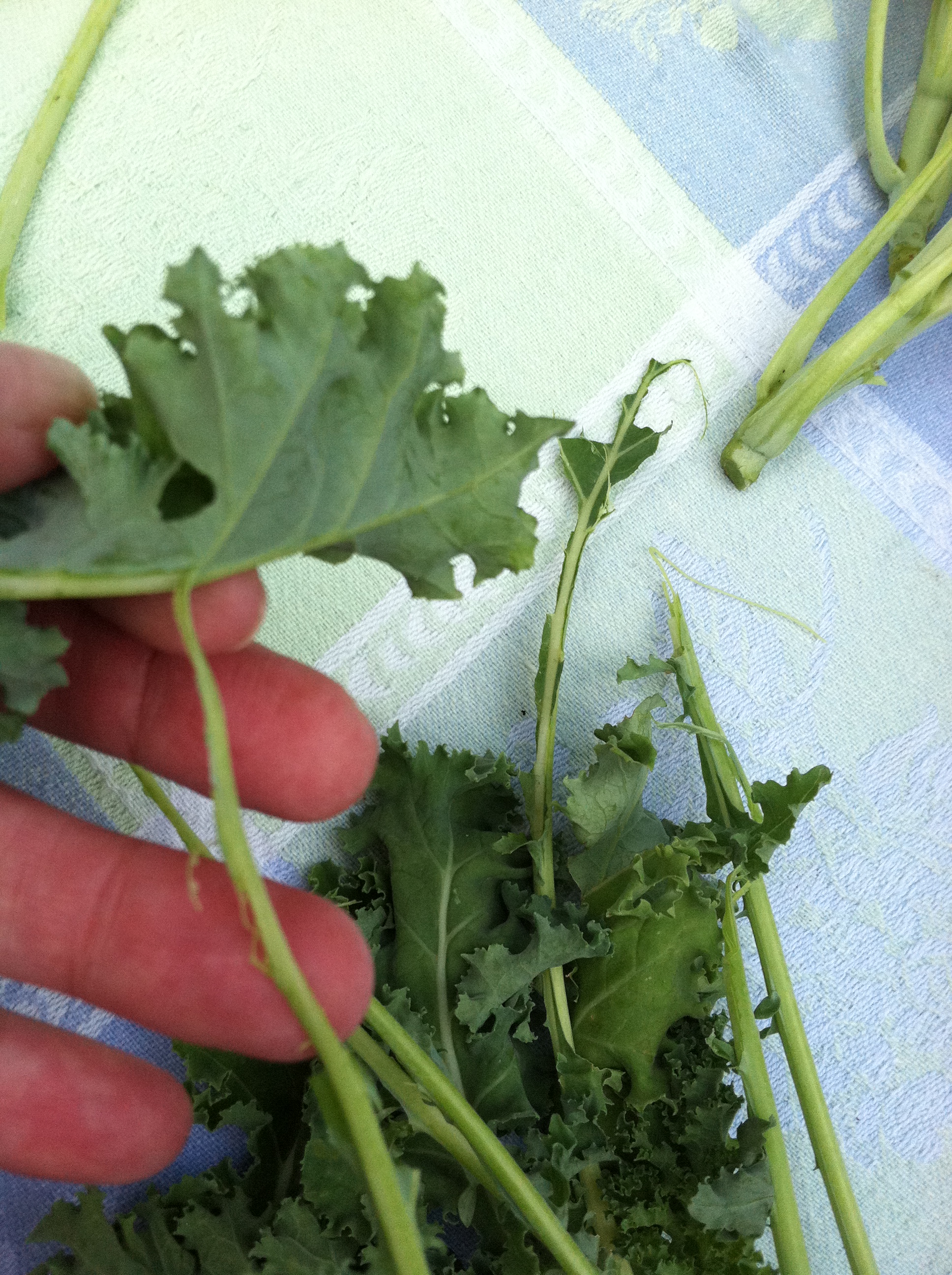
To make the chips, remove the leaves from the kale stems. Do this by holding the leaf and pulling the stem off from the back side of the leaf. This removes the stringy stem all the way down the leaf.

ImageImage

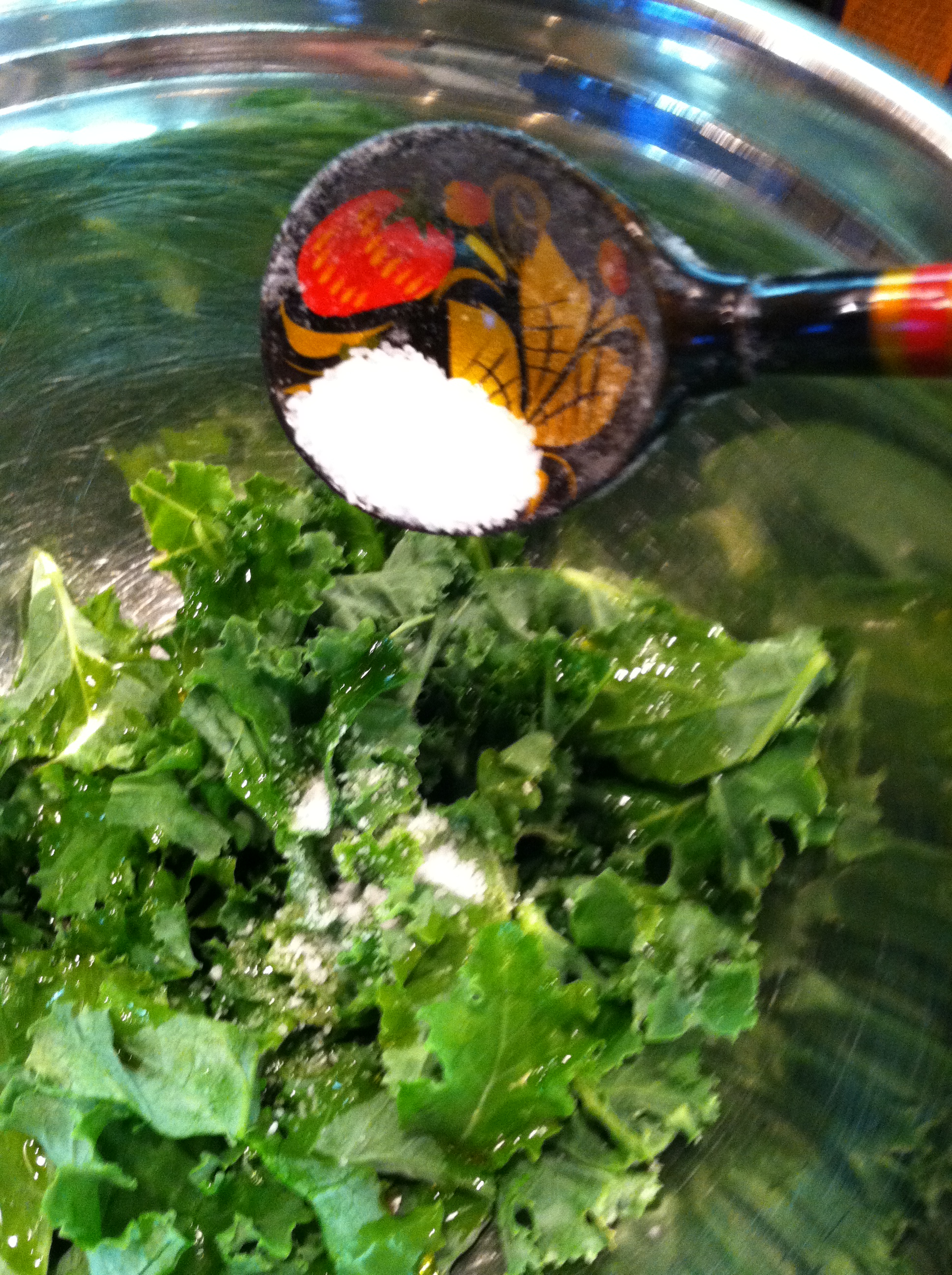
Tear the leaves into bite size pieces, but not too small. Wash and spin dry in a salad spinner. Place the kale in a bowl, season with a light drizzle of olive oil and a light sprinkle of salt.Image

Image

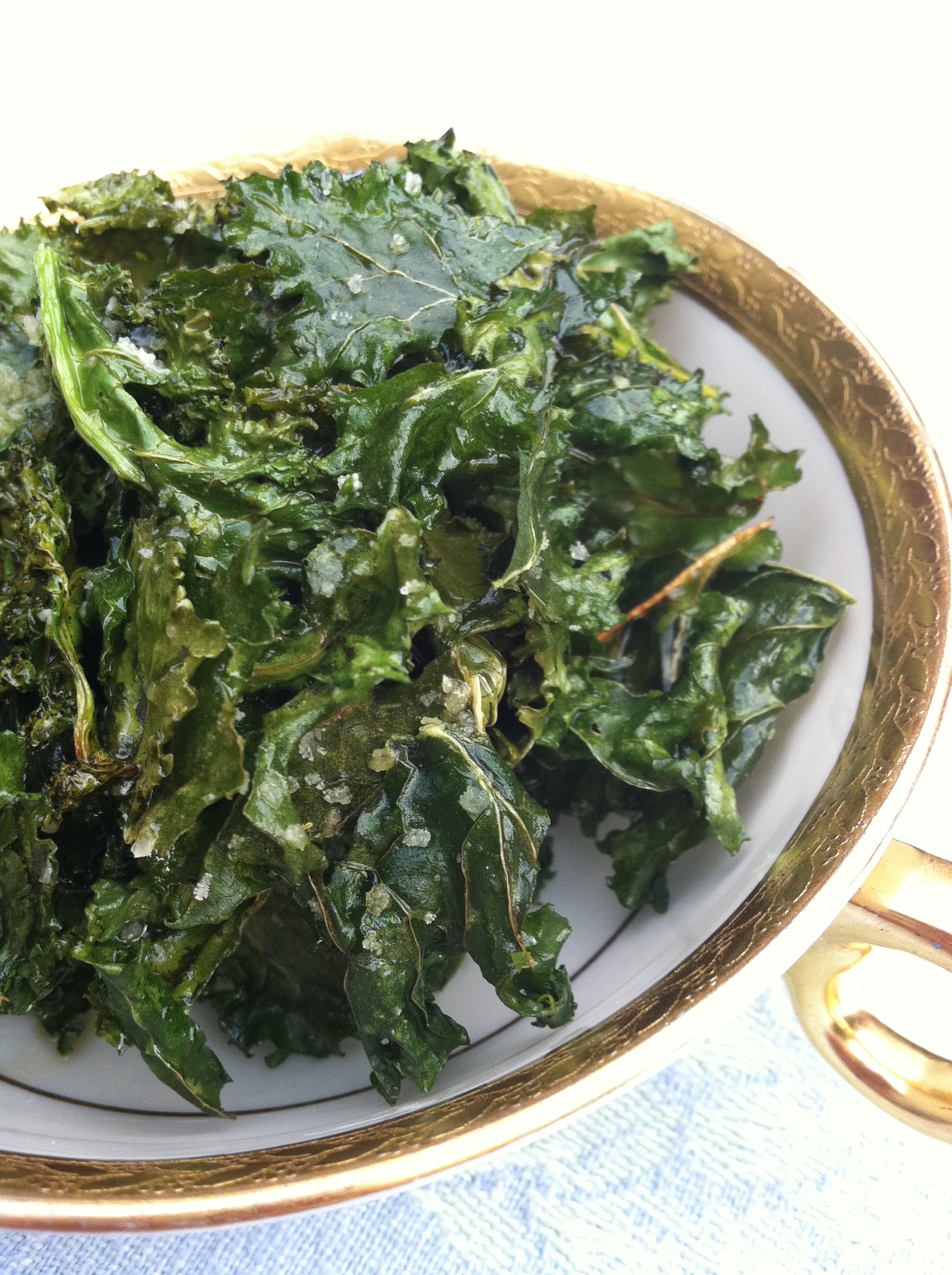
Spread the kale on the baking sheet and place in the pre-heated oven for 10-15 minutes. The younger and more tender the kale, the less time it takes to crisp.

When the chips are crispy and slightly brown on the edges, remove from the oven and serve.

If you live in a humid area, the chips may need re-crisping by simply placing them in a warm oven for a few minutes.

They have a lovely earthy flavor that complements many dishes. The chips make a great snack and are something different to put out at your next party.

Image

Spread the kale on a baking sheet and bake for 10-15 minutes

When taking a chefs certification once, I used the kale chip to compliment a dish of Lobster and Israeli Couscous with Grapefruit Emulsion. It was the perfect compliment as it brought  warm earthy “umami” flavors which really made the dish pop.