Eating Local

This is my interpretation of “eating local“:

Local Fare

Local Fare

The multi-grain bread was made by me and cooked on the grill. The sourdough culture I use is nearly 2 years old and came to me from a friend.

I grew the lettuce.

I made the goat cheese from milk from local goats. I could find out the names of the goats if I wanted. I buy the milk from our organic farmers market who bring it in fresh. Low-temp pasteurized, yeah buddy!

The tomato is from a farm just down the road whose family has been growing vegetables and operating a working farm on the land since 1775. These tomatoes are the first to ripen with any flavor, just perfect for the goat cheese!

So there you have it. Local food for lunch.

A Basic Fresh Goat Cheese: Chevre

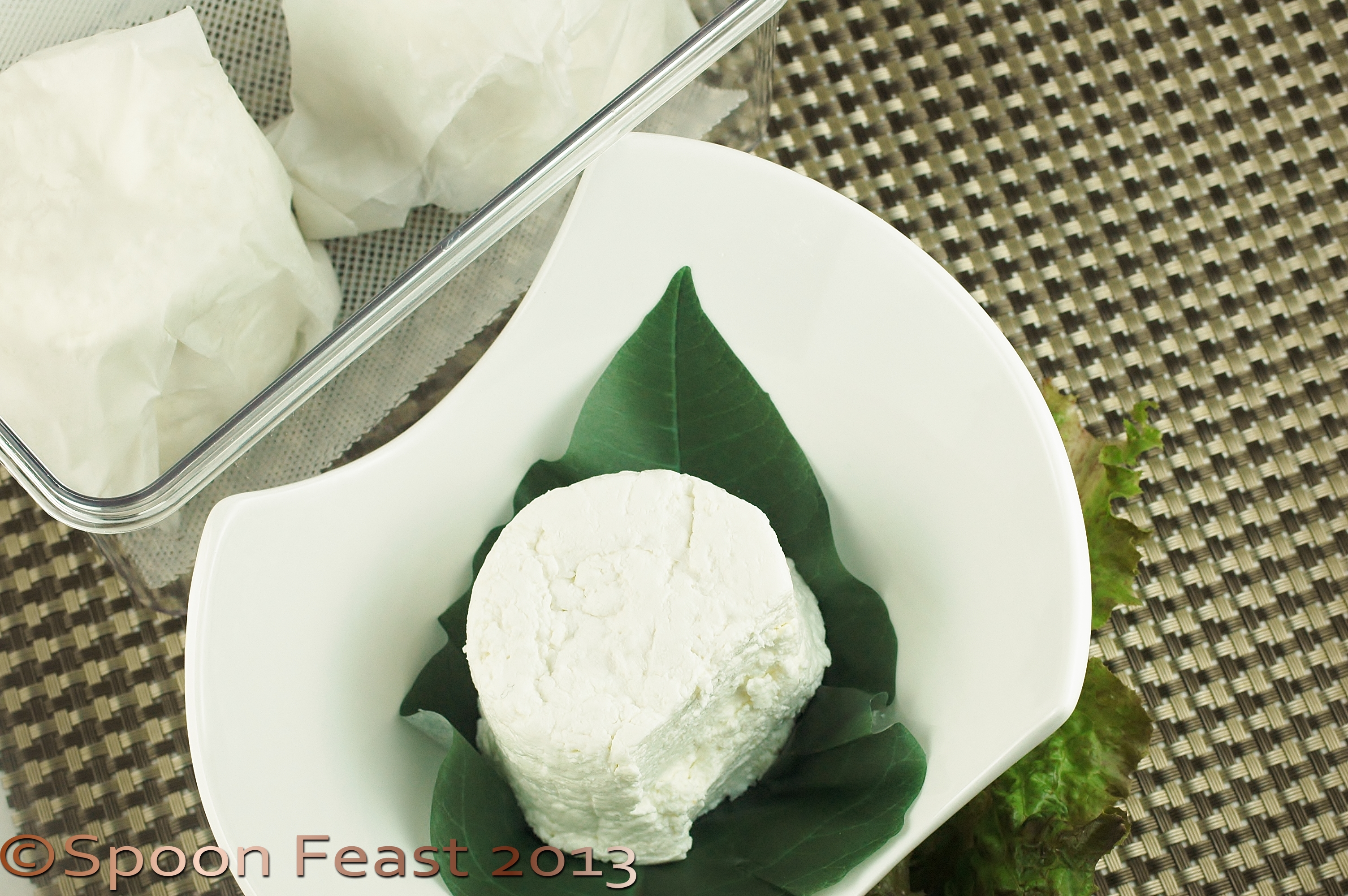
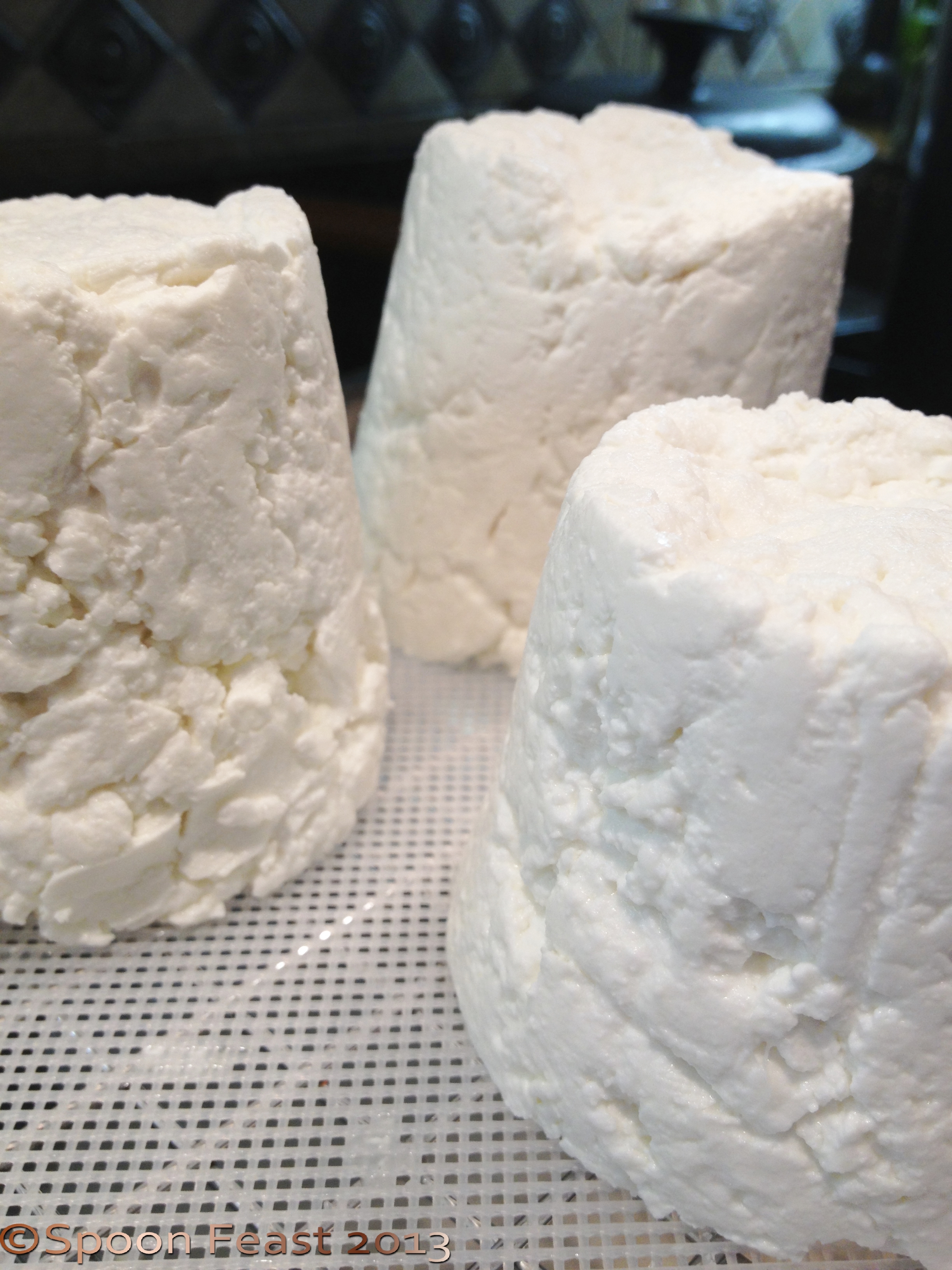
I made Fresh Goat Cheese!

Fresh Goat Cheese!

Fresh Goat Cheese!

Actually I was surprised at how quick and easy it actually was to make. Having the right equipment and getting good milk are key.

I get most of my supplies from The New England Cheese Making Supply which is a great resource for everything cheese.

Ever since I returned from the cheese making workshop a few weeks ago, my hands have been looking forward to getting into some milk.

First I had to find a source for good, clean, fresh goat milk for goat cheese and I still need to source Jersey cows for their milk for other cheese. For now, I have goat!

I LOVE the “barnyard” flavor of a strong goat cheese. While in France, I fell in love with Pouligny St. Pierre goat cheese which is a creamy smooth aged amazing bit of heaven to put into your mouth. It is my goal and intention to make some of that here, but obviously with the “terroir” of North Carolina.

OK, so here’s how I made this batch of Fresh Chevre:

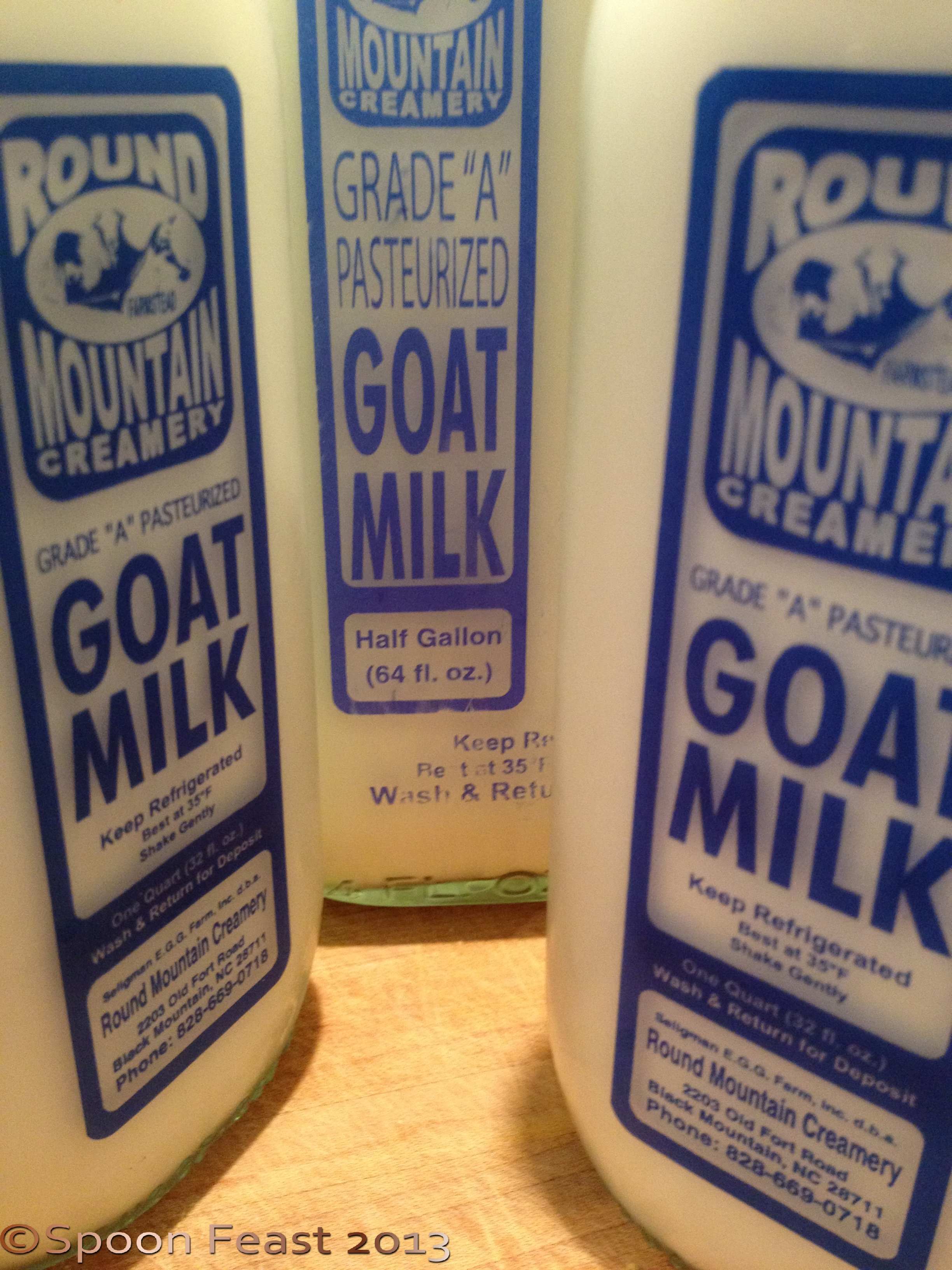
I started with one gallon of fresh Goat Milk from Round Mountain Creamery in Black Mountain, NC. The milk comes in glass bottles, which I love!

Order a batch of CHEVRE culture from New England Cheese Making Supply. One packet will culture one gallon of milk, so plan what you want to make. I never seem to order enough.

Additionally if your milk is pasteurized (PLEASE find milk that is low temp processed as Ultra-Pasteurized milk does not work for making cheese) you will need 1/4 teaspoon of calcium chloride per gallon of pasteurized, cold-stored milk.

In my next batch, I want to ripen it for a few weeks so I will be adding other cultures for different effects.

Equipment needed:
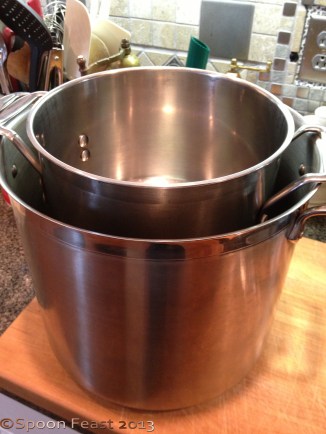
2 large pots; the small one holds 1 gallon easily. I can use the larger pot for larger batches. Just need to find a pot to nest it inside of for a reasonable price.

2 large pots; the small one holds 1 gallon easily. I can use the larger pot for larger batches. Just need to find a pot to nest it inside of for a reasonable price.

2 large stock pots: the one the milk goes into needs to be stainless steel (Non-reactive)

The second one needs to be large enough to make a double boiler or bain marie, the first needs to nestle into the large one so you can heat the milk easily and slowly.

A good thermometer: You NEED to be in control of temperatures, not too high or too low.

Cheese Muslin, butter muslin, closely woven cheese cloth– the normal loose woven is way too loosely woven. Invest in a yard or two, wash it and use it over and over.

Use cold water to remove any cheese particles, then hand wash. Rinse and boil it in a pot with some baking soda for 5-10 minutes, rinse and hang to dry. It will be fresh and good to go for the next round of cheese!

Here is how to make the cheese:

Wash and sanitize everything!! Have a pot of boiling/simmering water to drop cheesecloth, molds, tools into to sanitize them before they come into contact with cheese.

Pour the milk into the pot, place it over the water (about 80°F). Warm the milk to 72-78°F.

Please be aware that this will feel cold to the touch, this is not warm milk, just milk warmed from refrigeration to 72-78 degrees.

Open 1 packet of the Chevre culture and sprinkle it over the top of the milk. Allow it to hydrate for 2-5 minutes before stirring it into the milk.

Goat milkAdd 1/4 teaspoon calcium chloride is using cold-stored pasteurized milk.

Allow this to sit undisturbed for 6-12 hours. This is the hardest part as you want to go see what is happening and you want it to hurry up and do its thing. But be patient, it takes time.

This batch sat for 8 1/4 hours before testing the cleave of the curd. When it is ready to test, you should see a thin layer of whey over the curd and a slight separation from the sides of the pot.

Testing the cleavage break

Testing the cleavage break

Insert a knife or a spoon, slightly on the surface, the curd should cleave clean and the whey that floats into the separation should be clear.

Carefully lift the curds with a strainer into a colander lined with cheese muslin. Be sure to place the colander over a large bowl to catch the whey.

Gently fold the cheesecloth over the curds and allow them to drain for 6-12 hours again, depending upon your desired finished texture. Less time for sweeter cheese, more for tangy cheese. The longer the whey stays in contact with the curd, the more tangy it gets.

You must be very careful NOT TO PRESS the curds. Allow them to drain gently at this point. The whey should be clear dripping, if it is cloudy, you are losing milk fat and your cheese will be dry.

You can also put it into molds at this point if you are using a mold. It will result in a smoother sided end product.

Control the room temperature and the curd temperature to maintain as close to 72-78°F as possible. I let the curds form while still in the bain marie as the water in the host pot will maintain the temperature of the curd mass.

I usually let this happen overnight while sleeping. The next day is such a surprise!

Unfold the cheesecloth and reveal your fresh cheese! Now it is time to salt. For this batch, 1.5-2 teaspoons of non-iodized cheese salt.

You can consider the cheese finished at this point but this is also where you can be a bit creative.IMG_6161

As you fold in the salt, also consider adding other flavors like herbs, minced garlic or shallots or onions, crushed peppercorns, ash, use your imagination.

IMG_6171Store your fresh goat cheese in a bowl or tub and consume within 10 days. Refrigerate the cheese, but allow it to come to room temperature before serving to allow all the wonderful flavors to come through.

A Word About Seasonings:

Please use dried seasonings and herbs due to the risk of bacterial contamination that may be introduced by using fresh herbs and seasonings. If you use fresh, be sure to eat the cheese soon. It can’t hang out for a while like plain cheese.

A Word About Food Safety:

The temperature the milk gets processed is in a temperature range that is smack dab in the extreme temperature danger zone. Everything you use needs to be “sterilized” in the boiling water bath before it comes in contact with the curds or milk. I cover my curd formation and the curd draining with a glass lid (so I can see what is going on!) to prevent anything falling or flying into the curd mass.
Since my kitchen is FULL of wild yeast from all the bread I make, the introduction of wild yeast is totally possible. This could have a spoiling effect on the curd. This is another reason I boil things before they touch the milk/curds.

The hardest part is WAITING! I strongly suggest you get to a farmers market and buy some goat milk and try this. It is easy, very tasty and you will feel so good about making a tasty goat cheese you’ll make more.

If you do make any cheese, take notes on the temperatures, conditions, milk etc so you can repeat successful processes. Most of all remember DO NOT USE Ultra-Pasteurized milk!

So that’s Fresh Chevre in a nut shell. There is a lot of information out there on making cheese. I’m really just starting and am looking forward to making more!

Please let me know how you do if you make some fresh Goat Cheese!

A Cheese Making Workshop

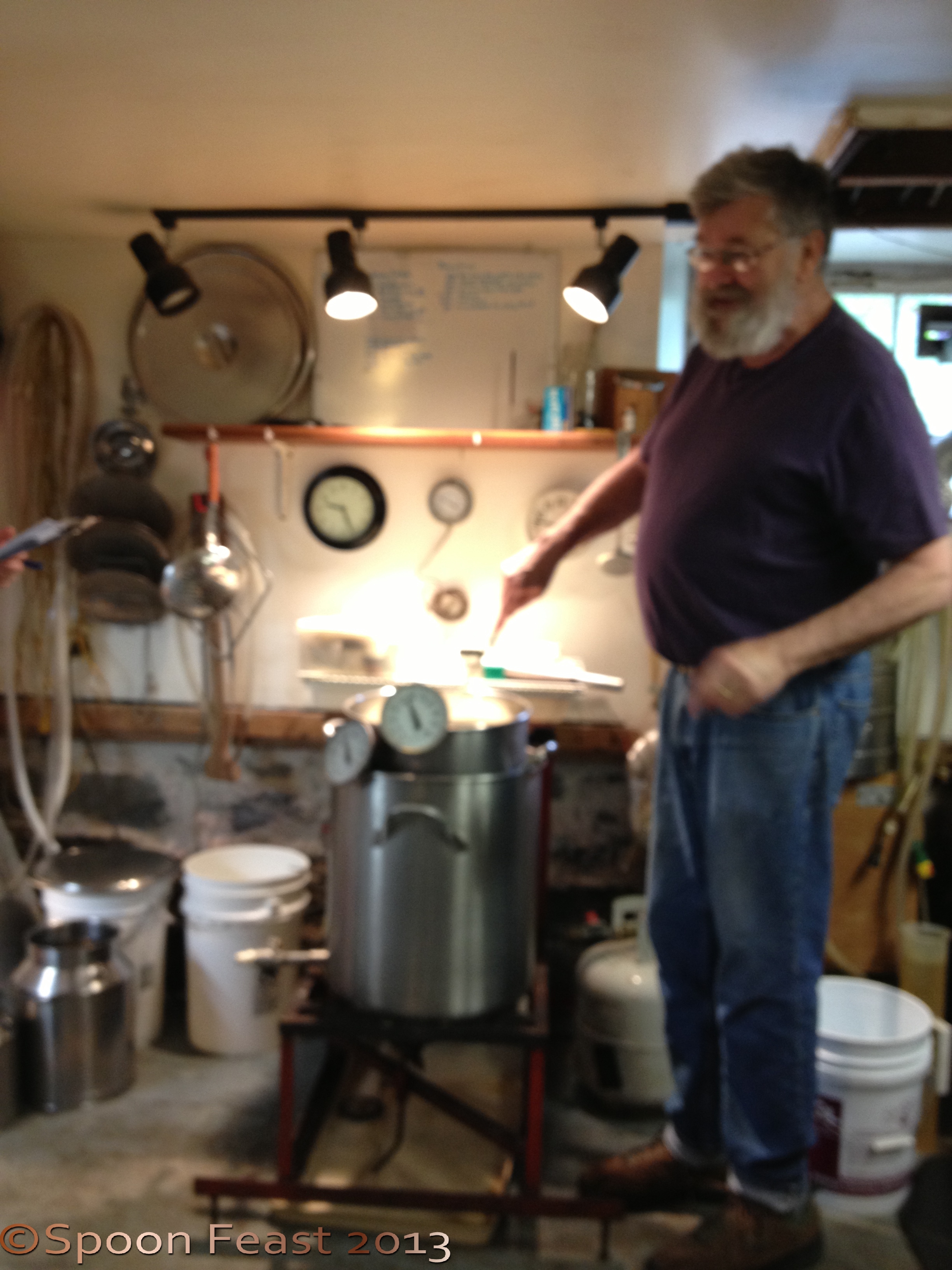
This past weekend two of my colleagues and I got to travel to Shelburne Falls, Massachusetts to take a Cheese Making Workshop conducted by cheese master Jim Wallace.

Master Cheese Maker, Jim Wallace

Master Cheese Maker, Jim Wallace

We learned about the processes of making Cheddar, Camembert and Vacha Toscana, about a lot of the science, theory and instinct involved in cheese making as well as an evaluation of the cheese each of us brought for him to trouble shoot.

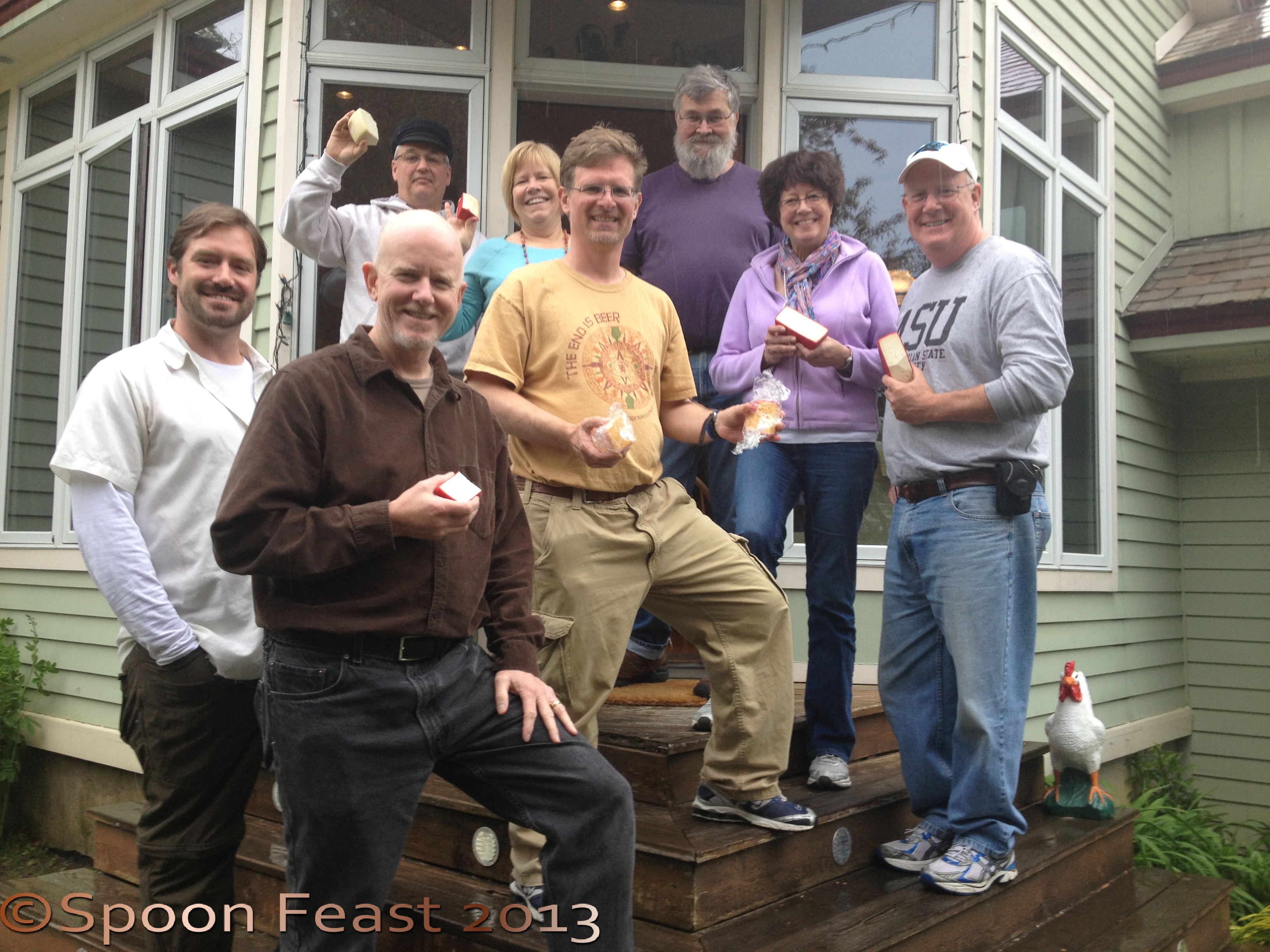
We had a great group: Seth from Vermont/New York, Martin from St. Augustine, Michael and Belinda from Pennsylvania who want to buy a boat soon and sail the eternal summer; two of my colleagues and myself.

Our Group

Our Group

Each of us have tinkered with cheese for a few years and this workshop allowed us to take our skills to another level. I hope we can stay in touch somehow, I want to hear about the cheese making adventures at sea!

Jim’s cheeses are not only beautiful but very tasty.

Cheese in the cave

Cheese in the cave

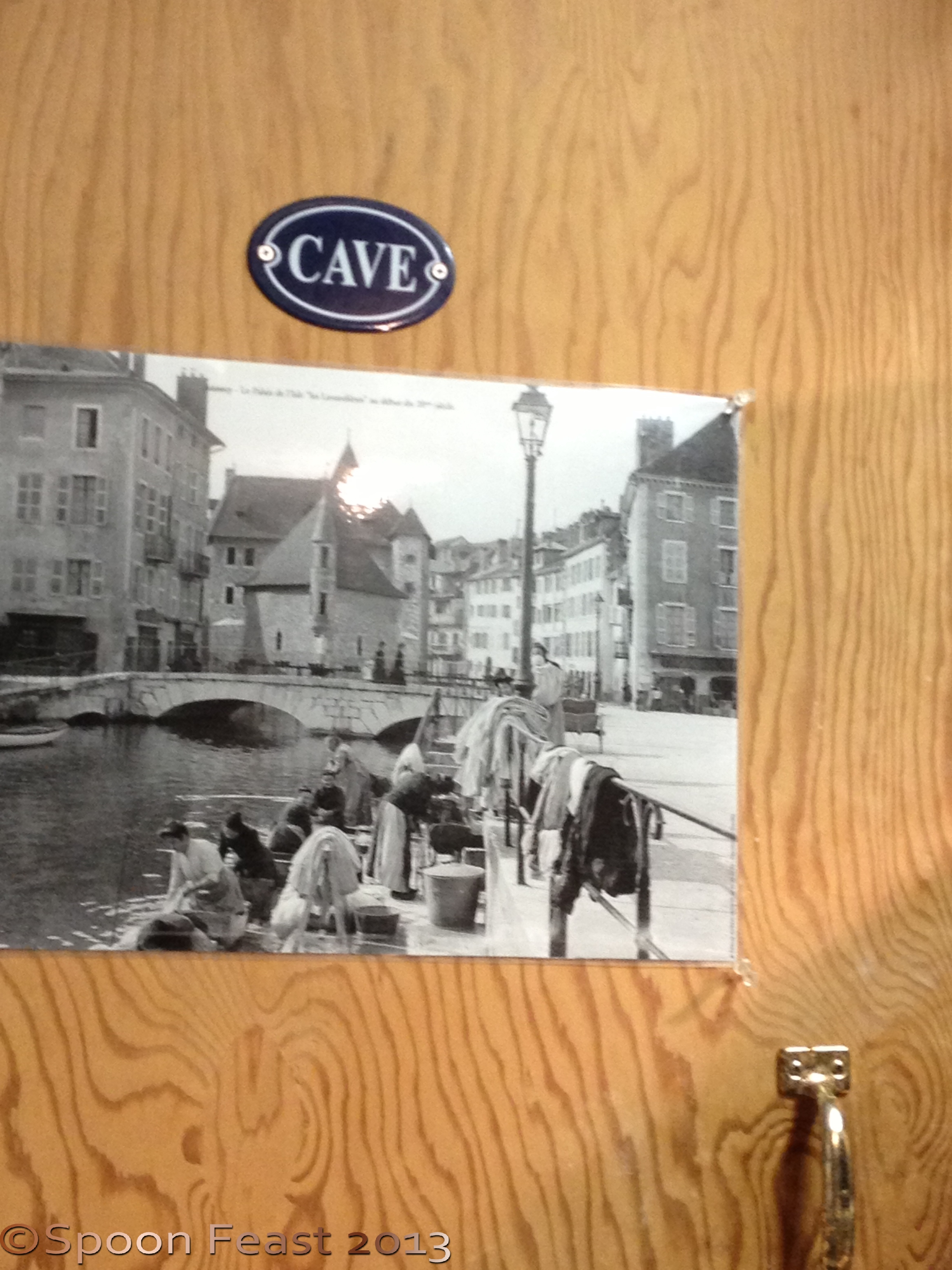
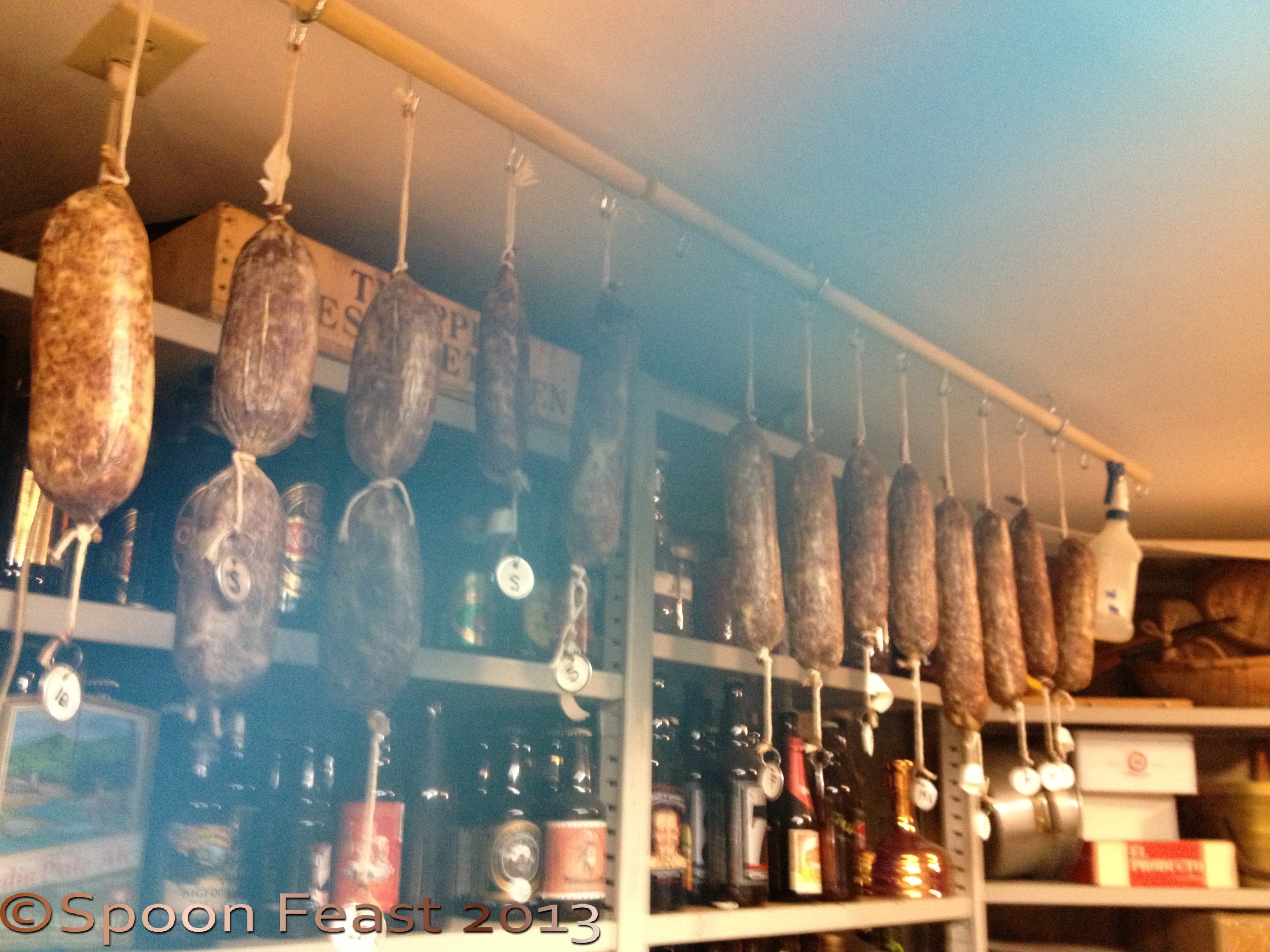
His “Cave” and drying rooms are places I could spend hours.

Cave door

Cave door

The drying room

The drying room

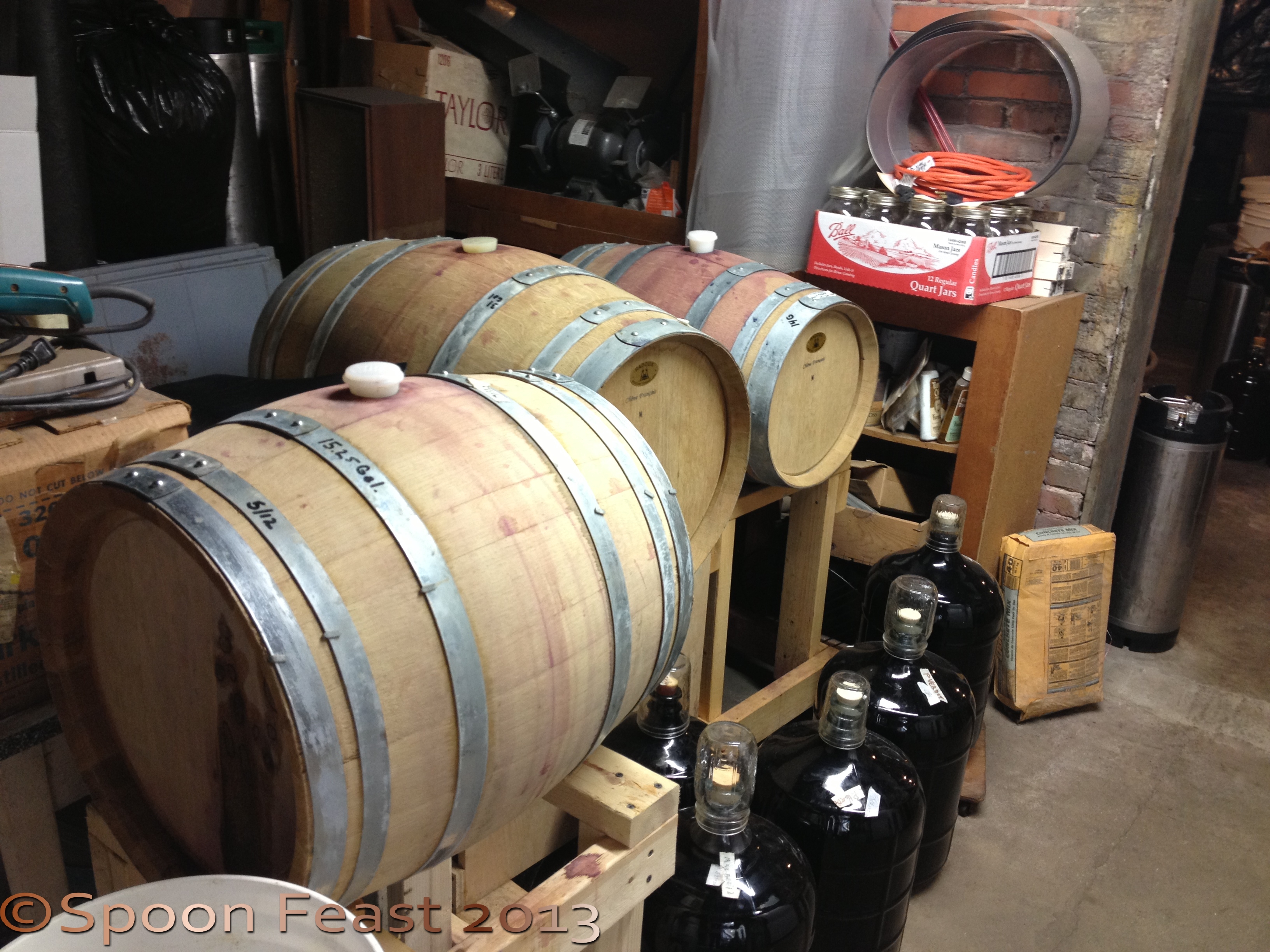
In addition to making cheese, Mr. Wallace also makes some lovely wine and impressive beer.

Wine making

Wine making

The workshop began at 9AM with the introduction of milk, cultures, rennet, stirring, curd cutting,

PH lab

PH lab

draining, molding and finally pressing.

I was amazed how easy it seems to be to make Camembert. Can’t wait to try it!

Jim’s lovely wife Robin made lunch for us both days. The table was full of lively conversations, great food, cheese, wine and beer. (Jim told us we must have been a special group as he doesn’t usually share his beer and wine with classes. So if you go, don’t expect it!)

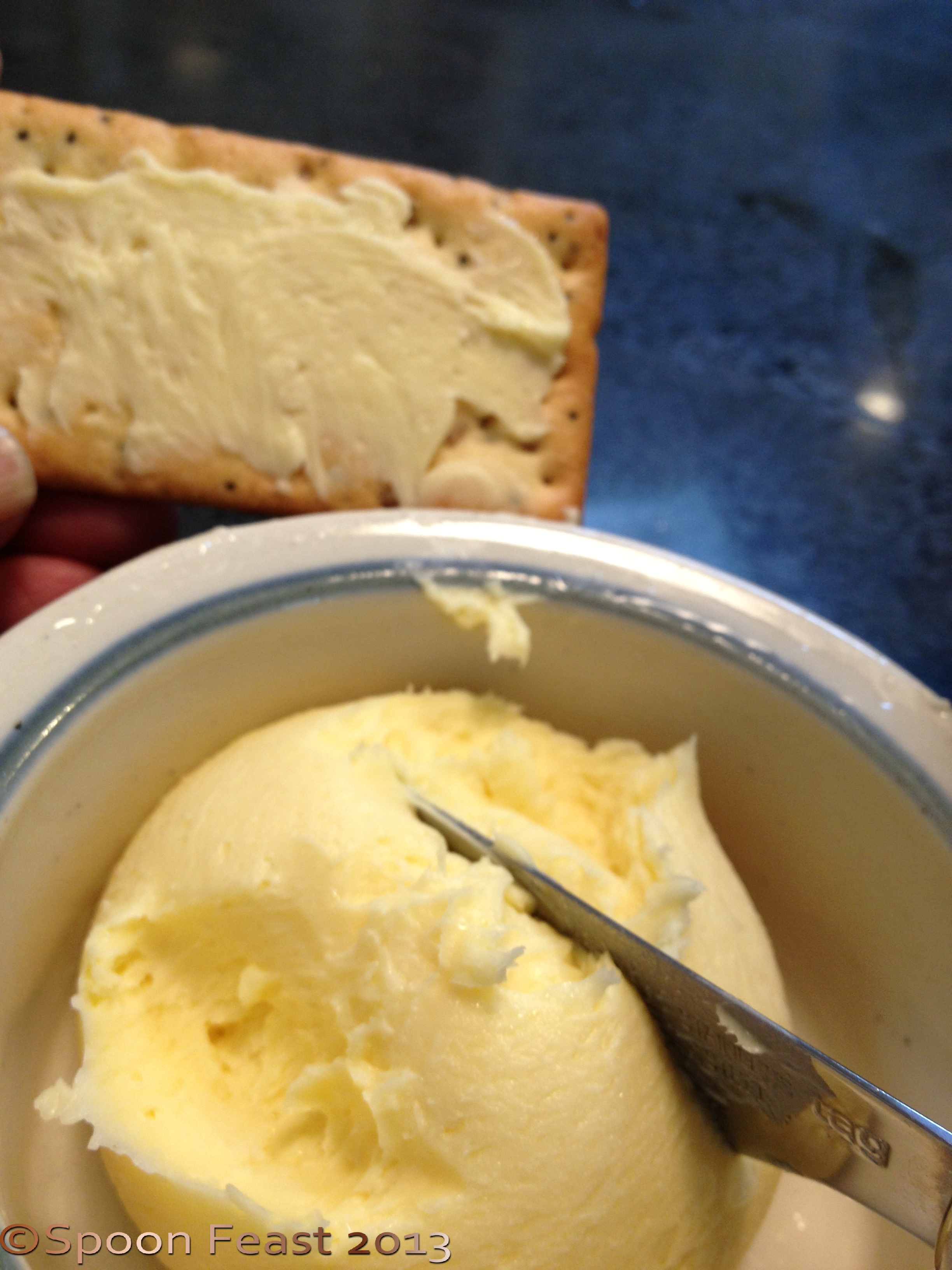
Sunday morning, Robin and Jim were making fresh butter from the butterfat that floated to the top of the whey from Saturdays cheese making.

Really fresh butter! Boy did that butter taste good!

Really fresh butter and you know how much I love butter!

Really fresh butter and you know how much I love butter!

Both Jim and Robin were professional photographers who traveled and sold their work at shows. This resulted in an amazing collection of original art work from photographs of their own and others, sculpted art pottery, bead work, and dinner/serve ware style pottery. It was great to be in the presence of so much creative energy.

Jim works with Ricki Carroll of The New England Cheese Making Supply on development, workshops, recipes and website.

If you have any interest in cheese making, I highly suggest you get in contact with Jim to see what he has coming up. He has limited space so make you plans early.

You can contact him at jim@cheesemaking.com.

He can give you the cost, dates and availability of up coming workshops. I would say these aren’t for someone who has never made cheese before because he gets quite technical. If you never made cheese before, find a local class that teaches mozzarella, marscapone, lemon cheese, cream cheese and other quick, easy fresh cheese.

If you like the process, play with making a couple aged cheese, THEN go take a workshop from Jim.

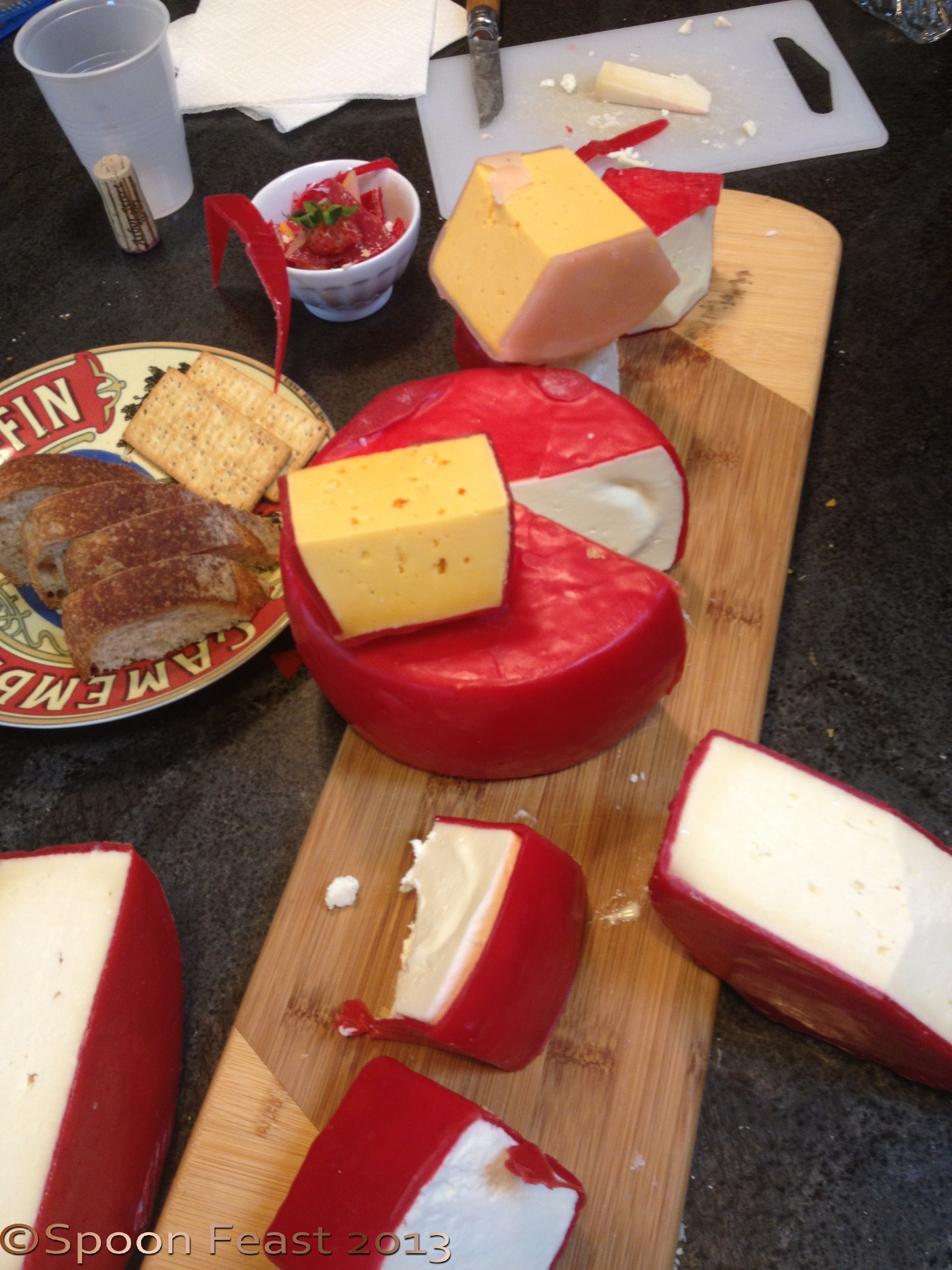
These are the cheeses that everyone brought for the evaluation session

These are the cheeses that everyone brought for the evaluation session

Bring your cheese with you and he will tell you what you did right, what went wrong and give great advice about your cheese. Everyone got a lot out of this session.

I will create posts on the cheese we made and the cheese we make now that we are back from the workshop.

It will be quite fun and interesting to get to make these. The challenge will be in allowing them to ripen and age enough before cutting into them.

Some age for a couple of weeks, and others several months, We think once we get the process started, we can have a perpetual flow of amazing artisan and farmstead cheese.

Watch for these posts over the summer!

If you take a workshop from Jim, let me know what you get to make as his workshops are all different. We guess it depends upon what his cave needs and his social schedule as he always brings cheese.

You’ve got to pace yourself though, it is easy to get cheesed out if you don’t normally have a lot of cheese in your diet.

Let’s make some cheese!

Aged Cheddar

Aged Cheddar

Almost ripe Camembert

Almost ripe Camembert

Aging Vacha Toscana

Aging Vacha Toscana

Jim's cheese we tasted at lunch. The Bavarian Feta (rectangle cheese top left) is my favorite!

Jim’s cheese we tasted at lunch. The Bavarian Feta (rectangle cheese top left) is my favorite!


Jacques Pepin: How to Debone a Chicken

The best video I have ever seen on how to do this process.

Buy some chickens, do it and practice!

Cooking time is about 2 hours at 350°F is a roasting pan.

Place a small bit of stock in the bottom of a pan with a couple of chopped carrots, onion and celery for flavor.

Use your favorite stuffing. When practicing, I make and donate the cooked chickens to Ronald McDonald House so we don’t get sick and tired of eating skills practice.

As Jacques says, you can do this with all birds.

What fun!

Wild Mushroom Arancini with Swiss Chard and Roasted Garlic

A miracle happened at our house recently. We had left over wild mushroom risotto. We have no idea how it happened but it is the only way to get to make arancini.

Mushroom Arancini

Mushroom Arancini

Arancini is made from left over risotto, breaded and sautéed to crispy golden brown.

Arancini 002

Arancini 002 (Photo credit: Wikipedia)

To go along with the arancini, I “water-sauteed” a bunch of red Swiss chard, added some roasted garlic, salt and pepper and 2 drops of liquid smoke – Yum! A lovely contrast of flavors that blend and contrast amazingly well with the arancini.

Here is how to make Arancini:

Use any left over risotto, in this case we had wild mushroom risotto.

Shape the risotto into equal size balls, flatten sightly and then dip them into a standard breading procedure of flour, egg wash, bread crumbs (or ground nuts, which would be amazing!)

Pan fry the arancini in a small amount of oil. Do this over medium heat so the inside of the arancini can get good and warm.

Once one side is golden brown, flip them over and brown the other side.

English: Swiss chard (Beta vulgaris) with vari...

English: Swiss chard (Beta vulgaris) with variously colored stems on sale at an outdoor farmers’ market in Rochester, Minnesota (Photo credit: Wikipedia)

To make the Swiss chard:

Wash the leaves and remove the stems. Reserve the stems for another use.

Chop the chard into 1″ ribbons.

Heat a saute pan to hot, do not add any oil. This is going to be a “water-saute”.

When the pan is hot, add the chard all at once, allowing whatever water still on the leaves to remain. “Water-saute” the chard until it wilts. Turning in the pan as the water evaporates.

Add a heaping spoonful of roasted garlic and a few drops of the garlic oil to the pan, stir gently to incorporate.

Season with fresh ground pepper, salt and 2 drops of liquid smoke (totally optional!)

Once all the liquid has evaporated, you are ready to serve.

Place a mound of the Swiss chard on the plate, place a wild mushroom arancini on the mound, garnish the plate with fresh tomato wedges, sliced fresh mushrooms and roasted garlic.

Simple, elegant and rich in flavors.

IMG_5500

Sorta “Socca”

Socca are flat breads from the Nice area of France. Made with garbanzo bean flour, cooked in a screaming hot oven until they blister and brown, sprinkled with salt, pepper and sometimes a bit of olive oil, these tasty bits are simply delicious.

I call these “sorta socca” because I use different kinds of flours and add seasonings and herbs to the mix before cooking. Traditional socca are simply flour, water, oil and salt.

David Lebovitz writes a great recipe for socca in his book Sweet Life in Paris and has another post about it on his blog. Check those out too. He gives some great information. For the most part, this recipe is based upon Davids recipe.

For these “Sorta Socca” you  will need:

  • 1/4 cup brown rice flour
  • 1/4 cup chestnut flour
  • 1/2 cup garbanzo bean (chick pea) flour
  • 9 ounces water
  • 3/4 teaspoon kosher or sea salt
  • 1/2 teaspoon herbs de Provence
  • 1/8 teaspoon ground cumin
  • 1/8 teaspoon onion powder
  • 1 1/2 tablespoon olive oil

Final seasonings: Freshly ground black pepper, sea or kosher salt, slight drizzle of olive oil which is totally optional.

Special equipment: Sturdy heat-resistant pan such as cast iron or steel. I use a crepe pan I bought in Paris and it works great! Just be sure there are no plastic handles on the pan you choose. A sturdy tart pan would work well, cast iron, although heavy, is ideal.

Here is some advice: if you go researching recipes and cooking methods you will find some call for cooking in a 450°F oven for 10-12 minutes. Please take my advice and realize this is not hot enough.

Use the broiler on high or use your grill if you can get it that hot.

To prevent the oil from burning on the pan, as it would if you were to pre-oil and then pre-heat the pan under the broiler, oil it just before you pour in the batter.

Mix all the ingredients together and allow the mix to sit for a couple of hours. This allows the flours to hydrate.

15 minutes before you are going to cook the socca, turn on the broiler and place the pan in the oven to get screaming hot.

Be SURE to use a good hot mitt or strong towel to handle the hot pan. Avoid getting burned! (Celia at Fig Jam and Lime Cordial suggests using welding mitts for managing very hot things in the oven)

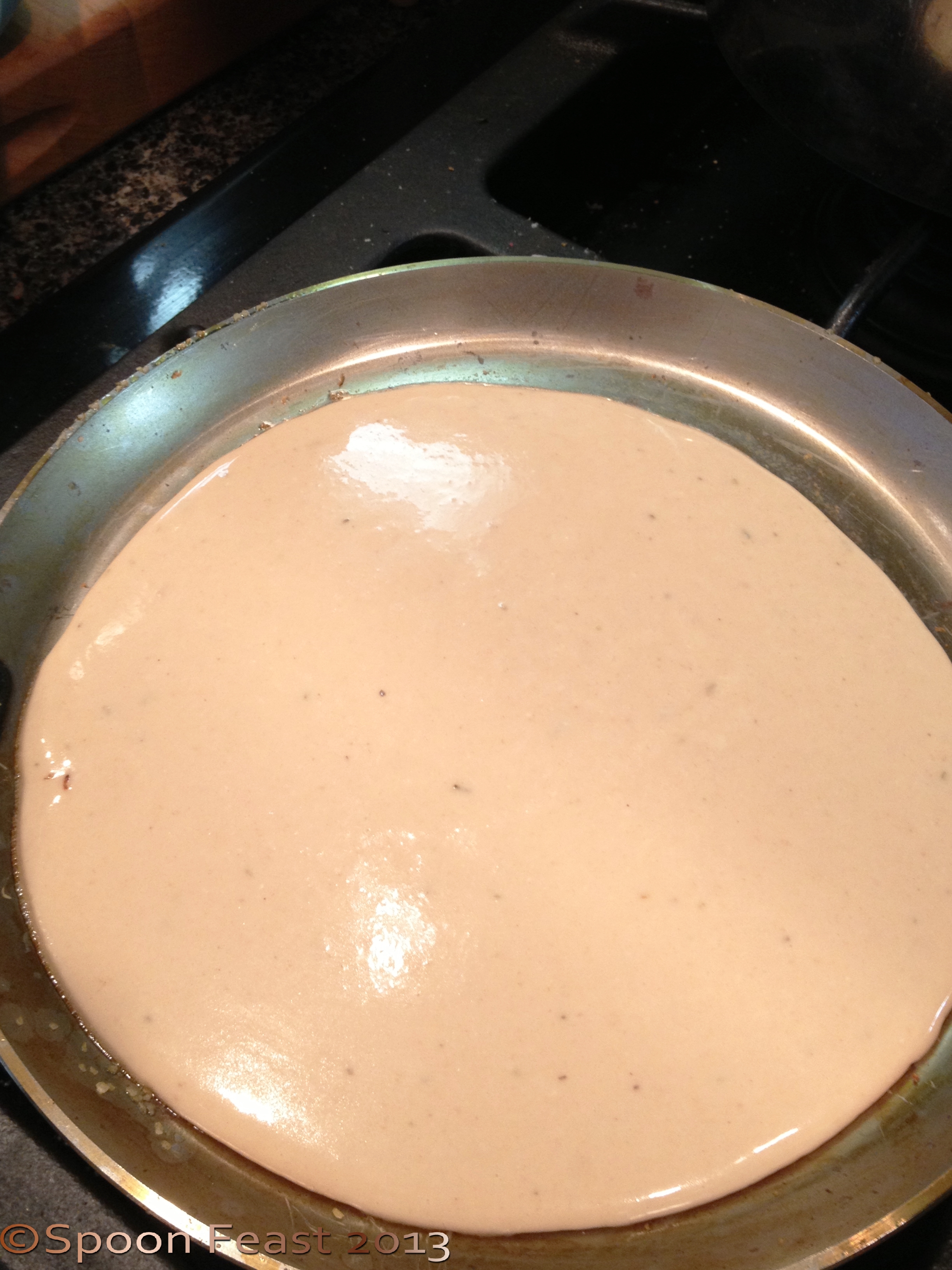
Pour the batter into the hot pan

Pour the batter into the hot pan

When the oven and the pan are really hot, pour enough batter into the pan, swirl it around and place the pan back under the broiler. Make sure there is room for the socca to rise while it is under the broiler, if it touches the heat source, it will burn.

You will see the dough puff and begin to turn brown. This only takes a few minutes and how long depends totally upon the strength and heat of your broiler.

The socca is done when it is dark brown to black around the edges and the top has golden brown spots.

Done!

Done!

Remove from the oven, place the socca on a cutting board, sprinkle with salt and fresh black pepper and a drop or two of olive oil.

Socca is meant to be rustic so either tear it into serving portions or cut it into wedges.

Put the warm socca on a rack to cool so it does not become soggy.

Sprinkle with seasonings, a little goes a long way

Sprinkle with seasonings, a little goes a long way

Sometimes I’ll re-warm any left-over socca by placing it on a hot pizza stone on the oven for a few minutes. This tastes so good warm!

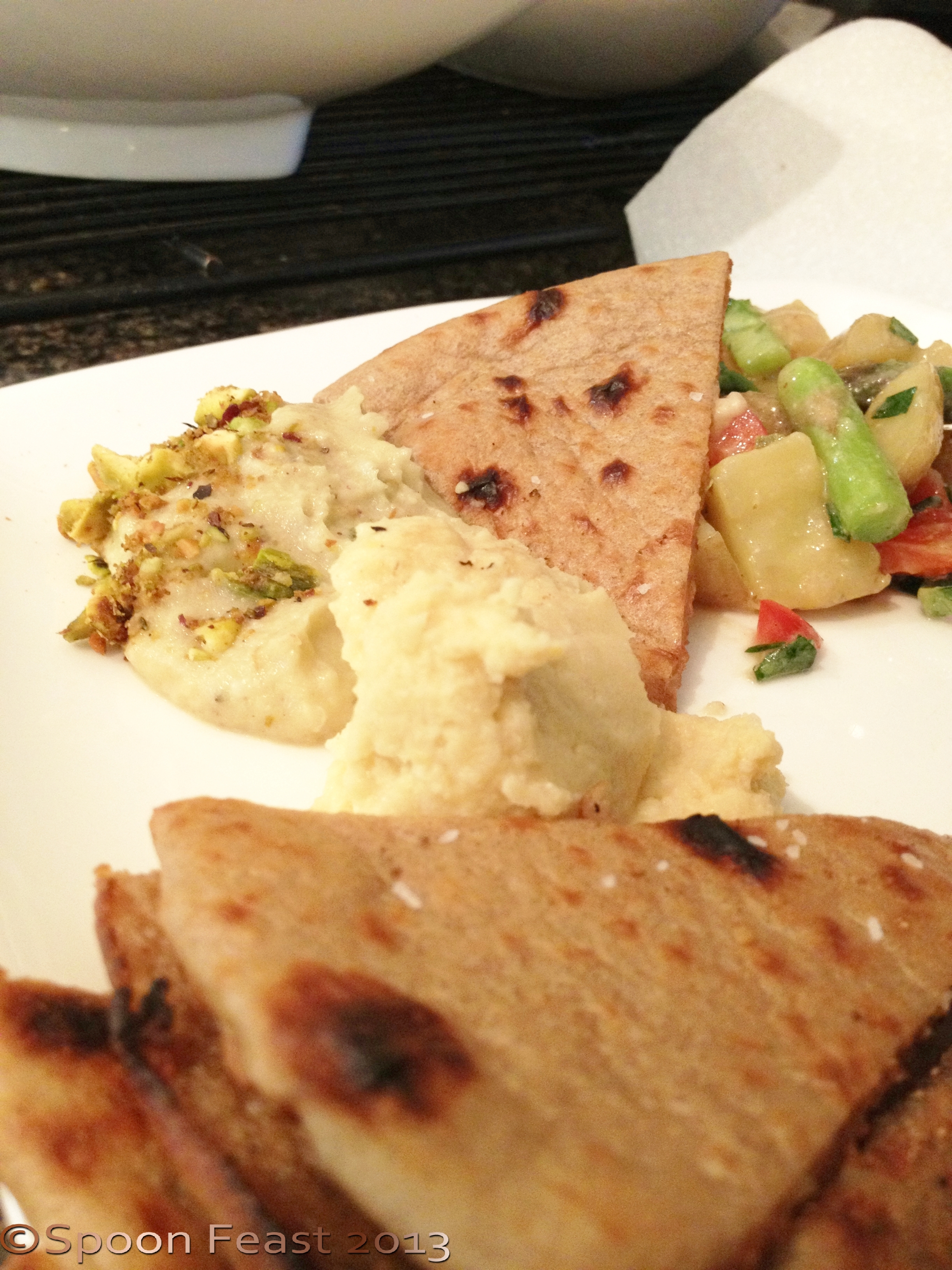
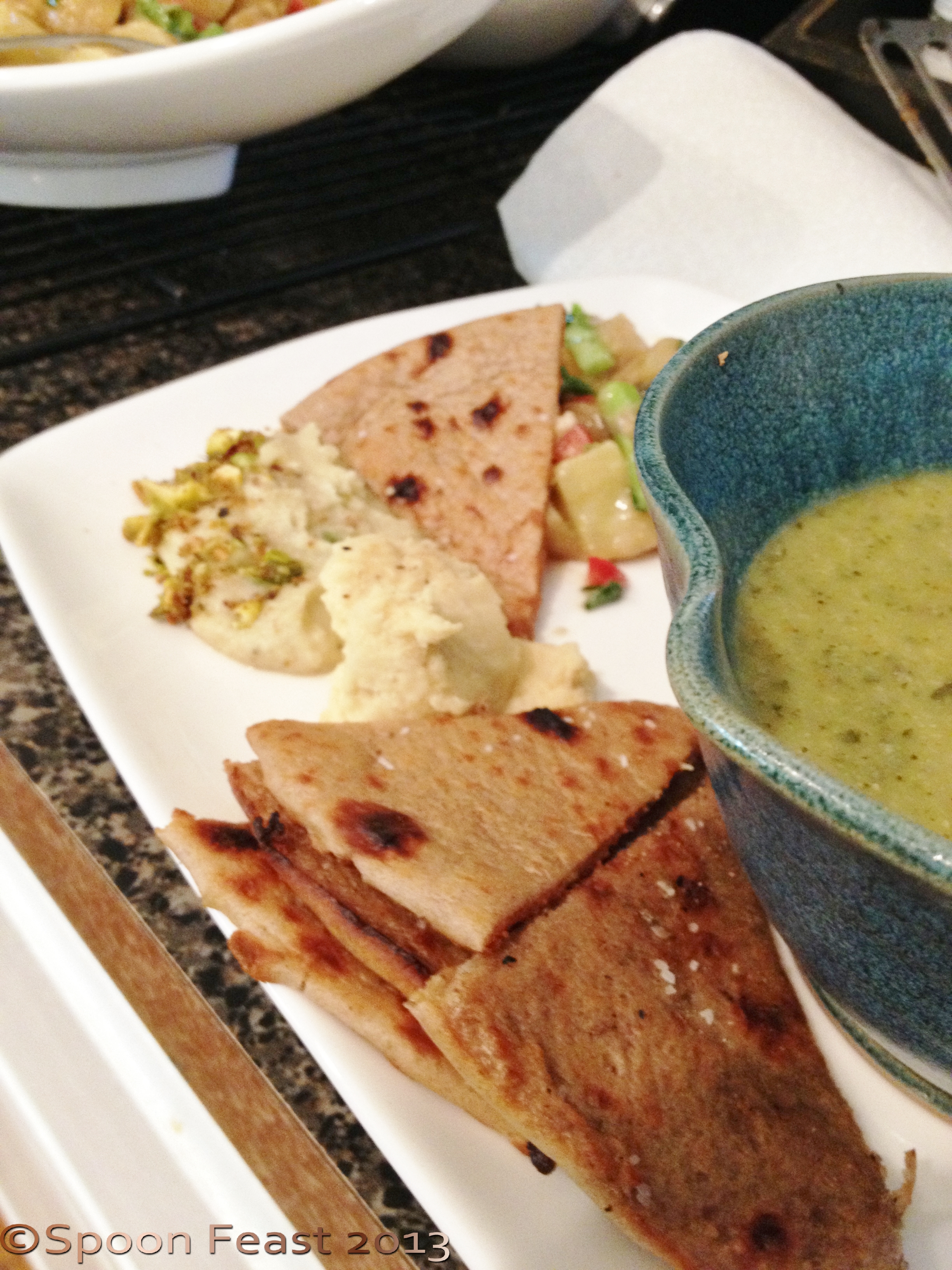
Today’s socca was served with lemon hummus, baba ganoush and cabbage cruciferous soup.

If you have no idea what socca is, try it.

I encourage playing with flour mix. While traditional socca is made with garbanzo bean flour, you can mix it up a bit with other flours too. An added bonus is this is also gluten-free unless you decide to use some wheat, rye or barley flours.

If you do know what socca is, while not quite the same as the street food in Nice, this comes pretty close.

Socca with soup, hummus and baba ganoush

Socca with soup, hummus and baba ganoush

Simple (And Great Tasting!) Bean Burger

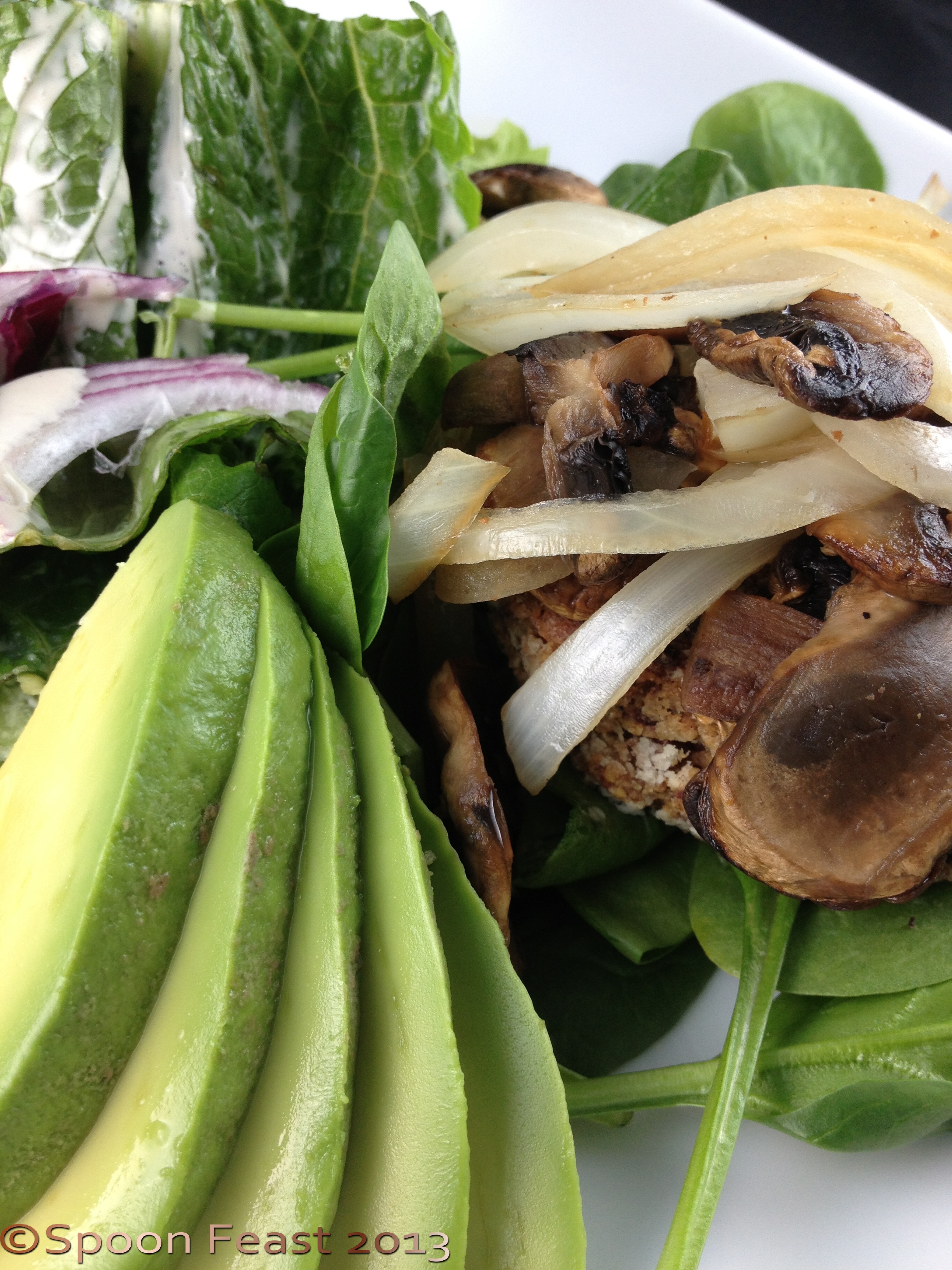
Bean Burger

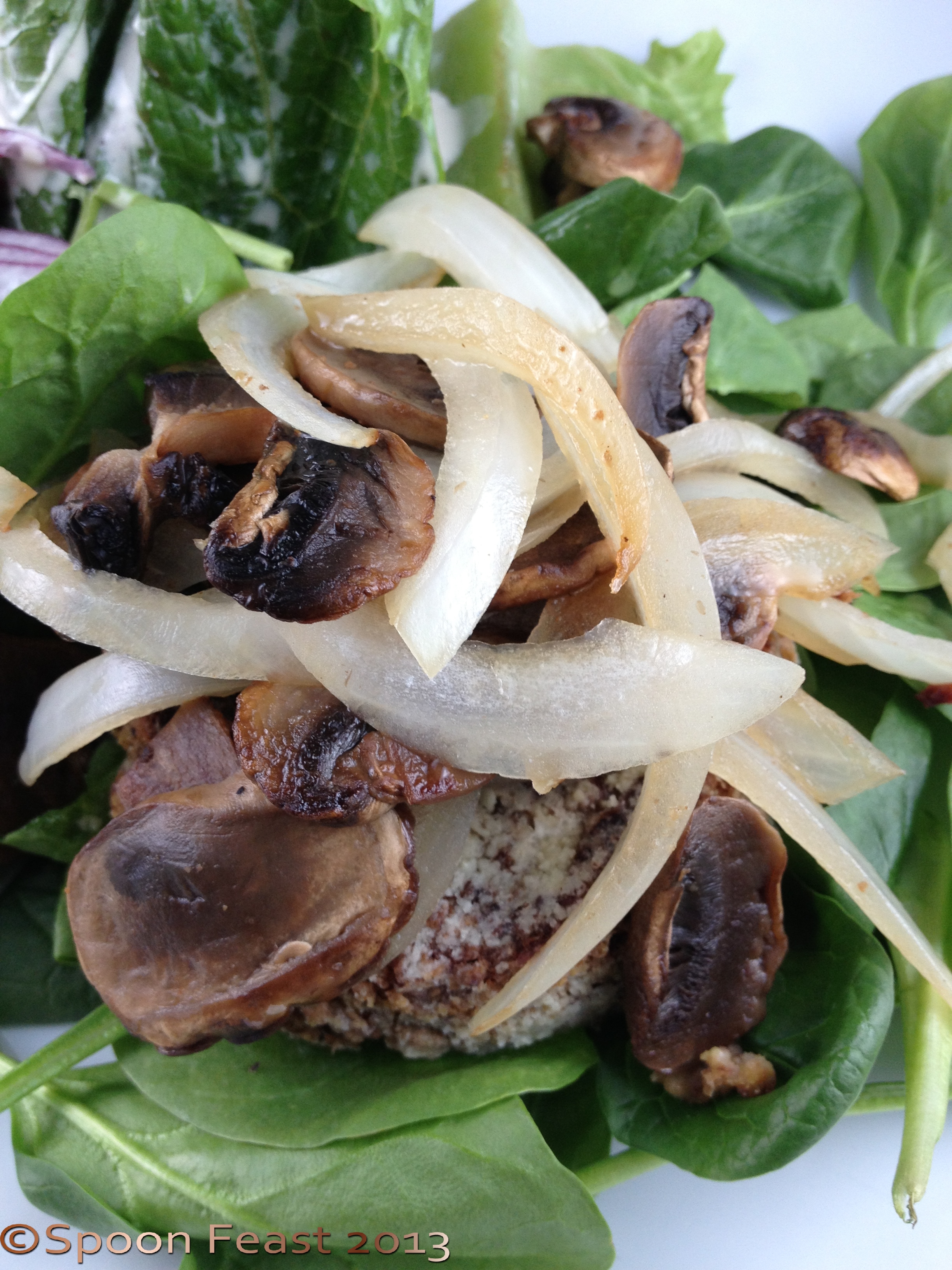
Bean Burger; Can you see it under the mushrooms and onions? I had to take the picture before Robert got to the table and didn’t have time to “present” the burger for photos.

This simple and great tasting bean burger is quite simple to make and is versatile enough to become many things besides burgers.

  • 1 15-ounce can dark red kidney beans
  • 2 cups cooked old-fashioned oatmeal
  • 1 tablespoon dried vegetable flakes (optional)
  • 1 teaspoon minced garlic
  • 1 teaspoon minced onion
  • 1/2 cup ground pistachio or almond meal
  • 1 tablespoon Bragg’s liquid aminos (the salt)

Start by cooking the oatmeal. Include the garlic, onions and dried vegetable flakes if using for flavor.

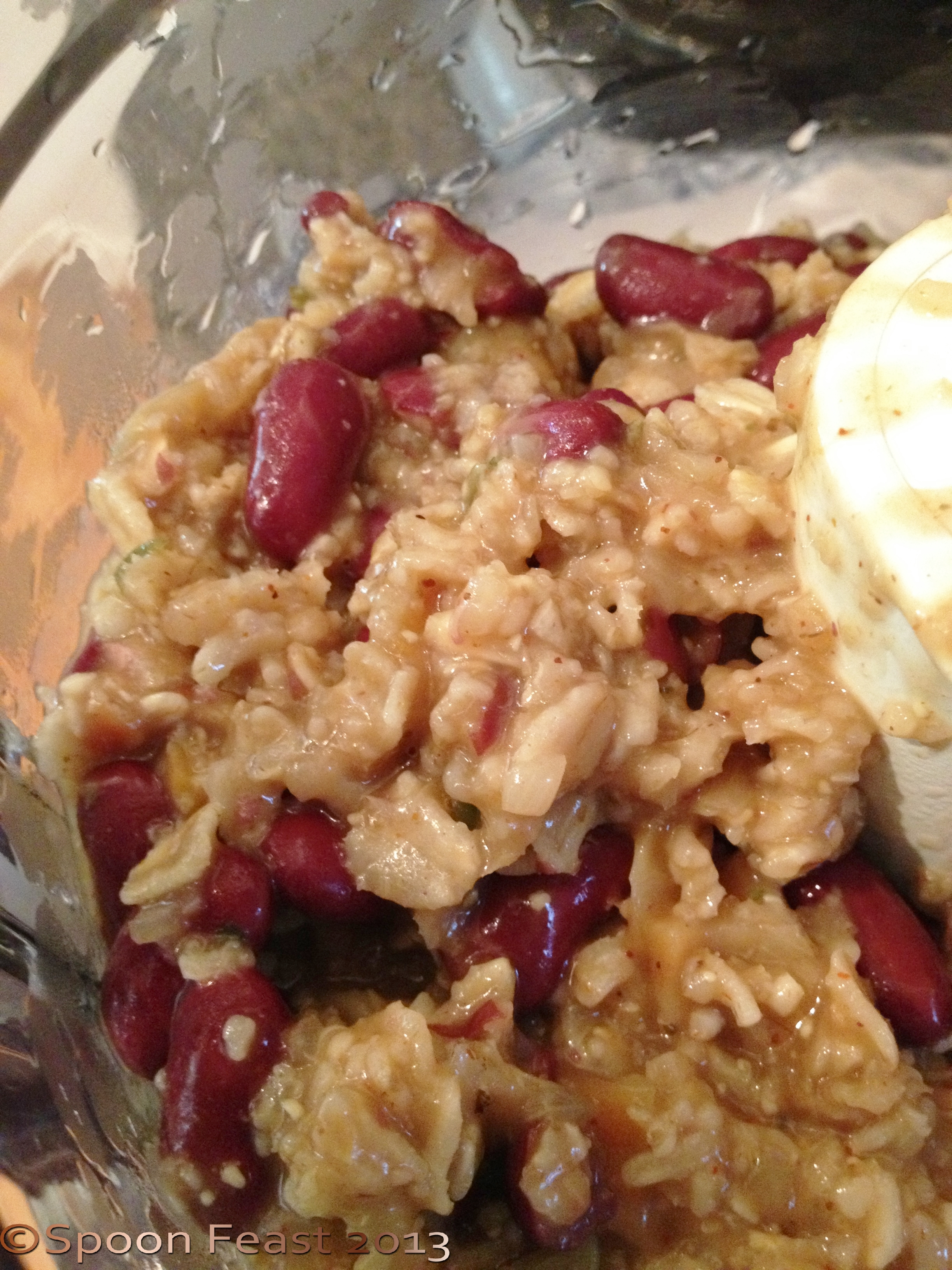
Drain the beans, rinse and add to the oatmeal.

Combine the oats and beans and all the seasonings

Combine the oats and beans and all the seasonings

Process the mixture in a food processor until things are coarsely chopped up. You do not want to make a paste.

Coarsely chop

Coarsely chop

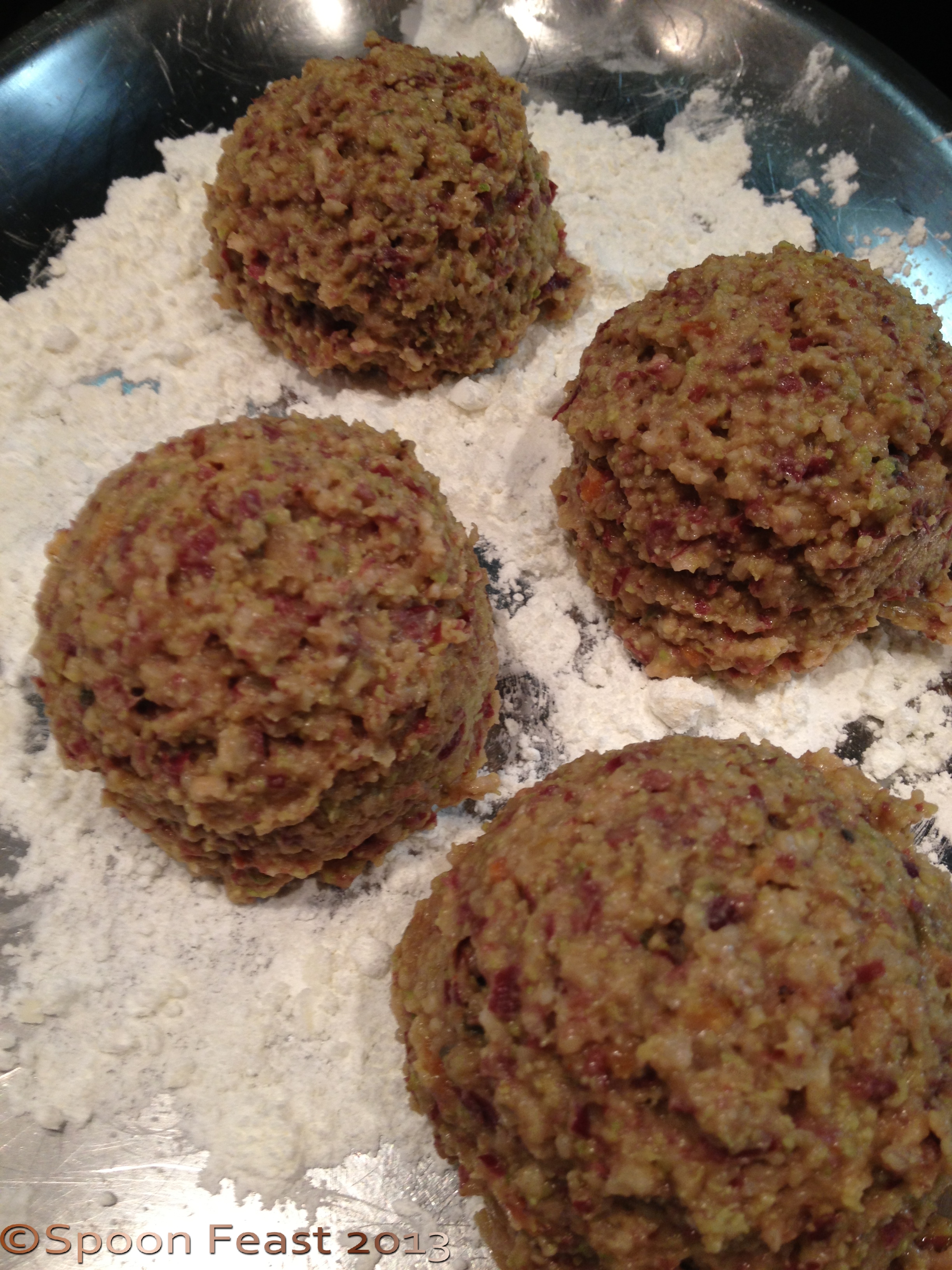
Form burgers using a scoop for even sizes.

Scoop for even size

Scoop for even size

Pat the burgers with additional pistachio or almond meal to ‘dry’ the outside of the burger. This will allow it to become nice and golden brown.

Using a very small amount of coconut oil or olive oil in the bottom of a saute pan (or use a non-stick pat and go fat-free) place the bean burgers into the hot pan, being careful not to overcrowd the pan.

Saute them until golden brown on one side, flip and cook on the other side until golden brown too.

You can finish cooking them in the oven or hold them in the oven until you are ready to eat.

Delicious Cooked Bean Burgers

Delicious Cooked Bean Burgers

Remove the burgers from the saute pan and then add sliced mushrooms and sliced onions, saute for 2 minutes, then add 1-2 tablespoons of water, continue cooking until the water is evaporated.

Serve the sautéed onions and mushrooms over the bean burgers.

This evening, we served them on a bed of fresh spinach with a side Caesar salad. I couldn’t eat it all!

If you have leftovers, you can saute the  crumbled burgers with some diced onions, chili powder, cumin and diced tomatoes to make “taco meat”. Fill corn tortillas and finish with your favorite taco toppings.

I find this can be used nearly the same as you would ground meat. Make chili, tacos, casseroles etc.

Enjoy!

Bean Burger topped with sauteed onions and mushrooms

Bean Burger topped with sauteed onions and mushrooms

Lavash – An Easy Cracker to Make

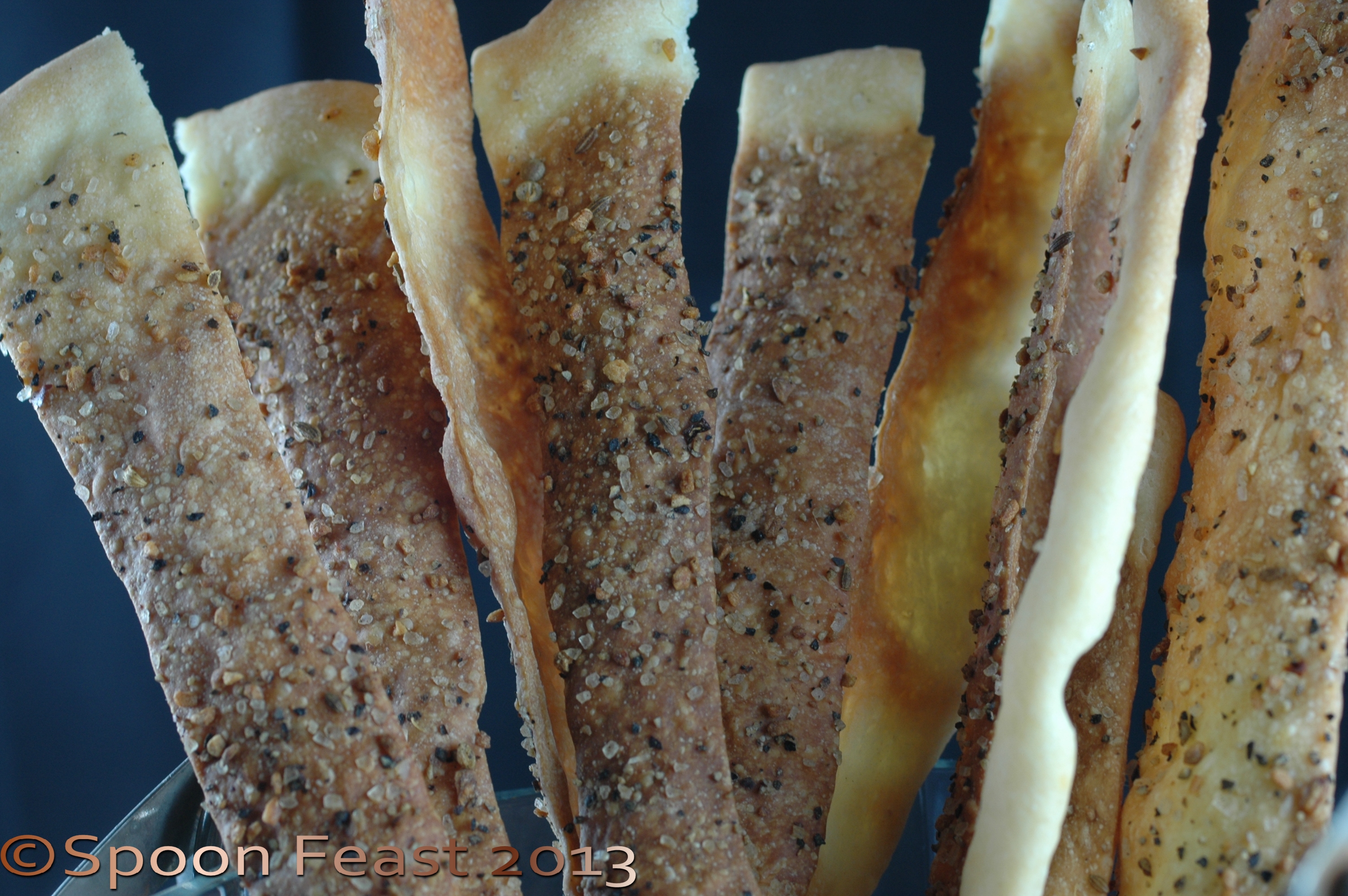
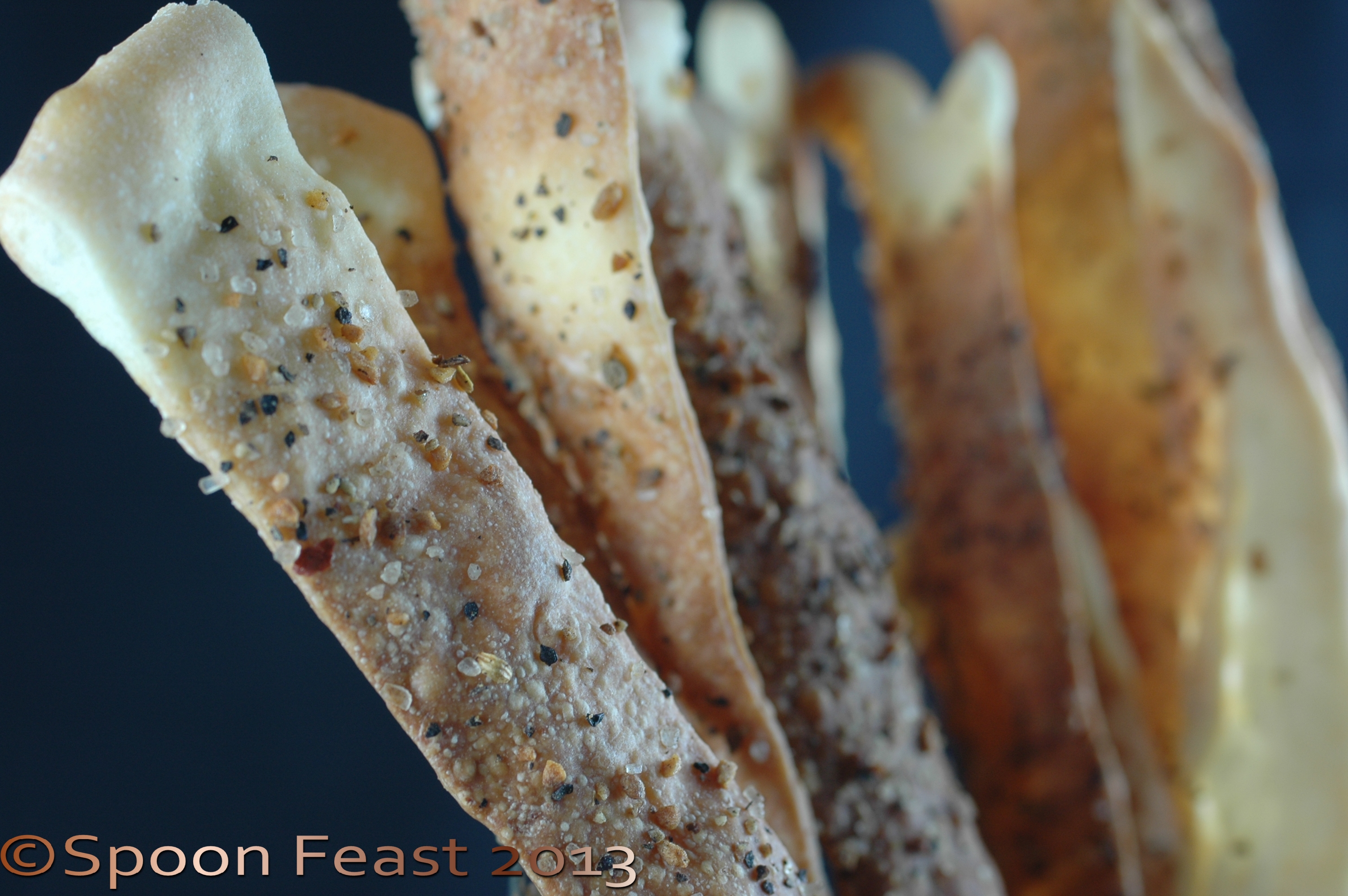
Lavash

Lavash

Lavash is such an easy cracker to make I think if more people knew how, more people would make them.

So here goes my attempt to teach everyone how to make Lavash.

Here is another added bonus, this recipe also makes great pita bread! Just weigh the dough balls to 4 ounces and roll it to 1/4 inch think.

Bake them on a baking stone in a 500°F oven. (Yeah, that’s HOT!) Place the dough disks onto the baking stone, wait for them to poof and begin to brown. Remove them to a cooling rack to cool. Lovely pita!

Sometimes I’ll make two 4-ounce pita and roll the rest out into lavash. Sometimes it’s all lavash others, all pita. Either way , this is a great formula and it comes to you by way of Peter Reinhart’s book, The Bread Bakers Apprentice, which if you don’t have it, I highly recommend it. But only if you like to bake bread.

OK!

Back to Lavash!

  • 1 1/2 cups bread flour
  • 1/2 teaspoon kosher salt
  • 1/2 teaspoon instant yeast
  • 1 tablespoon vegetable oil
  • 1 tablespoon honey
  • 1/3 to 1/2 cup room temperature water
  • Spray bottle with water (hopefully you have one dedicated to baking!)

DSC_0021Some topping suggestions:

  • Sesame seeds, both white and black
  • Poppy seeds
  • Cumin and caraway seeds
  • Sweet and/or hot Paprika
  • Kosher salt
  • Montreal Steak Seasoning
  • 7 seed mixtures

To make crackers:

Put all ingredients into a bowl of an electric mixer, add enough water to bring everything into a ball. You may only need 1/3 of a cup or you may need all the way up to 1/2 cup. If you need more than that, add it only 1 Tablespoon at a time.

Inf using an electric mixer to knead, knead the dough 6 minutes on medium speed. If kneading by hand, do it for 10 minutes.

The dough should be firm to the touch, satiny and not sticky.

Oil a bowl, roll the dough ball in the oil so it gets a light coating. Place the dough in the bowl and allow to rise for about 1 and 1/2 hours or until it has doubled in size.

If you don’t feel like finishing the crackers now, you can store the dough in the refrigerator overnight at this point.

If you want to make a couple of pita, weight out 2 4-ounce balls, give them an initial roll and set aside to rest.

Line the back side of a sheet pan with parchment paper. (The crackers get baked on the backside of the sheet pan.)

On a lightly oiled or floured surface, roll the dough into a paper-thin sheet. You may need to lift the dough to ensure it isn’t sticking to anything during this rolling process.

If, while rolling, the dough ‘fights’ you by shrinking back, cover it with a clean towel or piece of plastic wrap and allow the dough to rest for 5-10 minutes.

Place the thin dough onto the parchment lined sheet pan. Spray with water and sprinkle on the topping of your choice.

You can cut the dough into crackers or long strips using a pizza cutter before baking. Don’t worry about separating the crackers now, they will snap apart once cooled.DSC_0006

Bake the crackers in a preheated 350°F oven for 15-20 minutes or until they are golden brown.

Freshly baked crackers are a real treat to share with anyone dropping by for a glass of wine and a few nibbles. Don’t be surprised if your Lavash crackers become a topic of interest!

Caesar Salad – A Fresh Look

Caesar Salads have long been popular both in the restaurant scene and at home. I love a good Caesar Salad especially if you add some Caesar Saladgrilled chicken to it and lots of Parmesan cheese.

The dressing here is a low-fat version of a traditional Caesar. This maintains the flavor of the dressing the same as a traditional Caesar dressing, yet with far less fat. So you will find a stray from the traditional Caesar Dressing ingredients, but try this, you’d never know the difference!

Plating the salad becomes a real presentation. Take your time and you will be rewarded with not only a nice visual but also something that will satisfy your taste buds on many levels.

For the Salad:

      • Romaine Hearts – each one makes 1-2 servings; 3 for an appetizer or side salad
          • Keep the lettuce in tact!
  • Good quality bread for the “croutons”
  • Parmesan cheese, shredded or shaved off a block with a vegetable peeler
  • Anchovy fillets – white anchovies are a gourmet treat, but everyday anchovies will do also
  • Dressing (recipe follows)
  • Add Grilled chicken or shrimp if desired.

To make the dressing:

  • 1/2 cup low or non-fat mayonnaise
  • 1/2 cup low or non-fat plain Greek yogurt
  • 1/4 cup shredded Parmesan cheese (use the best quality you can buy!)
  • juice from 1/2 lemon
  • 1 tablespoon Worcestershire sauce
  • 4 oil packed anchovy fillets (or more if you like)
  • 2 cloves fresh garlic
  • 1 -2 teaspoons fresh ground black pepper

Put it all in the blender and process until smooth. Taste it, you may want more anchovy or garlic or cheese. If you do, add it and process again until smooth. If it gets too thick, thin with water.

Wash the lettuce, carefully remove any dirt or debris while keeping the head in tact. Turn the romaine heart upside down to drip dry or pat it dry with a paper towel.

Holding the romaine heart upright in a clean bowl, drizzle the leaves with the dressing, use about 1-2 ounces per heart.

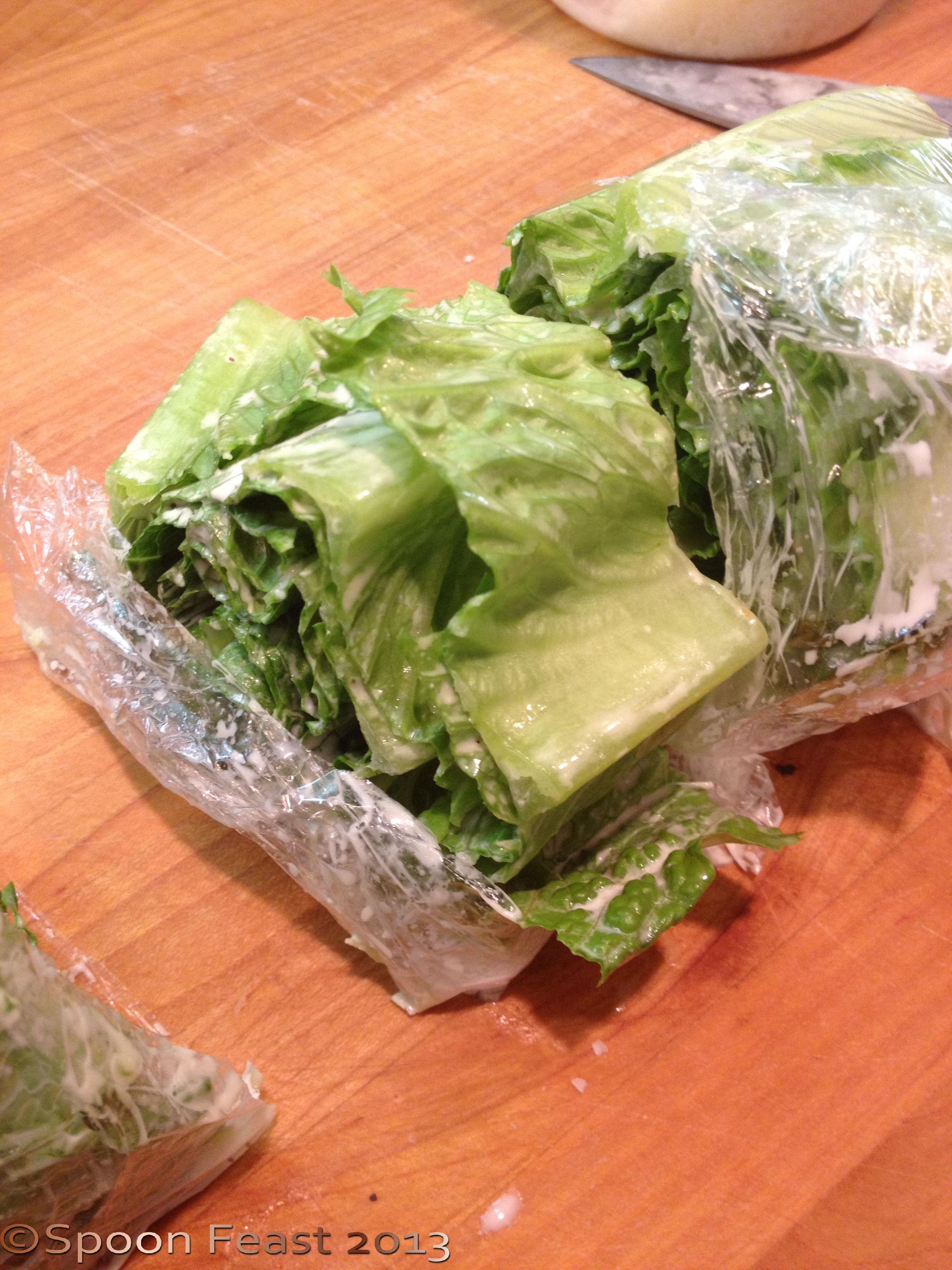
Wrap tightly into a log shape

Wrap tightly into a log shape

Wrap the lettuce tightly in a log shape in plastic wrap. When you do this, arrange the leaves so they don’t break. You want to be able to wrap it together really tight.

Refrigerate for at least 30 minutes.

Brush the bread with olive oil, grill each side for 1-2 minutes.

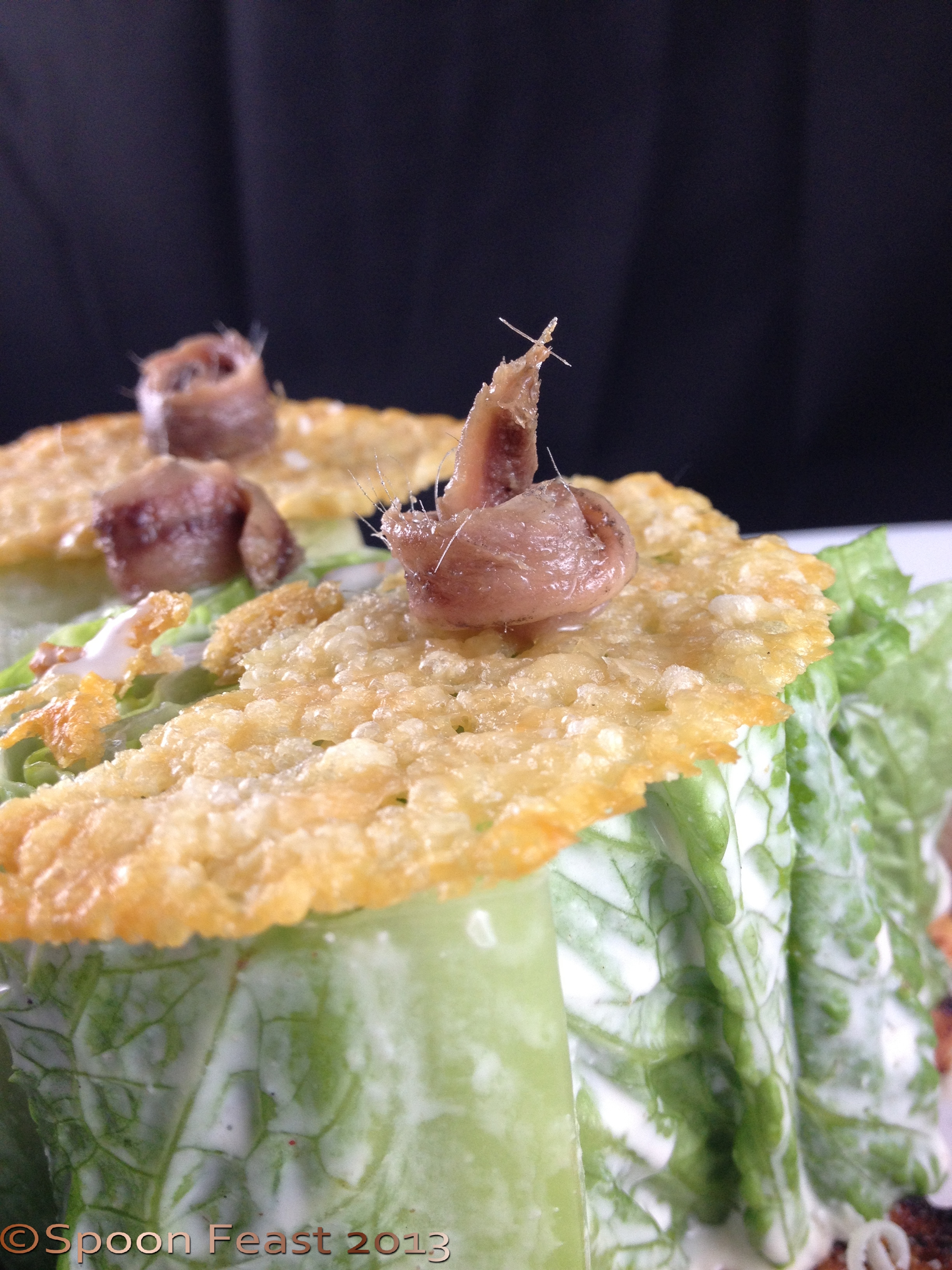
Roll the anchovy fillets into ‘mini-flowers’.

Make Crispy Parmesan Chips

Rolled anchovy fillets

Rolled anchovy fillets

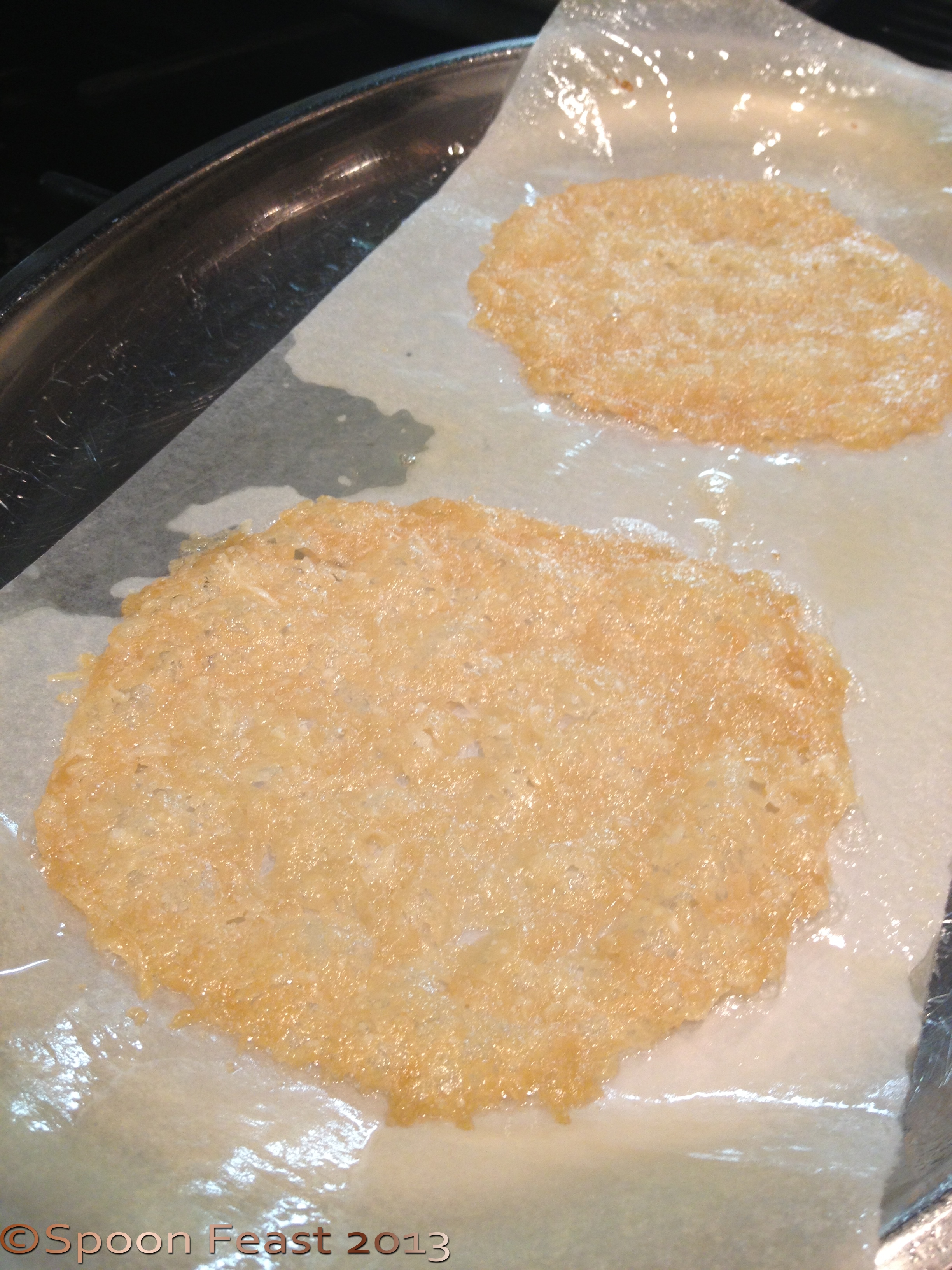
Make some crispy Parmesan chips by placing freshly shredded (grated cheese does not work) onto a piece of oiled parchment in a circle.

Use a ring mold for even shapes

Use a ring mold for even shapes

Use a ring mold to make even sized circles. Bake them in a 350°F oven for 5-10 minutes or until they turn golden brown.

Remove when the cheese gets golden brown

Remove when the cheese gets golden brown

Remove from the oven and using a spatula, remove them from the parchment immediately as the cheese cools rapidly. At this point, they will retain any shape you give them. but you have to move fast, once they cool they become crisp.

For this presentation, instead of making croutons, I cut the bread into a long rectangle, oiled it and then put it on the grill for a few minutes.

Plate Presentation:

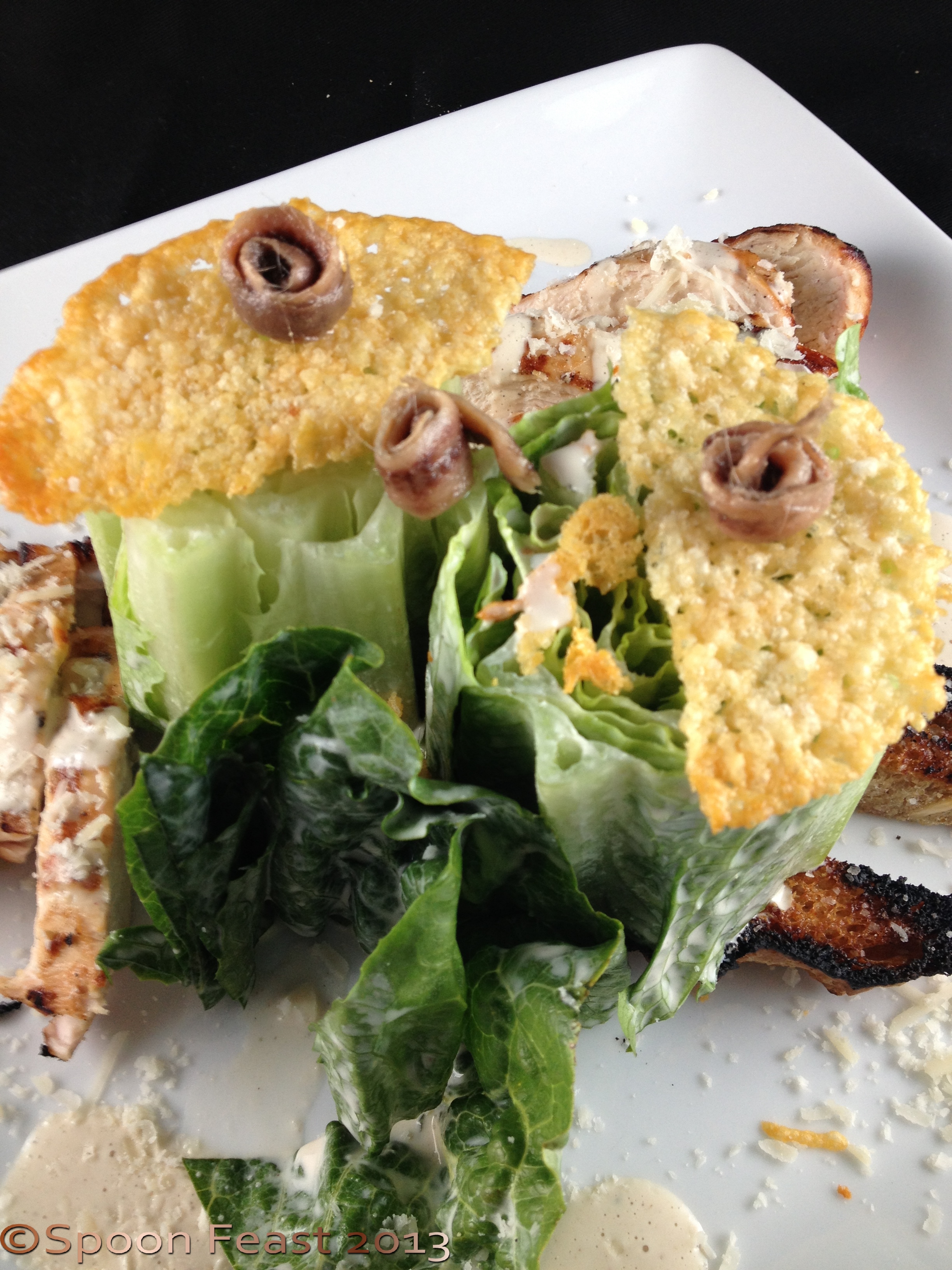
Lay two lengths of bread on the base of the plate.

With the plastic wrap still on the lettuce, slice the lettuce into rounds about 2″ wide.

Slice the lettuce with the plastic wrap still on. Of course, remove it as you bring the lettuce to the plate.

Slice the lettuce with the plastic wrap still on. Of course, remove it as you bring the lettuce to the plate.

Remove the plastic wrap and place them on the bread. Stand them up with the cut side down. Do this carefully and they will hold together.

Place a crispy cheese round on top of the cut lettuce, then add the rolled anchovies.

IMG_5419

Place either the grilled chicken or shrimp along side of the bread, sprinkle with Parmesan. Drizzle some dressing onto the plate and serve.

The presentation is nice because when you want to eat the lettuce, it falls apart easily with your fork and does not require further cutting unless you cut them too wide. 2 inches is the perfect size for this presentation.

Enjoy this Caesar!

IMG_5422

Time for a Change

I got a letter in the mail yesterday that let me know that it is time for a change. Two weeks ago I had a physical which also included doing a blood profile.

I have always taken great pride in knowing I followed my fathers genes for height, weight and cholesterol until yesterday. My mother has very high cholesterol which she is managing well; she and Dad are in their 80’s and are doing well.

For many years all of my lab reports were great. Now, this report comes back with a spike in my LDL cholesterol (the bad one) into a danger zone of 160 (it should be below 100). “Let’s talk about some medications” my Dr. suggests.

i take drugs

I suggest drugs! (Photo credit: the|G|™)

Guess the butter has caught up to me. And the lamb, fried chicken, bacon and pastries. If you realistically look at it and ask

“Just how many Bacon Topped, Maple Glazed yeast doughnuts can one eat before you have to pay the price?” you would know the answer.

Darn, because that sure does sound amazing,  is it the bacon part? Or the maple glaze part? Or the raised glazed part? Can’t we just forget about health this one time?

Well the real question that has come home to roost is how many times can you say “yes, just this time.”

How many times can you rationalize in your mind that it is “OK” to slather bread with butter, or load up that baked potato with sour cream and cheese on top of that butter or dip that fried chicken finger into ranch dressing.

a baked potato with butter

a baked potato with butter (Photo credit: Wikipedia)

How many times can we continue to look away?

No more, according to that letter.

Now, either I get to show and do what I know is right nutritionally or I can get on that AMA medicated bandwagon for the rest of my life. At 57 years old, I hope to have a lot of life ahead and have no desire to do so medicated or dependent on some doctors opinion.

I talked myself out of walking today because it was “cold”. 53°F “cold”.

Ha.

I scolded myself for not going. I didn’t go because I was lazy. Although I can come up with several excuses that all sound so much better than lazy, lazy is the truth. Lazy is a choice and lazy is something I can do something about.

Avoiding cardiovascular disease needs exercise, so I’d better get over this lazy spell.

While I don’t have a cardiovascular diagnosis, its numbers like these that lead to it unless something is done. Here lies my choice.

The amazing thing is that I really truly do know better! I am better educated about diet, health and food than most and yet I still find myself eating bacon, sugar and butter as if I were immune to the effects.

Today, I made some multi-grain bread and crackers with organic flour and whole grains, made hummus without oil, thanks to the vita-mix. Gosh, it had such a bright flavor! These are some of our go to snacks and lunch stuff for the next week.

I looked in the fridge and noticed some things that need to go.

Cholesterol is Good for You!

Cholesterol is Good for You! (Photo credit: Mr Jaded)[This is NOT really in my fridge! But wouldn’t it be nice if it were just this easy to eliminate cholesterol?]

The determination to do this myself, by ‘eating better’ is going to trump the medication possibility.

I asked myself today, “what do I want to accomplish by eating this?” and threw some junky food away rather than down my throat.

So some changes are in order.

While I’m not going to say I’ll never eat butter again or bacon or brie cheese, I can’t make them part of a normal diet. Maybe once a year or never for that doughnut.

My immediate goals are to change the amount of fat, increase vegetables and fiber, balance lean meats and breads.

I make all of our bread, I know what is in it, I’m not real keen on giving that up any time soon. Not being gluten intolerant or sensitive to it gives me a choice to eat my lovely breads or not.

I like meat, I really like the flavor. I was a vegan vegetarian for about 3 years when I was in my early 20’s. I determined then I really liked the flavor of meat. Being aware of how much meat and what kind of meat we eat is a key to control.

We don’t eat processed foods or fast foods and limit sugar and salt intake. We eat a variety of grains because we actually like them so some of the diet modifications should be rather simple to accomplish.

It’s the butter and pastries that need to go away. I know that and I don’t need a doctor to put me on meds in order to get the LDL under control.

I have been teaching bakeshop classes since January, I am 100% positive that change in schedule is a definite contributor to the spike in LDL. Next week when my new classes begin, I’m out of bakeshop and into Global Cuisine and so all those pastries and temptations will be well out of reach.

Additionally I need to get moving. Go walking. Anywhere.

Hopefully I can work up to a light run and learn to enjoy the process and shake these lazy bones.